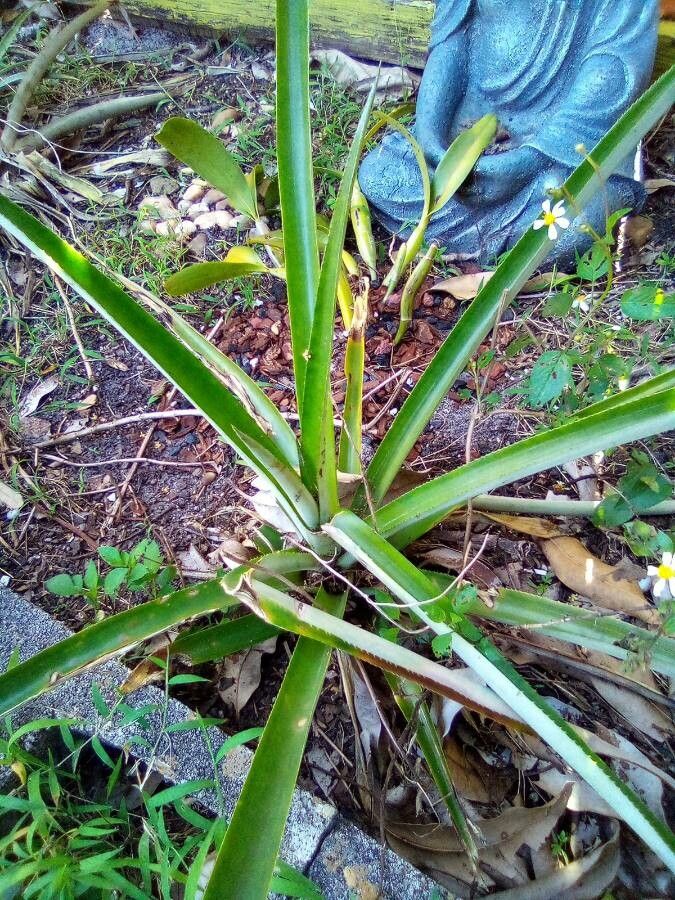
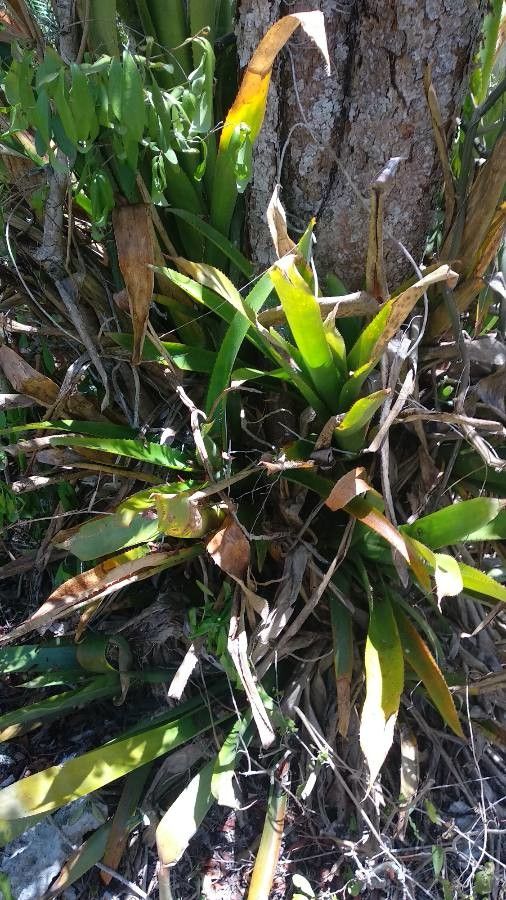
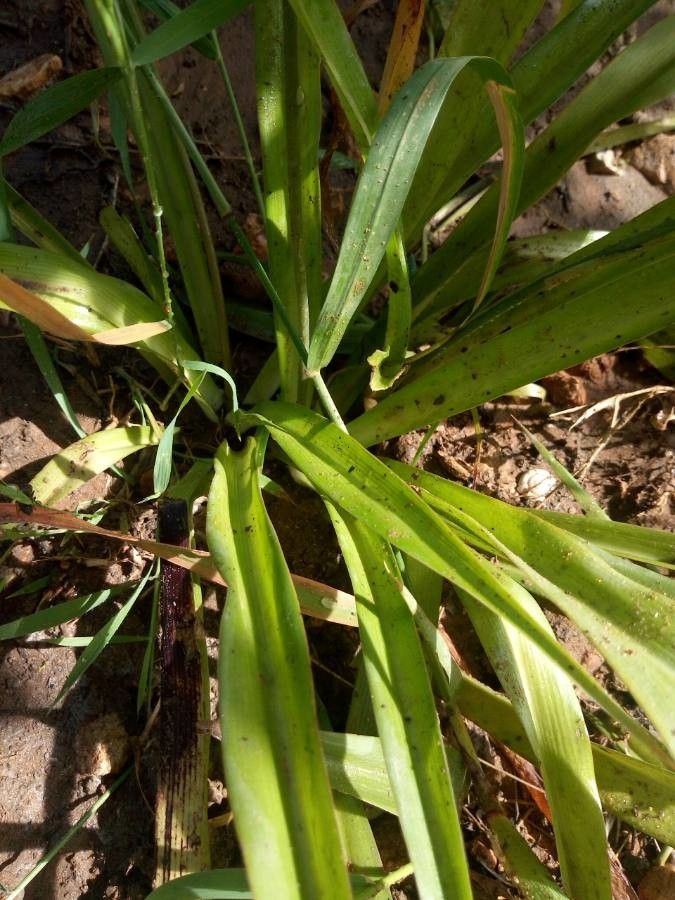
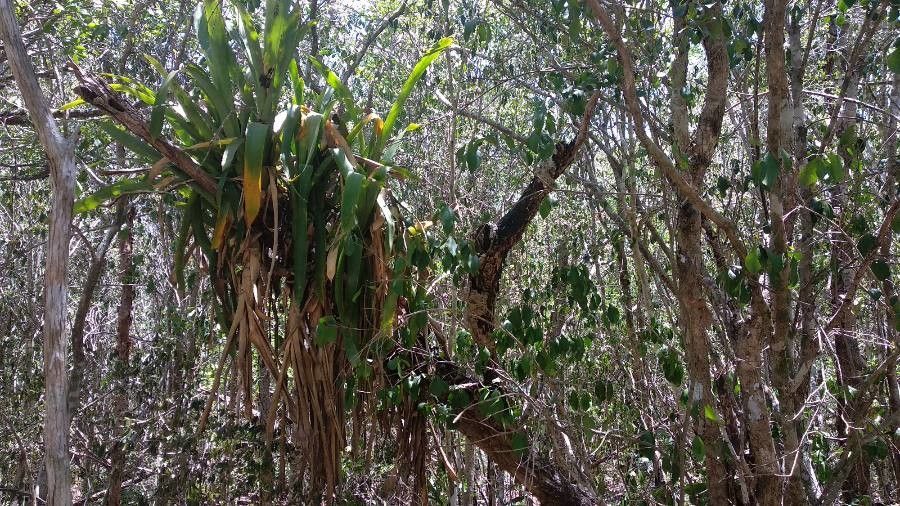
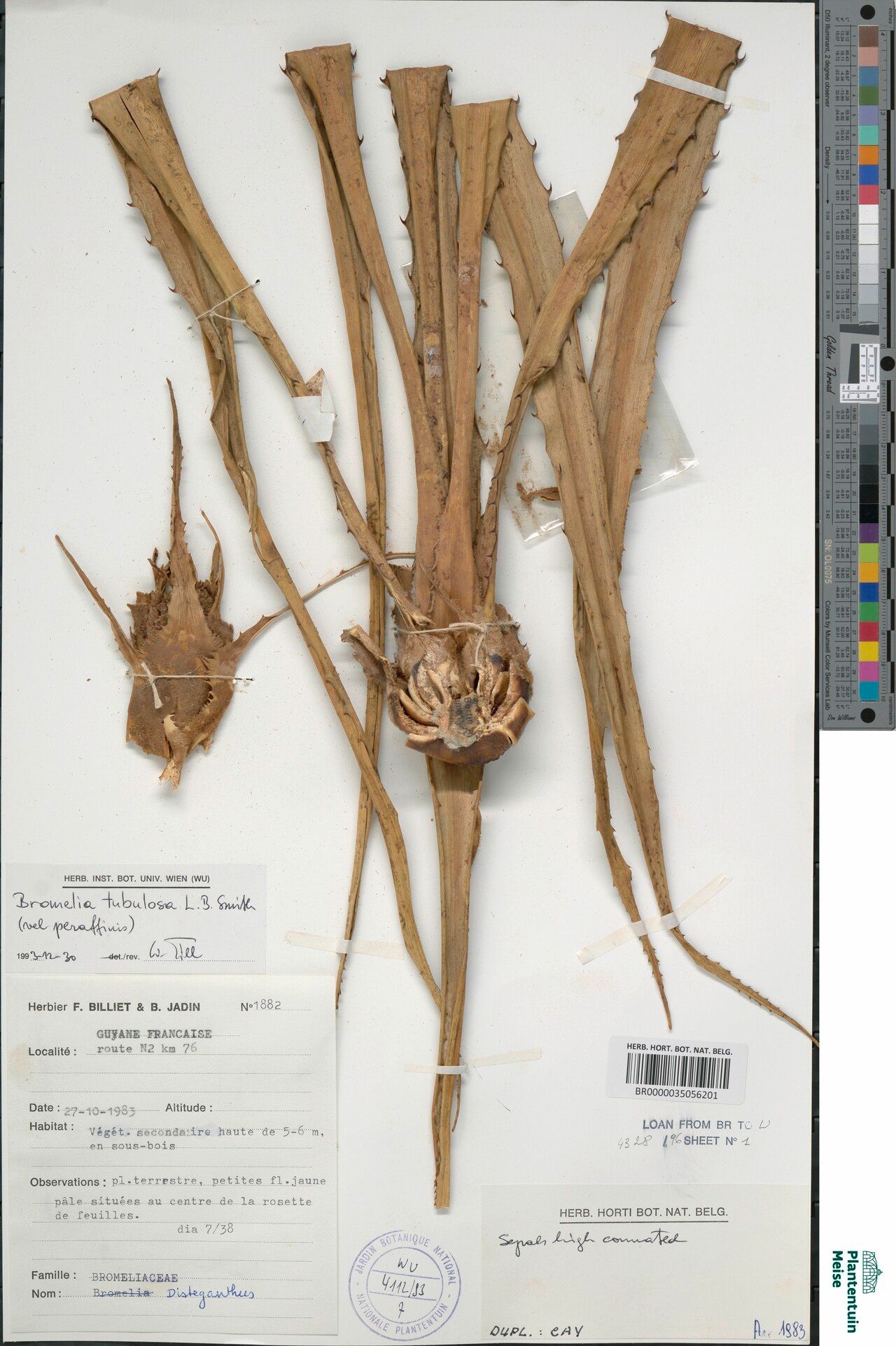
Bromelia plumieri, commonly known as the wild pineapple or Plumier's bromeliad, is a species of flowering plant in the Bromeliaceae family. It is native to Central and South America, specifically found in countries like Brazil, Colombia, Costa Rica, and Panama.
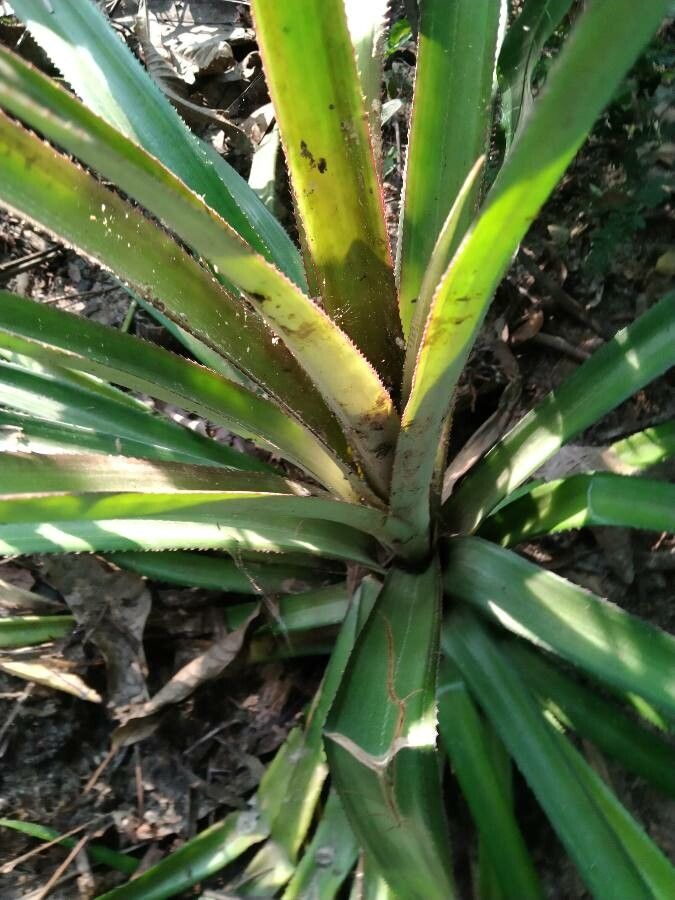
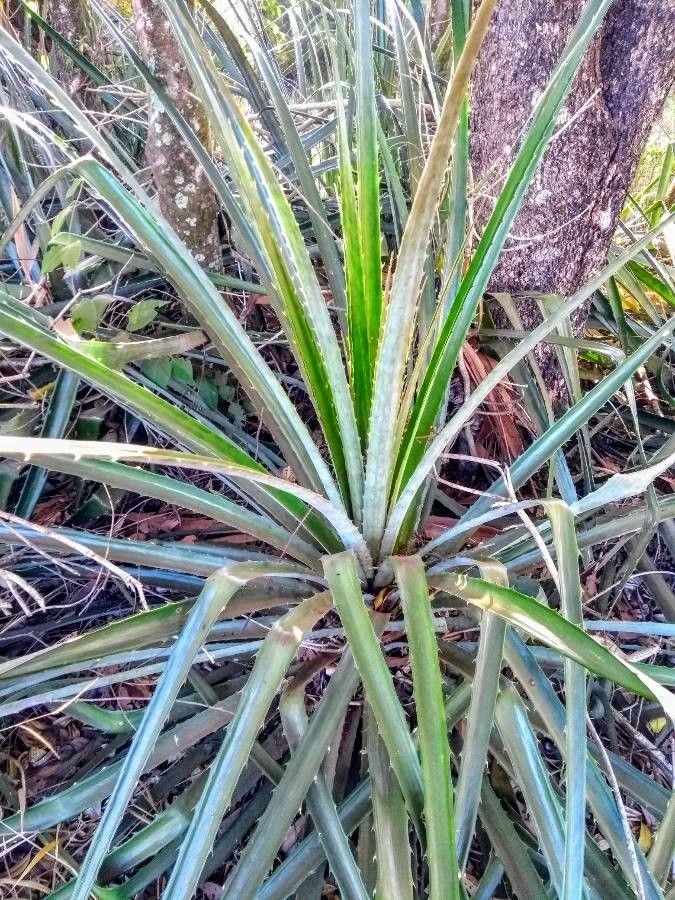
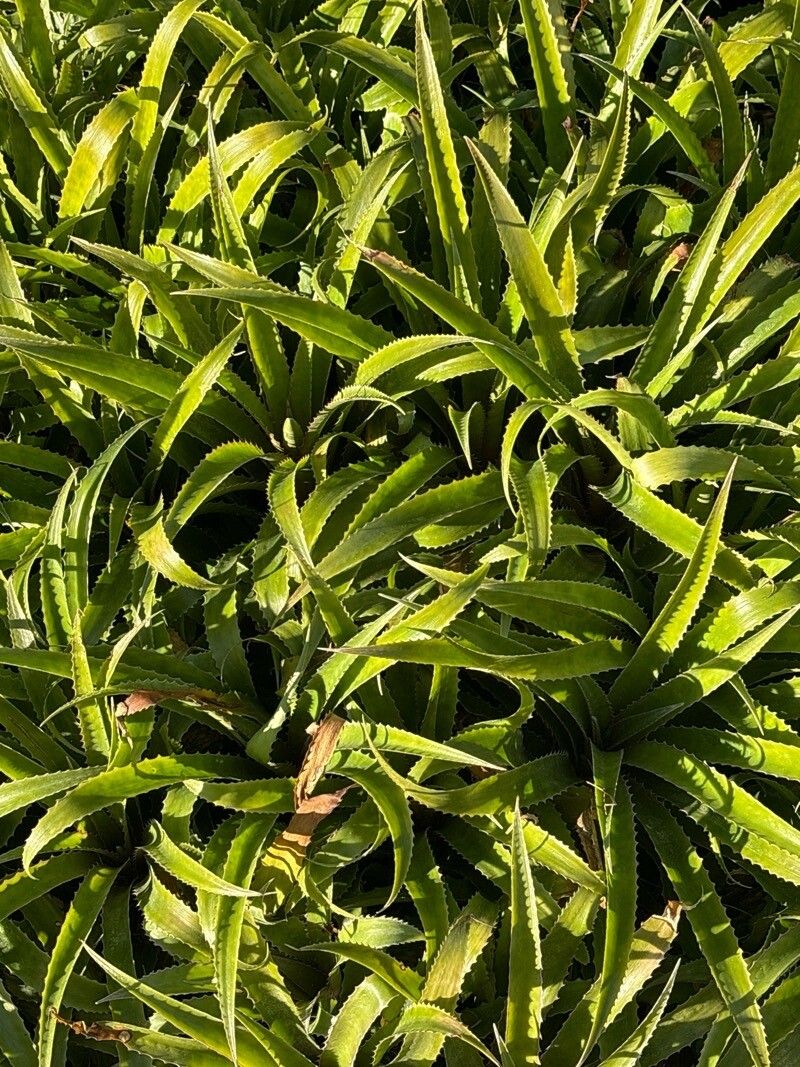
The plant features a rosette of stiff leaves that are green on the topside and red or purple underneath. These leaves are arranged in a spiral, forming a cup-shaped structure at the center of the rosette. This cup holds water, providing a habitat for small animals such as frogs and insects.
Bromelia plumieri produces bright red or orange flowers on long stalks that can grow up to 1 meter tall. These flowers are pollinated by hummingbirds and produce small fruits resembling pineapples, which are not edible for humans.
This plant is often used for ornamental purposes due to its attractive foliage and colorful flowers. Additionally, it has medicinal properties; indigenous people have used its leaves to treat various ailments such as fever, coughs, wounds, and skin infections.
Bromelia plumieri is easy to grow and thrives in bright light, although it can tolerate some shade. It prefers well-draining soil with regular watering but can also withstand periods of drought once established.
Bromelia karatas has moderate disease resistance but is more sensitive to humidity and excessive watering. It becomes more prone to disease when it is kept in low light and overwatered. In terms of care, Bromelia karatas is drought-tolerant and can endure long periods without water. It needs little fertilizer and only occasional pruning. These characteristics make it suitable for people of all experience levels, especially those who want to spend less time tending their plants or who may be away from home for extended periods. It is a good option for people who do not want to invest a lot of time in plant care yet still want an easy-to-maintain plant.
How to keep Bromelia Plumieri.
Light
Bromelia karatas comes from habitats with dappled light, such as the understory of forests or rocky areas that provide natural shade. It prefers partial sun but can also tolerate full sun.
Temperature
Bromelia karatas prefers warm conditions. If the ambient temperature becomes too low, growth may stop or the plant can suffer frost damage. It tolerates high temperatures and humidity well and needs a consistent level of moisture in its surroundings. However, extremely high heat and humidity can make it prone to fungal infections. In dry environments, regular watering and misting are needed to maintain sufficient air humidity. The plant is sensitive to sudden temperature changes, so keeping the temperature relatively stable is important.
Fertilizer
For Bromelia karatas, small applications of fertilizer once or twice a year during the growing season are enough. Do not fertilize in winter or summer while it is dormant. Use less fertilizer for repotted plants and wait a couple of months after repotting before applying fertilizer. Fertilizing helps maintain healthy growth and promotes flowering.
Botanical profile.
- Plant Type
- Herb, Succulent
- Life Cycle
- Perennial
- Genus
- Bromelia
- Family
- Bromeliaceae
- Hardiness Zone
- 10-12
- Mature Height
- 0.91 m to 1.52 m
- Mature Spread
- 0.91 m to 2.13 m
- Leaf Color
- Green, Dark Green
- Leaf Type
- Evergreen
- Flower Color
- Pink, Purple
- Flower Size
- 5.08 cm to 6.35 cm
- Bloom Time
- Summer
- Planting Time
- Spring, Summer
- Harvest Time
- Late summer, Early fall, Mid fall
- Native Area
- Colombia, Belize, Cuba, Honduras, Mexico, Guatemala, Venezuela, Guyana, Brazil, Nicaragua, Ecuador, Costa Rica, Panama
Other names.