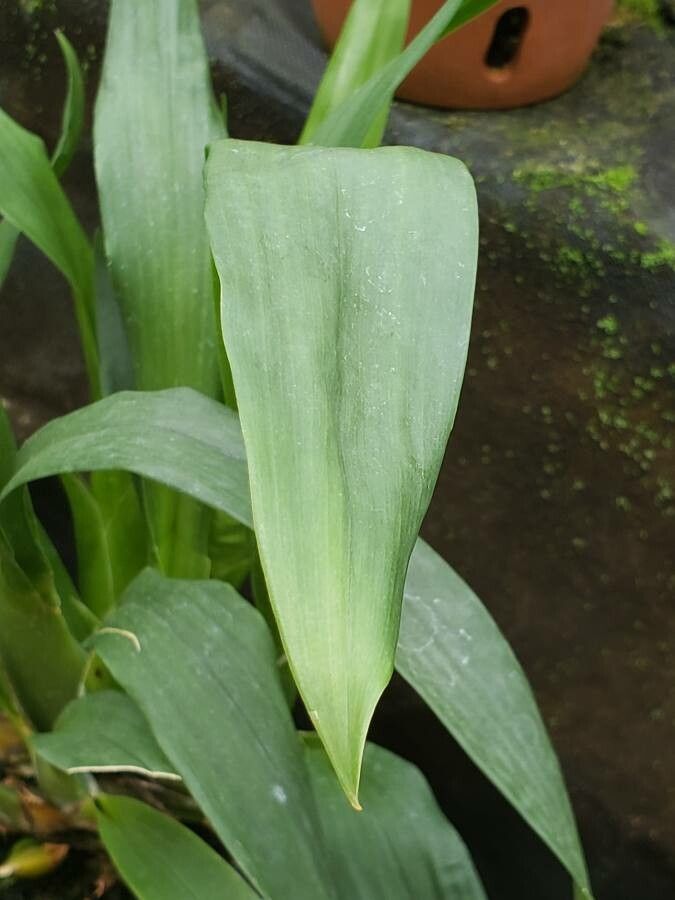
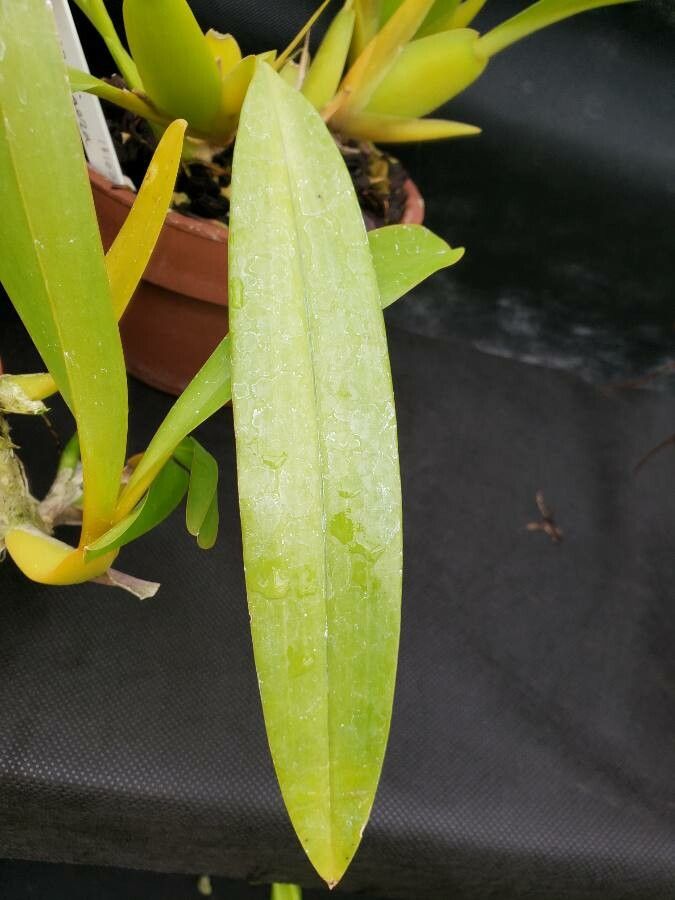
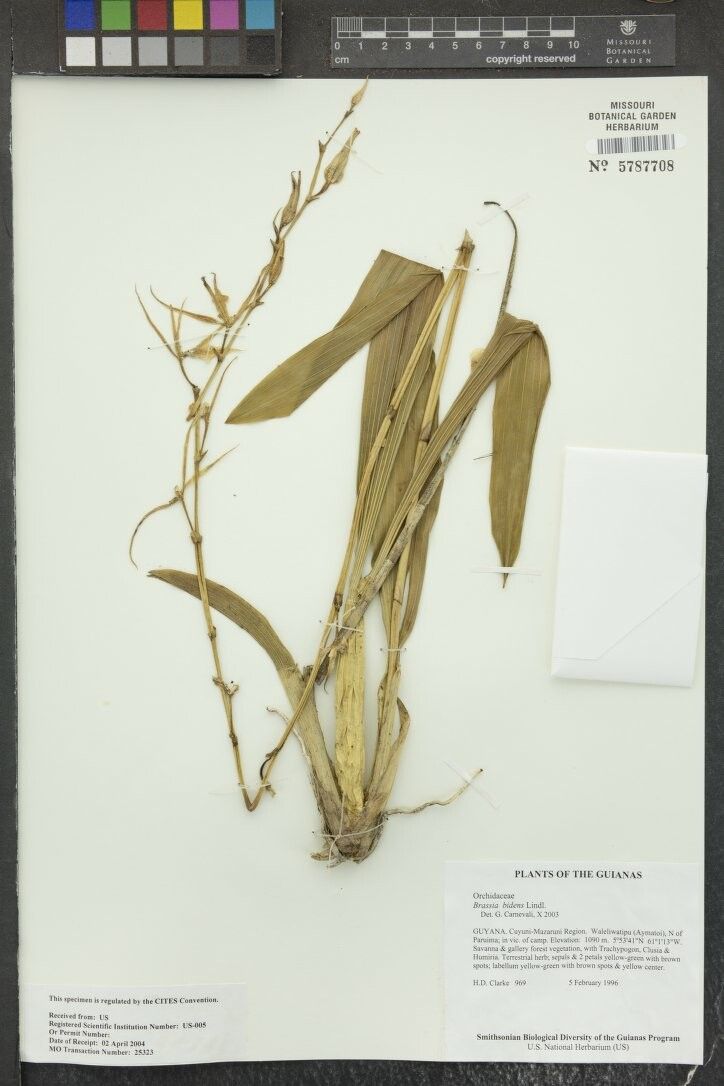
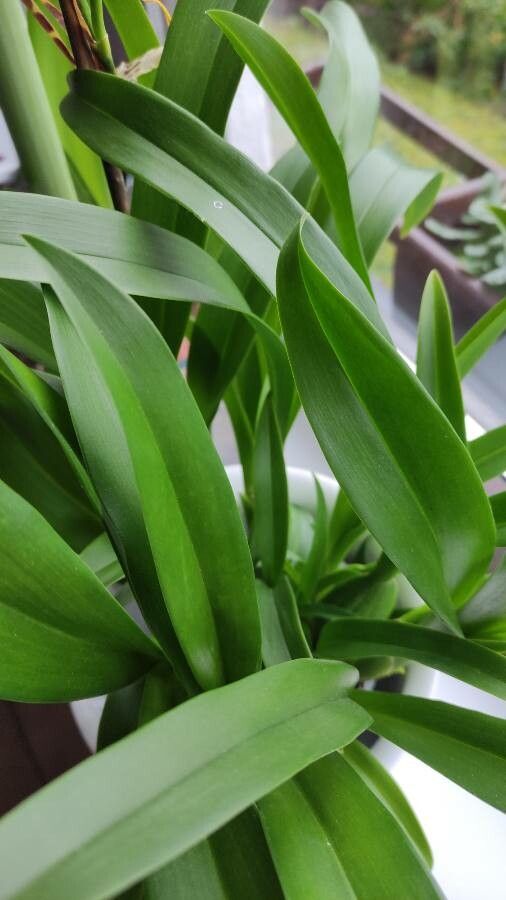
Brassia maculata, the spotted brassia, is a species of orchid. It is native to southern Mexico (Chiapas, Veracruz, Tabasco, Guerrero, Oaxaca, Campeche, Quintana Roo), Central America (Belize, Guatemala, El Salvador, Honduras, Nicaragua), Cuba, and Jamaica.
Brassia maculata typically has strong resistance to disease and is affected by relatively few insect pests. Its care is considered difficult because it needs high humidity combined with good ventilation and minimal harmful pathogens. Too much watering can result in root rot. Although anyone can grow Brassia maculata, keeping it healthy and getting it to flower again requires more growing experience.
How to keep Brassia Maculata.
Light
Brassia maculata is indigenous to habitats like forest understories and rocky areas, where it occurs in natural shade. It favors partial sun but can tolerate both full sun and full shade, illustrating its versatile, hardy nature.
Temperature
Brassia maculata does best in warm conditions. It prefers moderately high temperatures without excessive heat and humidity. Sunlight helps warm the plant and encourages flowering. However, extended direct sun in summer can cause sunburn, so it's important to limit the amount of light it gets during that season. The plant is generally intolerant of cold, so it needs adequate protection and warmer conditions in winter to prevent freezing.
Fertilizer
Brassia maculata needs the greatest amount of fertilizer during its active growth period, which takes place mainly in spring, summer, and early fall. Fertilization supplies essential nutrients that the soil may be lacking, supporting healthy root and stem development as well as attractive foliage, which is a key feature of this particular plant.
Pot & Repot
When repotting Brassia maculata, select a pot that is just slightly larger and has good drainage, preferably a clear orchid pot. Use an orchid-specific, well-draining mix that includes bark or moss. Carefully clean the roots and trim any that are dead or rotting. Repot once flowering has finished, typically in spring or fall; water thoroughly and position the plant in bright, indirect light. After repotting, avoid disturbing the roots.
Botanical profile.
- Plant Type
- Herb
- Life Cycle
- Perennial
- Genus
- Brassia
- Family
- Orchidaceae
- Hardiness Zone
- 10-12
- Mature Height
- 30 cm to 61 cm
- Mature Spread
- 40 cm to 61 cm
- Leaf Color
- Light Green
- Leaf Type
- Evergreen
- Flower Color
- Yellow, Green, Brown
- Flower Size
- 6.35 cm to 11.43 cm
- Bloom Time
- Late spring, Summer, Early fall, Mid fall
- Planting Time
- Spring, Autumn
- Harvest Time
- Fall, Winter
- Native Area
- Belize, Honduras, Mexico, Guatemala, El Salvador, Nicaragua