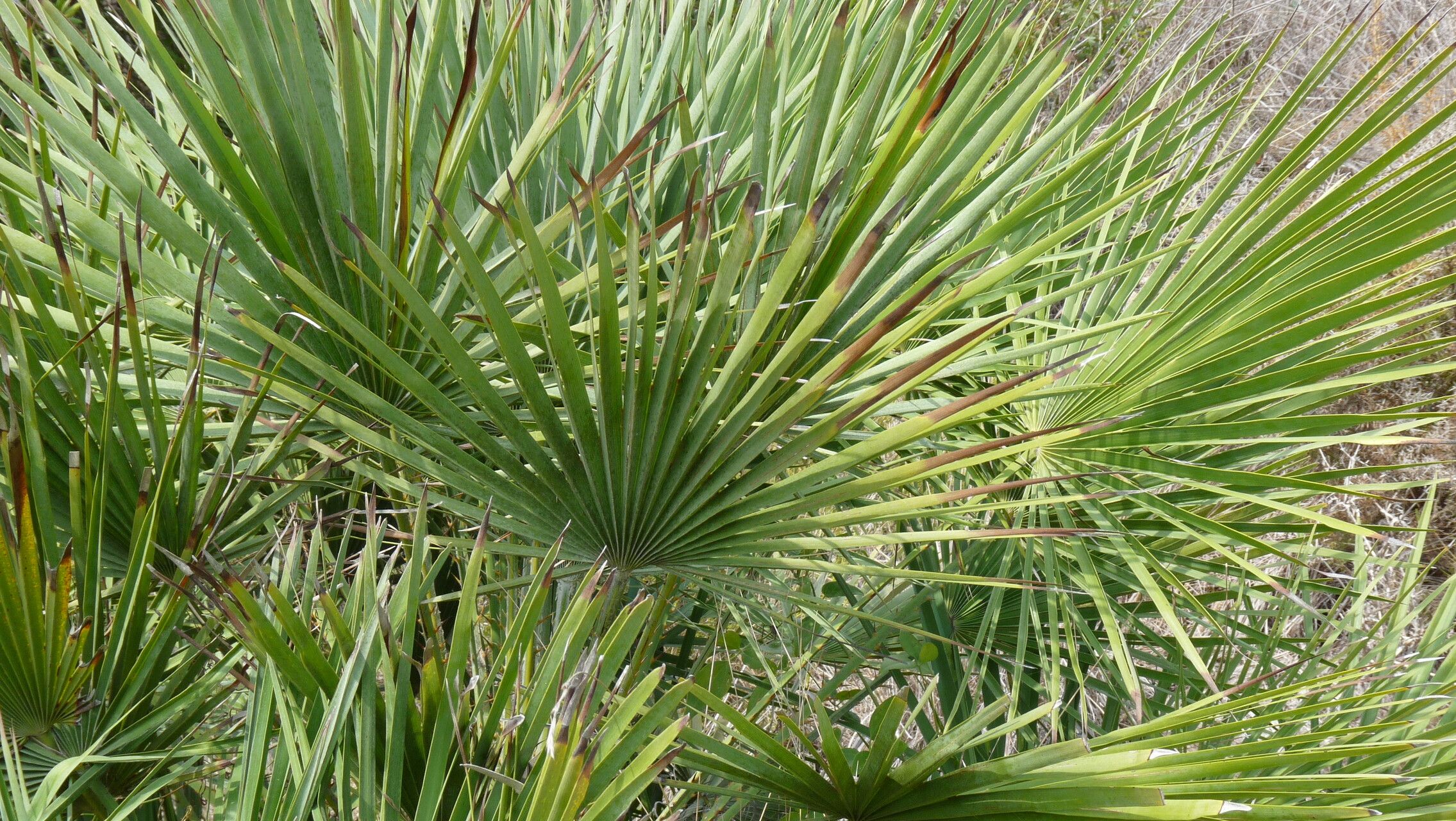
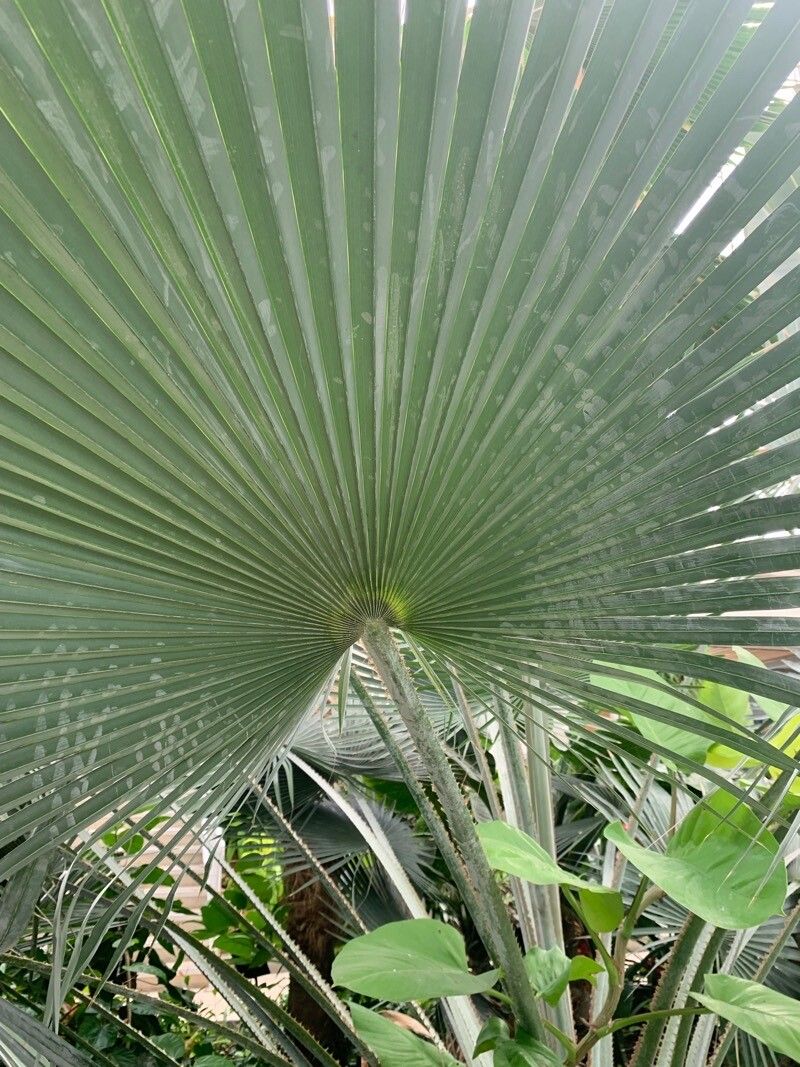
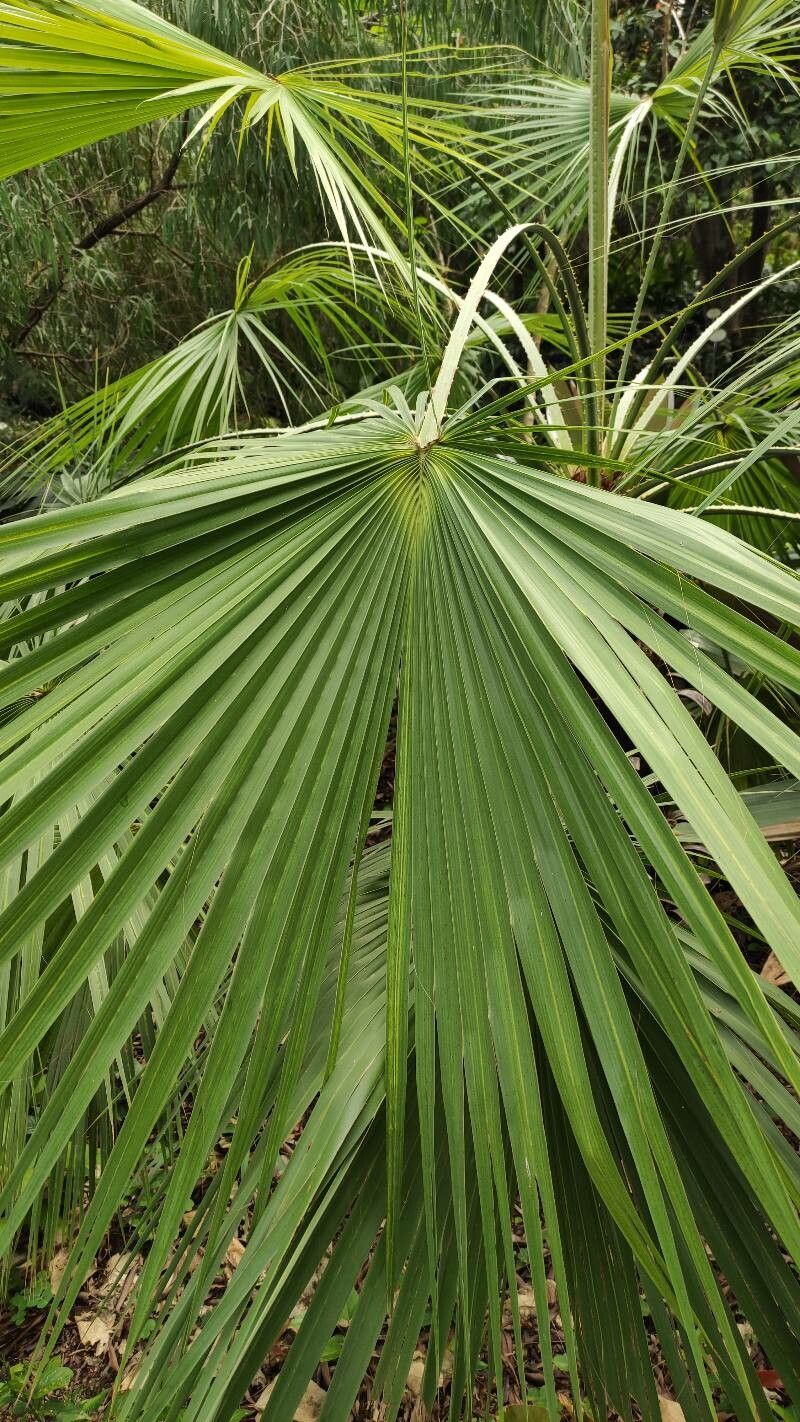
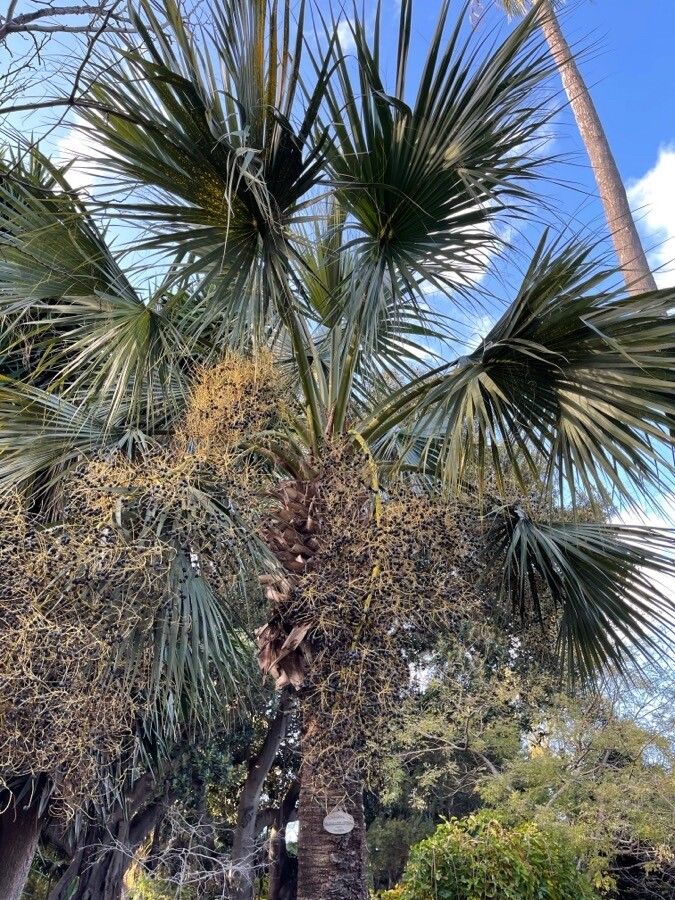
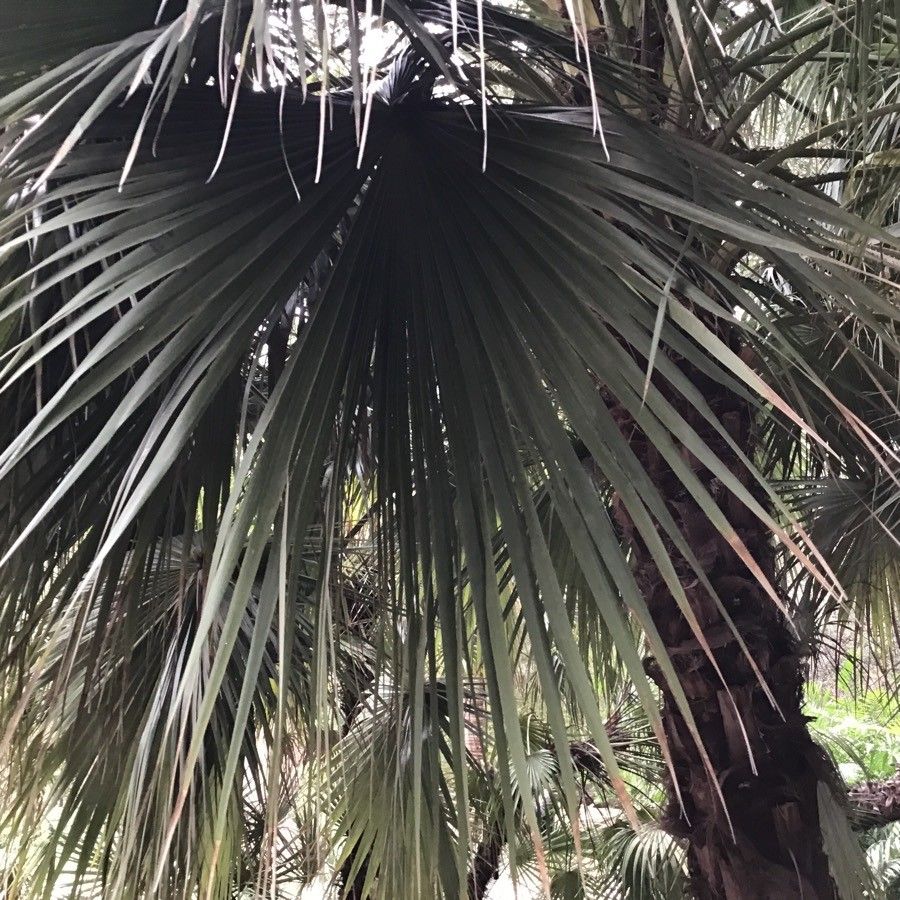
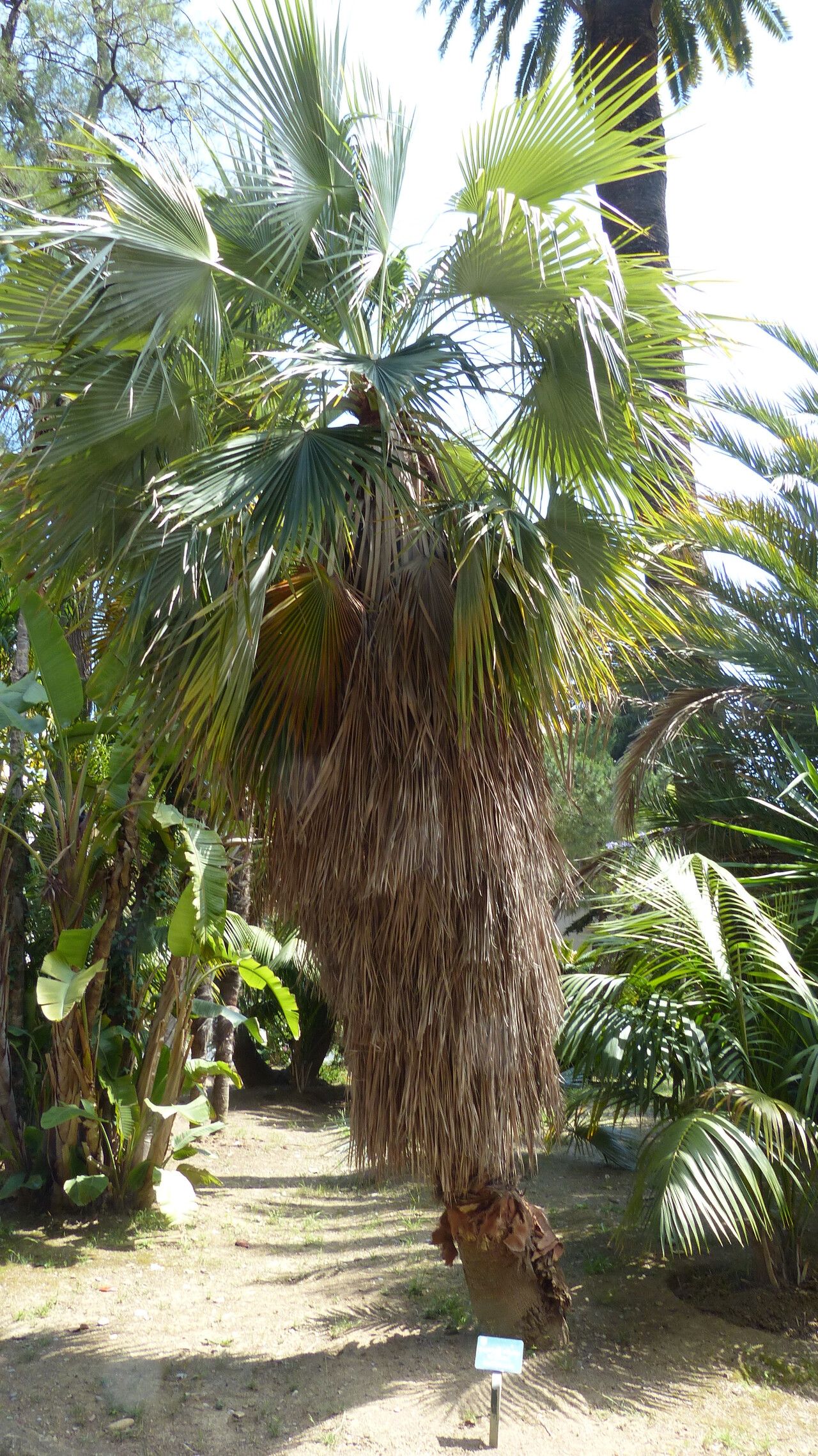
Brahea dulcis, commonly known as the Rock Palm or Sweet Brahea, is a species of palm tree native to Mexico and Central America. Belonging to the family Arecaceae, this palm can grow up to 10 meters tall. It features a single trunk covered with old leaf bases and bears large, fan-shaped leaves that can stretch up to 2 meters in length.
The Rock Palm produces small yellow or green flowers, which are followed by small fruits that turn black when ripe. This plant prefers well-drained soil and full sun exposure but can also tolerate partial shade.
In traditional medicine, Brahea dulcis has several uses. Its leaves are utilized for making baskets, hats, mats, and ropes, while its fruits are fermented to produce alcoholic beverages. Additionally, it is often grown as an ornamental plant due to its attractive appearance.
Overall, Brahea dulcis is a fascinating palm tree species with unique characteristics. It is a valuable addition for both ornamental purposes and traditional uses such as basket weaving and alcohol production.
The California palm is fairly resistant to disease and usually does not become ill. Regarding care, this species is relatively low-maintenance. When grown outside it needs only minimal watering, and larger specimens typically do not require pruning. Smaller plants, however, should be pruned after they flower. The California palm is suitable for anyone with outdoor space, such as a garden or deck, and does not demand extensive gardening experience.
How to keep Brahea Dulcis.
Light
California palm requires plenty of light to grow healthily. Native to areas with strong sun, this plant can cope without light but does best with ample daylight. Both too little and too much light can hinder growth, causing it to wilt or display poor development.
Temperature
The california palm is native to the hot, dry climate of the North American deserts and endures wide temperature fluctuations. Its preferred temperature for healthy growth is 59 to 100 ℉ (15 to 38 ℃). In summer, it is advisable to provide some shade to protect the plant from scorching heat, and in winter the plant should be brought indoors when the temperature drops below 20 ℉ (-6.67 ℃).
Fertilizer
Fertilize your California palm in early spring to encourage healthy growth. Regular feeding boosts overall health, leading to vigorous growth, increased tolerance of harsh conditions, and improved resistance to pests and diseases. Keep to a consistent fertilization schedule for your California palm to maintain bright, deeply colored foliage and a lush appearance.
Pruning
The Blue Rock Palm features blue-green foliage and grows slowly. It is best to prune this plant in early spring. To encourage healthy growth and maintain its appearance, remove any dead fronds. Use sharp, sterilized tools for pruning, and avoid excessive trimming to reduce stress on the plant. By doing so, you can also improve air circulation, which helps decrease pest issues and boost the plant's vigor.
Pot & Repot
When repotting a California palm, choose a pot that’s only slightly larger and provides excellent drainage. Use a potting mix that drains well. Repot in spring, taking care not to damage the roots while handling the plant. Place the palm so it sits at the same level as it did in the previous pot. Water thoroughly after repotting, then put the palm in a warm spot with bright, indirect sunlight. Avoid overwatering to prevent root rot.
Botanical profile.
- Plant Type
- Palm
- Life Cycle
- Perennial
- Genus
- Brahea
- Family
- Arecaceae
- Hardiness Zone
- 8-11
- Mature Height
- 10.97 m to 21.95 m
- Mature Spread
- 6.1 m
- Leaf Color
- Green, Gray, Silver
- Leaf Type
- Evergreen
- Flower Color
- White
- Flower Size
- 2.54 cm
- Bloom Time
- Mid summer
- Planting Time
- Spring, Autumn
- Harvest Time
- Mid summer, Late summer, Early fall
- Native Area
- Mexico
Other names.