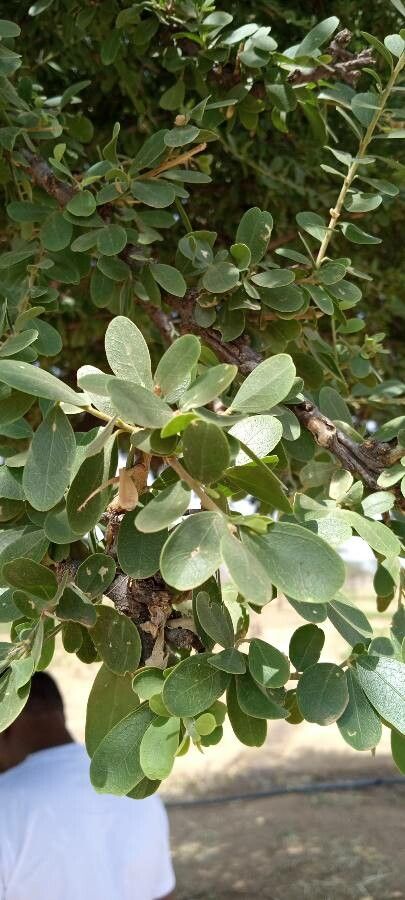
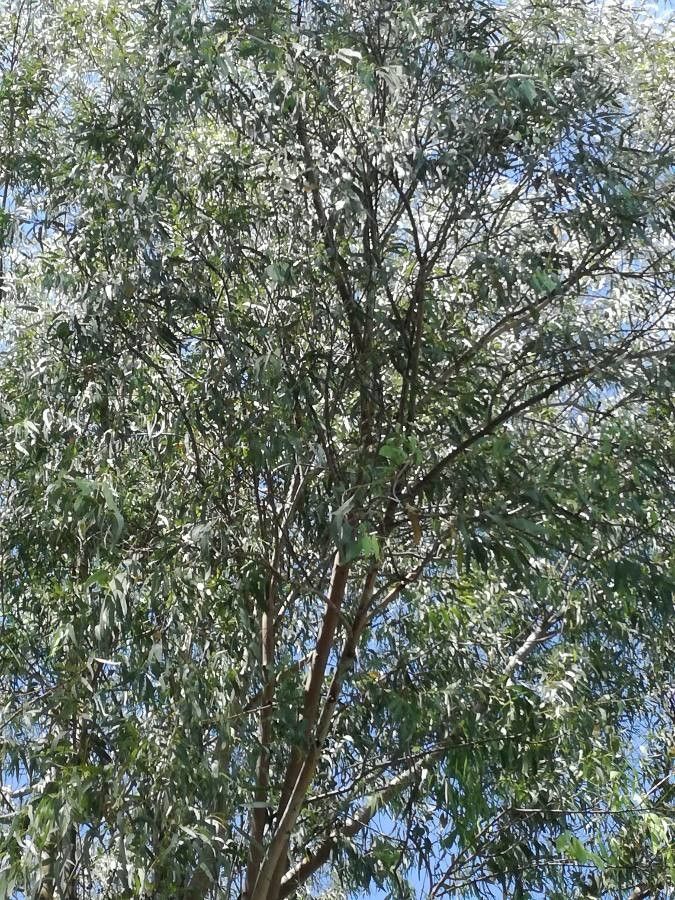
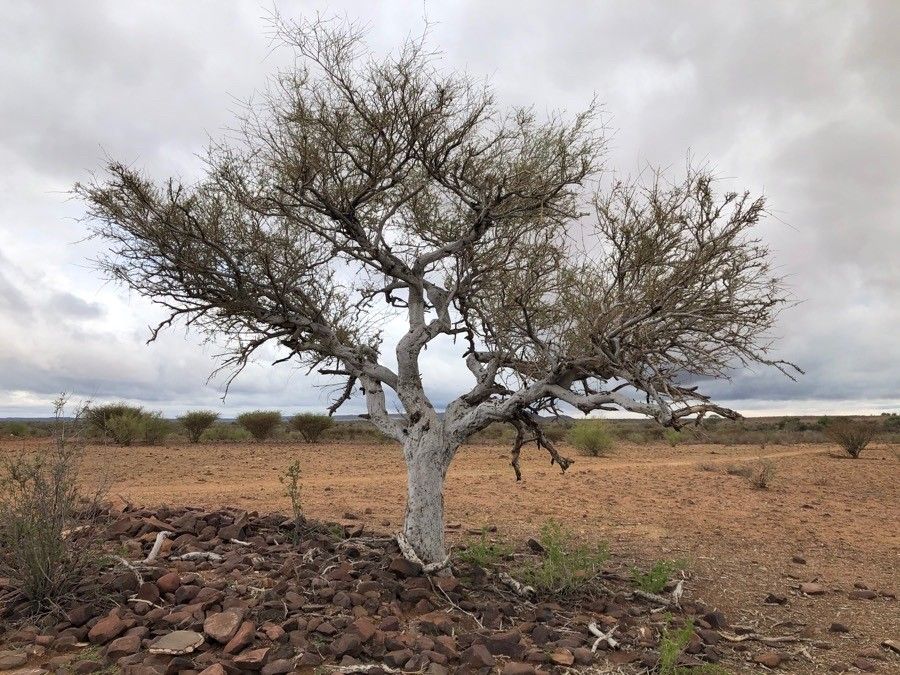
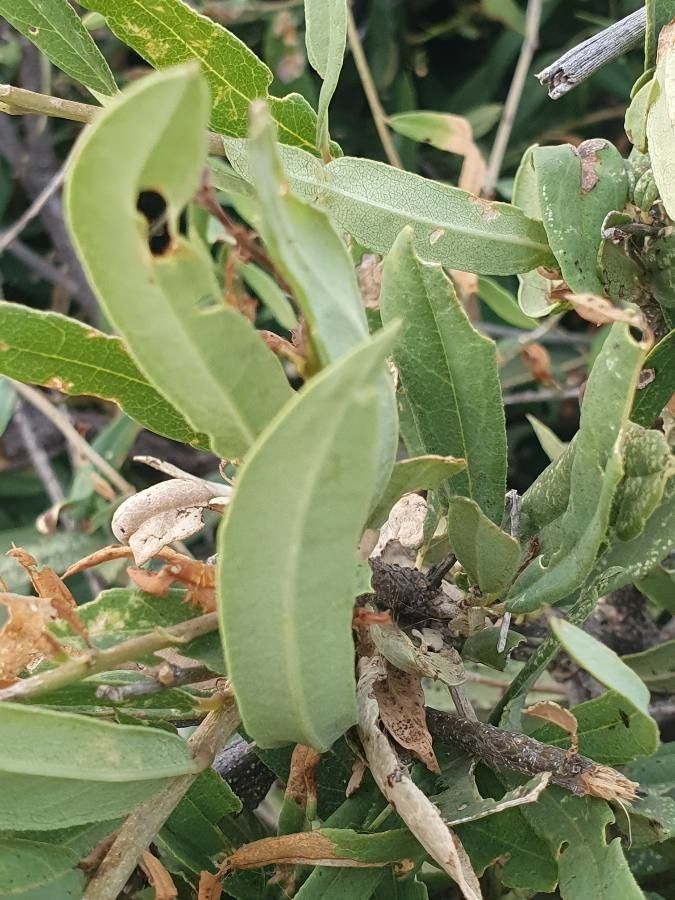
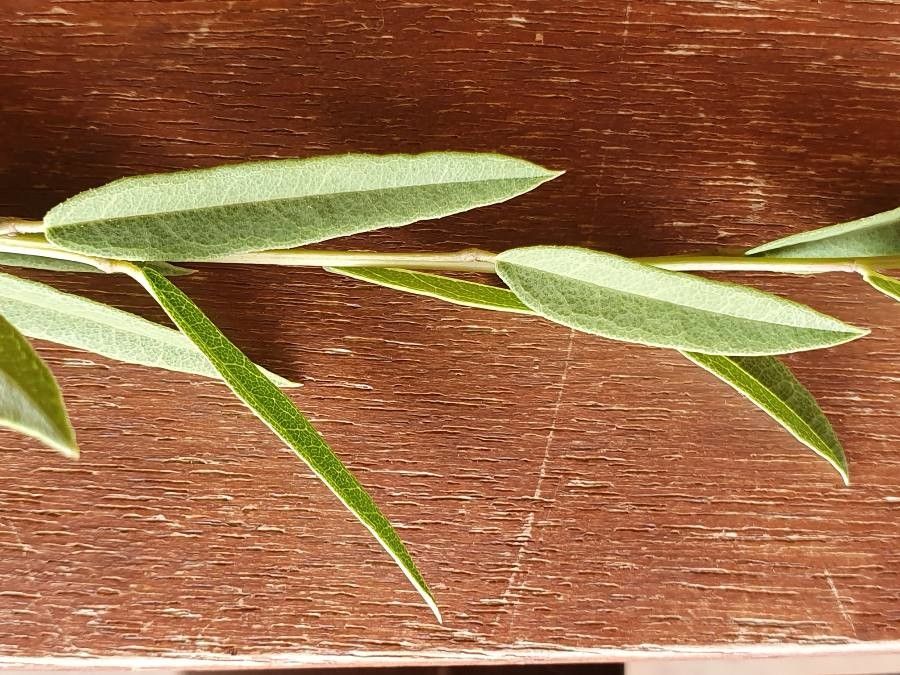
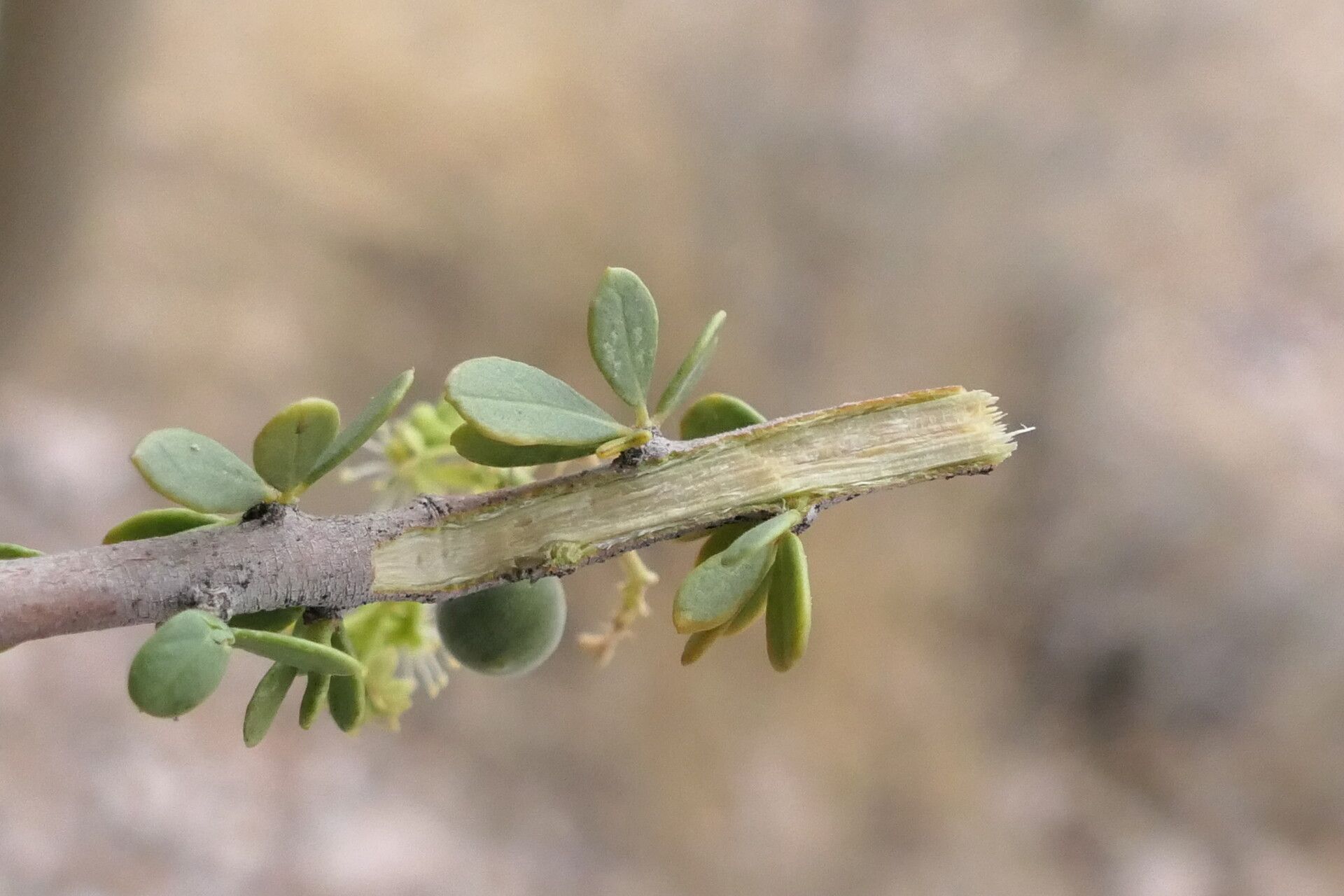
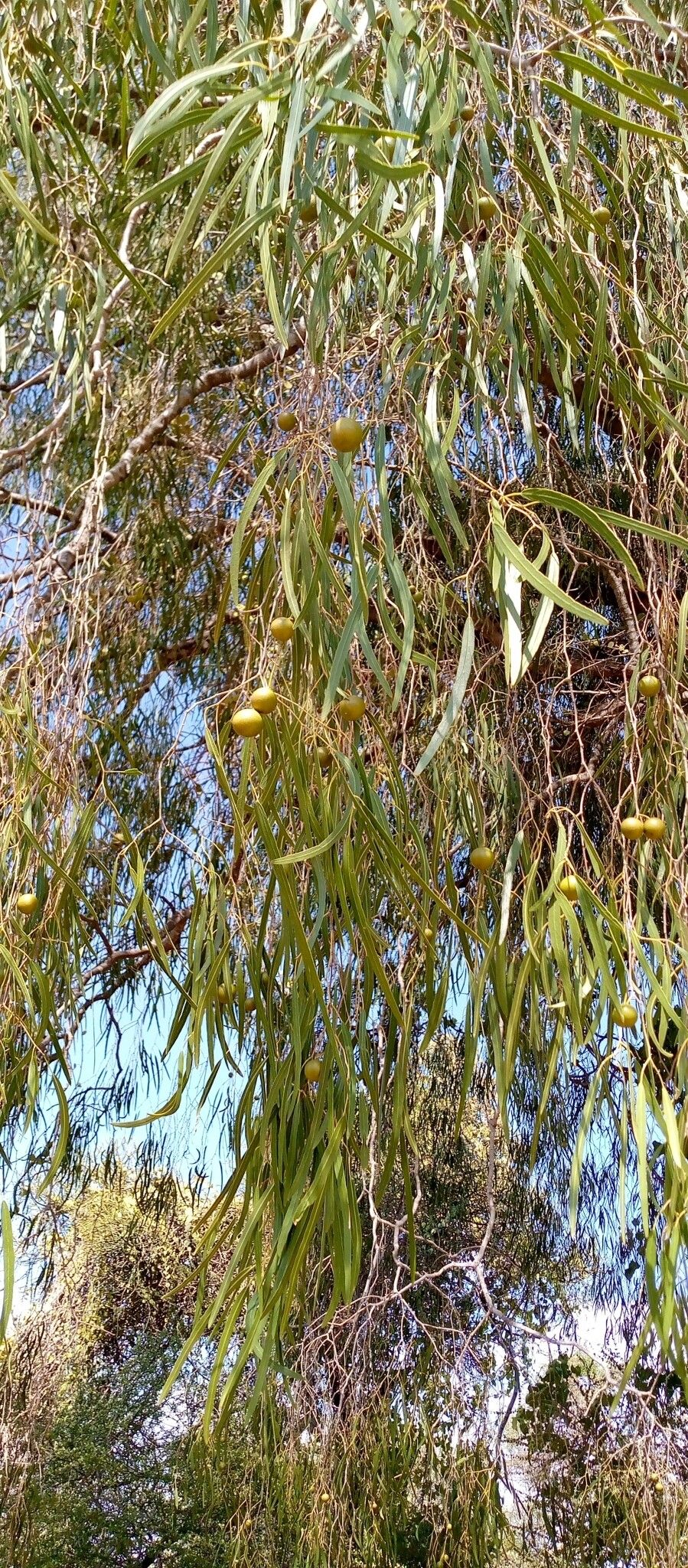
Boscia albitrunca, commonly known as the shepherd tree or shepherd's tree (Afrikaans: Witgat, Sotho: Mohlôpi, Tswana: Motlôpi, Venda: Muvhombwe, Xhosa: Umgqomogqomo, Zulu: Umvithi), is a protected tree in South Africa. The species epithet "albitrunca" refers to the oftentimes white trunk. Traditionally, the shepherd tree was used by Dutch settlers, "boers", to create a variant of coffee that is derived from the roots of the tree. It is an evergreen tree native to southern and tropical Africa, living in the hot, dry, and often brackish low-lying areas, sometimes on abundant lime or occasionally found in rocky terrain. It is a common tree of the Kalahari, bushveld and lowveld. It is one of the most important forage trees in the Kalahari.
The Shepherd's tree is resistant to disease and generally not vulnerable to illnesses. As for upkeep, this plant is fairly low-maintenance. When grown outdoors it needs only light watering, and larger specimens typically do not require pruning. Smaller plants, however, should be pruned after they finish flowering. The Shepherd's tree is well suited to anyone with outdoor space, like a garden or a deck, and it does not demand extensive care experience.
How to keep Boscia Albitrunca.
Light
Native to bright, sun-drenched habitats, Shepherd's tree is a tropical woody plant that flourishes in full sun but can tolerate partial sunlight. It commonly grows in open, well-lit locations with minimal shade.
Water
Originating from arid regions, the shepherd's tree is highly drought-tolerant and requires minimal watering, needing water only every 2-3 weeks. As an outdoor plant in hot climates, the shepherd's tree efficiently manages water during intense heat and extended dry periods.
Humidity
This plant prefers dry conditions, so don't mist it. However, watering it less often can also thrive in higher humidity.
Temperature
Shepherd's tree is indigenous to warm climates and prefers temperatures from 68 to 100.4 °F (20 to 38 ℃). To ensure optimal growth during seasonal changes, temperature adjustments may be needed to mimic its natural habitat.
Fertilizer
Fertilizing is essential for the care of the Shepherd's tree. Regular feeding during the active growing period preserves the energy needed for its showy foliage and supports general growth. Skipping fertilization can cause unhealthy leaves, reduced ornamental value, and stunted or weak growth that is more susceptible to breaking.
Pruning
The Shepherd's tree is highly drought-resistant and boasts a deep root system. For optimal growth, it's best to prune it between early and late winter, focusing on removing weak branches. This helps improve air circulation and light penetration. Be careful not to over-prune, as heavy pruning can stress the plant. With regular maintenance, you can enhance the Shepherd's tree's resilience, appearance, and longevity.
Botanical profile.
- Plant Type
- Tree
- Life Cycle
- Perennial
- Genus
- Boscia
- Family
- Capparaceae
- Hardiness Zone
- 10-11
- Mature Height
- 10.06 m
- Mature Spread
- 2.13 m to 3.96 m
- Leaf Color
- Green, Blue
- Leaf Type
- Evergreen
- Flower Color
- White
- Flower Size
- 0.51 cm to 0.76 cm
- Bloom Time
- Mid fall, Late fall, Early winter
- Planting Time
- Spring, Summer
- Harvest Time
- Mid winter, Late winter, Early spring
- Native Area
- Angola, Mozambique, South Africa, Zambia, Eswatini, Namibia, Botswana, Zimbabwe
Other names.