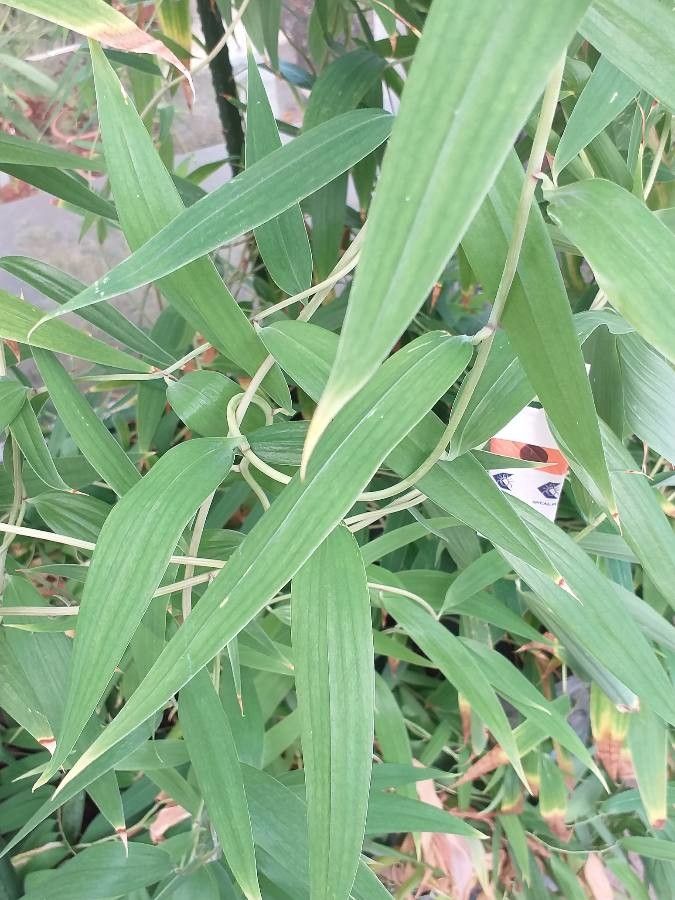
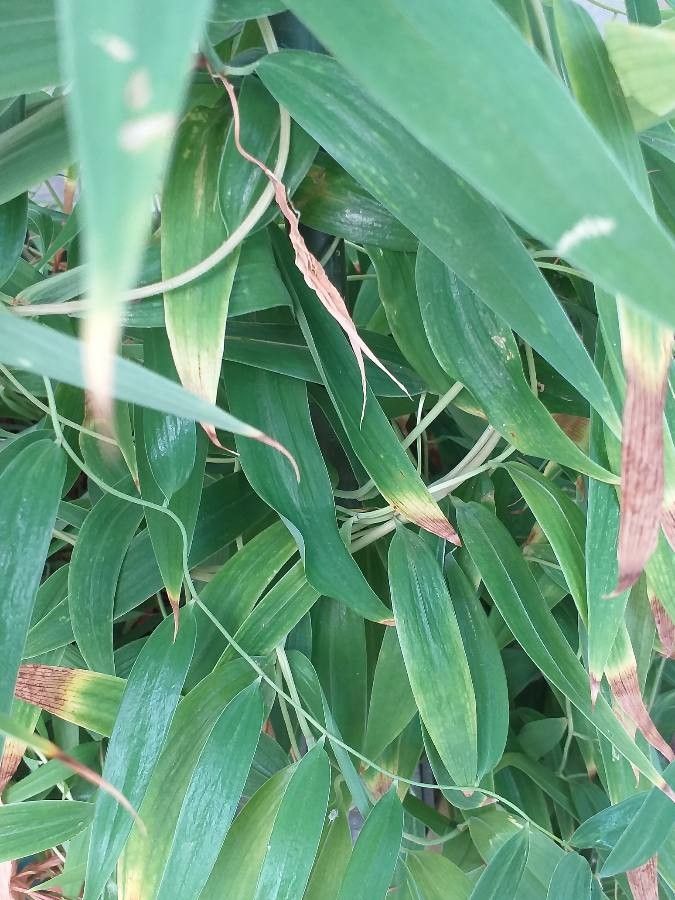
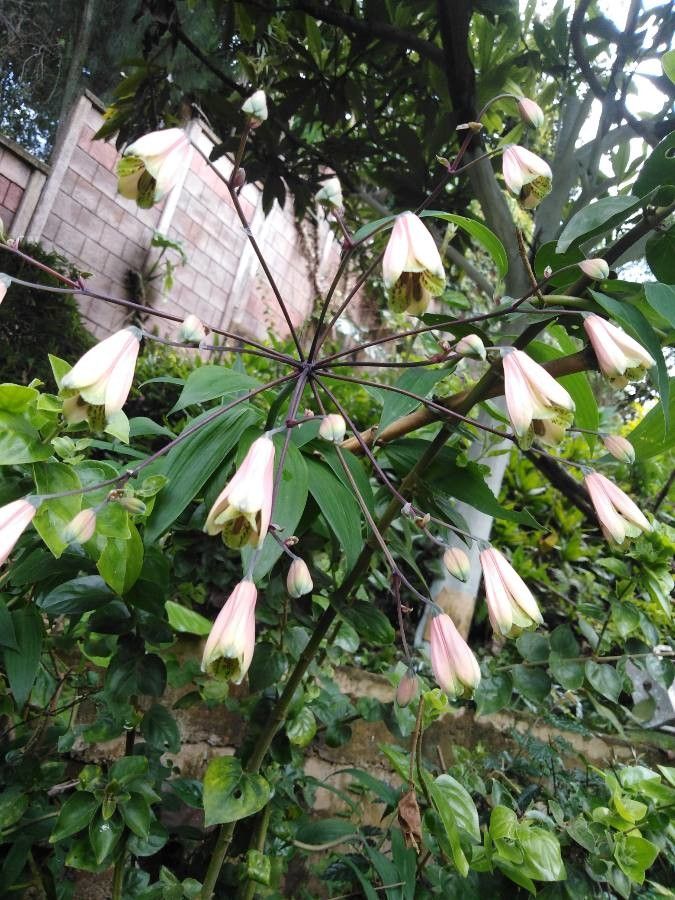
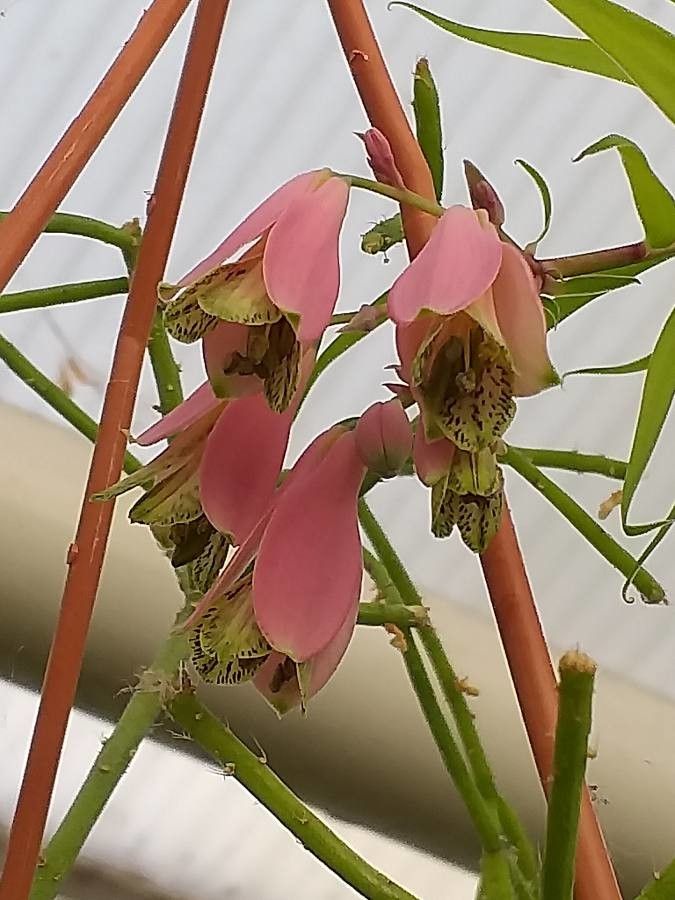
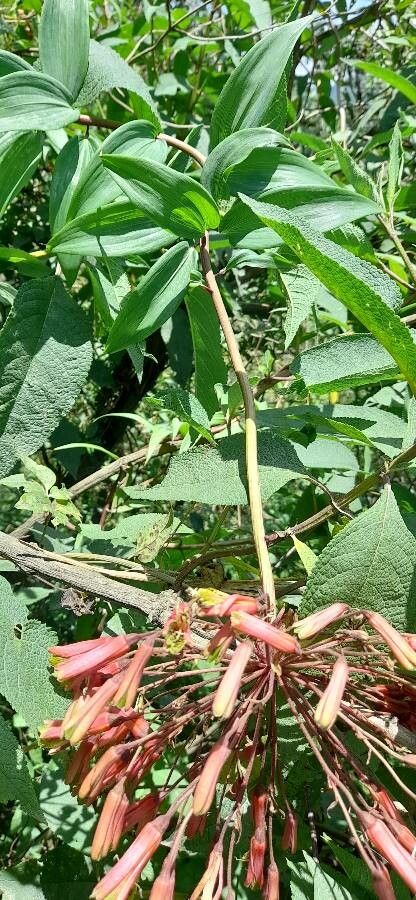
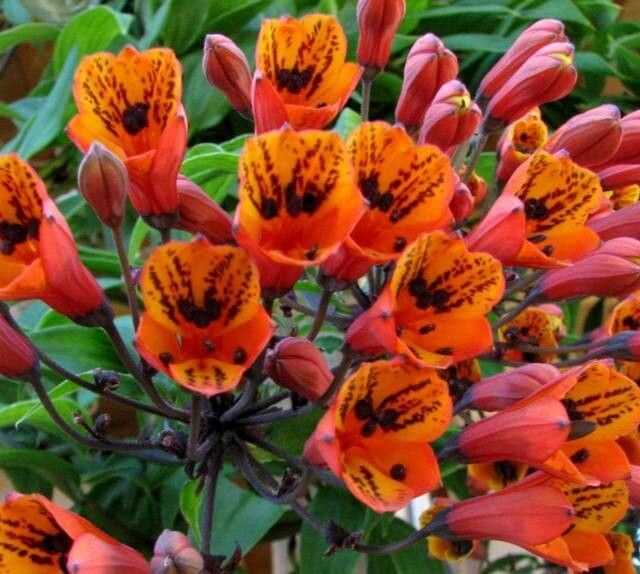
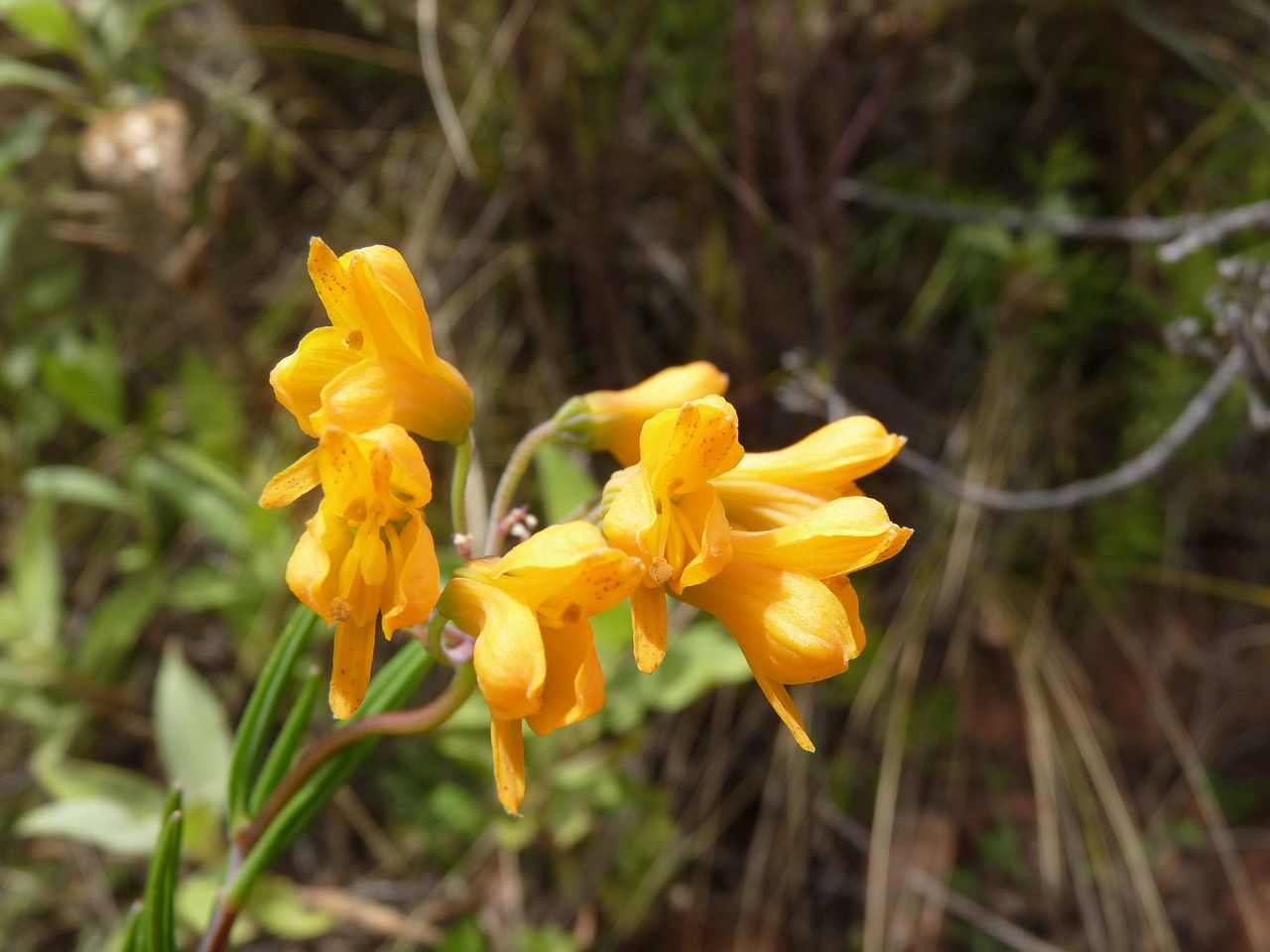
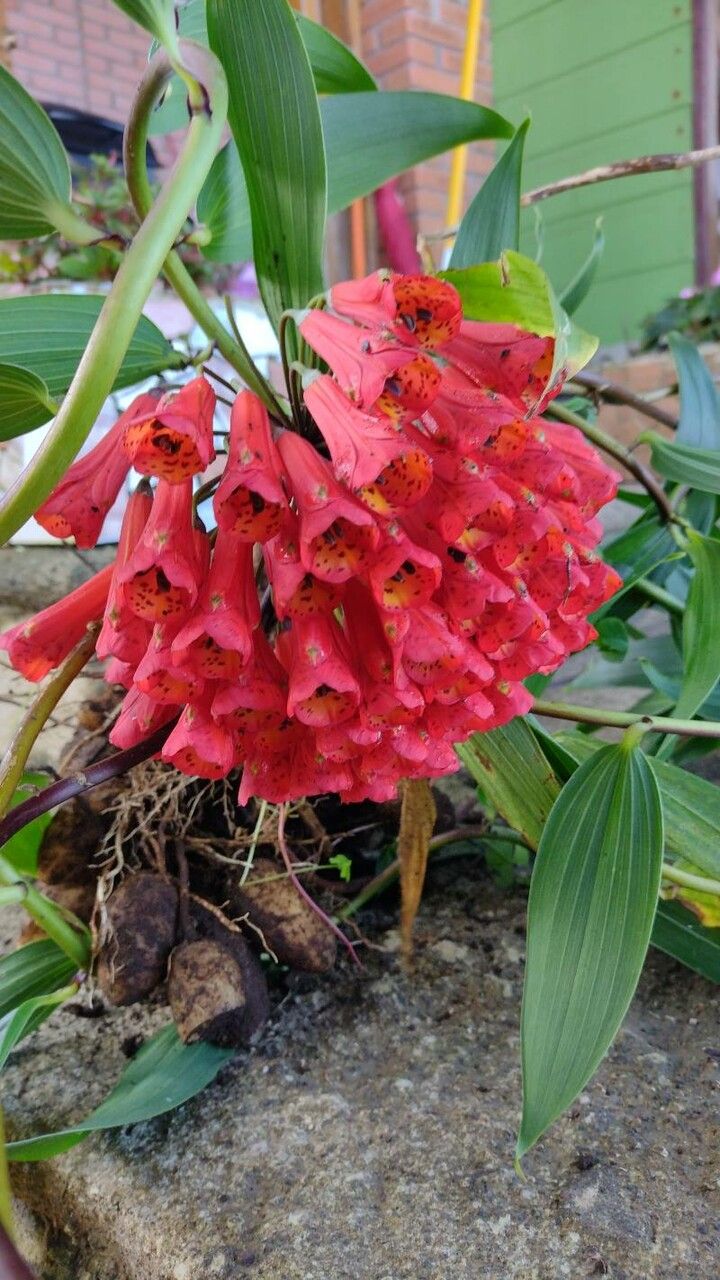
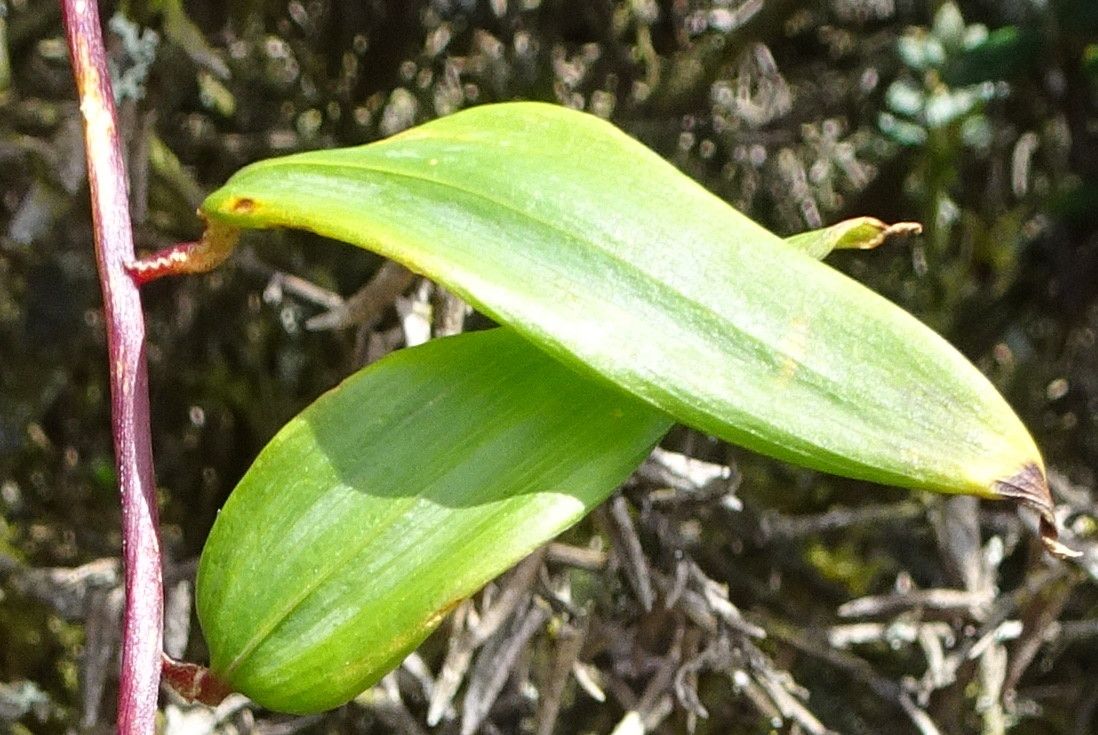
Bomarea edulis, common name salsilla, is a species of flowering plant in the alstroemeria family Alstroemeriaceae, that is native to the tropics of Mexico and the United States. A deciduous climber growing to 2.5 metres (8.2 ft) tall and wide, it has lanceolate leaves and clusters of trumpet-shaped flowers in shades of pink, yellow and green, with variable spotting, that are produced throughout the summer.The Latin specific epithet edulis refers to the edible tubers, which are sometimes used as a substitute for potatoes.B. edulis is grown as an ornamental plant. Though hardy down to −5 °C (23 °F), in temperate regions it is best grown under the shelter of glass, but can be placed outside during the summer months. In 2012 it was awarded the Royal Horticultural Society’s Award of Garden Merit.
Salsilla has strong resistance to disease and is typically not prone to illnesses. In terms of care, this plant is fairly low-maintenance. When grown outdoors, it needs only minimal watering, and larger specimens generally do not require pruning. However, smaller plants should be pruned after they have bloomed. Salsillat is suitable for anyone with an outdoor area, such as a garden or deck, and does not require much care experience.
How to keep Bomarea Edulis.
Light
Salsilla grows best when exposed to a considerable amount of sunlight each day—conditions resembling those of its native environment. It can endure shorter periods of sun, but this may hinder strong growth. Excessive sunlight or prolonged exposure, however, could possibly cause damage.
Water
Salsilla is ideal for the high-altitude climates of the Andes, where it thrives with a mix of occasional moisture and dry periods. It only needs watering every three weeks and is drought-tolerant. Typically grown outdoors, salsilla prefers cooler temperatures and makes efficient use of the sparse rainfall during its growing season.
Temperature
Salsilla is native to habitats with temperatures ranging from 59 to 95 °F (15 to 35 ℃). It favors mild conditions and may need temperature adjustments during extreme seasons to optimize growth.
Fertilizer
Timing matters for fertilizing Salsilla. Apply fertilizer in early spring and continue monthly up to early summer. Fertilizer encourages attractive blooms and supplies energy during both dormant periods and active growth.
Pruning
Salsilla is a climbing plant with tubular flowers and edible tubers. To maintain its health, prune it in early spring. This involves removing dead stems and controlling its growth. Regular pruning not only improves air circulation and flowering but also promotes overall health and appearance. Be sure to use sanitized tools to prevent infections.
Botanical profile.
- Plant Type
- Tree
- Life Cycle
- Perennial
- Genus
- Bomarea
- Family
- Alstroemeriaceae
- Hardiness Zone
- 7-10
- Mature Height
- 2.44 m
- Mature Spread
- 2.44 m
- Leaf Color
- Green
- Leaf Type
- Deciduous
- Flower Color
- Orange, Red
- Flower Size
- 3.05 cm to 5.08 cm
- Bloom Time
- Summer, Early fall, Mid fall
- Planting Time
- Spring, Summer
- Harvest Time
- Fall, Early winter, Mid winter
- Native Area
- Belize, Honduras, Mexico, Guatemala, Peru, Dominican Republic, Panama, Jamaica, Colombia, Cuba, Paraguay, Argentina, Haiti, Bolivia, Venezuela, Brazil, Guyana, El Salvador, Nicaragua, Suriname, Costa Rica
Other names.
Reader questions.
How should I water my Salsilla plant in the best way?
To ensure excellent root development, place a garden hose at the base of the plant. Avoid spraying the leaves directly, and if the plant is outdoors and in direct sunlight, remember that the leaves may need more water. To moisten the roots, use bubblers or soaker hoses on each plant. When adding or removing plants, use soaker hoses that cover the entire garden or bed to help the roots grow deeply. After watering, drain any excess water and allow the soil to dry before watering again. To prevent diseases, water at ground level and avoid spraying the entire bush on sunny days. Whether the plant is potted or in-ground, remember to give Salsilla deep watering instead of light sprinkling.
Why should I put fertilizer on my Salsilla?
Fertilizing a Salsilla is important for several reasons. Firstly, it helps the plant produce beautiful flowers. To ensure excellent blooms, it is recommended to fertilize in early spring. Additionally, fertilizer provides the plant with energy that can be stored in the ground during periods of dormant growth. By giving your Salsilla extra nutrients during fall planting or late spring, it will have more energy to use when it becomes active again.
How many hours of sunlight per day does Salsilla need to grow healthily?
To promote healthy growth, it is important to provide Salsilla with a minimum of 3-6 hours of sunlight each day. While this is the minimum requirement, most plants that can tolerate partial sun can also thrive in full sun. However, since they need less light for photosynthesis, these plants are more adaptable than those that need either full sun or partial shade.
What temperature is best for Salsilla?
Salsilla thrives best in temperatures between 65~80℉ (18~27℃). During the primary growing phase, it can tolerate temperatures as high as 95℉ (35℃) and as low as 15℉ (-10℃). This species is even able to survive freezing winters due to its tolerance for low temperatures. To summarize, the optimal temperature range for Salsilla is 65~80℉ (18~27℃), with the highest tolerable range being 85~95℉ (30~35℃) and the lowest tolerable range being -5~15℉ (-20~-10℃) or below.
What should I do if I give Salsilla too much or too little water?
If you notice that the leaves of your Salsilla plant are turning yellow, dropping off, and wilting, it may be due to overwatering. Overwatered Salsilla plants often look dull and unhealthy, with mushy stems. When you see these signs, it's best to adjust your watering schedule. On the other hand, wilting can also be a sign of under watering. Under watered leaves will turn crispy and dry, while overwatered leaves will be soft and wilted. To determine if the soil is dry, check it before watering. If it's dry, give the plant a thorough watering. However, even with adequate water, the Salsilla plant may still appear dry with yellow leaves for a few days due to root damage. Once it returns to normal, the yellowing of leaves will stop. If you have a Salsilla plant indoors, always check the moisture levels in the pot and avoid overwatering. Look for black spots as a sign of overwatering and allow the soil to dry out by withholding water for a few days. Overwatering can lead to root rot, so if you find discolored and slimy roots, consider transferring the plant to a different pot. It's important to prevent root rot by not allowing the soil to become too soggy. When planting your Salsilla outdoors, dig a little deeper and if the soil feels too dry, it's a sign of underwatering. Provide adequate water to help the plant recover.
When should I fertilize my Salsilla plant for optimal results?
Fertilizing Salsilla requires proper timing for optimal results. Applying fertilizer too early, while the plant is still dormant, will not be effective and can be washed away by rainwater, leading to waste and pollution. To start, apply the first round of fertilizer in early spring, and then continue fertilizing monthly until early summer.
What kind of sunlight does Salsilla require?
Salsilla thrives in areas with full or partial sun. It flourishes when exposed to direct morning sunlight, although during the summer it requires shielding from intense afternoon sun. In temperate climates, excessive hot afternoon sun can scorch the leaves, which negatively impacts the plant's aesthetics and wellbeing.
Do I need to change the temperature for Salsilla when it's growing in different stages?
According to research, when the temperature rises, particularly during the growth of side branches and main shoots, Salsilla may experience stunted growth. To promote healthy growth after germination or transplanting, it is recommended to maintain a consistent and cooler temperature of around 65℉ (18℃).
How frequently do I need to water my Salsilla?
The Salsilla plant prefers deep watering, especially when planted in pots. You should soak them in a gallon of water each time, considering that the water storage in pots is limited and the soil dries out quickly. In cold regions, watering is needed every 3 to 5 days. It's best to water them early in the morning when the soil is dry, both indoors and outdoors. You can also check the soil inside to determine when watering is necessary. If the top 2-3 inches of soil is dry, it's time to give the plant a thorough watering. During hot days, you may need to check the moisture daily as the pot's soil can dry out quickly in the heat. If you have a garden, you'll need to irrigate the soil as well. In hot climates, watering once a week is recommended. Make sure to water when you notice that about 2 to 3 inches of soil have become too dry, whether indoors or outdoors. Take into account any rainfall and avoid overwatering to prevent root rot. During spring and fall, when the Salsilla plant grows the most, you should add mulch about 3 to 4 inches deep to conserve water when it's planted outdoors. Sandy soil drains faster, so watering should be more frequent. On the other hand, clay soil can go 2-3 days without watering, preventing root rot. It might be useful to mark the calendar whenever you water the plant and pay attention to drooping leaves, as they could indicate a need for watering.
When is the best time to not fertilize my Salsilla plant?
To ensure optimal blooming, avoid using fertilizer with excessive nitrogen for Salsilla. Instead, opt for fertilizers that have lower nitrogen content relative to other essential nutrients. Avoid fertilizing Salsilla during the late autumn as it may result in excessive growth just before winter. Moreover, refrain from fertilizing Salsilla during hot and dry periods as the dry soil hampers the effective delivery of fertilizer, and the stimulation of growth will require additional water that may not be readily available. It is recommended to apply fertilizer earlier in the season when temperatures are cooler. Lastly, exercise caution to prevent inadvertently providing Salsilla with a double-dose of fertilizer by considering the absorption of nearby plant or lawn fertilizers.
Can the sun harm Salsilla? How can I keep Salsilla safe from the sun and heat?
Salsilla plants can be easily damaged by direct sunlight when they are moved outdoors. To prevent this, it is best to gradually move the pots from a shaded area to a brighter spot. However, even plants that are used to the summer sun can still suffer damage from extreme heat. During a heatwave, it is important to keep the soil consistently moist to help the plants handle the excessive heat. To protect sensitive Salsilla plants during extreme weather events, you can consider moving them to areas with afternoon shade or using a shade cloth to cover them.
How do I make sure Salsilla stays warm during cold seasons?
Salsilla is able to tolerate freezing temperatures when planted in the ground, as long as the temperature does not drop below 15℉ (-10℃). However, if it is planted in pots or containers, special care must be taken to protect the roots from the cold. This can be done by wrapping the container in a blanket or bringing it indoors where it will be shielded from the harsh winter weather.