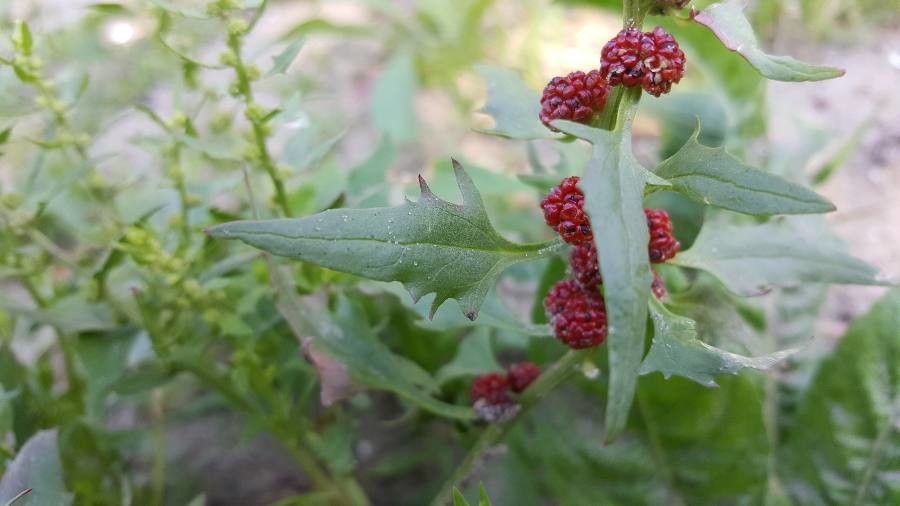
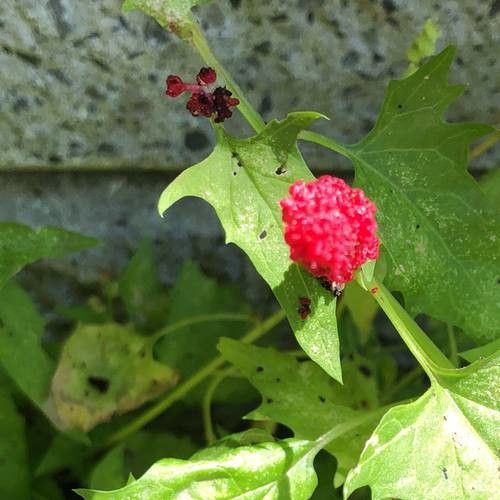
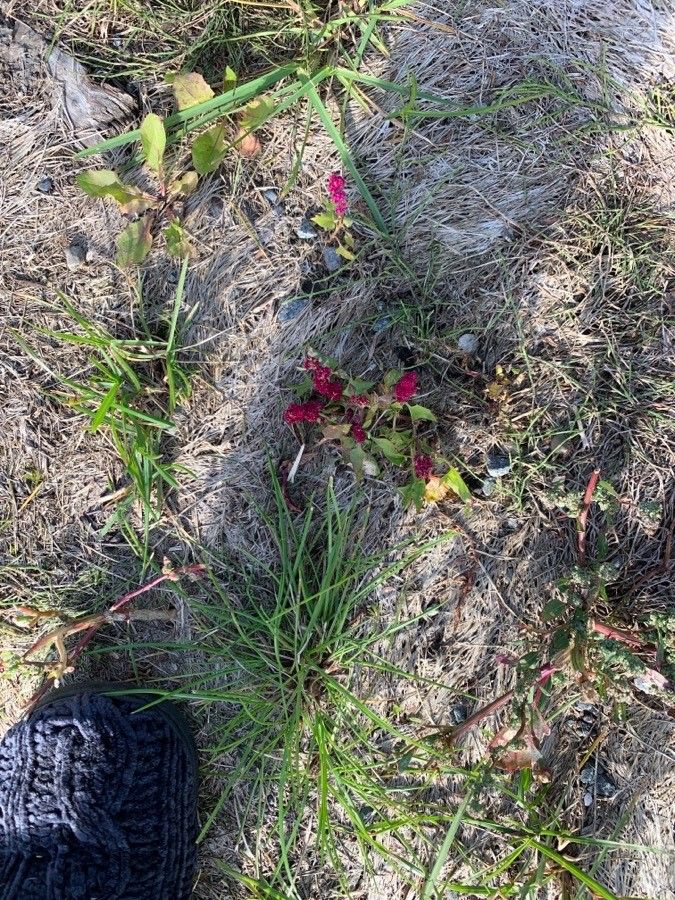
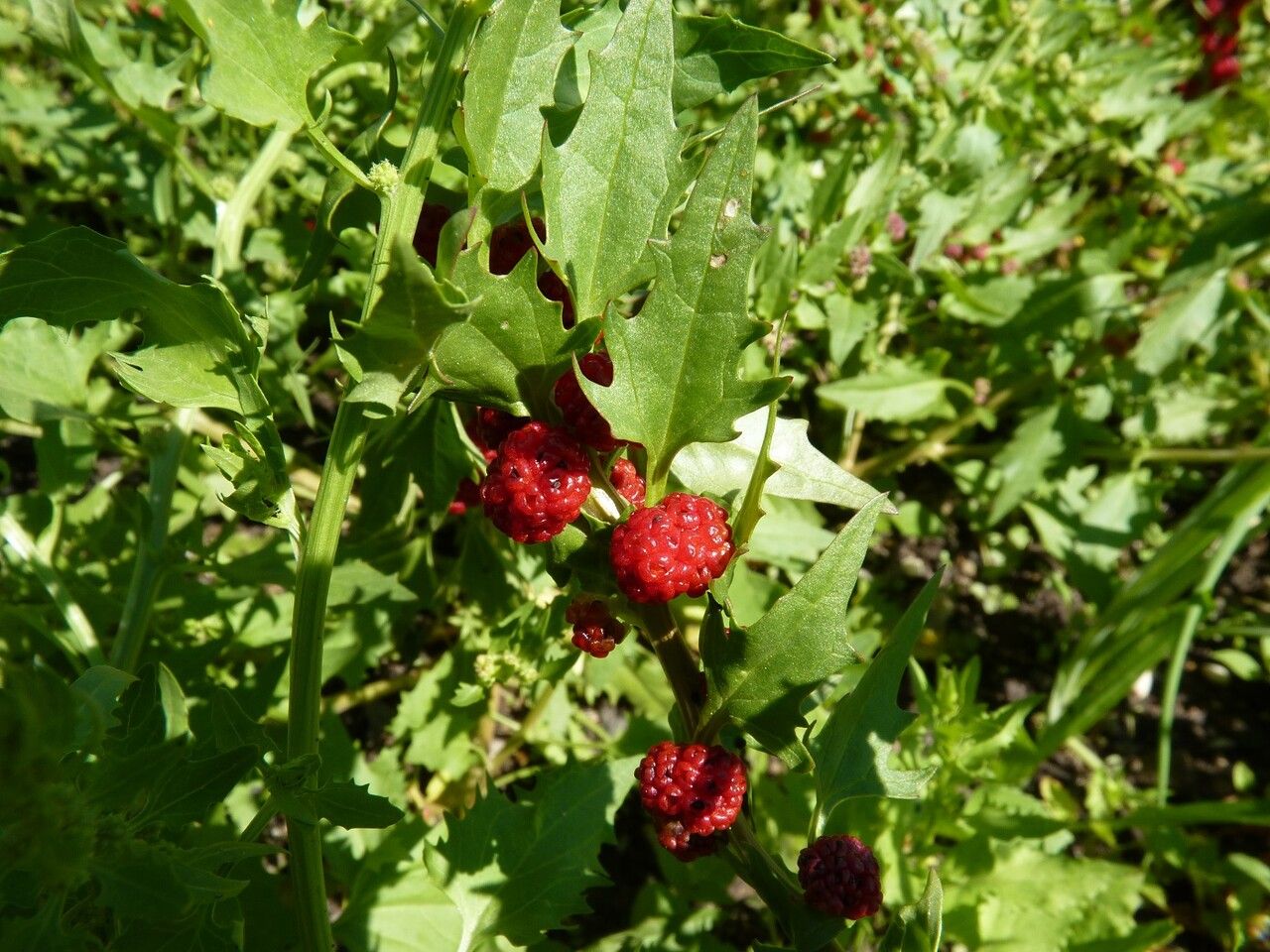
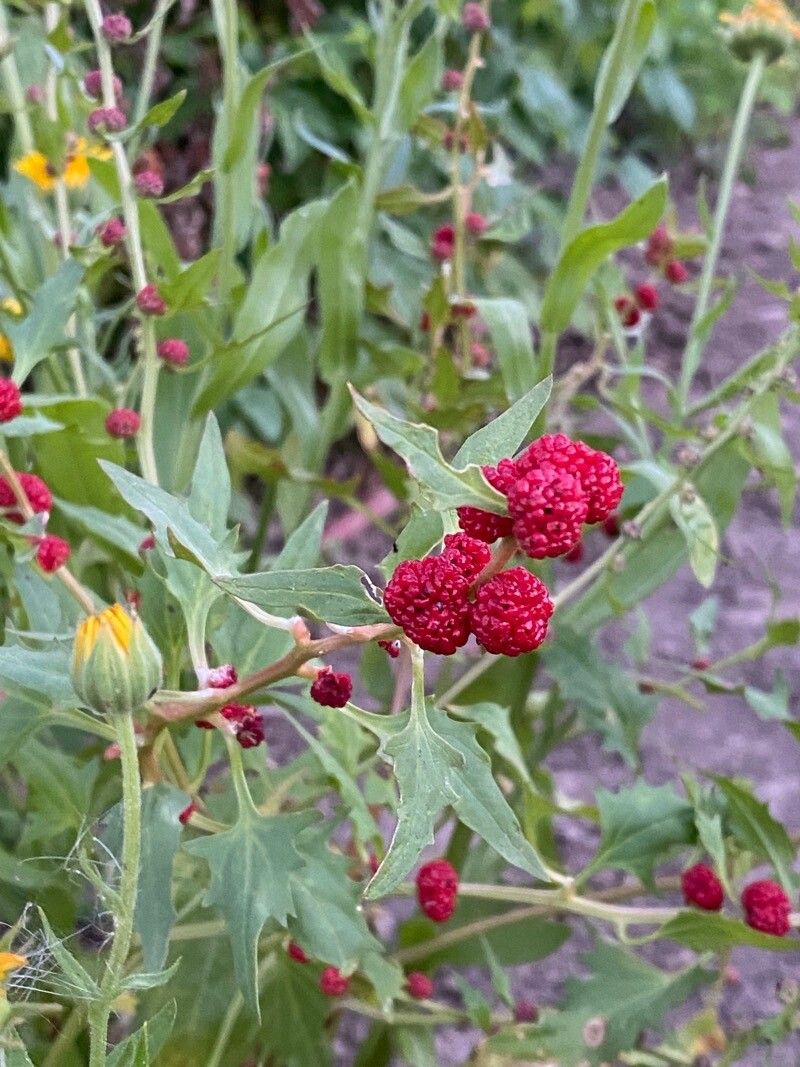
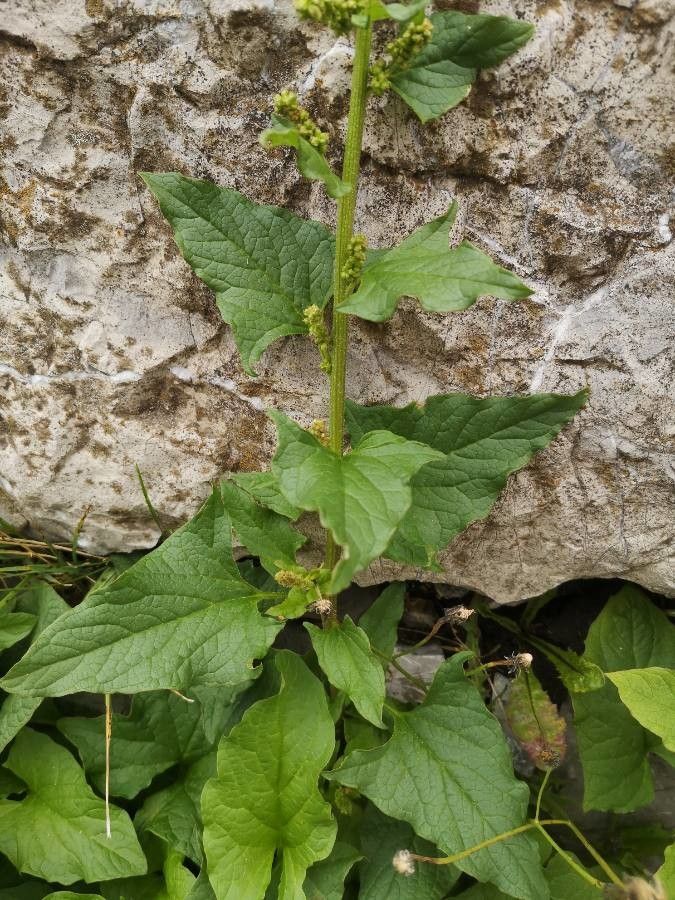
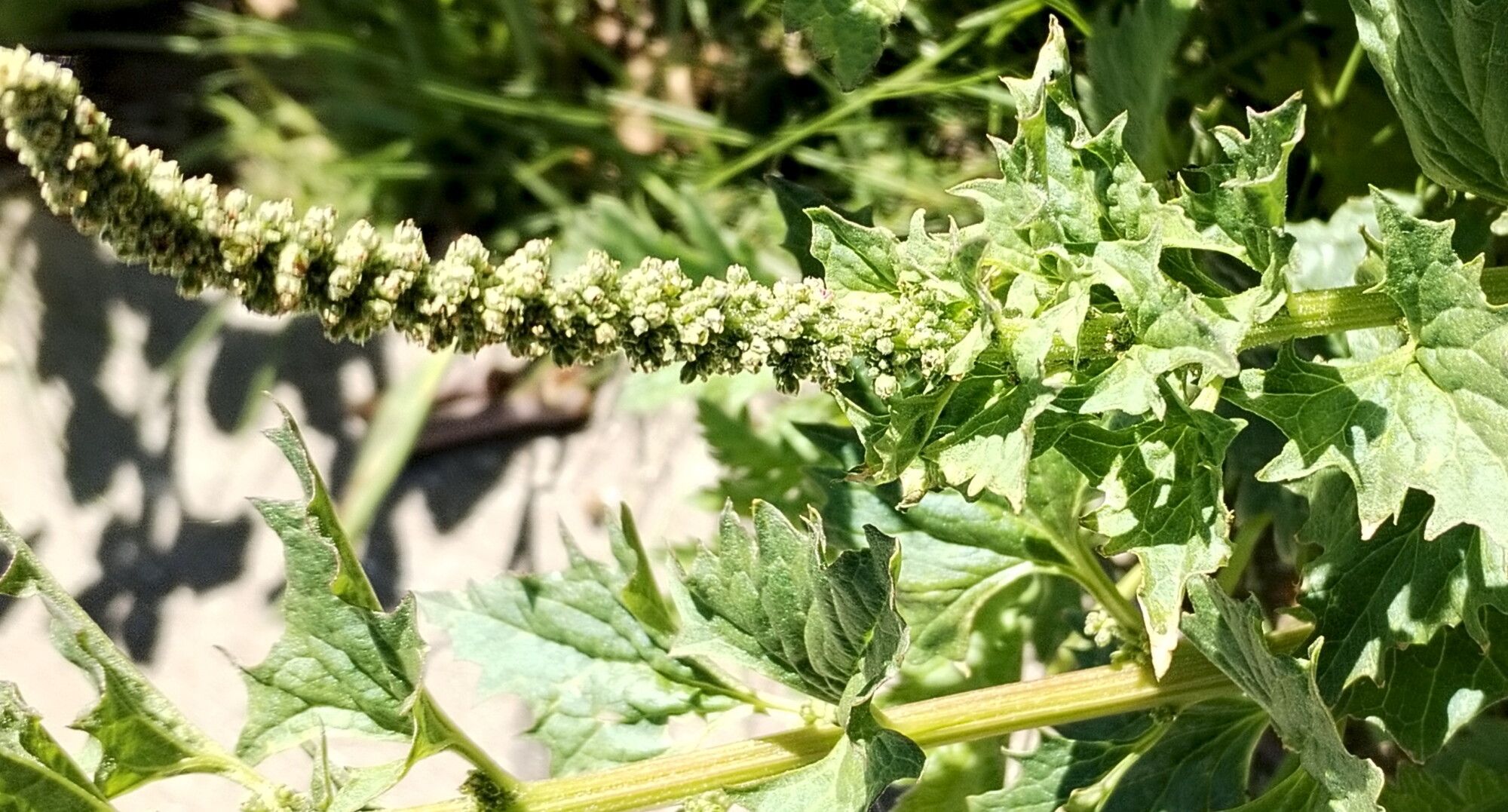
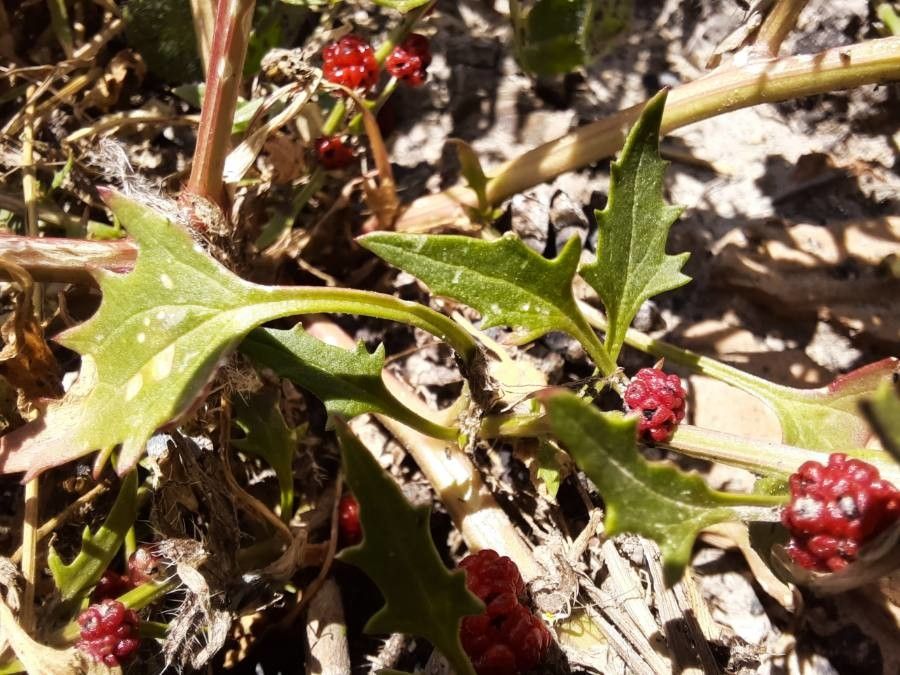
Strawberry blite (Blitum capitatum, syn. Chenopodium capitatum) is an edible annual plant, also known as blite goosefoot, strawberry goosefoot, strawberry spinach, Indian paint, and Indian ink. It is native to most of North America throughout the United States and Canada, including northern areas. It is considered to be endangered in Ohio. It is also found in parts of Europe and New Zealand. Fruit are small, pulpy, bright red and edible, resembling strawberries, though their taste is more bland. The juice from the fruit was also used as a red dye by native North Americans. The fruits contain small, black, lens-shaped seeds that are 0.7–1.2 mm long. The greens contain vitamins A and C; they are edible raw when young or as a potherb. If raw they should be eaten in moderation as they contain oxalates. The seeds may be toxic in large amounts.Strawberry blite is found in moist mountain valleys.
Strawberry Spinach has moderate resistance to disease but can be prone to issues like leaf spot. Its vulnerability to insect pests varies by variety, although most varieties have relatively low pest resistance. For care, Strawberry Spinach requires consistent watering and fertilizing, and yellow leaves should be pruned frequently. Controlling pests and diseases when they appear and harvesting the plant promptly are important. Strawberry Spinach is appropriate for people who can spend some time and energy on regular maintenance.
How to keep Blitum Capitatum.
Light
Strawberry Spinach grows best in full, direct sunlight. In its native habitat it is typically found in open areas without shade. However, too much light can scorch the plant, while too little will cause it to grow poorly.
Water
Strawberry Spinach, native to temperate regions, thrives in conditions of moderate moisture and benefits from regular weekly watering. It prefers well-draining soil, which helps prevent root rot. This makes it suitable for cultivation both indoors and outdoors, as these conditions mimic the balanced water availability of its natural habitat.
Temperature
Strawberry Spinach is a plant native to habitats where temperatures range from 68 to 95 °F (20 to 35 ℃). It prefers warmer conditions and develops best in that temperature range. In cool or cold seasons, take steps to keep temperatures within its preferred range for optimal growth.
Fertilizer
To maximize the yield and flavor of Strawberry Spinach, provide sufficient nitrogen during the entire growth period, covering pre-planting through harvest. Plants that are well-watered and properly fertilized develop plentiful, healthy leaves and are less likely to be bitter. Before planting, amend the soil with organic matter such as compost or manure, preferably 2 to 8 weeks beforehand.
Pruning
Strawberry Spinach has striking red berries and leaves similar to spinach. For optimal growth and to eliminate any damage, prune the plant from early to late spring. Thinning the plant enhances air circulation, and removing spent flowers helps prevent self-seeding. Always use clean tools to avoid the spread of disease. Properly timed pruning encourages strong, healthy growth.
Botanical profile.
- Plant Type
- Herb
- Life Cycle
- Annual, Biennial
- Genus
- Blitum
- Family
- Amaranthaceae
- Hardiness Zone
- 4-8
- Mature Height
- 61 cm
- Mature Spread
- 40 cm
- Leaf Color
- Green
- Leaf Type
- Deciduous
- Flower Color
- Green, Purple, Red
- Flower Size
- 0.20 cm to 0.25 cm
- Bloom Time
- Summer
- Planting Time
- Spring, Summer, Autumn
- Harvest Time
- Late summer, Early fall, Mid fall
Other names.
Reader questions.
How should I water my Strawberry Spinach in the most effective way?
The Strawberry Spinach has specific preferences for water and how it is provided. It is important to use the proper watering technique to avoid harming your plants. The best way to water Strawberry Spinach is to apply water directly to the soil in a slow and gentle manner. You should avoid pouring all the water into the soil at once or using overhead watering. While watering slowly, make sure to water deeply to ensure sufficient moisture for all the soil where your Strawberry Spinach grows.
Why should I put fertilizer on my Strawberry Spinach?
Strawberry Spinach grows fast and needs lots of energy to make the root veggies we like. Along with sunlight, oxygen, and water, Strawberry Spinach types need nutrients to grow and make roots. Normally, the soil in gardens has enough nutrients from natural organic matter breaking down. But sometimes, the soil may not have enough nutrients for Strawberry Spinach to grow well. That's when fertilizer helps give Strawberry Spinach the extra boost it needs.
What are the sunlight requirements for Strawberry Spinach?
Strawberry Spinach thrives best when it receives above 6 hours of sunlight each day, ideally in full, unobstructed sunlight. Its natural habitat consists of open expanses where it receives intense sunlight throughout the day. However, it's important to ensure a balance; too much sunlight can scorch the plant, while insufficient sunlight leads to suboptimal growth. It's beneficial to observe how sunlight moves through your garden to select optimal locations that provide this balance for the plant's well-being.
What is Strawberry Spinach and where does it thrive best?
Strawberry Spinach, botanically known as Blitum capitatum, is a plant that thrives best in environments with temperatures ranging between 68 to 95°F (20 to 35°C). It prefers warmer temperatures for optimal growth and is native to environments that maintain these conditions. During cooler or colder seasons, it's important to keep the temperature within this preferred range. If you're cultivating Strawberry Spinach during winter, ensuring that the temperature stays above 20°C is beneficial for the plant's growth, and taking measures to protect the plant from freezing by keeping the temperature above the freezing point is vital.
What should I do if I give too much or too little water to my Strawberry Spinach?
If you accidentally give your Strawberry Spinach too much water and are worried about the risk of disease, taking immediate action is important. The best solution for overwatered Strawberry Spinach is to remove it from its current spot. After removing it from the ground, allow the roots to dry a bit before replanting it in a location with good soil drainage. If you grow your plant in pots, you may also want to transfer it to a pot with larger or additional drainage holes. On the other hand, if you have underwatered your plant, simply increase the frequency of watering.
When should I fertilize my Strawberry Spinach?
To prepare your soil for planting, apply natural fertilizer. There is no set timeframe, but ensure you have enough time to blend the fertilizer into the soil and water it thoroughly before planting seeds or seedlings. Typically, one application of fertilizer is sufficient for growing Strawberry Spinach throughout the season. However, if you want to increase their yield, you can apply additional fertilizer once the seedlings have started to establish. Take caution not to overuse fertilizer, as it may harm the plants.
How can artificial lighting be used for Strawberry Spinach?
In conditions where natural sunlight is insufficient, such as during winter or in less sunny indoor spaces, artificial lighting serves as an essential alternative to promote healthy growth. LED lights are recommended because they can be tailored to supply specific wavelengths needed by plants. The intensity of artificial light required varies based on the plant's sunlight needs: full sun plants necessitate 30-50W/sq ft, partial sun plants need 20-30W/sq ft, and full shade plants require 10-20W/sq ft. The artificial light source should be placed 12-36 inches above the plant, and the lighting duration should mimic natural daylight hours, generally 8-12 hours per day.
What should I do if the outdoor temperature approaches -5°C (25°F) during winter?
If the outdoor temperature approaches -5°C (25°F) during the winter, it is advisable to bring Strawberry Spinach indoors or provide it with protection. Setting up a temporary greenhouse or using materials such as plastic film or fabric to wrap the plant can offer the necessary protection against the cold temperatures. This helps to prevent freezing damage and maintains the plant's health during cold weather.
How much do I need to water my Strawberry Spinach plant?
Strawberry Spinach needs a lot of water during its growing season. To meet this need, water it frequently from spring to summer. In the beginning, water it once or twice a week. As the season goes on, increase the frequency of watering, potentially up to twice a day in hot weather. Once the major growth phases have passed, reduce watering to about once a week until the end of the growing season.
When is the best time to not fertilize my Strawberry Spinach?
To ensure effective fertilization, remember to avoid applying fertilizer when the soil is dry. After fertilizing, make sure to water your plants thoroughly as this helps deliver the nutrients properly. If you prioritize the growth of foliage over the root crops, then high-nitrogen fertilizers might be suitable for you. However, take care not to let fertilizer come into contact with the base of the plant, leaves, or stems as it can potentially damage them.
What are the common symptoms of light deficiency in Strawberry Spinach?
When Strawberry Spinach doesn't receive enough light, especially when grown indoors, it may display several symptoms indicating light deficiency. These include smaller new leaves, leggy growth with elongated spaces between stems or leaves, premature leaf drop, cessation of new growth, leaves with a pale color indicating lack of chlorophyll, and conditions like chlorosis where leaves turn yellow, sunscald, leaf curling as a protection against excessive sunlight, wilting due to water loss, and leaf scorching marked by brown, dry edges.
What are the symptoms of Strawberry Spinach experiencing low temperatures and what are the solutions?
Strawberry Spinach has a moderate tolerance to low temperatures but thrives best between 20°C and 35°C. During winter, temperatures should be kept above 0°C to prevent damage. If temperatures fall below -30°C, the leaves of Strawberry Spinach may darken and exhibit signs like water-soaked necrosis, wilting, drooping, and gradual browning. To address frost damage, trim away the frost-damaged parts and immediately move the plant to a warmer environment indoors or set up a makeshift greenhouse for protection. Placing the plant near a south-facing window will ensure ample sunlight, and if light is insufficient, supplemental lighting can be utilized.