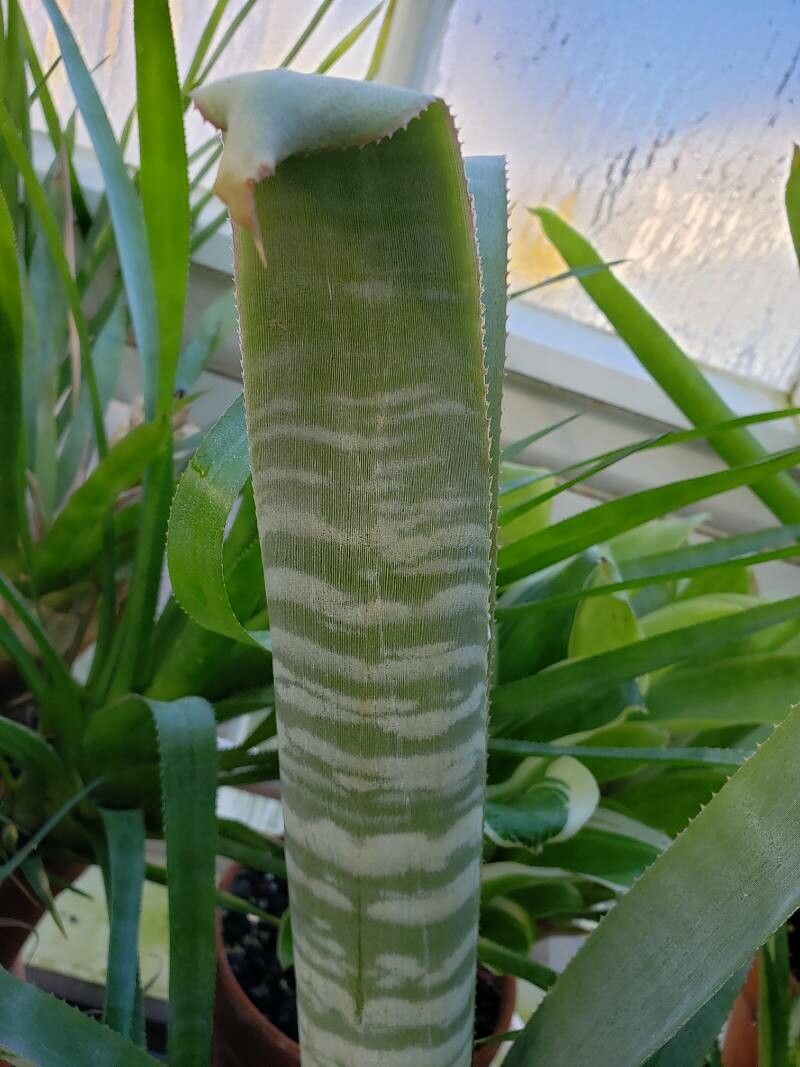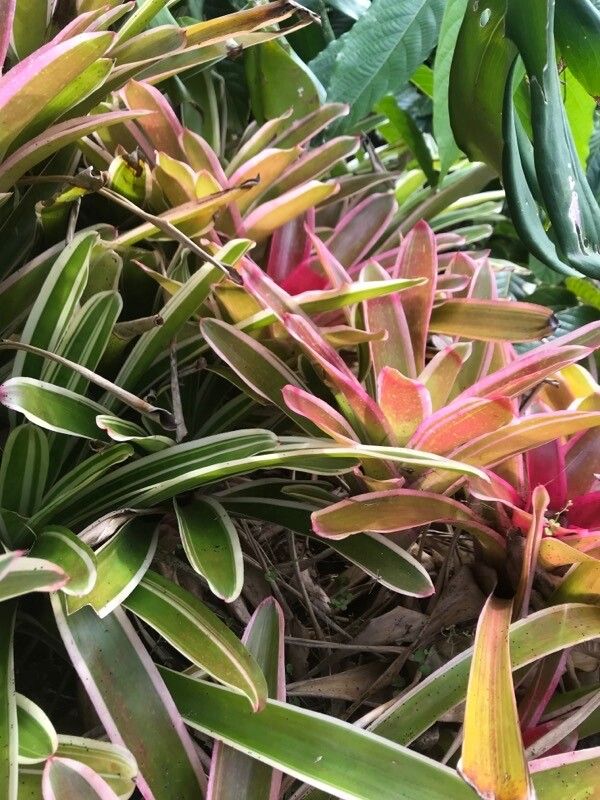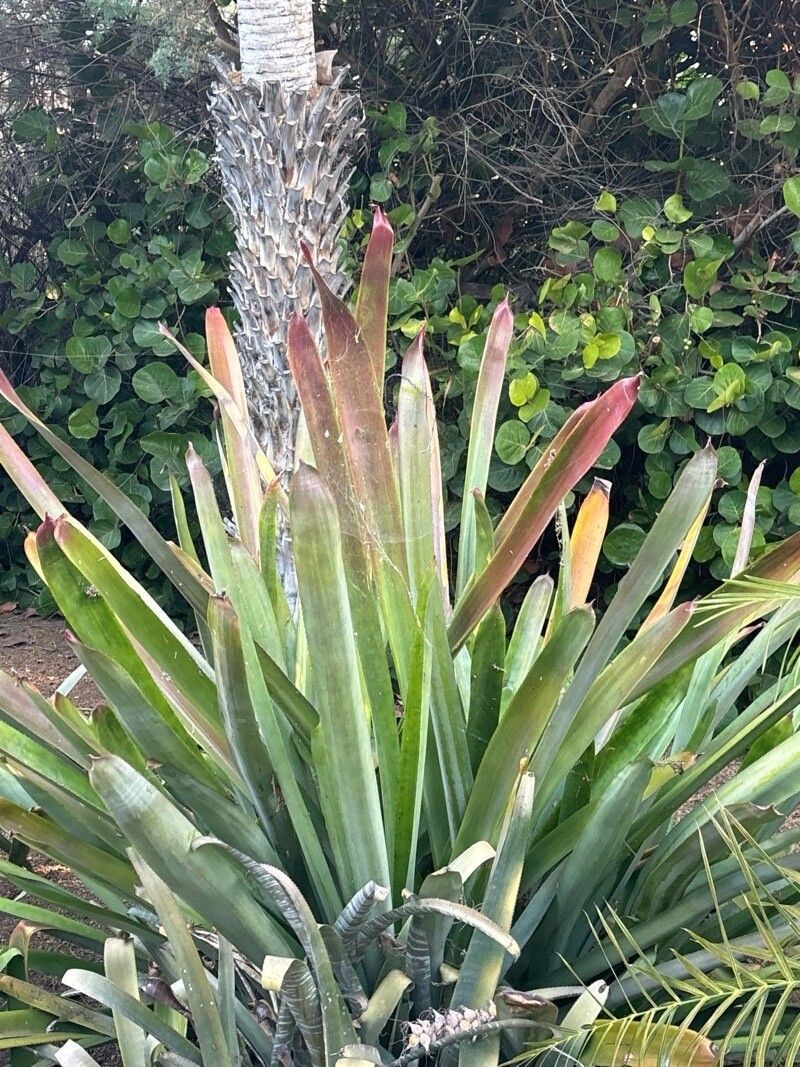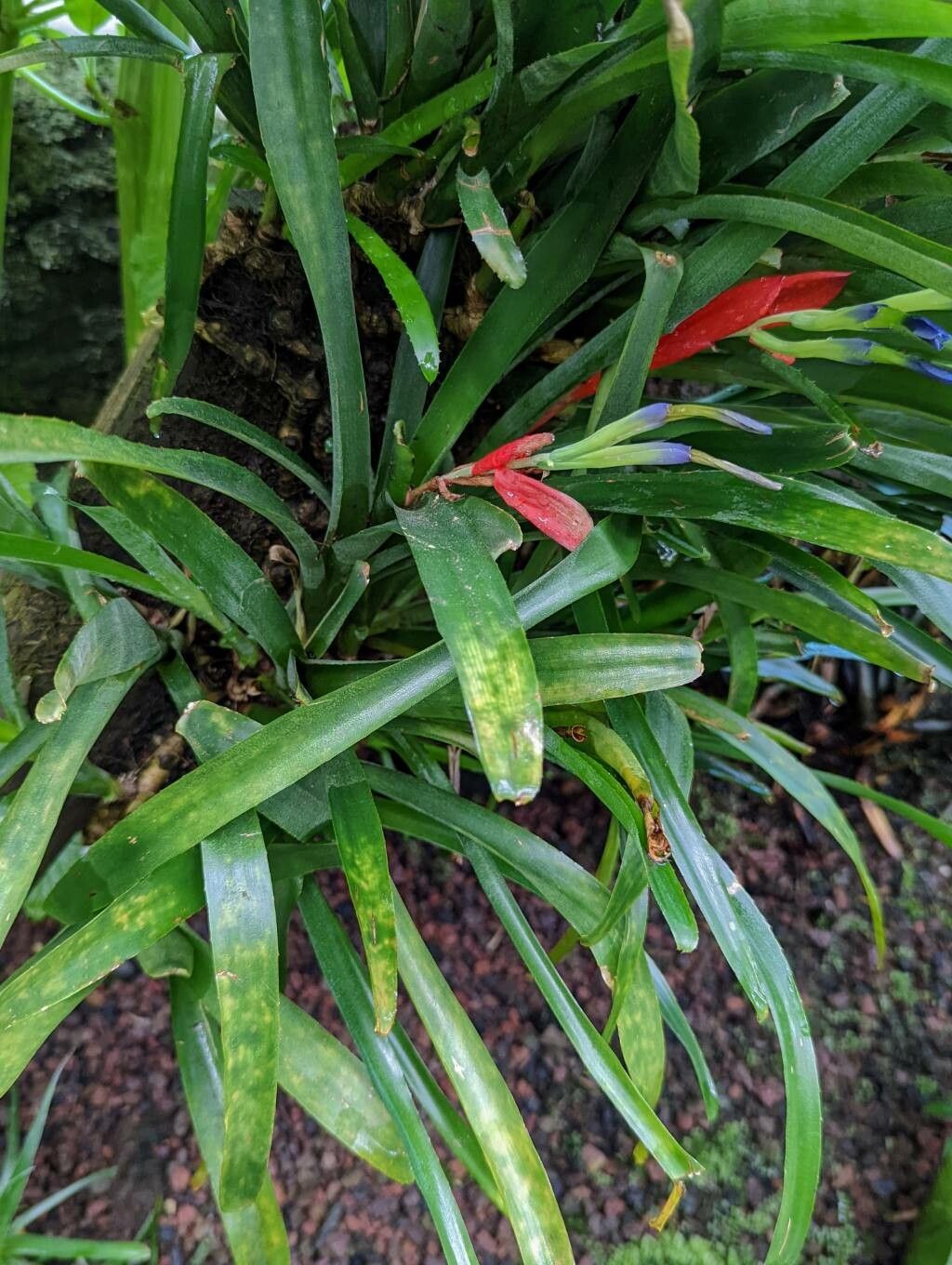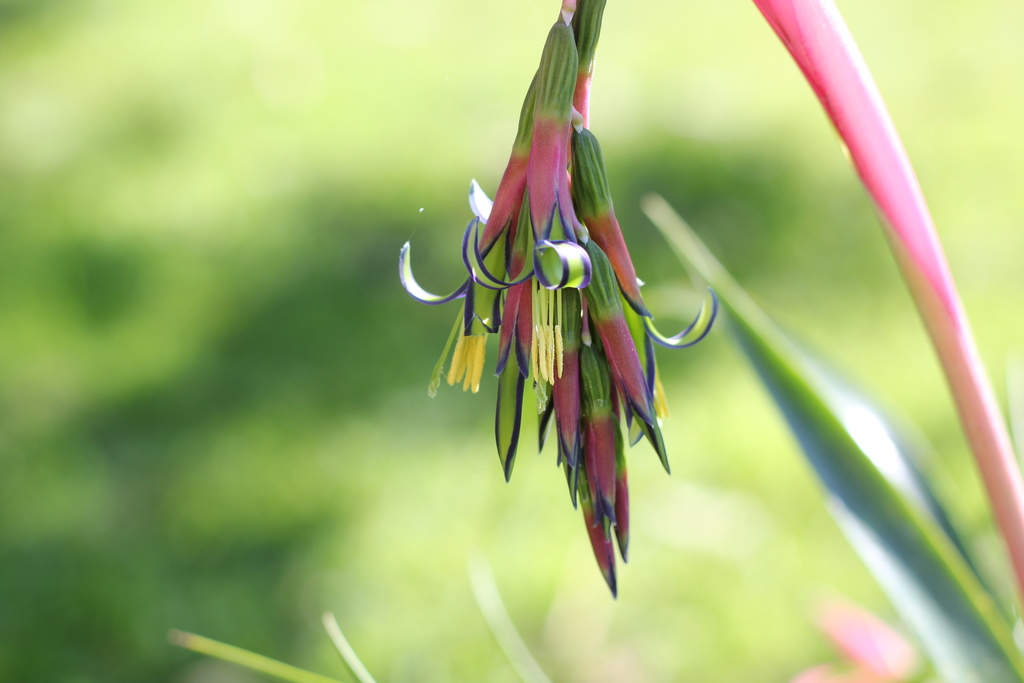
Billbergia nutans, commonly known as the Queen's Tears plant, is a popular bromeliad species native to Brazil. This perennial plant can grow up to 1.5 feet tall and 2 feet wide. It features long, narrow leaves that are green with reddish-brown stripes.
The most striking feature of the Billbergia nutans is its beautiful flowers, which bloom in late spring or early summer. The flowers are pendulous, hanging from long stalks, and boast bright pink bracts with blue-violet petals.
This plant thrives in bright but indirect light and well-draining soil. It can be grown both indoors and outdoors, provided it is protected from frosty temperatures.
Billbergia nutans requires minimal care but benefits from regular watering during the growing season (spring to fall), allowing the soil to dry out slightly between waterings. Monthly fertilization during this time can also promote healthy growth.
Overall, Billbergia nutans is an excellent addition to any garden or indoor space, thanks to its unique appearance and low maintenance needs.
Queen's tears shows good resistance to disease and generally does not tend to get sick. However, it can be affected by pests and diseases present in its surroundings. When infections occur, they are typically not serious. For care, this plant requires a moderate amount of maintenance. It should be pruned regularly to keep a tidy appearance and support healthy growth. Fertilizing can also encourage flowering. Queen's tears is suitable for someone with outdoor space, like a garden or patio, and does not demand extensive experience in plant care. It may need more attention if grown indoors.
How to keep Billbergia Nutans.
Light
Queen's tears does best in moderate light but can tolerate brighter exposure. Excessive light can scorch the leaves, while too little stunts growth and reduces bloom size. Its sun habit mirrors its original setting, with dappled sunlight filtering through dense trees. Different growth stages do not significantly change its light requirements.
Water
Queen's tears, a plant native to the South American rainforests, thrives in humid environments. It prefers soil that remains evenly moist. To care for this plant, water it weekly and ensure moderate humidity levels indoors. Use a well-draining potting mix to prevent the roots from becoming waterlogged, which helps maintain a good balance of moisture and aeration.
Humidity
This plant will thrive in moderate humidity, which is probably the level in your home. However, misting it a few times a week can be very beneficial. Make sure the room has good ventilation.
Temperature
Queen's tears does well in warm conditions. If the temperature falls too low, the plant may stop growing or suffer frost damage. It is highly tolerant of heat and humidity and needs a consistent amount of moisture in its surroundings. Nevertheless, excessively high temperature and humidity can make it vulnerable to fungal infections. In dry environments, regular watering and misting are needed to keep the air sufficiently humid. The plant is sensitive to sudden temperature changes, so maintaining a relatively steady temperature is important.
Fertilizer
Appropriate fertilization is essential for the health and appearance of Queen's tears. Apply fertilizer to Queen's tears in summer, repeating once a month throughout the season. Nutrients provide energy for growth and support the plant's structures. Fertilizing improves Queen's tears' flower display, helping ensure the best blooms.
Pruning
"Queen's Tears produces striking, arching flower spikes and benefits from regular pruning, which can be done from early spring to late winter. By removing dead leaves and spent flowers, you not only promote new growth but also conserve the plant's energy and enhance airflow. This reduction in disease risk leads to improved overall vigor and appearance, in line with reputable horticultural guidelines."
Pot & Repot
When repotting Queen's tears, pick a pot 1-2 inches (2.5–5.1 cm) larger that has good drainage. Use a well-draining potting mix. Repot in spring or fall, making sure the root ball sits slightly lower than the rim of the pot. Water thoroughly after repotting and place the plant in a warm spot with indirect sunlight.
Toxicity
Generally non-toxic but isn’t for consumption.
Further reading →
The toxicity and danger assessments provided are for reference only. We do not assure their accuracy, so it's crucial not to depend on them. Seek professional advice when necessary for accurate guidance.
Botanical profile.
- Plant Type
- Herb
- Life Cycle
- Perennial, Annual
- Genus
- Billbergia
- Family
- Bromeliaceae
- Hardiness Zone
- 9
- Mature Height
- 49 cm
- Mature Spread
- 40 cm
- Leaf Color
- Green
- Leaf Type
- Evergreen
- Flower Color
- Pink, Green, Blue
- Flower Size
- 2.03 cm
- Bloom Time
- Spring
- Planting Time
- Spring, Summer, Autumn, Winter
- Harvest Time
- Late spring, Early summer, Mid summer
- Native Area
- Brazil
Other names.
Reader questions.
What should I do if I give my Queen's tears plant too much or too little water?
Both overwatering and underwatering can affect your Queen's tears, but overwatering is more common. The Queen's tears can survive short periods of drought, but they prefer consistently moist soil. If you accidentally underwater your Queen's tears, you'll notice the leaves turning brown at the tips and possibly curling. This is especially common for in-ground plants when relying on rainfall that ends up being insufficient. Container-grown plants are more prone to underwatering because the soil in containers dries out quickly and doesn't get natural rainfall. To resolve underwatering, simply water more. On the other hand, if you have an issue with overwatering, your Queen's tears may begin to wilt. The leaves can turn yellow and you may notice rot in the leaves and stem. Overwatering can also result in damaged fruits and the growth of mold and fungus. Overwatering can occur for in-ground plants even when there has been sufficient rainfall, or for container-grown plants when heavy soils and lack of drainage holes are involved. To address overwatering in a container-grown Queen's tears, remove it from the container, clean and trim its roots, and replant it in a new container with looser soil and better drainage. In general, reduce your watering schedule for overwatered plants, whether they are in the ground or in pots.
Why should I use fertilizer on my Queen's tears?
Fertilization is important for the growth of Queen's tears and other plants as it provides essential nutrients above and below ground. While the fertilization needs for Queen's tears are generally low, annual fertilization can greatly benefit the plant. It helps to keep the plant alive and encourages the production of better flowers that last longer. Therefore, those wanting their Queen's tears to thrive and look their best should prioritize annual fertilization.
What are the sunlight requirements for Queen's tears?
Queen's tears, or Billbergia nutans, thrives best in partial sun, requiring about 3-6 hours of sunlight daily. However, it can also endure full sun conditions, which means receiving more than 6 hours of sunlight, especially in cooler climates. It's crucial to watch how sunlight moves through your garden to place your plants optimally. Too much sunlight can scorch the leaves, while insufficient light can stunt growth and diminish the size of blooms. The plant's original habitat, beneath dense trees, offers dappled sunlight, a condition that should be mimicked for optimal growth.
What are the ideal environmental conditions for Queen's tears?
Queen's tears, or Billbergia nutans, thrives in warm, humid conditions and requires a consistent level of moisture. It is tolerant of high temperatures and humidity but becomes susceptible to fungal infections if conditions are excessively warm and wet. During dry periods, it's crucial to water the plant regularly and mist it to maintain adequate air humidity. The plant is sensitive to sudden temperature fluctuations, so maintaining a stable environment is key. In winter, it's recommended to keep the plant indoors if temperatures drop below 0°C, preferably near a south-facing window for sufficient sunlight, and ensure indoor temperatures stay above 20°C for optimal growth.
How often should I give water to my Queen's tears?
To maintain proper moisture levels for your Queen's tears during the growing season, it's important to water them regularly without overwatering the soil. If you have your Queen's tears in a container, a good rule of thumb is to provide around one inch of water per week. However, if you have planted your Queen's tears directly in the ground and it has rained about one inch during the week, you may not need to water them additionally. This means that if there has been consistent rainfall, you may be able to go for extended periods without watering your in-ground Queen's tears. Keep in mind that the watering frequency should vary based on the season, with less water needed during winter compared to spring, summer, and fall. Additionally, the growth phase of your Queen's tears, particularly when it flowers and bears fruit, may require more watering than usual.
When should I fertilize my Queen's tears plant?
The best time to fertilize a Queen's tears is late winter to early spring when it transitions from dormancy to active growth. Fertilizing during this period promotes healthy growth and a strong start to the season. Fertilizing in the fall is also allowed but avoid feeding it during summer and winter.
How should artificial lighting be used for indoor Queen's tears plants?
Indoor Queen's tears plants require adequate lighting, especially when natural sunlight is insufficient, such as in winter or less sunny spaces. Artificial lights, particularly LED lights, provide a viable solution because they can be customized to emit specific wavelengths essential for plant growth. For optimal growth, full sun plants need 30-50W/sq ft of artificial light, partial sun plants need 20-30W/sq ft, and full shade plants need 10-20W/sq ft of light. The artificial light source should be placed 12-36 inches above the plant to mimic natural sunlight effectively. Moreover, the duration of artificial lighting should mirror natural daylight hours for the specific plant species, typically between 8-12 hours per day.
How should I care for Queen's tears in low temperature conditions?
In low temperatures, particularly when it drops below 20°C, Queen's tears show a preference for warmer environments and can suffer damage in colder conditions. If temperatures are expected to fall below 0°C, it's advised to move the plant indoors to protect it from frost damage. Should temperatures plummet below -5°C, leaves may initially show no symptoms but can start to wither and droop after a few days, leading potentially to the entire plant drying up. In such events, trim away frostbitten areas and relocate the plant to a warm spot indoors, ideally near a south-facing window to ensure it receives plenty of sunlight. Avoid placing the plant near heaters or air conditioning vents to sidestep excessive dryness.
If I grow Queen's tears indoors, how should I water it differently?
To successfully grow Queen's tears indoors, you need to consider a few factors. Firstly, if you live in a region with cold winters, growing indoors is a must, as these plants can't survive freezing temperatures. When growing indoors, note that Queen's tears won't have access to rainwater like they would outdoors, so you'll need to provide all the water they need. Indoor locations are generally drier, thanks to appliances like air conditioners, so you'll need to water them more frequently. Additionally, misting the leaves can help create a humid environment that benefits this plant.
When is the best time to not fertilize my Queen's tears?
To properly care for your Queen's tears plant, it is best to fertilize it only during late winter and early spring. This plant does not require frequent fertilization, so a single annual feeding is sufficient. Fertilizing during spring, summer, and fall can lead to overfertilization and its associated complications. However, if you happened to skip fertilizing in spring, it is acceptable to fertilize the plant in fall. Additionally, it is unnecessary to fertilize the Queen's tears plant during winter. During this time, the plant is in a dormant growth phase and does not produce new growth. Therefore, it is not recommended to fertilize it for most of the winter.
What are the signs of inadequate lighting for Queen's tears?
Symptoms of inadequate lighting for Queen's tears include smaller new leaves compared to older, mature ones, leggy or sparse growth, and the early dropping of older leaves to conserve resources. Additionally, the plant may exhibit slower or no new growth, lighter-colored or irregularly patterned new leaves due to a lack of chlorophyll, and conditions like chlorosis, where leaves lose their green color and turn yellow. Other symptoms include sunscald, which leads to pale, bleached, or necrotic spots on the plant; leaf curling or twisting as a defense against extreme sunlight; wilting due to increased water loss; and leaf scorching, characterized by brown, dry, crispy leaf edges.
What steps should I take if Queen's tears experiences too high temperatures?
During the hotter summer months when temperatures soar above 41°C, Queen's tears should be monitored closely. High temperatures, especially above 45°C, can cause leaves to dry out at the tips, halt plant growth, and make the plant vulnerable to root rot as well as sunburn from too much direct sunlight. To mitigate these effects, prune any withered parts of the plant and relocate it to a spot where it can enjoy shade during the peak sun of midday and afternoon. Ensure the plant is watered in the morning and evening to keep both the plant and its surrounding environment moist, which helps in cooling.