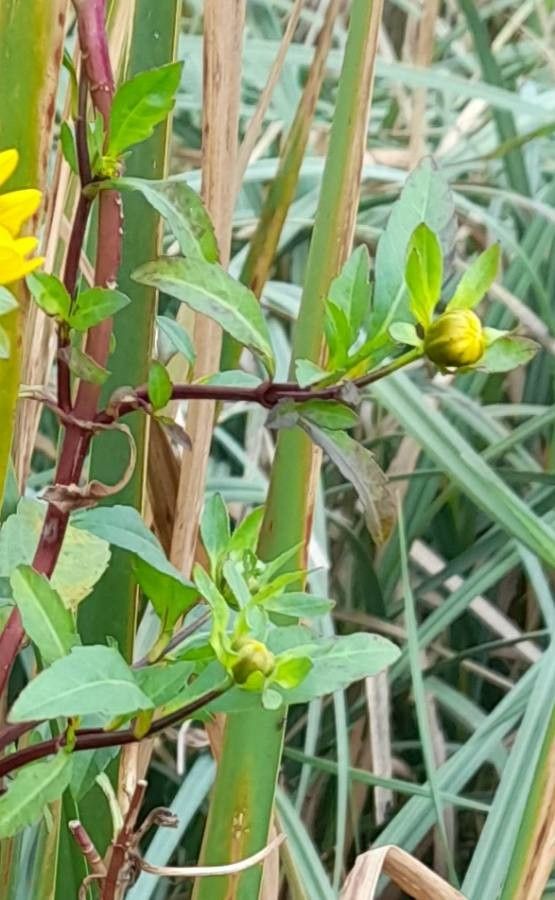
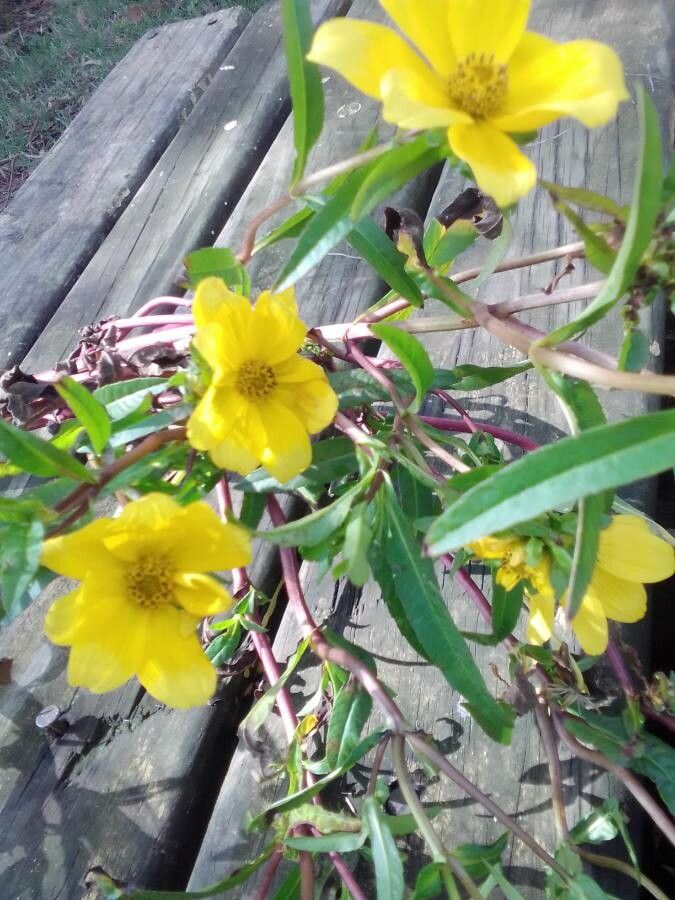
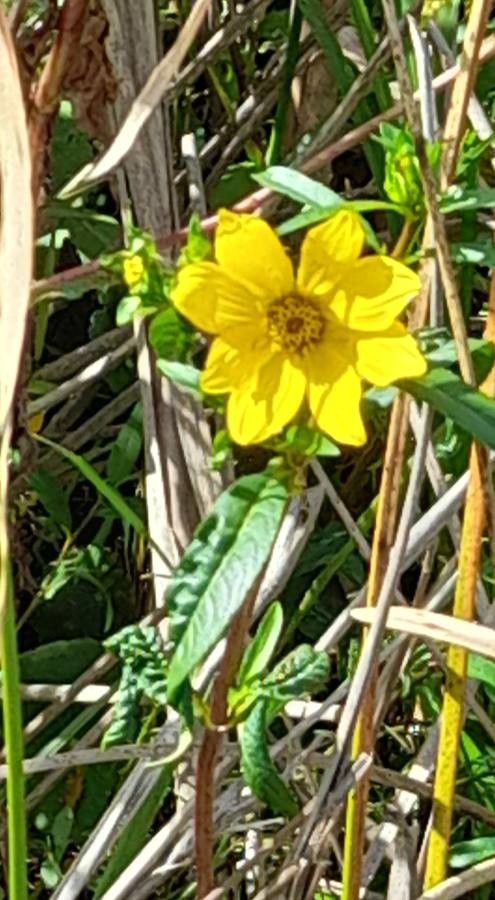
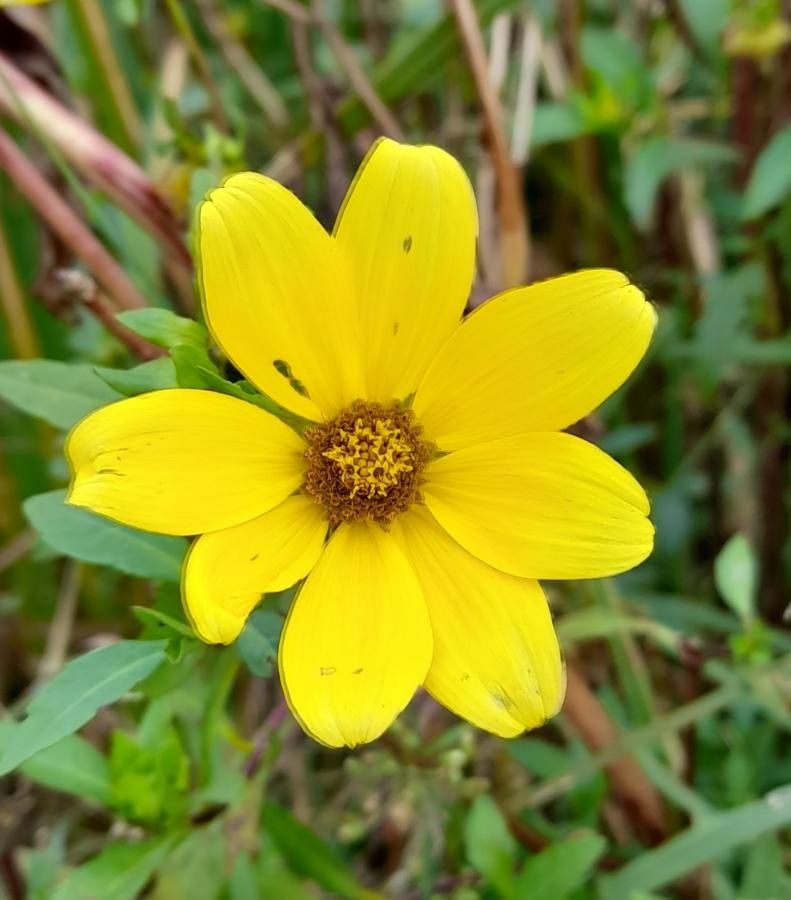
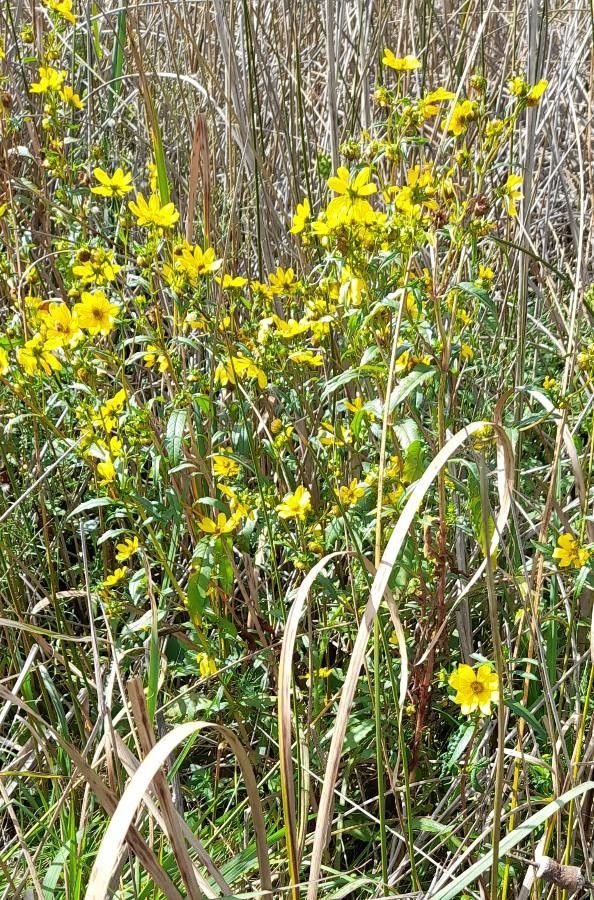
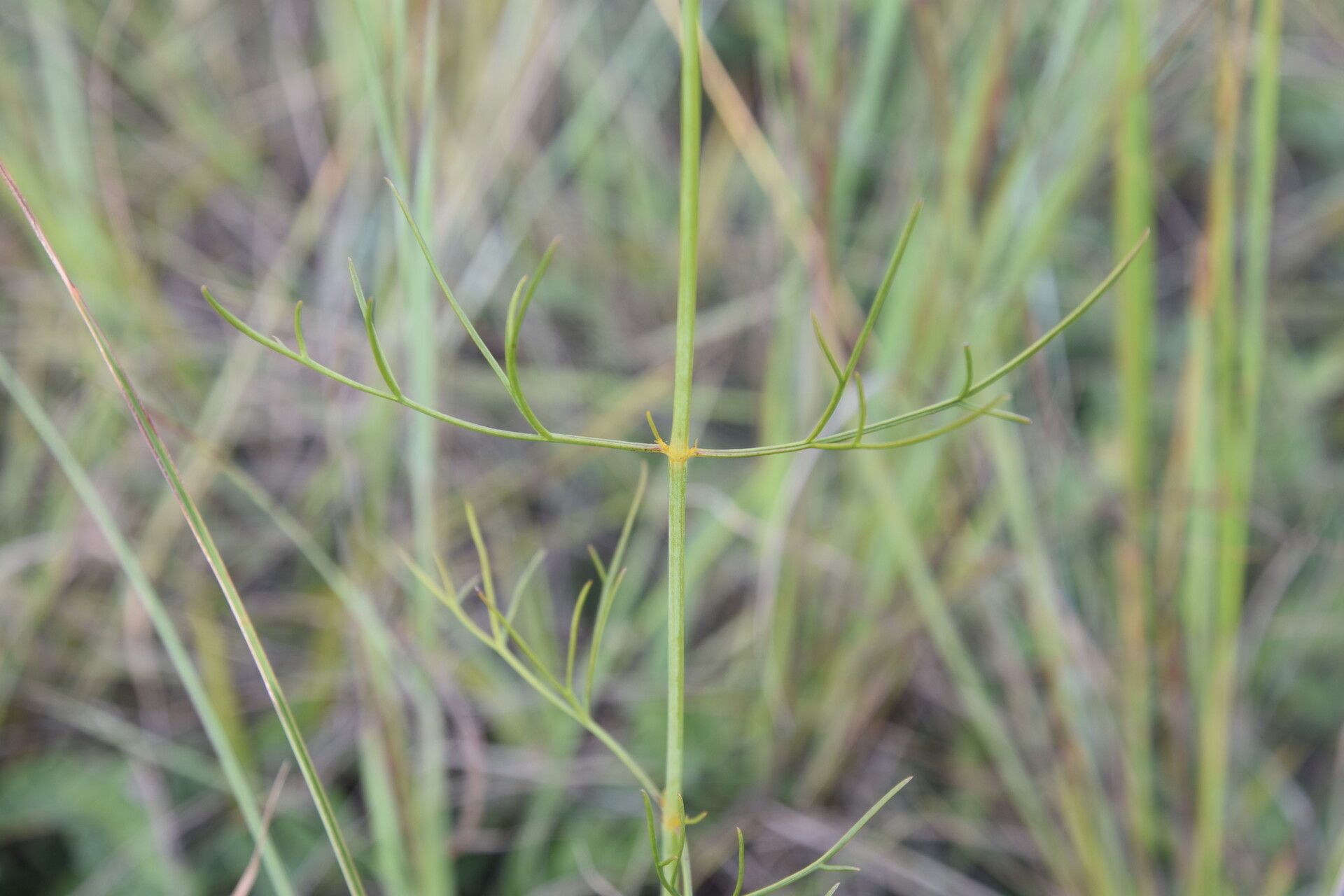
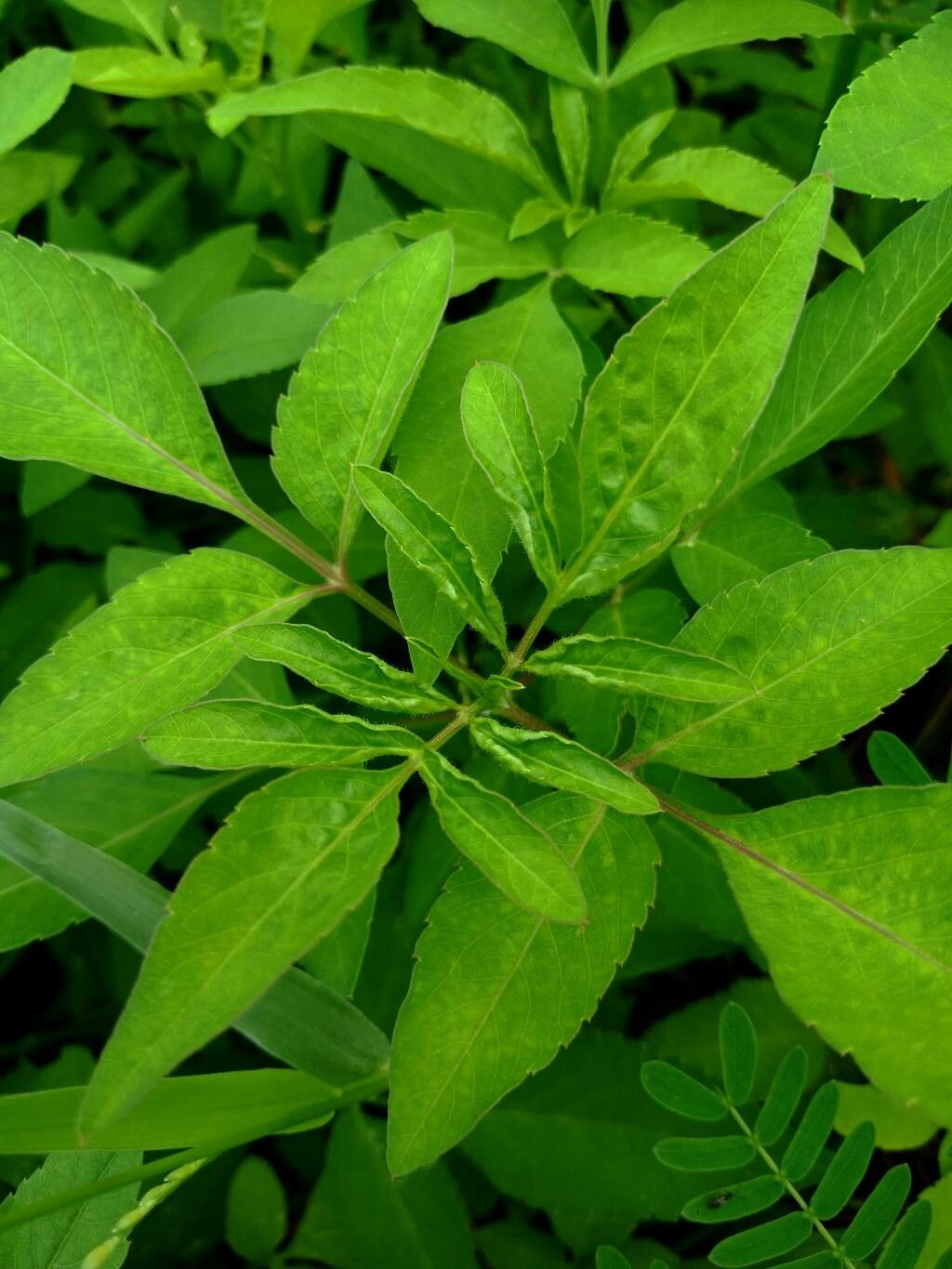
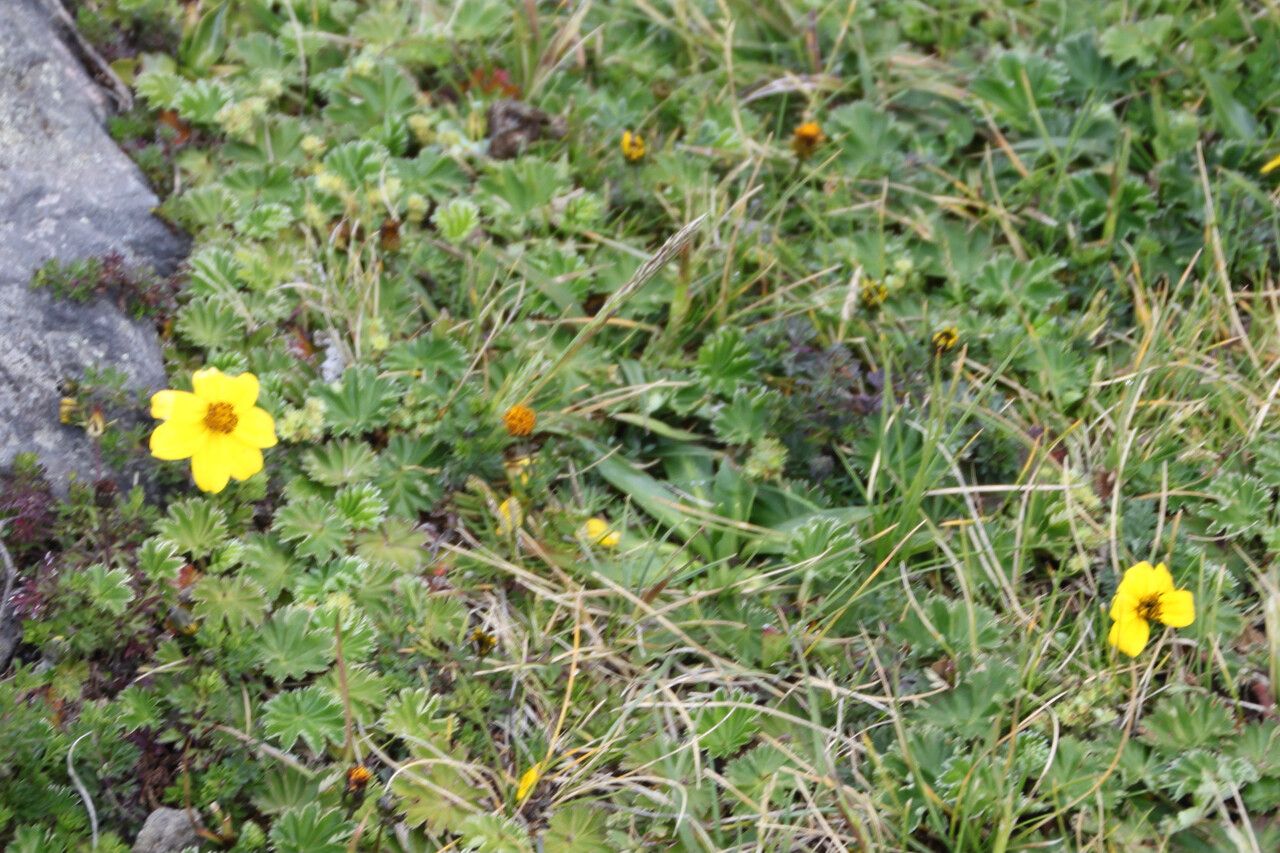
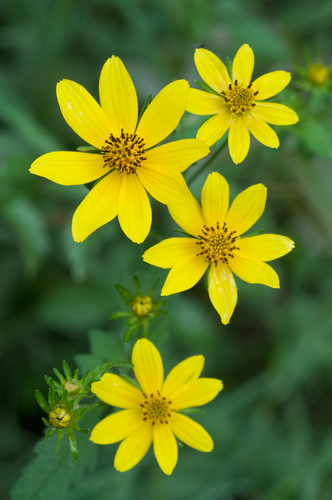
Bidens laevis is a species of flowering plant in the daisy family known by the common names larger bur-marigold and smooth beggarticks. It is native to South America, Mexico, and the southern and eastern United States. It grows in wetlands, including estuaries and riverbanks.Bidens laevis is similar in appearance to its relative Bidens cernua and the two are sometimes confused. This is an annual or perennial herb growing over 20 centimeters tall and sometimes much taller, exceeding one meter in height and sometimes approaching two. The narrow lance-shaped leaves are 5 to 15 centimeters long, with finely toothed edges and pointed tips. The inflorescence bears one or more flower heads which bend down as they become heavy with fruit after flowering. Each head has a center of yellow disc florets and a fringe of 7 or 8 yellow ray florets each up to 3 centimeters long. The fruit is a dry achene with sharp barbs that adhere to fur and clothing, thus helping the plant with seed dispersal.
Smooth beggarticks is fairly resistant to disease and typically does not suffer from many illnesses. Still, it can be affected by pests and diseases present in its environment. Such infections are generally mild. Regarding care, this plant needs moderate maintenance. It should be pruned regularly to keep a neat appearance and encourage healthy growth. Applying fertilizer can also help stimulate flowering. Smooth beggarticks is a good choice for anyone with outdoor space like a garden or patio and does not demand extensive gardening experience. It may need more attention when cultivated indoors.
How to keep Bidens Laevis.
Light
The smooth beggarticks does well in places where sunlight reaches it for half the day, yet it can also tolerate a full day of exposure. Naturally found in light-dappled environments, it can withstand intensified sun exposure. However, prolonged exposure may place stress on the plant and hinder its optimal growth.
Water
Smooth beggarticks thrive in moist environments, preferring consistent hydration but also exhibiting some drought tolerance. It is best to water them weekly to mimic natural rainfall. As an herbaceous perennial, smooth beggarticks grow well outdoors, with rainwater playing a key role in supporting their growth cycles and flowering potential.
Temperature
Smooth beggarticks occurs naturally in habitats with temperatures ranging from 68 to 100 °F (20 to 38 ℃). It favors a warm climate and is able to thrive at moderately high temperatures. Seasonal temperature adjustments may be necessary to promote optimal growth.
Fertilizer
Smooth beggarticks respond well to regular, light applications of fertilizer to encourage healthy leaf growth. You should fertilize Smooth beggarticks about once a month during the summer months. Nitrogen is essential for foliage, and providing nitrogen-rich sources helps Smooth beggarticks thrive.
Pruning
To encourage bushier growth and vibrant flowers in smooth beggarticks, it's beneficial to perform light pruning from early to late spring. Start by removing any dead stems and trimming back tall stems to shape the plant. Regularly deadhead spent blooms to promote more blooming. Pruning also improves airflow, reduces humidity, and helps prevent diseases. Always use clean, sharp tools when pruning.
Botanical profile.
- Plant Type
- Herb
- Life Cycle
- Annual, Perennial, Biennial
- Genus
- Bidens
- Family
- Compositae
- Hardiness Zone
- 12
- Mature Height
- 0.61 m to 1.52 m
- Mature Spread
- 1.22 m
- Leaf Color
- Green
- Leaf Type
- Deciduous
- Flower Color
- Yellow, Gold
- Flower Size
- 2.54 cm to 5.08 cm
- Bloom Time
- Mid summer, Late summer, Fall
- Planting Time
- Spring, Summer
- Harvest Time
- Fall, Early winter
- Native Area
- Colombia, Cuba, Mexico, Peru, Ecuador
Other names.
Reader questions.
What are the sunlight requirements for Smooth Beggarticks?
Smooth beggarticks requires about 3-6 hours of sunlight (partial sun) to thrive but can also handle more than 6 hours of direct sunlight (full sun) a day. The plant naturally grows in areas with dappled sunlight and can adapt to a full day's sun exposure. Nonetheless, continuous intense sun exposure might stress the plant, potentially impacting its growth negatively. It's crucial to observe how sunlight moves through your garden to find spots that offer the ideal balance of light and shade for your plants.
What is the ideal temperature range for Smooth Beggarticks?
Smooth Beggarticks thrives in environments with temperatures ranging from 68 to 100°F (20 to 38°C). It prefers warm climates and can grow well in moderately high temperatures. To ensure optimal growth, it might be necessary to adjust temperatures seasonally. The plant is extremely heat-loving, and exposure to cold can harm it. During autumn, if grown outdoors, it is advised to bring Smooth Beggarticks indoors, placing it near a bright window while avoiding direct proximity to heaters. Keeping the temperature above 20°C during winter benefits the plant's growth, while temperatures nearing 15°C can be detrimental.
How can artificial lighting benefit indoor plants like Smooth Beggarticks?
Indoor Smooth Beggarticks plants require adequate lighting for optimal growth. When natural sunlight is insufficient, especially in winter or less sunny spaces, artificial lighting becomes crucial. It promotes faster, healthier growth. LED lights are recommended for their ability to provide specific light wavelengths necessary for plants. Depending on the plant's sunlight needs, the intensity of artificial light (measured in watts per square foot) and the duration of exposure (typically 8-12 hours per day) should be adjusted accordingly. The light source should be placed 12-36 inches above the plant to simulate natural sunlight adequately.
How should you care for Smooth Beggarticks in low temperatures?
Smooth Beggarticks prefers warm environments and does not tolerate low temperatures well. It is best maintained at temperatures above 20°C, and during winter, it should not drop below 15°C. Exposure to temperatures under 10°C may cause the leaves to lighten in color, and after frost damage, they can turn brown or black, exhibiting wilting and drooping symptoms. To manage frost damage, trim off the damaged parts and move the plant to a warmer indoor space for protection. It’s ideal to place it near a south-facing window for sufficient sunlight, ensuring it is not too close to heaters or air conditioning vents to avoid air dryness.
What are the symptoms of inadequate light for Smooth Beggarticks?
When Smooth Beggarticks is grown under insufficient light conditions, several symptoms might appear. These include small leaves, leggy or sparse growth, faster leaf drop, slower or no new growth at all, and lighter-colored or yellowing leaves (chlorosis). Excessive sunlight can lead to symptoms like sunscald, leaf curling, wilting, and leaf scorching. These conditions indicate stress and could adversely affect the plant's health and growth.
What should be done for Smooth Beggarticks in high temperatures?
During the summer, it is important to ensure that Smooth Beggarticks is kept in temperatures below 38°C. Should the temperature exceed 43°C, the leaves may lighten in color, making the plant more prone to sunburn. In such cases, trim away the sunburned and dried parts. Relocate the plant to a shaded area, especially away from the harsh midday and afternoon sun. Watering the plant in the morning and evening will help keep the soil moist, protecting it from the high temperatures.
What are the recommended solutions for Smooth Beggarticks facing inadequate sunlight?
To optimize growth for Smooth Beggarticks facing inadequate sunlight, gradually increase sun exposure. Start by moving the plant to sunnier spots each week until it gets 3-6 hours of direct sunlight daily. If moving the plant isn't an option, consider artificial lighting sources like desk or ceiling lamps, or invest in professional grow lights, ensuring they're on for at least 8 hours daily. For outdoor plants, the adaptation should also be gradual to prevent sunburn. Additionally, removing obstructions that block sunlight or transplanting the plant to sunnier locations can significantly help. Note that parts of the plant already affected might not recover, but new growth should be healthy following these adjustments.