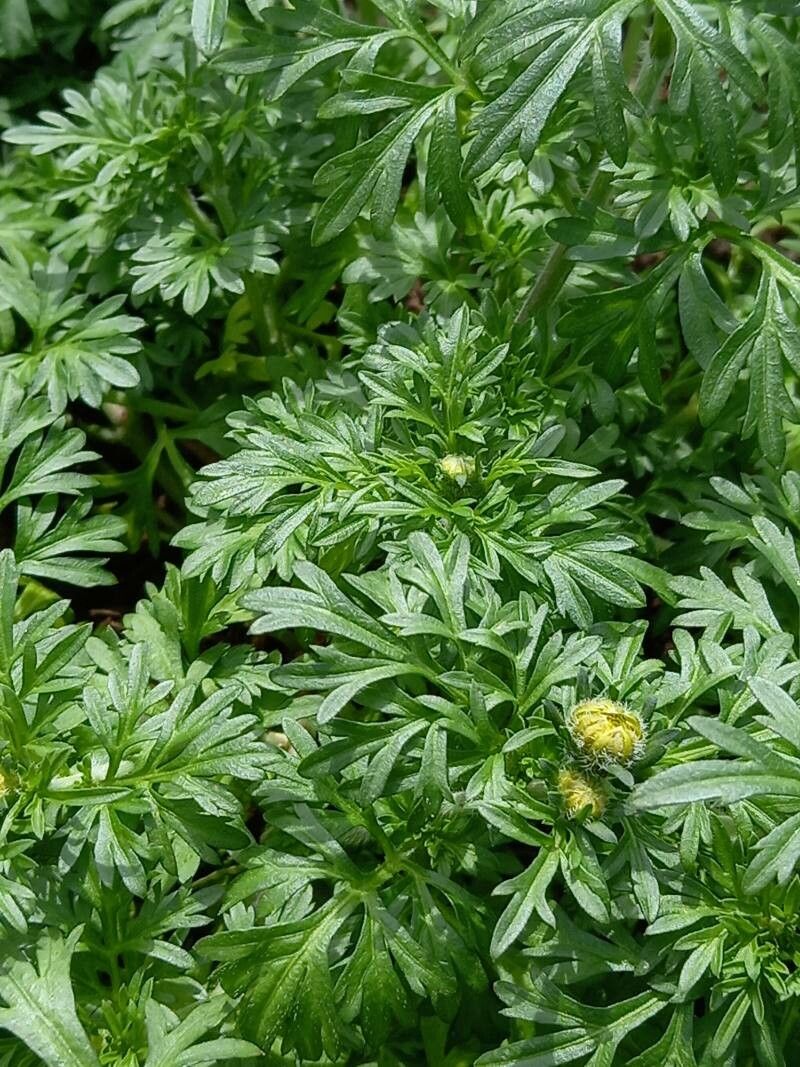
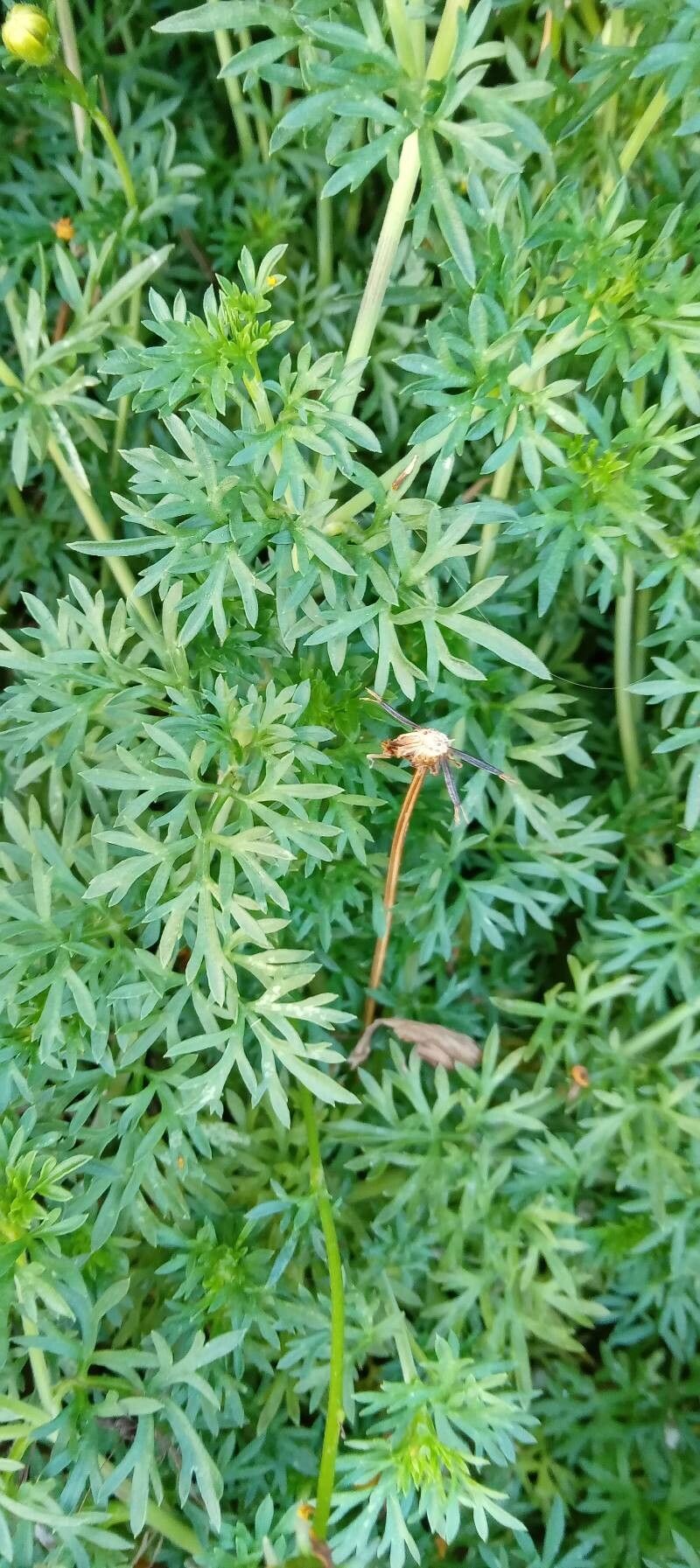
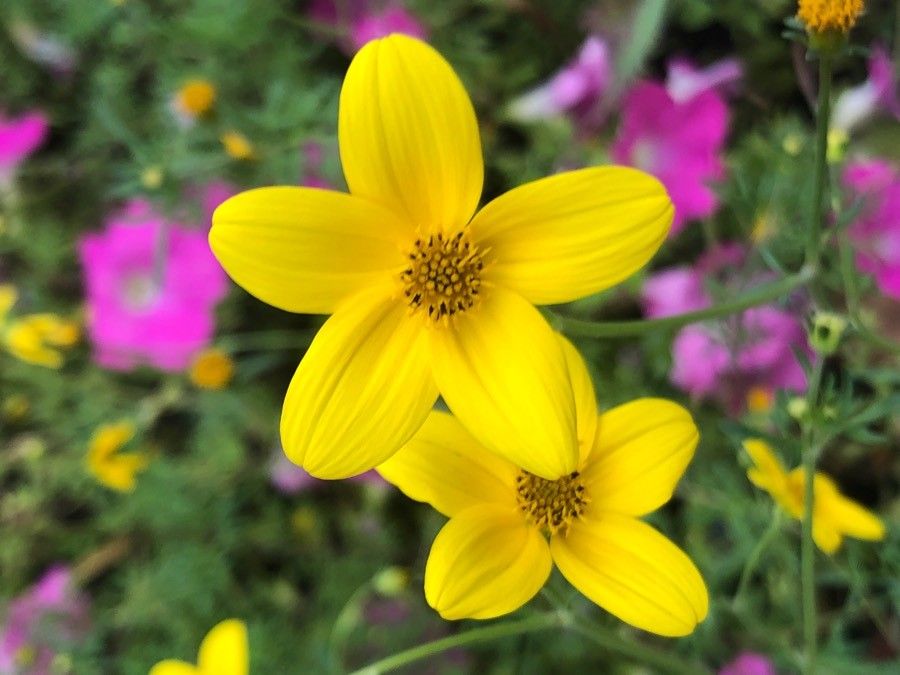
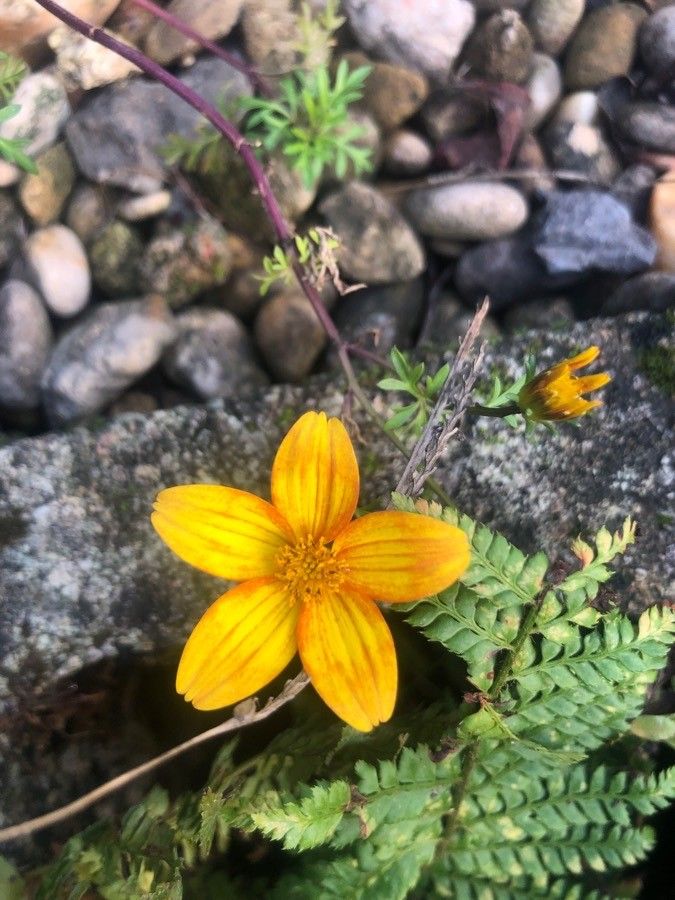
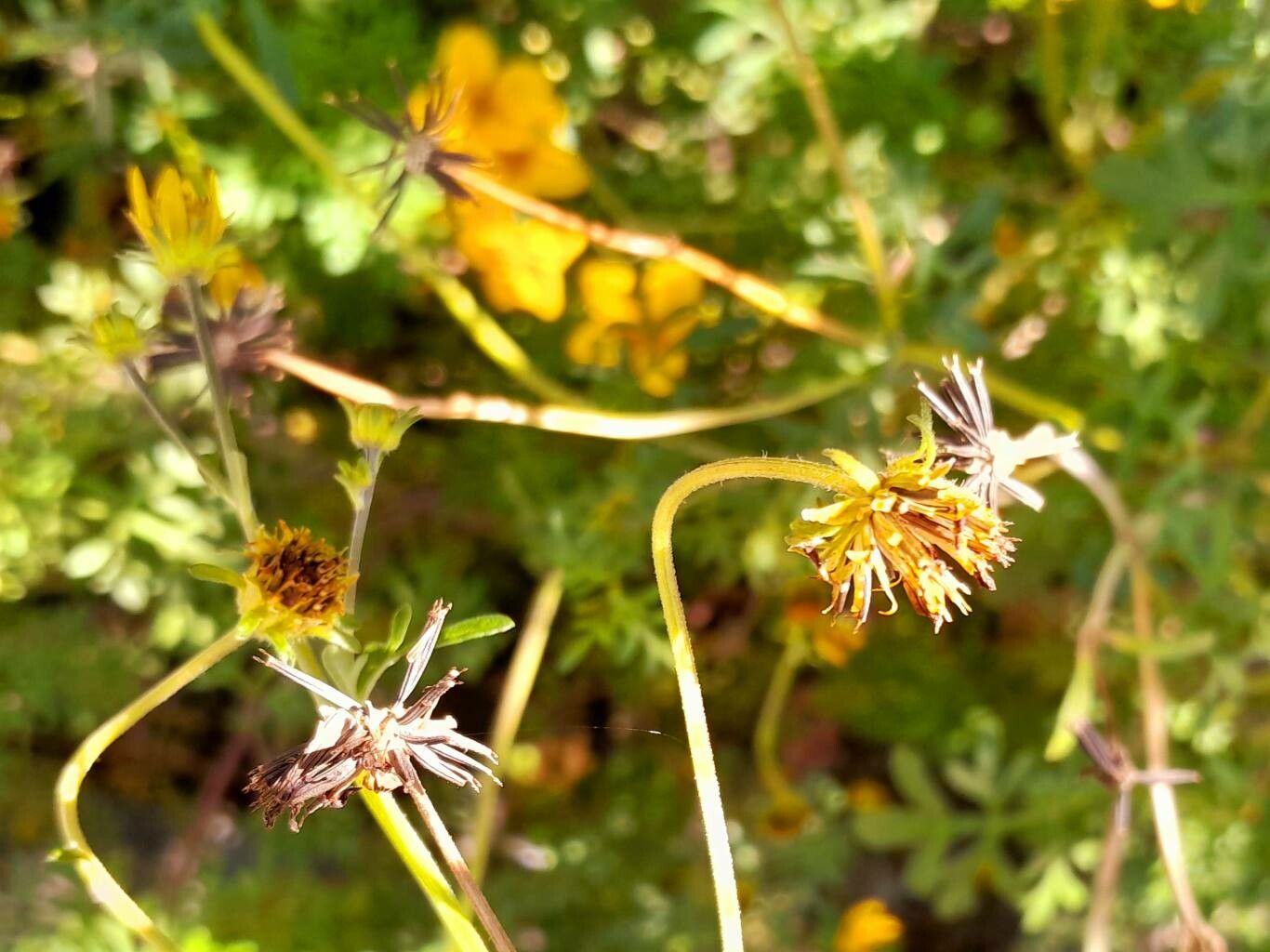
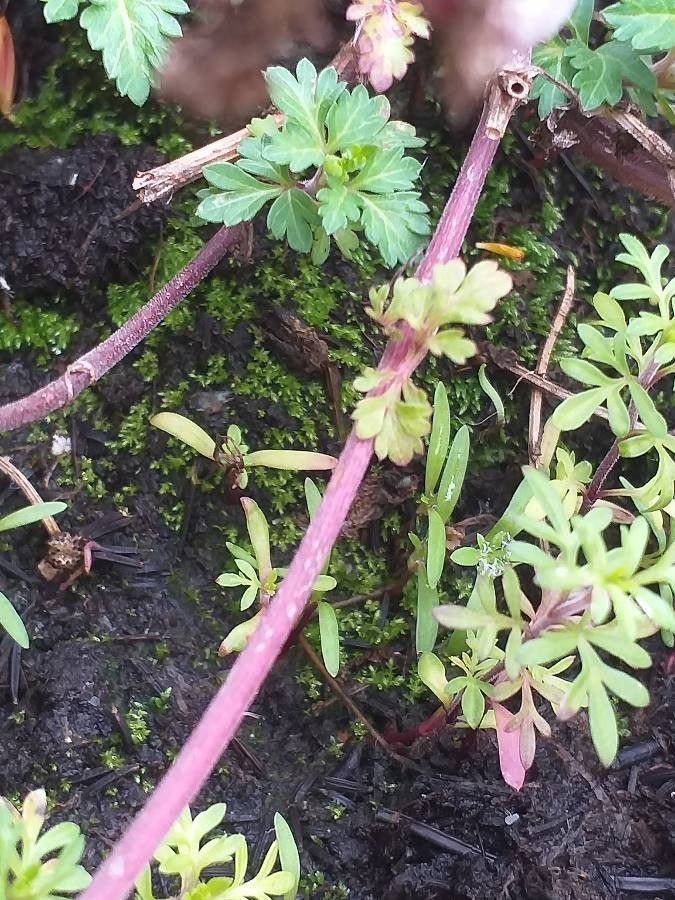
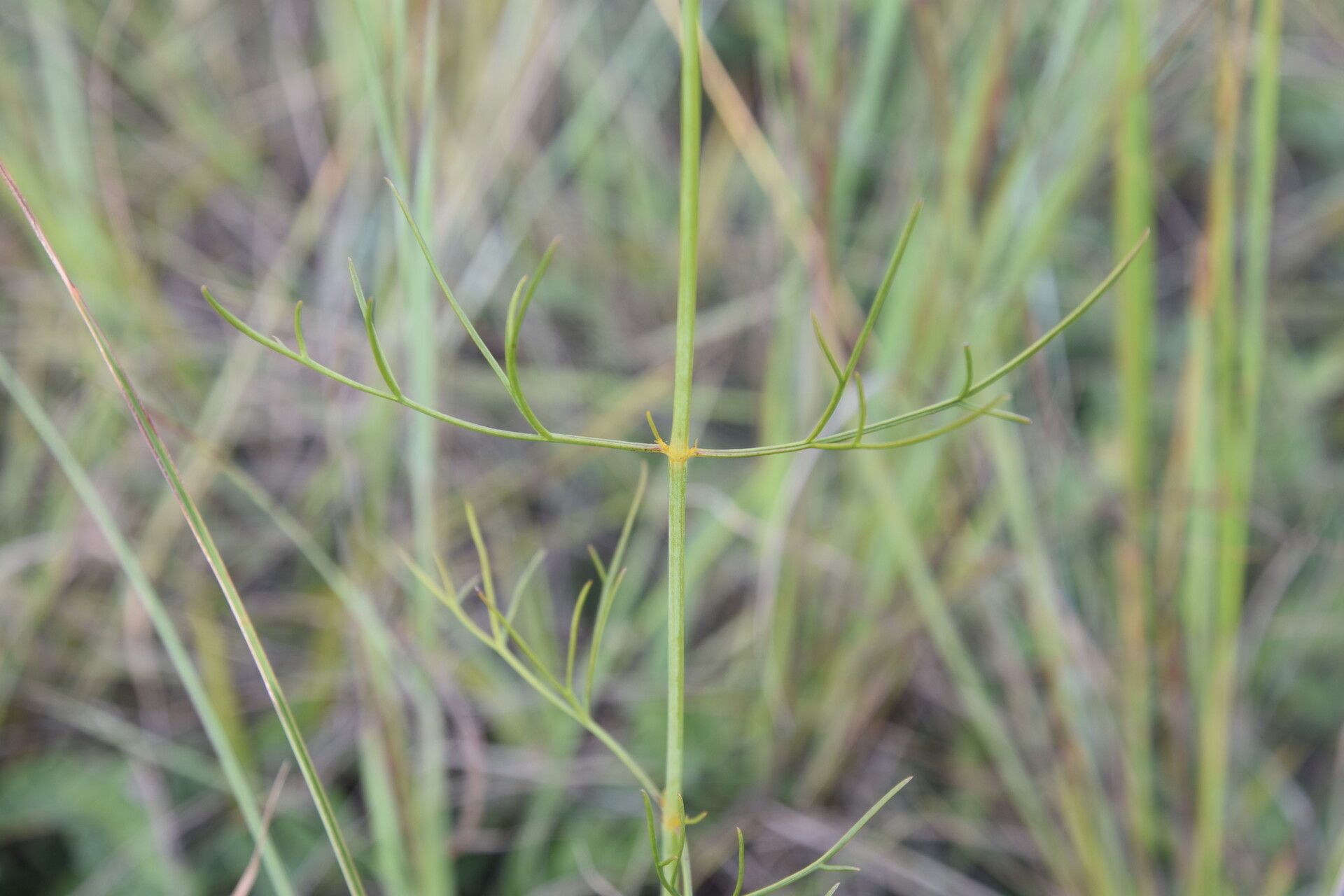
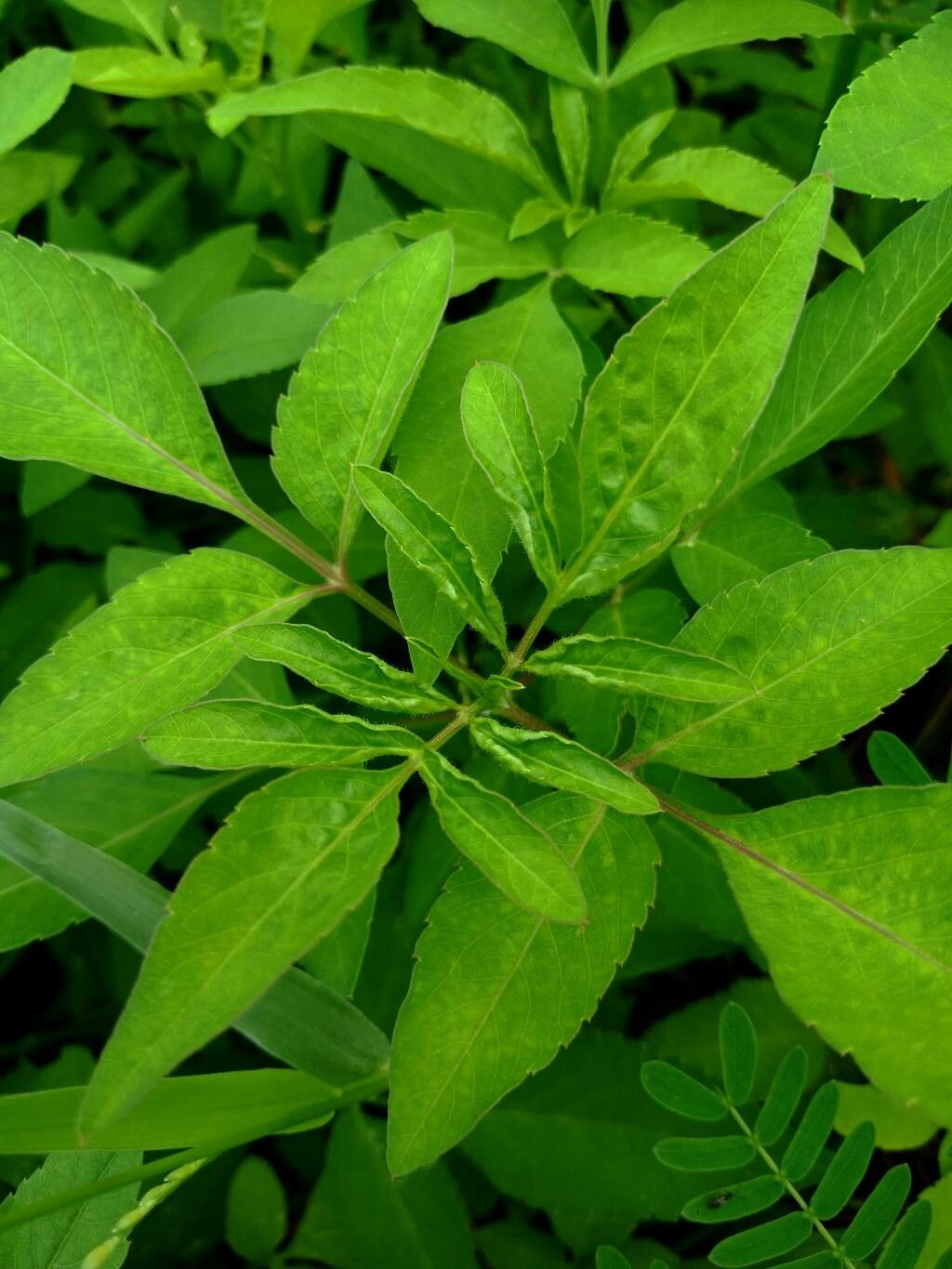
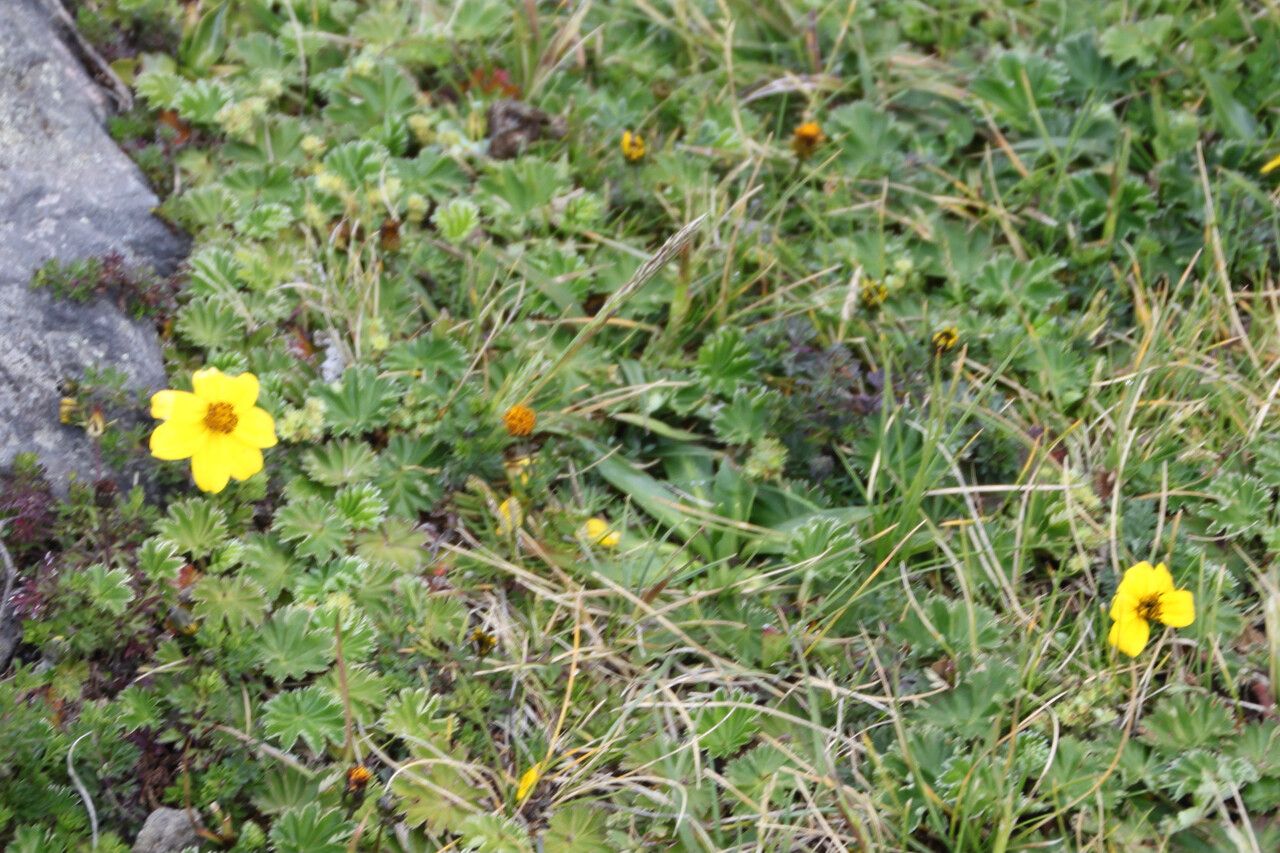
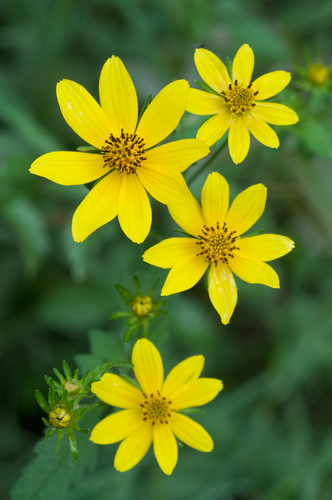
Bidens ferulifolia, commonly known as fernleaf beggarticks, is a flowering plant in the Asteraceae family. Native to Mexico and Central America, it has also been introduced worldwide as an ornamental plant. It grows up to 60 cm tall, featuring fern-like leaves deeply divided into narrow segments. The small yellow flowers, with a dark center disk, bloom from summer through fall. This plant thrives in full sun or partial shade and well-drained soil but can tolerate some drought once established. Fernleaf beggarticks is often used in garden borders or containers for its attractive foliage and long-lasting blooms, which attract butterflies and other pollinators.
Arizona beggarticks is fairly disease-resistant and generally does not tend to suffer from illnesses. Nevertheless, it can be vulnerable to pests and diseases present in its environment. These problems are usually mild. In terms of care, this plant requires moderate maintenance. It should be pruned regularly to maintain a pleasing appearance and healthy growth. Fertilizing can also help encourage flowering. Arizona beggarticks is appropriate for anyone with outdoor space, such as a garden or patio, and does not demand extensive care experience. It may need extra attention when grown indoors.
How to keep Bidens Ferulifolia.
Light
The Arizona beggarticks prefers living in environments awash with light, reflecting its native habitats that lack shaded canopy cover. Light is vital for its healthy growth because it powers photosynthesis. However, excessive exposure can be harmful, potentially causing sunburn and wilting, so its light exposure must be carefully managed.
Water
Your Bidens benefit from constant moderate moisture. Although these plants are considered fairly drought-resistant, they do require regular watering for them to thrive. Excessive dryness can cause petal drops.
Humidity
This plant will thrive in moderate humidity, which is probably the level in your home. However, misting it a few times a week can be very beneficial. Make sure the room has good ventilation.
Temperature
Arizona beggarticks is native to temperate climates, needing moderate warmth and preferring temperatures between 59 and 95 °F (15 and 35 °C). Seasonally, adaptations might involve providing extra shade or protective coverings when temperatures fluctuate dramatically.
Fertilizer
The best time to fertilize an Arizona beggarticks is in early spring, as it comes out of dormancy and starts active growth. Fertilization supplies essential nutrients for healthy development. Although Arizona beggarticks has fairly low fertilizer requirements, applying fertilizer once a year can improve its survival and encourage better, longer-lasting flowers.
Pruning
Pruning your Bidens requires deadheading, which means you have to remove wilted flowers regularly to help stimulate the plant to produce new flowers.
Toxicity
Bidens have no known toxic effects. This plant is generally considered pet-friendly and safe around children.
Further reading →
The toxicity and danger assessments provided are for reference only. We do not assure their accuracy, so it's crucial not to depend on them. Seek professional advice when necessary for accurate guidance.
Botanical profile.
- Plant Type
- Herb
- Life Cycle
- Perennial
- Genus
- Bidens
- Family
- Compositae
- Hardiness Zone
- 7-10
- Mature Height
- 61 cm
- Mature Spread
- 46 cm
- Leaf Color
- Green
- Leaf Type
- Deciduous
- Flower Color
- Yellow, Gold
- Flower Size
- 2.54 cm
- Bloom Time
- Late spring, Summer
- Planting Time
- Spring
- Harvest Time
- Mid summer, Late summer, Early fall
- Native Area
- Mexico
Other names.