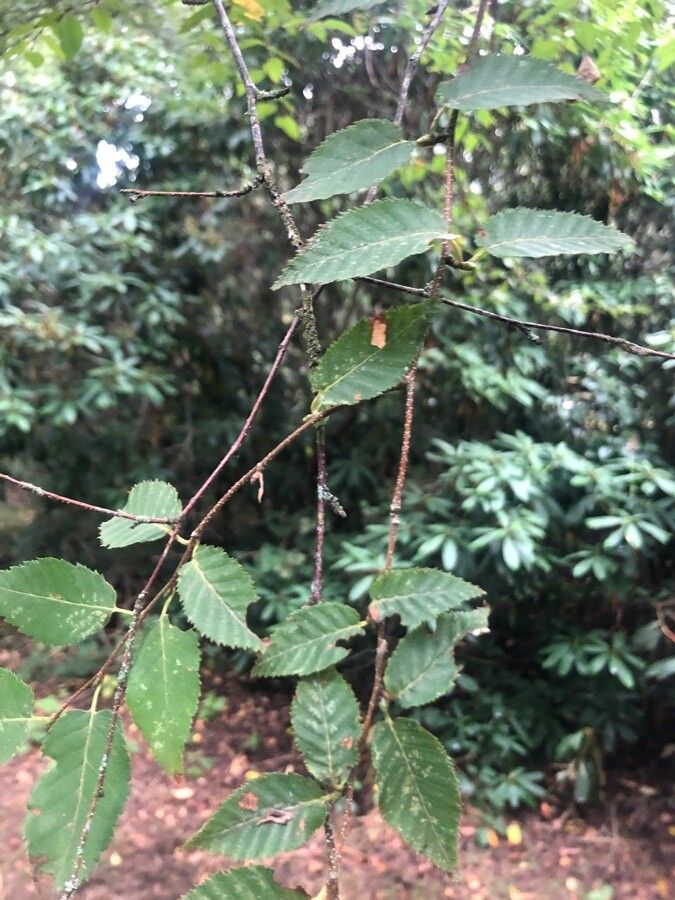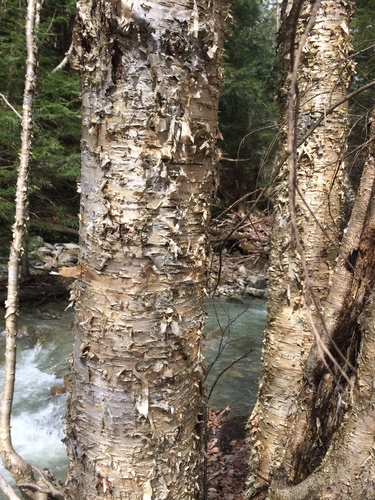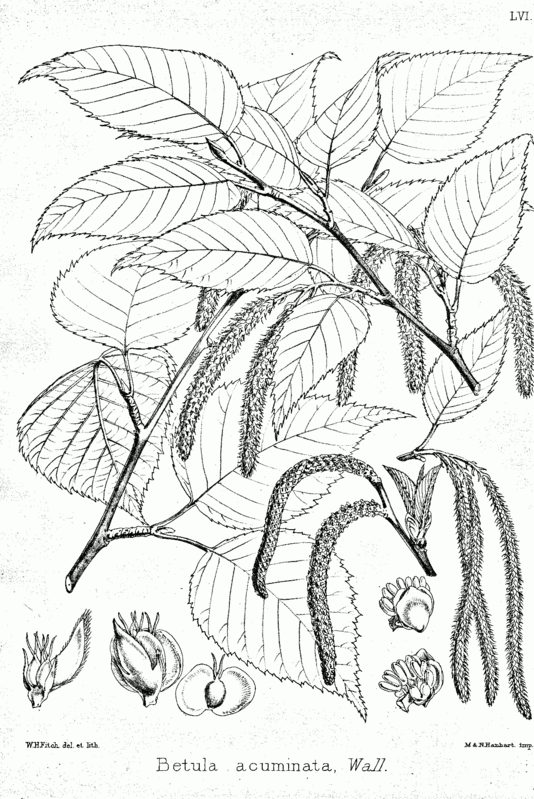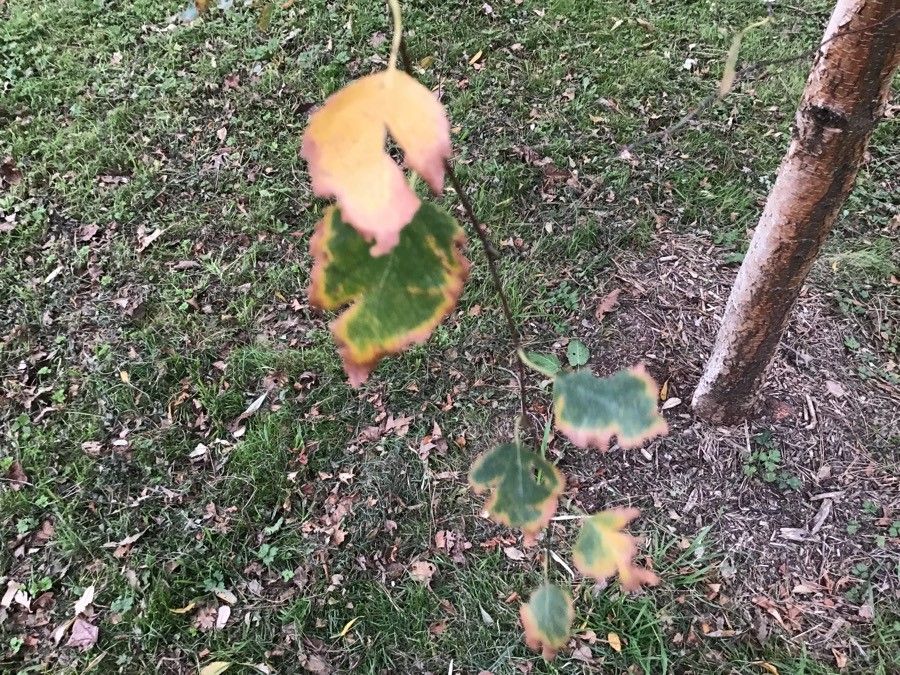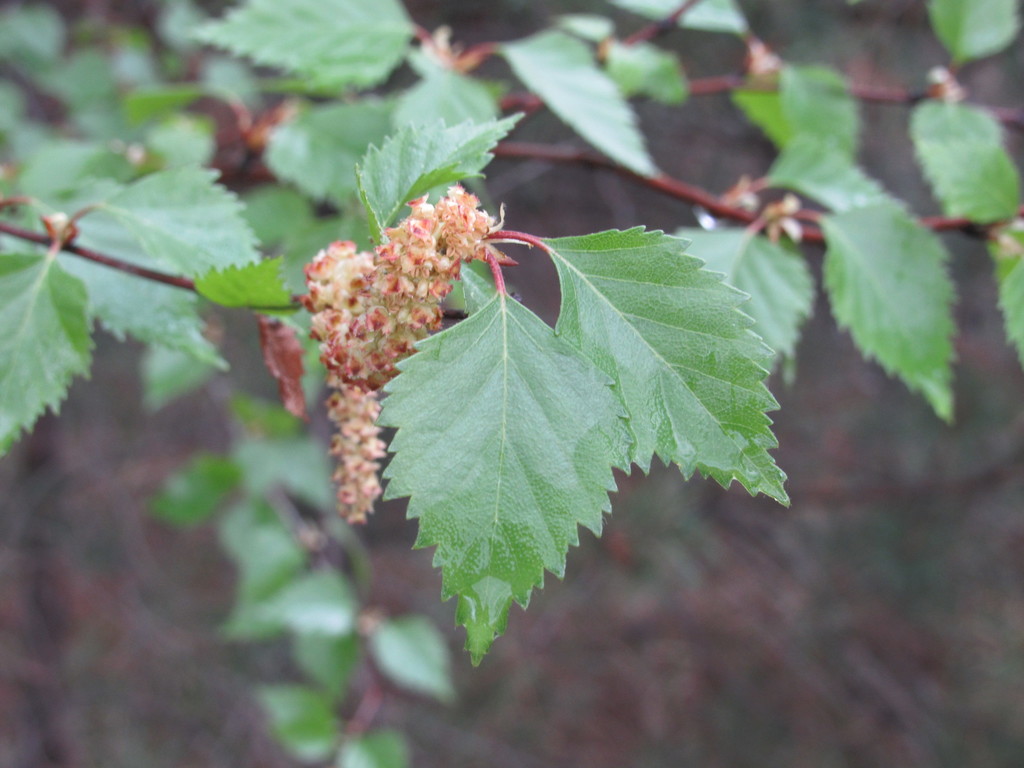
Betula pubescens (syn. Betula alba), commonly known as downy birch and also as moor birch, white birch, European white birch or hairy birch, is a species of deciduous tree, native and abundant throughout northern Europe and northern Asia, growing farther north than any other broadleaf tree. It is closely related to, and often confused with, the silver birch (B. pendula), but grows in wetter places with heavier soils and poorer drainage; smaller trees can also be confused with the dwarf birch (B. nana). Six varieties are recognised and it hybridises with the silver and dwarf birches. A number of cultivars have been developed but many are no longer in cultivation. The larva of the autumnal moth (Epirrita autumnata) feeds on the foliage and in some years, large areas of birch forest can be defoliated by this insect. Many fungi are associated with the tree and certain pathogenic fungi are the causal agents of birch dieback disease. The tree is a pioneer species, readily colonising cleared land, but later being replaced by taller, more long-lived species. The bark can be stripped off without killing the tree and the bark and the timber is used for turnery and in the manufacture of plywood, furniture, shelves, coffins, matches, toys and wood flooring. The inner bark is edible and it was ground up and used in bread-making in times of famine. The rising sap in spring can be used to make refreshing drinks, wines, ales and liqueurs and various parts of the tree have been used in herbal medicine.
Downy birch is highly resistant to disease and typically does not suffer from illnesses. In terms of care, this plant is fairly low-maintenance. When grown outdoors it needs little watering, and larger specimens usually do not require pruning. Smaller plants, however, should be trimmed after they have finished flowering. Downy birch is appropriate for anyone with outdoor space, such as a garden or deck, and does not demand much experience in plant care.
How to keep Betula Pubescens.
Light
Downy birch grows best in unobstructed sunlight, although abundant brightness is not necessary. It also does well where sunlight is diffused or broken. However, too little light or excessive sun exposure can impede its healthy growth. Its natural habitat indicates tolerance for a variety of light conditions.
Water
Downy birch thrives in cool, moist climates and generally requires consistent moisture. However, it can withstand short periods of dryness. For optimal growth, water the tree every three weeks, taking seasonal changes into account. During its winter dormancy, it will need less water.
Temperature
Downy birch does best in temperatures of 32 to 77 °F (0 to 25 ℃), reflecting its naturally cooler habitat. If temperatures spike, it is advisable to keep the plant in cooler locations, particularly during the harsh summer months.
Fertilizer
Fertilize your Downy birch in early spring to encourage healthy growth. Regular fertilization improves overall health, leading to vigorous growth, greater resilience to harsh conditions, and enhanced resistance to diseases and pests. Keep to a specific fertilization schedule for your Downy birch to achieve vibrant, deeply colored foliage and a lush appearance.
Pruning
Downy birch trees are known for their distinctive white bark and drooping branches. To maintain their health and appearance, it is best to prune them in early spring. Focus on removing any dead or crossing branches, as this will improve air circulation and strengthen their structure. Thinning the canopy can also help by enhancing light penetration, promoting vigorous growth, and aiding in size management. By following reputable horticultural practices, you can ensure the best outcomes for your downy birch.
Toxicity
Betula pubescens has no toxic effects reported.
Further reading →
The toxicity and danger assessments provided are for reference only. We do not assure their accuracy, so it's crucial not to depend on them. Seek professional advice when necessary for accurate guidance.
Botanical profile.
- Plant Type
- Tree
- Life Cycle
- Perennial
- Genus
- Betula
- Family
- Betulaceae
- Hardiness Zone
- 3-6
- Mature Height
- 20.12 m
- Mature Spread
- 10.06 m
- Leaf Color
- Green, Yellow
- Leaf Type
- Deciduous
- Flower Color
- Yellow, Green, Brown
- Flower Size
- 3.05 cm
- Bloom Time
- Mid spring, Late spring
- Planting Time
- Spring
- Harvest Time
- Mid summer
Other names.
Reader questions.
How should I water my Downy birch tree?
To ensure excellent root development, consider these watering tips for your plants. Place a garden hose at the base of the plant instead of directly spraying the leaves. If your plants are outdoors and exposed to direct sunlight, remember that the leaves will need more water. You can use bubblers or soaker hoses to ensure the roots are adequately moistened. When adding or removing plants, use soaker hoses that cover the entire garden or bed to encourage deep root growth. Make sure to drain any excess water and allow the soil to dry before watering again. Water at ground level to prevent diseases. On sunny days, it can be beneficial to spray the entire bush with water. Whether your plants are in pots or in the ground, keep in mind that Downy birch prefers deep watering rather than light sprinkling.
Why do I have to put fertilizer on my Downy birch tree?
No matter what type of Downy birch you have, regular fertilization is key to promoting its overall health. Providing the right nutrients will result in increased growth and resilience to challenging growing conditions, as well as improved ability to combat diseases and pests. The beautiful foliage of your Downy birch is one of its most appealing aspects, so it's important to maintain it. This involves following a regular fertilization schedule tailored to your specific Downy birch, which will encourage the growth of vibrant and lush leaves.
What are the sunlight requirements for Downy Birch?
Downy Birch requires an unobstructed exposure to the sun to thrive, though it does not need intense illumination to grow well. It can perform well under conditions where sunlight is filtered or scattered. Full sun conditions mean the plant should receive above 6 hours of sunlight, while partial sun corresponds to about 3-6 hours of sunlight. However, too little or too much exposure can hinder the plant's healthy growth. The original habitat of Downy Birch suggests it has resilience in varied light conditions. It's essential to observe how sunlight moves through your garden to find spots that offer a perfect balance of light and shade for optimal plant health.
What are the ideal temperature conditions for Downy Birch?
Downy Birch thrives in cooler environments, preferring temperatures ranging from 32 to 77°F (0 to 25°C). During temperature spikes, particularly in harsh summer months, it's recommended to move the plant to cooler areas to ensure its wellbeing. Despite its high cold tolerance, requiring no additional frost protection in winter, it is advisable to water the plant generously before the first freeze to keep the soil moist. This preparation helps to prevent drought and water scarcity during the colder months.
What should I do if I give the Downy birch too much or too little water?
An overwatered Downy birch can have yellow leaves that drop off and wilt. The plant may look dull and unhealthy with mushy stems. If you notice these signs, it's best to adjust your watering schedule. Wilting can also be a sign of under-watering, indicated by crispy and dry leaves. Check the soil and if it's dry, give the plant a thorough watering. However, even with enough water, the Downy birch may still have dry and yellow leaves due to a damaged root system. Once the plant recovers, the yellowing leaves will stop. When keeping a Downy birch indoors, always check the moisture levels and avoid overwatering. Look for signs of black spots, and if present, let the soil dry out for a few days before watering. Overwatering can cause root rot, so transfer the plant to a different pot if you notice discolored and slimy roots. Prevent root rot by avoiding overly soggy soil. When planting a Downy birch outdoors, dig a little deeper. If the soil feels too dry, it may be underwatering, so make sure to provide adequate water to help the plant recover.
When should I fertilize my Downy birch tree for best results?
To help your Downy birch grow strong and healthy, it is recommended to fertilize it first during late winter or early spring. This gives the tree the necessary nutrients to start healthy growth when the weather gets warmer. If you live in a warm climate region, it can also be beneficial to provide another fertilizer feeding during early fall. This not only provides additional nutrients for the tree to use in the next growing season, but also helps it become more resilient to the cold winter and prevents foliage damage. Early fertilization ensures that new branches have enough time to grow strong and withstand the winter cold.
How can artificial lighting be used for Downy Birch?
Artificial lighting can be crucial for Downy Birch growth, especially indoors where natural sunlight may be insufficient, such as in winter or less sunny spaces. LEDs are recommended for their ability to provide specific wavelengths needed by plants. Full sun plants, like Downy Birch, should have 30-50W/sq ft, while partial sun plants need 20-30W/sq ft of artificial light. The light source should be placed 12-36 inches above the plant to mimic natural sunlight, ensuring it receives 8-12 hours of light per day. This setup promotes healthier, faster plant growth by compensating for the lack of natural sunlight.
How does Downy Birch respond to extremely cold temperatures?
Downy Birch is remarkably cold-tolerant, able to withstand winter temperatures down to -35°C without immediate visible damage. However, exposure to temperatures below this threshold can lead to the branches becoming brittle and dry, especially noticeable in spring when new shoots fail to emerge. To manage this issue, it is recommended to prune away any dead branches that have not produced new leaves in spring, encouraging the growth of new, healthy shoots.
How much water does my Downy birch need?
The Downy birch prefers deep and infrequent watering, especially when planted in pots. To ensure proper hydration, soak them in a gallon of water each time. Potted plants have limited water storage, so the soil dries out quickly. In cold regions, water the birch every 3 to 5 days, preferably in the morning when the soil is dry. Check the soil inside the pot, and if the top 2-3 inches are dry, give it a full watering. During hot days, monitor the moisture daily, as the pot's soil can dry out rapidly. If you have a garden, irrigate the soil accordingly. In hot climates, watering once a week is sufficient. Only water when the top two to three inches of soil are too dry. Be mindful of rainfall and avoid overwatering to prevent root rot. During spring and fall, when the Downy birch typically grows, add a 3 to 4-inch layer of mulch outdoors to conserve water. Sandy soil drains faster, so water plants more frequently. In contrast, clay soil requires less frequent watering to avoid root rot. Keep track of watering dates on a calendar and pay attention to drooping leaves, as they may indicate the need for watering.
When is the best time to not add fertilizer to my Downy birch?
There are a few specific times of the year when you should avoid fertilizing your Downy birch. The first instance is during the early and mid-winter months when the tree is dormant and does not require nutrients. Additionally, it is not recommended to fertilize the plant in late spring and throughout the entire summer. During this period, hotter and potentially dryer weather can significantly harm the birch if fertilized. To prevent any negative effects, it is best to stick to a fertilization schedule that only includes feeding in the early spring and early fall.
What symptoms indicate Downy Birch is getting insufficient light?
When Downy Birch gets insufficient light, it may exhibit various symptoms indicating stress. These can include smaller leaves than previously matured ones, leggy or sparse growth due to elongated spaces between leaves or stems, early dropping of older leaves to conserve resources, delayed or halted growth as the plant enters a survival mode, and pale or irregularly colored new leaves due to a lack of chlorophyll. Chlorosis, sunscald, leaf curling, wilting, and leaf scorching are additional symptoms that can manifest when Downy Birch is either under or overexposed to sunlight, affecting its ability to photosynthesize and maintain overall health.
What should I do if my Downy Birch experiences high temperatures?
Downy Birch struggles with high temperatures, particularly when they exceed 25°C, leading to significant leaf drop or, in severe cases, the death of the plant. To protect and revive the plant, trim away sunburned and dried-up parts. It's crucial to relocate the plant to a shaded area away from the midday and afternoon sun or use a shade cloth. Ensuring the soil remains moist through morning and evening watering can further mitigate the impact of high temperatures on the plant.