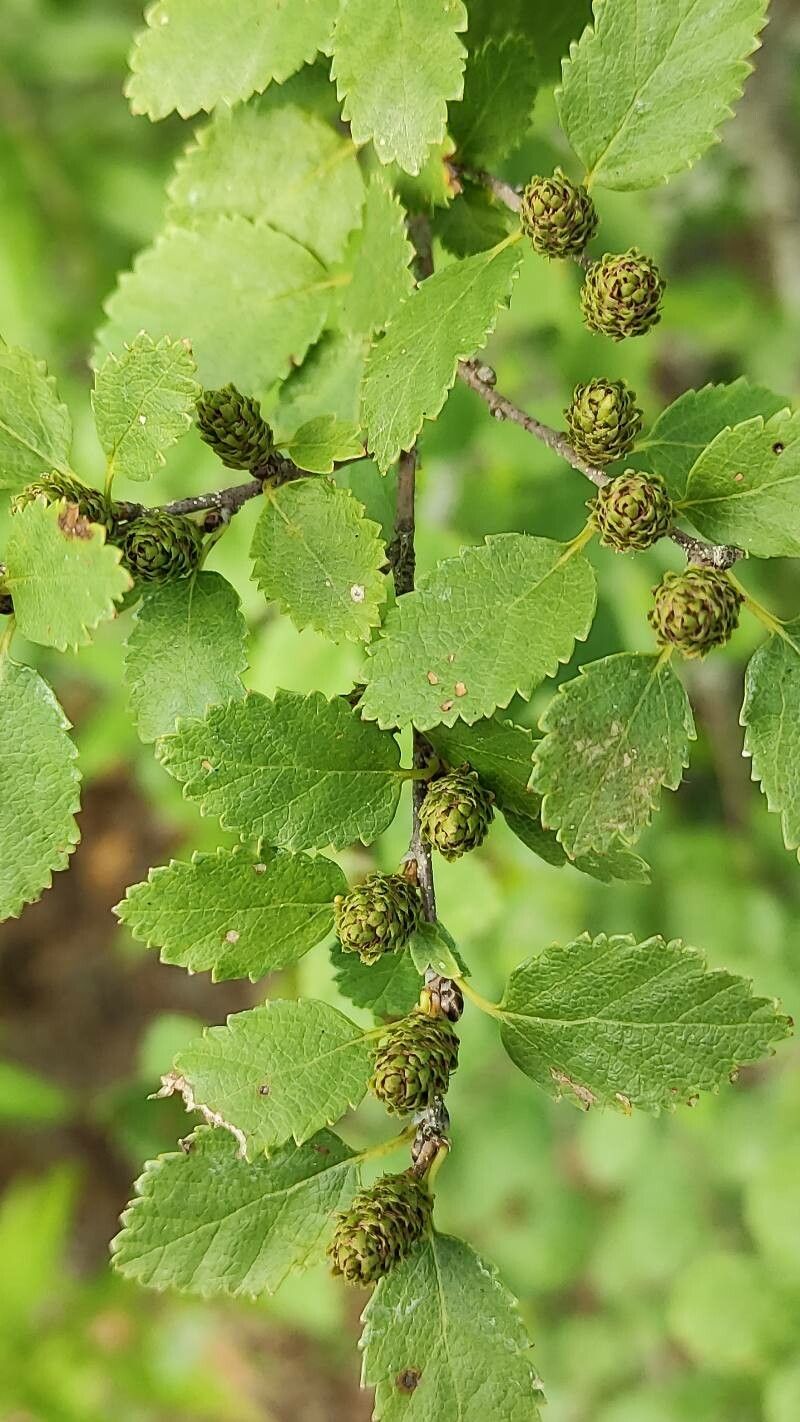
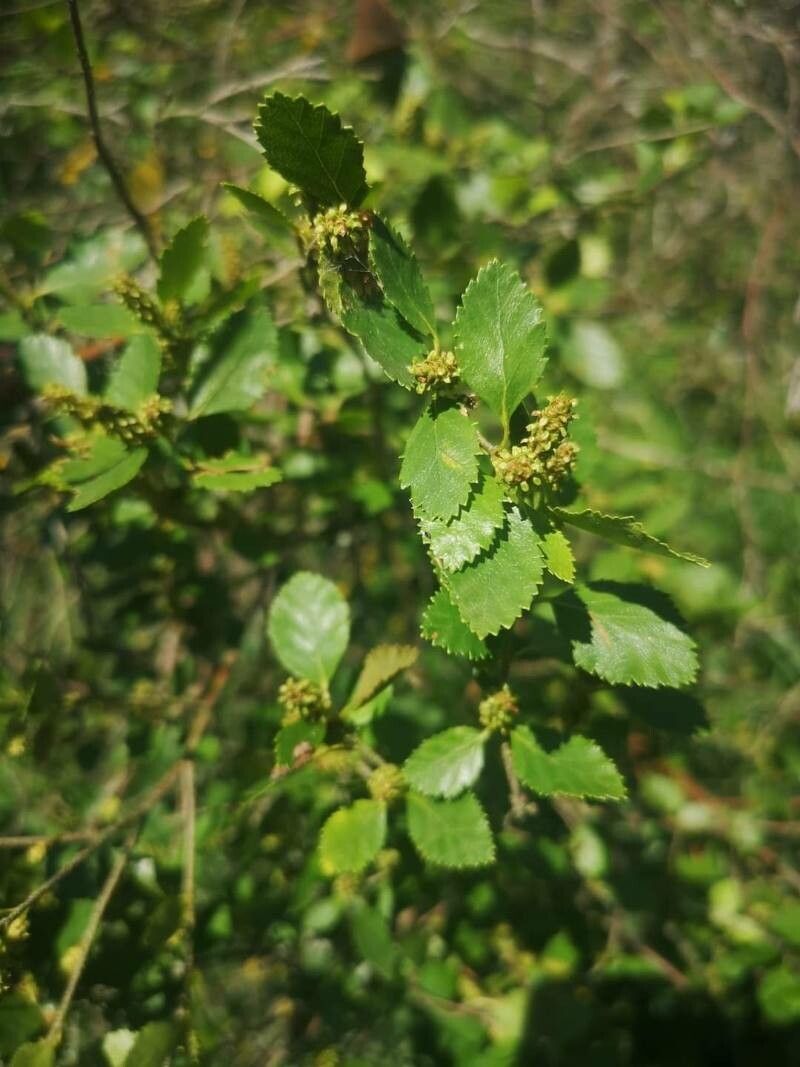
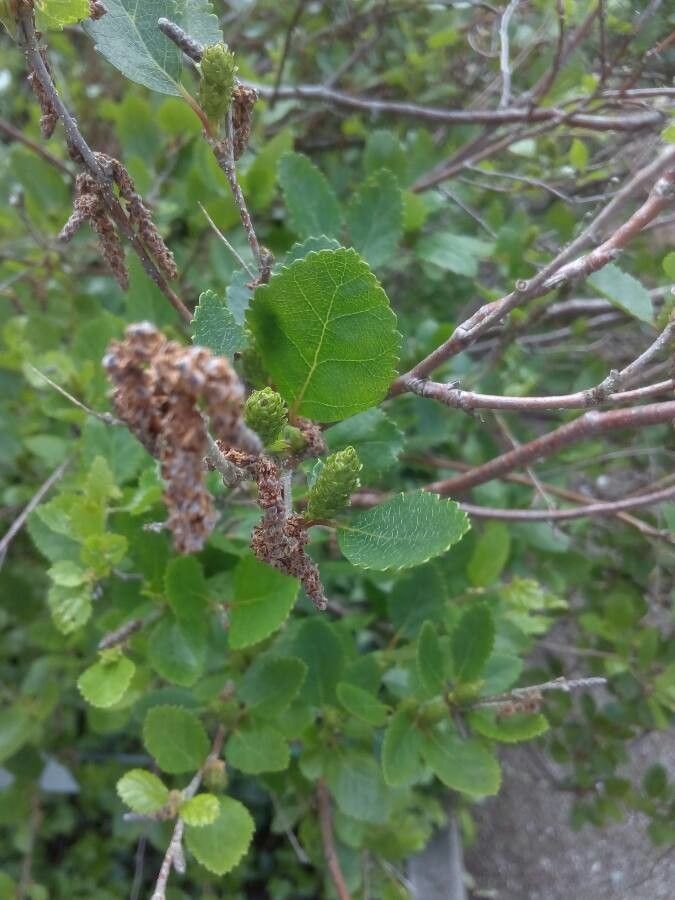
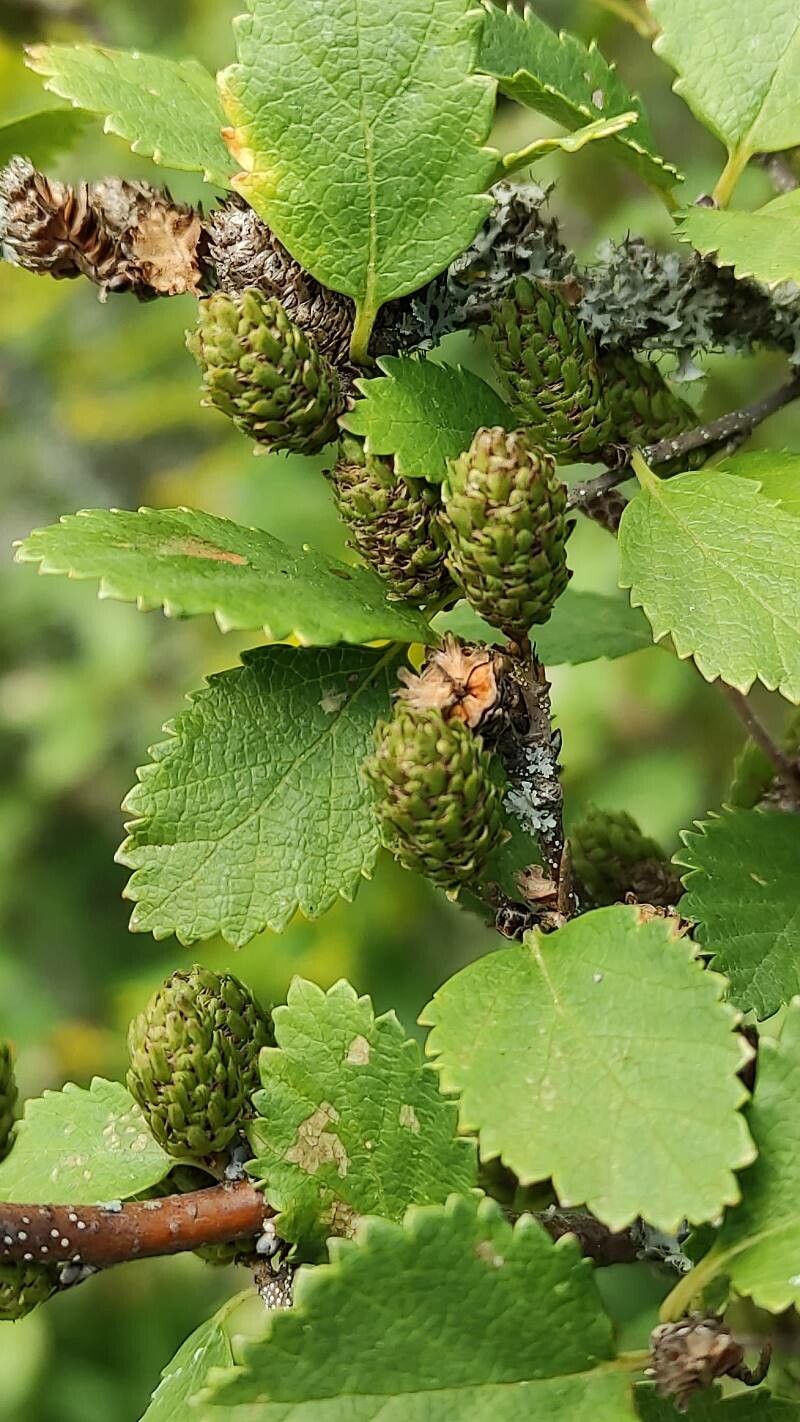
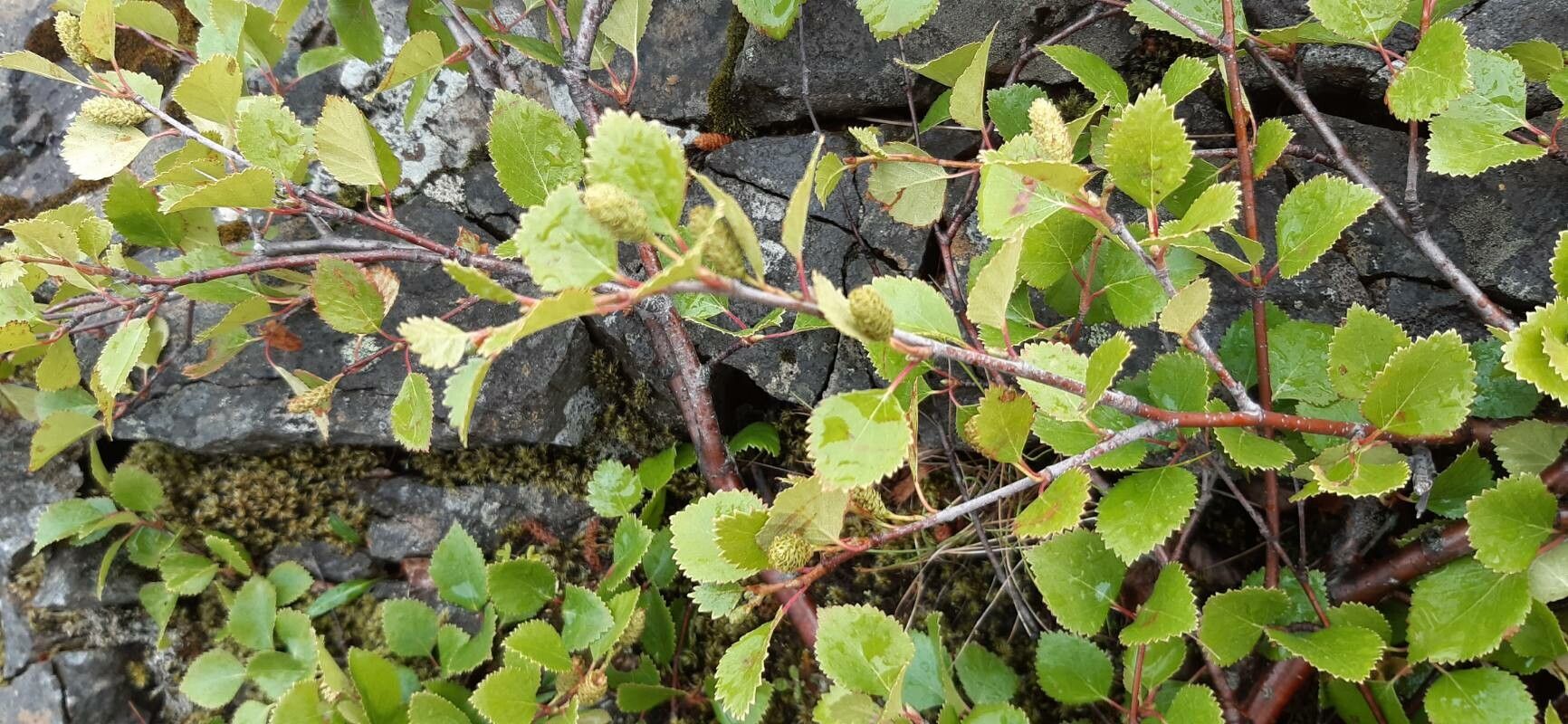
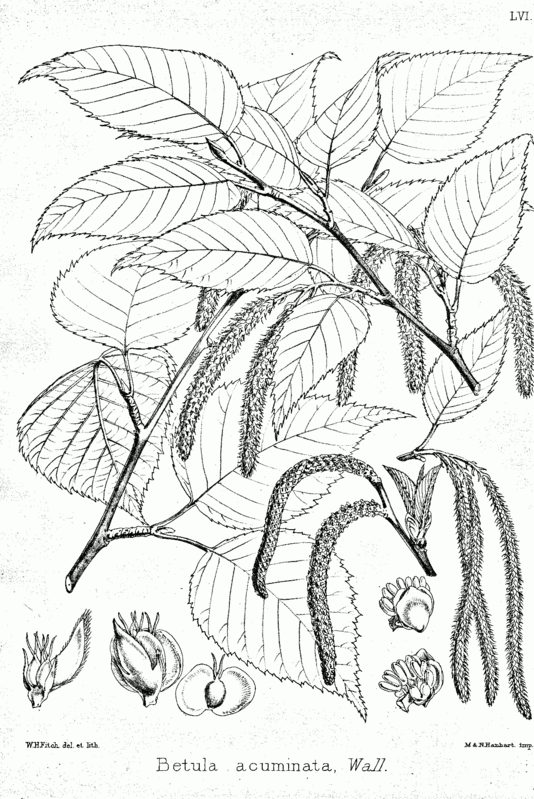
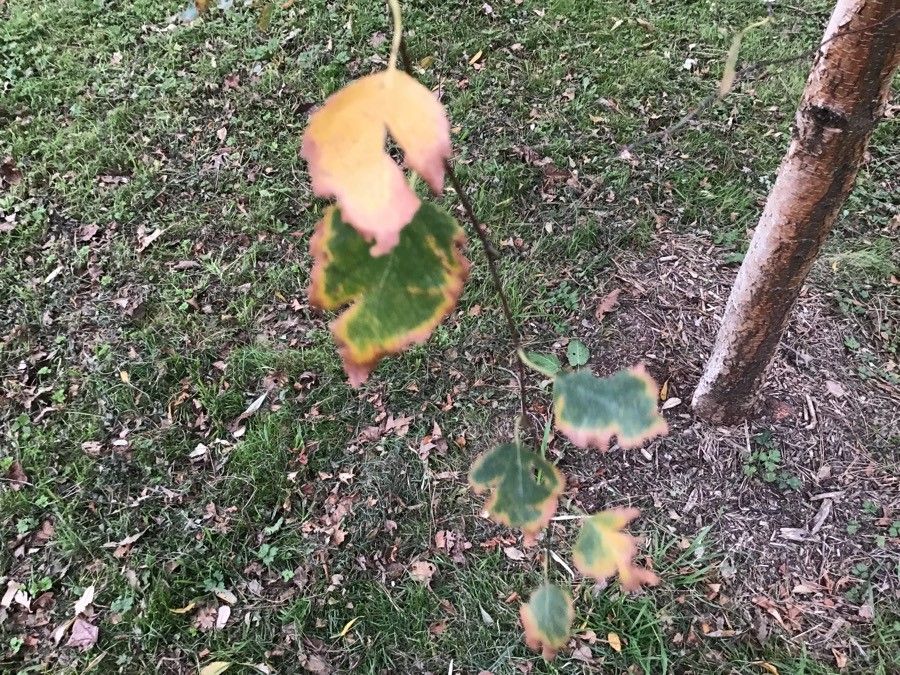
Betula humilis, commonly known as the bog birch or dwarf birch, is a deciduous shrub or small tree belonging to the Betulaceae family. Native to North America, it thrives in wetlands, bogs, and swamps in the eastern regions of Canada and the United States.
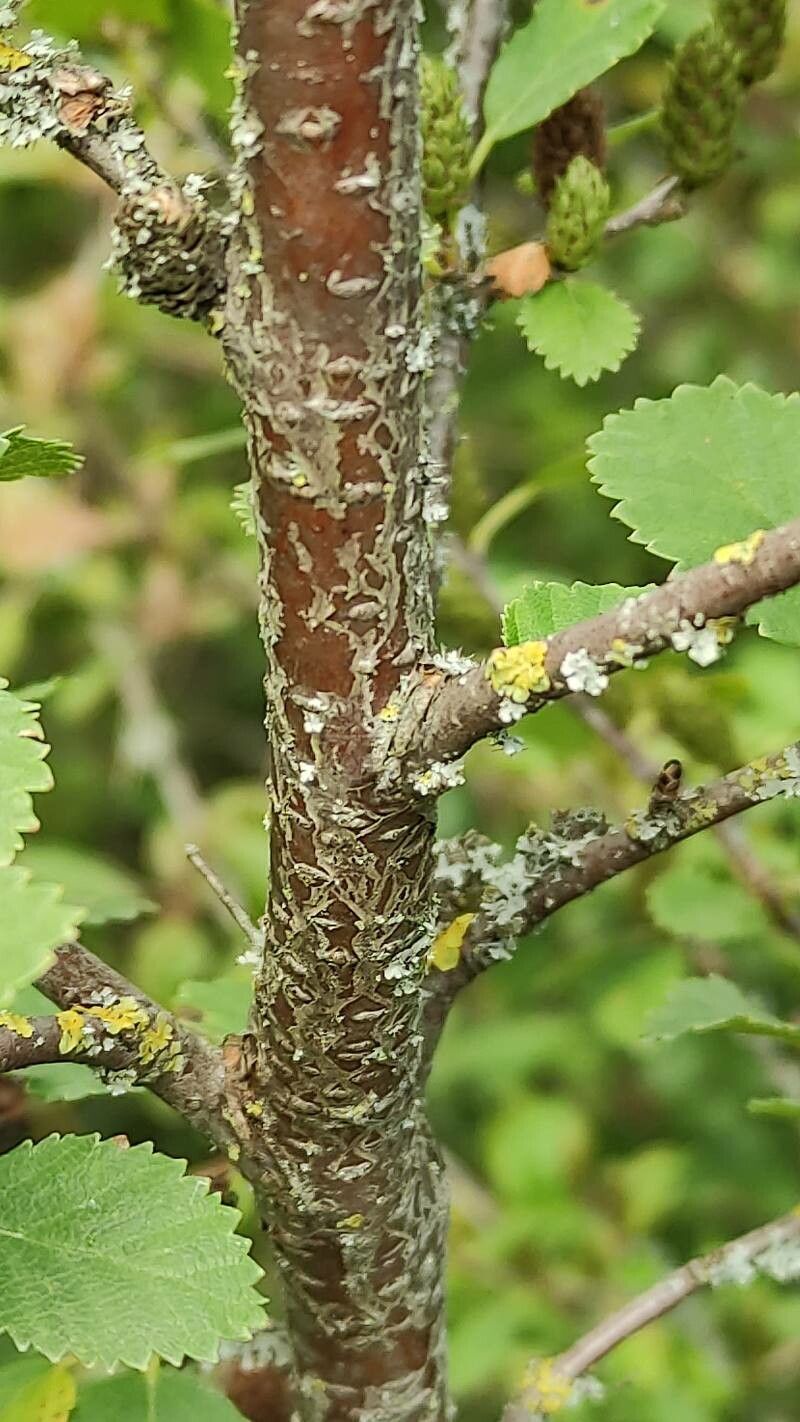
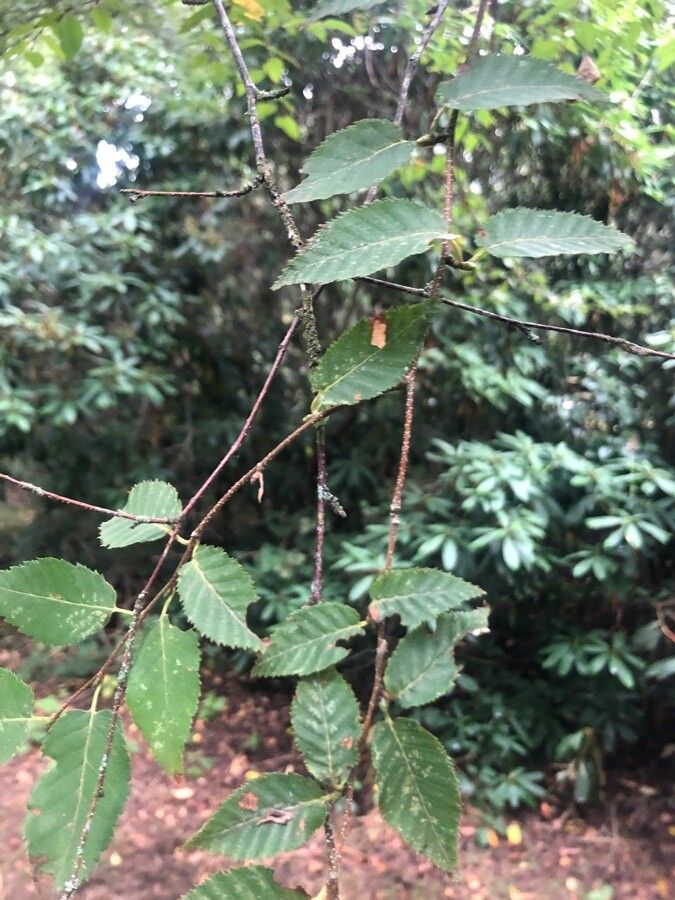
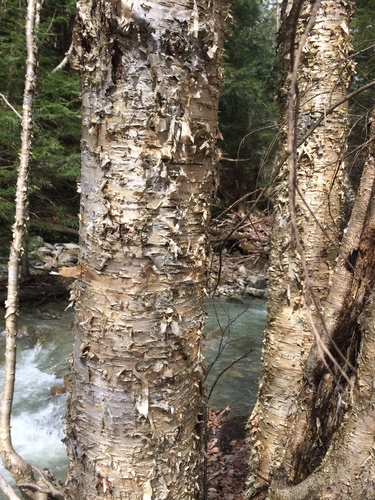
The bog birch usually reaches 3 to 6 feet in height and spreads 3 to 5 feet wide. It has a multi-stemmed growth habit with thin branches covered in smooth bark that varies from reddish-brown to grayish-white. Its oval-shaped leaves have serrated edges and range from light green to dark green in color.
In early spring, Betula humilis produces small yellow-brown catkins that later develop into cone-like fruit clusters containing tiny winged seeds. The plant prefers moist soil conditions but can tolerate some drought once established.
The bog birch is vital for wildlife, providing food for birds such as grouse and woodpeckers, and serving as a habitat for various insects including butterflies and moths.
Overall, Betula humilis is an attractive shrub or tree species that enhances the beauty of wetland environments while offering significant ecological benefits.
Lesser birch shows strong resistance to disease and is usually not susceptible to illnesses. As for care, this plant is fairly low-maintenance. When grown outdoors, it needs only minimal watering, and larger plants typically do not require pruning. Smaller plants, however, should be pruned after they have bloomed. Lesser bircht is suitable for anyone with an outdoor space, such as a garden or deck, and does not require a lot of care experience.
How to keep Betula Humilis.
Light
Lesser birch is native to open habitats, such as sunny meadows and forest edges, which provide abundant light. It flourishes in full sun but can also tolerate partial sun, adapting well to a range of light conditions.
Water
Newly planted lesser birch trees need careful watering. To keep the soil moist without making it too dry or soggy, water them for 30 seconds twice a week. Once the trees are established, they only require additional watering during hot summer months. To water the trees effectively, use a hose placed at the base, allowing a slow stream to reach the roots.
Temperature
Lesser birch is highly adaptable to a range of climatic conditions, whether in blazing summers or freezing winters. Still, it has an optimal temperature range for growth. If temperatures become too high, the plant can experience heat and humidity stress, which can lead to its death. In places where temperatures reach the lower boundary of its cold tolerance, insulating measures should be taken to protect the plant.
Fertilizer
Fertilize your Lesser birch in early spring to encourage healthy growth. Regular feeding improves the tree’s overall condition, producing vigorous growth, increased resilience to harsh conditions, and stronger resistance to diseases and pests. Stick to a specific fertilization schedule for your Lesser birch to preserve vibrant, deeply colored foliage and a lush appearance.
Pruning
The lesser birch is a small deciduous shrub characterized by its rounded leaves and catkins. To encourage healthy growth and improve air circulation, prune the shrub in early spring. It's important to remove any dead branches, but be careful not to prune too heavily, as this can stress the plant. Always sterilize your tools to reduce the risk of disease.
Botanical profile.
- Plant Type
- Shrub
- Life Cycle
- Perennial
- Genus
- Betula
- Family
- Betulaceae
- Hardiness Zone
- 2-6
- Mature Height
- 0.49 m to 2.13 m
- Mature Spread
- 0.91 m to 2.13 m
- Leaf Color
- Green, Dark Green
- Leaf Type
- Deciduous
- Flower Size
- 2.03 cm to 3.05 cm
- Bloom Time
- Early spring, Mid spring
- Planting Time
- Spring, Summer
- Harvest Time
- Late summer, Early fall, Mid fall
- Native Area
- Russia, Lithuania, Germany, Austria, Kazakhstan, Switzerland, Czech Republic, Estonia, Poland, Romania, Latvia, Ukraine, Belarus, China
Other names.
Reader questions.
What are the sunlight requirements for Lesser Birch (Betula humilis)?
Lesser Birch (Betula humilis) requires full sun to thrive, which means it needs above 6 hours of sunlight each day. It's important to observe how sunlight moves through your garden to select the ideal spots for your plants. This ensures they receive the perfect balance of light and shade, crucial for their growth and health.