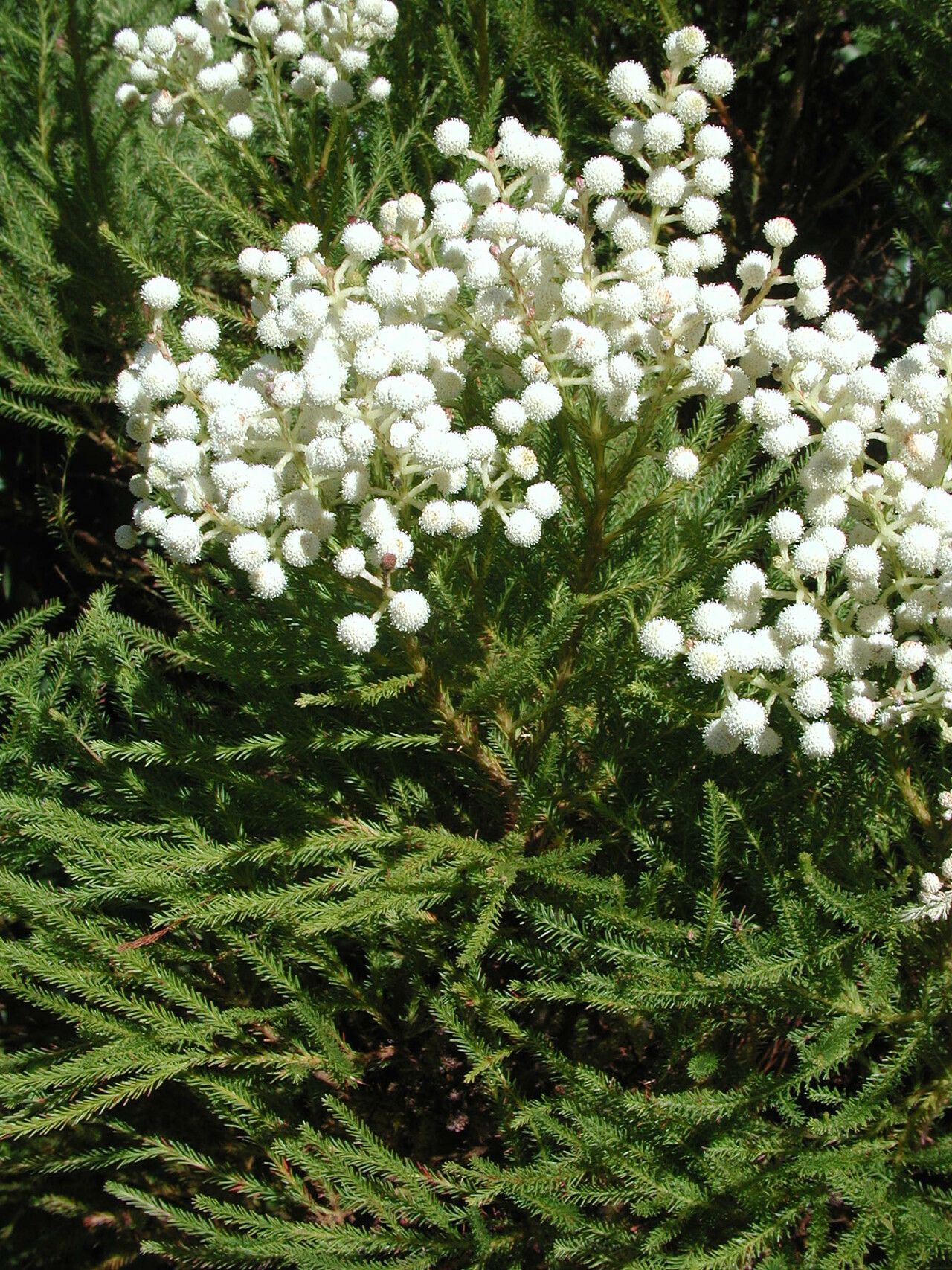
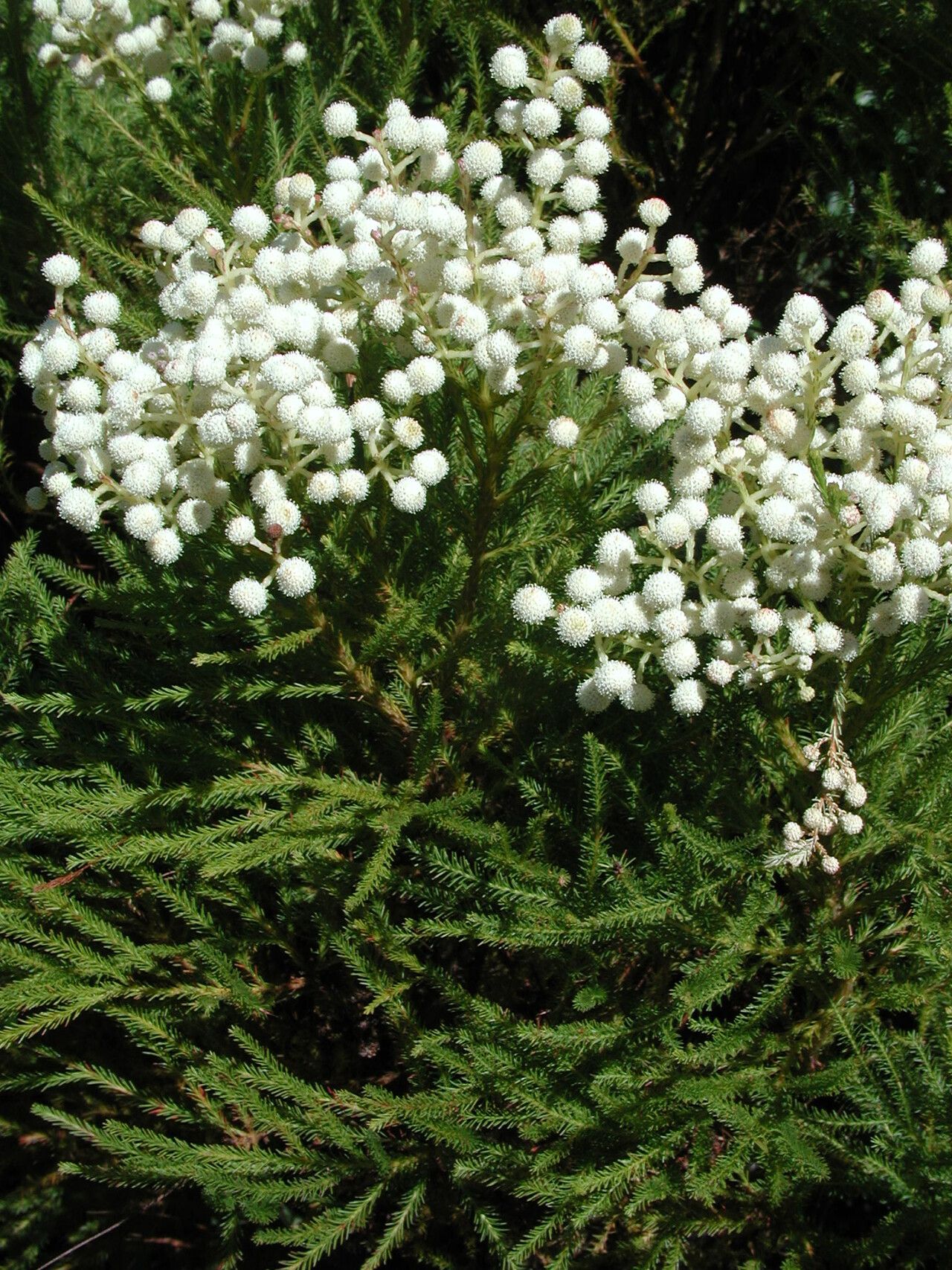
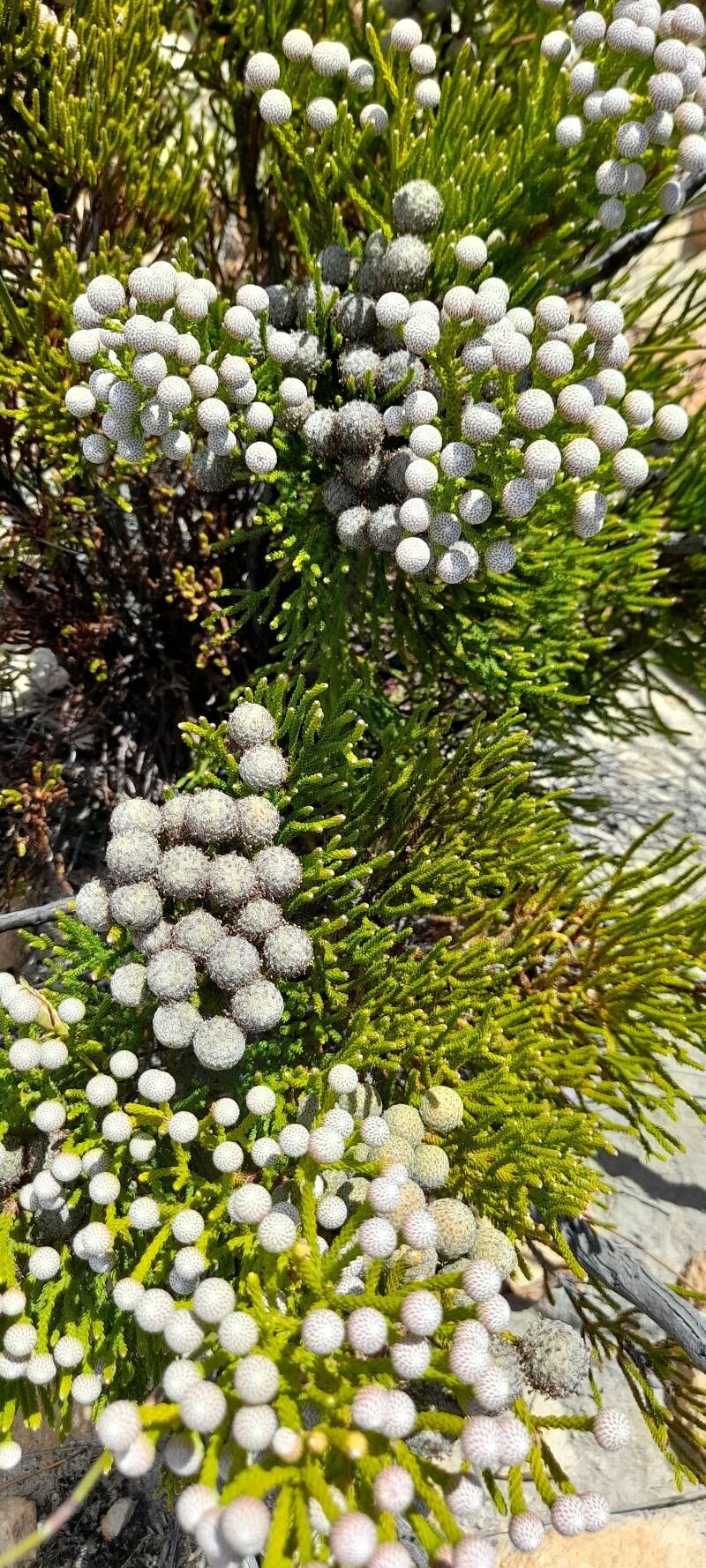
Berzelia lanuginosa, commonly known as common button bush, is a species of flowering plant in the family Bruniaceae native to the Western Cape region of South Africa. It is a perennial shrub that is hardy from USDA hardiness zones 9a to 11. It grows to be 4 to 6 feet tall.
Common button bush possesses good resistance to disease and is generally not susceptible to illnesses. With regard to care, this plant is relatively low-maintenance. When grown outdoors it needs only minimal watering, and larger specimens typically do not require pruning. Smaller plants, however, should be pruned after they finish flowering. Common button bush is suitable for anyone with an outdoor area, such as a garden or a deck, and does not demand extensive gardening experience.
How to keep Berzelia Lanuginosa.
Light
The common button bush thrives when it receives ample sunlight, using that light to drive its growth and overall vitality. If it lacks sufficient sun, it struggles and may show signs of poor development. Originally found in well-lit habitats, the common button bush cannot tolerate situations that are deprived of strong sunlight. Too much sun will not harm it, but too little can cause health problems.
Water
The common buttonbush thrives in moderate watering conditions, needing water every two weeks. It originates from regions with balanced rainfall, so it can tolerate occasional dry spells. This evergreen shrub does best in outdoor environments where natural rain cycles help maintain its optimal moisture and health.
Temperature
Common button bush shows strong adaptability to a variety of climate conditions, from blazing summers to frigid winters. Still, it has a preferred temperature range for healthy growth. If temperatures climb too high, the plant becomes vulnerable to heat and humidity stress, which can kill it. In areas where temperatures near the lower limit of its cold tolerance, providing insulation is important to protect the plant.
Fertilizer
Timing is essential when fertilizing Common button bush. Apply fertilizer in early spring and continue monthly until early summer. Fertilizer encourages attractive blooms and supplies energy during both dormant and active growth periods.
Pruning
To ensure optimal growth, the common buttonbush should be strategically pruned in early spring. Start by removing any dead branches and thinning out crowded areas. This will improve airflow and reduce the risk of disease. Pruning not only shapes the plant but also enhances flower production. Additionally, using clean tools is essential for promoting healthy regrowth.
Pot & Repot
To ensure healthy growth and vibrant blooms, repot your common buttonbush every 2-3 years in the spring into a larger container. After repotting, place the plant in bright, indirect light and keep the soil consistently moist to help it recover. These steps will support the development of the bush’s distinctive globular flowers.
Botanical profile.
- Plant Type
- Shrub
- Life Cycle
- Perennial
- Genus
- Berzelia
- Family
- Bruniaceae
- Hardiness Zone
- 9-11
- Mature Height
- 1.22 m to 1.83 m
- Mature Spread
- 0.91 m to 1.22 m
- Leaf Color
- Dark Green
- Leaf Type
- Semi-evergreen
- Flower Color
- White
- Flower Size
- 1.02 cm
- Bloom Time
- Winter
- Planting Time
- Winter
- Harvest Time
- Spring
- Native Area
- South Africa
Other names.