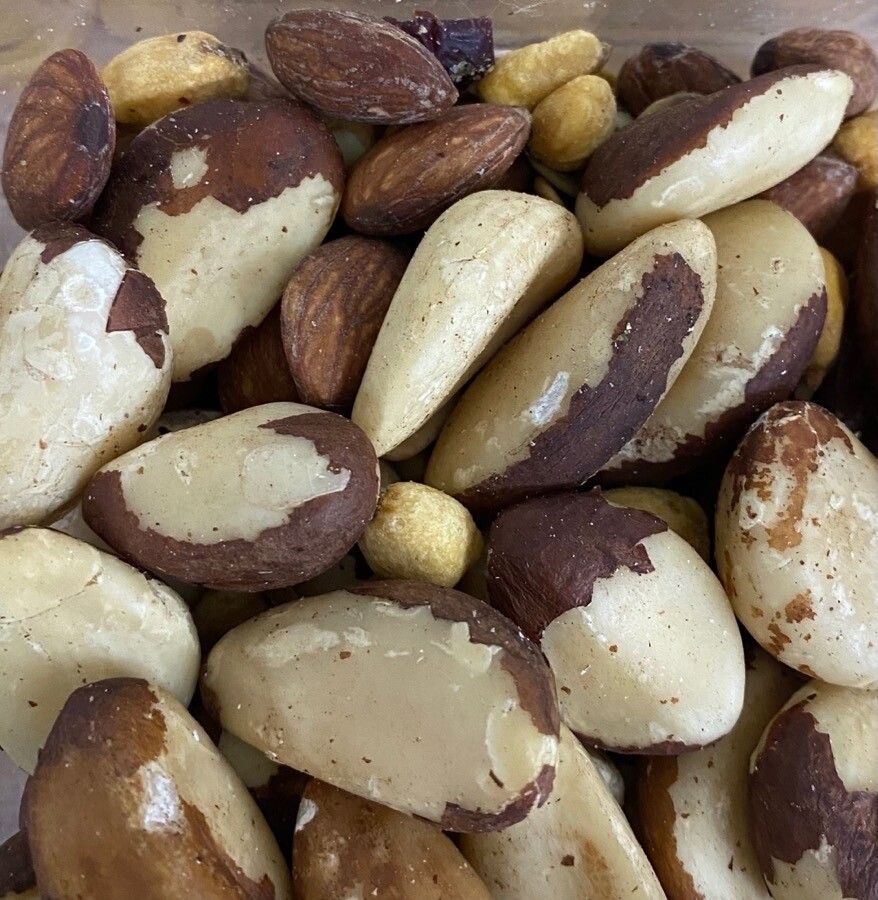
The Brazil nut (Bertholletia excelsa) is a South American tree in the family Lecythidaceae, and it is also the name of the tree's commercially harvested edible seeds. It is one of the largest and longest-lived trees in the Amazon rainforest. The fruit and its nutshell – containing the edible Brazil nut – are relatively large, possibly weighing as much as 2 kg (4 lb 7 oz) in total weight. As food, Brazil nuts are notable for diverse content of micronutrients, especially a high amount of selenium. The wood of the Brazil nut tree is prized for its quality in carpentry, flooring, and heavy construction.
The Brazil nut has strong disease resistance and is generally not prone to disease. In terms of care, this plant is fairly low-maintenance. When grown outdoors it needs little watering, and larger plants typically do not require pruning. However, smaller plants should be pruned after they have finished blooming. The Brazil nut is suitable for anyone with an outdoor area, such as a garden or deck, and does not demand extensive plant-care experience.
How to keep Bertholletia Excelsa.
Light
The Brazil nut comes from open habitats, for example sunny meadows and forest edges, which provide plenty of light. It does best in Full Sun but can also tolerate Partial Sun, showing good adaptability to different sunlight conditions.
Water
The Brazil nut tree, native to the Amazon rainforest, thrives in high humidity and can tolerate moderate drought. To mimic its natural wet-dry cycles, water the tree every 1-2 weeks. Although it is typically grown outdoors, ensuring the soil drains well is crucial to prevent root rot and support healthy growth.
Temperature
The Brazil nut is native to the Amazon rainforest and prospers in temperatures from 68 to 100.4 °F (20 to 38 °C). Within this preferred temperature range, adjusting to seasonal variations is unnecessary, providing a consistently stable growth environment year-round.
Fertilizer
Fertilizing is essential for caring for the Brazil nut. Regular feeding throughout the growing season maintains the energy required for its showy leaves and supports overall growth. Failing to fertilize can lead to unhealthy leaves, reduced ornamental value, and stunted or weak growth that is prone to breaking.
Pruning
Pruning Brazil nut trees in early spring offers several benefits. By removing dead branches and thinning the tree, you improve air circulation. Keeping a strong central leader and ensuring the branches are well-spaced will enhance the tree's health and boost fruit production. Be sure to use clean, sharp tools to protect the bark and extend the tree's lifespan.
Botanical profile.
- Plant Type
- Tree
- Life Cycle
- Perennial
- Genus
- Bertholletia
- Family
- Lecythidaceae
- Hardiness Zone
- 10-12
- Mature Height
- 29.87 m to 49.99 m
- Mature Spread
- 10.06 m to 20.12 m
- Leaf Color
- Dark Green
- Leaf Type
- Deciduous
- Flower Color
- White, Cream
- Flower Size
- 2.03 cm to 3.05 cm
- Bloom Time
- Winter
- Planting Time
- Spring, Summer
- Harvest Time
- Summer, Fall
- Native Area
- Colombia, Bolivia, Venezuela, Peru, Guyana
Other names.
Reader questions.
How should I water my Brazil nut tree the right way?
To promote excellent root development, it's best to place a garden hose at the base of the plant. Avoid spraying the leaves directly. If the leaves are exposed to direct sunlight outside, they will need more water. You can use bubblers to wet the roots of each plant. Soaker hoses are also useful, especially when adding or removing plants as they can cover the entire garden or bed for deep root watering. Make sure to drain any excess water and allow the soil to dry before watering again. Watering at ground level is recommended to prevent diseases. On a sunny day, it may be beneficial to spray the entire bush with water. Whether the plant is in a pot or in the ground, remember that Brazil nut plants prefer deep watering rather than light sprinkling.
Why should I add fertilizer to my Brazil nut plant?
Regular fertilization is crucial for Brazil nuts because their leaves are showy and require a lot of energy to produce and maintain. The challenge lies in the fact that Brazil nuts must allocate enough energy to keep their leaves healthy, while also supporting the growth of their stems, branches, roots, and other important structures. Neglecting fertilization can lead to two likely outcomes. Firstly, the leaves of the Brazil nut may lose their natural color and texture, appearing generally unhealthy and diminishing their ornamental appeal. Secondly, the Brazil nut may experience slowed overall growth or weak growth that is susceptible to breakage.
How many hours of sunlight does a Brazil nut need each day to grow healthily?
To promote healthy growth in Brazil nuts, it is important to provide them with a minimum of 3-6 hours of sunlight per day. While this is the minimum requirement, most plants that can tolerate partial sun can also flourish in full sun. However, since these plants require less light for photosynthesis, they are more adaptable compared to plants that need either full sun or partial shade.
What temperature is best for Brazil nuts?
To help your tropical plants thrive, it's best to maintain a temperature range of 75℉ to 90℉ (25-32℃). While different species can tolerate temperatures outside this range, sticking within a few degrees of these limits will ensure optimal growth. However, there are extreme temperature limits to be aware of. Anything below 50℉ (10℃) or above 95℉ (35℃) can hinder growth and cause issues with the leaves and stems. Low temperatures are particularly damaging, as even a light frost can lead to the death of your tropical plants. In fact, cellular death can occur rapidly, with some species dying within 12 to 24 hours.
What should I do if I give the Brazil nut too much water or too little water?
If a Brazil nut is overwatered, it can exhibit yellowing, dropping, and wilting of its leaves. The plant may also appear unhealthy, with mushy stems. In such cases, it's best to adjust your watering schedule as needed. Wilting can also indicate under watering, characterized by leaves turning crispy and dry. Conversely, overwatered leaves will be soft and wilted. If the soil is dry and normal watering is insufficient, give the plant a thorough watering. However, even after recovery, the plant may still display dryness and yellowing leaves due to root damage. It's important to regularly check the moisture levels of indoor potted plants like the Brazil nut, and avoid overwatering. If you notice black spots, allow the soil to dry out by refraining from watering for a few days. Overwatering can lead to root rot, which can be identified by discolored and slimy roots. If root rot is present, consider transferring the plant to a different pot, and ensure the soil does not become excessively soggy. When planting a Brazil nut outdoors, make sure to dig a little deeper. If the soil feels too dry when checked with your fingers, it may indicate underwatering, requiring adequate watering to aid in the plant's recovery.
When should I put fertilizer on my Brazil nut tree?
To ensure the proper growth of your Brazil nut plant, occasional feedings are recommended instead of following a strict feeding schedule. A convenient way to fertilize it is by applying fertilizer during watering sessions. Additionally, this plant requires a good amount of water during the growing season. Feeding the plant every two to three weeks throughout its growth cycle is recommended.
What kind of sunlight does the Brazil nut require?
The Brazil nut thrives in full or partial sun. It is most successful with direct morning light, but during the summer, it requires protection from intense afternoon sun. In temperate environments, excessive hot afternoon sun can scorch the leaves, harming the plant's overall look and well-being.
Does the Brazil nut need varying temperatures during different stages of growth?
The Brazil nut doesn't need temperature changes to enter different growing phases, but it's important to remain consistent. Fluctuations in temperature can slow down its growth regardless of its phase, so it's best to keep it in a controlled environment. Maintaining an optimal temperature range of 75℉ to 90℉ (25-32℃), especially above the lower limit, is crucial. While exceeding 90℉ (32℃) is not ideal, as a tropical plant, it can handle it. However, going below 50℉ (10℃), especially 40℉ (5℃), will directly damage this heat-loving plant.
How frequently should I use water on my Brazil nut?
The Brazil nut prefers deep and infrequent watering, especially when planted in pots. To ensure proper hydration, soak them in a gallon of water each time. Watering pots require more attention as the soil tends to dry out faster. In cold regions, water every 3 to 5 days, preferably in the morning when the soil is dry. Check the soil regularly, and when the top 2-3 inches are dry, give the plant a full watering. During hot days, monitor the soil moisture daily to prevent it from drying out quickly. If you have a garden, irrigation is necessary. In hot climates, water once a week and only when the top 2-3 inches of soil are dry. It's essential to consider rainfall and avoid overwatering to prevent root rot. Brazil nuts typically grow in spring and fall. For outdoor plants, add mulch about 3 to 4 inches deep to retain water. Sandy soil requires more frequent watering, while clay soil can go 2-3 days without water to avoid root rot. Keep track of watering dates to ensure timeliness, and watch for drooping leaves as signs that watering might be overdue.
When is it not a good idea to put fertilizer on my Brazil nut?
For most of the year, you can stick to a regular fertilization routine for your Brazil nut. This includes the active growing season of spring, summer, and early fall. However, it's important to refrain from fertilizing the plant during the winter. This is when the Brazil nut enters a dormant growth phase, during which it either shows no or minimal new growth. Because of this reduced energy usage, fertilization is unnecessary during this period.
Can the sun harm Brazil nuts? How can we keep Brazil nuts safe from sun and heat damage?
When transitioning a Brazil nut plant from indoors to outdoors, it is important to be mindful of direct sunlight, as it can cause damage. To prevent sunburn, gradually move the pots from a shaded area to a brighter spot. However, even plants that are accustomed to the sun can suffer from extreme heat. During a heatwave, it is crucial to keep the soil consistently moist to help the plants tolerate high temperatures. To protect the sensitive Brazil nut plants during extreme weather, it is recommended to either move them to areas with afternoon shade or use shade cloth to provide some protection.
Does Brazil nut require varying temperatures for different seasons?
Brazil nut is convenient to grow because it does not require different temperature conditions for each growing season. The key to taking care of this plant is maintaining the environment within the ideal temperature range. As a result, keeping the plant indoors is highly recommended. This allows you to have control over the temperature, regardless of the external climate conditions. Adequate lighting is also important for tropical plants like the Brazil nut. These plants thrive with partial side-level sun exposure, meaning they should receive dappled or filtered light. Bright but indirect light is the best choice when growing them indoors. Exposing the plants to excessive direct sunlight can harm their leaves and hinder their growth potential.