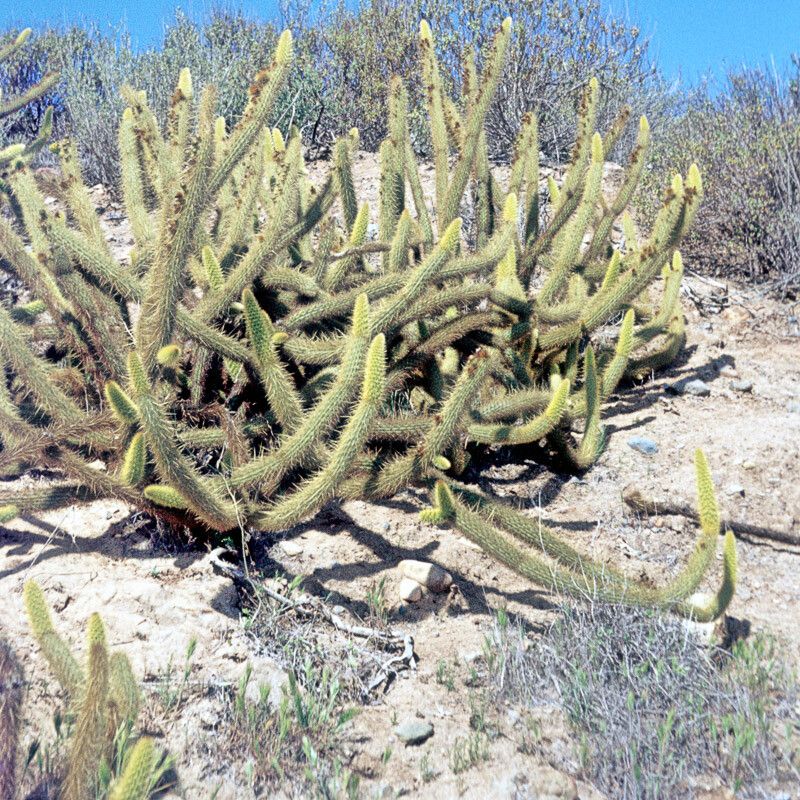
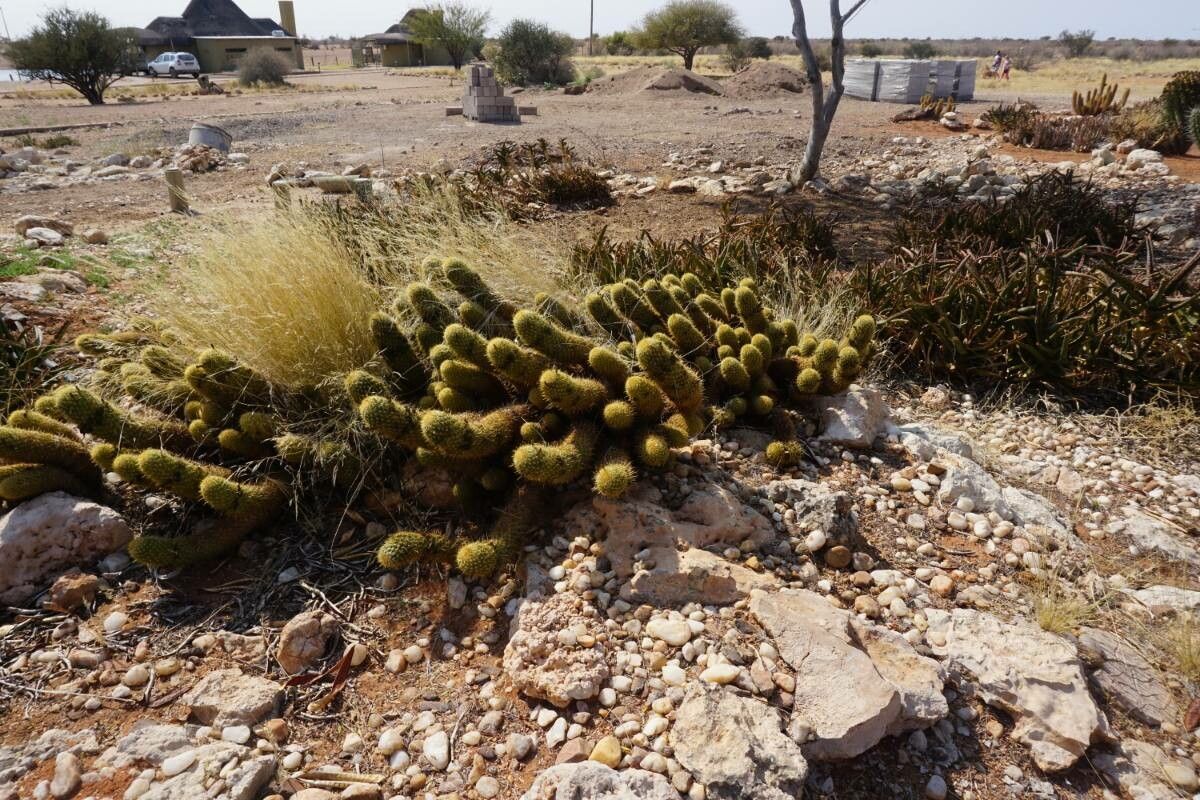
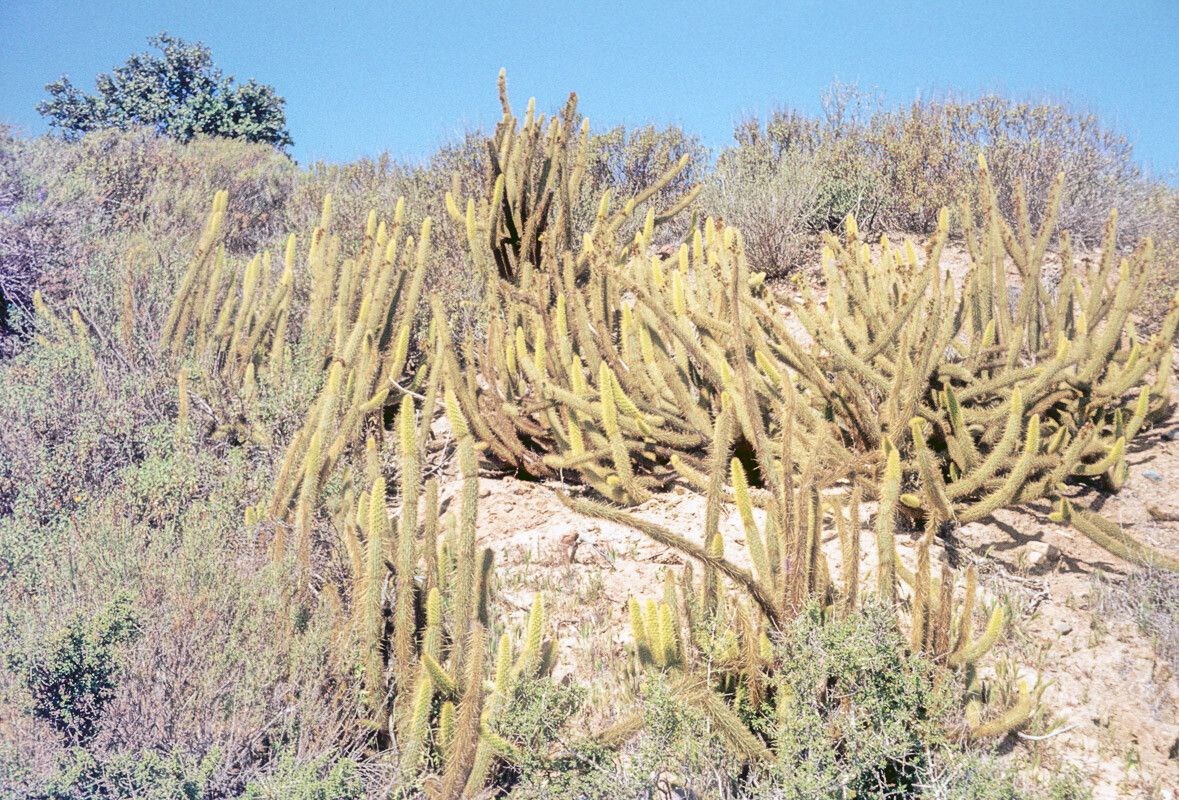
Bergerocactus emoryi is a species of cactus, known commonly as the golden-spined cereus, golden snake cactus, velvet cactus or golden club cactus. It is a relatively small cactus, but it can form dense thickets or colonies, with the dense yellow spines giving off a velvety appearance when backlit by the sun. From April to May, yellow, green-tinged flowers emerge, which transform into reddish, globular fruit. This species is native to the California Floristic Province, and is found in northwestern Baja California and a small part of California, in San Diego County and on the southern Channel Islands. Where the Mediterranean climate of the California Floristic Province collides with the subtropical Sonoran Desert near El Rosario, hybrids with two other species of cacti are found. It is the sole member of the monotypic genus Bergerocactus, named after German botanist Alwin Berger.
Golden snake-cactus has strong disease resistance and generally tolerates normal care without becoming ill easily. That said, it can be vulnerable to mealybugs; these pests may do some damage but are usually not a major danger. Regarding care, Golden snake-cactus is drought-tolerant and does not require frequent watering. It can go long stretches without water and needs little fertilizer. Nevertheless, it is very prone to root rot if kept in poor light and overwatered. In general, Golden snake-cactus is a good choice for people who prefer low-maintenance plants, though it remains important to know and meet its basic needs. It is especially appropriate for those who travel or are away for extended periods and might forget to water regularly.
How to keep Bergerocactus Emoryi.
Light
Golden snake-cactus prefers very bright locations with strong sun exposure for its best growth. Places with dappled sunlight provide enough light without causing harm. Native to predominantly sunny habitats, it thrives under those conditions. Too little or too much sunlight results in poor development or damage, respectively.
Water
The golden snake-cactus thrives in arid environments, demonstrating impressive drought tolerance and efficient water storage capabilities. It needs watering only every three weeks and flourishes in outdoor dry climates. Its flowering is dependent on the infrequent rains that are vital to its desert habitat.
Temperature
Golden snake-cactus is native to warm environments and performs best at 68 to 95°F (20 to 35°C). Those making seasonal adjustments may need to reduce the plant's exposure to intense heat. Avoid temperatures below 68°F (20°C).
Fertilizer
For the Golden snake-cactus, small doses of fertilizer once or twice a year during the growing season are sufficient. Avoid fertilizing in winter or during summer dormancy. Cut back on fertilizer for repotted plants and wait a couple of months after repotting before fertilizing. Fertilizing supports healthy growth and encourages blooms.
Pruning
The golden snake cactus needs very little pruning. All you need to do is remove any withered flowers and branches. This helps the plant focus its nutrients on promoting healthy growth.
Pot & Repot
The 'golden snake cactus' is a columnar plant that can grow to a height of 1 to 1.5 meters. Repot it every 2 to 3 years during the spring, using a larger container with excellent drainage. After repotting, place the cactus in a bright location, but avoid direct sunlight for the first week. Make sure to water it consistently, while allowing the soil to dry out between waterings.
Botanical profile.
- Plant Type
- Succulent
- Life Cycle
- Perennial
- Genus
- Bergerocactus
- Family
- Cactaceae
- Hardiness Zone
- 9
- Mature Height
- 91 cm
- Mature Spread
- 5 cm
- Leaf Color
- Green
- Leaf Type
- Evergreen
- Flower Color
- Yellow
- Flower Size
- 2.03 cm
- Bloom Time
- Mid summer
- Planting Time
- Spring, Summer
- Harvest Time
- Mid summer, Late summer
- Native Area
- Mexico
Other names.
Reader questions.
What are the sunlight requirements for Golden snake-cactus?
The Golden snake-cactus thrives in environments that offer ample sunlight. It requires locations that are bathed in intense sun exposure for optimal growth, preferring light-soaked areas or those with dappled sun which provides it with sufficient light without causing harm. The plant is naturally inclined towards habitats dominated by sunlight, and it is crucial for its development. Insufficient or excessive sunlight exposure can lead to maldevelopment or damage. To categorize sunlight exposure: full sun entails more than 6 hours of sunlight, while partial sun involves about 3-6 hours of sunlight. Observing the movement of sunlight through your garden can help you select the ideal locations that balance light and shade, ensuring the well-being of your plants.
How can artificial lighting support Golden snake-cactus indoor growth?
For indoor Golden snake-cacti, adequate lighting is essential for optimal growth, especially when natural sunlight is insufficient, such as in winter or less sunny spaces. Artificial lighting provides a crucial alternative, promoting healthier and faster growth. LED lights are preferred for indoor plant lighting due to their ability to be customized to the specific light wavelengths needed by plants. Full sun plants require 30-50W/sq ft of artificial light, partial sun plants need 20-30W/sq ft, and full shade plants require 10-20W/sq ft. The light source should be placed 12-36 inches above the plant to mimic natural sunlight, and most plants need 8-12 hours of light per day to thrive.
What symptoms indicate inadequate lighting for Golden snake-cactus?
Golden snake-cactus shows several symptoms when subjected to inadequate lighting, which include smaller new leaves compared to the older ones, leggy or sparse growth where the spaces between leaves or stems become longer, faster leaf drop as the plant conserves resources, slower or halted new growth reflecting the plant entering survival mode, and lighter-colored new leaves indicating a lack of chlorophyll. Additionally, chlorosis (leaves turning yellow), sunscald (damage from intense sunlight), leaf curling (a defense mechanism against sunlight), wilting (loss of turgor pressure), and leaf scorching (brown, dry edges on leaves due to excessive sunlight) are critical signs of either too much or too little light.
What solutions can remedy insufficient sunlight for Golden snake-cactus?
To address insufficient sunlight for Golden snake-cactus, consider gradually moving the plants to sunnier locations, ensuring they receive at least 6 hours of direct sunlight daily. A south-facing window can be ideal for indoor plants, with curtains kept open to maximize sunlight. For plants that are not easily movable or are large, artificial lighting, such as desk lamps or professional grow lights, can provide the necessary exposure for 8 hours daily. For outdoor plants, gradual relocation to sunnier spots is advised to prevent sunburn from sudden changes. If sunlight is obstructed, pruning or transplanting during the plant's dormant period to a location with better sunlight and drainage can be effective. It's important to note that parts of the plant affected by prior insufficient sunlight may not recover, but new growth post-adjustment should be healthy.