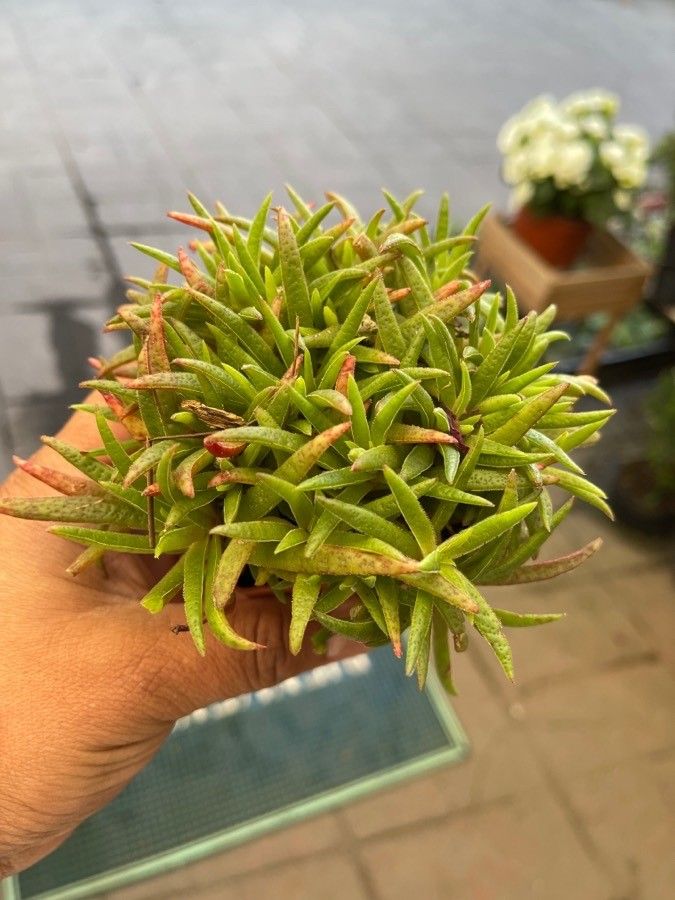
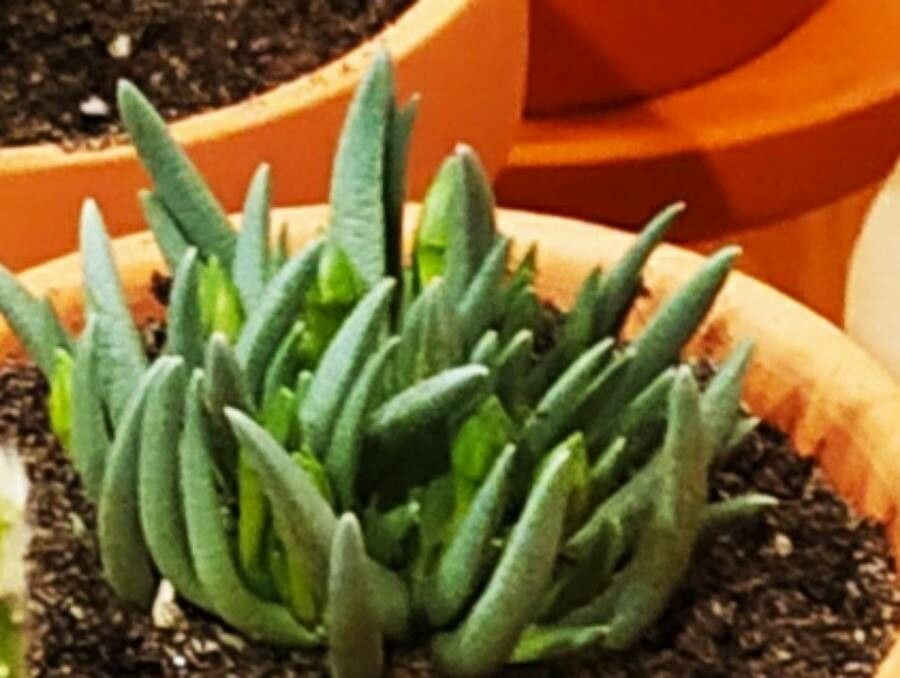
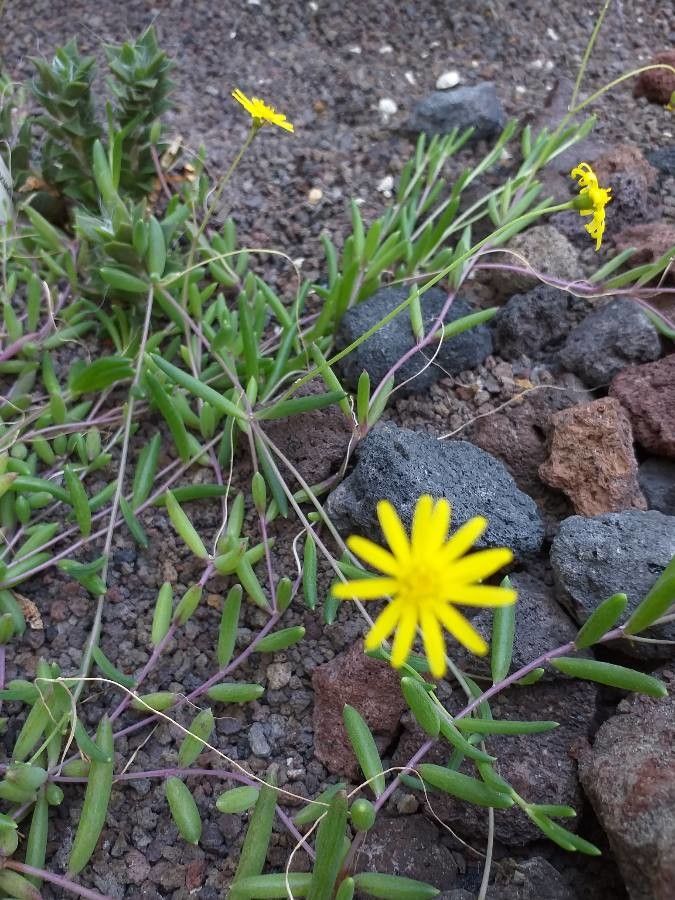
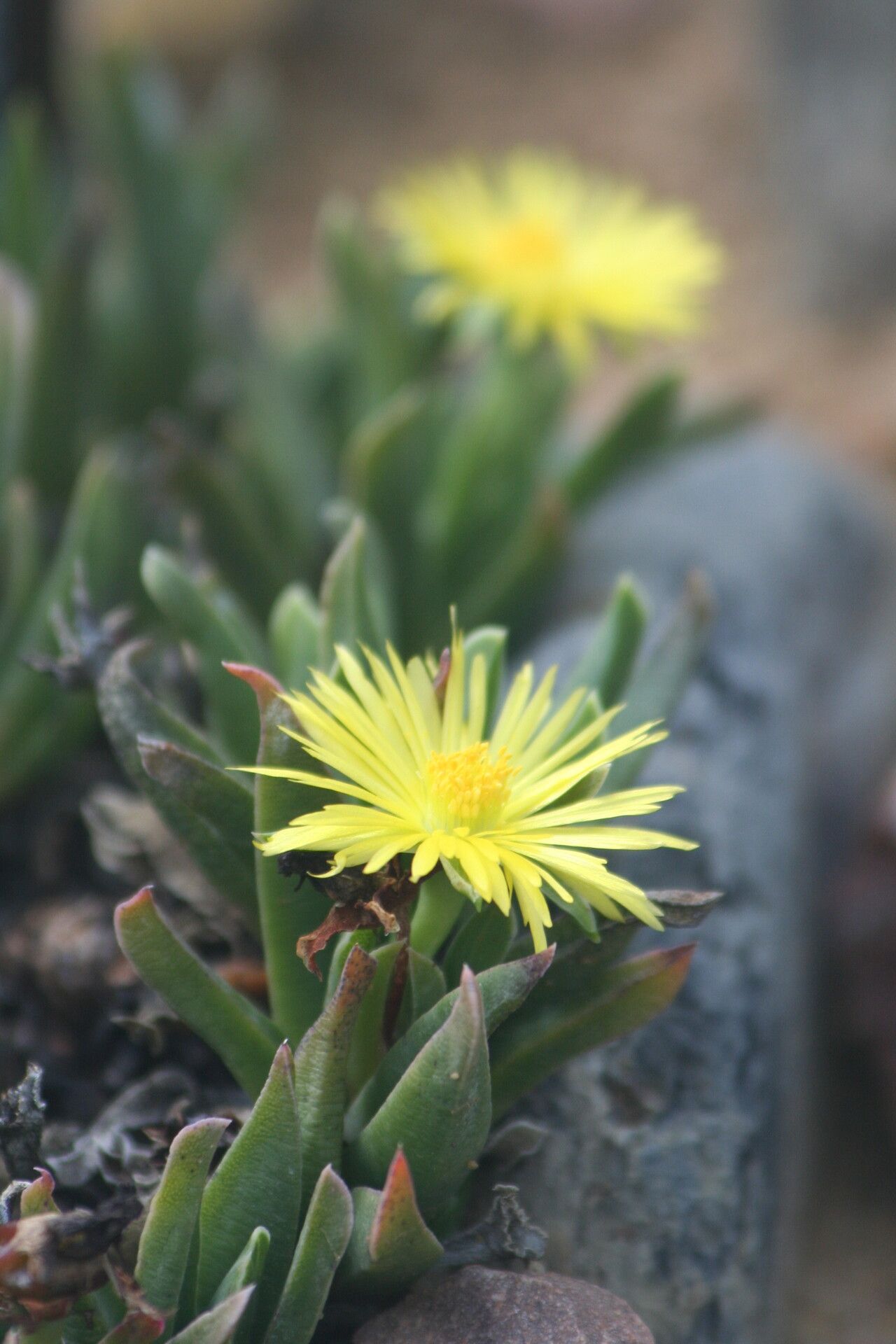
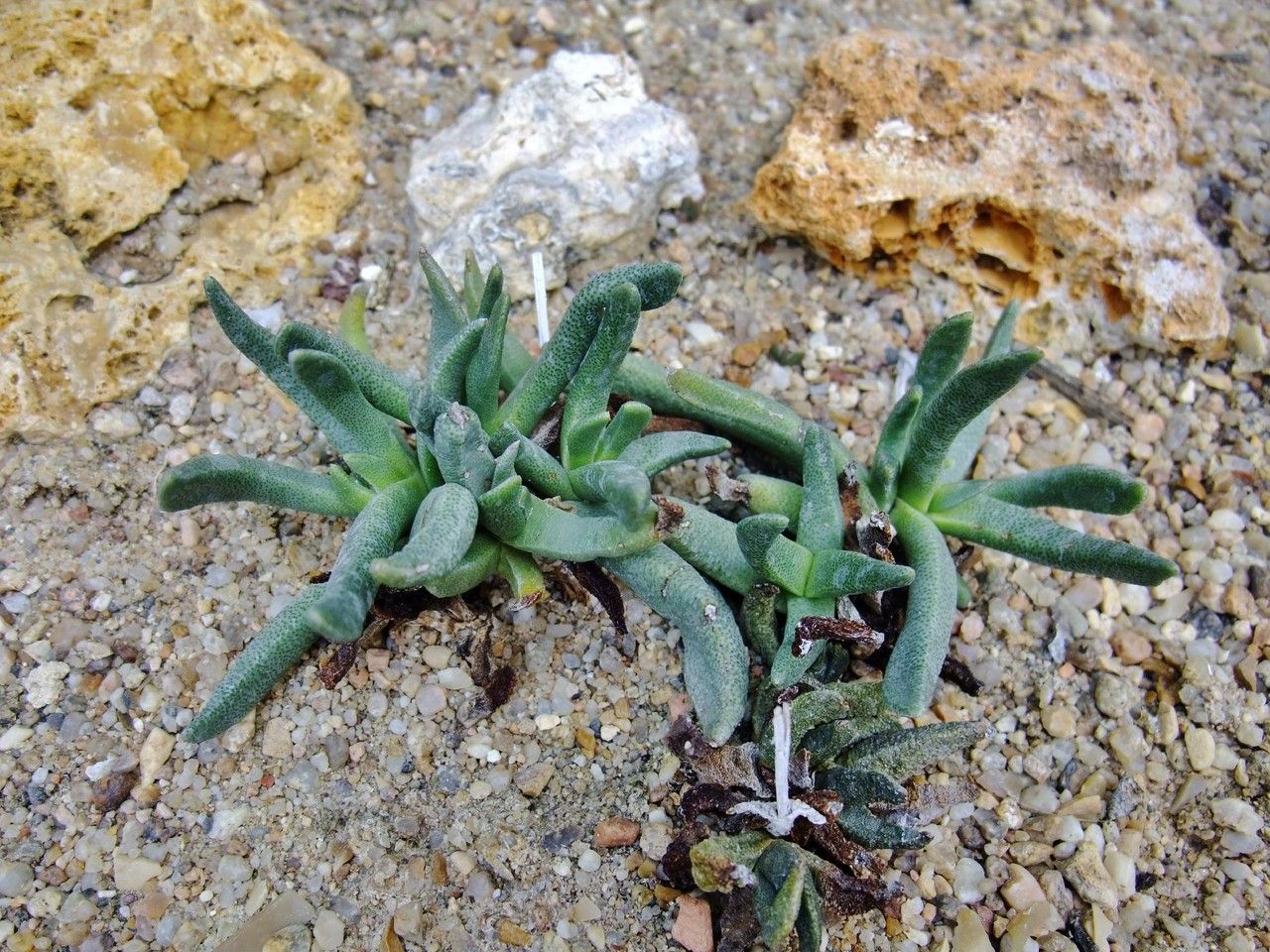
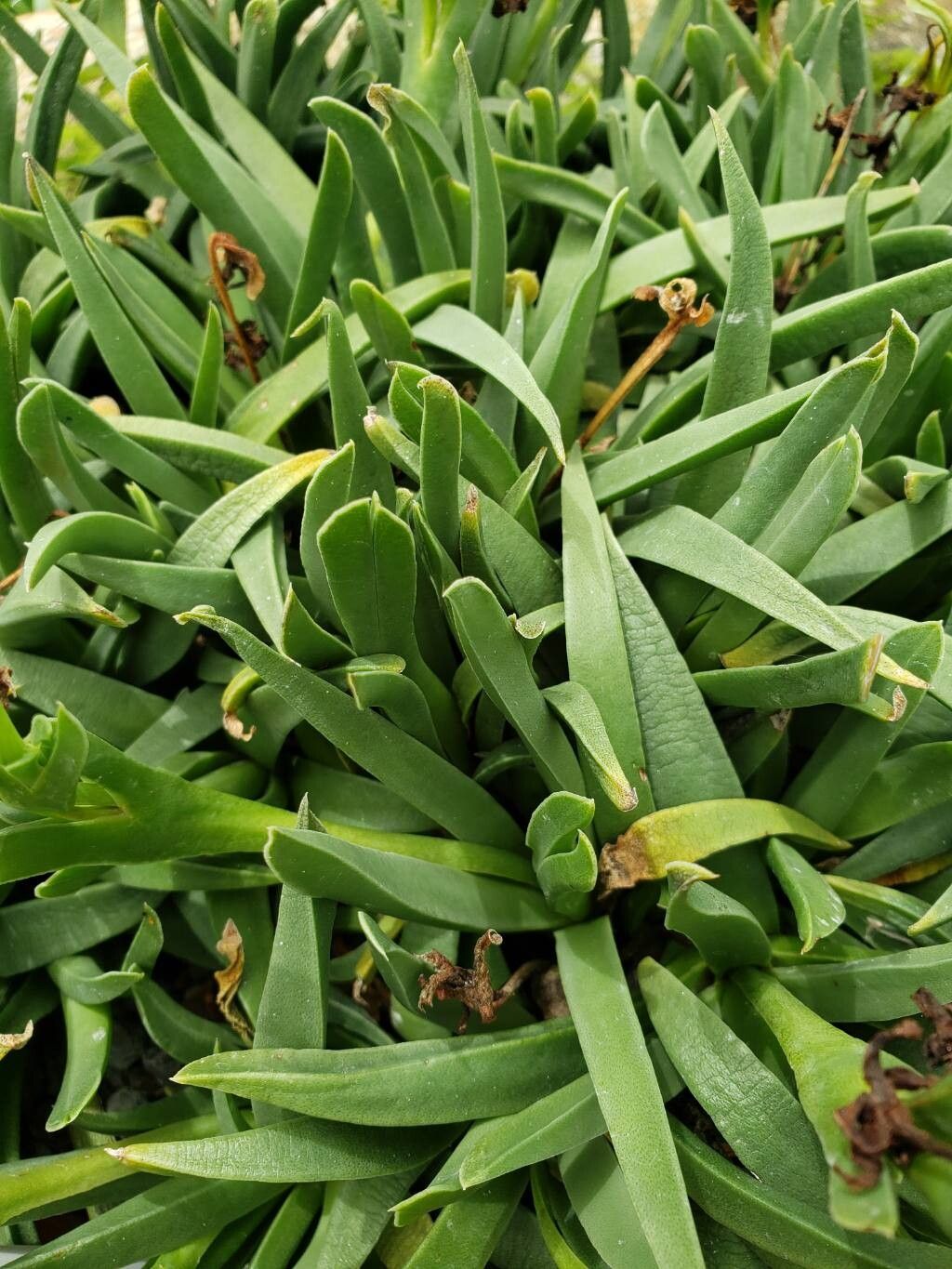
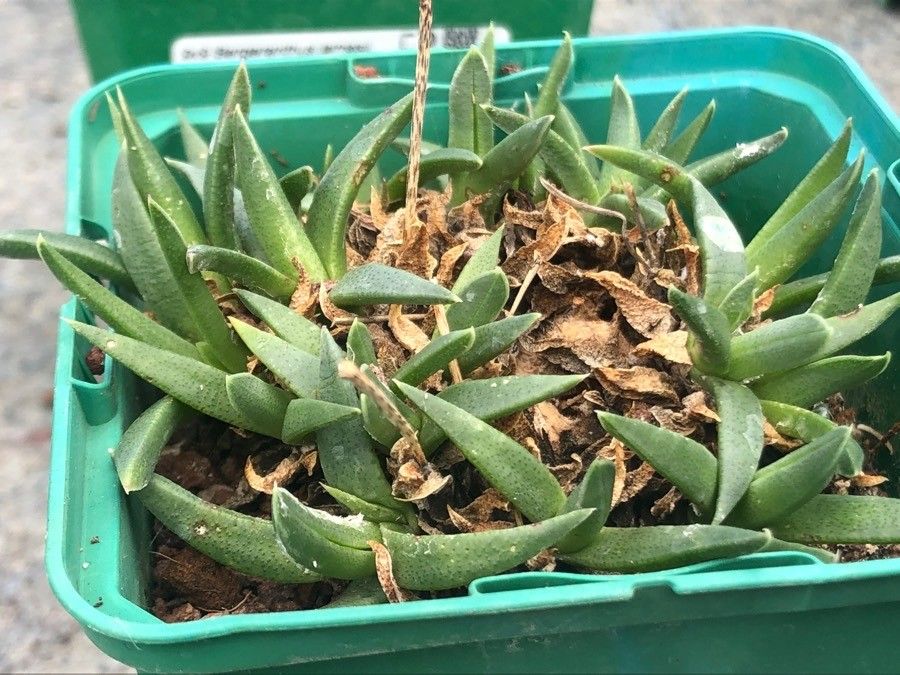
Despite being a little bit smaller, Bergeranthus jamesii is a relative of Bergeranthus vespertinus with yellow flowers. It is a small, nearly stemless succulent with succulent, triangular, finely tapered leaves that spreads by dense, leafy shoots with intenodes that are not apparent. It grows to only be about 5 cm tall in clusters that are 12 to 15 cm broad. Bright yellow, daisy-like flowers cover the shrub in the summer. Initially erected, the leaves subsequently become more or less prostrate. They are narrowly acuminate, triangular in section, flat, somewhat wrinkled, and grayish-green with some darker transparent spots and a dense covering of wax made of small particles.
Bergeranthus has moderate disease resistance and is more sensitive to humidity. It is prone to illness in high-humidity conditions and can develop root rot during dormancy. Regarding care, Bergeranthus tolerates drought but requires more water in the growing season. Watering should be greatly reduced or stopped completely during the dormant period. Bergeranthus is suitable for people with some growing experience, but it can be challenging to care for, especially during dormancy. It is particularly appropriate for those who can dedicate time to its care during the winter months.
How to keep Bergeranthus Multiceps.
Light
Bergeranthus is a sun-loving plant that flourishes with plentiful light. For healthy growth it needs a generous amount of sun exposure. Originally growing in habitats with abundant sunlight, it can also tolerate semi-shaded conditions. Both excessive and insufficient light can impede its growth or cause health problems.
Water
Bergeranthus is a drought-tolerant plant native to arid regions, thriving with minimal moisture. It should be watered every two weeks and prefers well-draining soil to prevent water-logging. This makes it an ideal choice for rock gardens and xeriscapes.
Humidity
This plant will thrive in moderate humidity, which is probably the level in your home. However, misting it a few times a week can be very beneficial. Make sure the room has good ventilation.
Temperature
Bergeranthus thrives at temperatures between 68 and 100 ℉ (20 and 38 ℃). Its native habitat is made up of warm, temperate areas with low atmospheric humidity. In hot summer months provide shade to avoid scorching, while in winter give ample light to uphold the plant's optimal temperature needs.
Fertilizer
For Bergeranthus, give light doses of fertilizer 1-2 times a year during the growing season. Avoid fertilizing in winter and in summer when it is dormant. Cut back on fertilizer for repotted plants and wait a couple of months after repotting before you fertilize. Fertilizing supports healthy growth and encourages blooms.
Pruning
To maintain the shape of your Bergeranthus plant, prune any redundant or dense branches in the spring and autumn using a knife or scissors. For propagation, cut thick stems that have 5 to 6 leaves. Apply sulfur powder to the cut surface to help prevent infection, and allow the wound to heal before planting. When planting the cuttings, slightly moisten the soil using a watering can.
Pot & Repot
When repotting Bergeranthus, choose a pot slightly larger than the current one that has good drainage. Use a gritty, well-draining succulent or cactus mix. Gently remove the plant from its old pot, brush off excess soil, and place it at the same depth. Wait a few days before watering to allow any root damage to heal. Repot in spring or fall, and keep it in a brightly lit location.
Toxicity
Supposed to be toxic to people. Succulents that might be harmful to people. Even non-toxic succulents should be kept out of the reach of kids and pets as a general rule for all indoor plants. Some types of this fashionable plant may be harmful to cats and canines if consumed.
Further reading →
The toxicity and danger assessments provided are for reference only. We do not assure their accuracy, so it's crucial not to depend on them. Seek professional advice when necessary for accurate guidance.
Botanical profile.
- Plant Type
- Succulent, Herb
- Life Cycle
- Perennial
- Genus
- Bergeranthus
- Family
- Aizoaceae
- Hardiness Zone
- 10-11
- Mature Height
- 15 cm
- Mature Spread
- 15 cm
- Leaf Color
- Green, Bronze, Brown
- Leaf Type
- Evergreen
- Flower Color
- Yellow
- Flower Size
- 2.03 cm to 2.54 cm
- Bloom Time
- Late spring, Early summer, Mid summer
- Planting Time
- Spring, Summer, Autumn
- Harvest Time
- Mid summer
- Native Area
- South Africa
Other names.
Reader questions.
How should I water my Bergeranthus plant?
To water Bergeranthus properly, timing is crucial. Wait until spring, when new leaves are emerging, before watering the plant. Only water when the soil in the pot is completely dry. You can use tap water or distilled water for this. Avoid watering from above and instead, water the plant at its base. Apply water slowly and evenly over the entire surface of the soil. This method ensures consistent moisture without wetting the above-ground parts of the plant, which is beneficial for your Bergeranthus. Keep adding water until you observe a light stream of excess water draining from the pot's hole.
Why should I put fertilizer on my Bergeranthus plant?
Fertilizing Bergeranthus helps add nutrients to the growing medium, supporting healthy growth. While it already stores water and nutrients, applying plant food during the growing season further enhances its growth. Additionally, fertilizing can stimulate mature specimens to produce blooms.
What are the sunlight requirements for Bergeranthus plants?
Bergeranthus plants thrive in full sun conditions, requiring more than 6 hours of sunlight daily, but they can also grow in partial sun, with about 3-6 hours of sunlight. It's essential to observe the movement of sunlight in your garden to ensure your plants get the right balance of light and shade for optimal growth. Both too much and too little light can affect the health of Bergeranthus, so finding that perfect spot is key for their happiness and development.
What temperature range is ideal for Bergeranthus?
Bergeranthus thrives best in a temperature range between 68°F (20°C) and 100°F (38°C). Its native growth environment is warm and temperate with low atmospheric humidity. To ensure the plant's health, it is important to provide shade during hot summer months to prevent scorching, and to ensure sufficient light exposure during winter to maintain optimal temperatures. The growing season for Bergeranthus is winter, so maintaining temperatures above 20°C is crucial for its growth. When outdoor temperatures fall below 5°C, it's advisable to bring the plant indoors to a well-lit area, increase watering with higher temperatures, and reduce it as temperatures approach 5°C. If overwintering outdoors, place the plant in a sheltered area with ample sunlight or set up a temporary greenhouse if temperatures are consistently low, keeping the plant adequately moist.
If I give my Bergeranthus plant too much or too little water, what should I do?
Overwatering a Bergeranthus is more common than underwatering, but it can seriously harm the plant and even lead to death. To avoid overwatering, it's important to let the soil dry completely before watering, especially during dormancy. Now, let's focus on how to fix overwatering issues. If your Bergeranthus shows signs of overwatering, it's best to remove it from its current pot and examine the roots. Remove any rot or moisture-related diseases, but some roots may just need a good cleaning to recover. Afterward, repot the plant in well-draining soil to prevent future overwatering. While underwatering is unlikely, if it does happen, water the plant slightly more often without overcorrecting and risking overwatering.
When should I fertilize my Bergeranthus plant?
Bergeranthus plants require only a small amount of fertilizer during the growing season, about 1-2 times a year. It is best to fertilize them in the spring and autumn, avoiding the winter and summer when they are dormant. When repotting, be cautious and reduce the amount of fertilizer used. It is recommended to wait a few months after repotting before applying any fertilizer.
What should I do if my Bergeranthus isn't getting enough sunlight?
If your Bergeranthus isn't receiving enough sunlight, you may notice symptoms such as leggy growth, slower or halted new growth, chlorosis (yellowing leaves), sunscald, leaf curling, wilting, or leaf scorching. To remedy this, gradually move your plant to a sunnier spot, aiming for at least 6 hours of direct sunlight each day. For indoor plants, consider using artificial lighting, ensuring to provide 8-12 hours of light per day, and adjust the intensity based on the plant's specific sun requirements. Additionally, remove any obstructions that might be blocking sunlight, and if necessary, transplant smaller plants to a location with better light conditions and good drainage.
How does Bergeranthus react to low temperatures?
Bergeranthus is not tolerant of extremely cold temperatures and thrives best within a range of 20°C to 38°C. During winter, it is important to keep the temperature above 5°C. Exposure to temperatures below 1°C can lead to water-soaked necrosis and wilting of the leaves. In cases of mild frost damage, the plant may not show immediate symptoms but will exhibit significant wilting and leaf fall after about a week. To mitigate frost damage, affected areas should be trimmed off, and the plant should be moved to a warm environment indoors or placed within a makeshift greenhouse to protect it from the cold. It's crucial to ensure the plant is near a south-facing window for ample sunlight if moved indoors and to pay attention to ventilation in a greenhouse setup to avoid plant decay due to poor airflow.
How frequently should I water my Bergeranthus plant?
Bergeranthus is a type of succulent plant that has low water needs due to its origin in a hot and dry region. To properly care for this plant, it is important to let the soil completely dry out between watering sessions. Typically, it takes around two weeks to a month for the soil to dry completely, at which point you can water it again. The frequency of watering depends on the season. During the spring and summer, when the plant is actively growing, the soil may take 2-3 weeks to dry completely. You can follow this same watering frequency. In the summer, the soil may dry out faster. However, the plant becomes dormant or semi-dormant when the temperature falls below 60 degrees or rises above 85 degrees Fahrenheit. During this time, it does not require additional watering. Instead, you should reduce or even stop watering to maintain dry soil until the temperature is suitable for the plant to grow again.
When should I not put fertilizer on my Bergeranthus?
Bergeranthus, like other plants, goes through a dormancy period where it stops growing. During this time, it is best to avoid applying fertilizer. This dormancy period occurs in both summer and winter. Additionally, it is recommended to stop fertilizing for a couple of months after repotting in the spring.
Can artificial lighting be used for Bergeranthus plants?
Yes, artificial lighting can be an essential solution for Bergeranthus plants that don't get enough natural sunlight, especially during winter or in less sunny spaces. It promotes faster and healthier growth. Opt for LED lights as they can provide specific wavelengths needed by your plants. Full sun plants require 30-50W/sq ft, partial sun plants need 20-30W/sq ft, and shade plants need 10-20W/sq ft of artificial light. Position the light source 12-36 inches above the plant and mimic natural daylight hours, typically 8-12 hours of light per day, to ensure optimal growth.
How does high temperature affect Bergeranthus and how can it be managed?
During summer, it's essential to keep Bergeranthus's temperature below 38°C. Temperatures exceeding 43°C can cause the plant to enter a dormant state, making it more susceptible to rot in high humidity. To manage high temperature issues, dry and rotten parts should be removed, and the plant should be moved to a partially shaded area to protect it from direct sunlight, especially during midday and the afternoon. Watering should be stopped until the weather cools down, to prevent further stress and potential rot.