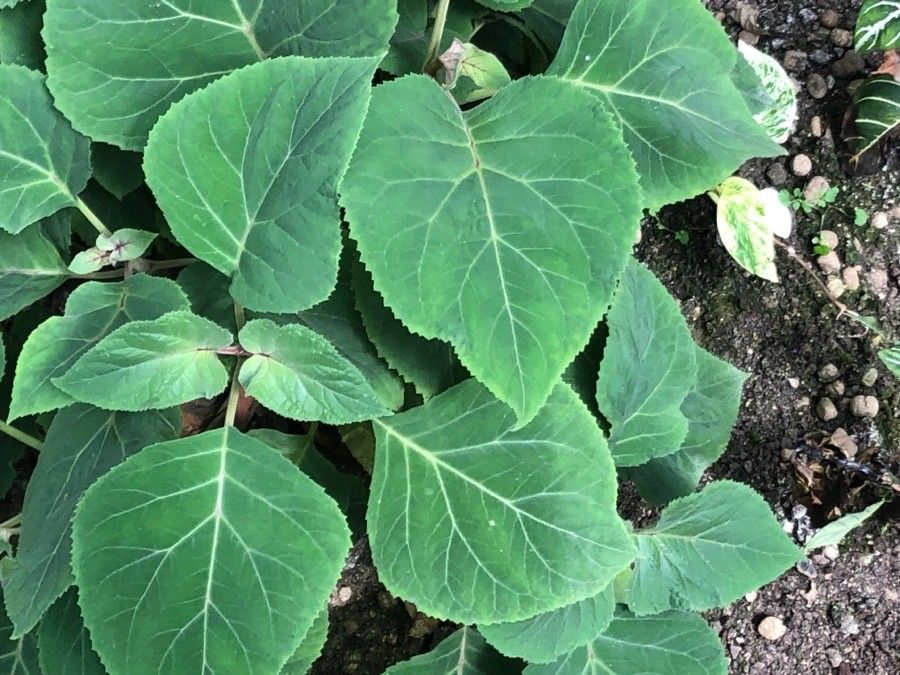
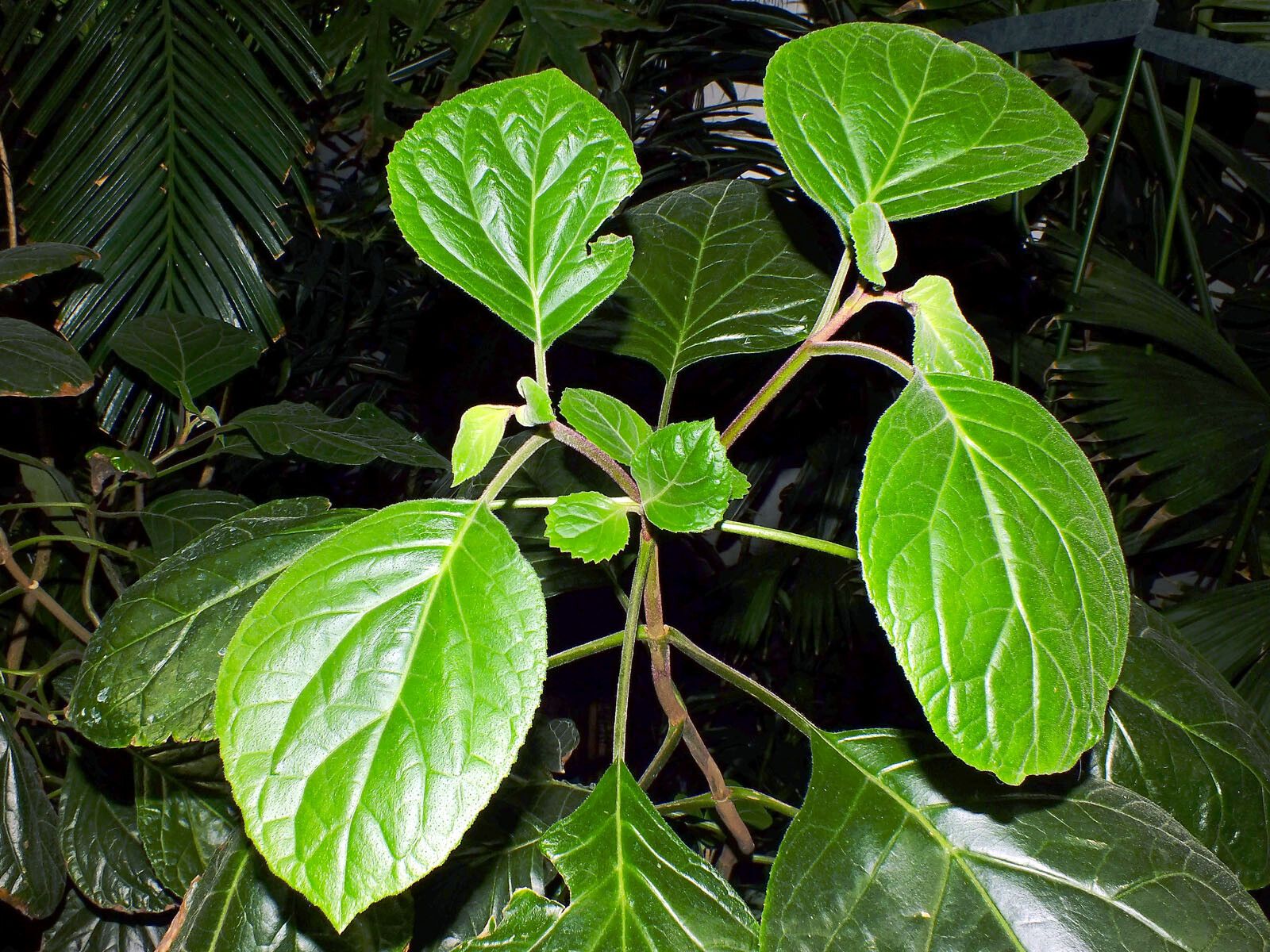
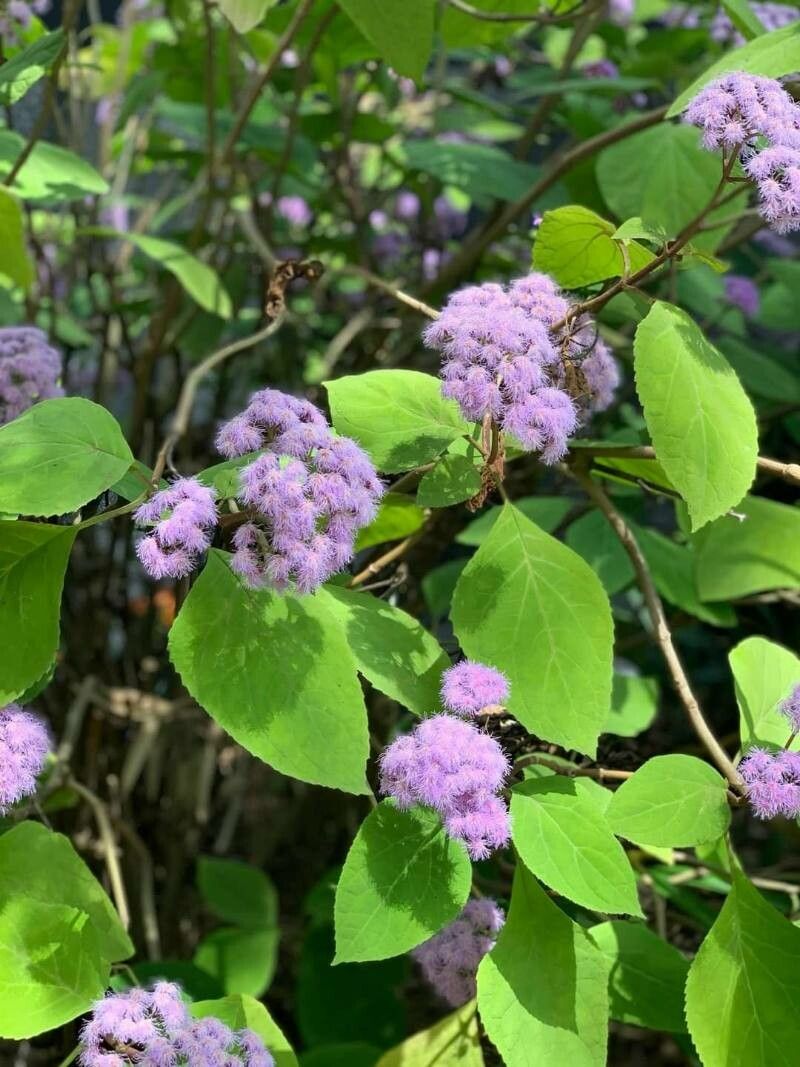
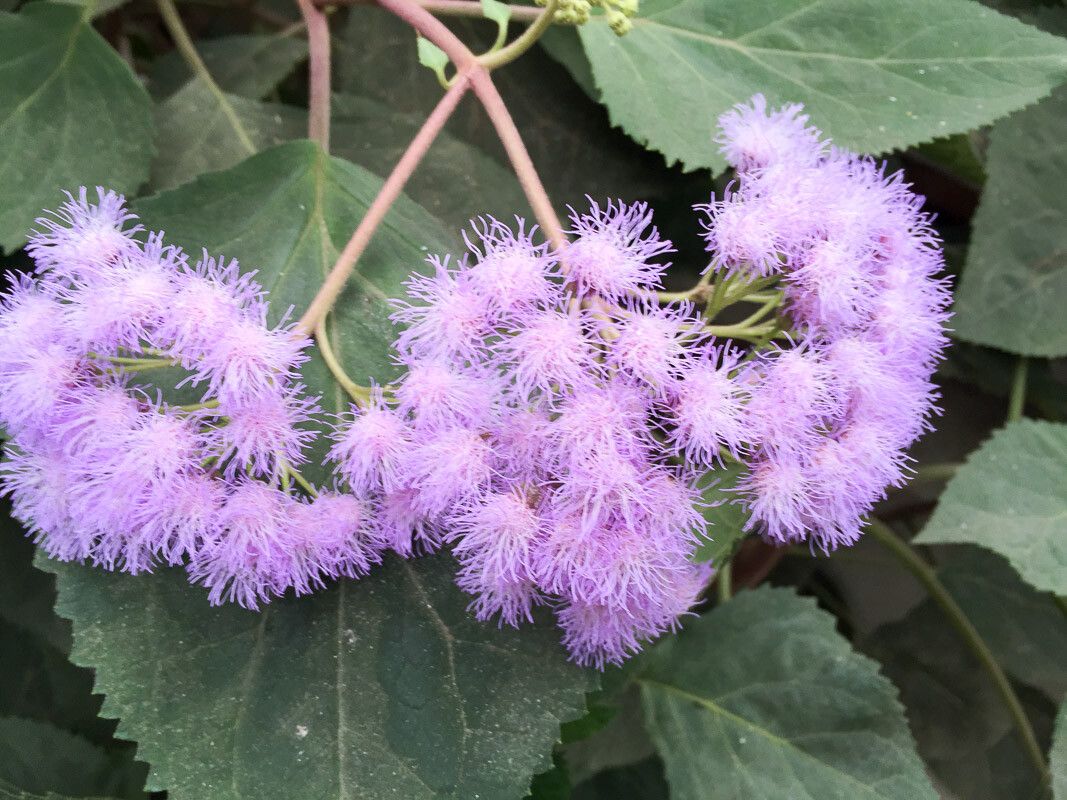
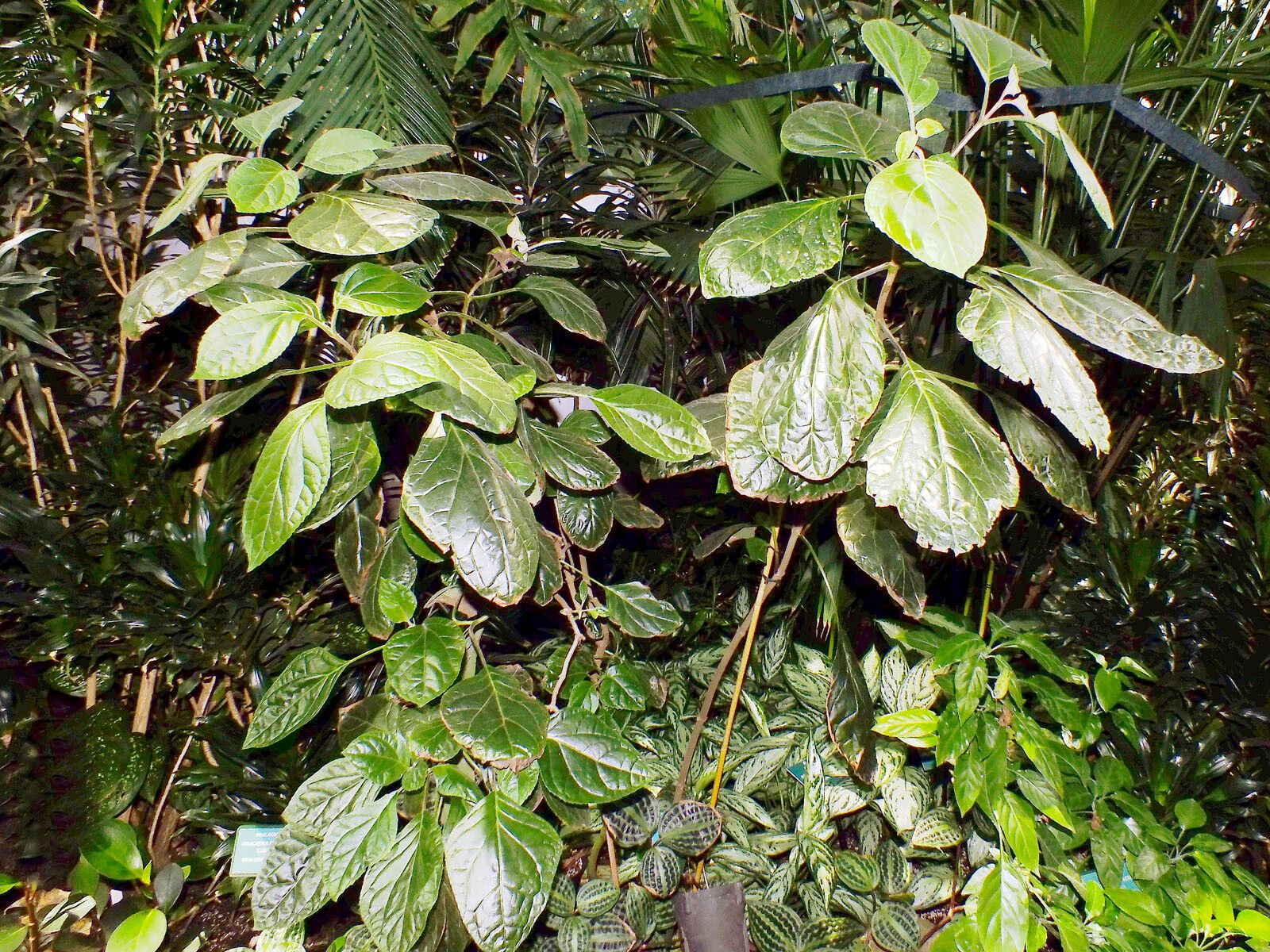
Bartlettina sordida, the purple torch or blue mist flower, is a flowering plant which is endemic to cloud forest habitats in Mexico. It was formerly classified in the genus Eupatorium.
Blue mist flower is disease-resistant and, overall, unlikely to suffer from illnesses. As for care, this plant is fairly low-maintenance. When grown outdoors it needs little watering, and larger specimens usually do not require pruning. Smaller specimens, however, should be pruned after they finish blooming. Blue mist flowert is appropriate for anyone who has an outdoor area, such as a garden or a deck, and it does not demand extensive gardening experience.
How to keep Bartlettina Sordida.
Light
The blue mist flower performs best with moderate light but can cope with no light at all, making it adaptable to a variety of lighting situations. Excessive light can scorch its leaves, while too little light may impede its growth. The light levels in its natural habitat are similar, allowing it to grow there with ease.
Water
The blue mist flower thrives in moist environments and should be watered every 1-2 weeks, ensuring that the soil does not become waterlogged. It is resilient across various climate zones and flourishes best when it receives adequate water during its active growing season, making it a popular choice for outdoor cultivation.
Temperature
Blue mist flower comes from tropical areas, where the weather is typically warm and humid. Consequently, it is well suited to high temperatures and moisture. It does not handle sudden temperature shifts well and prefers a steady temperature, so avoiding indoor temperature fluctuations is important. It generally cannot tolerate cold and needs higher temperatures to grow. If the surrounding temperature falls too low, the plant may stop growing or even die.
Fertilizer
The best time to fertilize a blue mist flower is in early spring when it comes out of dormancy. This supports overall growth and the development of blooms. Feeding the plant improves foliage, stems, and branches, and encourages flowers that are large, bright, and long-lasting. It also helps move nutrients from the roots to the flowers and enhances the plant's health and resistance to disease.
Pruning
To encourage better growth and flowering, prune blue mist flowers from early to late winter while they are dormant. Remove any dead stems and trim the plant back by one-third of its height. This practice helps improve air circulation, prevents the plant from becoming leggy, and maintains a balanced shape, all of which contribute to its overall health and blooming potential.
Pot & Repot
Repot the blue mist flower every 2 to 3 years in early spring. Choose a pot that allows the plant to grow up to 2 meters. Keep the soil evenly moist but be careful not to overwater. Place the plant in partial shade to encourage recovery and healthy growth.
Botanical profile.
- Plant Type
- Shrub
- Life Cycle
- Perennial
- Genus
- Bartlettina
- Family
- Asteraceae
- Hardiness Zone
- 9-11
- Mature Height
- 1.83 m
- Mature Spread
- 1.52 m
- Leaf Color
- Green
- Leaf Type
- Evergreen
- Flower Color
- Lavender
- Flower Size
- 1.02 cm to 2.03 cm
- Bloom Time
- Winter
- Planting Time
- Spring, Summer, Autumn
- Harvest Time
- Late winter, Early spring, Mid spring
- Native Area
- Mexico, Guatemala
Other names.
Reader questions.
How should I water my Blue mist flower for the best results?
Your Blue mist flower is not picky about how it is watered. You can use any common watering tool like watering cans, hoses, or even cups. Regardless of the tool you choose, it is best to water directly onto the soil and ensure that all areas of the soil are moistened equally. Filtered water is recommended because tap water may contain harmful particles for plants. It is also better to use water at or slightly above room temperature as extremely hot or cold water can shock the Blue mist flower. However, the Blue mist flower generally responds well to any type of water.
What are the sun requirements for Blue Mist Flower?
The Blue Mist Flower requires about 3-6 hours of sunlight daily, thriving under conditions of partial sun. It's crucial to observe how sunlight moves through your garden to select spots that offer an optimal balance of light and shade, ensuring the plants grow happily. It's equally important to mitigate any potential issues by recognizing that while the plant is adaptable to varying light conditions, excessive exposure to light can lead to leaf scorch, and insufficient light might inhibit growth.
What do I do if I give my Blue mist flower too much water or not enough water?
For outdoor plants, especially newly planted ones or seedlings, it can be common for them to not get enough water. It's important to remember that you should keep watering the plant adequately for a few months while it's still small or recently planted. This is because once the roots are established, Blue mist flower can rely on rain most of the time. When your Blue mist flower is in a pot, overwatering is more likely to happen. If you accidentally overwater your Blue mist flower, there are steps you can take to fix it. Firstly, stop watering the plant immediately to minimize the effects of overwatering. Then, remove the plant from its pot and check the roots. If you don't find any signs of root rot, you can put the plant back in its container. However, if you do find root rot, trim away any affected roots and consider applying a fungicide to prevent further damage. Lastly, repot the Blue mist flower in well-draining soil. On the other hand, if your Blue mist flower is underwatered, the solution is simple. Just water the plant more frequently. You will notice the leaves drooping, drying out, and falling off if the plant is underwatered, but they will regain fullness quickly once properly watered. Make sure to adjust your watering frequency as soon as you notice the plant is underwatered.
How does artificial lighting benefit indoor Blue Mist Flowers?
Indoor Blue Mist Flowers can significantly benefit from artificial lighting, especially when natural sunlight is inadequate, such as during winter or in less sunny indoor spaces. Artificial lights, particularly LED lights, can be customized to supply the specific wavelengths needed for optimal plant growth. Full sun plants require 30-50W/sq ft, partial sun plants need 20-30W/sq ft, and full shade plants require 10-20W/sq ft of artificial light. The appropriate distance for the light source is 12-36 inches above the plant, simulating natural sunlight conditions. To mimic natural daylight hours, ensure the plants receive 8-12 hours of light per day. This approach promotes healthier, faster growth by compensating for the lack of natural sunlight.
How frequently should I give water to my Blue mist flower?
If your area doesn't get enough rainfall, it's important to water your outdoor plants adequately. During the spring and fall, watering every two weeks should be sufficient, but in the summer, you'll need to water more often. In the winter, plants require less water, so water sparingly or not at all. However, if you have a young or newly planted Blue mist flower, it may need more frequent watering to help it establish and become drought tolerant. For potted plants, there are two ways to determine how often to water your Blue mist flower. The first is to have a regular watering schedule, like once a week or every other week. However, this may not always be appropriate as it doesn't consider the specific growing conditions for your plant. Alternatively, you can base your watering frequency on soil moisture. Wait until the top 2-4 inches of soil have completely dried out before watering again. This method ensures you're giving water only when necessary and helps prevent overwatering.
What are the symptoms of light deficiency in Blue Mist Flowers?
When Blue Mist Flowers grow with insufficient light, they may show several symptoms indicating light deficiency. New leaves might grow smaller than older ones, the plant could develop a leggy or sparse appearance due to elongated spaces between leaves or stems, and there might be an early drop of older leaves as the plant attempts to conserve resources. Additionally, growth can slow down or stop completely, new leaves may appear lighter in color or pale, indicating a lack of chlorophyll. Conditions such as chlorosis and sunscald also manifest, where leaves lose their green color or suffer damage from intense light exposure, respectively. Leaf curling and wilting can occur as defense mechanisms against excessive sunlight, while leaf scorching might show up as brown, dry, and crispy leaf edges.
How much water does my Blue mist flower require?
To water your Blue mist flower effectively, you don't always need to use a lot of water. If the soil has only dried a few inches since the last watering, giving the plant about five to ten ounces of water each time should promote healthy growth. You can also gauge the water volume based on the soil's moisture level, paying attention to how many inches of soil have dried between waterings. To ensure the plant receives enough moisture, water it enough to moisten all the soil layers that became dry since the last watering. If more than half of the soil is dry, consider giving more water than usual, and keep adding water until you see excess water draining from the pot's drainage holes. If your Blue mist flower is planted in an area that receives sufficient rainfall, it may not require additional watering. When the plant is young or establishing itself, aim for 1-2 inches of rain per week. Once it grows and establishes, it can primarily rely on rainwater, unless there is a hot and rainless period lasting 2-3 weeks. In such cases, giving the plant a thorough watering will help prevent stress.
What are the solutions for Blue Mist Flowers showing symptoms of light deficiency?
To address light deficiency in Blue Mist Flowers, consider gradually transitioning them to sunnier spots, allowing them to adapt to the new light conditions by moving them to a sunnier location each week. For indoor plants that are too large to move easily or regularly, supplementing with artificial light can be beneficial. Keep a desk or ceiling lamp on for at least 8 hours daily, or use professional grow lights for sufficient light exposure. Outdoors, work on gradually moving your plants to better-lit spots to prevent sunburn from sudden exposure changes. For plants on the ground, reducing obstructions like pruning branches from nearby trees, or transplanting smaller plants during their dormant period to more sun-exposed locations can significantly improve sunlight access. Note that parts of the plant already affected might not recover, but new growth should be healthy with improved light conditions.
How can I know if I'm giving enough water to my Blue mist flower?
The Blue mist flower is often overwatered, and there are clear indications to watch out for. If your Blue mist flower is overwatered, its leaves will turn yellow and it may lose some of them. Overwatering can also lead to the plant shrinking and root rot. On the contrary, an underwatered Blue mist flower will start withering and its leaves may become brown and fragile. Regardless of whether you notice signs of overwatering or underwatering, it's important to take action and revive your Blue mist flower's health.
How can I water my Blue mist flower as it grows?
When the Blue mist flower is young, particularly during the seedling stage, it requires more water compared to when it is fully grown. It is crucial to consistently keep the soil moist to promote root development during the early stages of the plant's life. This also applies if you have transplanted the Blue mist flower to a new location. Additionally, providing proper care can result in the development of attractive flowers and fruits in the Blue mist flower. If your Blue mist flower is currently in a flowering or fruiting phase, it will likely require slightly more water than usual to support these plant structures.
How do I make sure my Blue mist flower gets enough water all year round?
The watering needs of your Blue mist flower will be affected by the seasons. In the hot summer months, especially if the plant is in a sunny location, you will likely need to increase watering to prevent the soil from drying out quickly. However, during the winter when the plant is not actively growing, it will require less water, with watering once every 2 to 3 weeks or sometimes not at all. If you are growing the plant indoors, be cautious of appliances like air conditioners as they can dry out the plant faster, requiring more frequent watering.
What's the difference between watering my Blue mist flower inside or outside?
If you are growing your Blue mist flower outside and receive regular rainfall, you may not need to water it. However, if you live in a dry area with little rain, watering every two weeks is recommended. If you live outside the plant's natural hardiness zone, it is best to grow it indoors. When growing indoors, monitor the soil closely as it can dry out faster in containers or near HVAC units like air conditioners. In these cases, you may need to water your plant more frequently than if it were outdoors.