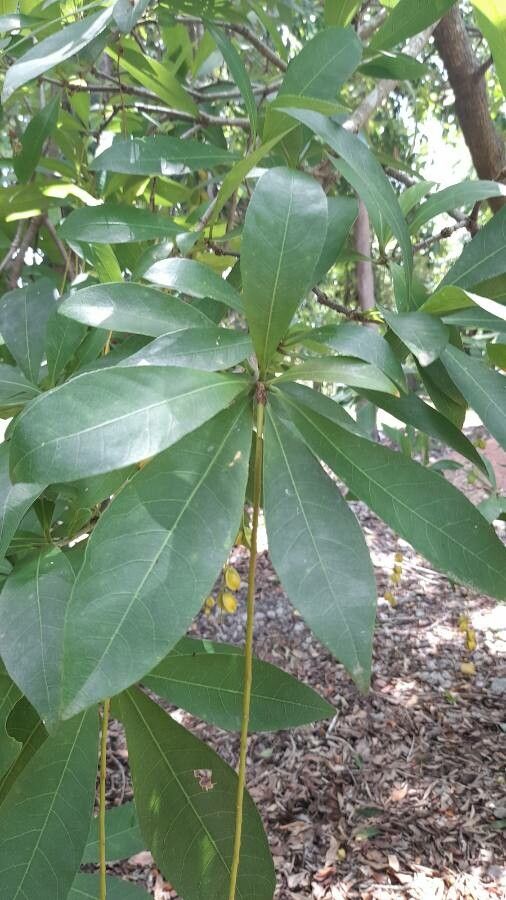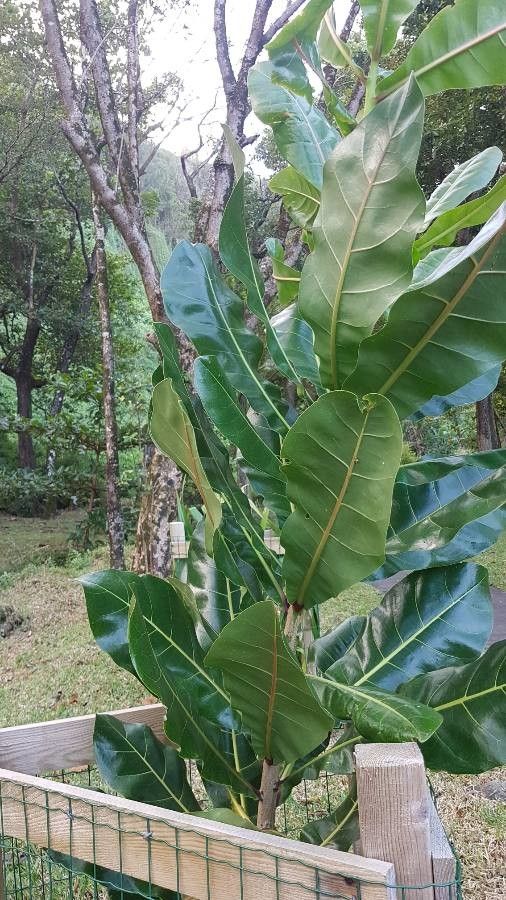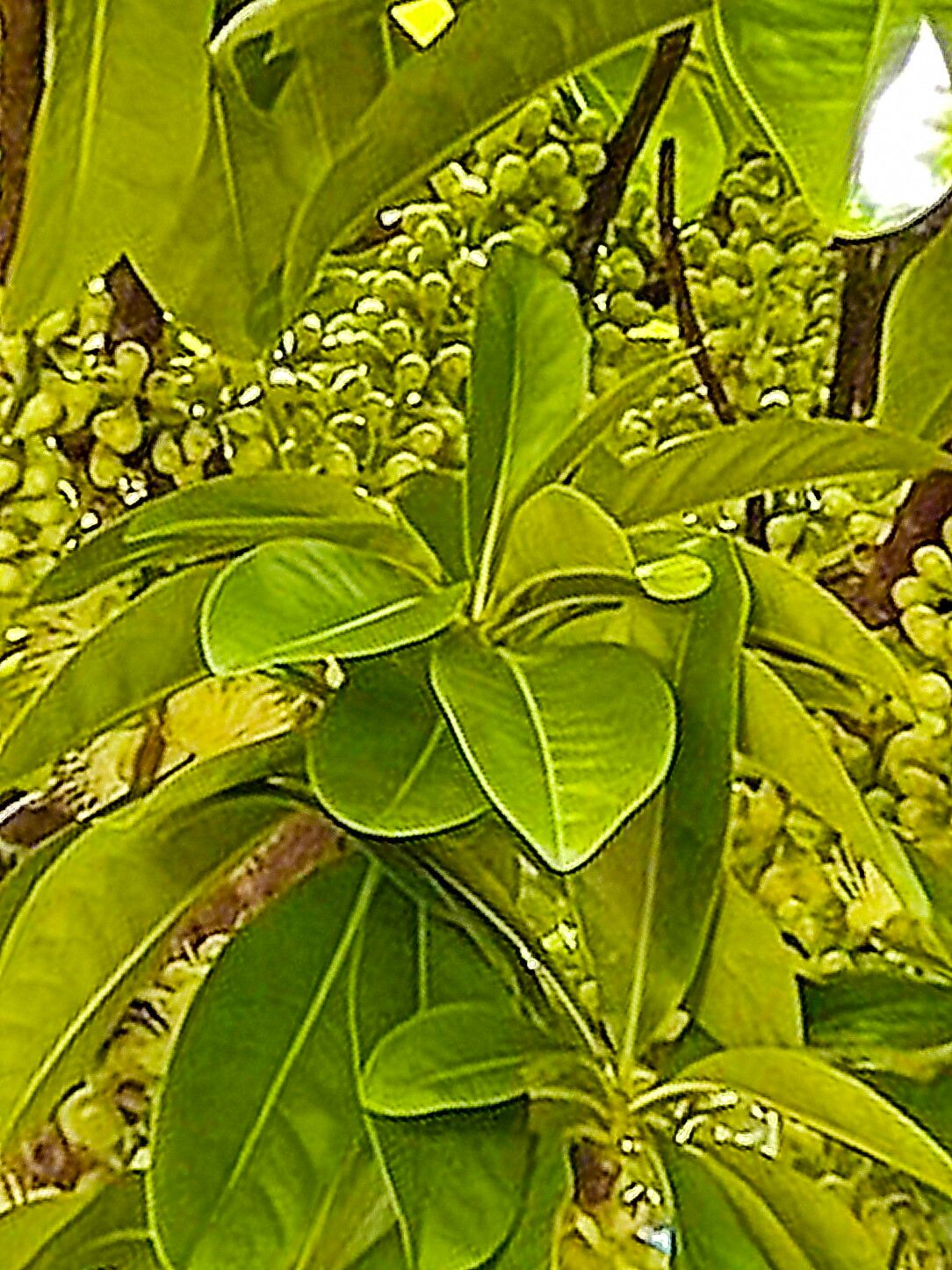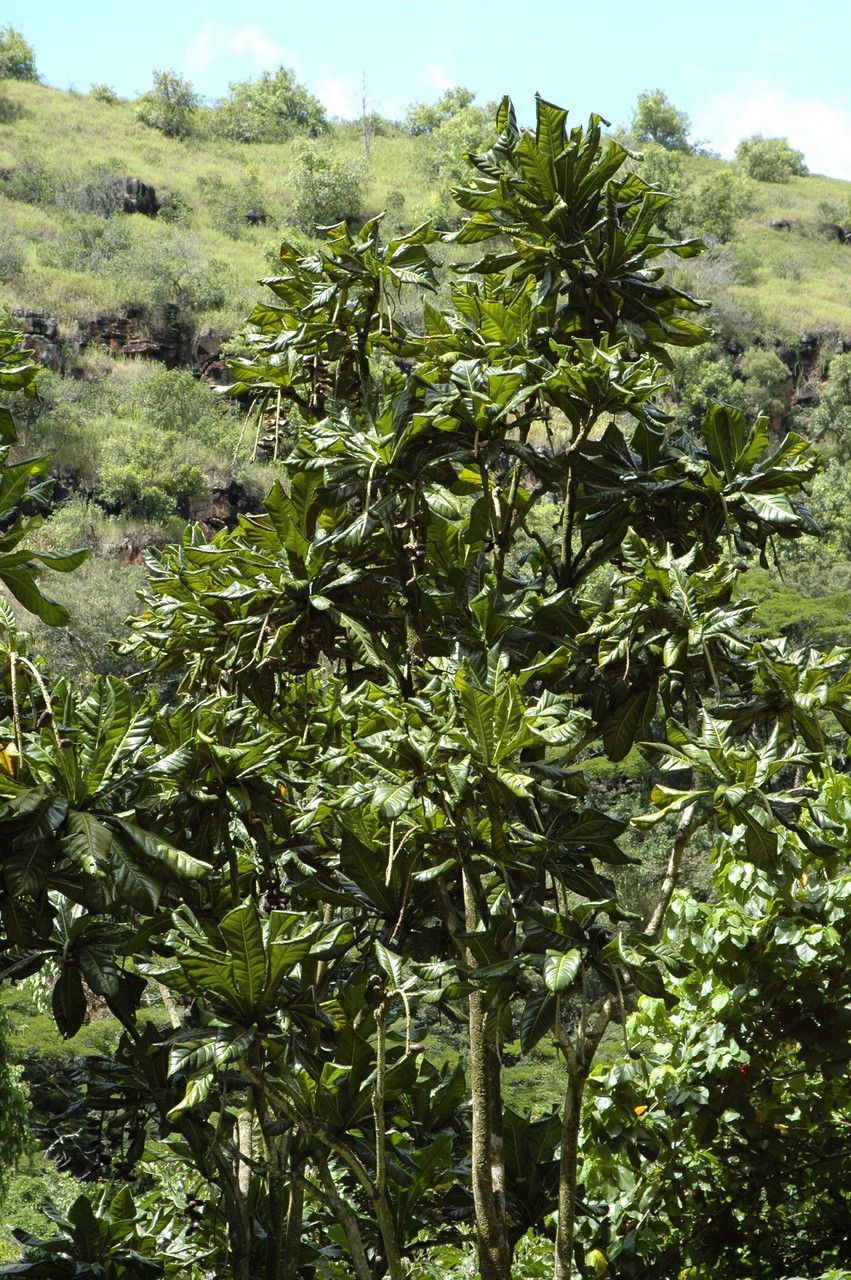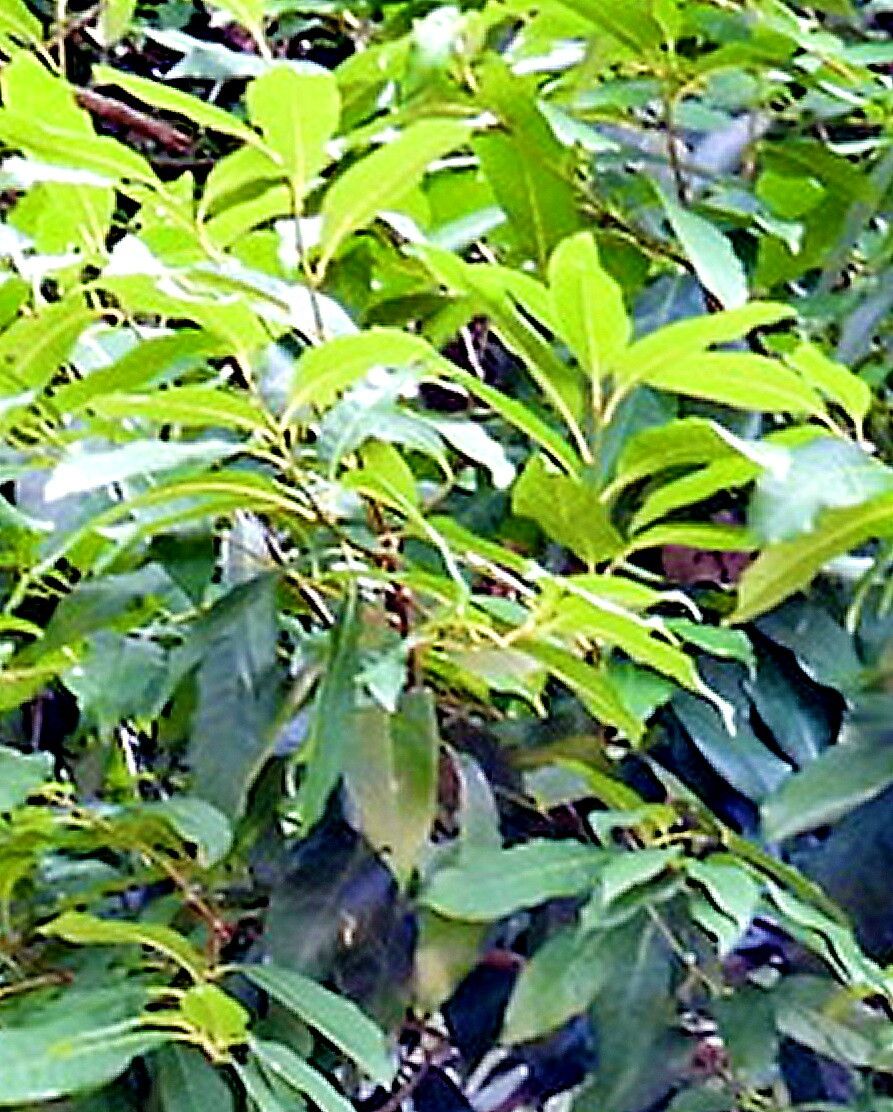
Barringtonia macrostachya grows as a shrub or tree up to 30 metres (100 ft) tall, with a trunk diameter of up to 95 centimetres (37 in). The bark is brown, greenish yellow, greyish brown or brown mottled grey. The fruits are obovoid, up to 9 cm (4 in) long. The specific epithet macrostachya is from the Greek meaning 'large spike', referring to the inflorescence. Habitat is riverine and swamp forest, from sea level to 1,300 metres (4,300 ft) altitude. Local medicinal uses include the treatment of ringworm, sore eyes and stomach aches. B. macrostachya has been used as fish poison. It is found in China, Burma, Thailand, Vietnam, Malaysia, Brunei, Indonesia and the Philippines.
Red putat is resistant to disease and is generally not susceptible to illnesses. Regarding care, this plant is fairly low maintenance. When grown outdoors it needs only minimal watering, and larger plants typically do not need pruning. Smaller plants, however, should be pruned after they have bloomed. Red putatt is appropriate for anyone with an outdoor area, such as a garden or deck, and does not require a lot of care experience.
How to keep Barringtonia Macrostachya.
Light
Red putat is native to habitats like forest understories or rocky areas, where it grows in natural shade. It prefers partial sun but can tolerate full sun or full shade, illustrating its versatility and hardiness.
Temperature
Red putat comes from tropical areas, where conditions are generally warm and humid. Consequently, it is adapted to high heat and moisture. It is sensitive to sudden temperature shifts and prefers a steady temperature, so indoor temperature swings should be avoided. It is typically intolerant of cold and needs warmer conditions to grow. If the ambient temperature falls too far, growth can stop and the plant may die.
Fertilizer
Fertilizing a Red putat is best done in early spring when it comes out of dormancy. This encourages overall growth and the development of flowers. Fertilizer improves the foliage, stems, and branches, while encouraging flowers that are large, bright, and long-lasting. It helps transport nutrients from the roots to the blooms and enhances the plant’s health and resistance to disease.
Botanical profile.
- Plant Type
- Tree
- Life Cycle
- Perennial
- Genus
- Barringtonia
- Family
- Lecythidaceae
- Hardiness Zone
- 10-11
- Mature Height
- 10.06 m to 14.94 m
- Mature Spread
- 4.88 m to 7.92 m
- Leaf Color
- Dark Green
- Leaf Type
- Semi-evergreen
- Flower Size
- 3.05 cm to 4.06 cm
- Bloom Time
- Late spring, Summer, Early fall
- Planting Time
- Spring, Summer
- Harvest Time
- Late summer, Fall, Early winter
- Native Area
- Malaysia, Indonesia, Vietnam, Myanmar, Philippines, Singapore, Laos, Brunei, Thailand, China