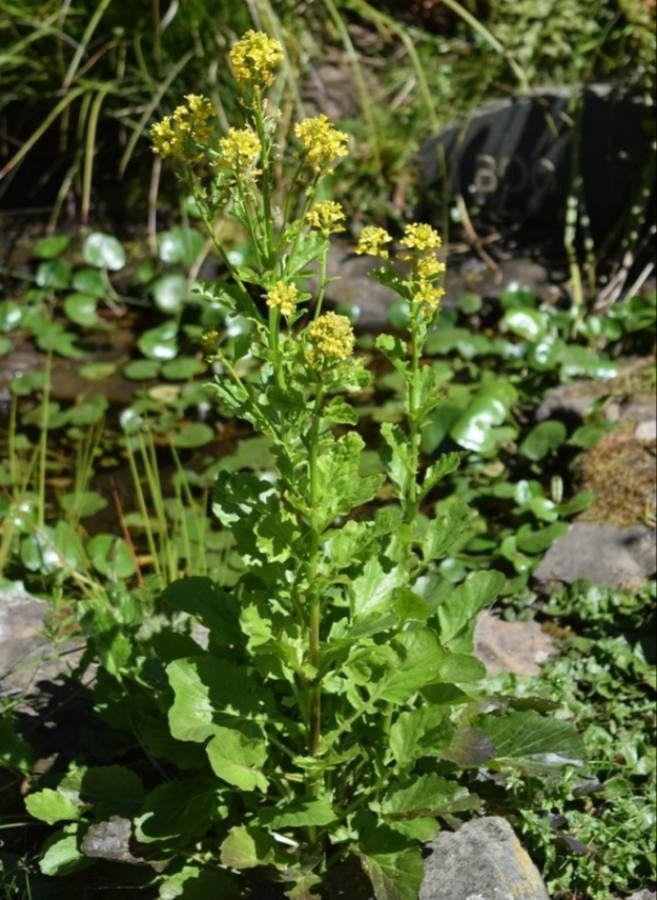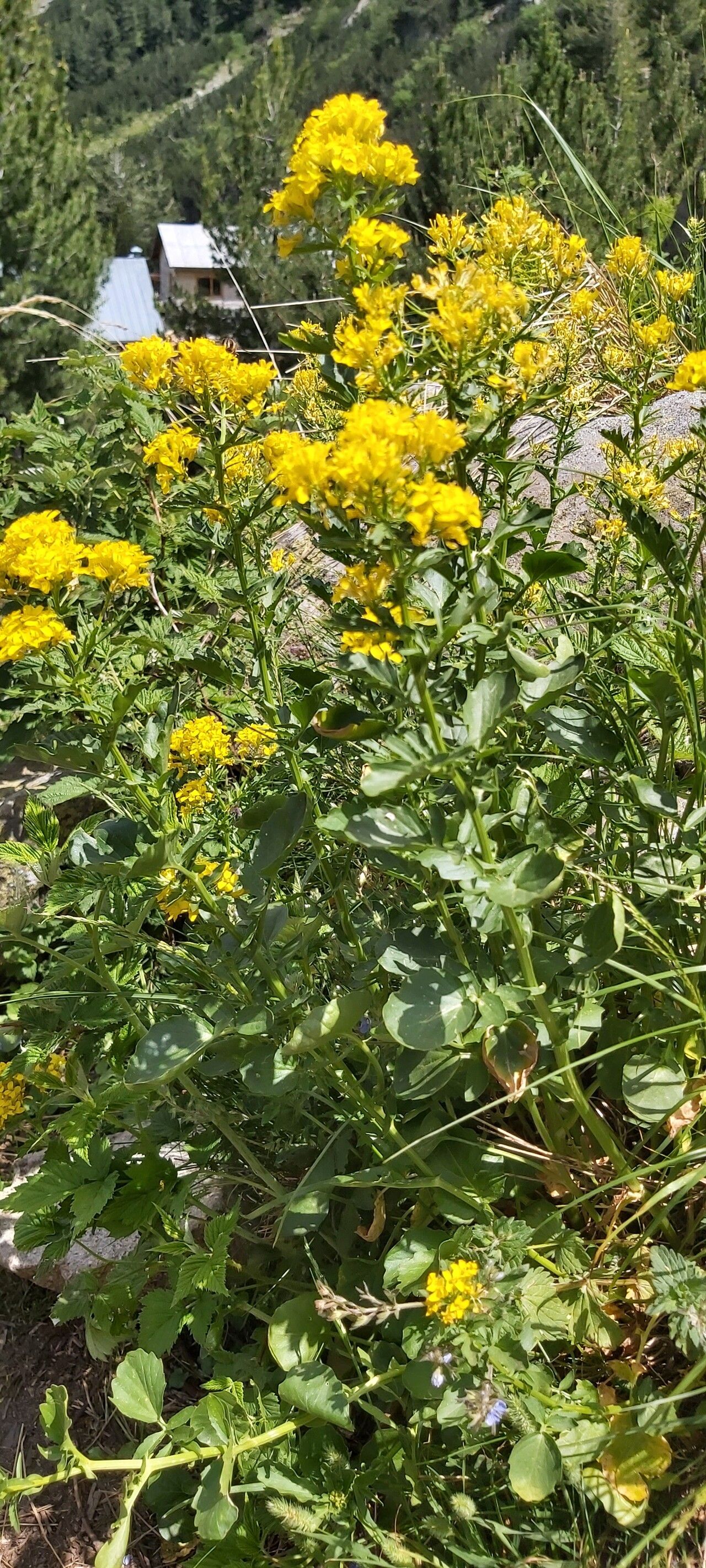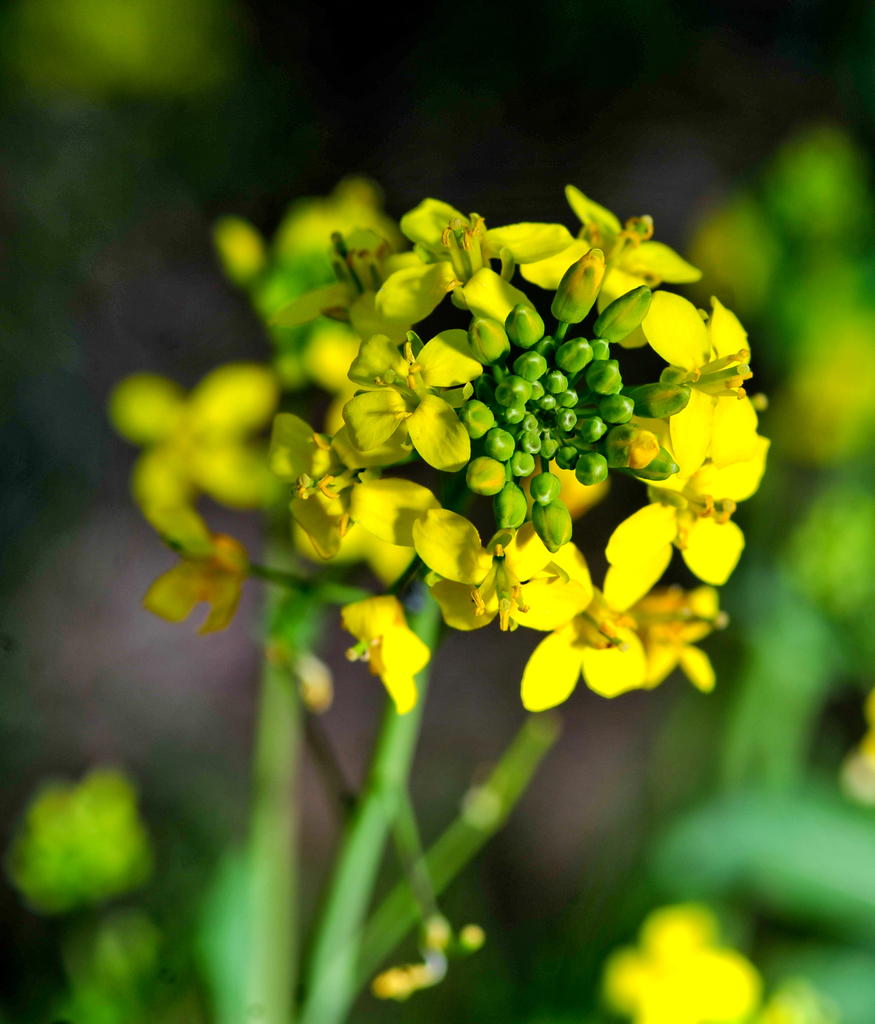
Barbarea verna, commonly known as upland cress or early yellowrocket, is a biennial or short-lived perennial plant that belongs to the mustard family. Native to Europe and western Asia, it has also been introduced and naturalized in North America.
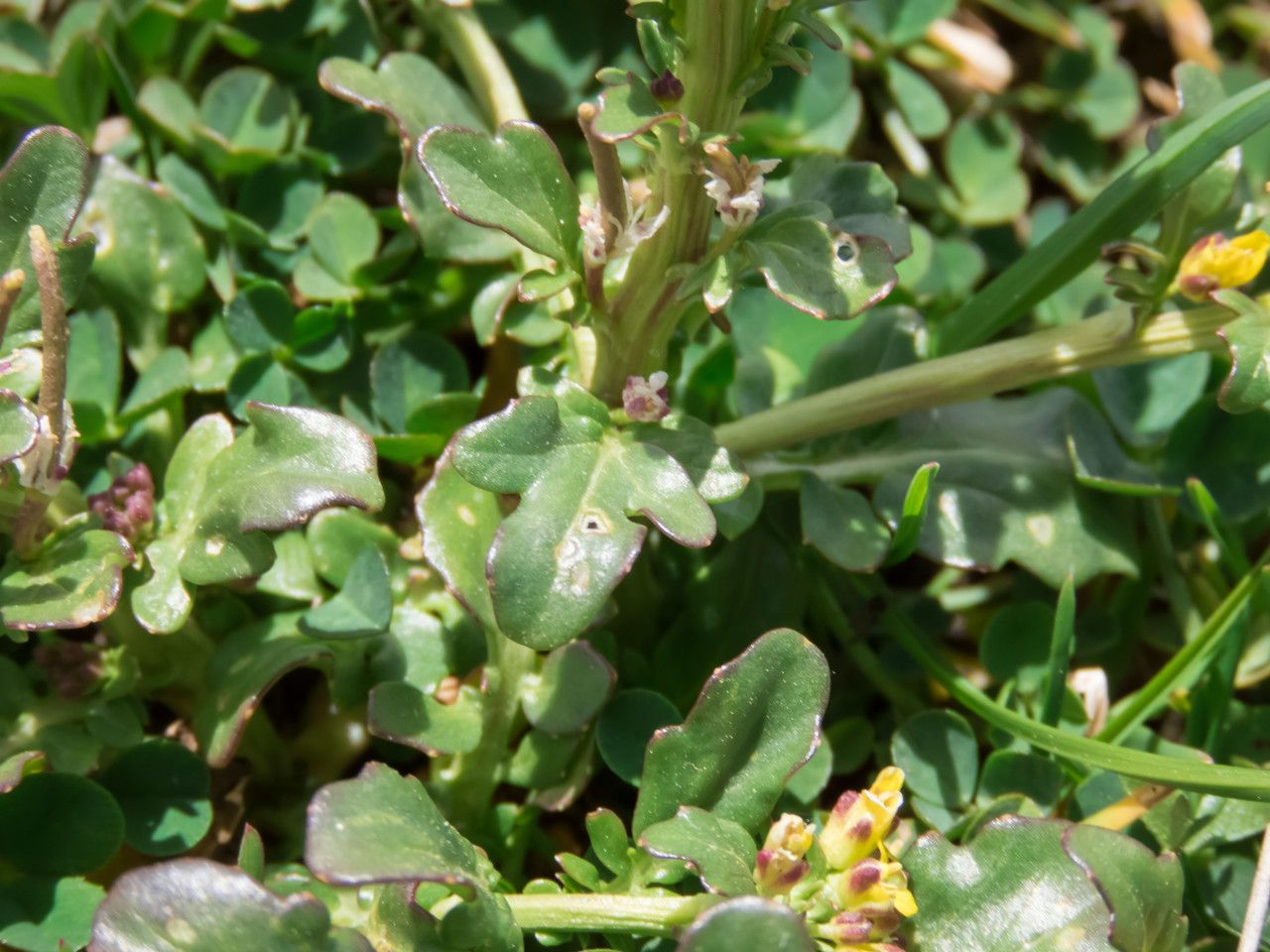
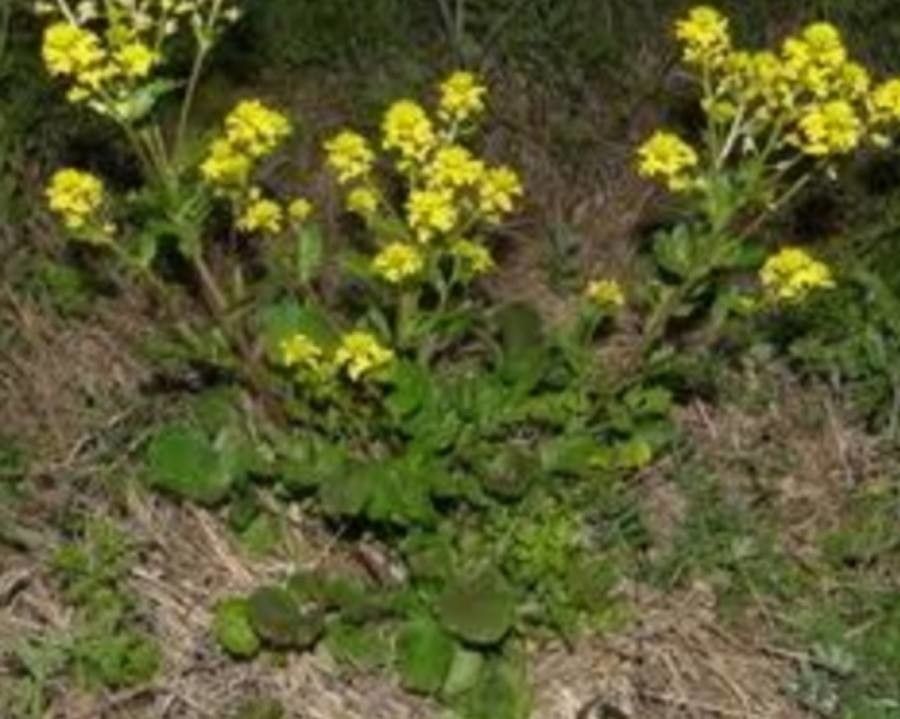
The plant can grow up to 60 cm tall and features a basal rosette of deeply lobed and toothed leaves. The stem leaves are smaller with fewer lobes. The flowers are small, yellow, and four-petaled, arranged in clusters at the top of the stem.
Upland cress thrives in moist soils with full sun or partial shade but can tolerate dry conditions once established. It is often used as a salad green for its peppery taste, which is similar to watercress.
For centuries, the plant has been valued for its medicinal properties due to its high content of vitamins A and C, as well as minerals such as calcium, iron, potassium, and magnesium.
Overall, Barbarea verna is an easy-to-grow herbaceous perennial that adds a distinct flavor to salads and offers medicinal benefits when consumed regularly over time.
Early yellowrocket has moderate resistance to disease and can be prone to problems like leaf spot. Its vulnerability to insect pests differs by cultivar, though most varieties are relatively less resistant to pests. For care, Early yellowrocket requires consistent watering and feeding, along with regular removal of yellowing leaves. Pests and diseases should be managed as soon as they appear, and the plant should be harvested promptly. Early yellowrocket is best suited to people who can invest some time and effort into routine maintenance.
How to keep Barbarea Verna.
Light
Early yellowrocket performs best when it gets sunlight for most of the day, though it can tolerate spots with some shade. Coming from sunny habitats, it typically benefits from ample light for strong growth. However, too much light can be harmful, causing wilting or scorching.
Water
Early yellowrocket, a plant native to temperate climates, thrives in evenly moist soil and has a moderate tolerance for drought. To keep the plant properly hydrated without causing over-saturation, it is advisable to water it once a week. During the growing season, it’s important to maintain consistently damp soil to promote optimal growth and health.
Temperature
Early yellowrocket is native to temperate environments and prefers temperatures of 68 to 95 °F (20 to 35 ℃). In colder seasons, it may need some indoor protection or growth support.
Fertilizer
To maximize Early yellowrocket's yield and flavor, supply adequate nitrogen throughout the entire growth period, from pre-planting through harvest. Well-watered, well-fertilized plants develop plentiful, healthy leaves and are less bitter. Before planting, amend the soil with organic matter like compost or manure, preferably 2 to 8 weeks ahead.
Pruning
Early yellowrocket is a biennial plant known for its bright yellow flowers. To encourage new growth and prevent disease, it should be pruned from early to late spring. Regular trimming not only enhances flowering but also maintains the plant's vigor and improves airflow, leading to a healthier garden. For additional tips, consult horticultural guides.
Botanical profile.
- Plant Type
- Herb
- Life Cycle
- Biennial, Perennial, Annual
- Genus
- Barbarea
- Family
- Brassicaceae
- Hardiness Zone
- 5-9
- Mature Height
- 30 cm
- Mature Spread
- 30 cm
- Leaf Color
- Green
- Leaf Type
- Semi-evergreen
- Flower Color
- Yellow
- Flower Size
- 0.51 cm
- Bloom Time
- Spring
- Planting Time
- Spring, Summer
- Harvest Time
- Late spring, Early summer, Mid summer
- Native Area
- Russia, Turkey, Italy, Spain, France, Portugal
Other names.
Reader questions.
How should I water my Early yellowrocket plant?
To ensure the health of the Early yellowrocket, it's important to follow some watering guidelines. Start by using filtered water at room temperature or slightly warmer. Tap water may contain harmful particles. As the Early yellowrocket is used to a warm environment, cold water can be a shock to its system. Avoid overhead watering as it can cause issues with the leaves. Instead, water directly onto the soil until it is completely soaked. This helps to moisten the roots and allows them to spread and gather important nutrients.
Why should I add fertilizer to my Early yellowrocket?
Nitrogen and potassium are essential for two main reasons. Firstly, they provide the necessary nutrients for the rapid growth of foliage, which is a characteristic feature of Early yellowrocket plants. Secondly, these nutrients support the development of strong roots to firmly anchor the plants in the soil. Additionally, nitrogen specifically aids in promoting taller and fuller plant growth.
What are the sunlight requirements for Early yellowrocket?
Early yellowrocket requires full sun, which means it needs more than 6 hours of sunlight daily to thrive. It can also tolerate partial sun, needing about 3-6 hours of sunlight. Observing how sunlight moves through your garden can help you find spots that offer the right balance of light and shade, ensuring your plants grow happily and healthily.
What is the ideal temperature range for growing Early Yellowrocket?
Early yellowrocket is native to temperate environments and prefers a temperature range between 68 to 95°F (20 to 35°C). It thrives best in these conditions, making it suitable for growth in many temperate regions.
What should I do if I give too much or too little water to my Early yellowrocket?
Overwatering is a more common issue for the health of your Early yellowrocket than underwatering. When this plant receives too much water, its stems and leaves may wilt and turn yellow. Overwatering for a long time can lead to diseases like root rot, mold, and mildew, which can kill the plant. Underwatering is less common for the Early yellowrocket, as it can tolerate drought. However, it can still happen and result in brittle, brown leaves. It's important to notice signs of overwatering early and reduce watering immediately. Also, check the soil and replace it with a well-draining mix if it doesn't drain well. If your Early yellowrocket shows signs of not enough water, simply water it regularly until the signs go away.
When should I fertilize my Early yellowrocket plant?
Early yellowrocket is classified as a heavy feeder because it grows quickly, has large leaves, and contains a lot of water. Due to these characteristics, it requires plenty of nutrients throughout its growing season. If you do not provide fertilizer from germination until senescence, the plant's growth will be affected and deficiency symptoms will appear. In the past, it was believed that the nutrient needs of Early yellowrocket decreased significantly when it started changing colors in the fall. Consequently, it was thought that you could reduce or stop fertilizer applications at that time. However, research has shown that even after maturity, small amounts of nitrogen fertilizer can be beneficial. This fertilizer will not significantly impact coloration, but it will prevent the bottom leaves from turning yellow and falling off.
What essentials should I know about providing light to Early yellowrocket?
Early yellowrocket thrives with significant light exposure and benefits from being in daylight for most of the day, though it can withstand some shade. Originating from brightly lit environments, it's generally happier with ample sunlight. For indoor plants, artificial lighting can be a vital solution in less sunny spaces or during winter. When choosing artificial lighting, LED lights are recommended due to their ability to provide specific wavelengths. Full sun plants need 30-50W/sq ft, partial sun plants need 20-30W/sq ft, and full shade plants need 10-20W/sq ft of artificial light. Position the light 12-36 inches above the plant and mimic natural daylight hours, usually 8-12 hours per day, to promote healthy growth.
How does Early Yellowrocket cope with cold temperatures?
Early yellowrocket has strong cold resistance, rendering special frost protection measures usually unnecessary during winter. However, in regions where winter temperatures are expected to fall below -25°C, it is important to take measures to provide cold protection, such as covering the plant with soil or straw. Additionally, watering the plant abundantly before the first freeze of autumn to keep the soil moist can help prevent drought and water scarcity during the winter and early spring.
How often do I need to water my Early yellowrocket plant?
If your Early yellowrocket plant is in a pot, the most precise way to determine if it needs water is by checking the moisture level of the soil. Simply stick your finger into the soil and if you find that the top two to three inches are dry, it's time to water it. For those growing Early yellowrocket outdoors in the ground, you can use a similar method to test the soil. Again, if you find that the top few inches of soil have dried out, it's time to water. Typically, during the spring and early fall, this plant will need to be watered about once a week using this method. However, during extremely hot weather, you may need to increase the watering frequency to about twice a week or even more. Nevertheless, it's worth noting that mature and well-established Early yellowrocket plants have an impressive ability to withstand drought.
When is the best time to not fertilize my Early yellowrocket?
Fertilizer can sometimes harm Early yellowrocket, especially when the plant is already stressed. If the plant is struggling with diseases or insect problems, it is best to avoid fertilizing. This is because fertilization can further weaken the plant's defenses, making it more susceptible to additional pest problems or diseases. Additionally, it is important to avoid fertilizing when the soil surface is hardened or too dry, as there is a higher risk of fertilizer burn to the roots. In this case, it is advisable to first water the potting soil slightly and then apply fertilizer.
What symptoms indicate Early yellowrocket is getting inadequate light?
When Early yellowrocket doesn't receive enough light, it may display several symptoms such as smaller new leaves, leggy or sparse growth, faster leaf drop, slower or no new growth, lighter-colored new leaves, and several symptoms related to overexposure such as chlorosis, sunscald, leaf curling, wilting, and leaf scorching. These symptoms indicate the plant's struggle with light deficiency or excessive light, respectively.
What should be done if the Early Yellowrocket experiences very low or high temperatures?
If temperatures fall below -25°C, Early Yellowrocket may not show immediate changes, but there could be a decrease in sprouting or even no sprouting in spring. In this case, any parts of the plant that have failed to sprout by spring should be removed. Conversely, if temperatures exceed 35°C, reaching up to 38°C, the plant's leaves may become lighter, prone to curling, susceptible to sunburn, and the plant might wilt and dry out. To mitigate this, trim away the sunburned and dried-up parts, move the plant to a shaded location or use a shade cloth, and ensure the soil remains moist by watering in the morning and evening.