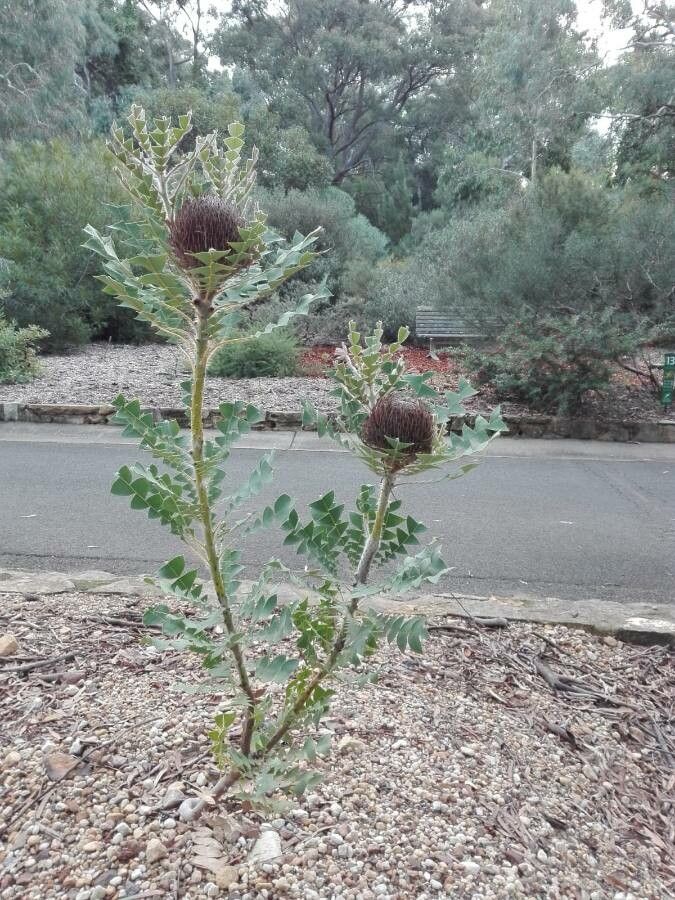
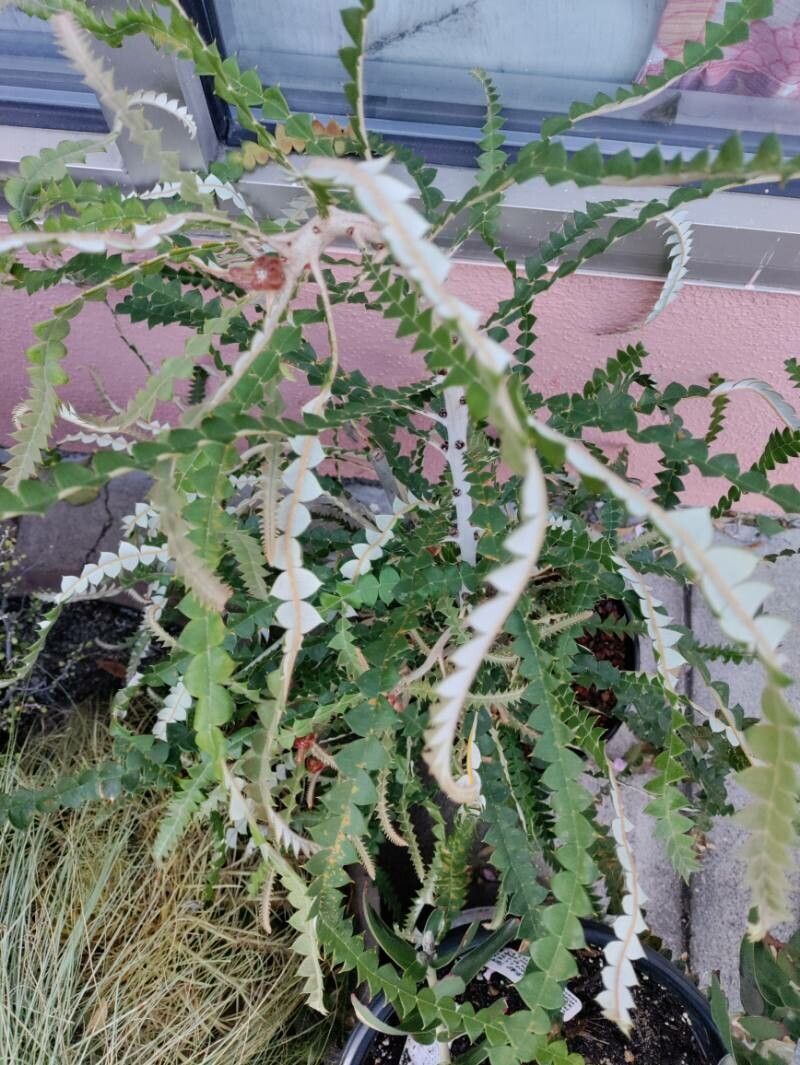
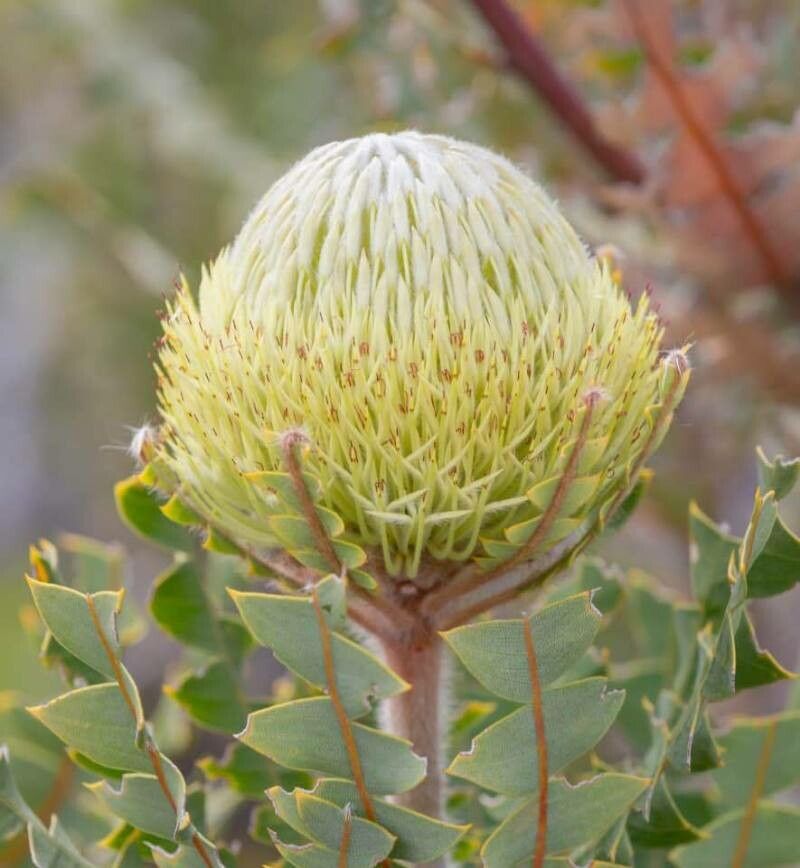
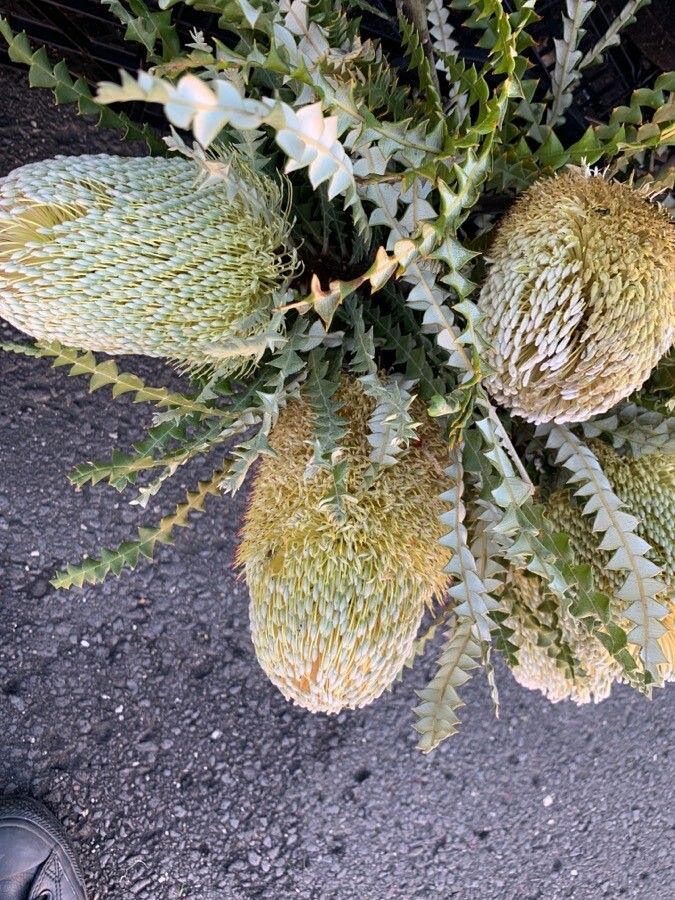
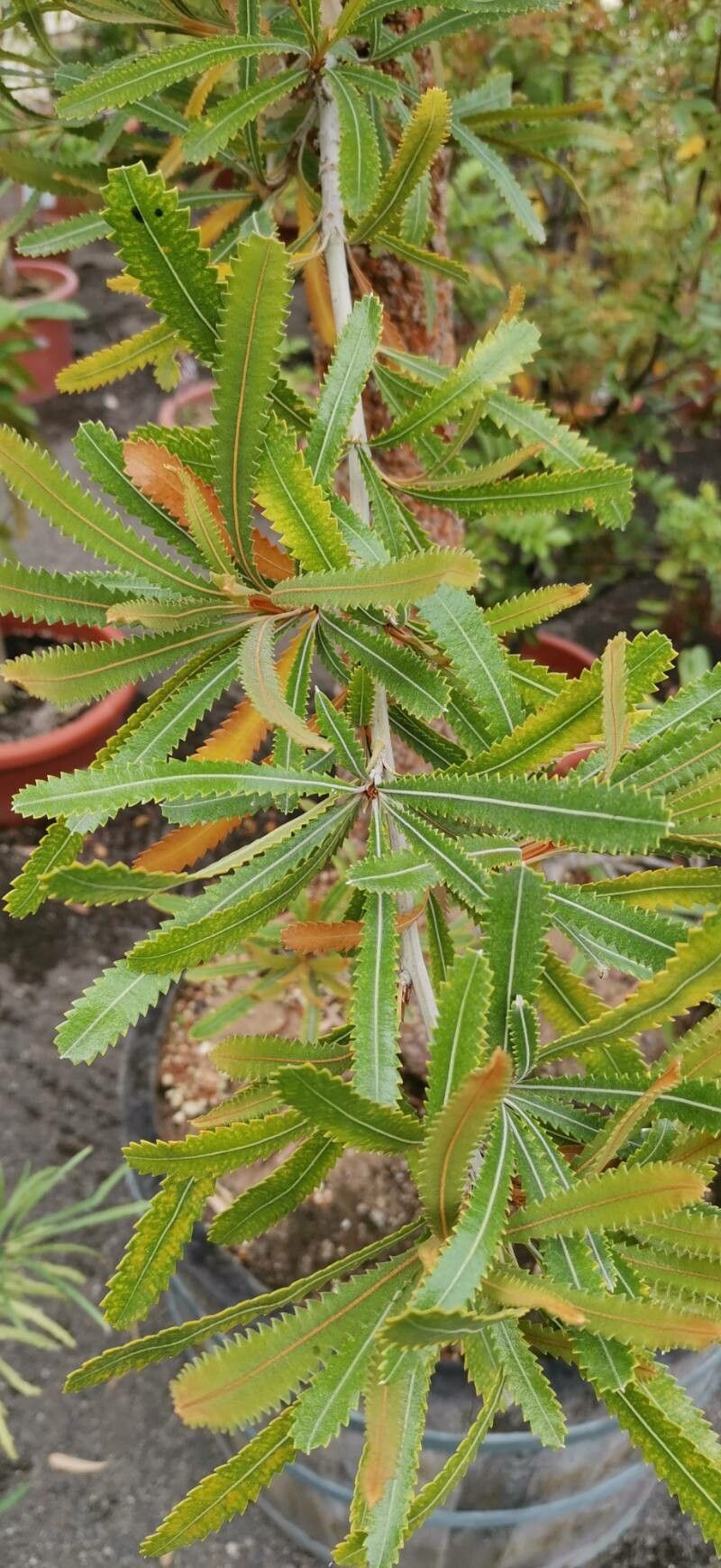
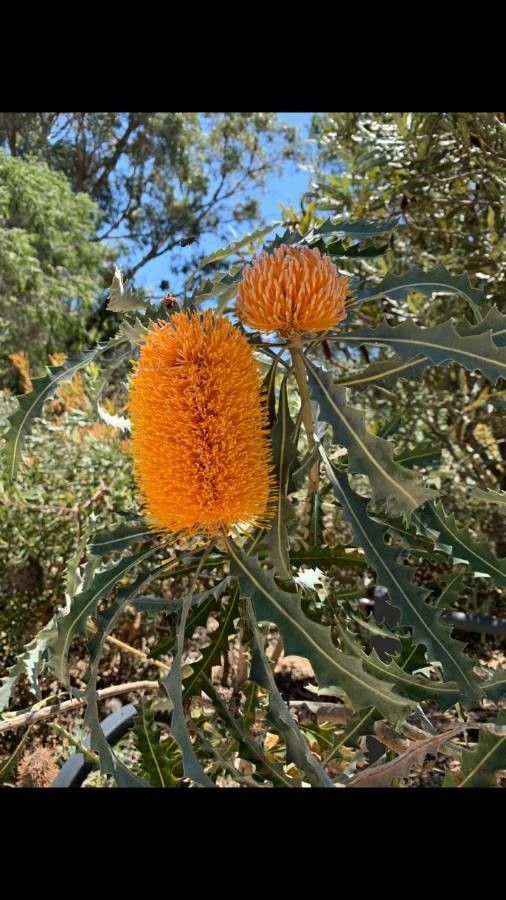
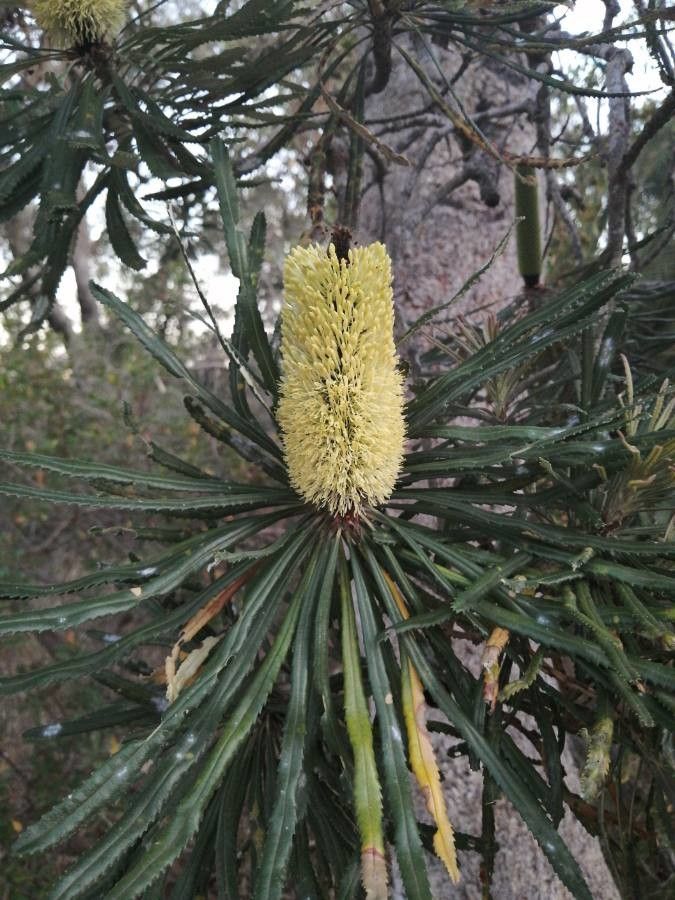
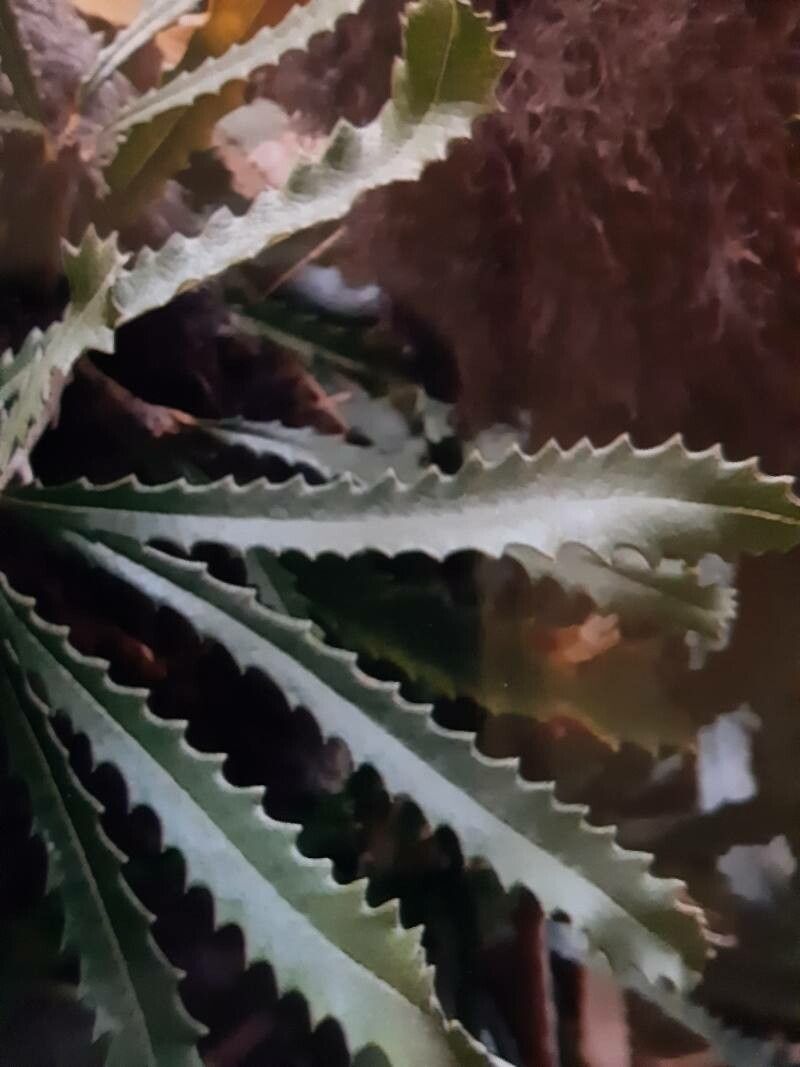
Banksia speciosa, commonly known as the showy banksia, is a species of large shrub or small tree in the family Proteaceae. It is found on the south coast of Western Australia between Hopetoun (33°57′ S) and the Great Australian Bight (approximately 33° S 130° E), growing on white or grey sand in shrubland. Reaching up to 8 m (26 ft) in height, it is a single-stemmed plant that has thin leaves with prominent triangular "teeth" along each margin, which are 20–45 cm (7.9–17.7 in) long and 2–4 cm (0.8–1.6 in) wide. The prominent cream-yellow flower spikes known as inflorescences appear throughout the year. As they age they develop up to 20 follicles each that store seeds until opened by fire. Though widely occurring, the species is highly sensitive to dieback and large populations of plants have succumbed to the disease. Collected and described by Robert Brown in the early 19th century, B. speciosa is classified in the series Banksia within the genus. Its closest relative is B. baxteri. B. speciosa plants are killed by bushfire, and regenerate from seed. The flowers attract nectar- and insect-feeding birds, particularly honeyeaters, and a variety of insects. In cultivation, B. speciosa grows well in a sunny location on well-drained soil in areas with dry summers. It cannot be grown in areas with humid summers, though it has been grafted onto Banksia serrata or B. integrifolia.
Showy banksia is resistant to disease and typically does not suffer from illnesses. As for care, this plant is fairly low-maintenance. When grown outdoors it needs only minimal watering, and larger specimens usually do not need pruning. Smaller plants, however, should be trimmed after they have finished blooming. Showy banksiat is suited to anyone with an outdoor area, like a garden or deck, and does not demand a great deal of care experience.
How to keep Banksia Speciosa.
Light
Showy banksia comes from open habitats, such as sunny meadows and forest margins, which offer abundant light. It does best in Full Sun but will also tolerate Partial Sun, showing good adaptability to different light levels.
Temperature
The showy banksia displays strong adaptability to a range of climatic conditions, from scorching summers to cold winters. However, it does have an optimal temperature range for growth. When temperatures become excessively high, the plant is susceptible to heat and humidity stress, which can cause it to die. In areas where temperatures approach the lower limit of its cold tolerance, it is important to provide insulation to protect the plant.
Fertilizer
Timing is essential when fertilizing Showy banksia. Apply fertilizer in early spring and continue monthly until early summer. Fertilizer promotes lovely blooms and supplies energy during both dormant and active growth phases.
Pruning
The showy Banksia is known for its vibrant flowers and robust foliage. To promote healthy growth and blooming, prune the plant from early to late winter. Focus on removing dead branches and shaping it to improve air circulation. Always use clean tools to prevent the spread of disease. Proper pruning helps maintain the plant's size and enhances the overall aesthetics of your garden.
Botanical profile.
- Plant Type
- Shrub
- Life Cycle
- Perennial
- Genus
- Banksia
- Family
- Proteaceae
- Hardiness Zone
- 9-11
- Mature Height
- 3.05 m to 7.92 m
- Mature Spread
- 2.13 m to 3.96 m
- Leaf Color
- Dark Green
- Leaf Type
- Evergreen
- Flower Color
- Yellow, Cream
- Flower Size
- 10.16 cm to 15.24 cm
- Bloom Time
- Fall
- Planting Time
- Spring, Summer, Autumn
- Harvest Time
- Winter
Other names.