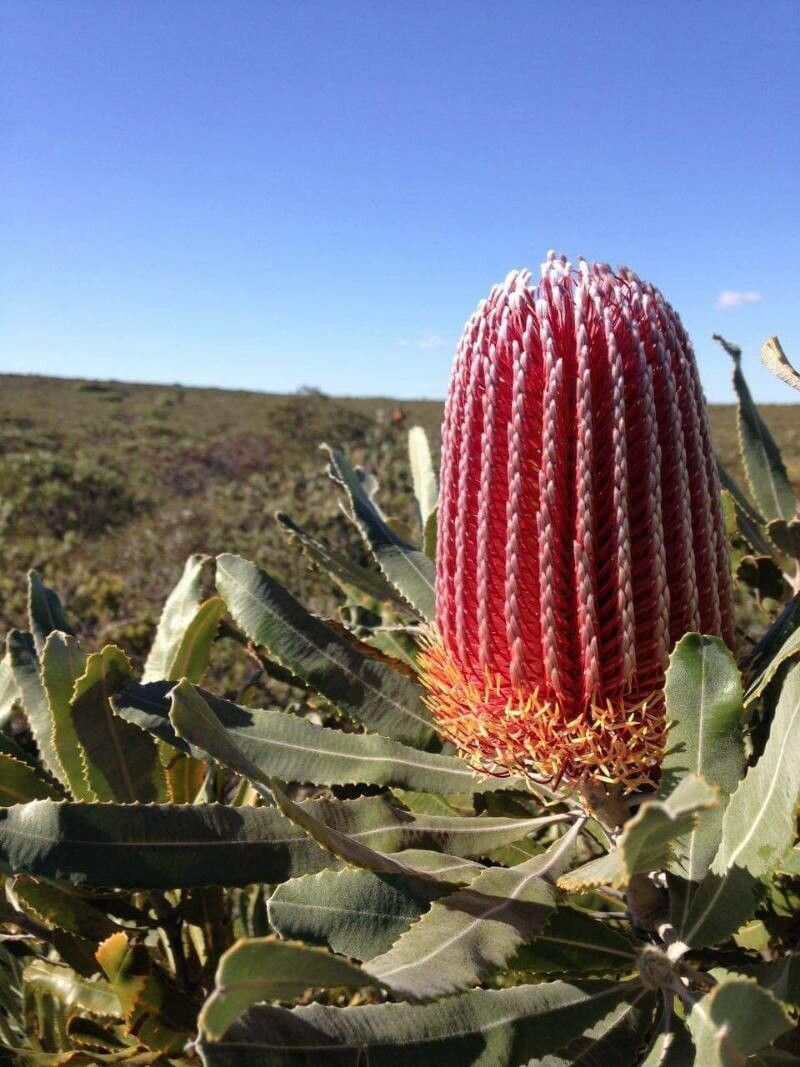
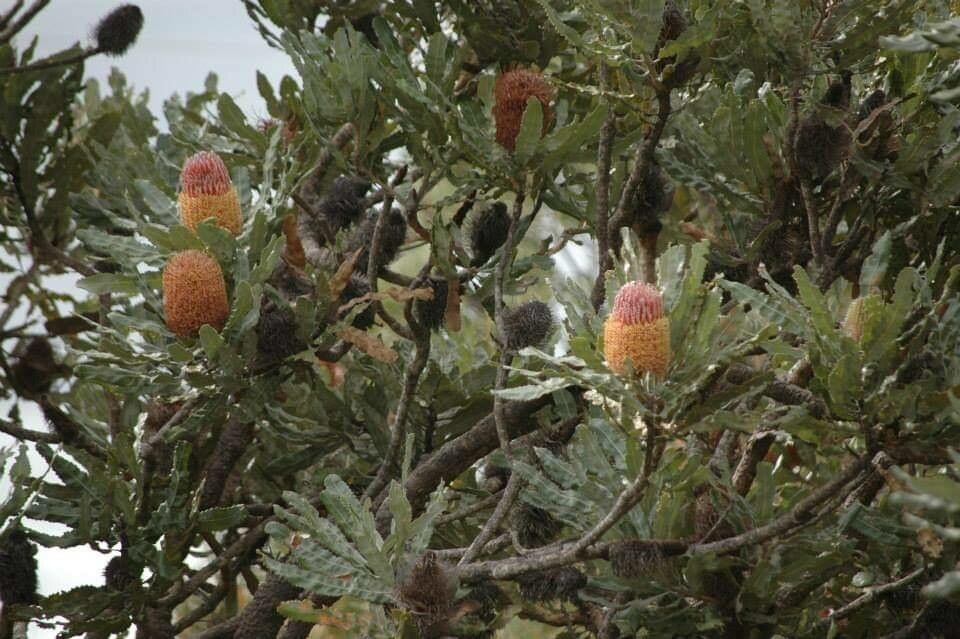
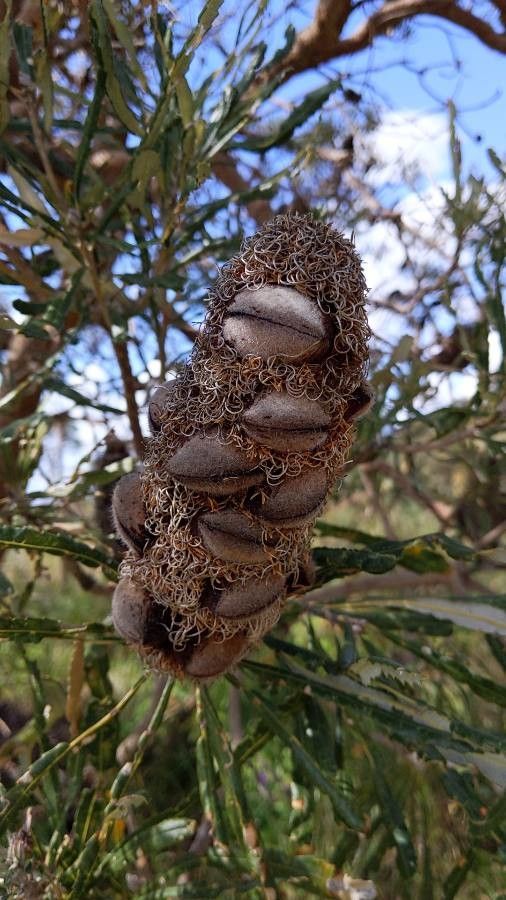
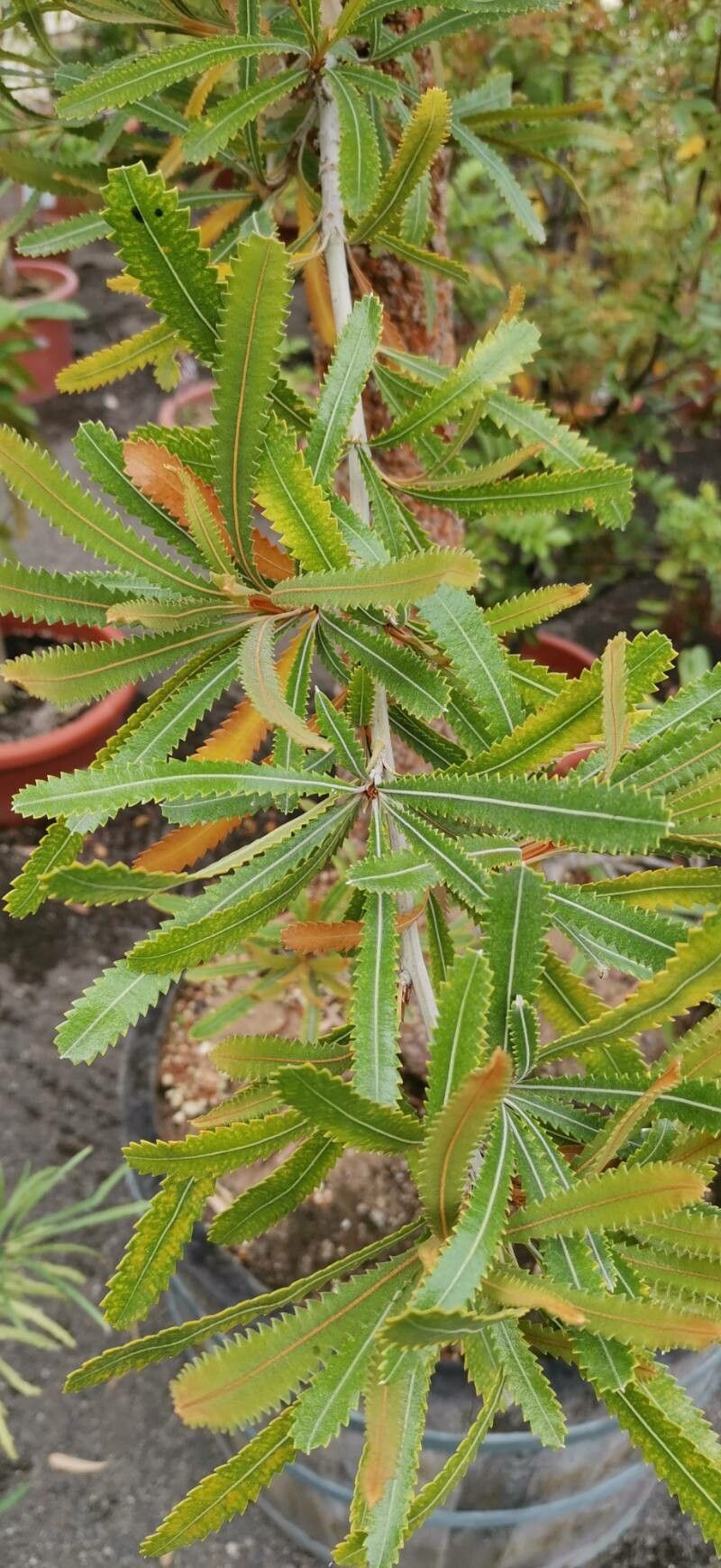
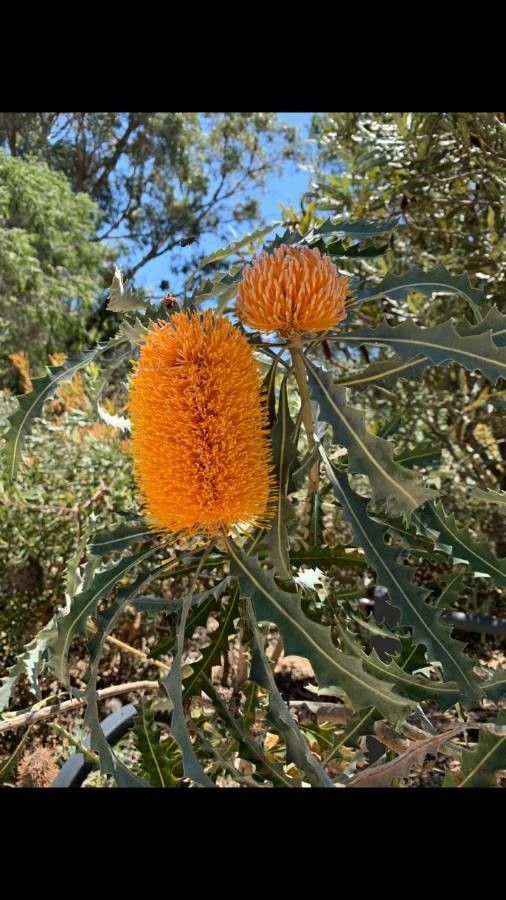
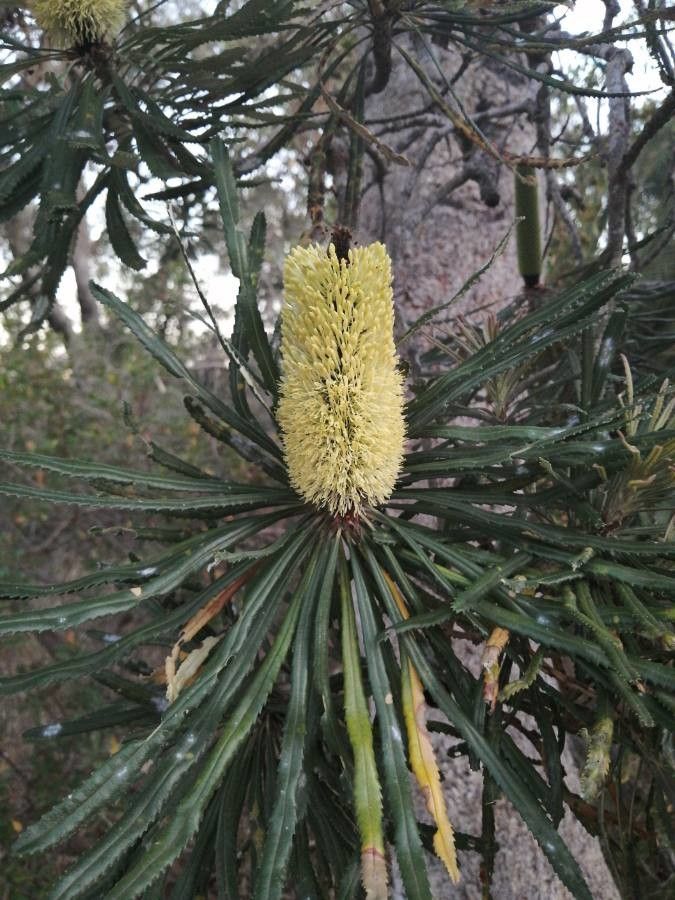
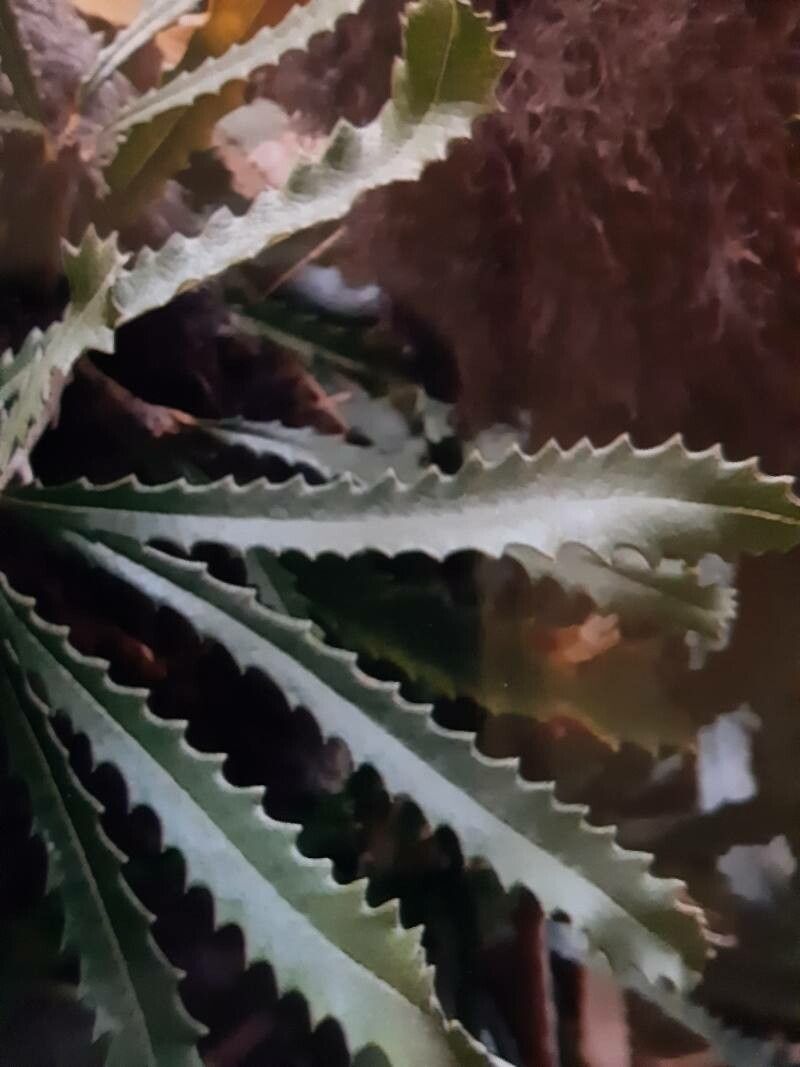
Banksia menziesii, commonly known as firewood banksia, is a species of flowering plant in the genus Banksia. It is a gnarled tree up to 10 m (33 ft) tall, or a lower spreading 1–3 m (3.3–9.8 ft) shrub in the more northern parts of its range. The serrated leaves are dull green with new growth a paler grey green. The prominent autumn and winter inflorescences are often two-coloured red or pink and yellow, and their colour has given rise to more unusual common names such as port wine banksia and strawberry banksia. Yellow blooms are rarely seen. First described by the botanist Robert Brown in the early 19th century, no separate varieties of Banksia menziesii are recognised. It is found in Western Australia, from the Perth (32° S) region north to the Murchison River (27° S), and generally grows on sandy soils, in scrubland or low woodland. Banksia menziesii provides food for a wide array of invertebrate and vertebrate animals; birds and in particular honeyeaters are prominent visitors. A relatively hardy plant, Banksia menziesii is commonly seen in gardens, nature strips and parks in Australian urban areas with Mediterranean climates, but its sensitivity to dieback from the soil-borne water mould Phytophthora cinnamomi makes it short-lived in places with humid summers, such as Sydney. Banksia menziesii is widely used in the cut flower industry both in Australia and overseas.
Firewood banksia is resistant to disease and is usually not susceptible to illnesses. For care, this plant is fairly low maintenance. When grown outdoors it needs little watering, and larger plants typically do not need pruning. Smaller plants, however, should be pruned after they finish flowering. Firewood banksiat is suitable for anyone with an outdoor area, like a garden or deck, and does not demand much gardening experience.
How to keep Banksia Menziesii.
Light
Firewood banksia comes from open habitats, like sunny meadows and forest edges, that offer abundant light. It does best in Full Sun but can also tolerate Partial Sun, adapting well to different light conditions.
Temperature
Firewood banksia is highly adaptable to a range of climate conditions, from very hot summers to cold winters. Still, it has a preferred temperature range for healthy growth. If temperatures climb too high, the plant is susceptible to heat and humidity stress, which can lead to its death. In areas where temperatures near the lower edge of its cold tolerance, it is important to insulate the plant for protection.
Fertilizer
The timing of feeding Firewood banksia is important. Apply fertilizer in early spring and continue on a monthly schedule until early summer. Feeding encourages attractive blooms and supplies energy during both dormant periods and active growth.
Pruning
The Firewood Banksia is known for its vibrant flowers and toothed leaves, thriving best in well-drained soils. To maintain its health and appearance, prune it during winter. This helps remove dead wood, improves air circulation, and shapes the plant. Using clean tools is essential to prevent infections. Regular pruning encourages healthier growth, enhances flowering, and reduces the risk of disease.
Botanical profile.
- Plant Type
- Tree, Shrub
- Life Cycle
- Perennial
- Genus
- Banksia
- Family
- Proteaceae
- Hardiness Zone
- 9-11
- Mature Height
- 10.06 m
- Mature Spread
- 6.1 m
- Leaf Color
- Dark Green, Olive Drab
- Leaf Type
- Evergreen
- Flower Color
- Red, Orange
- Flower Size
- 10.16 cm to 15.24 cm
- Bloom Time
- Winter, Early spring, Mid spring
- Planting Time
- Spring
- Harvest Time
- Spring, Early summer, Mid summer
Other names.