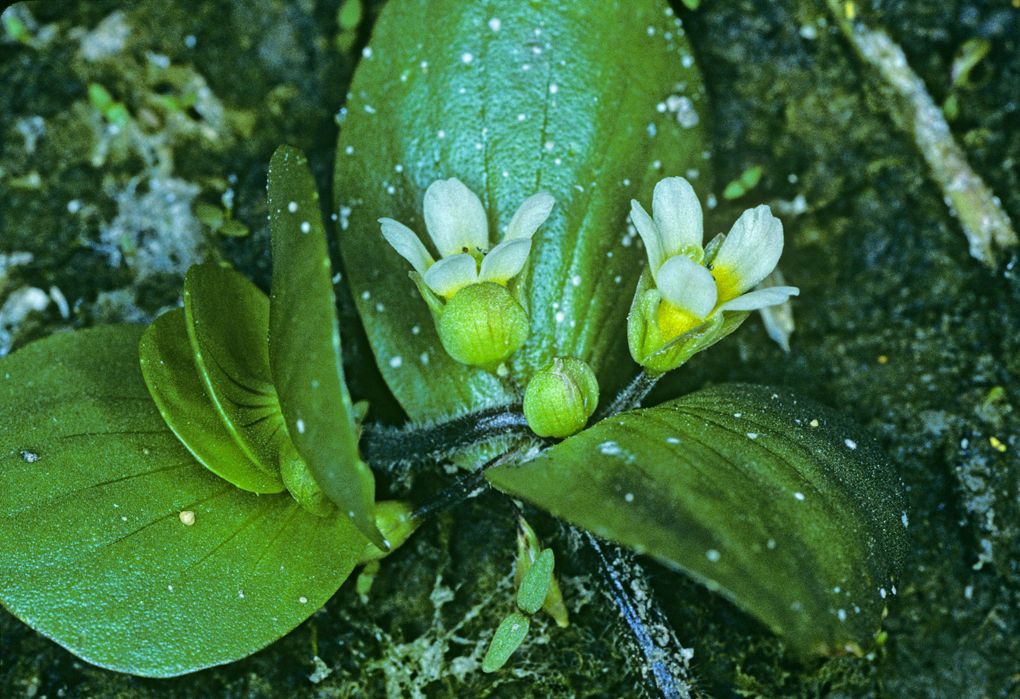
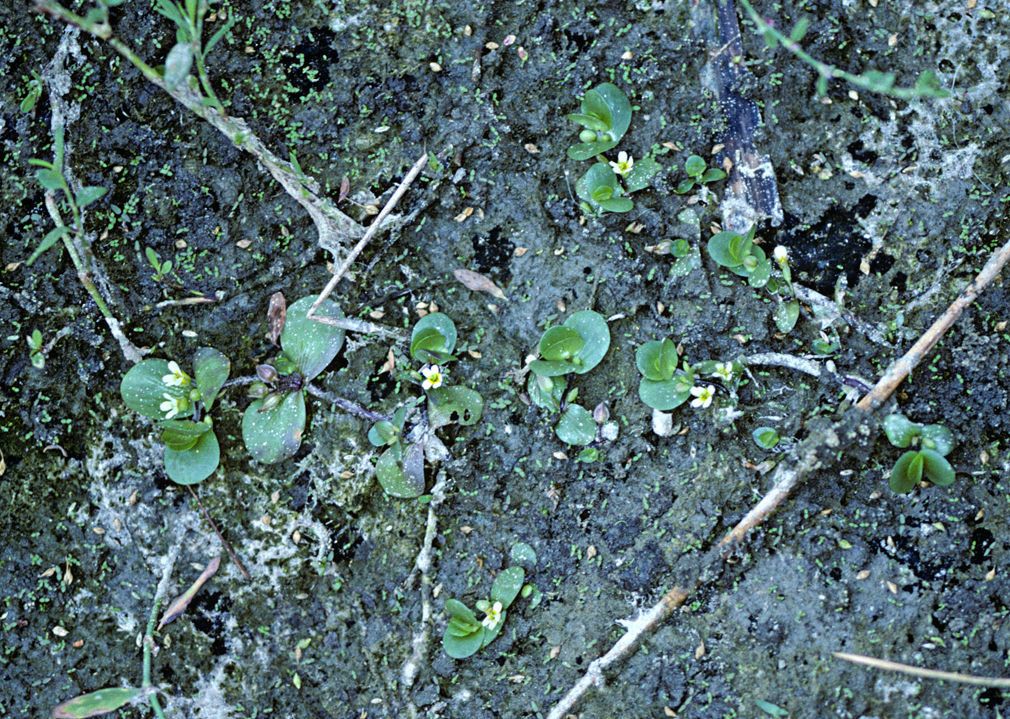
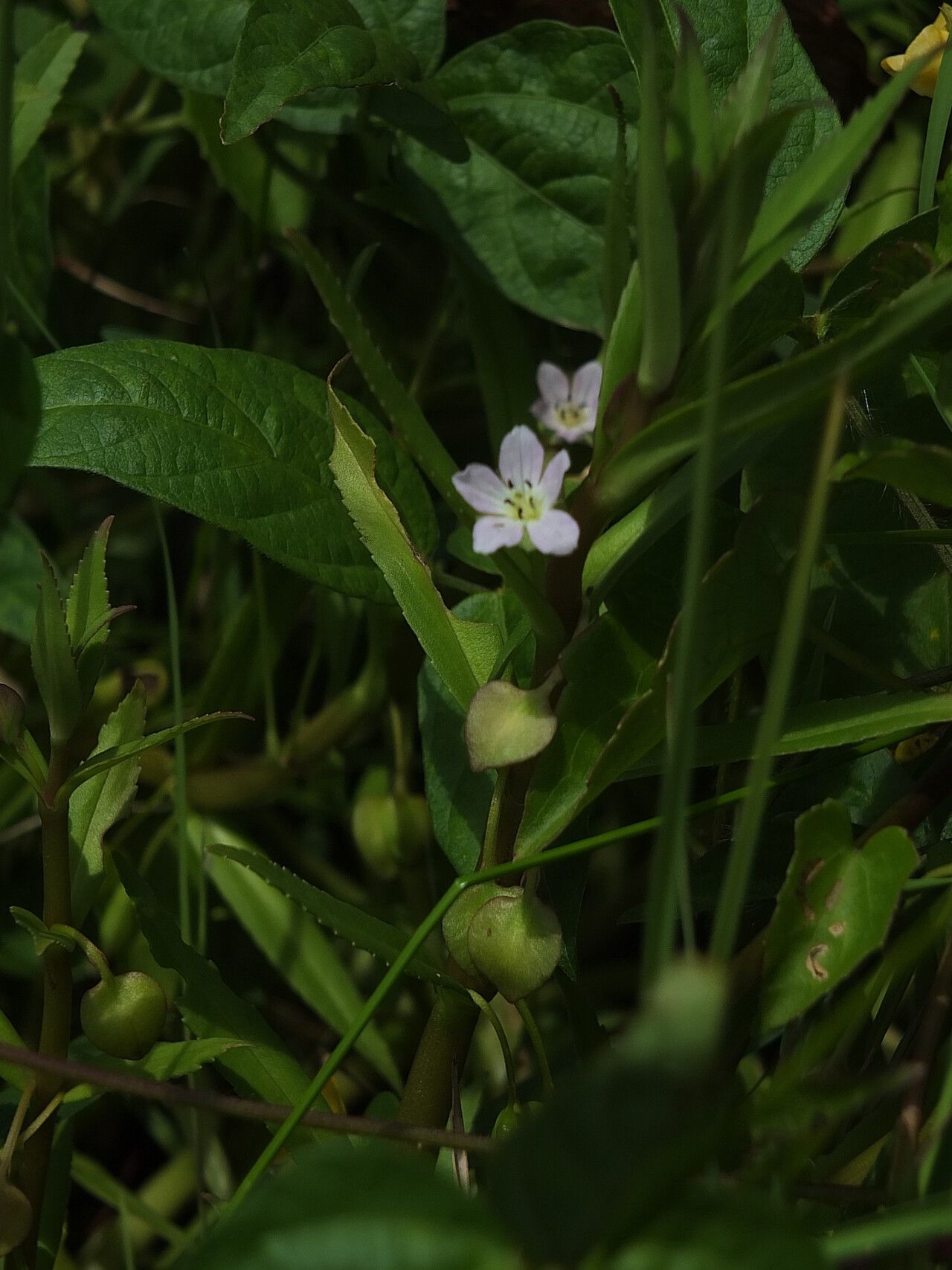
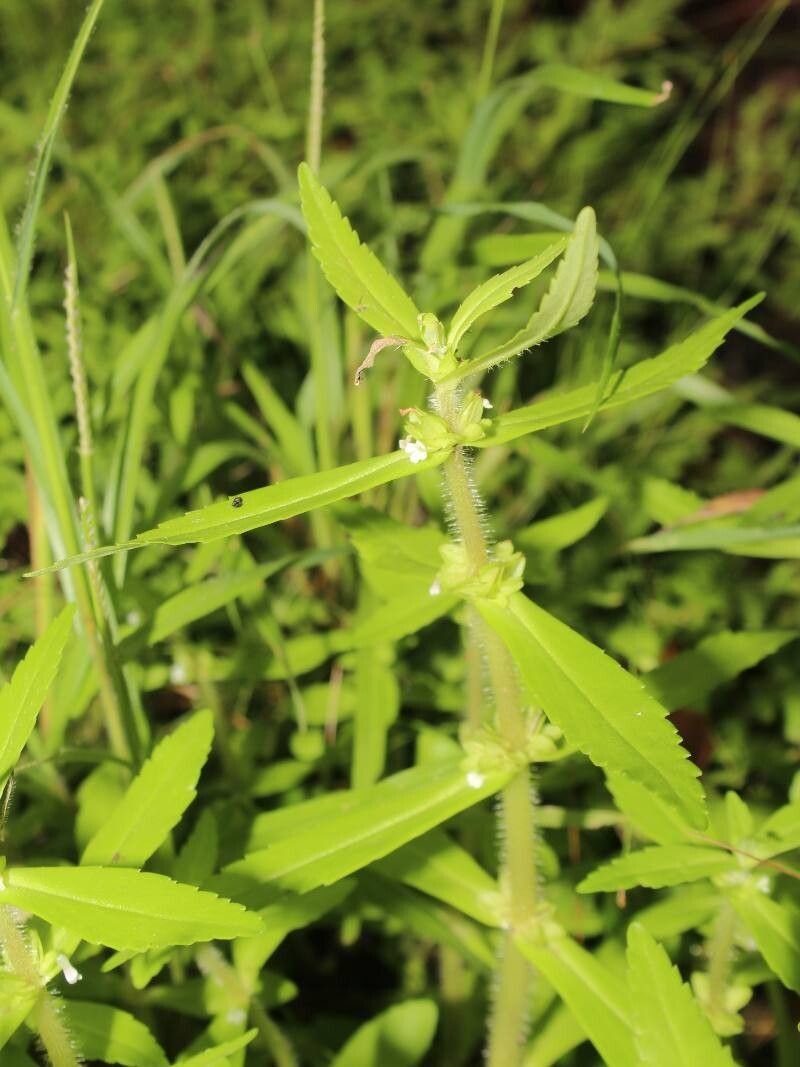
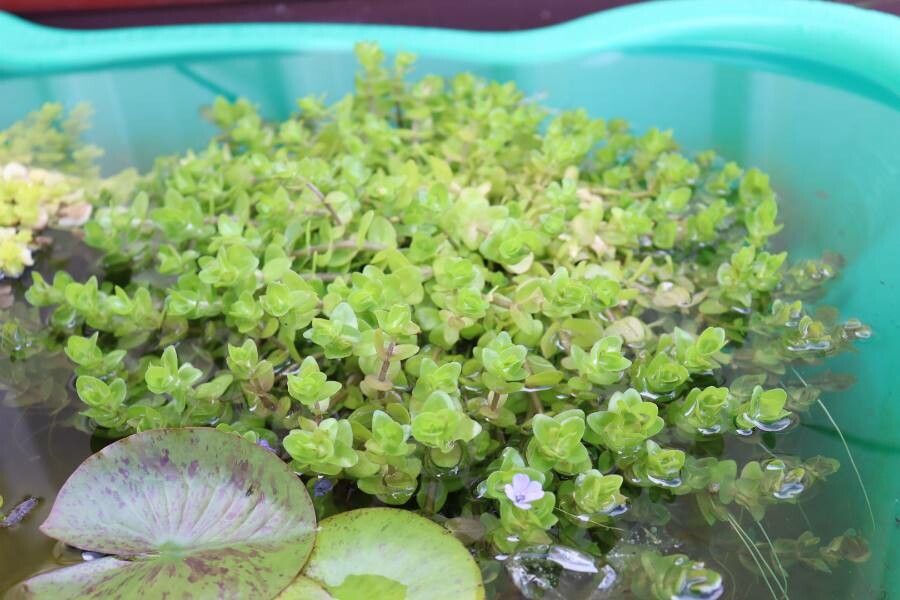
Bacopa rotundifolia is a species of water hyssop known as the disk water hyssop or round-leafed water hyssop, due to the shape of its leaves. This is an aquatic plant native to water bodies of the central United States and well known in other areas as an invasive weed of waterways. The round leaves are 1 to 3 centimeters wide and each has six longitudinal veins. The plant produces yellow-throated white flowers. The plant is in bloom during the fall, its fruit/seed abundance is medium and its seed spread rate is slow. The plant has no commercial use.
Disk waterhyssop has strong disease resistance and is generally not prone to illnesses. Still, it can be affected by pests and diseases present in its environment. Such infections are typically mild. Carewise, the plant needs moderate maintenance. It should be pruned regularly to keep a neat appearance and support healthy growth. Applying fertilizer can also encourage flowering. Disk waterhyssop is a good choice for anyone with outdoor areas like a garden or patio and does not demand extensive care experience. It may need more attention when cultivated indoors.
How to keep Bacopa Rotundifolia.
Light
Disk waterhyssop comes from habitats that receive plentiful sunlight, such as the shallow margins of ponds and lakes. It prefers full sun but can also tolerate partial sun.
Water
Disk waterhyssop thrives in consistently moist soil and high humidity, making it ideal for wetland environments. This resilient plant can handle overwatering but still requires regular watering about once a week. It's important to ensure the soil is well-draining to protect its roots from excess moisture, thereby preventing waterlogging. Although typically grown outdoors, providing these conditions will help disk waterhyssop flourish.
Temperature
Disk waterhyssop can tolerate a wide variety of temperatures, but its range may still be restricted by specific mixes of water and heat. It does best in warm summer conditions with enough rainfall or irrigation. Long stretches of cloudy, rainy weather or prolonged high temperatures raise the risk of Disk waterhyssop dying. In winter, shielding it from cold can increase its chances of survival.
Pruning
Disk waterhyssop, with its rounded leaves and small white flowers, thrives in aquatic environments. To encourage growth and prevent overcrowding, prune the plant from early to late spring. Trim overgrown stems just above a node to maintain the plant's structure and promote flowering while minimizing the risk of disease. For optimal results, make sure to use clean, sharp tools for cutting.
Botanical profile.
- Plant Type
- Herb
- Life Cycle
- Perennial
- Genus
- Bacopa
- Family
- Plantaginaceae
- Hardiness Zone
- 7-11
- Mature Height
- 61 cm
- Mature Spread
- 30 cm to 61 cm
- Leaf Color
- Green, Light Green
- Leaf Type
- Deciduous
- Flower Color
- White
- Flower Size
- 1.02 cm to 1.52 cm
- Bloom Time
- Late spring, Summer, Early fall
- Planting Time
- Spring, Summer, Autumn
- Harvest Time
- Mid summer, Late summer, Fall
- Native Area
- Mexico, Bolivia
Other names.
Reader questions.
What are the sunlight requirements for Disk waterhyssop plants?
Disk waterhyssop plants thrive in full sun, requiring above 6 hours of sunlight daily, but they can tolerate partial sun conditions as well. It's important to observe how sunlight moves through your garden to pick spots that offer a good balance of light and shade, ensuring the plants' well-being.
What additional lighting needs might indoor Disk waterhyssop plants have?
Indoor Disk waterhyssop plants may require artificial lighting when natural sunlight is insufficient, especially in winter or less sunny spaces. LED lights are recommended as they can be tailored to provide specific wavelengths needed by the plants. Full sun plants need 30-50W/sq ft, partial sun plants 20-30W/sq ft, and full shade plants 10-20W/sq ft of artificial light. The light should be placed 12-36 inches above the plant to mimic natural sunlight and left on for 8-12 hours per day.
What are the symptoms of inadequate lighting for Disk waterhyssop?
Symptoms of light deficiency in Disk waterhyssop include smaller new leaves, leggy or sparse growth, premature leaf drop, halted or slowed growth, lighter-colored new leaves, chlorosis, sunscald, leaf curling, wilting, and leaf scorching. These indicate that the plant is not receiving the optimal amount of sunlight for its growth and overall health.
How can I address light deficiency issues in my Disk waterhyssop?
To combat light deficiency in Disk waterhyssop, gradually move plants to a location with at least 6 hours of direct sunlight daily. Indoors, consider using artificial light, like a desk or ceiling lamp left on for at least 8 hours daily or invest in grow lights. Outdoors, acclimate plants to increased sunlight gradually to prevent sunburn. If trees obstruct sunlight, prune branches to improve exposure. For ground plants in shaded areas, transplanting during dormancy to a sunnier location with good drainage can help. Note that parts of the plant already affected may not recover, but new growth should be healthy with improved light conditions.