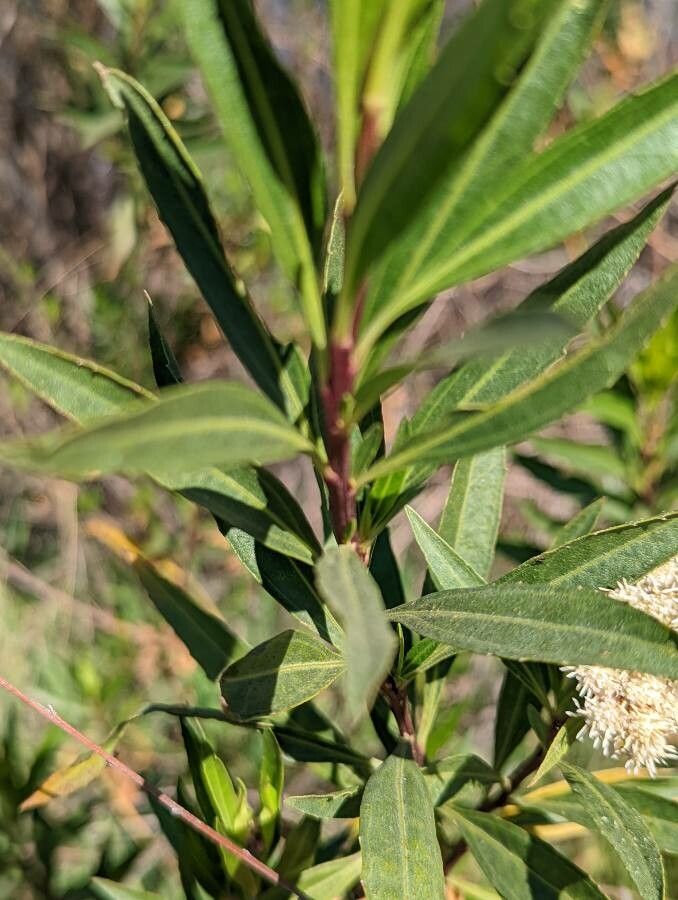
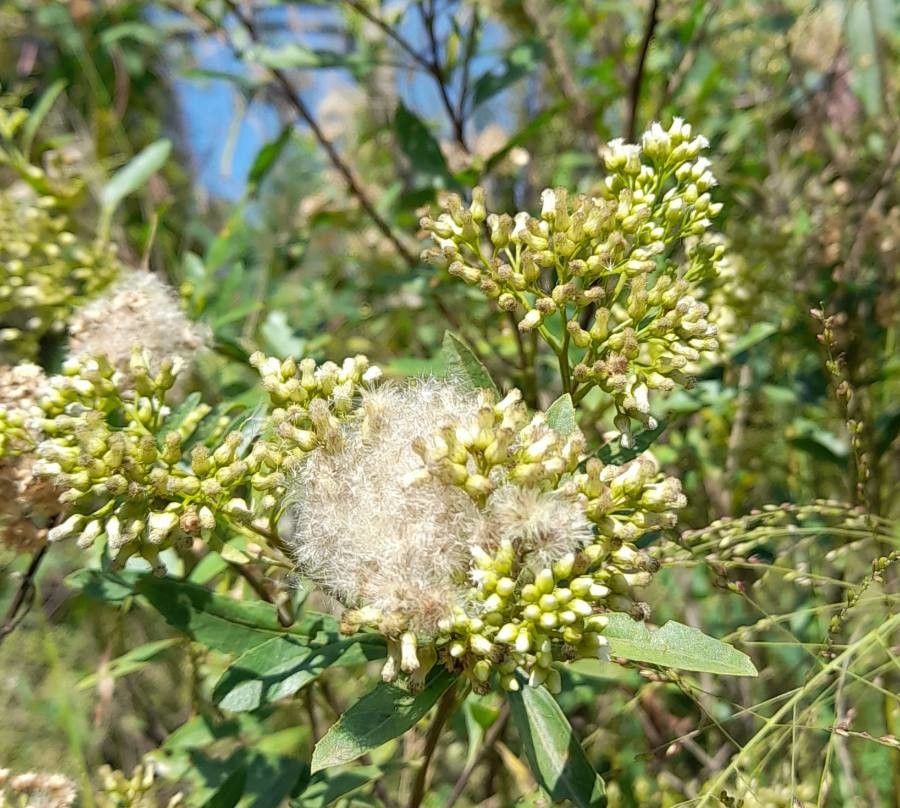
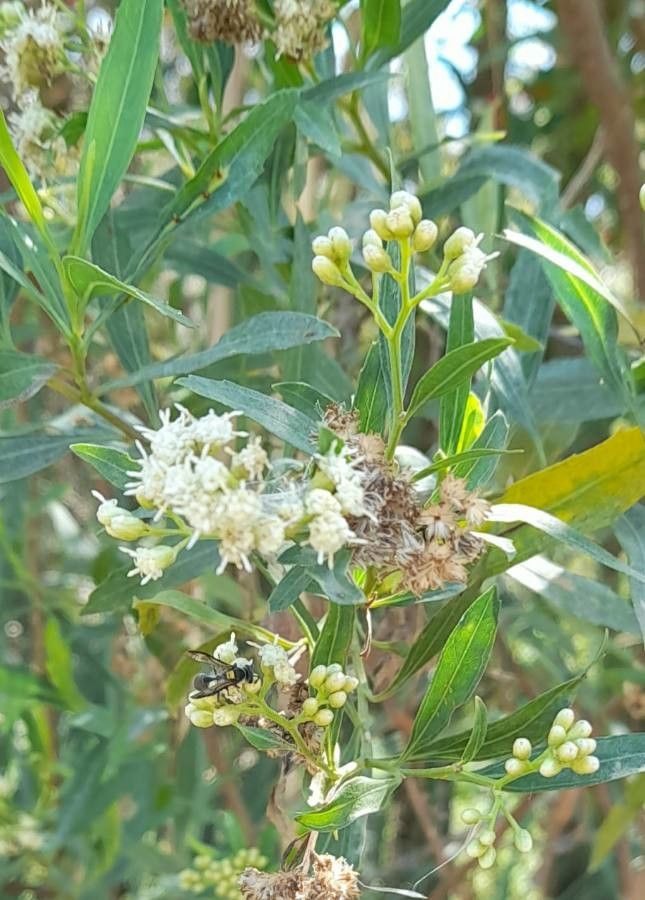
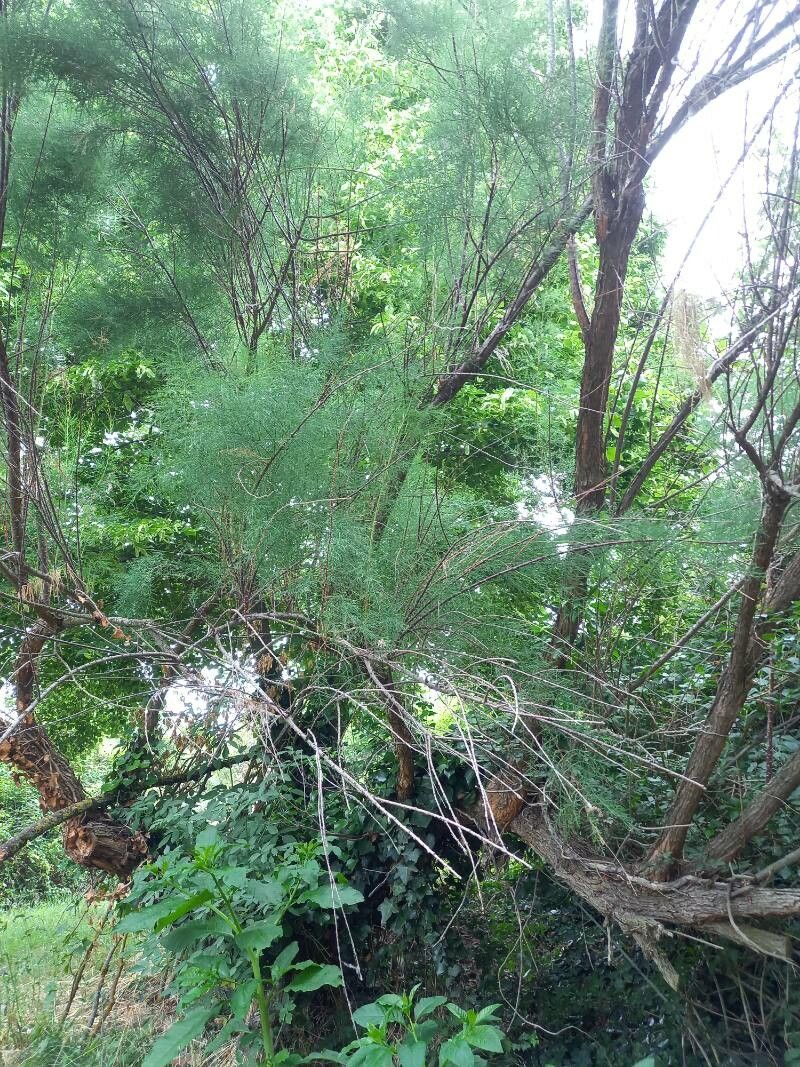
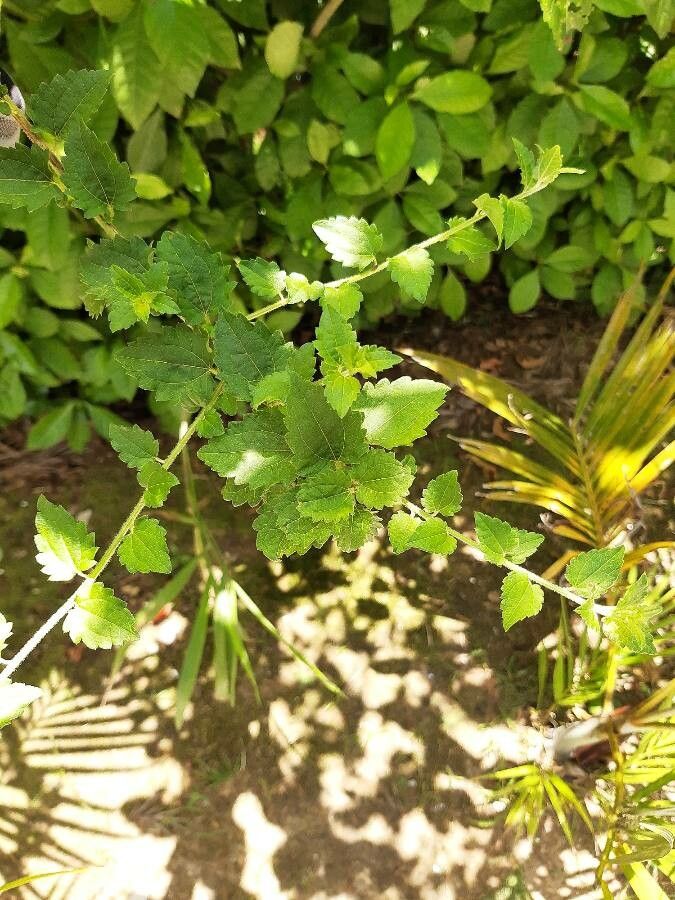
Baccharis salicina, commonly known as Mule Fat or Seep Willow, is a shrub species that belongs to the Asteraceae family. Native to North America, it thrives in various habitats such as wetlands, riparian areas, and chaparral.
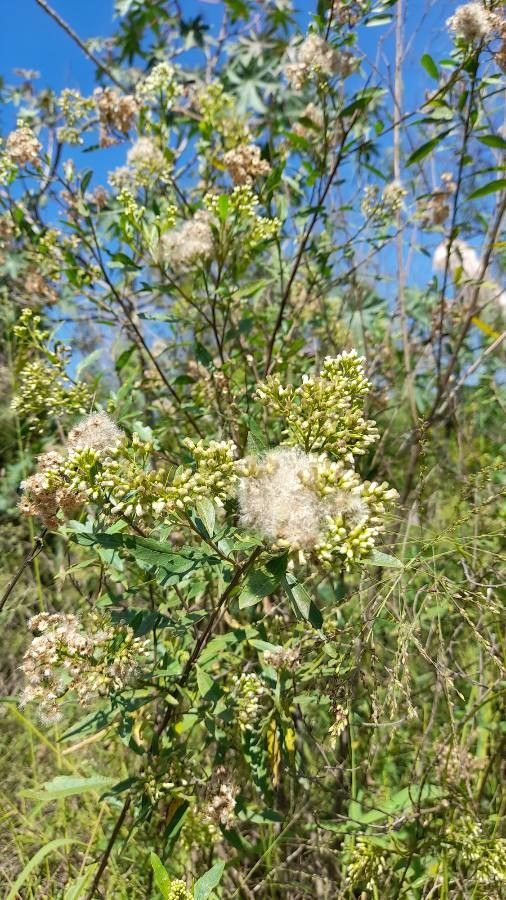
This plant can grow up to 10 feet tall and features a slender stem with numerous branches that form a dense thicket. Its leaves are narrow, elongated, and serrated, typically green in color. During late summer through fall, Mule Fat produces small clusters of white or pink flowers at the ends of its branches.
Baccharis salicina plays a vital role in its ecosystem by providing habitat for various wildlife species, including birds, insects, and small mammals. Additionally, it helps prevent soil erosion by stabilizing riverbanks.
Indigenous people have used this plant for centuries due to its anti-inflammatory properties, which are beneficial in treating wounds and skin irritations.
In summary, Baccharis salicina is an important native shrub that offers ecological benefits while also possessing medicinal properties, making it an essential component of biodiversity conservation efforts in North America.
Willow baccharis has strong resistance to disease and is usually not susceptible to illnesses. In terms of maintenance, this plant is fairly low-maintenance. Planted outdoors, it needs minimal watering, and larger specimens generally do not require pruning. However, smaller plants should be pruned once they have finished blooming. Willow baccharis is suitable for anyone with outdoor space, such as a garden or a deck, and does not demand much experience in plant care.
How to keep Baccharis Salicina.
Light
Willow baccharis comes from open habitats, such as sunny meadows and the edges of forests, which provide plenty of light. It does best in Full Sun but can also tolerate Partial Sun, adapting to different light levels.
Temperature
Willow baccharis is highly adaptable to a range of climate conditions, from blazing summers to freezing winters. That said, it grows best within a certain temperature range. If temperatures become too high, the plant can suffer from heat and humidity stress, which may lead to its death. In areas where temperatures near the lower limit of its cold tolerance, applying insulation measures to protect the plant is advisable.
Fertilizer
Fertilize your Willow baccharis in early spring to encourage healthy growth. Regular feeding improves overall health, leading to vigorous development, increased tolerance of harsh conditions, and enhanced resistance to pests and diseases. Follow a consistent fertilization schedule for your Willow baccharis to maintain vibrant, deeply colored foliage and a lush appearance.
Pruning
Willow baccharis is a shrub known for its upright growth and narrow leaves. To keep it healthy and attractive, prune it in early spring. This helps remove any damaged branches and improves air circulation. Pruning in this way encourages vigorous growth, controls the shrub's height, and maintains its natural shape, all of which lead to better flowering.
Botanical profile.
- Plant Type
- Shrub
- Life Cycle
- Perennial
- Genus
- Baccharis
- Family
- Asteraceae
- Hardiness Zone
- 7-10
- Mature Height
- 0.91 m to 3.66 m
- Mature Spread
- 0.91 m to 2.13 m
- Leaf Color
- Green, Dark Green
- Leaf Type
- Evergreen
- Flower Color
- White
- Flower Size
- 0.51 cm to 1.02 cm
- Bloom Time
- Mid summer, Late summer, Early fall
- Planting Time
- Spring, Summer, Autumn
- Harvest Time
- Early fall, Mid fall
- Native Area
- Mexico
Other names.