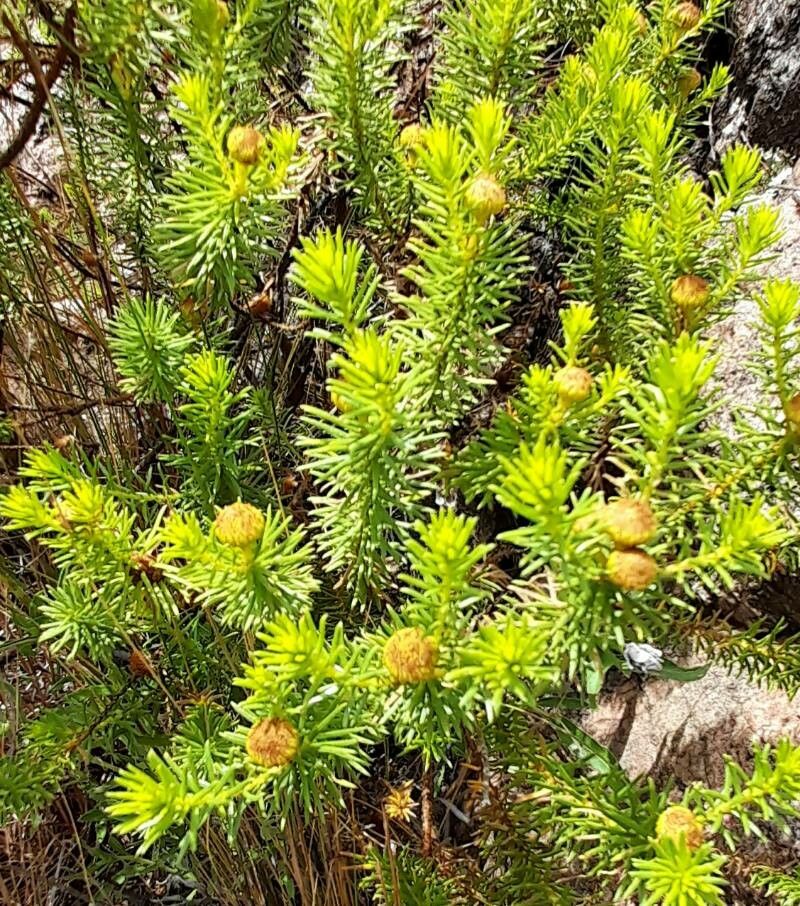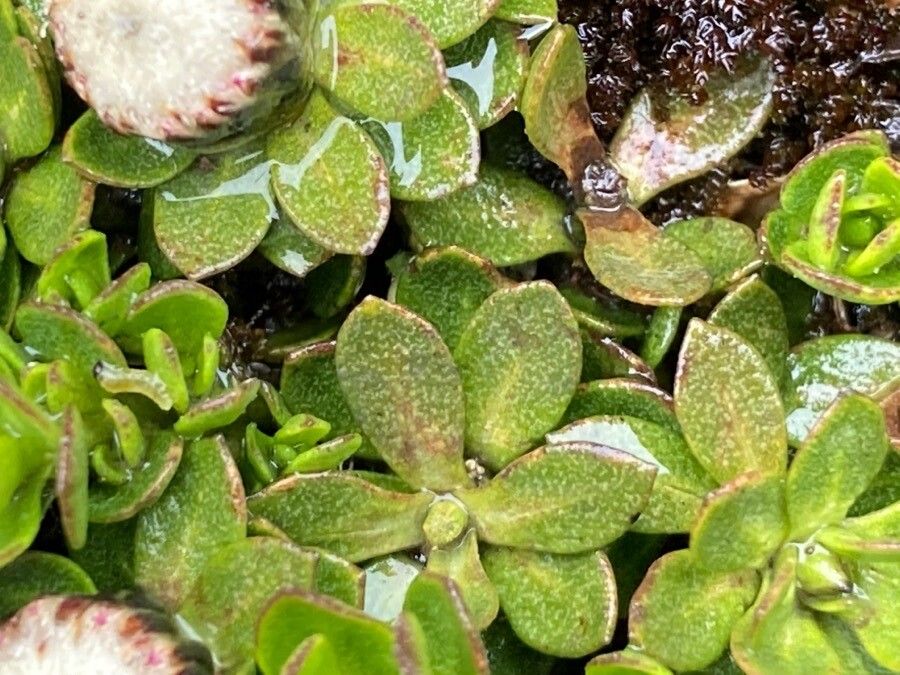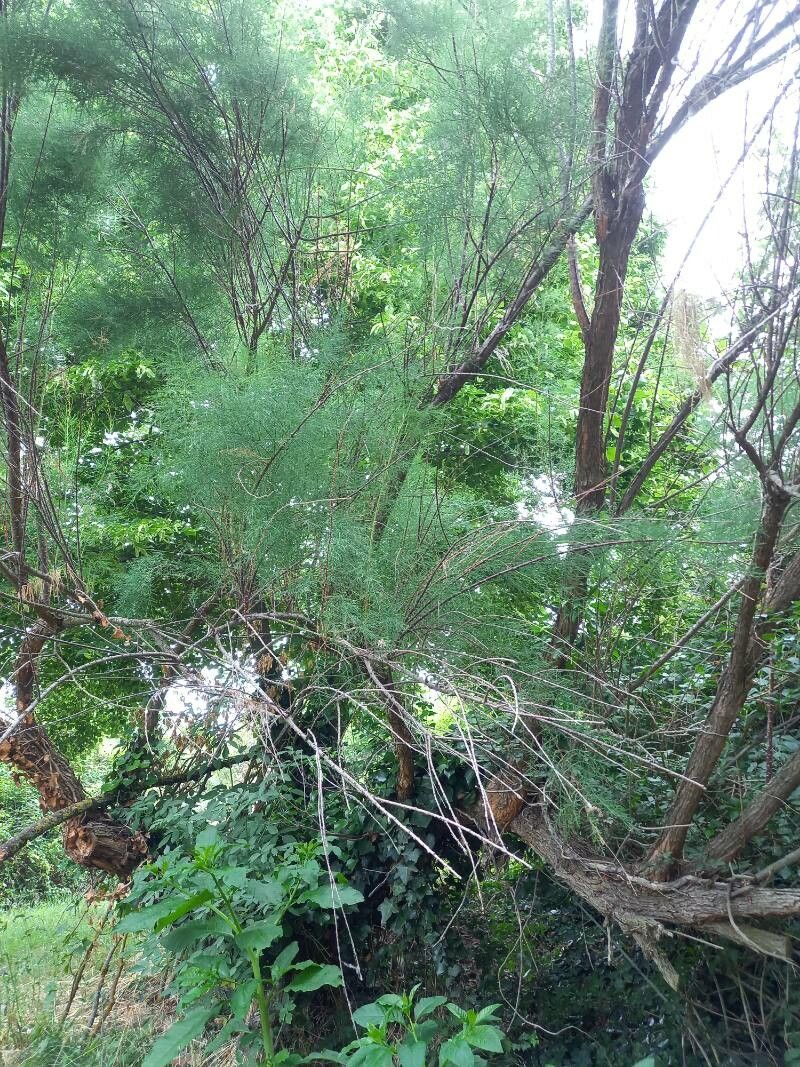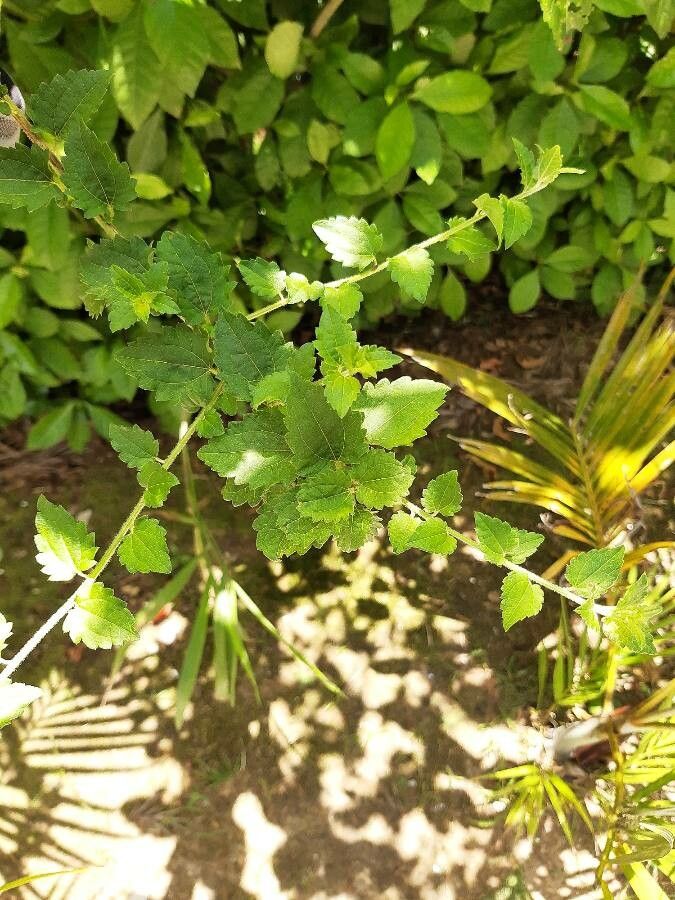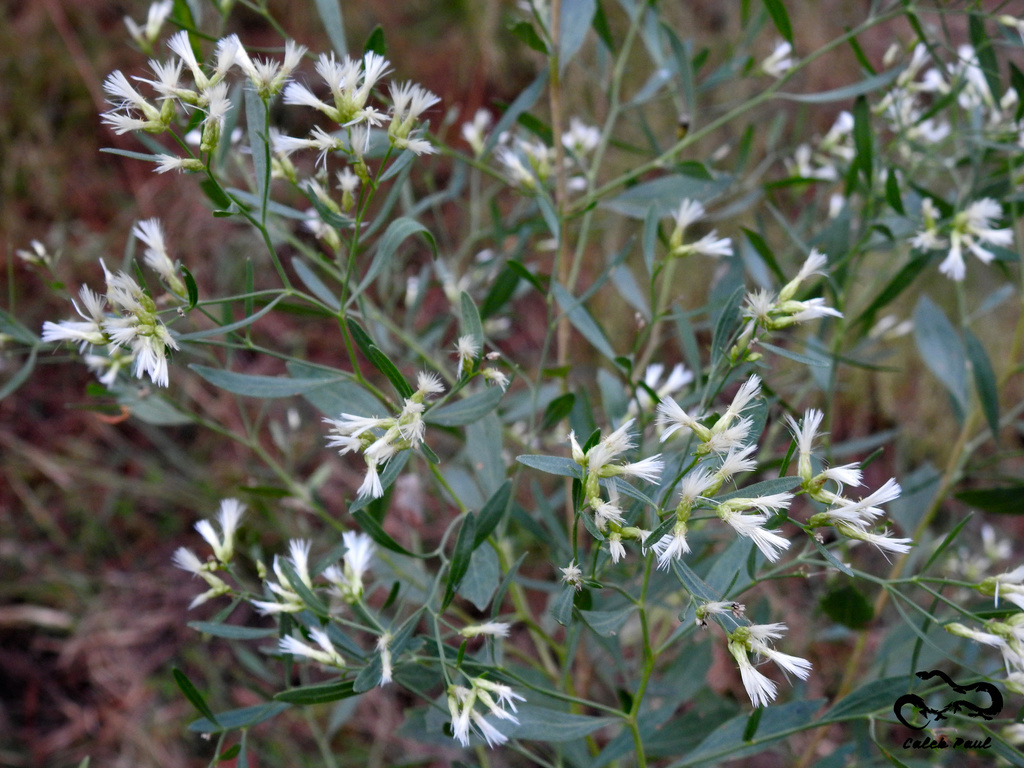
Baccharis halimifolia, commonly known as eastern baccharis or groundsel bush, is a deciduous shrub native to the eastern coast of North America. This plant can grow up to 20 feet tall and features a spreading habit with arching branches. Its small, narrow leaves have serrated edges, and it produces small white flowers in late summer or early fall.
Eastern baccharis is typically found in coastal areas such as salt marshes, dunes, and sandy soils. It is capable of tolerating salt spray and flooding but also thrives in upland areas.
Historically, Native Americans have used Baccharis halimifolia for medicinal purposes, treating ailments such as fever, coughs, colds, and skin irritations. The leaves were also employed to make tea.
This plant provides valuable habitat for wildlife, notably for birds that use it for nesting sites or as a food source. Additionally, it helps stabilize soil along coastlines, reducing erosion.
Although it can become invasive in regions outside its native range due to its rapid spread via seed production or root sprouts after disturbances like fire or flooding, Baccharis halimifolia remains an integral part of coastal ecosystems where it naturally occurs.
Eastern baccharis, also known as Florida Groundsel Bush, is the only native species of the aster family in the eastern United States that can grow to the size of a tree. It originates from the coastal plains. The name "Baccharis" is taken from ancient Greek, named after the god Bacchus, and refers to a plant with fragrant roots.
Groundseltree demonstrates strong resistance to disease and is generally not susceptible to illnesses. In terms of care, the plant is fairly low-maintenance. When grown outdoors it needs only light watering, and larger specimens usually do not require pruning. Smaller plants, however, should be pruned after they have finished blooming. Groundseltreet is well suited to anyone who has an outdoor area, such as a garden or a deck, and it does not call for extensive care experience.
How to keep Baccharis Halimifolia.
Light
The groundseltree does best when it receives a generous amount of sunlight each day. That lets it prosper and helps prevent harmful effects on its health. It can, however, tolerate somewhat lower light levels. It comes from an environment rich in sunlight, absorbing the radiant energy throughout the day. Both excessive shade and overly intense illumination can potentially damage its health.
Water
The groundsel bush thrives in coastal environments with occasional moisture. It is moderately drought-tolerant, requiring watering every 1-2 weeks, while allowing the soil to dry out slightly between waterings. This plant prefers plenty of sunlight and adapts well to saline conditions, demonstrating its resilience to different water sources.
Temperature
The groundseltree plant prefers temperatures between 41 to 100 ℉ (5 to 38 ℃). It is a temperate, woody species that occurs naturally in coastal environments. In winter, it may require adjustments to maintain these temperature conditions.
Fertilizer
Fertilize your Groundseltree in early spring to encourage healthy growth. Regular applications of fertilizer improve overall health, leading to vigorous growth, increased tolerance of harsh conditions, and enhanced resistance to disease and pests. Follow a defined fertilization schedule for your Groundseltree to maintain vibrant, deeply colored foliage and a lush appearance.
Pruning
Groundsel bush benefits from pruning in early spring due to its woody stems. Regularly removing dead or overcrowded branches improves air circulation, encourages growth, and helps maintain the plant's shape. To prevent stress and promote the plant’s health and appearance, avoid heavy pruning outside the growing season.
Botanical profile.
- Plant Type
- Shrub
- Life Cycle
- Perennial
- Genus
- Baccharis
- Family
- Asteraceae
- Hardiness Zone
- 5-11
- Mature Height
- 3.96 m
- Mature Spread
- 3.66 m to 4.27 m
- Leaf Color
- Green, White, Gray, Silver
- Leaf Type
- Deciduous
- Flower Color
- White, Yellow
- Flower Size
- 8.89 cm
- Bloom Time
- Mid summer, Late summer
- Planting Time
- Spring, Autumn
- Harvest Time
- Fall, Winter
- Native Area
- Bahamas, Mexico, Cuba
Other names.
Reader questions.
How should I water my Groundsel bush?
To promote excellent root development, it is recommended to place a garden hose at the base of the plant rather than directly spraying the leaves. If the leaves are exposed to direct sunlight outdoors, they will require more watering. For moistening the roots, you can use bubblers or soaker hoses for each plant. When adding or removing plants, it is advisable to use soaker hoses that cover the entire garden or bed, which helps push the roots deeper. After watering, make sure to drain any excess water and allow the soil to dry before watering again. To prevent diseases, water at ground level rather than spraying on the leaves. On a sunny day, consider spraying the entire bush with water. Whether it's potted or in the ground, keep in mind that the Groundsel bush prefers deep watering rather than light sprinkling.
Why do I have to put fertilizer on my Groundsel bush?
If you own a Groundsel bush, whether it's a different kind, regularly fertilizing it will greatly improve its overall health. Providing the right nutrients will result in stronger growth and make your plant more resistant to tough conditions, diseases, and pests. The foliage of your Groundsel bush is particularly appealing, so it's important to keep it in good shape. This involves following a specific fertilization schedule to encourage the growth of vibrant, lush leaves with a deep color.
What are the sunlight requirements for Groundsel Bush (Baccharis halimifolia)?
Groundsel Bush (Baccharis halimifolia) thrives best under full sun conditions, requiring over 6 hours of sunlight daily to flourish and maintain health. It is capable of tolerating partial sunlight conditions — about 3-6 hours of sunlight per day — but for optimal growth and health, a generous amount of daily sunlight is preferred. The plant originates from environments with abundant sunlight, benefiting significantly from soaking in radiant energy throughout the day. It's important to watch how sunlight moves through your garden and choose locations that offer a good balance of light for your plants.
What are the ideal growing temperatures for Groundsel bush?
Groundsel bush, or Baccharis halimifolia, prefers temperatures ranging from 41°F to 100°F (5°C to 38°C). It is a temperate plant thriving in coastal environments and exhibits strong cold resistance, making it adaptable to winter conditions without needing special frost protection measures. However, during winter, if temperatures are expected to fall below its tolerance, precautions should be taken to wrap the plant with protective materials. Additionally, abundant watering before the first freeze of autumn is recommended to keep the soil moist and prevent drought and water scarcity through winter and early spring.
What should I do if I give the Groundsel bush too much or too little water?
If you overwater your Groundsel bush, its leaves may turn yellow, drop off, and wilt. The plant will also appear dull and unhealthy, with mushy stems. If you notice these signs, try adjusting your watering schedule. Wilting can also indicate under watering, in which case the leaves become crispy and dry. When the soil is dry and simply watering is not enough, give the plant a thorough watering. This will help the Groundsel bush recover, but it may still have dry and yellow leaves for a few days due to root damage. Once it returns to normal, the yellowing of leaves will stop. When you have a Groundsel bush indoors, always check the moisture levels in the pot and avoid overwatering. Look for signs of black spots, and if present, allow the soil to dry in the pot by withholding watering for a few days. Overwatering can cause root rot, so if you see discolored and slimy roots, consider transferring the plant to a different pot. It's important to prevent root rot by not letting the soil become too soggy. When planting a Groundsel bush outdoors, make sure to dig a little deeper. If you find that the soil is too dry when checking with your fingers, it may be a sign of underwatering. Proper watering is necessary for the plant's recovery.
When should I put fertilizer on my Groundsel bush?
To keep your Groundsel bush healthy, start fertilizing it in late winter or early spring. This gives the bush the necessary nutrients to grow well when the weather warms up. If you live in a warm climate, it can also be helpful to fertilize again in early fall. This provides additional nutrients for the following growing season and helps the bush withstand the winter without foliage damage. Fertilizing earlier in the fall ensures that new branches have enough time to grow and withstand the cold winter.
What precautions should be taken regarding sunlight for the Groundsel Bush?
When caring for Groundsel Bush, it's essential to find the perfect balance between light and shade, as both excessive shade and overly harsh sunlight can negatively affect the plant's health. Too much shade can lead to symptoms of light deficiency, such as small and pale leaves, leggy growth, faster leaf drop, slower growth, and even chlorosis or sunscald in severe conditions. Direct sunlight can lead to leaf curling, wilting, or leaf scorching due to excessive heat. Monitoring and adjusting the plant's exposure to sunlight can ensure it remains healthy and vibrant.
How does low temperature affect Groundsel bush, and what are the solutions?
Groundsel bush is relatively cold-tolerant, with optimal growth seen when temperatures are kept above its minimum tolerance. During winter, it is important to ensure temperatures do not fall below its growth limit, as this may not cause noticeable changes immediately but could lead to branches becoming brittle, dry in spring, and failure of new shoots to emerge. To mitigate these effects, it's advisable to prune away any dead branches in spring to promote healthy new growth.
How frequently should I give water to my Groundsel bush?
The Groundsel bush prefers deep watering but infrequently. When watering, it's best to soak the plant in a gallon of water, especially if it is in a pot. Potted plants have limited water storage, so the soil dries out faster. In a cold region, water every 3 to 5 days. Water in the morning when the soil is dry, both indoors and outdoors. Check the soil to see if watering is needed - if the top 2-3 inches are dry, it's time to water. On hot days, check the moisture daily as the heat can dry out the soil quickly. For garden plants, irrigation is needed. In a hot climate, water once a week, ensuring that about 2 to 3 inches of soil are dry. Be mindful of rainwater and avoid overwatering to prevent root rot. If it rains a lot, additional watering may not be necessary. Groundsel bush typically grows in spring and fall. When outdoors, add mulch that is 3 to 4 inches deep to conserve water. Sandy soil drains faster and requires more frequent watering. Clay soil, on the other hand, needs less watering - every 2 to 3 days is sufficient to prevent root rot. Keep track of watering dates and be aware of any drooping leaves, which might indicate a late watering.
When is it not a good idea to put fertilizer on my Groundsel bush?
There are certain periods throughout the year when you should avoid fertilizing your Groundsel bush. The first occurs during the early and mid-winter months when the plant is dormant and does not require nutrients. Additionally, it is not recommended to fertilize the plant during late spring and summer. The hotter and drier weather during this time can have adverse effects on the plant if fertilized. To prevent any issues, it is best to follow a fertilization schedule that focuses on feeding the plant only in early spring and early fall.
How can artificial lighting be used for Groundsel Bush indoor care?
Artificial lighting serves as an essential solution for Groundsel Bush care indoors, especially when natural sunlight is insufficient. LED lights, popular for indoor plant lighting, can be customized to provide specific wavelengths needed by plants. For full sun plants, 30-50W/sq ft of artificial light is recommended, whereas partial sun plants need about 20-30W/sq ft. The light source should be placed 12-36 inches above the plant to mimic natural sunlight conditions, ensuring the plant receives 8-12 hours of light per day. This approach promotes faster, healthier growth.
What should be done if Groundsel bush experiences high temperatures?
During the summer, it's crucial to maintain the Groundsel bush below its maximum temperature tolerance to prevent the leaves from becoming lighter in color, tips from drying and withering, and to reduce susceptibility to sunburn. If the plant experiences temperatures above its high-temperature tolerance, it's recommended to trim away the sunburned and dried-up parts, move the plant to a shaded location, or use a shade cloth for protection. Additionally, watering the plant in the morning and evening can help keep the soil adequately moist.