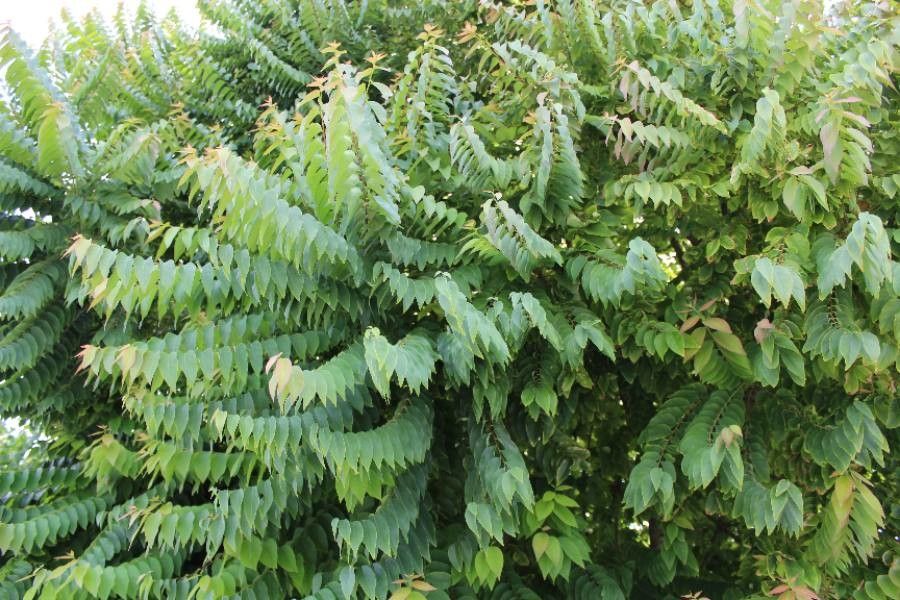
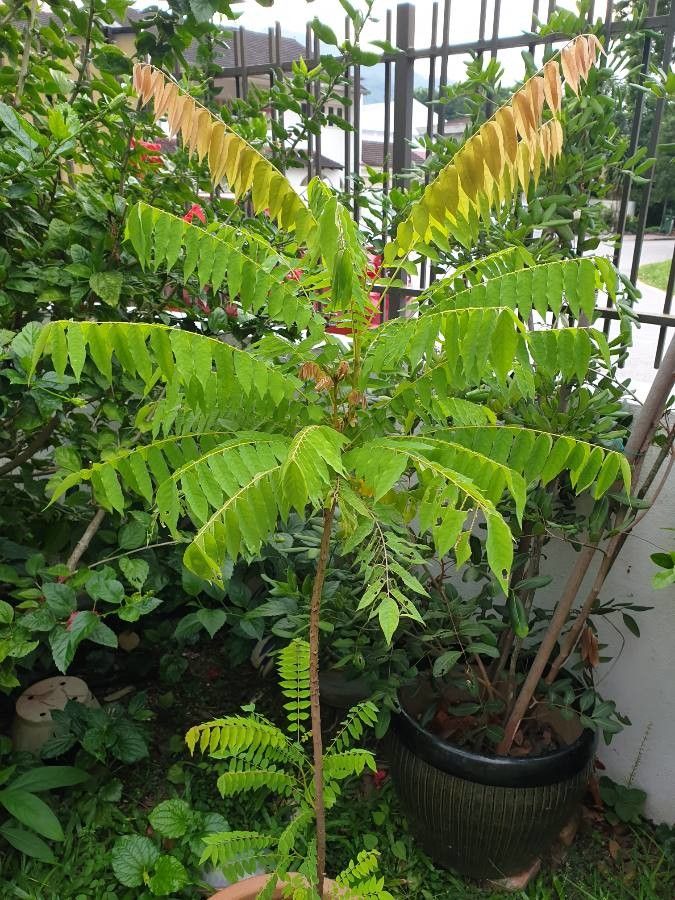
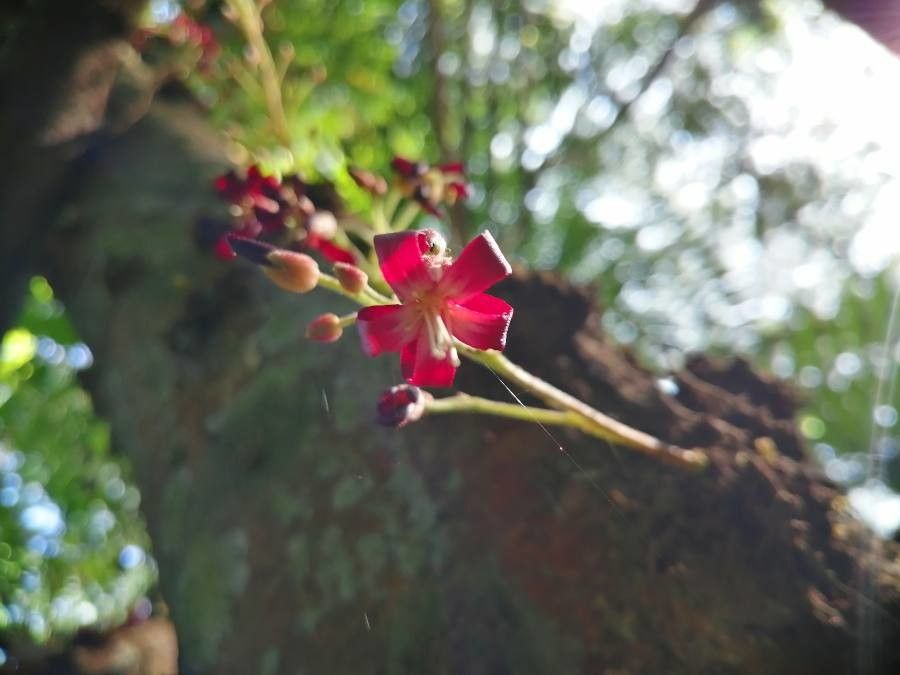
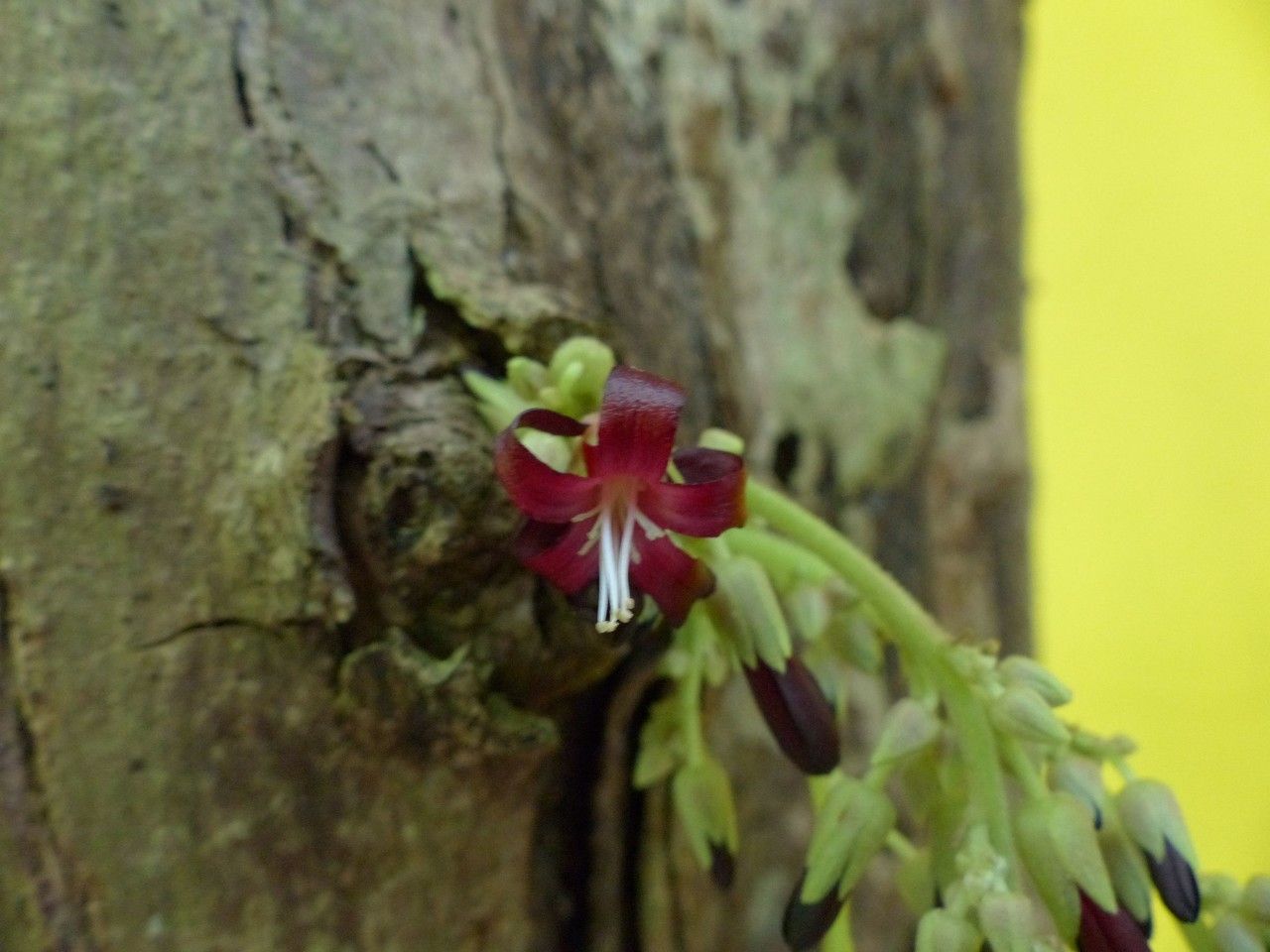
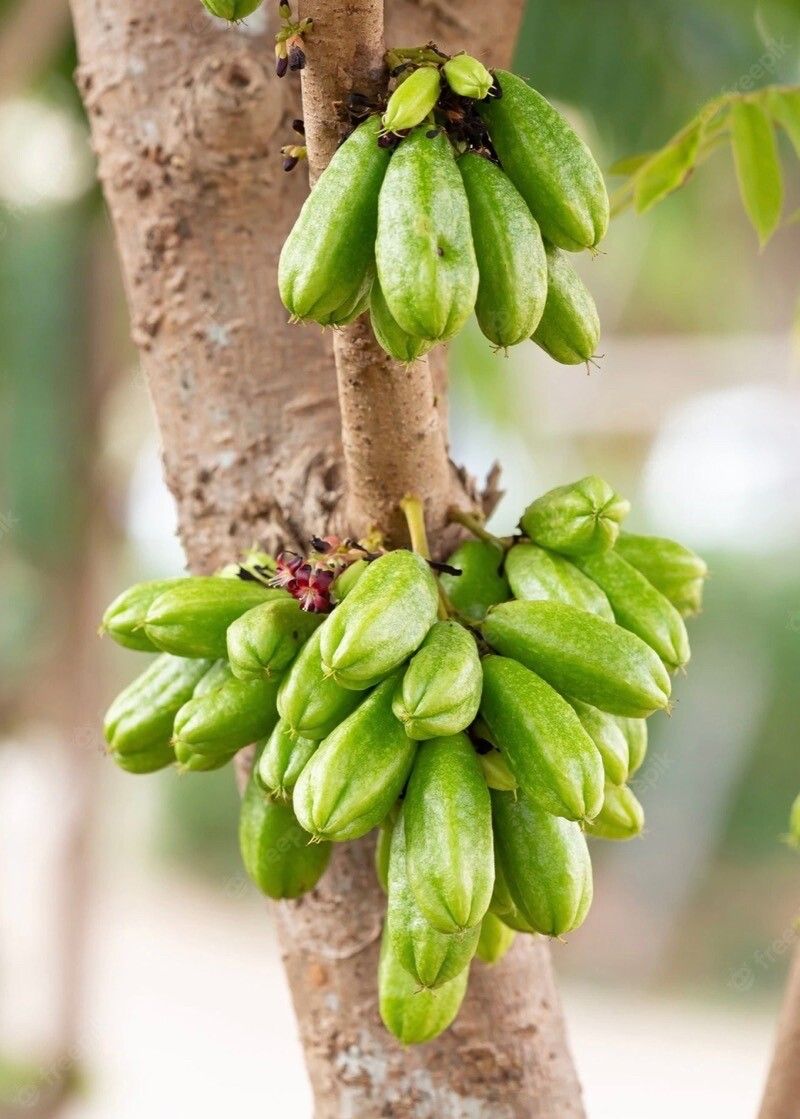
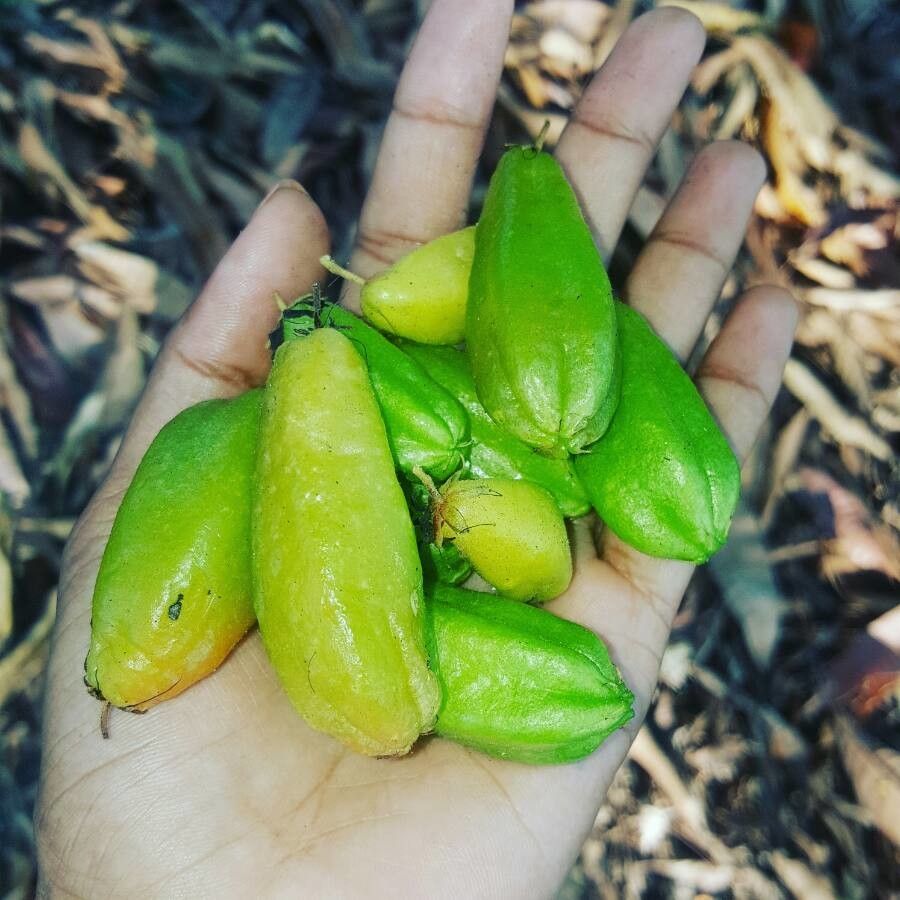
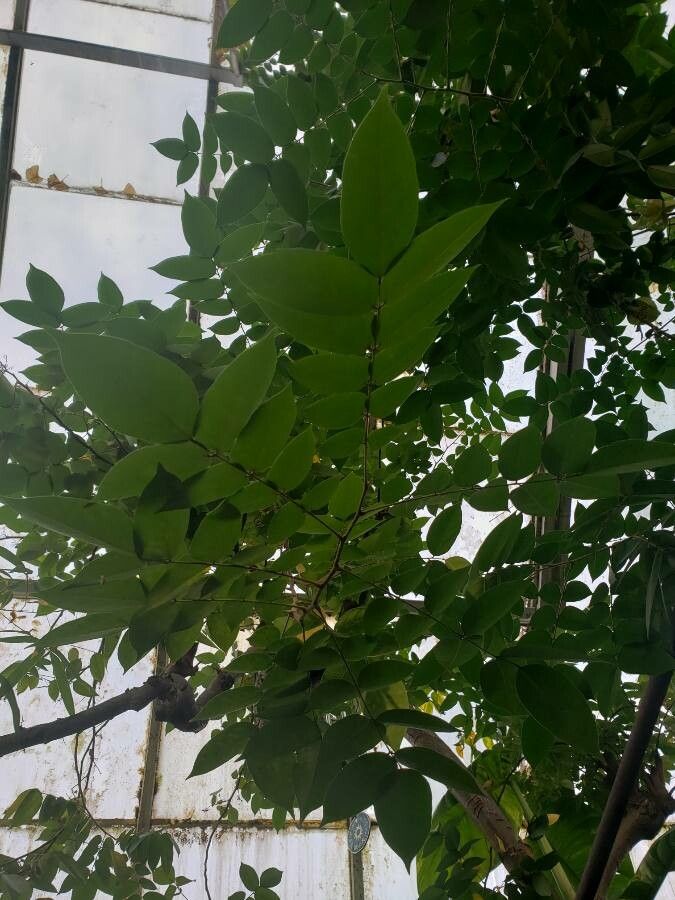
Averrhoa bilimbi, commonly known as the bilimbi or cucumber tree, is a tropical fruit-bearing tree native to Southeast Asia. It belongs to the family Oxalidaceae and is closely related to the carambola, or star fruit. The tree can grow up to 15 meters tall and has a slender trunk with a dense canopy of leaves.
The bilimbi fruit is small and greenish-yellow in color. It has a sour taste due to its high oxalic acid content and is commonly used in Southeast Asian cuisine as an ingredient in curries, chutneys, pickles, and sauces.
Beyond its culinary uses, Averrhoa bilimbi also possesses medicinal properties. The leaves of the plant are used to treat fever, while its bark can be used to treat skin conditions such as eczema.
The plant thrives in warm climates with high humidity levels but can also grow well in subtropical regions with adequate rainfall. It requires well-drained soil that is rich in organic matter for optimal growth.
Overall, the Averrhoa bilimbi plant serves both culinary and medicinal purposes, making it an important part of traditional medicine practices across Southeast Asia.
Bilimbi shows strong resistance to disease and is usually not susceptible to illnesses. In terms of upkeep, this plant is fairly low-maintenance. When grown outdoors it needs only light watering, and larger plants typically do not require pruning. Smaller plants, however, should be trimmed after they finish flowering. Bilimbit is well suited for anyone who has an outdoor area, like a garden or a deck, and it does not demand extensive care experience.
How to keep Averrhoa Bilimbi.
Light
Bilimbi does best in places that get sunlight for most of the day, which supports its growth and development. Its native habitat is characterized by ample sun, though it can tolerate some shade. Too much shade or excessive sunlight can harm its health.
Water
Bilimbi flourishes in environments with high humidity and consistent rainfall, which are typical of its tropical origins. It should be watered every 2 to 3 weeks, ensuring a balance between hydration and proper drainage. Its growth cycle is influenced by the rainy season, which promotes lush foliage and supports fruit development.
Humidity
This plant will thrive in moderate humidity, which is probably the level in your home. However, misting it a few times a week can be very beneficial. Make sure the room has good ventilation.
Temperature
Bilimbi comes from regions where temperatures generally stay between 68 and 100.4 °F (20 to 38 ℃). It thrives in that warmth and may need adjustments during colder months to grow optimally.
Fertilizer
Choose organic fertilizers (e.g., fish emulsion or compost) instead of chemical fertilizers for Bilimbi. Supply young plants with higher nitrogen and phosphorus during spring. Incorporate compost or fertilizer into the soil before or after planting. For mature plants, add a balanced fertilizer or one aimed at specific deficiencies in spring. Nutrient deficiency causes small leaves, short branches, yellow or bronze leaves, acidic fruits, premature fruit fall, and fruit splitting.
Pruning
The bilimbi is a tropical tree that produces elongated, sour fruits. To maintain a healthy and productive tree, it's important to use key pruning techniques. This includes removing dead branches and thinning out the canopy, which is best done from early to late spring. These practices improve airflow, boost fruit production, and increase the tree's overall vigor, while also making the tree easier to manage for harvesting.
Botanical profile.
- Plant Type
- Tree
- Life Cycle
- Perennial
- Genus
- Averrhoa
- Family
- Oxalidaceae
- Hardiness Zone
- 11
- Mature Height
- 4.57 m to 10.67 m
- Mature Spread
- 3.05 m to 3.66 m
- Leaf Color
- Light Green, Medium Sea Green
- Leaf Type
- Evergreen
- Flower Color
- Pink
- Flower Size
- 2.54 cm
- Bloom Time
- All year round
- Planting Time
- Spring, Summer, Autumn, Winter
- Harvest Time
- All year round
- Native Area
- Papua New Guinea, Indonesia
Other names.
Reader questions.
How should I water my Bilimbi plant?
You can water your Bilimbi using different types of watering tools such as watering cans, hoses, or cups. It doesn't really matter which one you choose, as long as you apply the water directly to the soil. Make sure you evenly moisten all areas of the soil to provide the necessary water to the entire root system. Using filtered water is recommended to avoid any harmful particles that may be present in tap water. Additionally, it's best to use water that is at or slightly above room temperature as extreme cold or hot water can shock the Bilimbi. However, the Bilimbi generally thrives well with any kind of water you give it.
Why should I put fertilizer on my Bilimbi?
In areas with nutrient-rich soil, fertilizing may not be crucial. However, if the soil lacks nutrients, a Bilimbi plant may struggle to produce ample leaves, flowers, and fruits. Conducting a soil test is the most effective way to identify the nutrients that are abundant in the soil and those that may be lacking. Nutrient deficiencies in Bilimbi plants can result in small leaves and stunted branches, yellow or bronze foliage, as well as more acidic and less flavorful fruits. Certain nutrient deficiencies can even cause premature fruit drop or splitting.
What are the sunlight requirements for Bilimbi plants?
Bilimbi plants thrive in conditions that mimic their native habitat, which is rich in sunlight. They require full sun, meaning they should receive more than 6 hours of direct sunlight daily, but they can also grow in partial sun, with exposure to about 3-6 hours of sunlight. It's important to observe how sunlight moves through your garden to find an ideal spot that offers a balance of light and shade, ensuring the plant's health and happiness. In regions with less natural light, particularly during winter, artificial lighting can supplement sunlight. Indoor Bilimbi plants benefit from LED lights or other artificial sources, which should be provided for 8-12 hours a day to mimic natural sunlight conditions.
What are the ideal temperature conditions for growing Bilimbi?
Bilimbi thrives in environments with temperatures ranging from 68 to 100.4 °F (20 to 38 °C), favoring warmer climates for optimal growth. It is sensitive to cold and requires careful management during colder seasons. During the autumn, it's advisable to move outdoor-grown Bilimbi plants indoors, placing them near a bright window while ensuring they are not too close to heat sources. Keeping the temperature above 20°C during winter is crucial, as temperatures near 10°C can harm the plant.
What should I do if I give my Bilimbi plant too much or too little water?
Outdoor plants, especially newly planted ones or seedlings, are prone to lack of watering. It's important to water them adequately for a few months while they are small or recently planted. Once the roots are established, Bilimbi plants can usually rely on rain. However, when Bilimbi is planted in pots, overwatering can become a problem. If you accidentally overwater your Bilimbi, there are steps you can take to fix the situation. First, stop watering the plant immediately to minimize the effects of overwatering. Then, remove the Bilimbi from its pot and inspect the roots. If there is no root rot, you can return the plant to its container. If there is root rot, trim away the affected roots and consider applying a fungicide. Finally, repot the Bilimbi in well-draining soil. On the other hand, if your Bilimbi is underwatered, simply water it more frequently. Underwatering is usually easy to fix, as the leaves will droop, dry out, and fall off. Once the plant receives enough water, the leaves will quickly return to their normal state. Make sure to adjust your watering frequency as soon as you notice underwatering.
When should I fertilize my Bilimbi plant?
To support the growth of young Bilimbi plants, it is recommended to provide them with higher nitrogen and phosphorus fertilizer. This will help promote the development of strong leaves and roots, ensuring their future growth. The best time to apply fertilizer is during the spring of the first growing season. Prior to or immediately after planting, it is a good practice to incorporate compost or another type of fertilizer into the soil. For mature Bilimbi plants, it is advisable to supplement with a balanced fertilizer or one that specifically addresses any soil deficiencies in your area. This can be done every few years throughout the spring and summer, as needed. Avoid fertilizing Bilimbi during the autumn or winter seasons.
What are the common symptoms of incorrect lighting for Bilimbi?
When Bilimbi plants receive insufficient light, several symptoms can manifest, including smaller new leaves, leggy or sparse growth, premature leaf drop, halted or no new growth, and leaves that may develop lighter coloration or show signs of chlorosis. Conversely, excessive sunlight can cause sunscald, leaf curling, wilting, leaf scorching, and damage through intense exposure. Identifying these symptoms early can significantly aid in adjusting care practices to ensure the plant's health.
How should you care for Bilimbi in low temperature conditions?
Bilimbi is not tolerant of low temperatures and prefers environments warmer than 20°C, requiring temperatures to be kept above 10°C during winter. Exposure to temperatures below 5°C may cause the leaves to lighten in color, and frost damage can turn leaves brown or black, followed by wilting and drooping. To protect the plant, trim off frost-damaged parts and immediately move it to a warm indoor setting. Place it near a south-facing window for ample sunlight, and avoid placing the plant near heaters or air conditioning vents to prevent air dryness.
How often should I give water to my Bilimbi?
If you have outdoor plants that rely on rainfall, they can usually grow fine without additional watering. However, if your area lacks rainfall, you'll need to water them every 2 weeks in the spring and fall, and more frequently in the summer. In the winter, you can cut back on watering because plants usually need less water during this time. In fact, they may not need any additional watering at all. If you have a young or newly planted Bilimbi plant, you should water it more often to help it establish and become more tolerant to drought. For potted plants, there are two main ways to determine how often to water your Bilimbi. The first method is to follow a set watering schedule, such as once a week or once every other week. However, this may not always work, as it doesn't take into account the specific growing conditions of your Bilimbi. Another approach is to check the soil moisture before watering. Typically, it's best to wait until the top 2 to 4 inches of soil, about ⅓ to ½ of the pot's depth, have dried out completely before watering again. The watering frequency can also vary depending on the season, with higher water needs during summer.
When is it not a good idea to fertilize my Bilimbi?
To ensure the health of your Bilimbi plant, it is important to avoid fertilizing it after pruning or during times when it is dealing with disease, insects, or other stress. Fertilizer is only effective in treating soil with insufficient nutrients and cannot resolve other problems that may affect the Bilimbi. It is crucial to correctly diagnose the issue before adding fertilizer, as another cause may be responsible for the problem. Additionally, refrain from fertilizing the Bilimbi during the winter or during extremely hot and dry periods in the summer.
How can I address lighting issues for my indoor and outdoor Bilimbi plants?
To address lighting issues, gradually acclimatize your Bilimbi plants to their ideal light conditions. For indoor plants, this may mean moving them closer to south-facing windows for at least 6 hours of sunlight or supplementing with artificial light sources like professional grow lights for 8-12 hours daily. For outdoor plants, identify and transition them to sunnier spots weekly to avoid shock, potentially incorporating artificial lighting if necessary. Ensure there are no obstructions blocking sunlight and, if needed, prune or transplant to optimize light exposure. It's important to note that parts of the plant affected by previous light conditions may not recover, but new growth should be healthier with these adjustments.
What steps should be taken for Bilimbi in high temperature conditions?
During the summer, Bilimbi should be maintained in conditions below 38°C to prevent overheating. If temperatures exceed 43°C, the plant may exhibit symptoms like lightening of leaf colors and increased susceptibility to sunburn. To address this, remove sunburnt or dried portions of the plant and relocate it to a shaded area, particularly away from strong midday and afternoon sun. Watering the plant in the morning and evening will help keep the soil adequately moist, supporting its health in high temperatures.