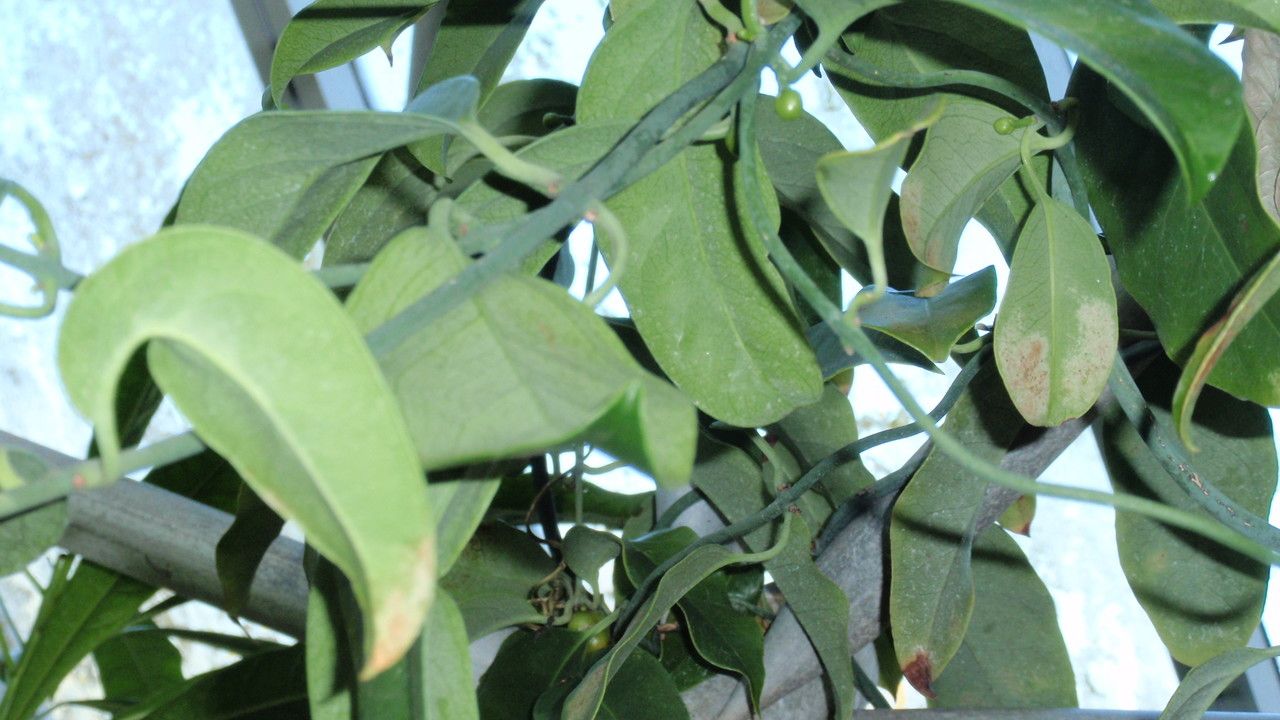
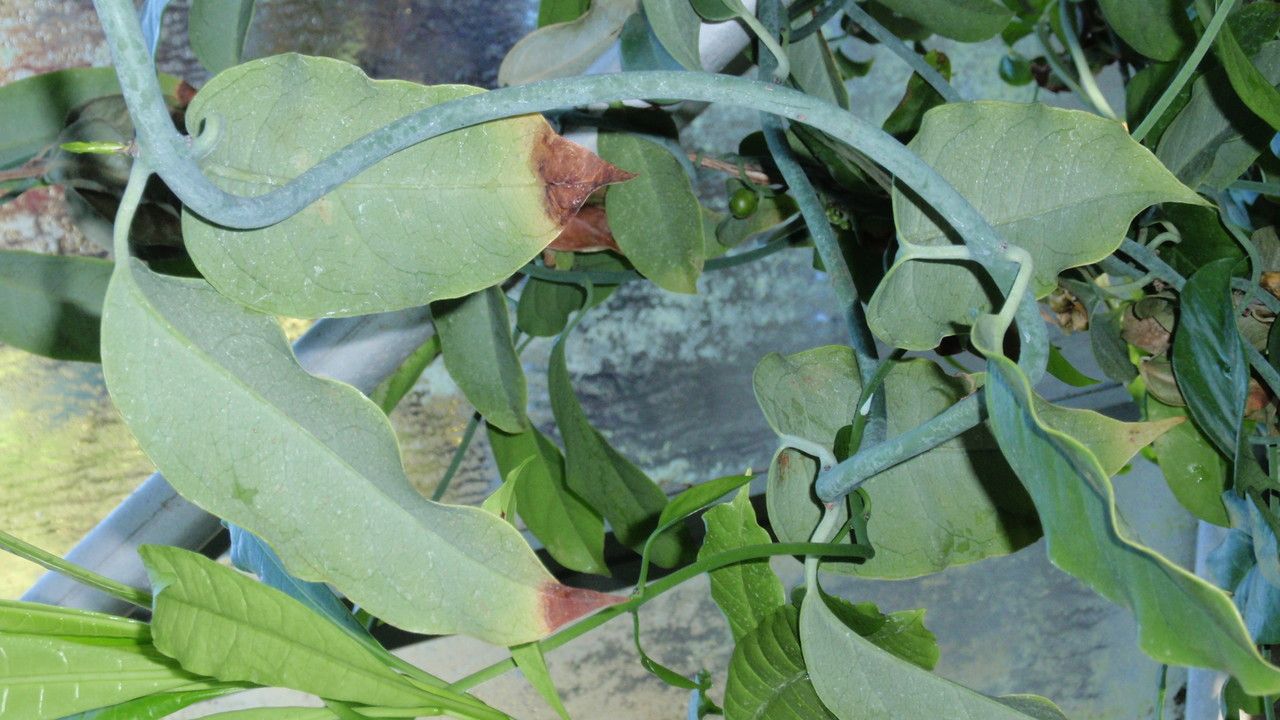
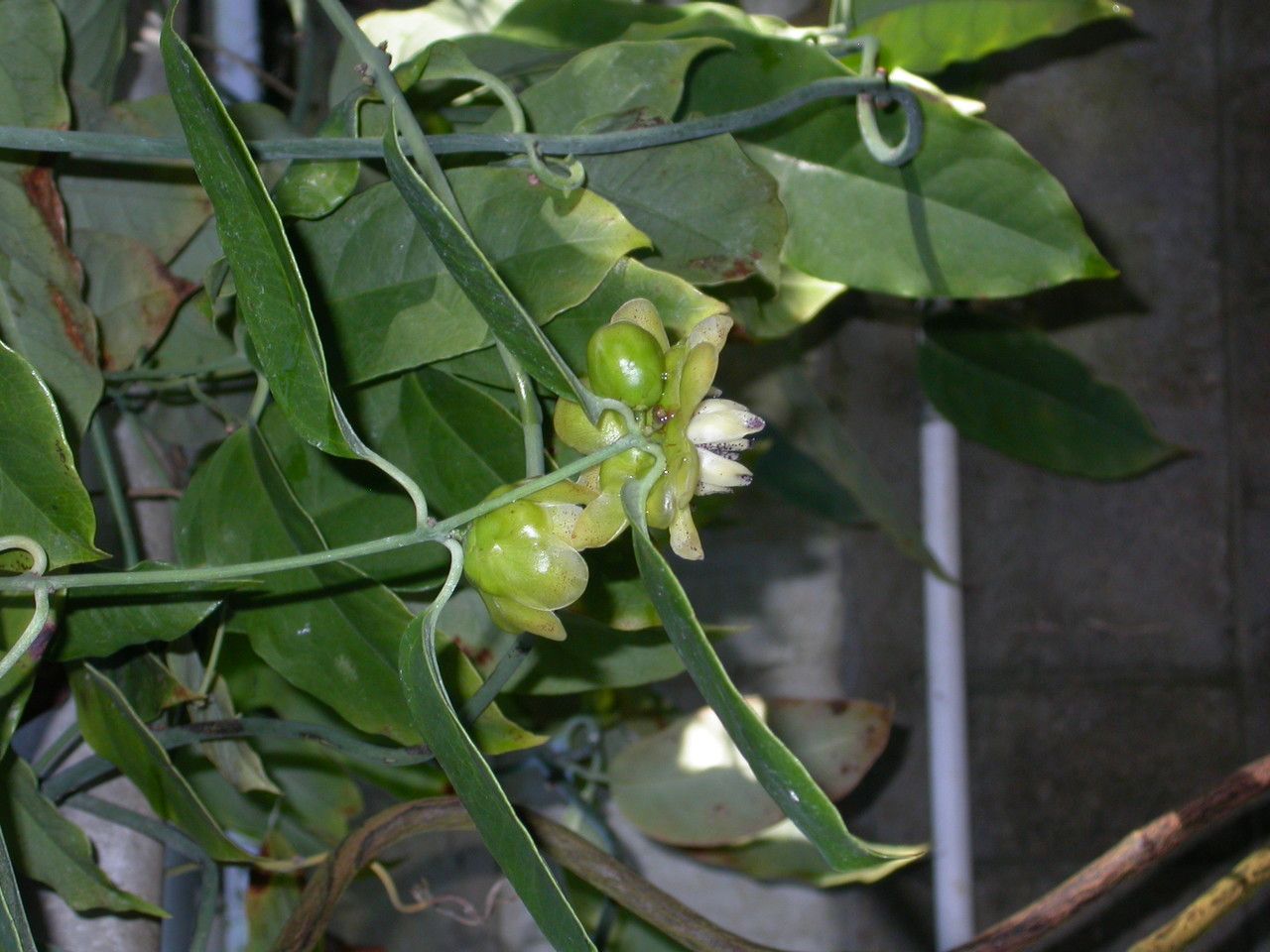
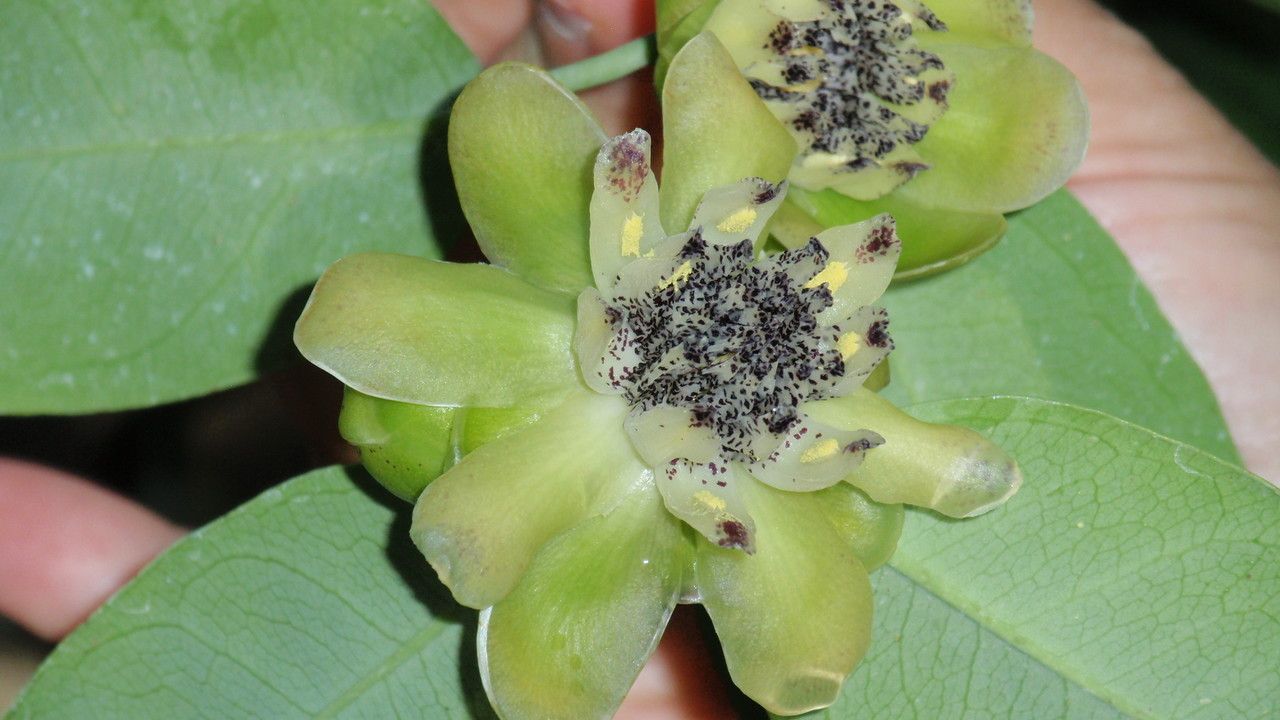
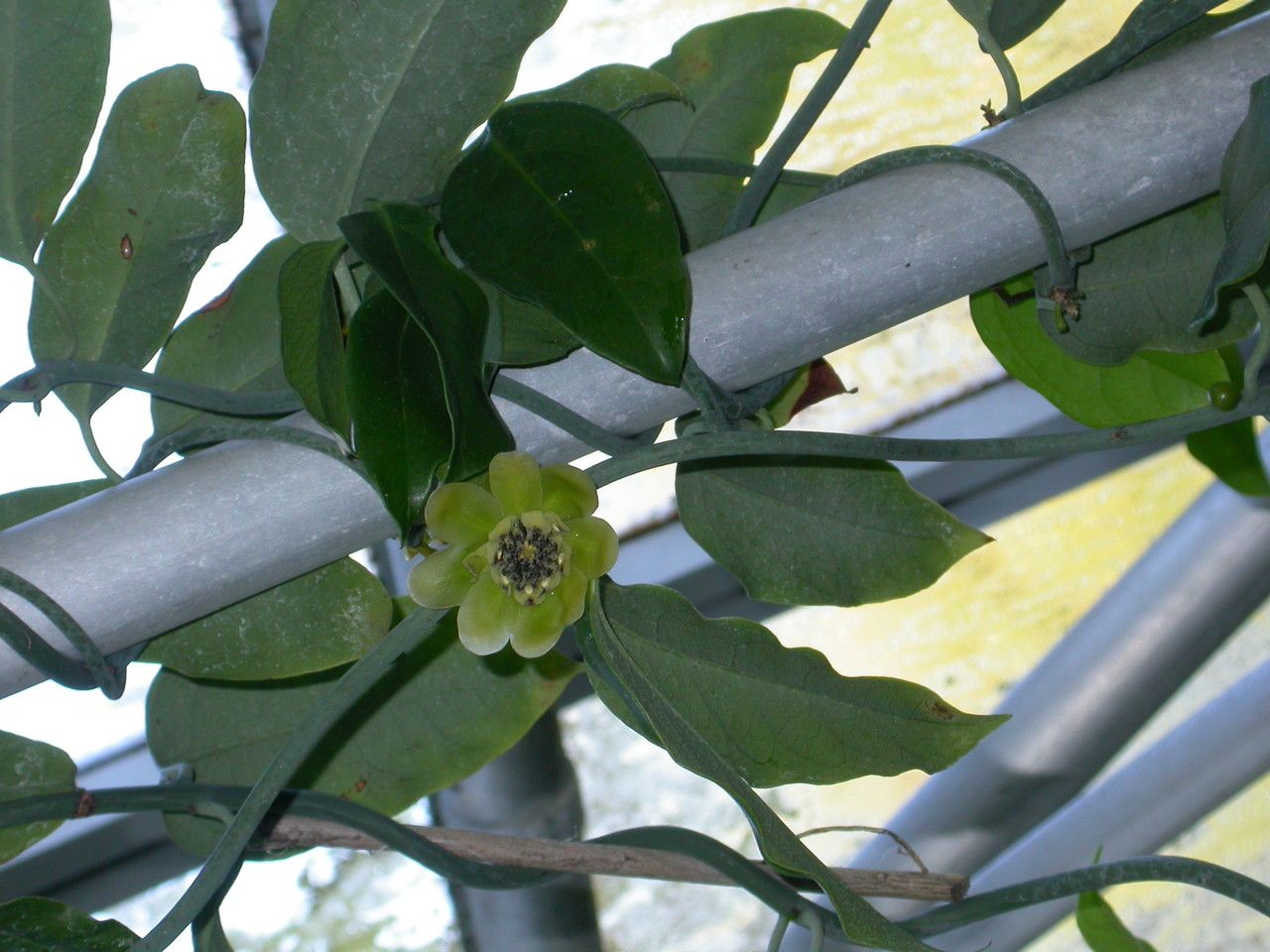
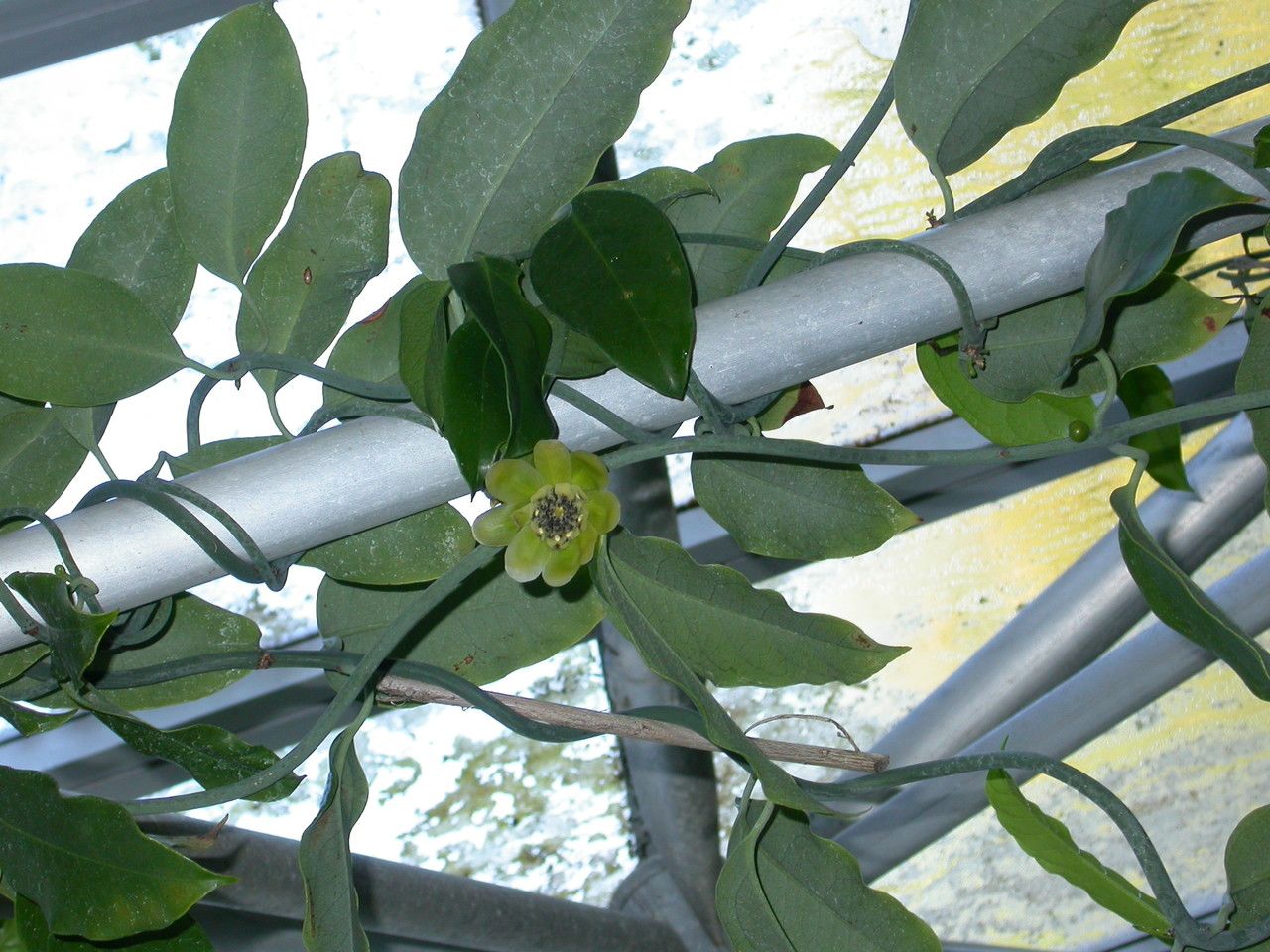
Austrobaileya is the sole genus consisting of a single species that constitutes the entire flowering plant family Austrobaileyaceae. The species Austrobaileya scandens grows naturally only in the Wet Tropics rainforests of northeastern Queensland, Australia.The name A. maculata is recognized as a synonym of A. scandens.Austrobaileya plants grow as woody lianas or vines. Their main growing stems loosely twine, with straight, extending, leafy branches. The leaves are leathery, veined and simple. The leaves produce essential oils in spherical ethereal oil cells. Their foliage is damaged by oxidation in direct sunlight, so it tends to grow beneath the rainforest canopy, in low-sunlight and very humid conditions. Like many other flowering plants growing in the understory of tropical rainforest, it does not have palisade mesophyll tissue or low leaf photosynthetic rates. It relies strongly on vegetative reproduction for continuation of the species.
Austrobaileya scandens is fairly disease-resistant and is typically not susceptible to disease. Regarding care, this plant is relatively low-maintenance. When grown outdoors it needs only minimal watering, and larger plants usually do not require pruning. Smaller plants, however, should be pruned after they finish blooming. Austrobaileya scandenst is suitable for anyone with an outdoor area, such as a garden or deck, and does not require extensive care experience.
How to keep Austrobaileya Scandens.
Light
Austrobaileya scandens is native to habitats such as forest understories and rocky areas, where it is subject to natural shade. It prefers partial sun but can tolerate full sun or full shade, reflecting its versatile and hardy nature.
Water
Austrobaileya scandens, a plant native to tropical rainforests, thrives in high humidity and consistent moisture. It prefers soil that remains evenly moist and has a moderate tolerance to drought. To maintain its year-round evergreen foliage and support its growth cycle, water the plant twice a week. Be sure not to let the soil dry out completely.
Temperature
Austrobaileya scandens comes from tropical areas, where the weather is generally warm and humid. Consequently, it is adapted to high heat and moisture. It is sensitive to abrupt temperature changes and favors a steady temperature, so avoiding indoor temperature swings is important. It typically cannot tolerate cold and needs warmer conditions to grow. If the surrounding temperature becomes too low, the plant may stop growing or even die.
Fertilizer
Fertilization is essential for the care of Austrobaileya scandens. Regular feeding during the growing season maintains the energy needed for its showy leaves and promotes overall growth. If fertilization is neglected, leaves can become unhealthy, its ornamental appeal reduced, and growth may be stunted or weak and prone to breakage.
Pruning
Austrobaileya scandens is a climbing plant known for its unique foliage and fragrant flowers. To ensure healthy growth and optimal blooming, it's important to prune this plant by removing dead stems and managing its branches. The best time for pruning is early spring, as this promotes better air circulation and helps maintain the plant's shape and manageability.
Botanical profile.
- Plant Type
- Shrub, Vine
- Life Cycle
- Perennial
- Genus
- Austrobaileya
- Family
- Austrobaileyaceae
- Hardiness Zone
- 10-12
- Mature Height
- 10.06 m to 29.87 m
- Mature Spread
- 3.05 m to 4.88 m
- Leaf Color
- Dark Green
- Leaf Type
- Evergreen
- Flower Color
- Brown, Yellow
- Flower Size
- 2.03 cm to 3.05 cm
- Bloom Time
- Late spring, Early summer, Mid summer
- Planting Time
- Spring, Summer, Autumn
- Harvest Time
- Late summer, Early fall, Mid fall