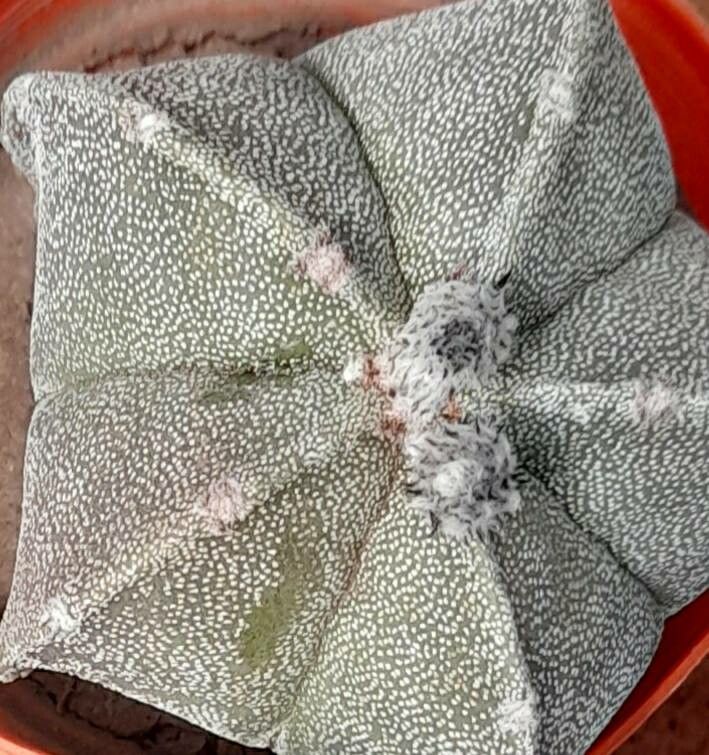
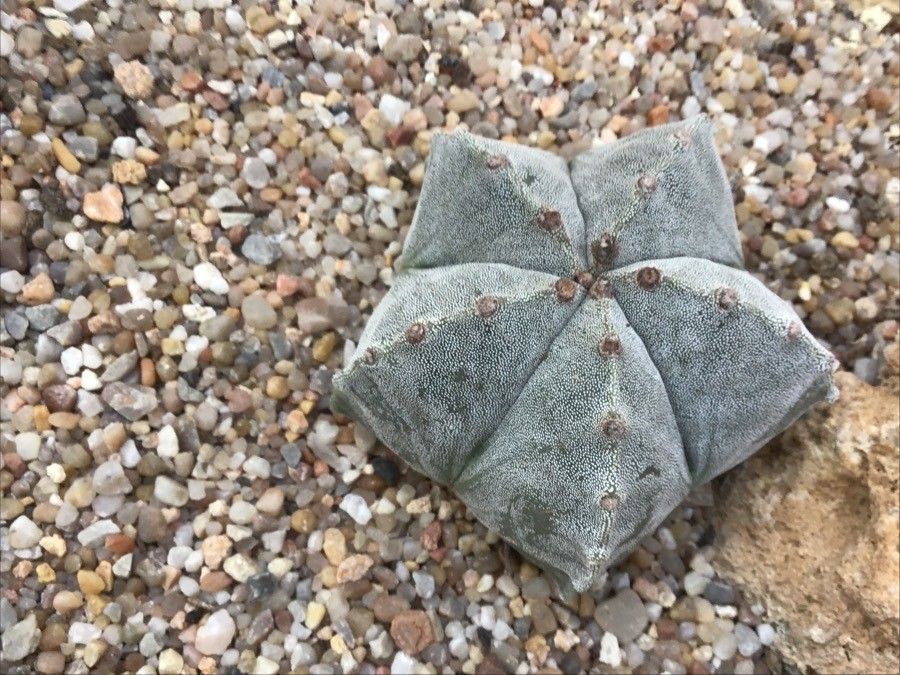
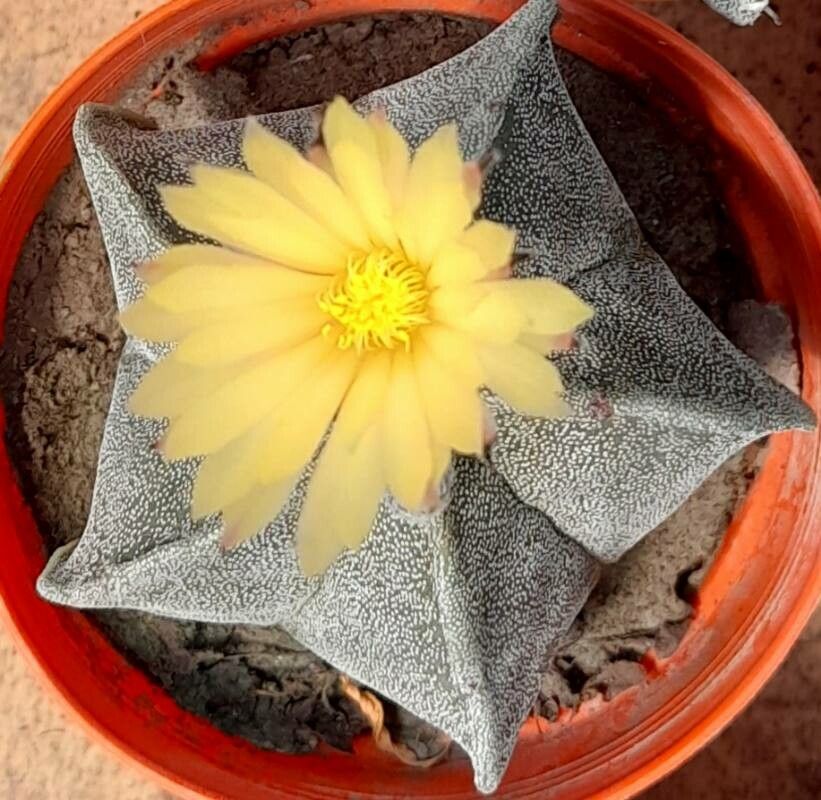
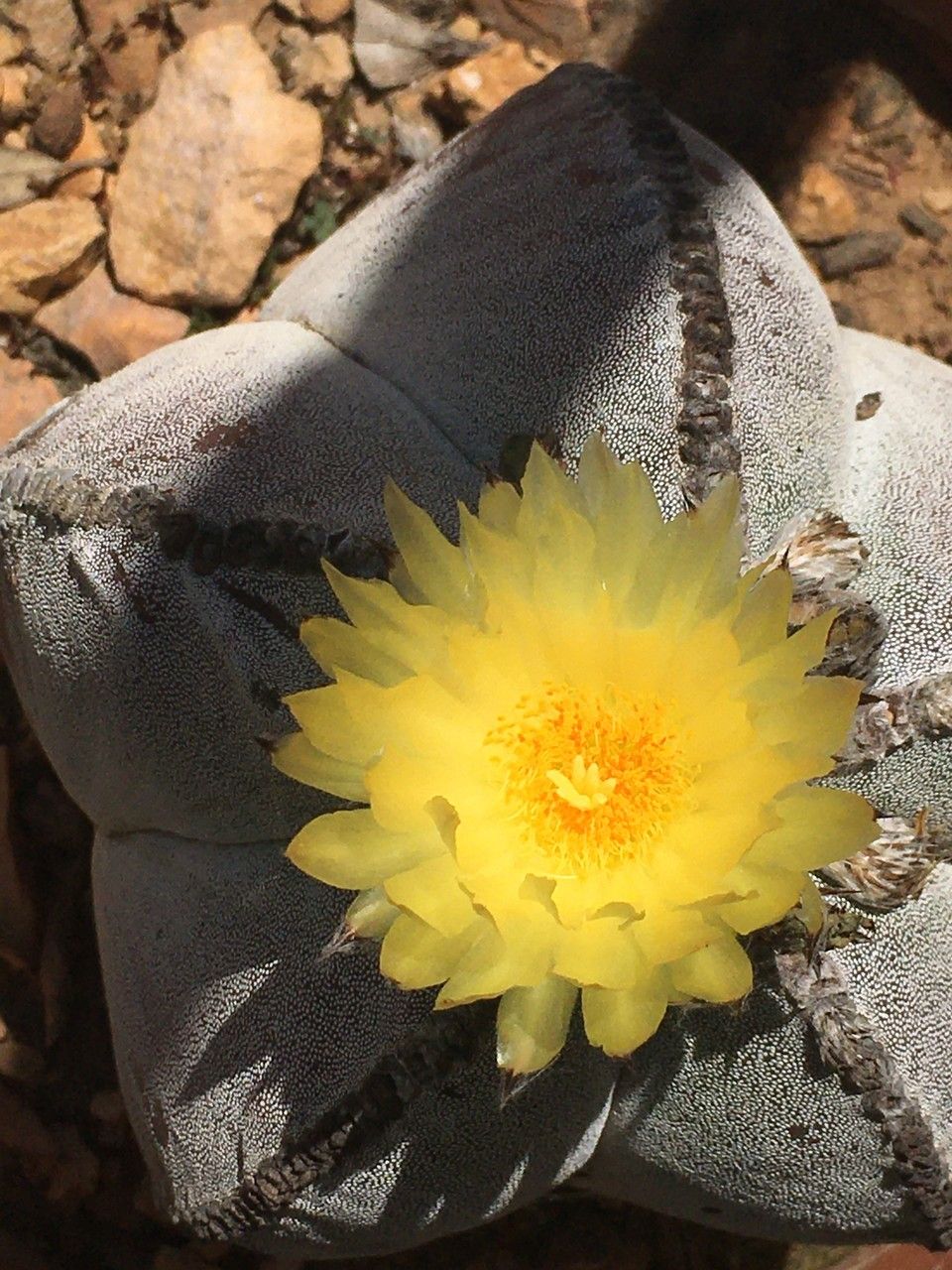
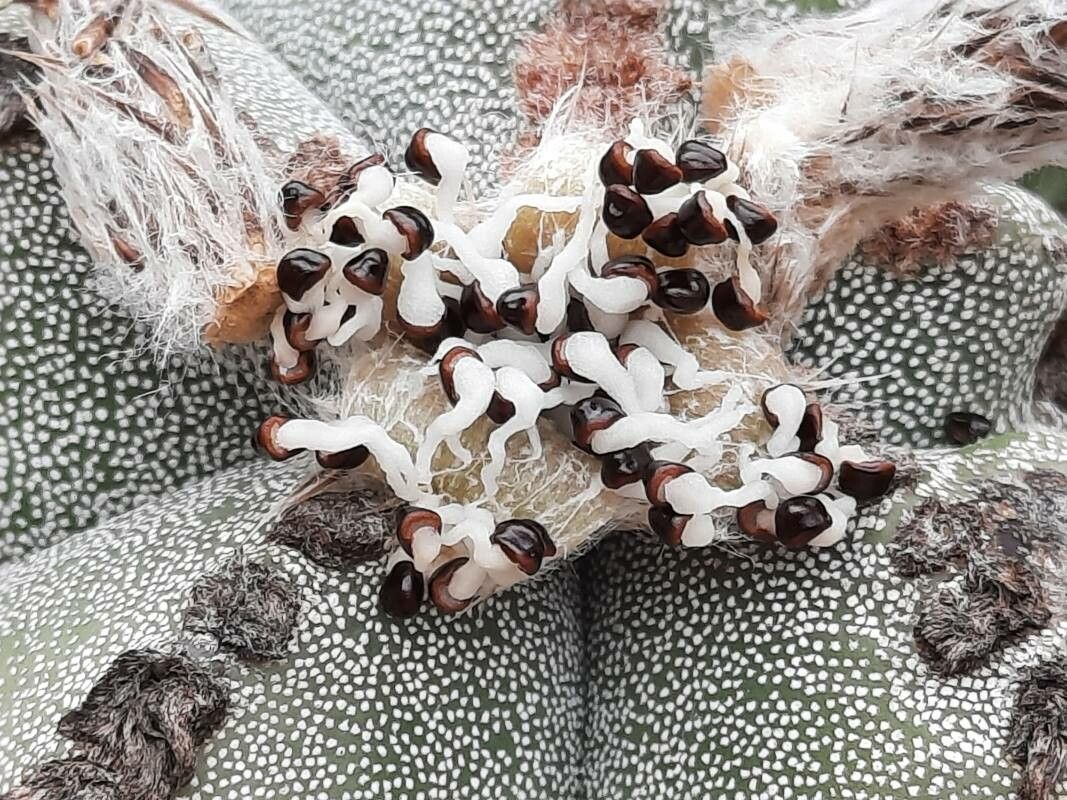
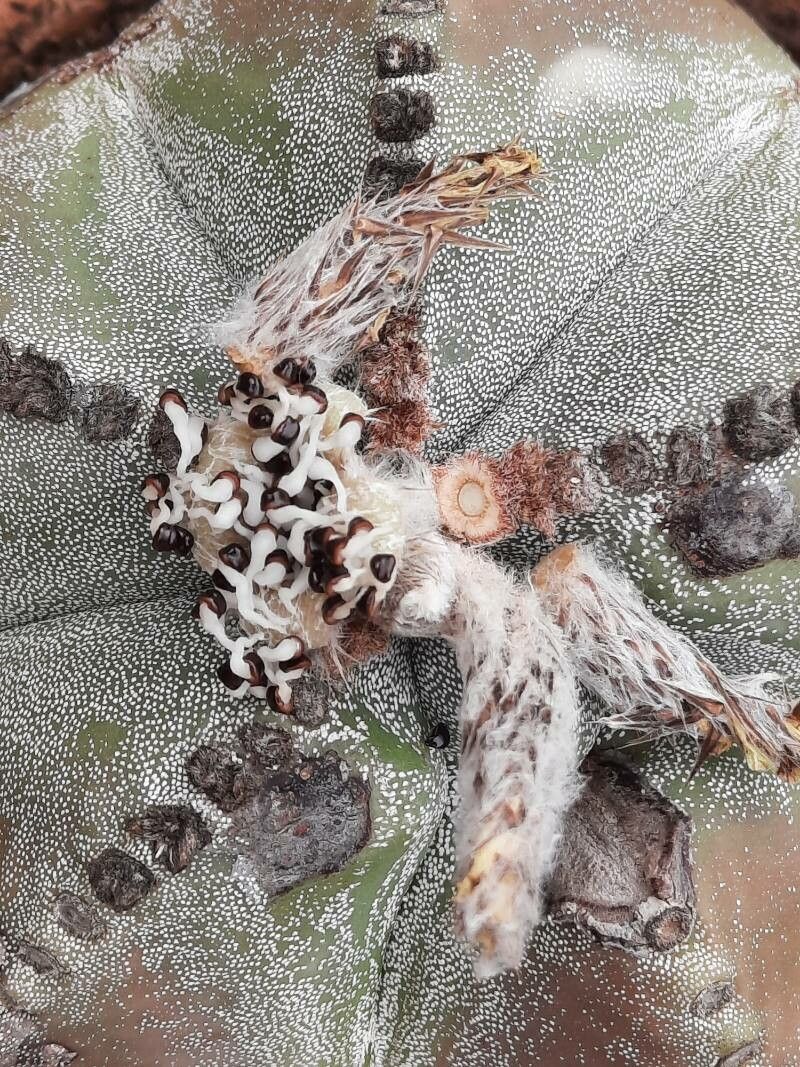
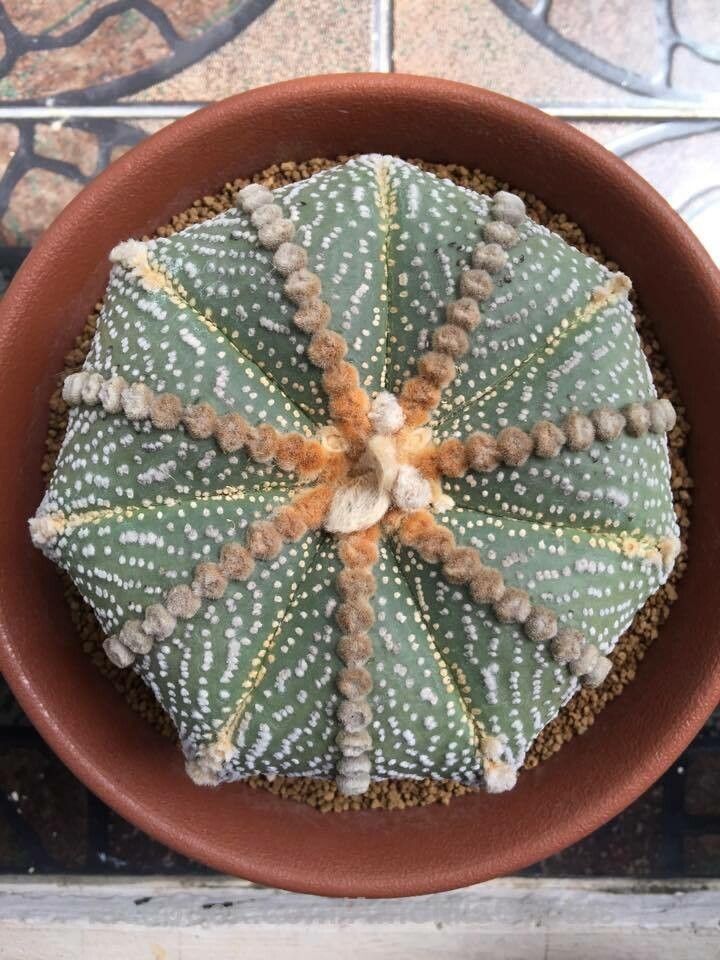
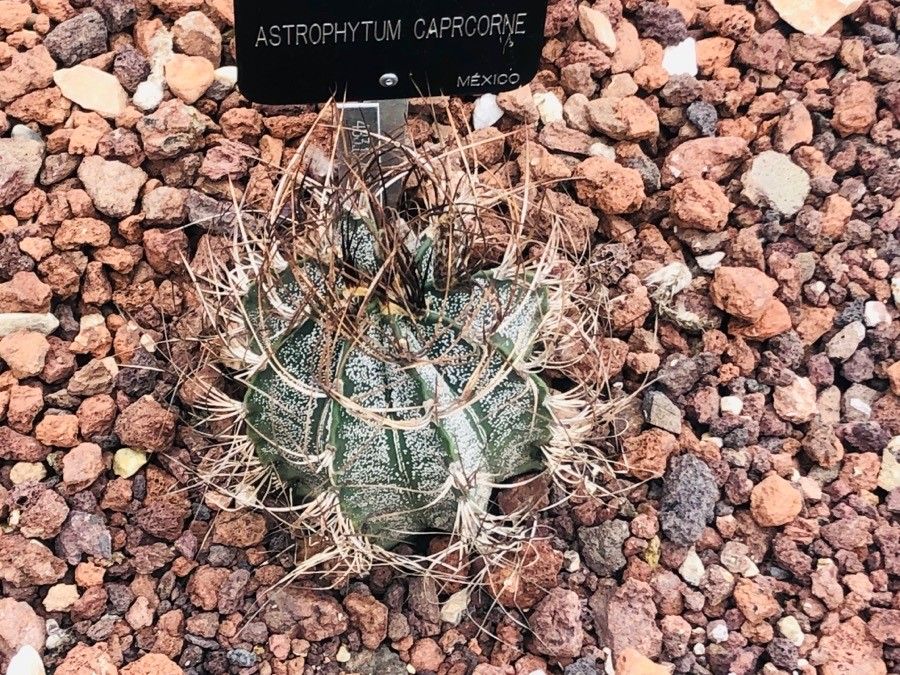
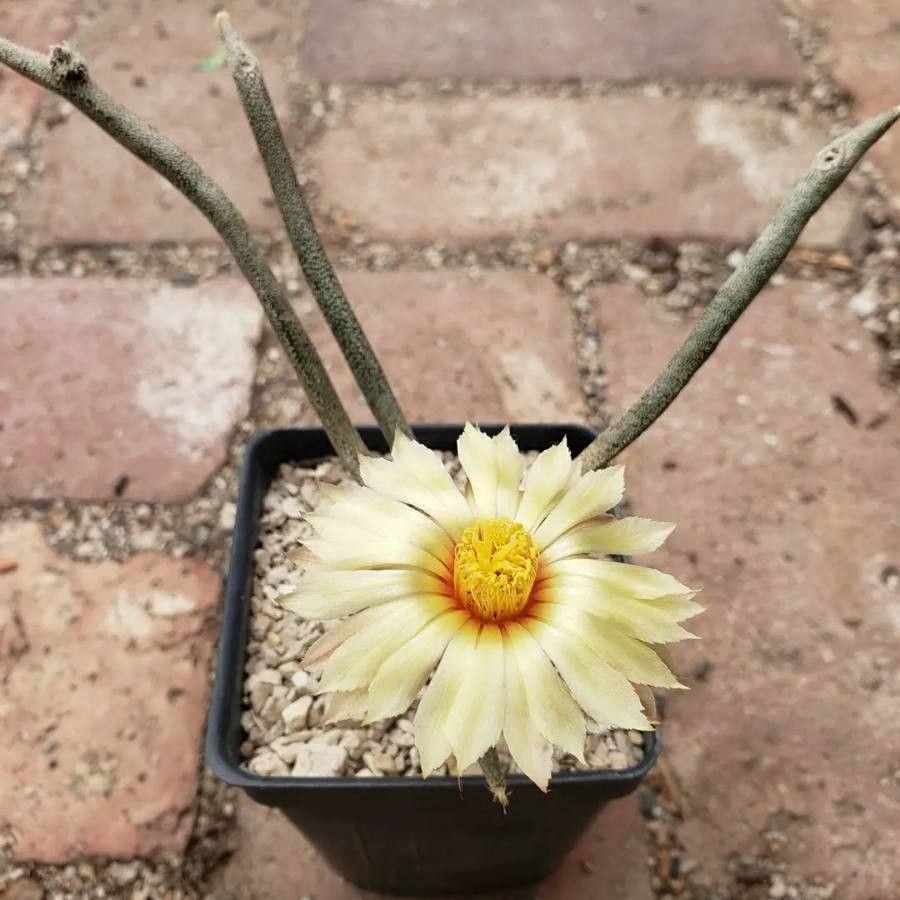
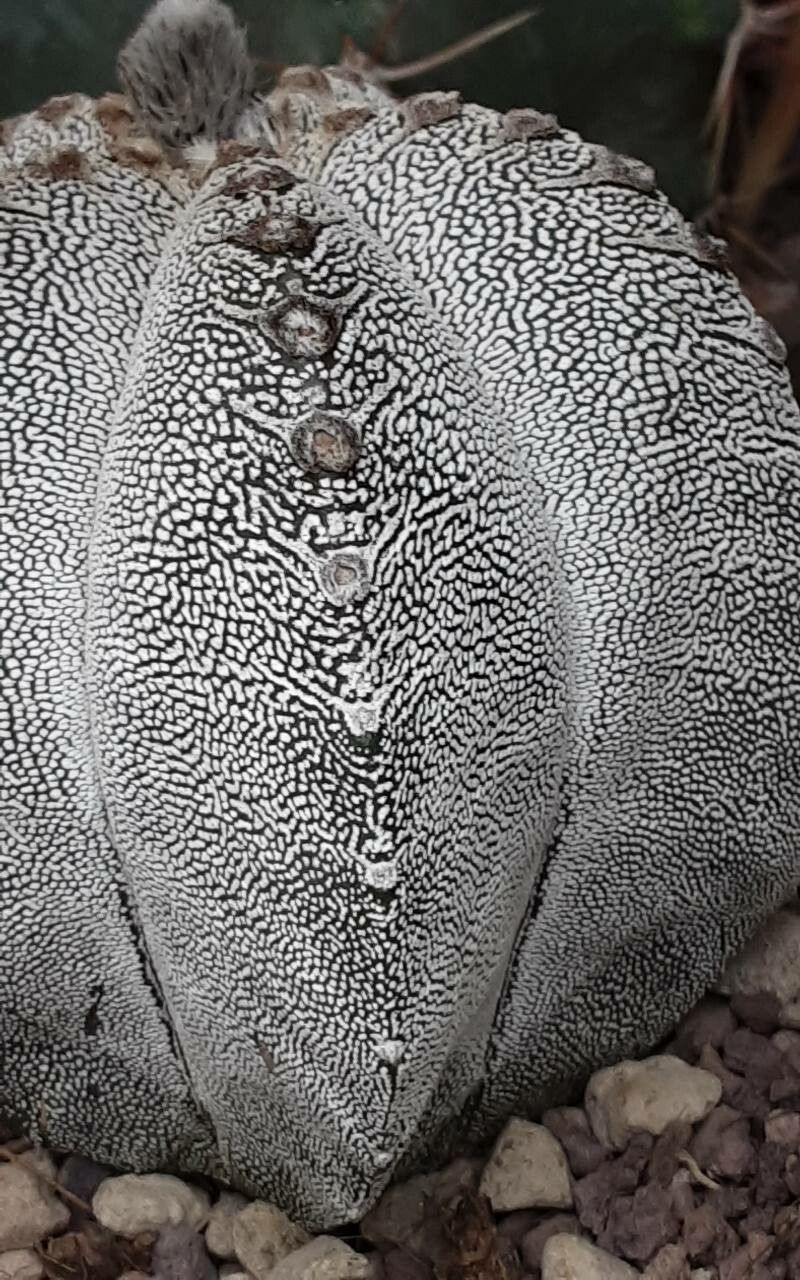
Astrophytum myriostigma, commonly known as the Bishop's Cap cactus, is a species of cactus native to Mexico. This slow-growing, globular plant can reach up to 30 cm in height and 15 cm in diameter. It features distinctive vertical ridges along its body, which are covered with small, white or yellowish spines. During the summer months, the Bishop's Cap cactus produces large yellow flowers, which are followed by small red fruits containing black seeds. This plant is popular among collectors due to its unique appearance and slow growth rate. It thrives in well-draining soil and bright sunlight, though it can tolerate some shade. Watering should be done sparingly during the growing season, allowing the soil to dry out completely between waterings. Traditionally, indigenous people of Mexico have used Astrophytum myriostigma for medicinal purposes, treating ailments such as fever, inflammation, and pain. Overall, this fascinating cactus species makes an excellent addition to any collection due to its striking appearance and low maintenance requirements.
Bishop's cap cactus has strong resistance to disease and can handle standard care without becoming ill easily. It can, however, be vulnerable to mealybugs; these pests may cause some harm but typically do not pose a serious danger. Regarding care, Bishop's cap cactus is drought-tolerant and does not require frequent watering. It endures extended stretches without water and needs little fertilizer. Nevertheless, it is very prone to root rot if kept in poor light and overwatered. All in all, Bishop's cap cactus is a good choice for people who prefer to spend less time on plant care, though it remains important to know and meet its basic needs. It is especially suited for those who are away for long periods and might forget to water their plants regularly.
How to keep Astrophytum Myriostigma.
Light
The bishop's cap cactus requires plentiful sunlight, which supports healthy growth. Having evolved in habitats with strong sunlight, it is adapted to thrive under those conditions. Insufficient or excessive light can inhibit growth, lead to discoloration, or even kill the plant.
Water
The bishop's cap cactus, well-suited to arid environments, is highly drought-tolerant and needs watering only once every three weeks. It grows best in well-draining soil, benefiting from a thorough watering followed by a period of complete drying. As an indoor plant, the bishop's cap cactus thrives in low-humidity conditions and requires minimal maintenance.
Humidity
This plant prefers dry conditions, so don't mist it. However, watering it less often can also thrive in higher humidity.
Temperature
Bishop's cap cactus originates from habitats with temperatures between 68 and 100 °F (20 to 38 °C). This plant prefers warmer conditions. Proper adjustment of temperatures may be necessary during cold seasons to maintain its health.
Fertilizer
For Bishop's cap cactus, apply light amounts of fertilizer one to two times a year during the growing season. Do not fertilize in winter or in summer, when the plant is dormant. Cut back on fertilizer for repotted specimens and wait a couple of months after repotting before you begin fertilizing. Fertilizing helps maintain healthy growth and encourages blooms.
Pruning
The Bishop's Cap cactus requires very little pruning. Simply remove wilted flowers and dead branches regularly to ensure that nutrients are directed towards healthy growth.
Pot & Repot
Repot Bishop's cap cactus in spring or summer, choosing a pot slightly larger than the current one that provides good drainage. Use a well-draining, sandy or gritty cactus mix. Handle it carefully to avoid the spines. Let the cactus dry out before repotting to reduce the risk of root rot. After repotting, wait about a week before watering so the roots can heal.
Toxicity
Bishop's Cap Cactus is not reported as toxic and is safe to have around curious children or pets. Although, as with all plants, it’s best to keep these cacti out of easy reach to minimize the risk of potential injury or harm.
Further reading →
The toxicity and danger assessments provided are for reference only. We do not assure their accuracy, so it's crucial not to depend on them. Seek professional advice when necessary for accurate guidance.
Botanical profile.
- Plant Type
- Succulent
- Life Cycle
- Perennial
- Genus
- Astrophytum
- Family
- Cactaceae
- Hardiness Zone
- 9-11
- Mature Height
- 23 cm
- Mature Spread
- 30 cm
- Leaf Color
- Green, Silver
- Leaf Type
- Evergreen
- Flower Color
- Yellow
- Flower Size
- 6.35 cm to 7.62 cm
- Bloom Time
- Late spring, Early summer, Mid summer
- Planting Time
- Spring, Summer, Autumn
- Harvest Time
- Mid summer
- Native Area
- Mexico
Other names.
Reader questions.
What do I need to do if I give my Bishop's cap cactus too much or too little water?
Bishop's cap cactus and other succulents can survive without water for long periods, so it's unusual to find them suffering from underwatering. However, if you forget to water your Bishop's cap cactus for a month or more, you'll likely notice it looking thirsty or damaged. Signs of underwatering include a lackluster and wrinkled appearance, complete drying up, browning and crisping, and dropped-off leaves. To remedy this, give the cactus plenty of water by fully submerging the pot for 5-10 minutes. Once you feel moisture on the soil's surface, you'll know it has been properly watered. On the other hand, overwatering poses a danger to Bishop's cap cactus and can be fatal if not addressed. Too much moisture leads to root rot, preventing nutrient and water absorption. Root rot occurs when fungi and bacteria thrive in wet soil and feed on the roots. Symptoms of overwatering include yellow, swollen, and translucent organs, which may burst open. If not treated, the plant can turn brown or black and easily fall off. Check the soil to confirm overwatering as the cause of these symptoms. Saving an overwatered cactus can be challenging but not impossible. Catching it early is crucial to minimize damage. If the roots show signs of decay, it may kill the entire plant. To address overwatering, remove the cactus from its pot and examine the roots and soil. Gently remove wet soil and rinse the roots in room-temperature water to eliminate fungus and assess their health. Dark brown or black, soft, mushy, or slimy roots signify root rot. If most of the roots are affected, saving the plant may not be possible. However, if only a portion is affected, there's a chance for recovery. Use a sterilized cutting tool to remove unhealthy roots. Then, dip the remaining firm and pale roots in fungicide to kill any remaining spores. Repot the cactus in fresh, well-draining soil. While saving a succulent with root rot doesn't always work, in most cases, the plant can fully recover and begin new growth in the next growing season.
Why should I put fertilizer on my Bishop's cap cactus?
Fertilizing Bishop's cap cactus provides essential nutrients for its growth. While it does store water and nutrients, applying plant food during the growing season promotes healthy development and may even encourage blooming in mature specimens.
What are the sunlight requirements for the Bishop's Cap Cactus?
The Bishop's cap cactus requires full sun exposure, defined as above 6 hours of sunlight per day, to thrive and maintain its health. It can also tolerate partial sun, which means about 3-6 hours of sunlight per day. It's important to observe the movement of sunlight in your garden and select locations that offer a good mix of light and shade, ensuring these plants receive the appropriate amount of sunlight for their needs.
What is the ideal temperature range for Bishop's cap cactus?
Bishop's cap cactus thrives in environments with temperatures ranging from 68 to 100°F (20 to 38°C), favoring warmer conditions for its growth. During colder seasons, it's essential to adjust temperatures to maintain the plant's health. In winter, as the plant enters a dormant state, it should be protected from temperatures dropping below 0°C by moving it indoors, preferably near a south-facing window to ensure adequate sunlight. Supplemental lighting can be used if natural light is insufficient. When temperatures fall below 20°C, it's advisable to reduce or halt watering to prevent root rot, especially for outdoor plants where watering should be completely stopped under low temperatures.
How frequently should I water my Bishop's cap cactus?
Determining the frequency of watering for Bishop's cap cactus is not set in stone. The simplest way to decide is by checking the soil and only watering when it is completely dry. This can be done by either inserting a finger into the pot or using a moisture meter to gauge the moisture level below the surface. If the cactus is planted in a deep pot, a stick or chopstick can also be used for this purpose. If the soil feels slightly damp, it is advisable to wait a few days and check again. Generally, most people will need to water Bishop's cap cactus around every two weeks during the summer and once a month in the winter. However, there are various factors to consider that may affect the watering frequency. The following section provides a list of considerations to help determine how often to water.
When should I fertilize my Bishop's cap cactus?
For Bishop's cap cactus, it is best to apply a light dose of fertilizer during the growing season. Fertilization should occur 1-2 times a year, preferably in the spring and autumn. It is important to avoid fertilizing during the cactus's dormant periods in the winter and summer. When repotting, be cautious with the amount of fertilizer used and wait a couple of months before applying any.
Why is ample sunlight essential for the Bishop's Cap Cactus?
Ample sunlight is crucial for the Bishop's cap cactus as it originates from environments with intense sunlight, which has shaped its development to excel in such conditions. Sufficient sunlight encourages strong growth, while a lack of adequate light can hinder growth, cause discoloration, and potentially lead to the plant's demise.
How should I care for Bishop's cap cactus in low temperatures?
Bishop's cap cactus requires warmth to thrive and struggles with low temperatures, growing best above 20°C. To protect the plant during winter, keep it above 0°C and avoid exposure to temperatures below -5°C, which can weaken the plant, causing it to wilt and be prone to root rot. Mild frost damage may not show immediate symptoms, but the plant will gradually wither a week later. If frostbite occurs, trim off the affected areas, check the roots for rot, and if necessary, propagate through cuttings. The plant should be moved to a warmer location indoors near a south-facing window for ample sunlight, using supplemental lighting if needed.
What do I need to think about when I water my Bishop's cap cactus?
When watering your Bishop's cap cactus, keep in mind several factors like the container size, soil type, temperature, and humidity. The container and soil you choose will determine how often and how much water to use. Make sure the container has drainage holes so excess water can escape. Smaller containers hold less moisture and need to be watered more frequently, while larger pots retain more water and require less frequent watering. Avoid using an oversized pot to prevent overwatering. When repotting, only move up to a slightly larger container, as Bishop's cap cactus has shallow roots and prefers shallow containers. In terms of watering frequency, the Bishop's cap cactus needs less water during winter when its growth slows down and the soil retains moisture longer due to less evaporation. The amount of water needed also depends on the overall climate. Humid areas with frequent rainfall require less watering compared to dry, arid regions. It's important to consider that conditions can vary within the same geographic location depending on the season and indoor heating or air conditioning usage. If you have planted the Bishop's cap cactus in the ground, once it has established a root system, it typically doesn't require additional watering beyond natural precipitation and dew. However, during extended dry periods, occasional watering may be necessary. If you are growing the cactus in a container, you can move it outside during suitable temperatures in spring and summer but bring it back indoors when the weather starts to cool. Keep in mind that potted Bishop's cap cacti kept outside may need more frequent watering due to increased sun exposure, even if they are on a shaded porch.
When should I not put fertilizer on my Bishop's cap cactus?
Bishop's cap cactus, like other plants, goes through a dormancy period. During this time, it is best to avoid using fertilizer. The plant stops growing in both summer and winter, making it important to cease fertilizer applications. Additionally, it is advisable to refrain from fertilizing for the first few months after repotting in the spring.
How can artificial lighting be utilized for indoor Bishop's Cap Cacti?
For indoor Bishop's Cap Cacti that do not receive enough natural sunlight, especially during winter or in less sunny spaces, artificial lighting serves as an essential alternative. LED lights are recommended due to their ability to be customized to the specific light wavelengths needed by the plants. Full sun plants require 30-50W/sq ft, partial sun plants need 20-30W/sq ft, and full shade plants 10-20W/sq ft of artificial light. Position the light source 12-36 inches above the plant, mirroring natural sunlight conditions, and ensure it receives 8-12 hours of light per day.
What should I do if my Bishop's cap cactus experiences high temperatures?
During the summer, Bishop's cap cactus should be kept below 38°C to prevent growth cessation, water loss, wilting, and susceptibility to sunburn when temperatures exceed 43°C. If your plant suffers from sunburn or root rot, remove the damaged parts. To help the plant recover, shield it from the harsh afternoon sunlight and cease watering until new roots form. It's crucial to provide a conducive environment for recovery and regrowth.