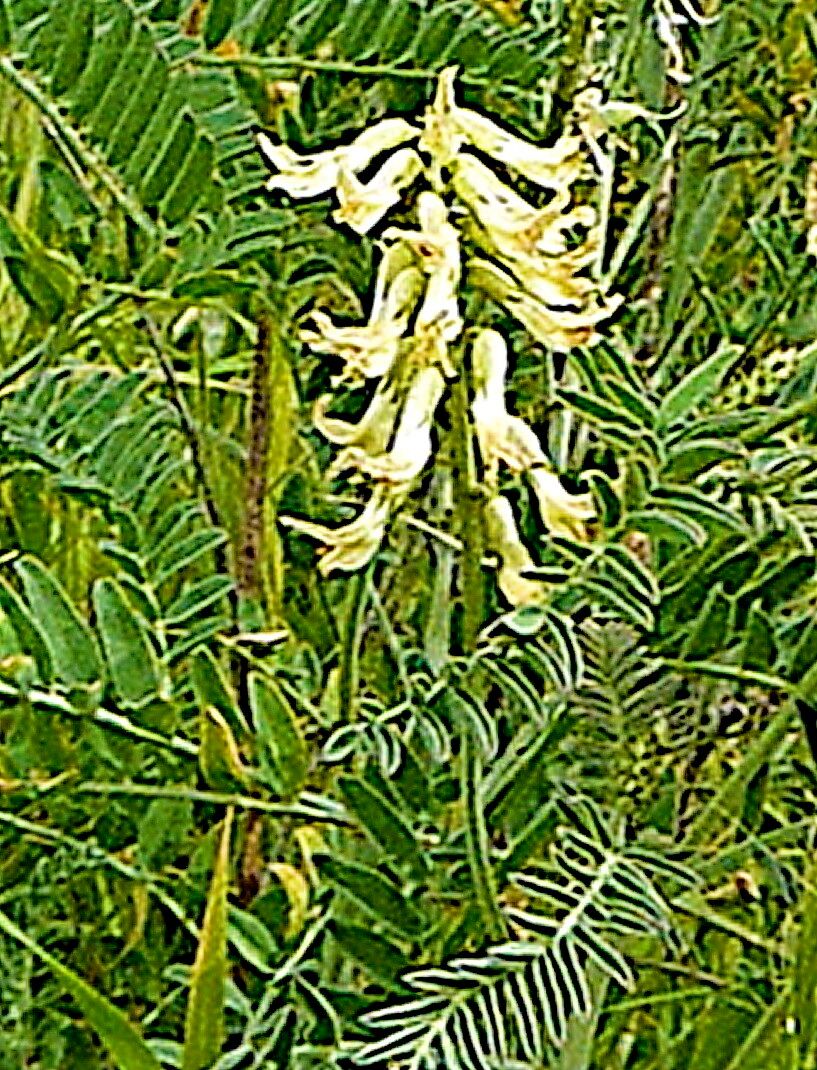
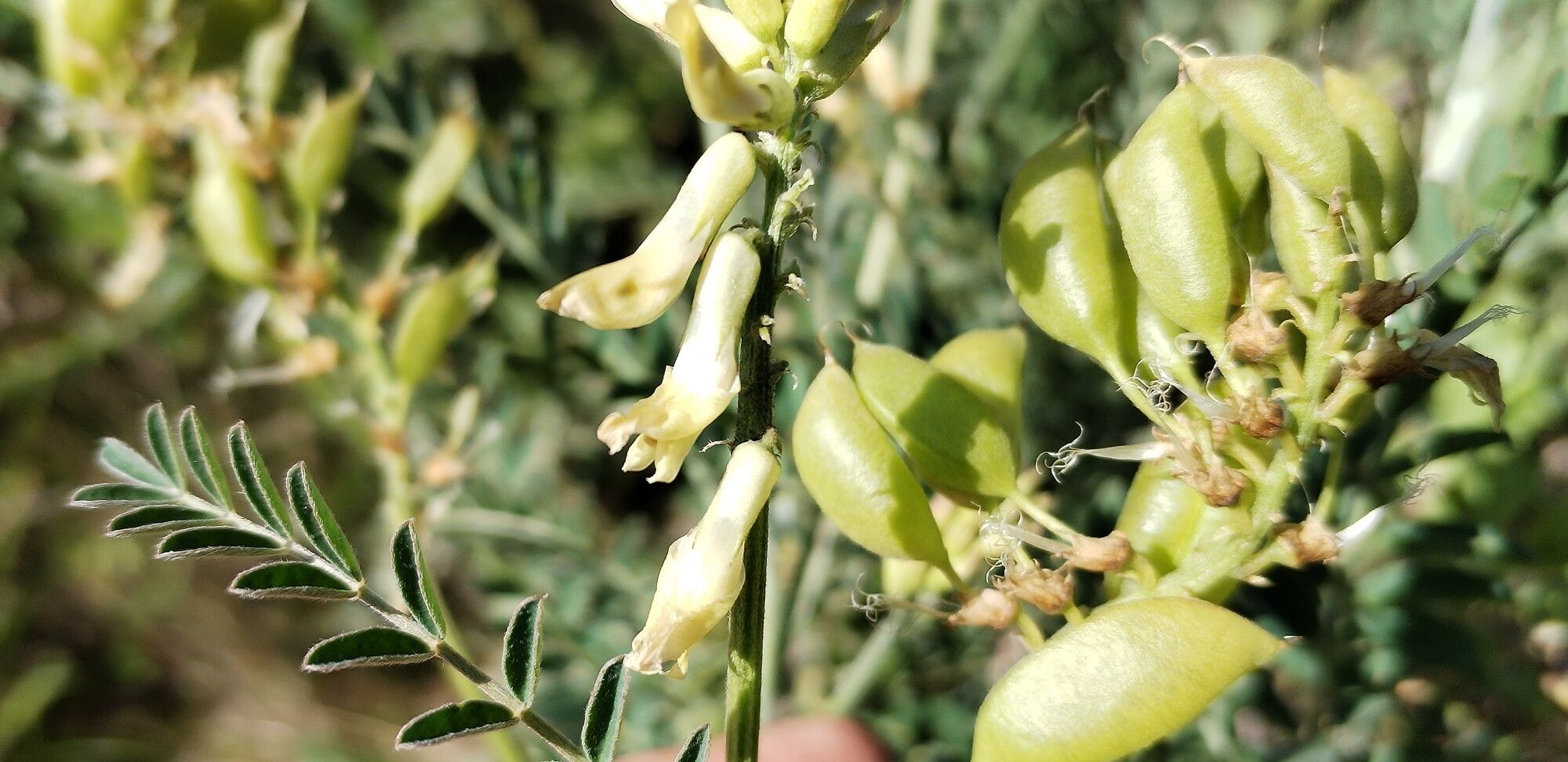
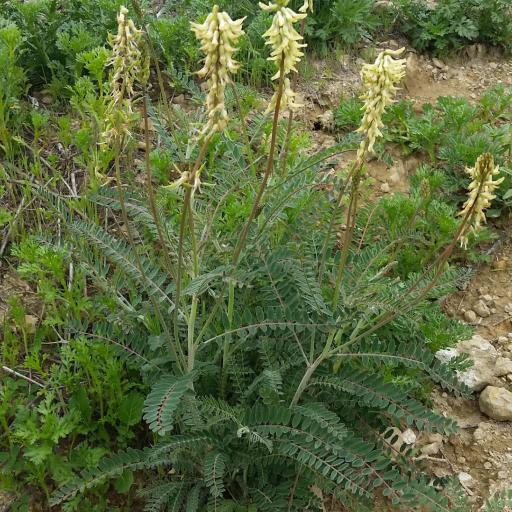
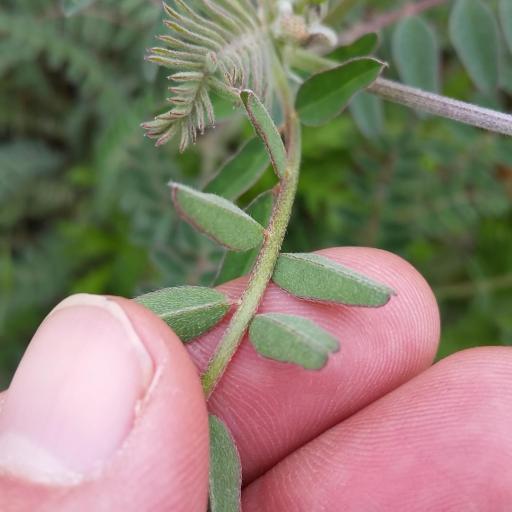
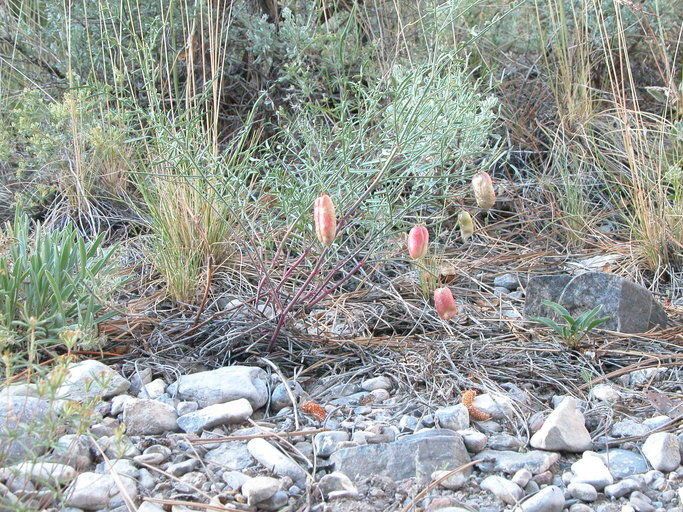
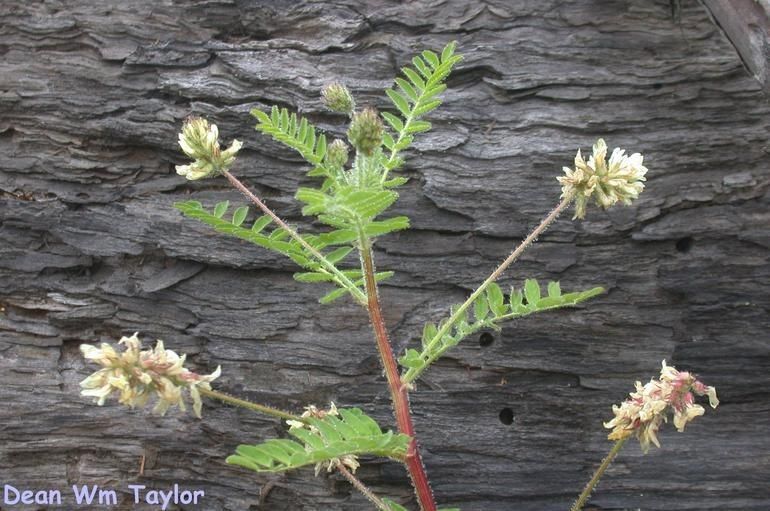
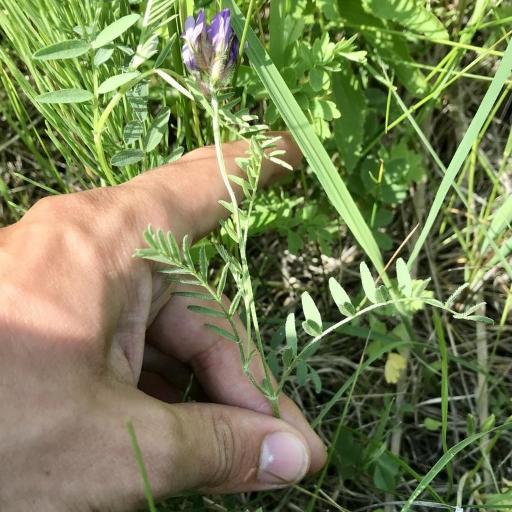
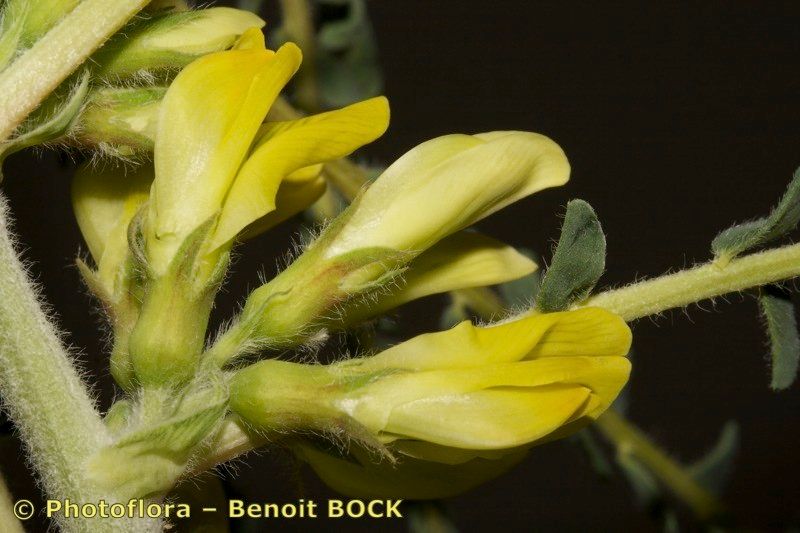
Astragalus trichopodus is a species of legume known by the common name Santa Barbara milk vetch. It is native to southern California and Baja California, where it grows in several types of open habitat, including in the Transverse Ranges and Mojave Desert. This is a robust perennial herb producing a branching stem up to about a meter in maximum height. The hairy stem is lined with many leaves each up to 20 cm (7.9 in) long which are made up of several pairs of widely spaced lance-shaped leaflets each up to 2.5 cm (0.98 in) in length. The inflorescence is a raceme of up to 50 flowers which are cream colored and sometimes tinted with light purple. Each flower is 2 to 3 cm (0.79 to 1.18 in) long including its tubular base of sepals. The fruit is a laterally compressed, slightly inflated legume pod up to 4 to 5 cm (1.6 to 2.0 in) long which dries to a papery texture. The fruits hang in bunches where they develop from the inflorescence. Each pod contains many seeds.
Santa barbara milkvetch shows strong resistance to disease and is generally not prone to illnesses. That said, it can be affected by pests or diseases present in its environment. These problems are typically mild. For care, the plant demands a moderate level of maintenance. It should be pruned regularly to keep a pleasing appearance and support healthy growth. Fertilizing can also encourage better flowering. Santa barbara milkvetch is well suited to anyone with outdoor space, such as a garden or patio, and does not require extensive gardening experience. It may need extra attention when grown indoors.
How to keep Astragalus Trichopodus.
Light
Santa barbara milkvetch generally thrives with abundant sunlight. Its growth and health are strongly affected by these light conditions, which reflect its natural habitat. Too little or too much sunlight can impede its proper growth and health. Different stages of growth may not require different amounts of light.
Temperature
Santa barbara milkvetch is native to areas with moderate climates where temperatures typically range from 68 to 95 °F (20 to 35 °C). It does best within this temperature range, and adjustments may be required during extreme seasonal changes to maintain optimal growth.
Fertilizer
Santa Barbara milkvetch needs the most fertilizer during its active growth period, mainly in spring, summer, and early fall. Fertilizing supplies essential nutrients the soil may lack, supporting healthy root and stem development and the attractive foliage that is characteristic of this plant.
Botanical profile.
- Plant Type
- Herb
- Life Cycle
- Perennial
- Genus
- Astragalus
- Family
- Fabaceae
- Hardiness Zone
- 10
- Mature Height
- 20 cm to 91 cm
- Mature Spread
- 0.3 m to 1.52 m
- Leaf Color
- Green, Light Green
- Leaf Type
- Semi-evergreen
- Flower Color
- Lavender, White
- Flower Size
- 2.54 cm
- Bloom Time
- Spring
- Planting Time
- Spring, Summer
- Harvest Time
- Summer
- Native Area
- Mexico
Other names.