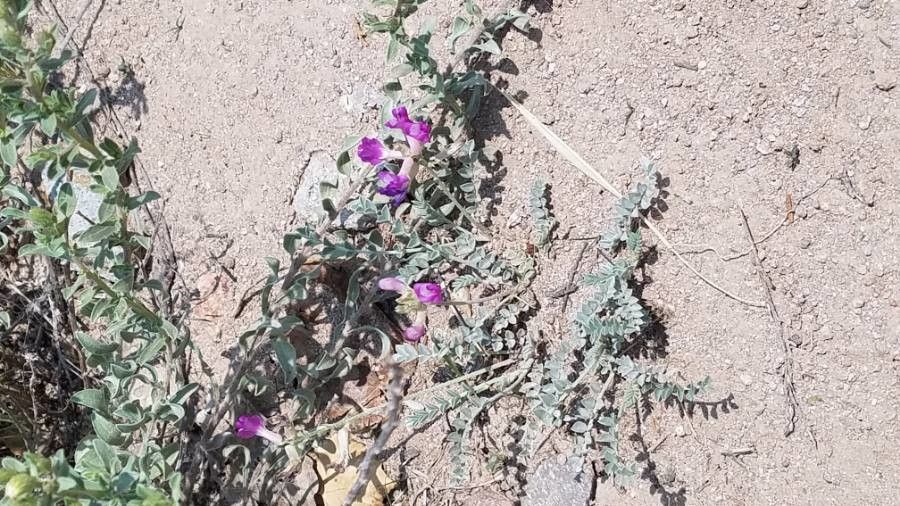
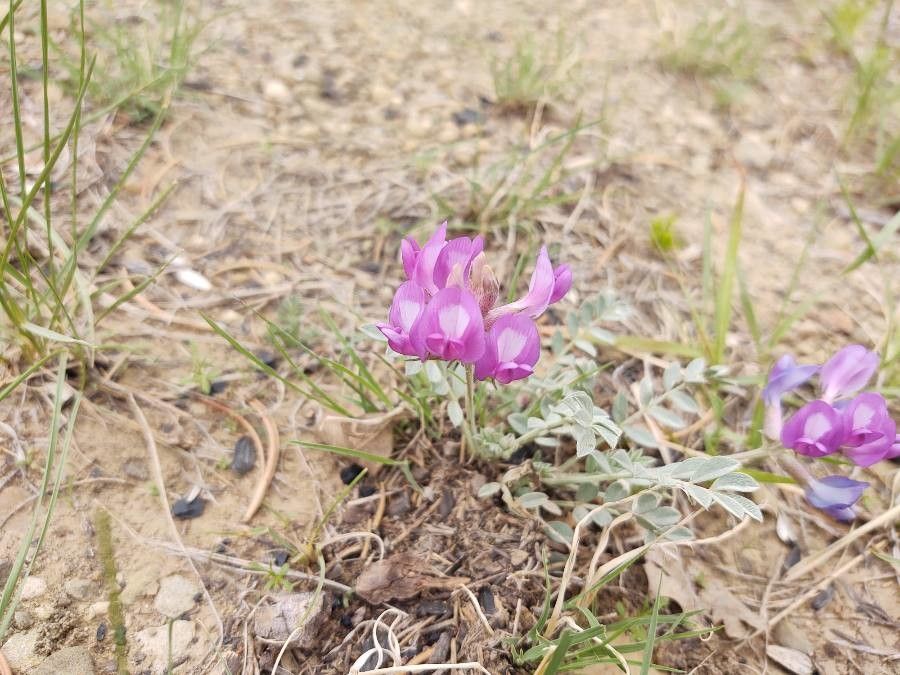
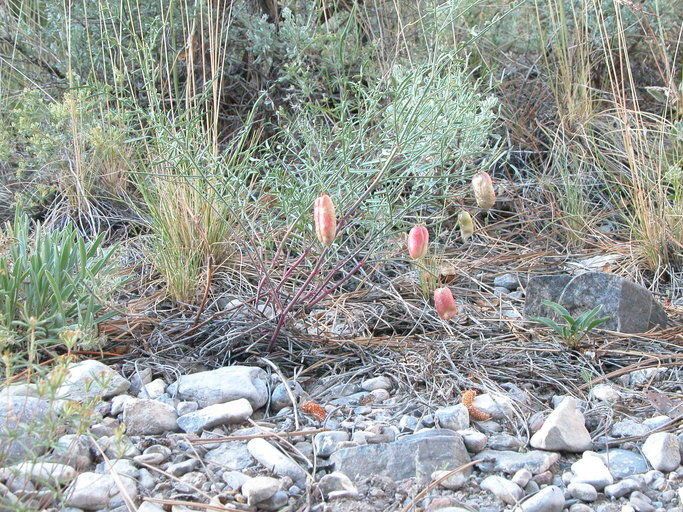
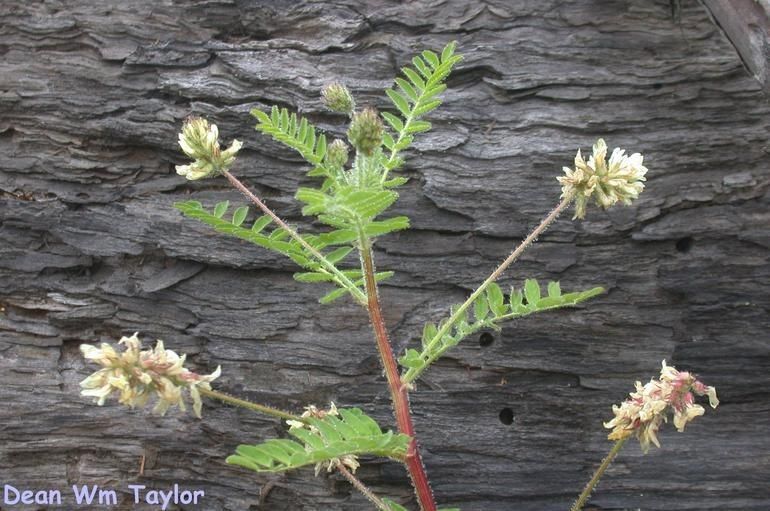
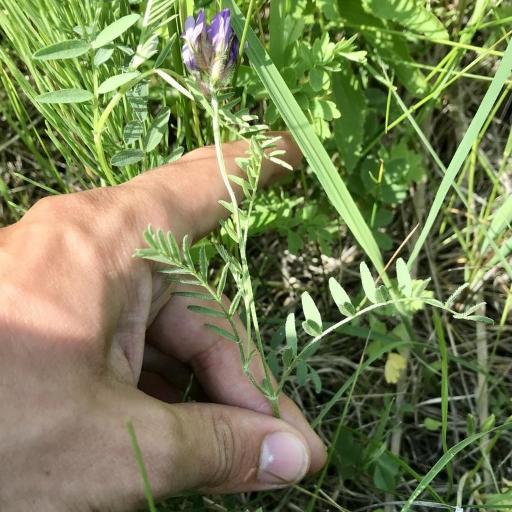
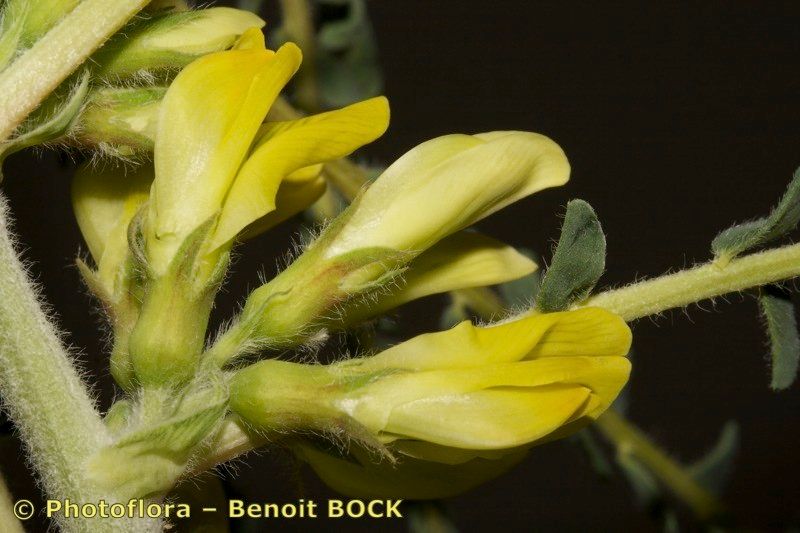
Astragalus nuttallianus is a species of milkvetch known by the common names smallflower milkvetch and turkeypeas. It is native to the southwestern and south central United States and northern Mexico, where it can be found in many types of habitat, often in dry areas. This is an annual herb which is variable in appearance, especially across varieties. It produces slender, hairy stems which reach 4 to 45 centimeters in length. The leaves are up to 6.5 centimeters long and are made up of several oval-shaped pointed or round-tipped leaflets. The inflorescence bears 1 to 4 white to purple or bicolored flowers, each less than a centimeter in length. The fruit is a legume pod 12 to 26 mm long.There are several varieties of this species:
A. n. var. austrinus - distributed from California to Oklahoma to northwestern Mexico A. n. var. cedrosensis - native to the Sonoran Desert A. n. var. imperfectus - native to the southwestern United States A. n. var. macilentus - native to New Mexico and Texas A. n. var. micranthiformis - found in the southwestern United States A. n. var. nuttallianus - known from the central US from Kansas to Louisiana A. n. var. trichocarpus - native to Texas and Oklahoma A. n. var. zapatanus - Texas endemic
Small-flowered milkvetch demonstrates good resistance to disease and is generally not very susceptible. Still, it can be vulnerable to pests and diseases present in its environment. These infections are usually mild. For care, the plant needs a moderate amount of maintenance. Regular pruning is required to keep a neat appearance and support healthy growth. Fertilizing can also encourage flowering. Small-flowered milkvetch is suitable for people with outdoor spaces such as a garden or patio and does not demand extensive care experience. It may need more attention if grown indoors.
How to keep Astragalus Nuttallianus.
Light
Small-flowered milkvetch comes from bright, open habitats where it thrives in full sun. It can tolerate partial shade but favors direct sunlight for best growth. This plant, which may be annual or biennial, is known for its sun-loving habit.
Water
Small-flowered milkvetch flourishes in dry environments due to its high drought tolerance and ability to adapt to low humidity. It only needs watering once a week, and benefits most from deep watering. This method simulates the effect of infrequent heavy rains, encouraging strong root development and greater resilience.
Temperature
Small-flowered milkvetch is a plant native to habitats where temperatures fall between 68 and 95 °F (20 and 35 ℃). It flourishes in these conditions, so try to recreate them and adjust as necessary with the changing seasons.
Fertilizer
Small-flowered milkvetch benefits from regular, light applications of fertilizer to encourage healthy leaf growth. Fertilize Small-flowered milkvetch about once a month during the summer. Nitrogen is essential for foliage, and supplying nitrogen-rich sources helps Small-flowered milkvetch thrive.
Pruning
The small-flowered milkvetch is known for its tiny, delicate blossoms. To maintain its health and encourage air circulation, it is best to prune this plant from early to late spring. During this time, remove any dead stems and lightly trim the overgrown branches. Always use sharp, sterilized tools, and avoid excessive pruning to protect its fragile structure and improve flowering.
Botanical profile.
- Plant Type
- Herb
- Life Cycle
- Annual, Perennial
- Genus
- Astragalus
- Family
- Fabaceae
- Hardiness Zone
- 10
- Mature Height
- 4 cm to 46 cm
- Mature Spread
- 15 cm to 40 cm
- Leaf Color
- Green, Light Green
- Leaf Type
- Deciduous
- Flower Color
- Lavender
- Flower Size
- 0.51 cm to 0.76 cm
- Bloom Time
- Spring
- Planting Time
- Spring, Summer
- Harvest Time
- Late spring, Early summer, Mid summer
- Native Area
- Mexico
Other names.
Reader questions.
What are the ideal conditions for Small-flowered milkvetch?
Small-flowered milkvetch thrives in environments where temperatures range from 68 to 95 °F (20 to 35 ℃). It is a heat-loving plant, native to areas within this temperature bracket. To ensure its health, it is crucial to replicate these conditions as closely as possible, adjusting for changes across the seasons. During winter, maintaining a temperature above 20°C is beneficial for the plant's growth, while ensuring it does not get exposed to temperatures near or below 5°C to avoid harm.
How should I care for Small-flowered milkvetch during cold weather?
Small-flowered milkvetch is not tolerant to low temperatures and thrives best when the temperature remains above 20°C. In winter, it's important to keep it in conditions above 5°C. Exposure to temperatures below 1°C can lead to leaves lightening in color, and frost damage may cause leaves to turn brown or black, accompanied by wilting and drooping. If frost damage occurs, trim off the damaged parts and move the plant to a warm environment indoors, ideally near a south-facing window for ample sunlight, ensuring it's not too close to heaters or air conditioning vents to prevent air from getting too dry.
What should I do if my Small-flowered milkvetch experiences high temperatures?
During summer, it's crucial to ensure that the temperature around the Small-flowered milkvetch does not exceed 35°C. Exposure to temperatures above 41°C can cause the leaves to lighten and increase susceptibility to sunburn. To care for a plant affected by high temperatures, trim away any sunburned or dried-up parts. Then, relocate the plant to an area that provides shade, particularly from the midday and afternoon sun. Watering the plant during the morning and evening will help keep the soil moist and support the plant's well-being in high temperatures.