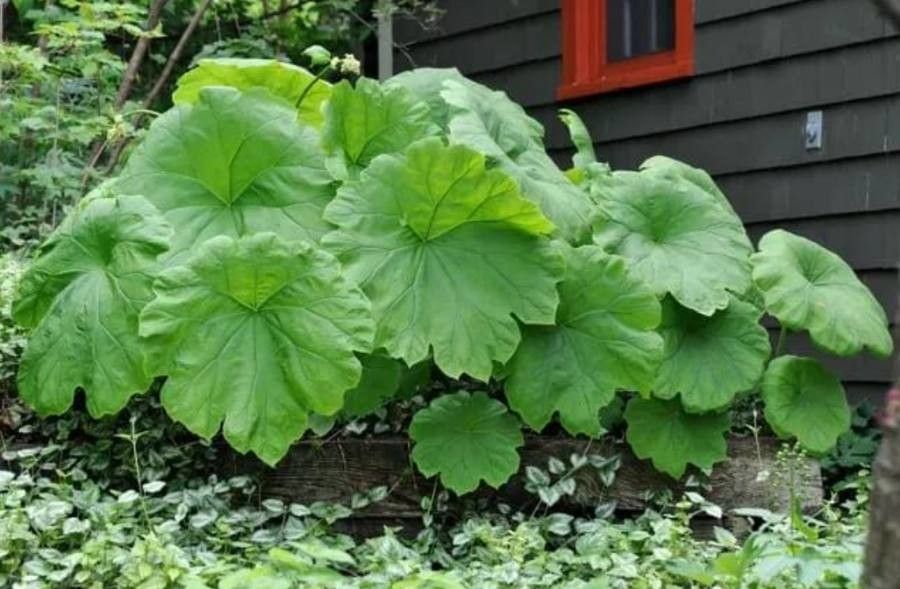
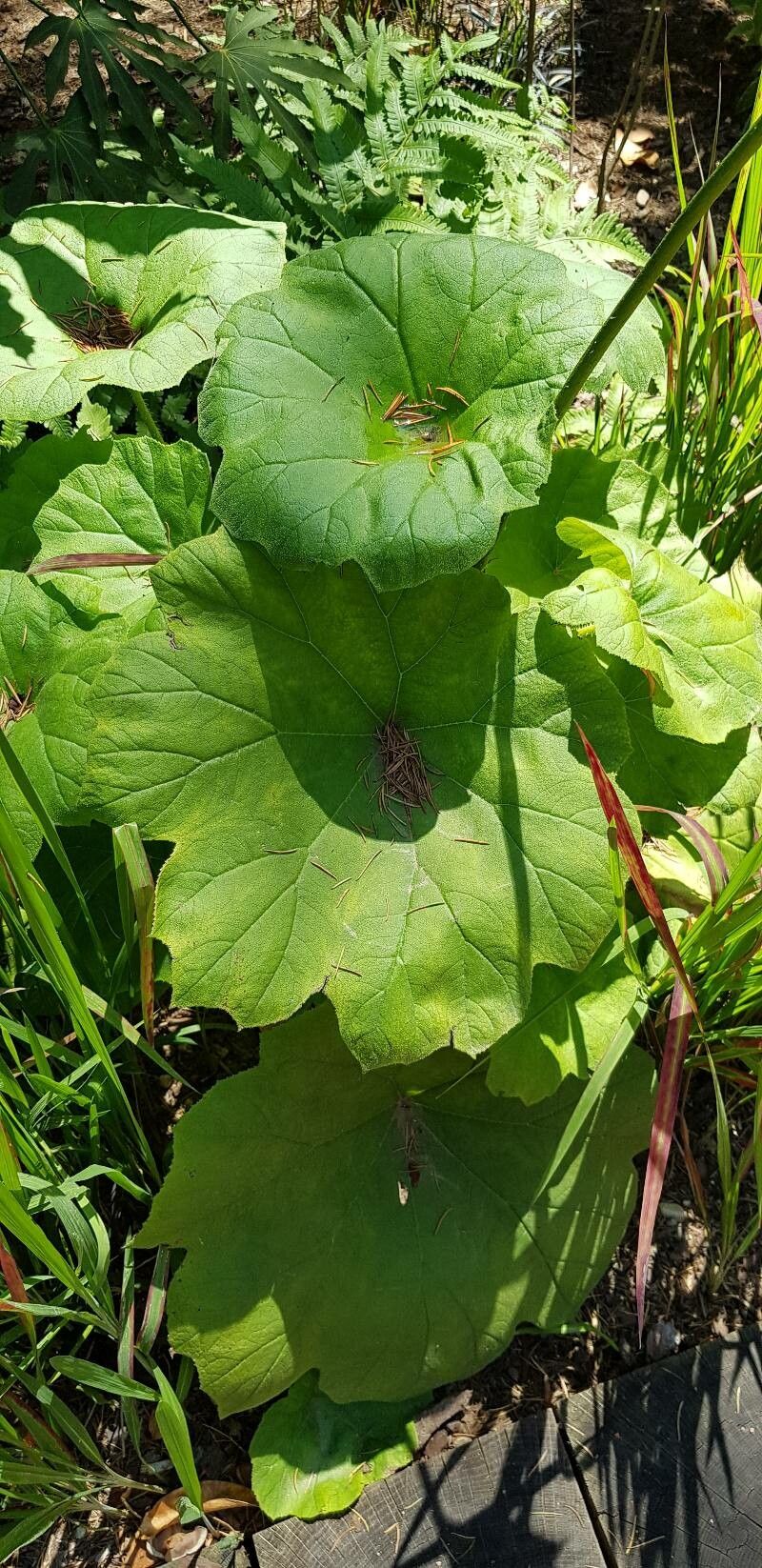
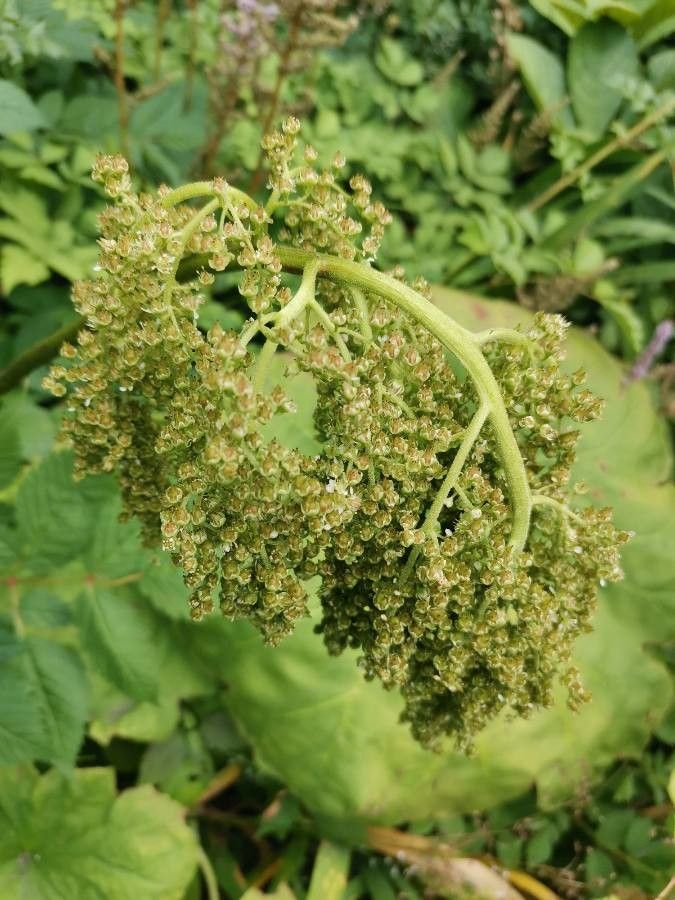
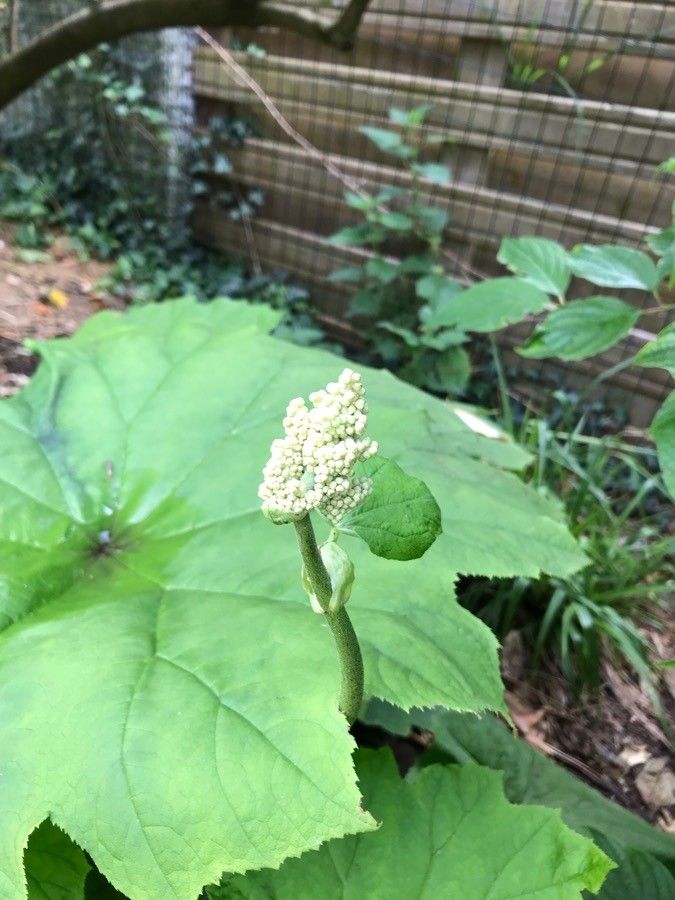
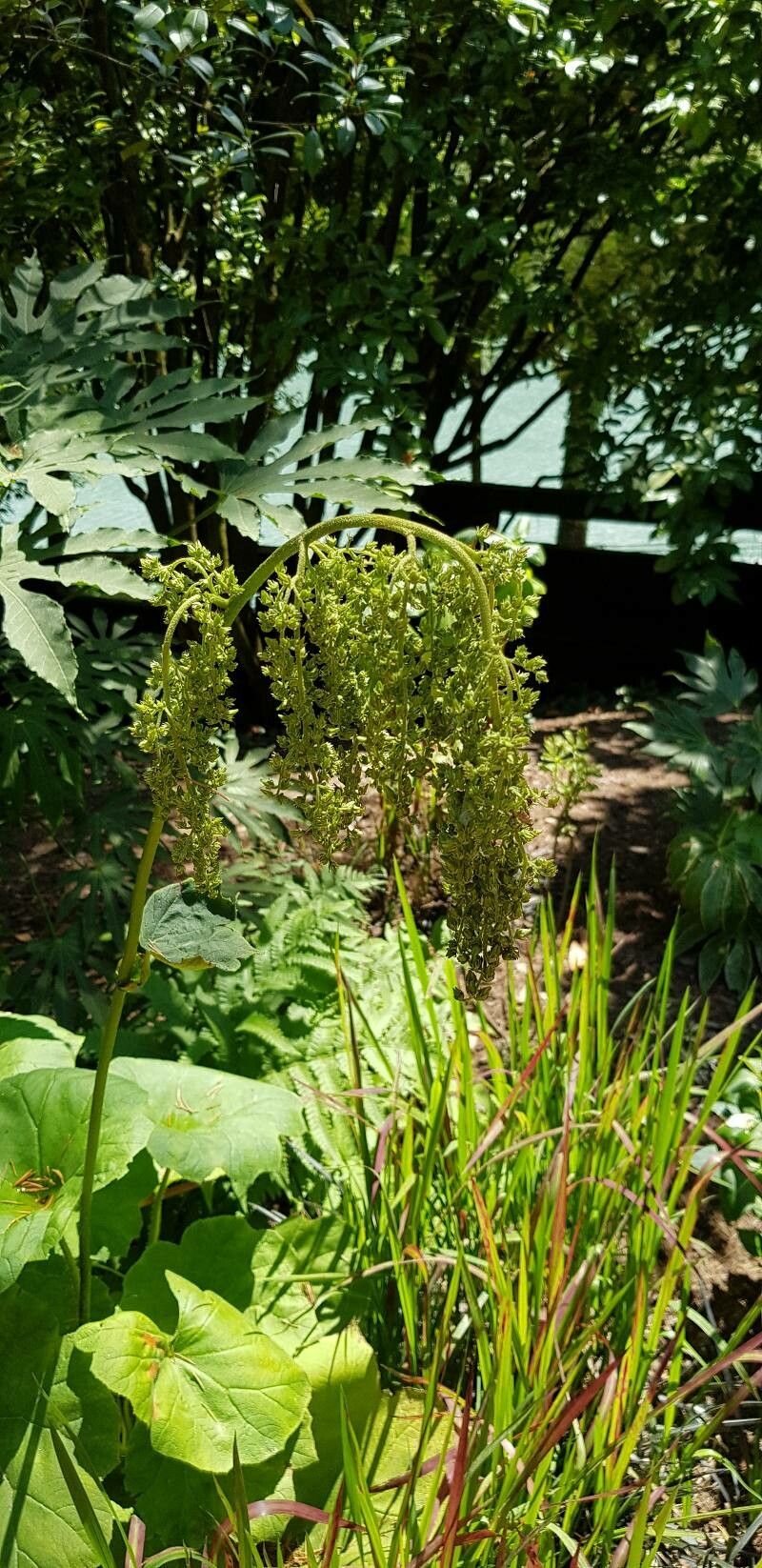
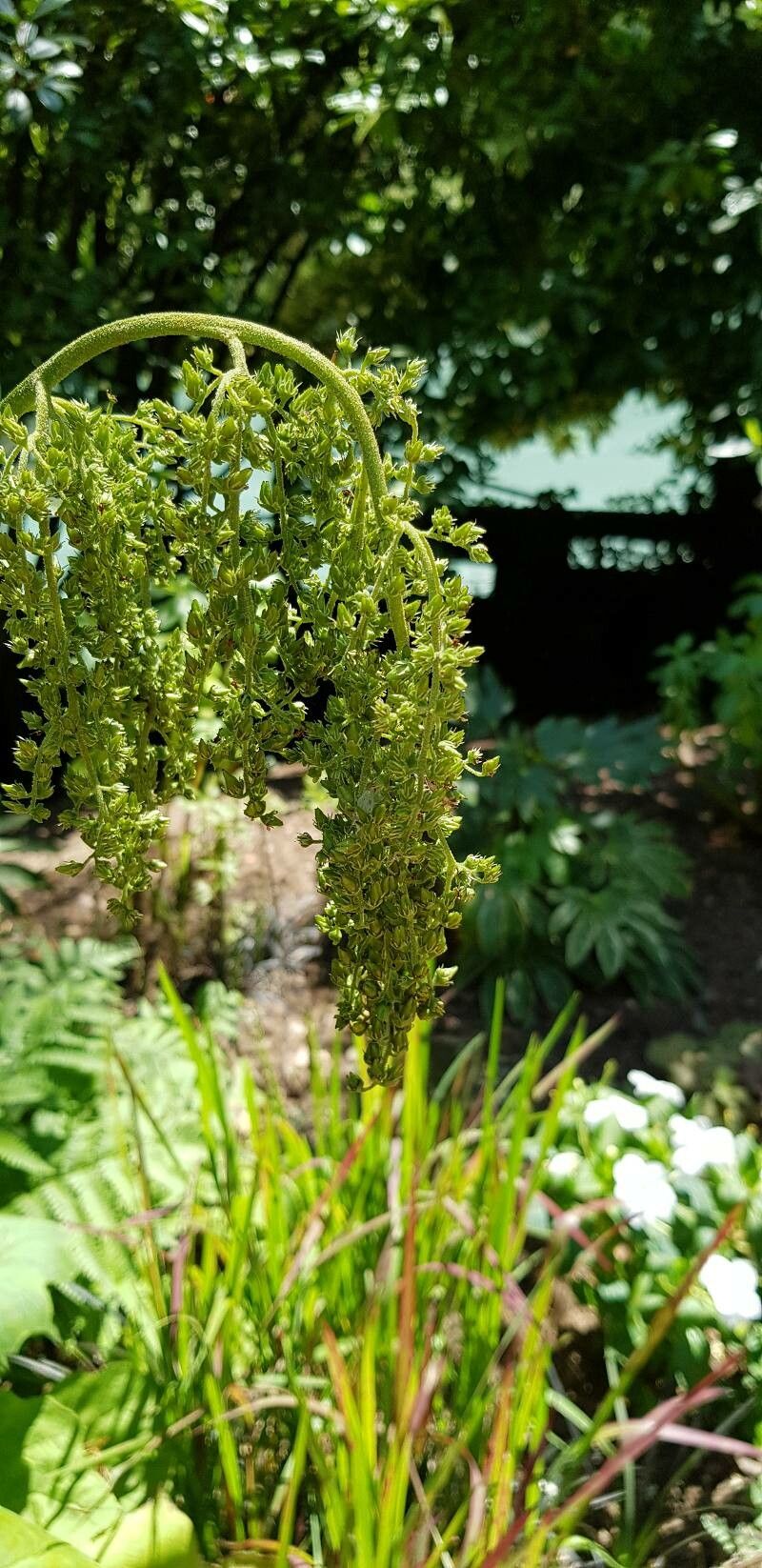
Astilboides, a genus of the saxifrage family containing only one species, Astilboides tabularis, a herbaceous perennial once included in the genus Rodgersia. It comes from China and differs from its former relatives mainly in its leaf shape. It is grown for its huge bright green, circular leaves to 36 in (90 cm) across with the stem attached to the center, and large fluffy racemes of tiny white flowers produced in summer. The Latin specific epithet tabularis means "tabular" or "flat", referring to the leaf formation.
Shieldleaf rodgers flower has strong disease resistance and is typically not prone to illnesses. However, it can be affected by pests and diseases present in its surroundings. Those infections are usually not severe. In terms of care, this plant requires a moderate amount of maintenance. It should be pruned regularly to preserve a good appearance and support healthy growth. Fertilizing can also help encourage flowering. Shieldleaf rodgers flower is suitable for anyone with outdoor space, such as a garden or patio, and does not demand extensive care experience. It may need more attention when grown indoors.
How to keep Astilboides Tabularis.
Light
Shieldleaf rodgers flower thrives in gentle sunlight rather than intense rays. It can remain healthy even in places shrouded in shadow, yet constant exposure to gloom can result in reduced growth. In its natural habitat, it flourishes in the dappled light that filters through dense canopies.
Water
The shieldleaf rodgers flower, which originates from moist woodland floors, thrives in consistently damp soil. To prevent waterlogging, it needs to be watered weekly. Mulching is beneficial for this plant because it helps retain moisture and stabilizes temperature, which is crucial during its active growing season. Although this plant has moderate drought tolerance, maintaining proper moisture levels is important for its health.
Temperature
Shieldleaf rodgers flower is native to cool, temperate zones and grows best in temperatures from 32 to 95 °F (0 to 35 ℃). Its native habitat indicates a preference for cooler climates. Because of this preference, gardeners should modify the plant's microclimate when seasonal temperatures become high.
Fertilizer
For Shieldleaf rodgers flower, the primary time to fertilize is in early spring as the flowers are developing. The correct fertilizer promotes improved blooms and helps Shieldleaf rodgers flower produce attractive flowers. Fertilizing in early spring ensures strong flowering during the season and supplies energy for dormant growth periods.
Pruning
The Shieldleaf Rodgers flower features large, shield-like leaves and thrives in moist, shaded areas. For optimal growth, it's important to prune this plant from early to late spring. This involves removing dead foliage and cutting back old flower stalks to encourage new growth. Proper pruning improves air circulation, reduces the risk of disease, and keeps the plant looking tidy.
Botanical profile.
- Plant Type
- Herb
- Life Cycle
- Perennial
- Genus
- Astilboides
- Family
- Saxifragaceae
- Hardiness Zone
- 3-9
- Mature Height
- 0.91 m to 1.22 m
- Mature Spread
- 1.52 m
- Leaf Color
- Green
- Leaf Type
- Deciduous
- Flower Color
- White
- Flower Size
- 15.24 cm to 20.32 cm
- Bloom Time
- Early summer, Mid summer
- Planting Time
- Spring, Summer
- Harvest Time
- Late summer, Early fall
- Native Area
- Koppen, China
Other names.
Reader questions.
How can I water my Shieldleaf rodgers flower in the best way?
To properly water the Shieldleaf rodgers flower, use filtered water at room temperature or slightly warmer. Tap water may have harmful particles, so filtering it is recommended. Since the flower comes from a warm environment, avoid using cold water as it can shock the plant. Additionally, refrain from overhead watering to prevent foliage problems. Instead, thoroughly soak the soil with the filtered room temperature water. This helps moisten the roots and supports their spread in the soil for nutrient collection.
Why do I have to put fertilizer on my Shieldleaf rodgers flower?
The Shieldleaf rodgers flower relies heavily on its leaves for structure and function. Fertilization plays a key role in ensuring that these leaves appear vibrant and healthy. The right fertilization routine will not only maintain leaf color and texture, but also support root growth and maintenance. By fertilizing your plant, you not only keep it healthy in the present, but also enhance its ability to absorb nutrients from the soil in the future.
What are the sunlight requirements for Shieldleaf Rodgers Flower?
Shieldleaf Rodgers Flower, known botanically as Astilboides tabularis, thrives best in conditions that balance light and shade. It requires partial sun, meaning about 3-6 hours of sunlight daily, but it can also grow in full shade areas where it receives less than 3 hours of sunlight. Keep an eye on the daily movement of sunlight through your garden to find spots offering the ideal mix of light for your plants. Remember, too much or too little light can affect the plant's growth, so finding that perfect balance is key to fostering a healthy and flourishing Shieldleaf Rodgers Flower.
What is the Shieldleaf rodgers flower and where does it thrive best?
The Shieldleaf rodgers flower, botanically known as Astilboides tabularis, is native to cool, temperate zones. It thrives best in temperatures that range from 32 to 95°F (0 to 35°C), indicating a preference for cooler climates. Despite its strong cold resistance, which usually negates the need for special frost protection measures in winter, gardeners are advised to adjust the plant's microclimate during high seasonal temperatures to ensure its well-being.
What should I do if I give too much or too little water to my Shieldleaf rodgers flower?
Overwatering is a more common problem than underwatering for the health of your Shieldleaf rodgers flower. When this species gets too much water, its stems and leaves may wilt and turn yellow. If overwatering continues for a long time, it can cause diseases like root rot, mold, and mildew, which can kill your plant. Underwatering is less common because the Shieldleaf rodgers flower can tolerate drought. However, if it happens, the leaves will become brittle and brown. It's important to notice the signs of overwatering early. Some diseases caused by overwatering, like root rot, may not be fixable if you wait too long. If you notice early signs of overwatering, reduce your watering schedule immediately. Also, check if the soil drains poorly and replace it with a loose, well-draining potting mix if needed. If you see signs that your plant is not getting enough water, simply increase the frequency of your watering until the signs go away.
When should I fertilize my Shieldleaf rodgers flower for optimal results?
If you grow Shieldleaf rodgers flower outdoors, it will start to grow new leaves in early spring. This is a sign that it's time to start fertilizing for the year. Usually, one application of fertilizer is enough for the flower to do well in the spring. However, if you want to maximize its growth, you can fertilize it multiple times throughout the spring and early summer. If you choose to do this, fertilize the flower about once every month to a month and a half.
What are the essential care tips for Shieldleaf Rodgers Flower indoors?
For the Shieldleaf Rodgers Flower to flourish indoors, it's crucial to ensure adequate lighting, mimicking its natural preference for gentle sunlight rather than harsh rays. In spaces with insufficient natural light, especially during winter or in less sunny locations, artificial lighting becomes essential. LED lights are recommended for their adaptability and efficiency in providing the necessary wavelengths of light. The amount of artificial light needed varies: full sun plants require 30-50W per square foot, partial sun plants 20-30W per square foot, and full shade plants 10-20W per square foot. Position these lights 12-36 inches above the plant and keep them on for 8-12 hours a day to simulate natural daylight conditions. This approach promotes healthier and faster growth even indoors.
How should Shieldleaf rodgers flower be protected during winter?
To protect the Shieldleaf rodgers flower during winter, when temperatures are expected to drop below -35°C, it's important to provide cold protection by covering the plant with materials such as soil or straw. Additionally, before the first freeze of autumn, the plant should be watered abundantly to keep the soil moist, which helps prevent drought and water scarcity during the cold season. This preparation aids in maintaining the flower's health through winter and early spring.
How often do I need to water my Shieldleaf rodgers flower?
If your Shieldleaf rodgers flower is in a pot, you can check if it needs water by sticking your finger in the soil. If the top two to three inches of soil are dry, it's time to water it. When growing the Shieldleaf rodgers flower outdoors, you can use the same method. If the top few inches of soil have dried out, it's time to water. Typically, you'll need to water this plant about once a week during spring and early fall. In very hot weather, you may need to increase watering to about twice a week or more. However, mature and well-established Shieldleaf rodgers flowers can withstand drought well.
When is the best time to not use fertilizer on my Shieldleaf rodgers flower?
During the late fall and winter, your Shieldleaf rodgers flower will go into a dormant phase where it stops growing. It's important to note that you shouldn't fertilize it during this time. In spring and summer, you can fertilize multiple times, but as summer approaches, you should decrease the amount of fertilizer you use because the growth rate of your Shieldleaf rodgers flower will slow down. Overall, it's not recommended to fertilize your Shieldleaf rodgers flower during extremely hot weather or when the soil is very dry. Fertilizing in these conditions can stress your flower and cause it to die prematurely.
What are the symptoms of inadequate light for Shieldleaf Rodgers Flower?
When grown in conditions lacking sufficient light, Shieldleaf Rodgers Flower exhibits various symptoms signaling stress. These include the development of smaller new leaves, leggy or sparse growth with increased spacing between leaves or stems, accelerated leaf drop as the plant aims to conserve resources, and a halt in new growth indicating the plant has entered survival mode. Additionally, new leaves may appear lighter in color, suggesting a deficiency in chlorophyll and essential nutrients. Other symptoms like chlorosis, sunscald, leaf curling, wilting, and leaf scorching can arise from excessive light exposure, highlighting the importance of maintaining an optimal light balance.
What are the symptoms of low temperature exposure and how to manage them?
Shieldleaf rodgers flower exhibits cold tolerance and typically thrives when the temperature is above 0°C. However, if winter temperatures fall below -35°C, the plant may show no noticeable changes during the cold months but can experience a decrease in sprouting or fail to sprout at all during springtime. To manage this, in spring, gardeners should remove any parts of the plant that have failed to sprout, facilitating healthier growth.