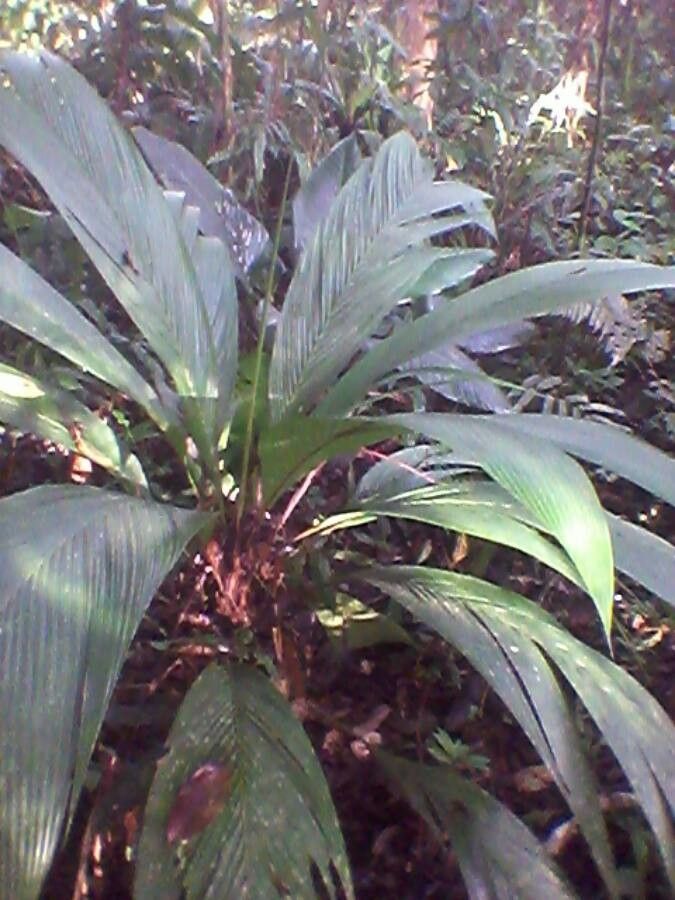
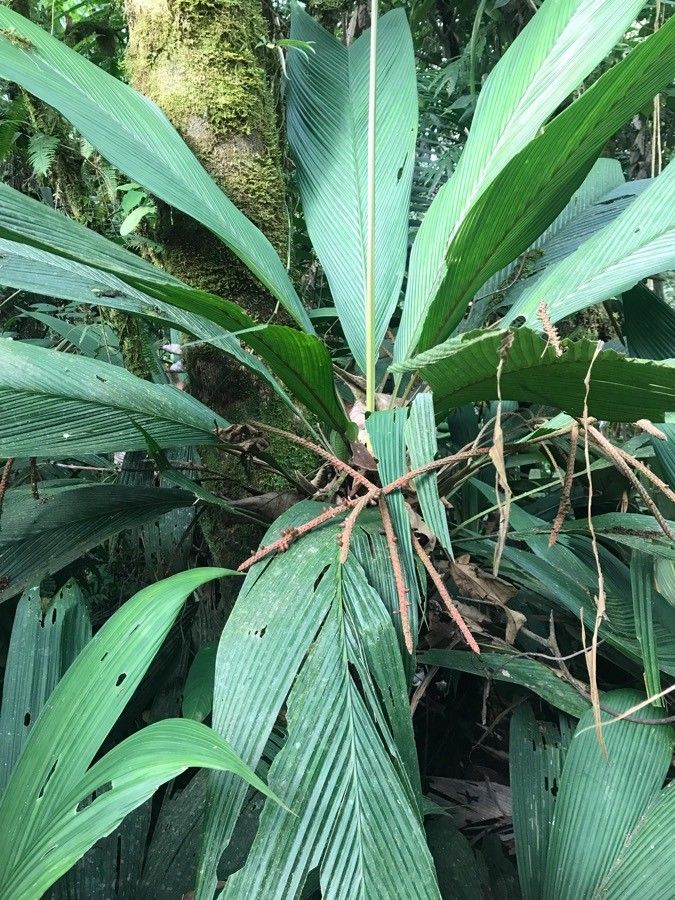
Polaris palm is resistant to disease and generally not susceptible to illnesses. In terms of care, this plant is fairly low-maintenance. When grown outdoors it needs little watering, and larger specimens typically do not require pruning. Smaller plants, however, should be pruned after they bloom. The Polaris palm is suitable for anyone who has outdoor space, such as a garden or deck, and does not demand extensive plant-care experience.
How to keep Asterogyne Martiana.
Light
Polaris palm is native to habitats like forest understories and rocky areas, where it grows in natural shade. It prefers partial sun but can adjust to full sun or full shade, showing its versatility and hardiness.
Temperature
The Polaris palm comes from tropical areas, where the climate is generally warm and humid. Consequently, it is well adapted to high temperatures and humidity. It dislikes sudden temperature changes and prefers a stable thermal environment, so avoiding temperature fluctuations indoors is important. It typically cannot tolerate cold and requires warmer conditions to grow. If the surrounding temperature falls too low, the plant may stop growing or even die.
Fertilizer
Fertilize your Polaris palm in early spring to encourage healthy growth. Consistent fertilization improves overall health, producing vigorous growth, increased tolerance of harsh conditions, and better resistance to pests and diseases. Follow a specific fertilization schedule for your Polaris palm to maintain foliage that is richly colored and lush in appearance.
Pruning
The Polaris palm is a tropical plant known for its graceful, arching fronds and slender trunk. To maintain its health and appearance, it is best to prune in early spring to remove any damaged fronds. Be mindful not to prune heavily, as this can hinder its slow growth. Regularly removing the lower fronds can help improve airflow and reduce the risk of disease.
Botanical profile.
- Plant Type
- Palm
- Life Cycle
- Perennial
- Genus
- Asterogyne
- Family
- Arecaceae
- Hardiness Zone
- 10-12
- Mature Height
- 2.13 m to 3.96 m
- Mature Spread
- 0.91 m to 2.13 m
- Leaf Color
- Dark Green
- Leaf Type
- Evergreen
- Flower Color
- White, Cream
- Flower Size
- 0.51 cm to 1.02 cm
- Bloom Time
- All year round
- Planting Time
- Spring, Summer
- Harvest Time
- All year round
- Native Area
- Colombia, Belize, Honduras, Guatemala, Nicaragua, Ecuador, Costa Rica, Panama
Other names.