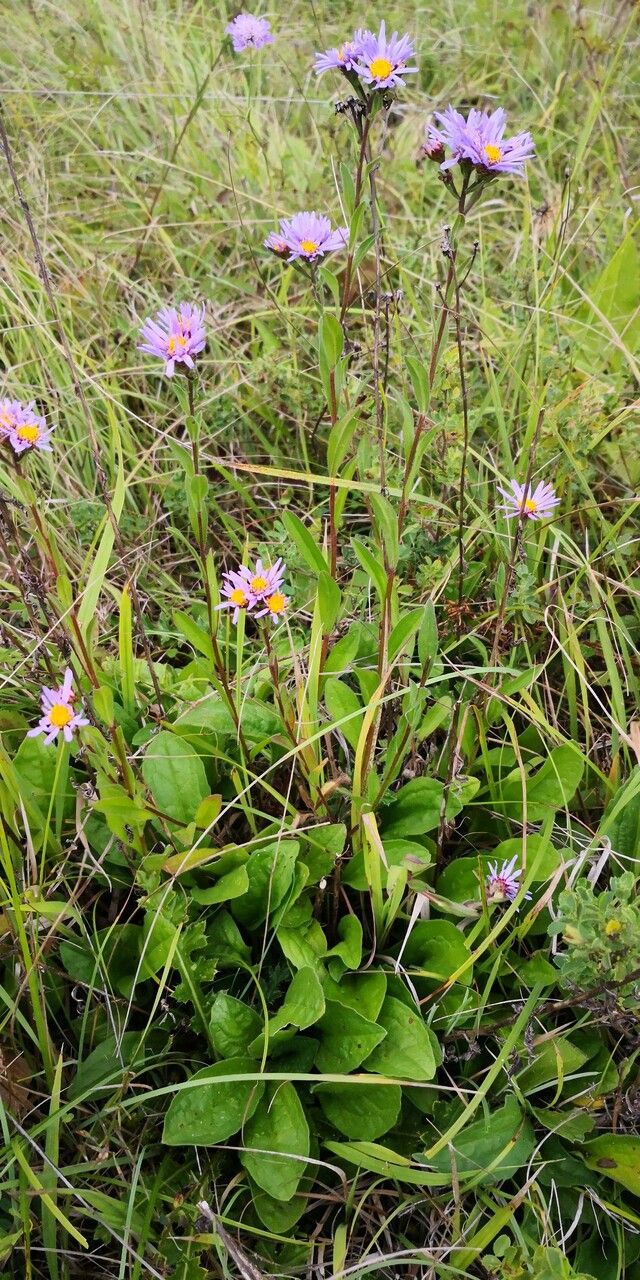
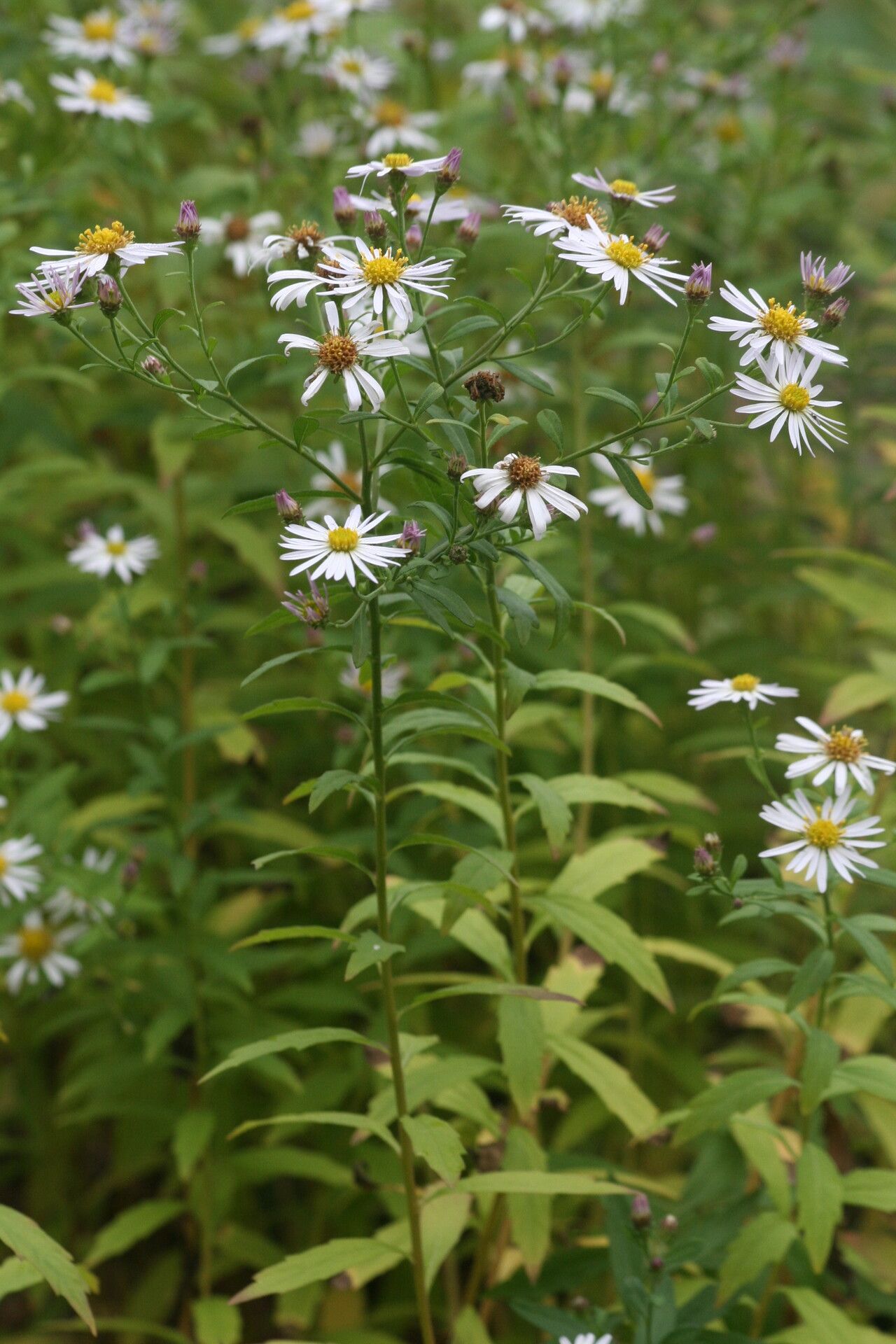
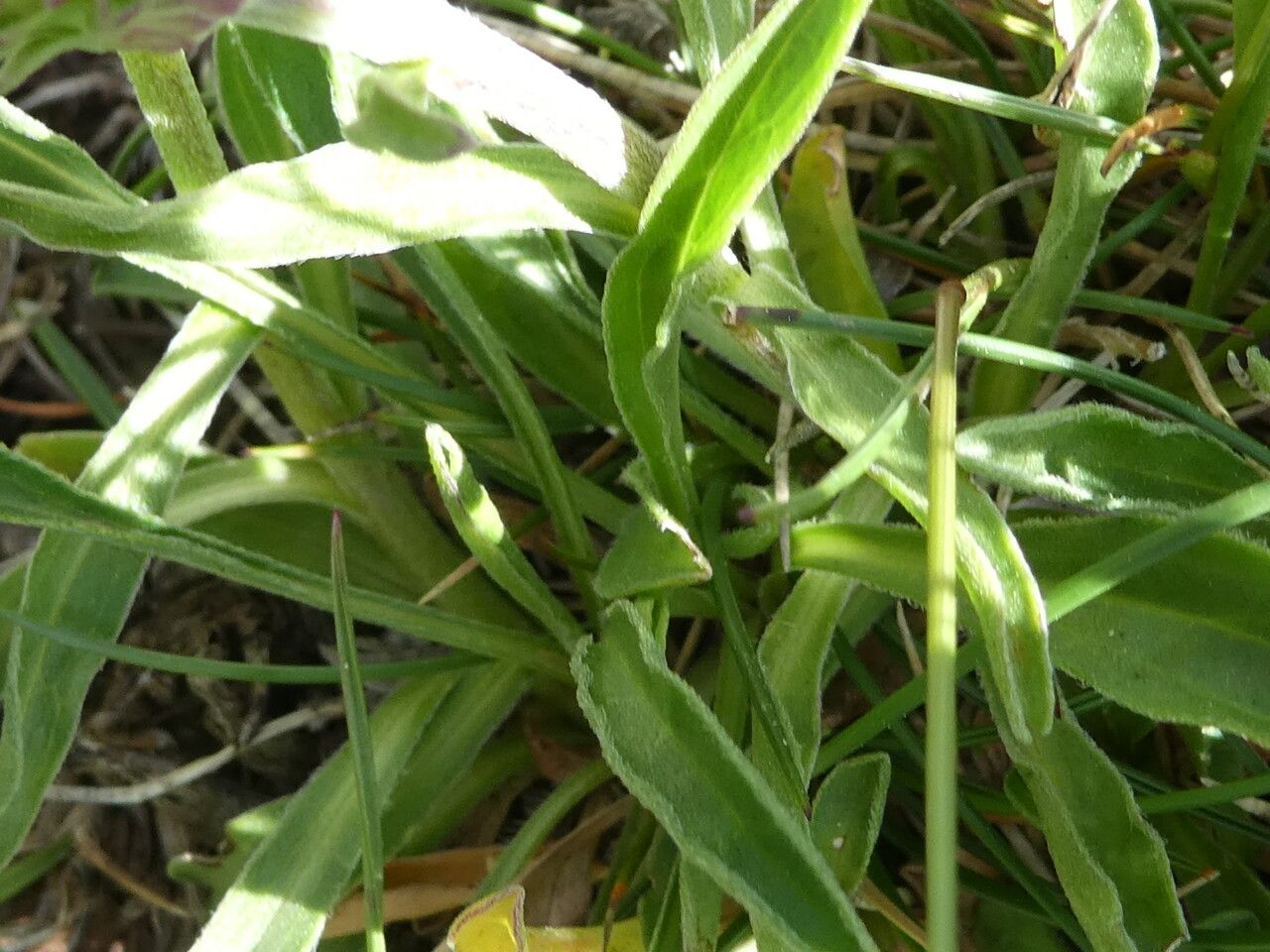
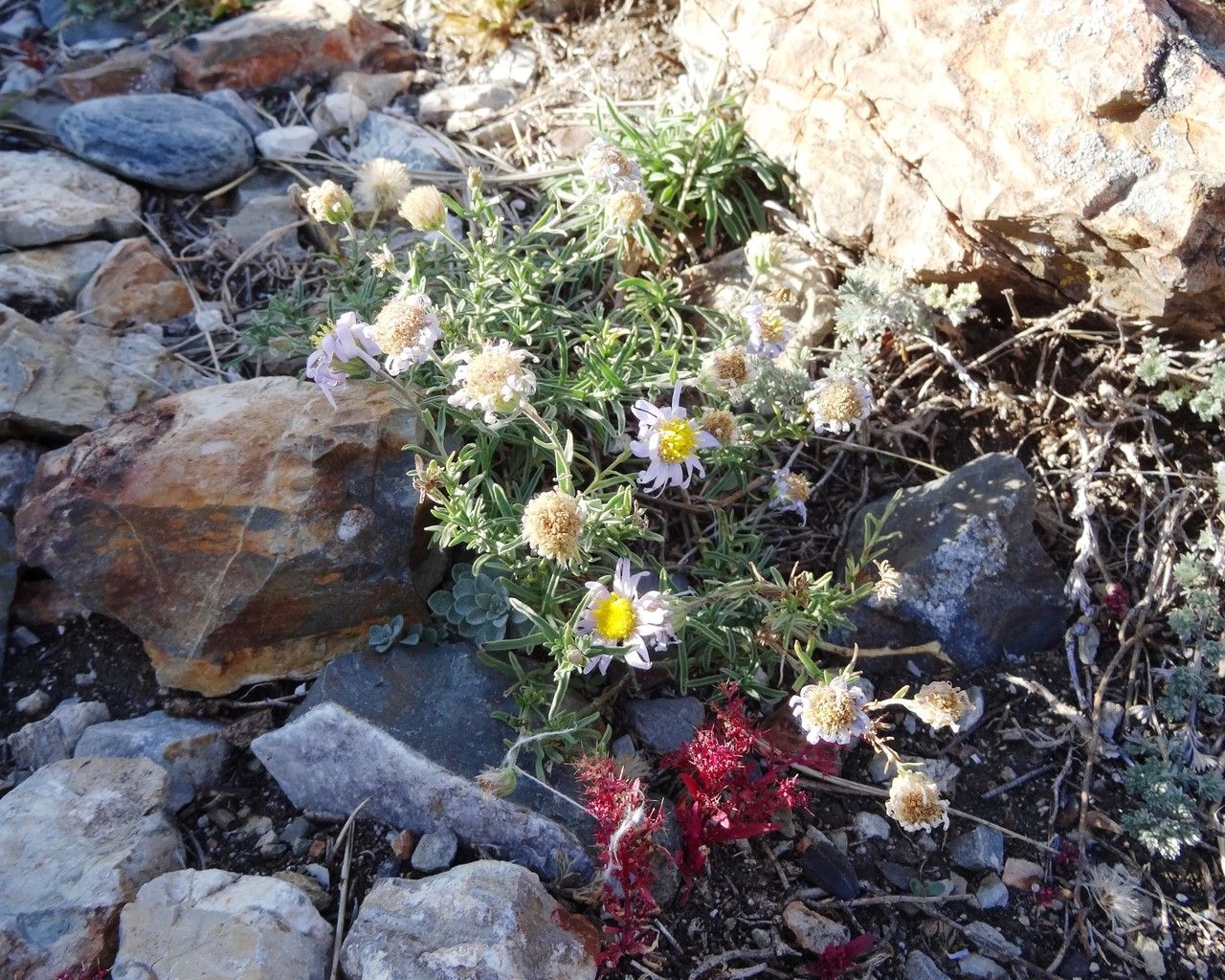
Aster amellus, commonly known as the European Michaelmas Daisy, is a perennial herbaceous plant belonging to the Asteraceae family. Native to Europe and western Asia, it has been widely cultivated as an ornamental plant in gardens and parks. The plant grows to a height of 60-90 cm with an upright habit, producing numerous small flowers that bloom in late summer or early autumn. The flowers are daisy-like, featuring blue-violet petals surrounding a yellow central disk. The leaves are lance-shaped with serrated edges and can grow up to 10 cm long.
Aster amellus prefers well-drained soil in full sun or partial shade but can tolerate some drought conditions once established. It is easy to grow from seed or by dividing established clumps, making it popular among gardeners for its long-lasting blooms that attract butterflies and bees.
In traditional medicine, Aster amellus has been used for its anti-inflammatory properties and for treating respiratory ailments such as coughs and bronchitis.
Overall, Aster amellus is a beautiful addition to any garden or landscape. Its vibrant blooms add color during the late summer months, and it also offers medicinal benefits.
European michaelmas daisy has good disease resistance and is generally not prone to diseases. Nevertheless, it can be vulnerable to pests and illnesses present in its environment. These problems are typically not serious. For care, this plant demands a moderate amount of maintenance. It should be pruned regularly to preserve a neat appearance and encourage healthy growth. Fertilizing can also aid in increasing flowering. European michaelmas daisy is appropriate for anyone with an outdoor area, such as a garden or patio, and does not need extensive care experience. It may need extra attention if grown indoors.
How to keep Aster Amellus.
Light
The European michaelmas daisy benefits from strong sun exposure to maintain healthy growth. In its natural habitat it does best in full sun, taking in plentiful sunlight. Too little light produces weak flowering, while excessively intense sun can damage the foliage.
Water
The European Michaelmas daisy flourishes in temperate climates and prefers soil that consistently retains moisture without becoming waterlogged. Ideally, it should be watered weekly, though it requires less water during its dormant period in colder months. While the plant is often cultivated outdoors to take advantage of natural rainfall, it's crucial to maintain a balanced level of moisture for optimal growth.
Temperature
European michaelmas daisy, native to regions with fluctuating temperatures, prospers across a wide temperature range of 41 to 89.6 °F (5 to 32 ℃). A tailored temperature regimen suited to seasonal changes can optimise its health and growth.
Fertilizer
The best time to fertilize a European michaelmas daisy is in early spring, as it comes out of dormancy and begins active growth. Fertilizing supplies essential nutrients for healthy growth. Although the European michaelmas daisy has relatively low fertilizer needs, an annual application can improve its survival and encourage better, longer-lasting blooms.
Pruning
The European Michaelmas daisy benefits greatly from regular pruning. This includes cutting back dead stems in early spring and trimming away spent flowers. Shearing the plant in late spring encourages bushier growth. These practices improve air circulation, reduce the risk of disease, and extend the blooming period, ensuring vibrant displays throughout the autumn.
Pot & Repot
For optimal growth, the European Michaelmas daisy needs pots with excellent drainage.
Botanical profile.
- Plant Type
- Herb
- Life Cycle
- Perennial
- Genus
- Aster
- Family
- Asteraceae
- Hardiness Zone
- 4-8
- Mature Height
- 20 cm to 49 cm
- Mature Spread
- 61 cm
- Leaf Color
- Green, Silver
- Leaf Type
- Deciduous
- Flower Color
- Purple, Lavender
- Flower Size
- 6.35 cm
- Bloom Time
- Mid summer, Late summer
- Planting Time
- Spring, Autumn
- Harvest Time
- Late summer, Early fall
Other names.
Reader questions.
What is the proper way to water my European michaelmas daisy?
To properly water the European michaelmas daisy, it is best to use filtered water at room temperature. Tap water may contain harmful particles for this plant, so it is important to avoid using it. This plant prefers slightly warm water because it originates from a warm environment and cold water can be stressful for it. It is also advisable to not water the plant from above as it can cause issues with the foliage. Instead, gently apply the filtered room temperature water directly to the soil until it is completely saturated. This method helps to moisten the roots and allows them to spread throughout the soil, ensuring they can absorb the necessary nutrients.
Why should I put fertilizer on my European michaelmas daisy?
Fertilization is important for the European Michaelmas Daisy because it provides vital nutrients for the plant's growth, both above and below ground. However, the overall fertilization requirements for this plant are relatively low. While it can survive without fertilization, annual fertilization can greatly benefit the European Michaelmas Daisy. It helps keep the plant healthy and may also improve flower quality and longevity. Therefore, those who want their European Michaelmas Daisy to thrive should make sure to fertilize it annually.
What are the sunlight requirements for the European michaelmas daisy?
The European michaelmas daisy thrives in environments where it can receive an abundance of sunlight. It requires full sun exposure, meaning it needs above 6 hours of sunlight daily, to ensure healthy growth and blooming. However, it can also tolerate partial sun, which is about 3-6 hours of sunlight. It's essential to observe how sunlight moves through your garden and find spots that provide a balance of light and shade, ensuring the plant's well-being.
What is the optimal temperature range for European michaellas daisy?
The European michaelmas daisy, known botanically as Aster amellus, thrives in a wide range of temperatures, from 41°F (5°C) to 89.6°F (32°C). Adaptability to variable temperature zones makes it a robust plant capable of handling different seasonal temperatures efficiently. Creating a tailored temperature plan that accommodates the changing seasons can significantly enhance the health and growth of the European michaelmas daisy.
What should I do if I give too much or too little water to my European michaelmas daisy?
It's important to avoid both overwatering and underwatering your European michaelmas daisy, but overwatering tends to be a more common problem. When this plant gets too much water, its stems and leaves may wilt and turn yellow. Overwatering for a long time can also lead to diseases like root rot, mold, and mildew, which can be fatal to your plant. Underwatering is less likely since this plant can tolerate drought fairly well, but it can still happen. When it does, the leaves of your European michaelmas daisy may become brittle and brown. To care for your plant, it's crucial to notice signs of overwatering early. Some of the diseases caused by overwatering, like root rot, may not be fixable if you wait too long. If you see early signs, reduce your watering schedule immediately. You should also check the soil quality where your plant grows. If it drains poorly, replace it with a loose, well-draining potting mix. On the other hand, if you notice signs of underwatering, simply increase your watering frequency until the signs improve.
When should I fertilize my European michaelmas daisy?
The best time to fertilize a European michaelmas daisy is in late winter to early spring. This is when the plant is coming out of its dormant phase and starting to grow actively. Fertilizing during this time helps promote healthy growth and sets the plant up for a successful season. Although early spring is generally the most beneficial time to fertilize, it is also okay to fertilize in the fall. However, it is not recommended to feed the plant during the summer or winter seasons.
How important is sunlight for the growth of European michaelmas daisy?
Sunlight plays a crucial role in the growth and health of the European michaelmas daisy. In its natural habitat, it absorbs abundant sunlight for vigorous growth. Adequate exposure to sunlight leads to robust blooming, while insufficient light causes weak flowering. On the other hand, too much harsh sunlight can damage the foliage. For indoor plants lacking enough natural light, especially during winter or in less sunny spaces, artificial lighting can be a beneficial solution. LED lights are recommended for providing the necessary wavelengths, with different intensities suggested for full sun, partial sun, and full shade plants.
How does European michaelmas daisy handle cold weather, and what are the recommended cold protection measures?
European michaelmas daisy exhibits strong cold resistance, usually negating the need for special frost protection measures during winter. Nevertheless, if temperatures are anticipated to plummet below -30°C, it's crucial to take steps to shield the plant. This can include using protective coverings like soil or straw. Additionally, watering the plant abundantly before the first autumn freeze to ensure the soil is moist and enters a frozen state can protect against drought and water scarcity through the winter and early spring.
How frequently should I water my European michaelmas daisy?
If your European michaelmas daisy is in a pot, you can use the most precise method to determine if it needs water by sticking your finger into the soil. If the top two to three inches of soil feel dry, it's time to water it. Similarly, if you have planted your European michaelmas daisy outdoors in the ground, you can also use this method to test the soil. Once again, if the top few inches of soil have dried out, it's time to water. Generally, during spring and early fall, watering once a week is sufficient. However, in extremely hot weather, you may need to water twice or more per week. It's worth noting that mature, well-established European michaelmas daisies can tolerate drought well.
When is it better to not put fertilizer on my European michaelmas daisy?
To properly care for your European michaelmas daisy, it's important to follow a specific fertilization schedule. Typically, you should only fertilize this plant in late winter or early spring. Since this plant has low fertilization needs, a single annual feeding will suffice. It is crucial to refrain from fertilizing during the spring, summer, and fall to avoid overfertilization and complications. However, if you happened to forget to fertilize in the spring, it is acceptable to feed the plant in the fall. During the winter, when the plant is in a dormant growth phase and not producing new growth, fertilization is unnecessary and not recommended.
What symptoms indicate a European michaelmas daisy is receiving inadequate sunlight?
When a European michaelmas daisy doesn't get enough sunlight, certain symptoms can emerge. New leaves might grow smaller, and the plant may exhibit leggy or sparse growth, with longer spaces between stems or leaves, leading to a weaker structure. There might be faster leaf drop as the plant tries to conserve resources, and its growth could slow down or stop. Leaves may also become lighter in color or develop chlorosis, turning yellow due to insufficient chlorophyll. Excessive sunlight can cause sunscald, leaf curling, wilting, or leaf scorching, indicating damage from overexposure.
What should I do if the temperature falls below the European michaelmas daisy's cold tolerance?
The European michaelmas daisy is notably cold-tolerant, preferring temperatures above 5°C and ideally kept above -25°C during the winter months. When temperatures drop below -30°C, you might not notice immediate damage, but the plant's ability to sprout in spring could decrease, or it might fail to sprout altogether. In spring, it's recommended to remove any parts of the plant that haven't sprouted to encourage new growth and maintain the plant's health.