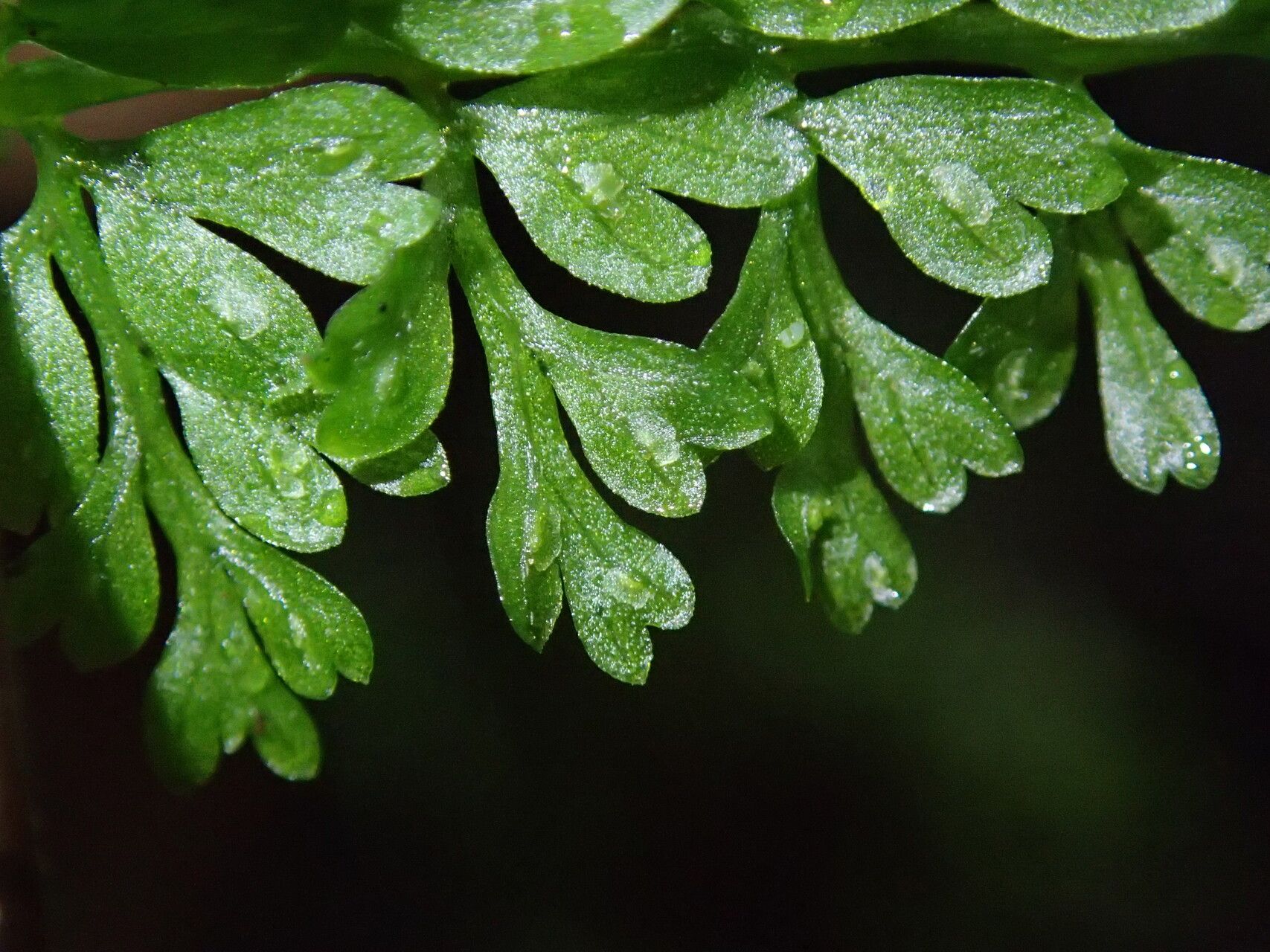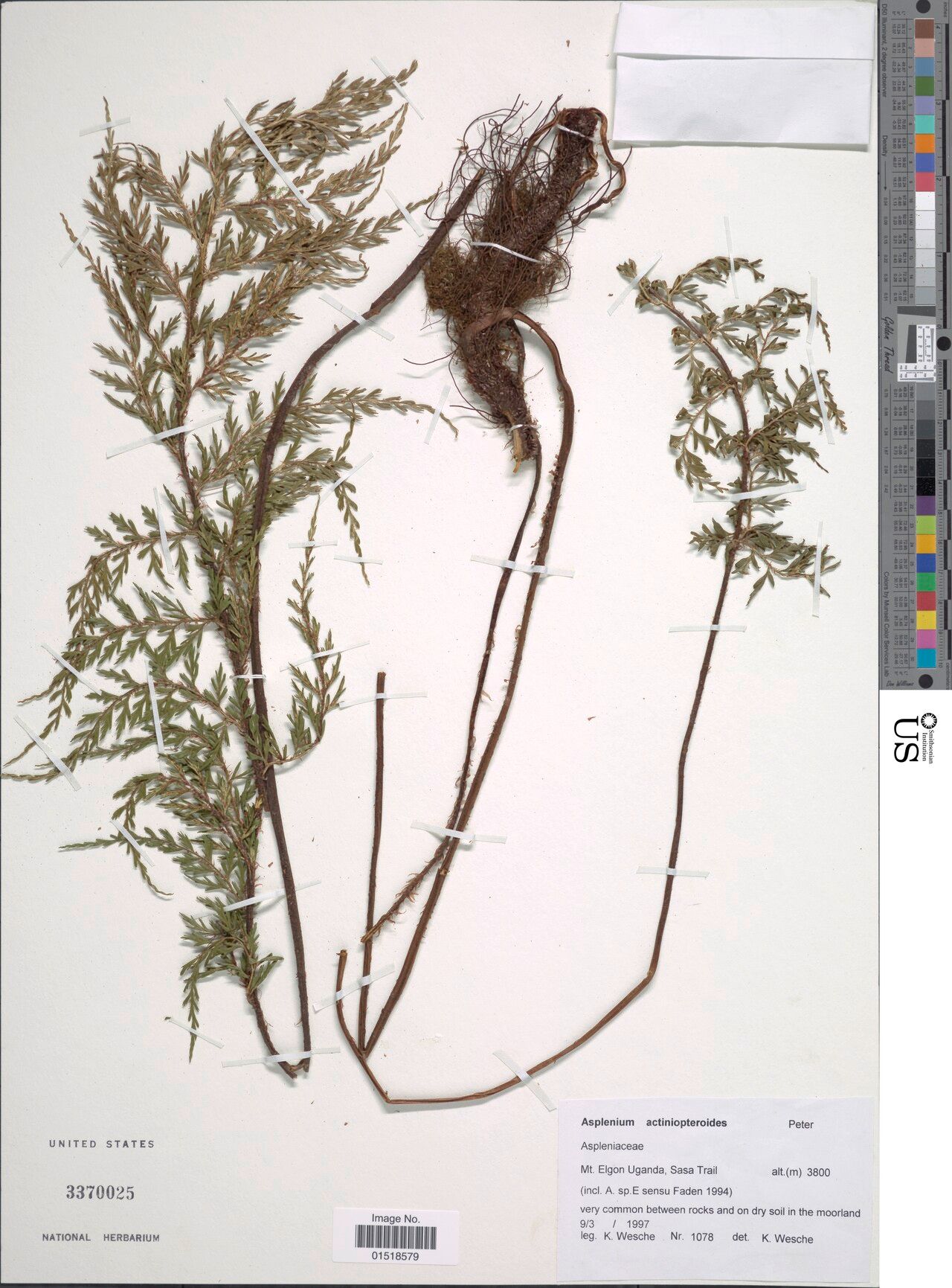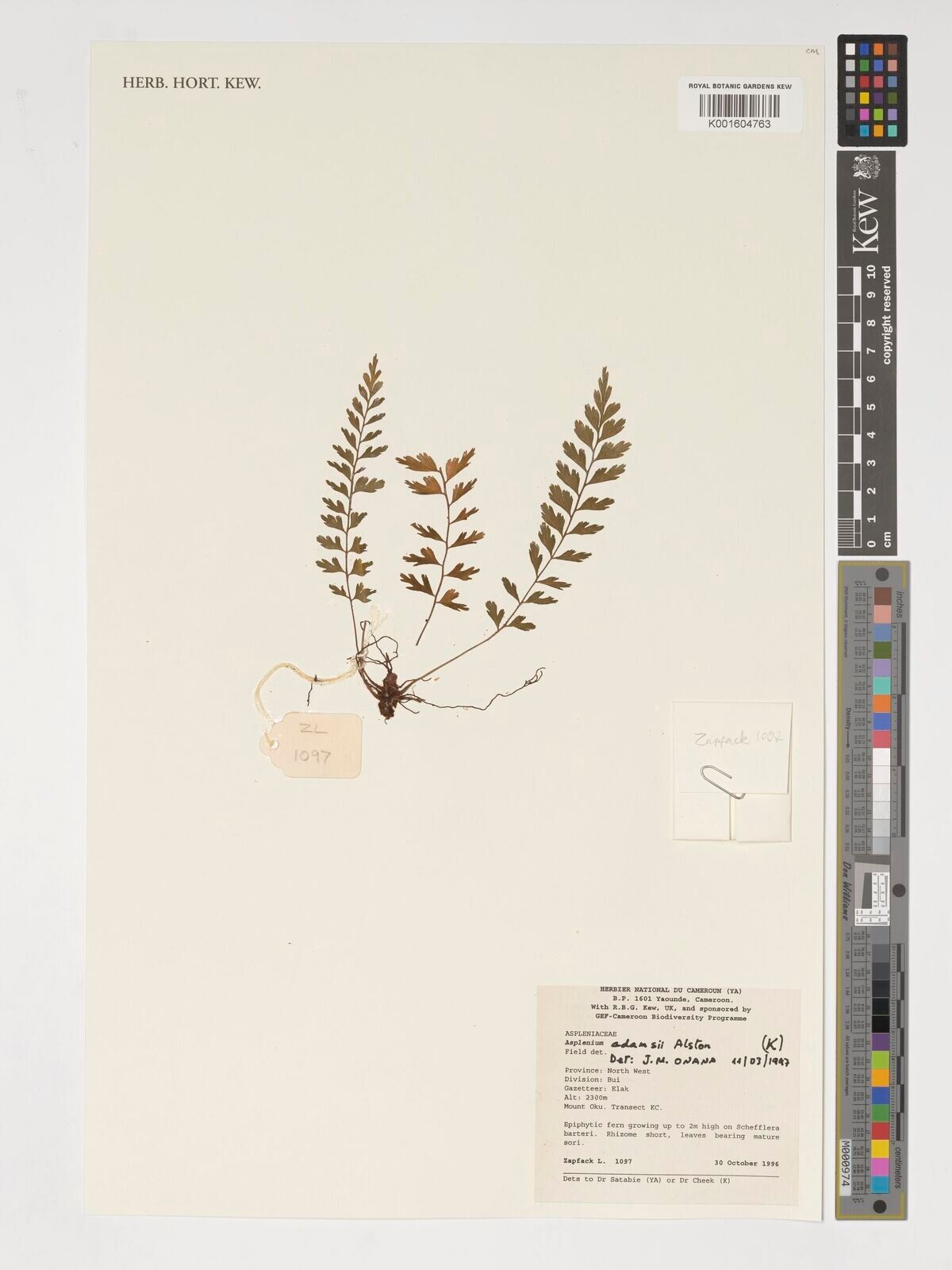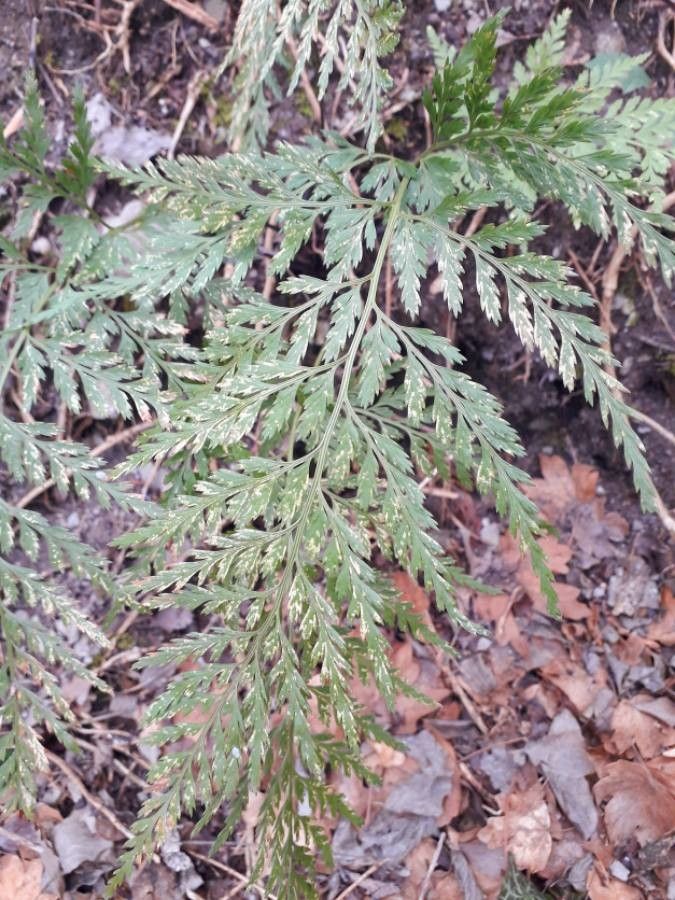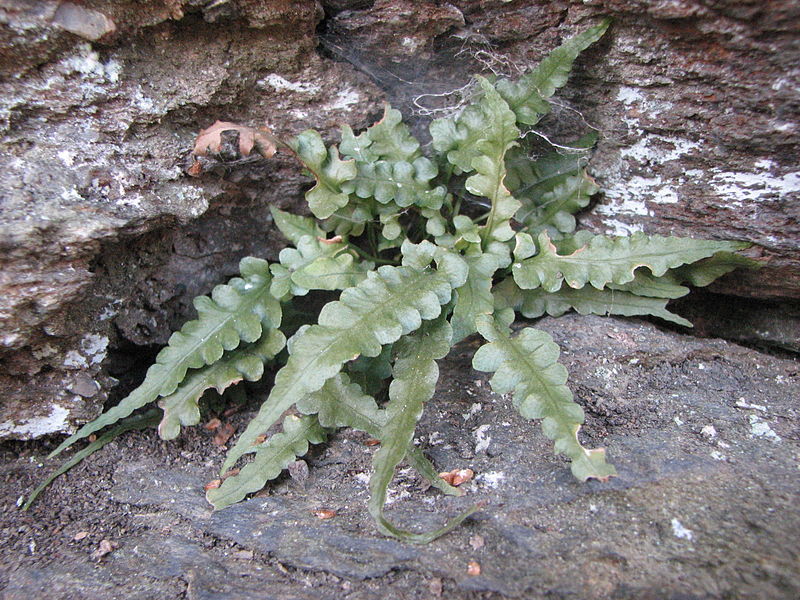
Asplenium pinnatifidum, commonly known as the lobed spleenwort or pinnatifid spleenwort, is a small fern found principally in the Appalachian Mountains and the Shawnee Hills, growing in rock crevices in moderately acid to subacid strata. Originally identified as a variety of walking fern (Asplenium rhizophyllum), it was classified as a separate species by Thomas Nuttall in 1818. It is believed to have originated by chromosome doubling in a hybrid between walking fern and mountain spleenwort (Asplenium montanum), producing a fertile tetraploid, a phenomenon known as alloploidy; however, the hypothesized parental hybrid has never been located. It is intermediate in morphology between the parent species: while its leaf blades are long and tapering like that of walking fern, the influence of mountain spleenwort means that the blades are lobed, rather than whole. A. pinnatifidum can itself form sterile hybrids with several other spleenworts.
Lobed spleenwort is fairly disease-resistant and typically does not suffer from many illnesses. However, it can be vulnerable to pests and pathogens found in its environment. Such infections are generally mild. Regarding care, this plant needs moderate upkeep. Regular pruning is necessary to preserve its appearance and support healthy growth. Applying fertilizer can also encourage flowering. Lobed spleenwort is appropriate for people who have outdoor areas like a garden or patio and does not demand extensive gardening experience. It may need extra attention if kept indoors.
How to keep Asplenium Pinnatifidum.
Light
Lobed spleenwort is native to places like forest understories and rocky areas, where it grows in natural shade. It prefers partial sun but can adjust to full sun or full shade, showing its versatile and hardy nature.
Water
Lobed spleenwort, which originates from rocky woodlands, thrives in environments with consistent moisture and steady humidity. It needs to be watered weekly but is somewhat drought-tolerant. As an epiphyte, it absorbs water from the air around it, making it well-suited for indoor environments where humidity levels can be easily managed.
Fertilizer
One fertilizing in spring is generally enough for Lobed spleenwort, but repeated feedings can maximize its growth. Apply fertilizer about once every month to a month and a half. Fertilization improves the appearance and function of the leaves, encouraging even color and a healthy texture. It also promotes root development and nutrient uptake, supporting the plant’s long-term health.
Pruning
To promote healthy growth, prune lobed spleenwort between early and late spring by removing dead fronds. Maintaining an open structure helps minimize the risk of fungal infections, so be sure to trim any elongated or misshapen fronds for a more compact shape. Always use clean, sharp tools to prevent infection and extend the plant's lifespan.
Botanical profile.
- Plant Type
- Herb
- Life Cycle
- Perennial
- Genus
- Asplenium
- Family
- Aspleniaceae
- Hardiness Zone
- 5-13
- Leaf Type
- Evergreen
Other names.
Reader questions.
What are the sunlight requirements for Lobed Spleenwort?
Lobed Spleenwort thrives in partial sun, requiring about 3-6 hours of sunlight daily. It is a versatile plant native to environments like forest understories or rocky areas, experiencing natural shade. While it prefers partial sun, Lobed Spleenwort can also tolerate full shade. Note the movement of sunlight through your garden to choose locations that offer the right balance of light and shade, ensuring the plant's well-being.
How should artificial lighting be used for Lobed Spleenwort indoors?
When natural sunlight is not sufficient, especially during winter or in less sunny locations, artificial lights are crucial for Lobed Spleenwort's growth. LED lights are recommended because they can be customized to provide specific wavelengths of light needed by the plant. For optimal growth, full sun plants require 30-50W/sq ft, partial sun plants 20-30W/sq ft, and full shade plants 10-20W/sq ft of artificial light. Place the light source 12-36 inches above the plant and ensure it receives 8-12 hours of light per day to mimic natural sunlight.
What are the signs of insufficient light for indoor Lobed Spleenwort?
Indoor Lobed Spleenwort may show several symptoms when not receiving enough light, including smaller new leaves, leggy or sparse growth, faster leaf drop, slower or no new growth, lighter-colored new leaves, chlorosis, sunscald, leaf curling, wilting, and leaf scorching. These symptoms indicate a need to adjust the plant's light exposure.
What solutions can be implemented for Lobed Spleenwort experiencing light deficiency?
To address light deficiency in Lobed Spleenwort, gradually acclimate the plant to more sunlight by placing it in increasingly sunnier spots each week. For indoor plants, if relocating is not an option, using a desk or ceiling lamp for at least 8 hours daily, or investing in professional grow lights can provide the necessary light. Outdoors, moving plants to sunnier locations gradually is key to avoid sunburn. Pruning obstructive trees or transplanting the plant to a sunnier location with good drainage can also help. Note that parts of the plant damaged by insufficient light may not recover, but new growth should be healthy with improved light conditions.