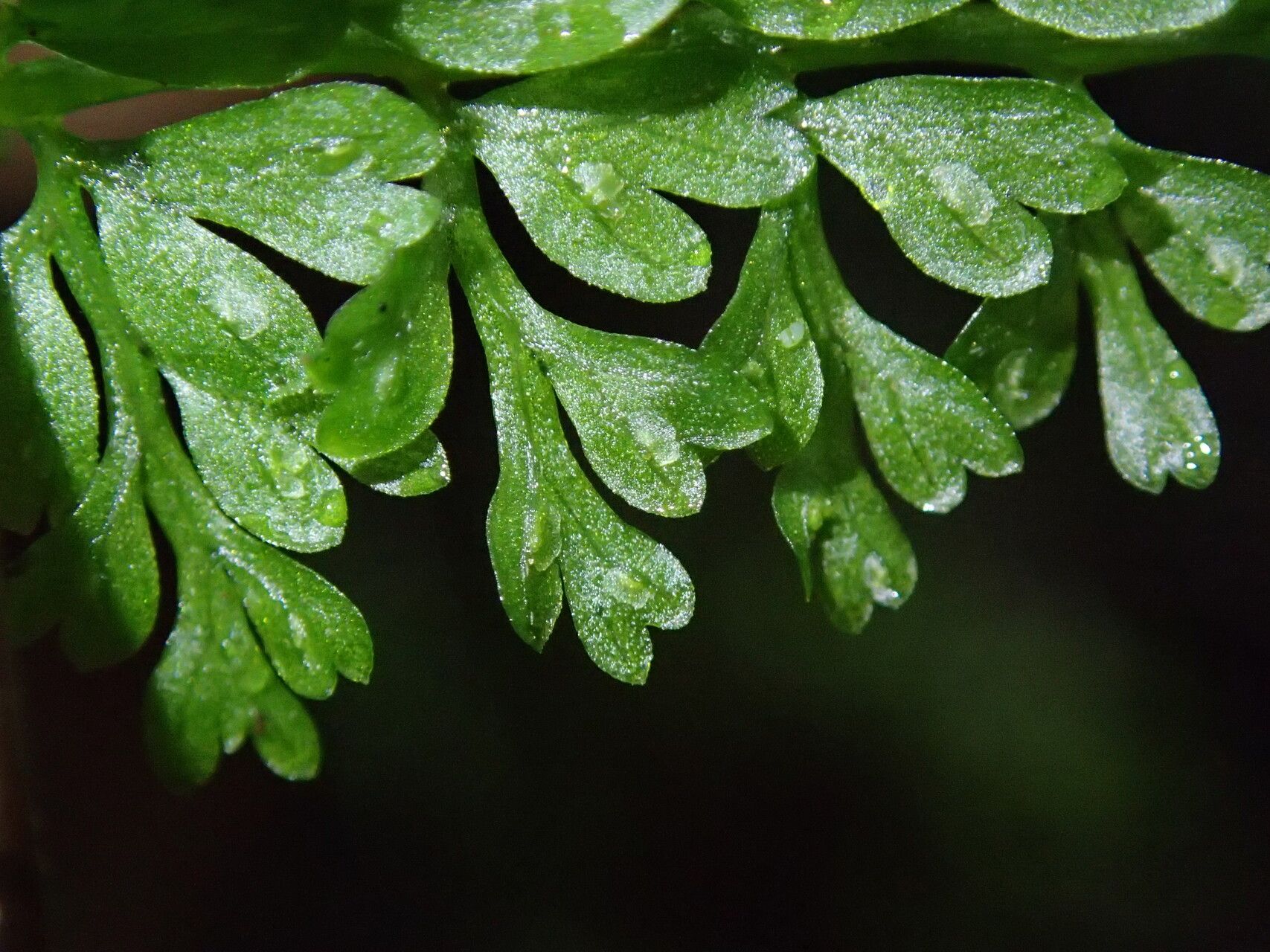
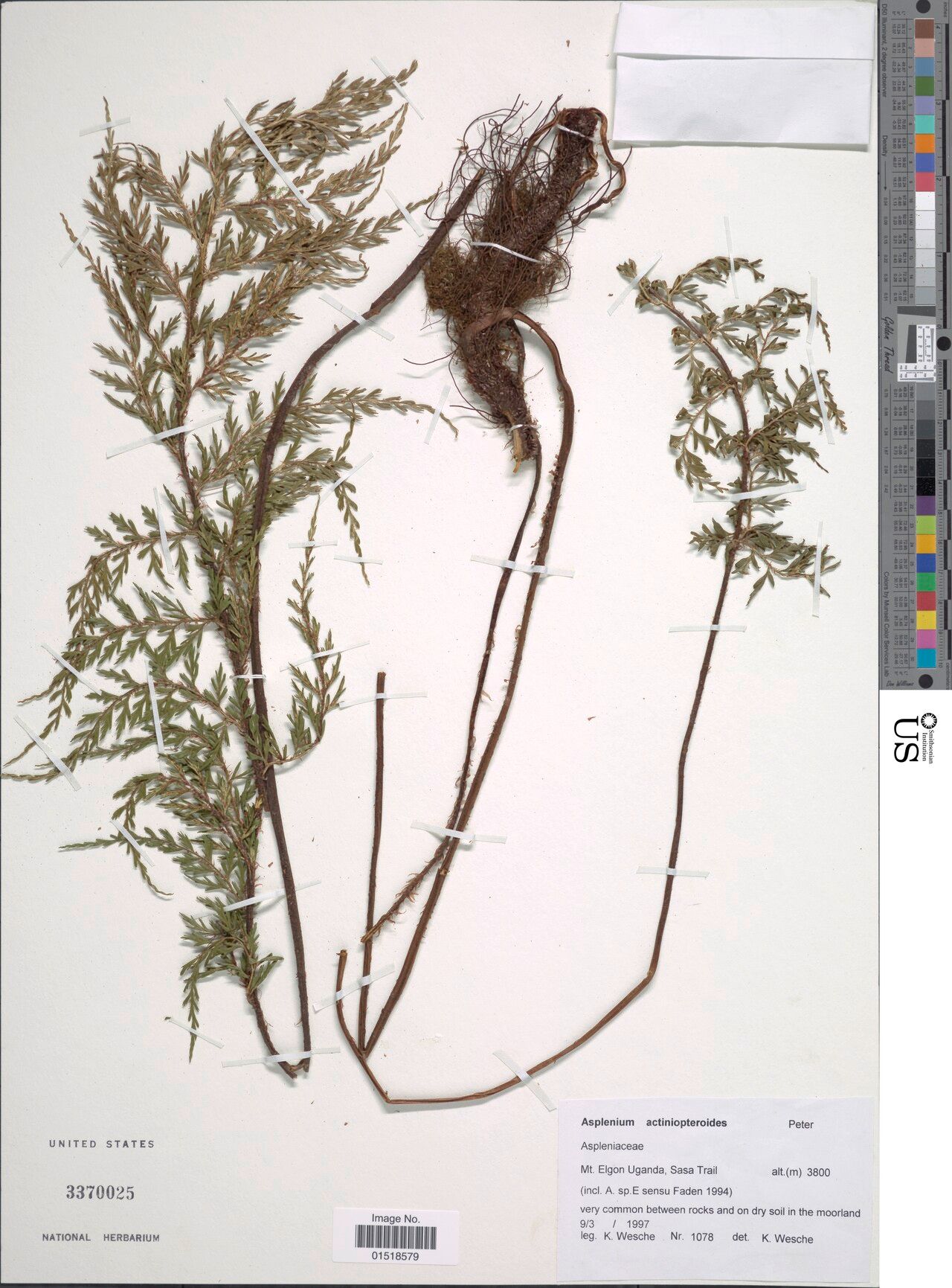
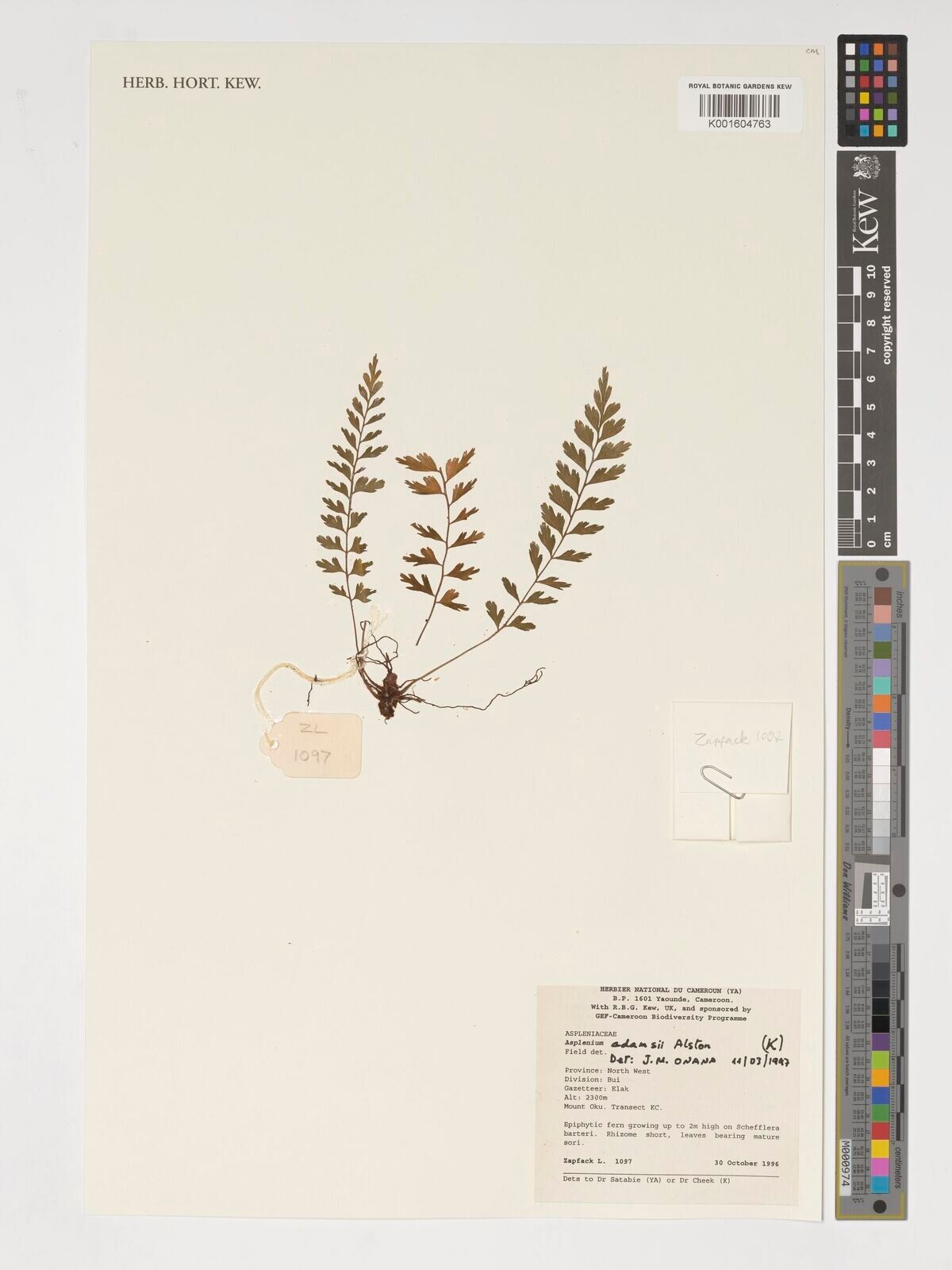
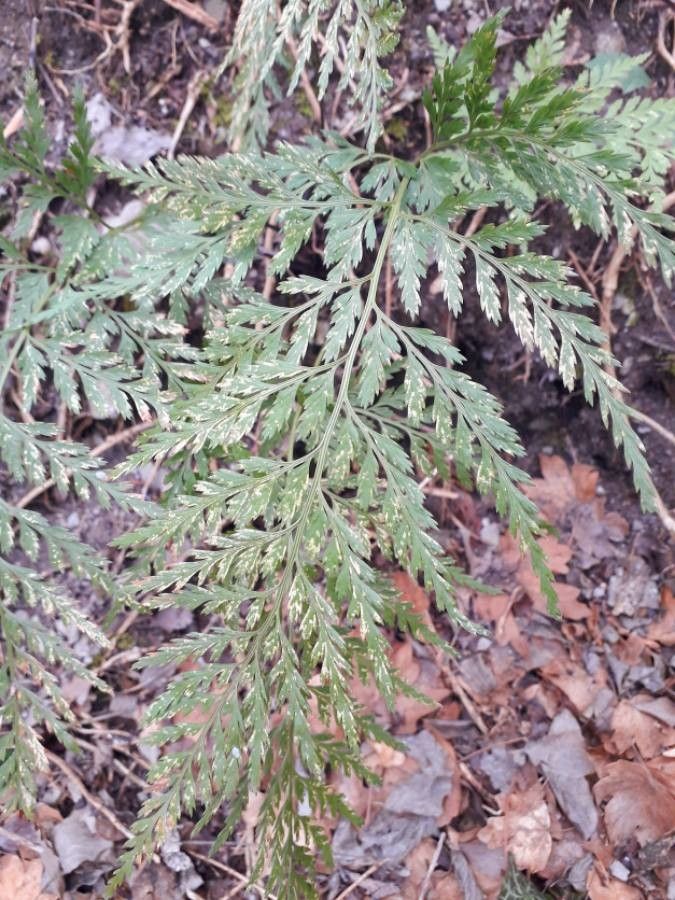
Asplenium montanum, commonly known as the mountain spleenwort, is a small fern endemic to the eastern United States. It is found primarily in the Appalachian Mountains from Vermont to Alabama, with a few isolated populations in the Ozarks and in the Ohio Valley. It grows in small crevices in sandstone cliffs with highly acid soil, where it is usually the only vascular plant occupying that ecological niche. It can be recognized by its tufts of dark blue-green, highly divided leaves. The species was first described in 1810 by the botanist Carl Ludwig Willdenow. No subspecies have been described, although a discolored and highly dissected form was reported from the Shawangunk Mountains in 1974. Asplenium montanum is a diploid member of the "Appalachian Asplenium complex," a group of spleenwort species and hybrids which have formed by reticulate evolution. Members of the complex descended from A. montanum are among the few other vascular plants that can tolerate its typical habitat.
Mountain spleenwort typically has strong disease resistance and relatively few insect pests. Its care is considered difficult because it needs a moist environment and frequent watering. The roots are vulnerable to rot if overwatered or kept in poorly ventilated conditions. It is appropriate for people with some growing experience, as most can keep it alive for a period, but it may still have trouble thriving and its leaves can dry out and become less healthy over time.
How to keep Asplenium Montanum.
Light
Mountain spleenwort is native to habitats like forest understories or rocky sites that provide natural shade. It prefers Full Shade but can tolerate Partial Sun.
Water
The mountain spleenwort is a plant native to rocky, mountainous regions. It thrives in conditions with consistent but moderate moisture and stable humidity. To keep it healthy, it should be watered once a week. As an evergreen plant, the mountain spleenwort retains its foliage throughout the year and adapts well to various seasonal changes. It relies more on steady soil moisture than on rainfall.
Fertilizer
Usually a single fertilizer application in spring is adequate for Mountain spleenwort, though multiple feedings can increase growth. Apply fertilizer about every month to month and a half. Fertilizing improves the leaves' appearance and function, helping maintain even color and a healthy texture. It also encourages root development and nutrient uptake, supporting the plant's long-term health.
Pruning
Mountain spleenwort is a small, evergreen fern with delicate fronds. To promote healthy growth and improve its appearance, prune the plant in early to late spring. Use clean scissors during pruning to enhance air circulation and align with the fern's growth cycle for the best health and aesthetic results.
Botanical profile.
- Plant Type
- Fern, Herb
- Life Cycle
- Perennial
- Genus
- Asplenium
- Family
- Aspleniaceae
- Hardiness Zone
- 4-8
- Mature Height
- 10 cm to 20 cm
- Mature Spread
- 15 cm to 25 cm
- Leaf Color
- Dark Green, Forest Green
- Leaf Type
- Evergreen
- Planting Time
- Spring, Summer
Other names.
Reader questions.
What are the sunlight requirements for Mountain Spleenwort?
Mountain Spleenwort, or Asplenium montanum, thrives in full shade, requiring less than 3 hours of sunlight daily. It's important to observe how sunlight moves through your garden throughout the day to find the ideal spot that provides the perfect balance of light and shade. This observation will ensure the happiness and health of your Mountain Spleenwort plants.
What is Mountain spleenwort?
Mountain spleenwort, scientifically known as Asplenium montanum, is a plant species. Unfortunately, there is no further information provided regarding its essentials or symptoms. Therefore, specific details about its characteristics, uses, or cultivation practices remain unspecified in this context.