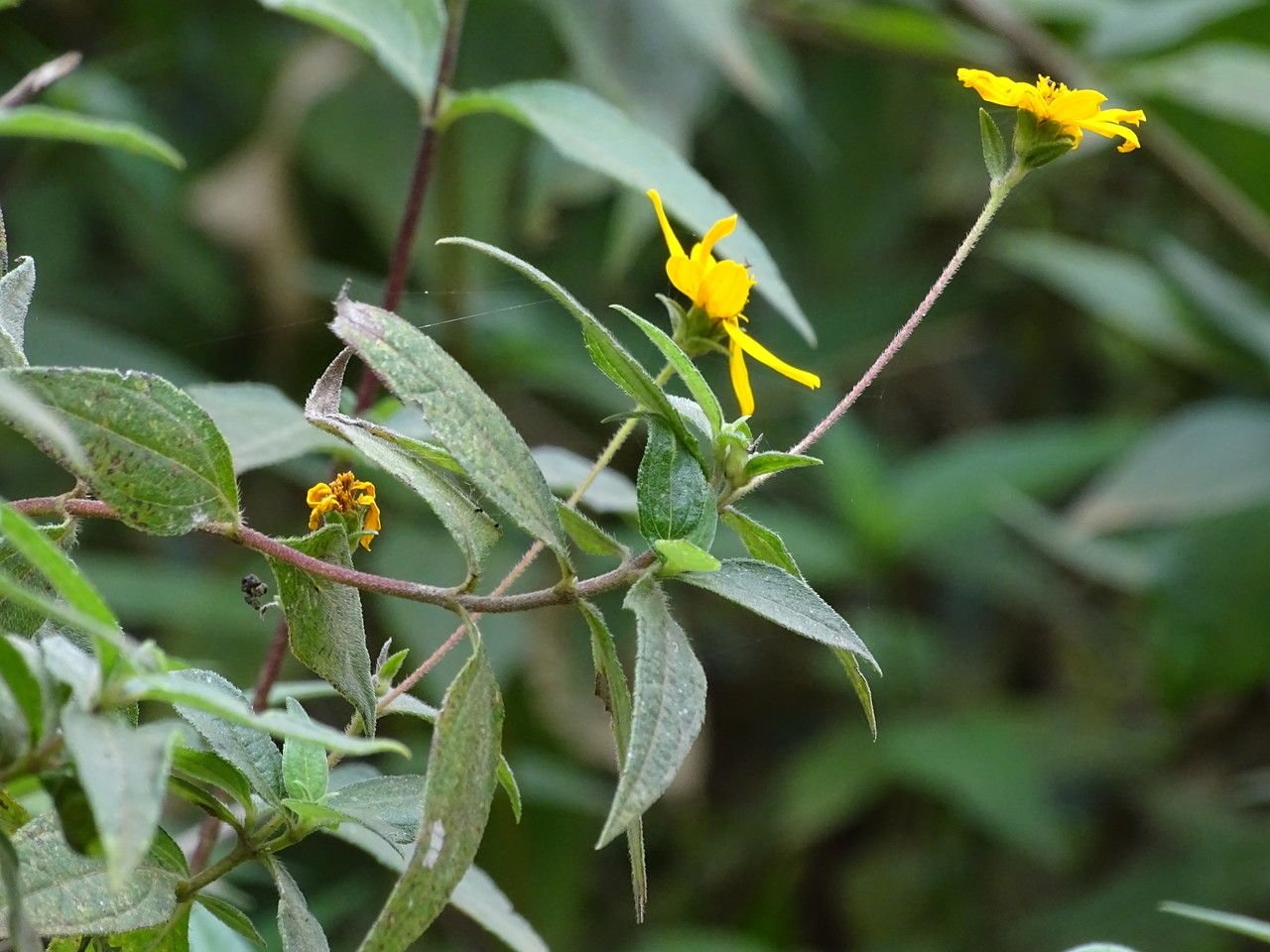
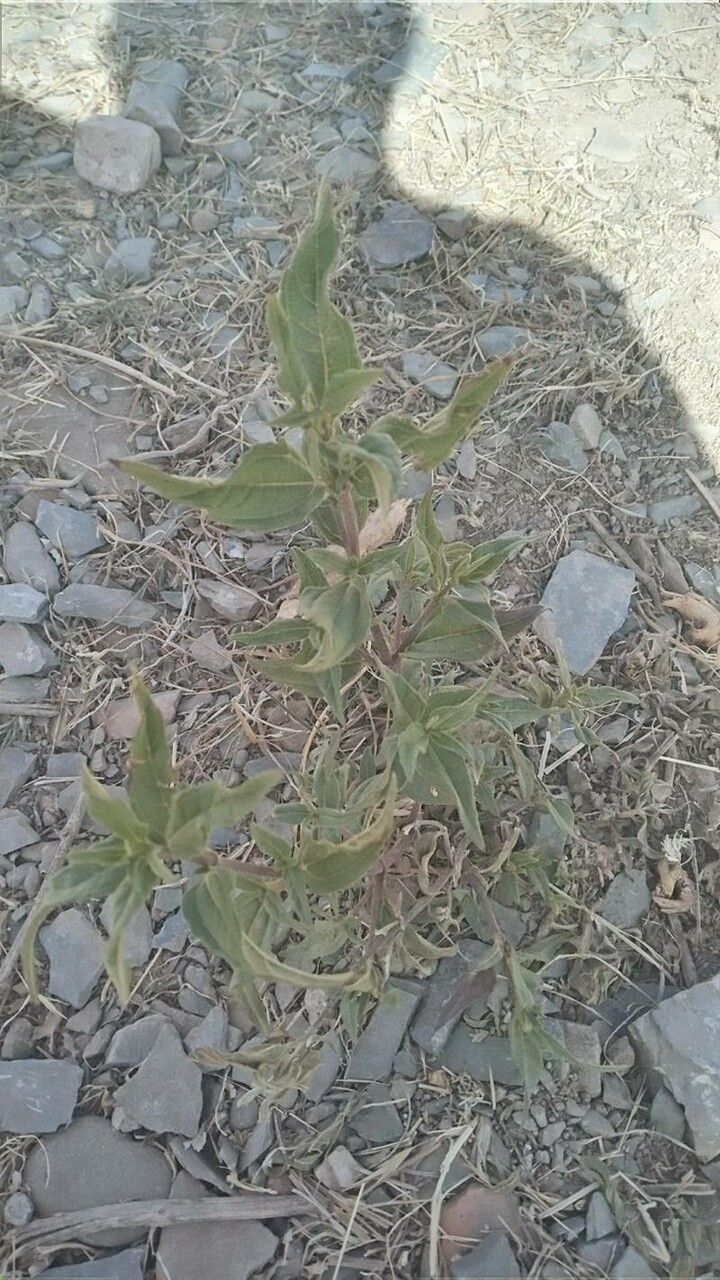
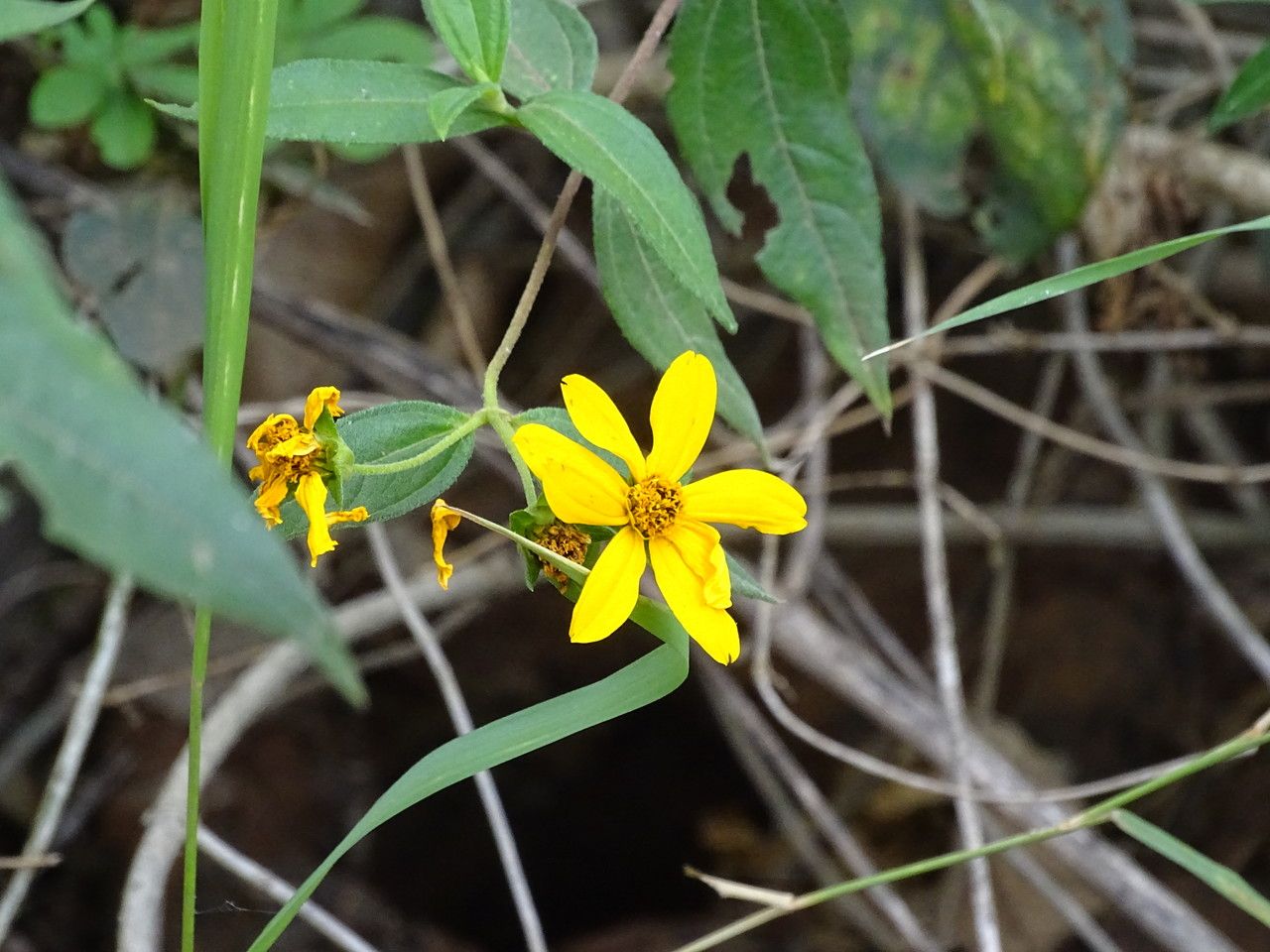
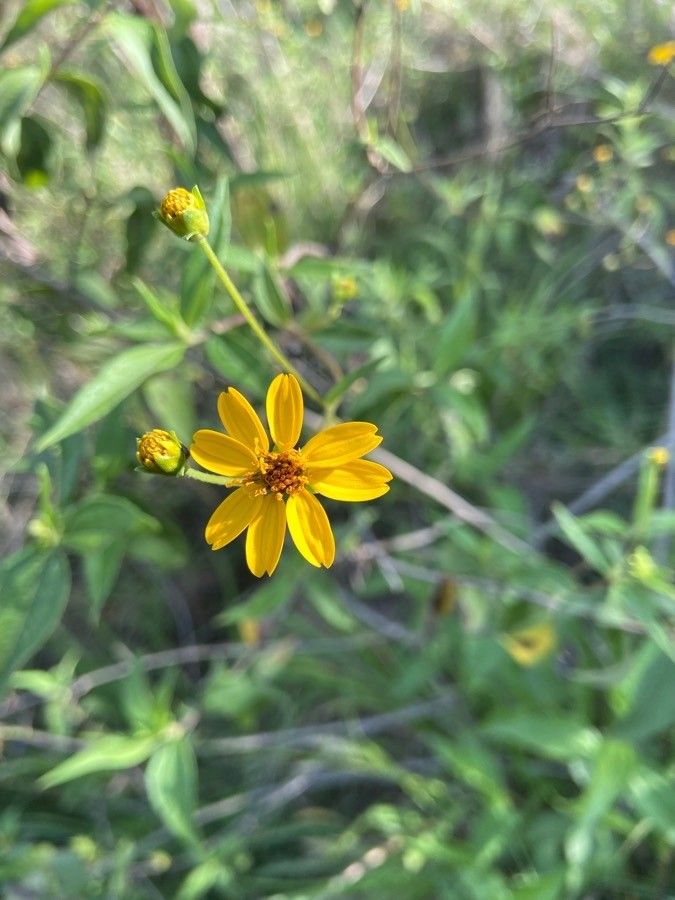
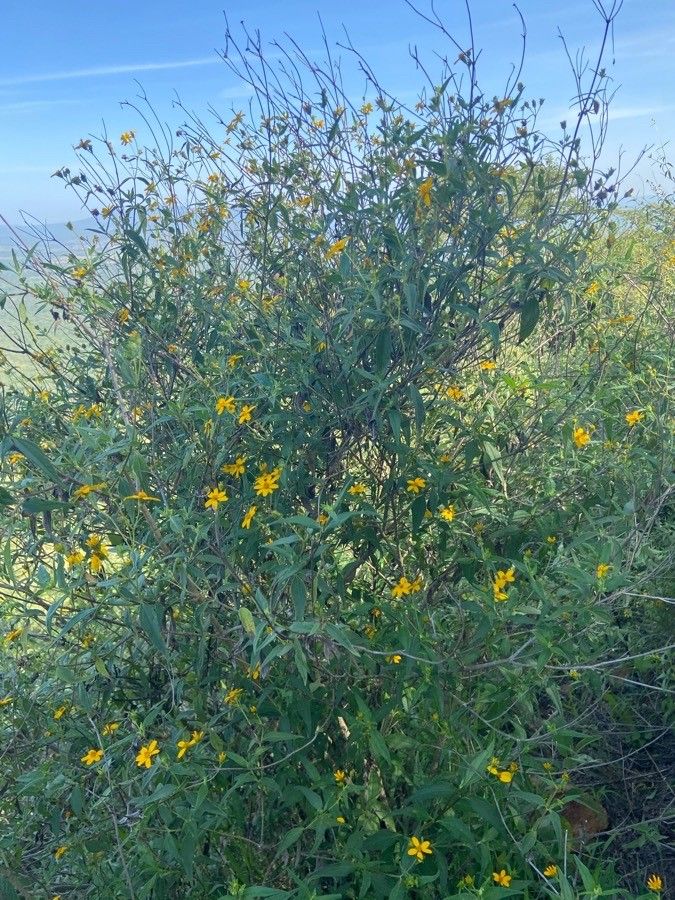
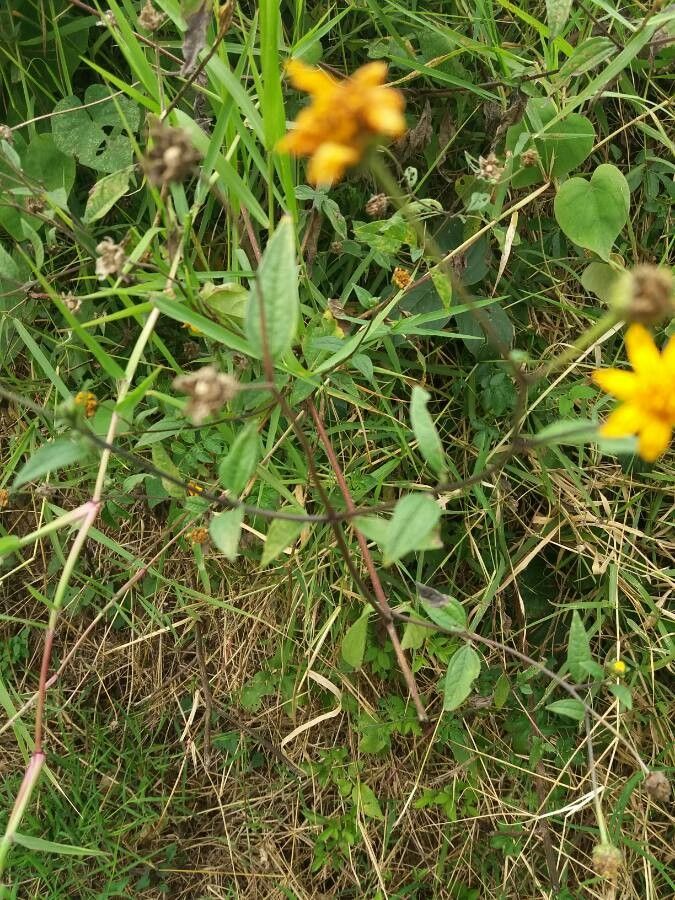
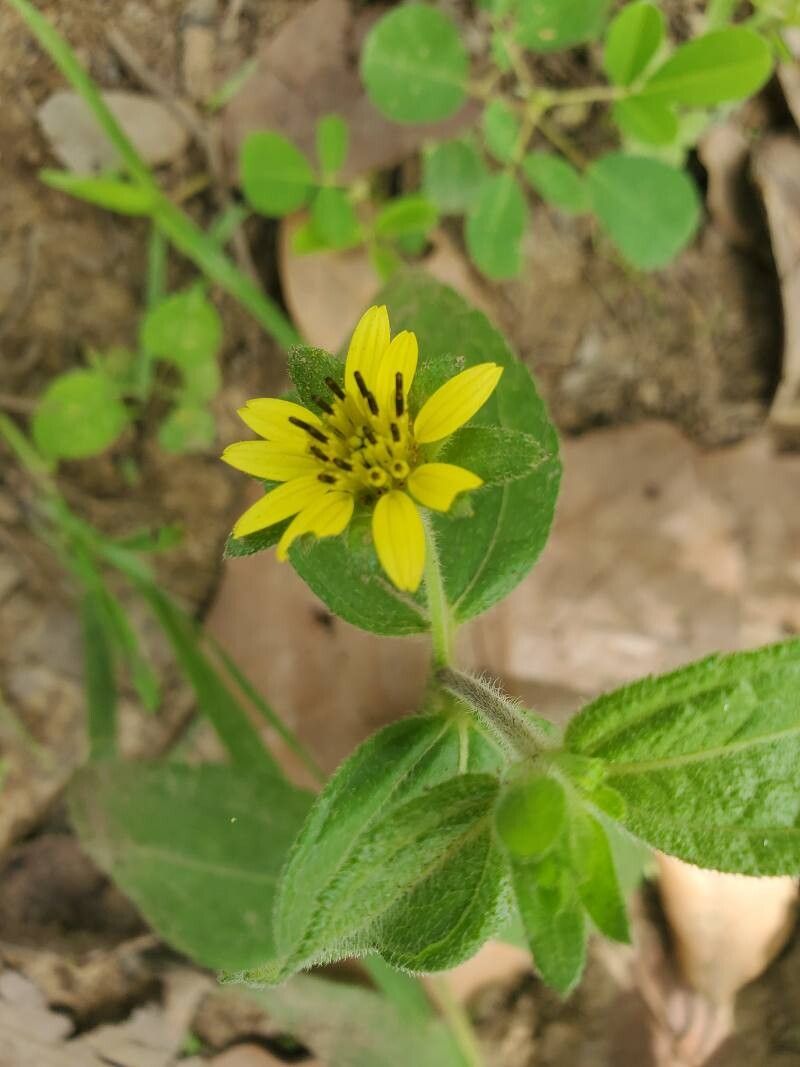
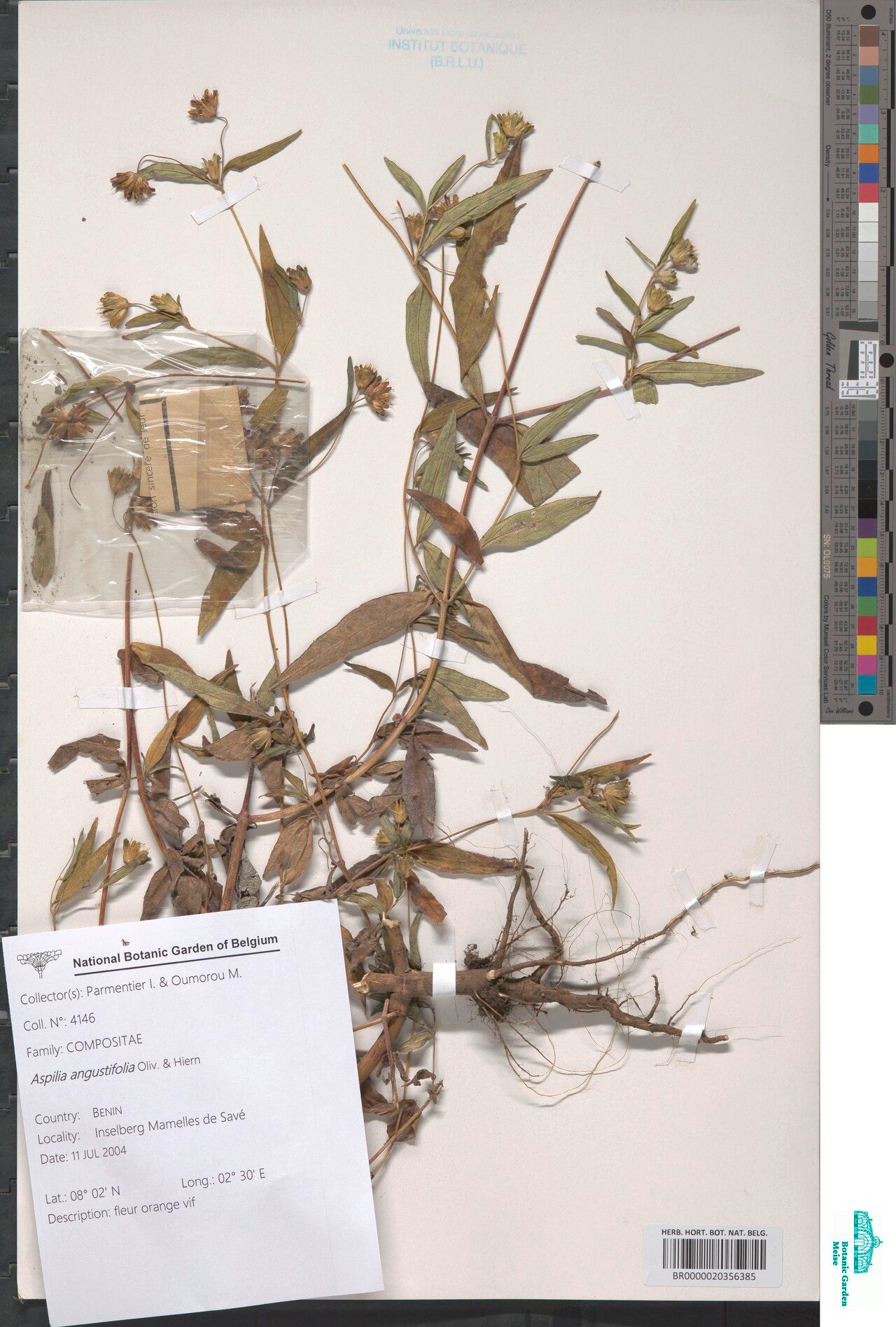
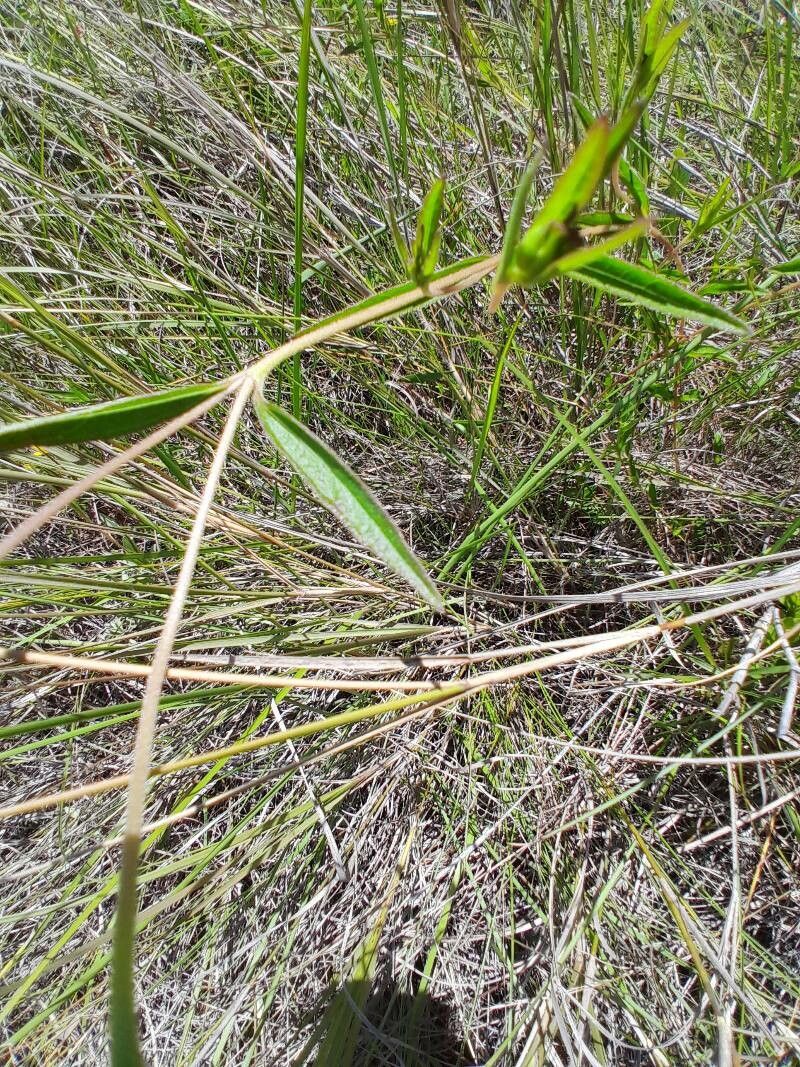
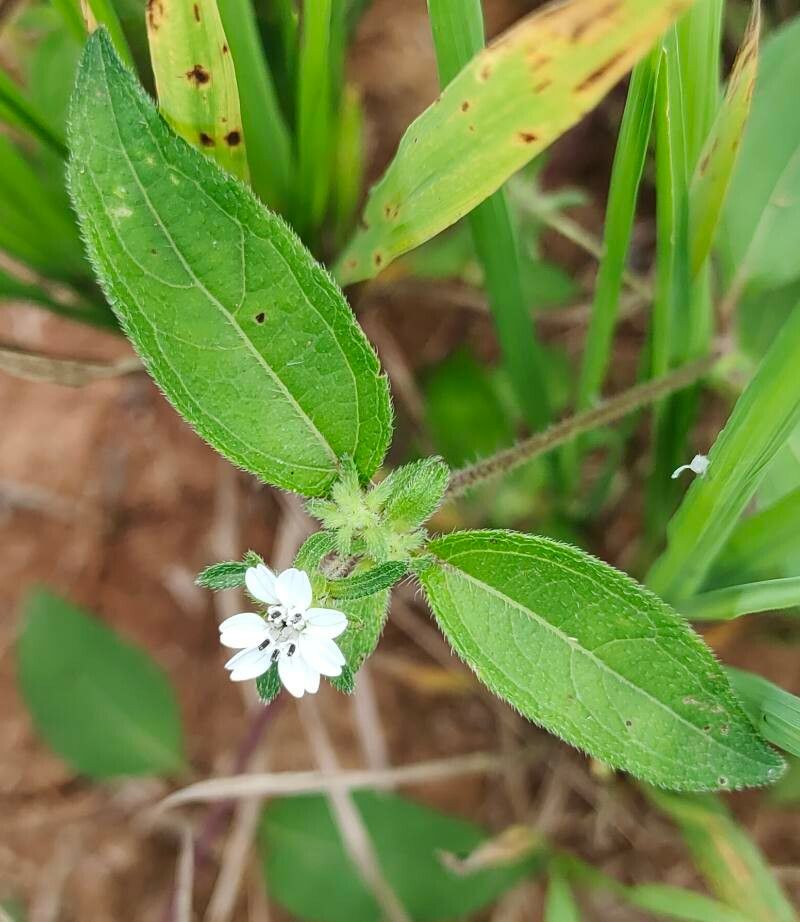
Aspilia mossambicensis, also known as wild sunflower, is a medicinally useful herbaceous plant of the family Compositae (Asteraceae). It is widespread with an anthropogenic distribution in central and Eastern tropical Africa from Ethiopia, through East Africa, the Congo, Zambia, Zimbabwe, Malawi, Mozambique and South Africa.
Herb or shrub 0.5–1 m or straggling bush to 2.5 m high; branches scabrid. Leaves sessile to shortly petiolate, ovate or elliptic, 2–12´1–3 cm, base cuneate, margins entire or serrate, apex acute or attenuate, scabrid on both surfaces, somewhat 3‑nerved from base; petiole up to 1 cm long. Capitula in loose paniculate corymbs, on stalks to 7 cm long; involucre 4–7 mm high; outer phyllaries yellowish near base, green near apex, hispid‑pubescent; paleae 5–7 mm long, keeled with a dark midrib. Ray florets 8–13, bright yellow, rays 6–20 mm long, glabrous or pubescent above; disk florets yellow, 5–6.5 mm long, often with dark stripes along the tube. Achenes brown, obovoid, 4–5 mm long, pilose; pappus of several connate scales to 0.4 mm long and 1–2 barbellate aristae 1–3 mm long.A. mossambicensis is used by herbalists and local people to treat such ailments and conditions as malaria, bacterial infection and human immunodeficiency virus (HIV). It is also used to reduce menstrual cramps as well as a uterotonic able to induce uterine contraction and labour in confinements. This species is used together with the Neem tree to control the breeding cycles of Nile tilapia, Oreochromis niloticus. Drugs extracted from the two species inhibit early maturing and reproduction of the fish, countering problems raised by having populations of diverse ages in commercial breeding ponds.
Aspilia mossambicensis is fairly resistant to disease and typically not prone to illnesses. However, it can be affected by pests and diseases present in its surroundings. These infections are usually mild. In terms of care, this plant needs moderate maintenance. It should be pruned regularly to maintain an attractive appearance and healthy growth. Fertilizing can also help encourage flowering. Aspilia mossambicensis is suitable for anyone with outdoor space, such as a garden or patio, and does not require extensive care experience. It may need more attention when grown indoors.
How to keep Aspilia Mossambicensis.
Light
Aspilia mossambicensis is a sun-loving perennial herbaceous plant native to open habitats, commonly found in meadows and grasslands. It prefers full sun but can also tolerate partial sun.
Temperature
Aspilia mossambicensis comes from tropical areas, where the climate is generally warm and humid. Consequently, it is adapted to high heat and moisture. It does not tolerate sudden temperature shifts and prefers a steady thermal environment, so avoiding indoor temperature fluctuations is important. It typically cannot endure cold conditions and needs higher temperatures to grow. If the ambient temperature falls too low, the plant may stop growing or even die.
Fertilizer
Appropriate fertilization is essential for Aspilia mossambicensis's health and appearance. Fertilize Aspilia mossambicensis in summer, applying it monthly throughout the season. Nutrients power growth and sustain the plant's parts. Fertilization improves Aspilia mossambicensis's flower display, ensuring the best blooms.
Botanical profile.
- Plant Type
- Herb
- Life Cycle
- Perennial
- Genus
- Aspilia
- Family
- Asteraceae
- Hardiness Zone
- 10-11
- Mature Height
- 30 cm to 61 cm
- Mature Spread
- 30 cm to 49 cm
- Leaf Color
- Green, Dark Green
- Leaf Type
- Evergreen
- Flower Color
- Yellow
- Flower Size
- 3.05 cm to 5.08 cm
- Bloom Time
- All year round
- Planting Time
- Spring, Summer, Autumn
- Harvest Time
- All year round
- Native Area
- Malawi, Somalia, South Africa, Zambia, Sudan, Namibia, Eritrea, Yemen, Kenya, Uganda, Tanzania, Zimbabwe, Burundi, Mozambique, Ethiopia, Congo (DRC), Botswana
Other names.