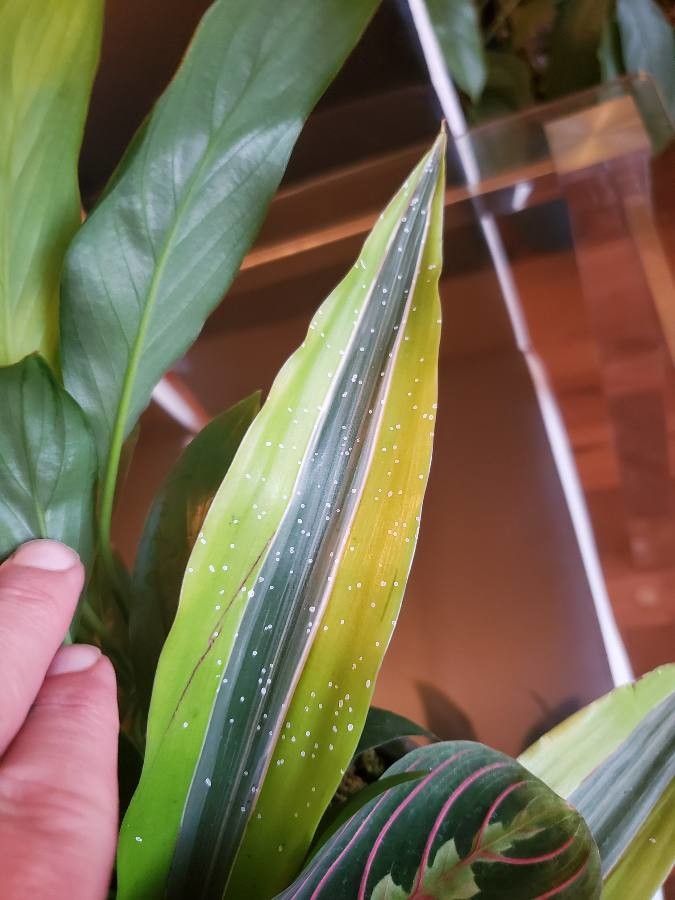
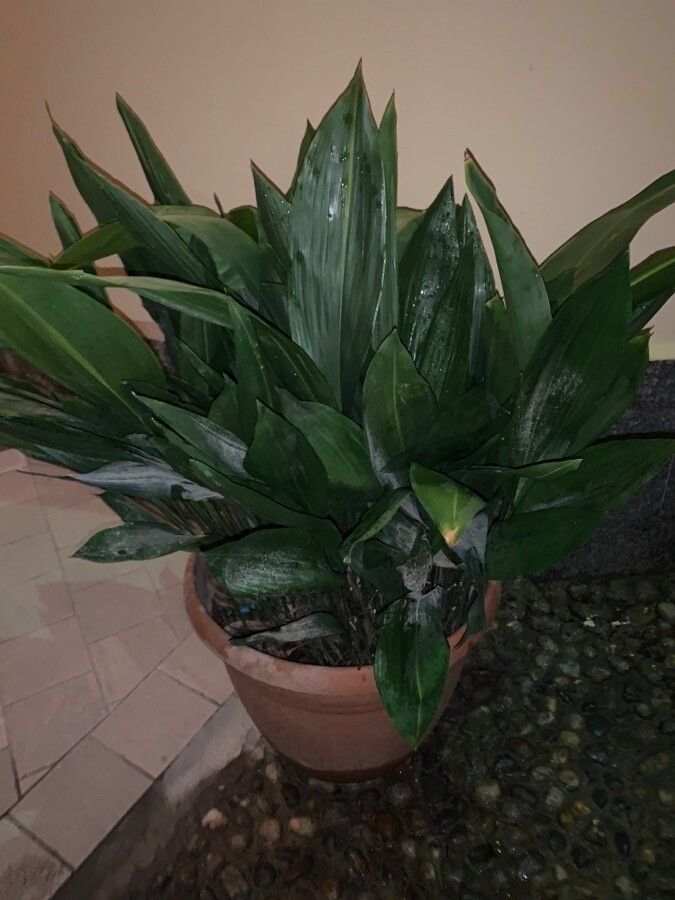
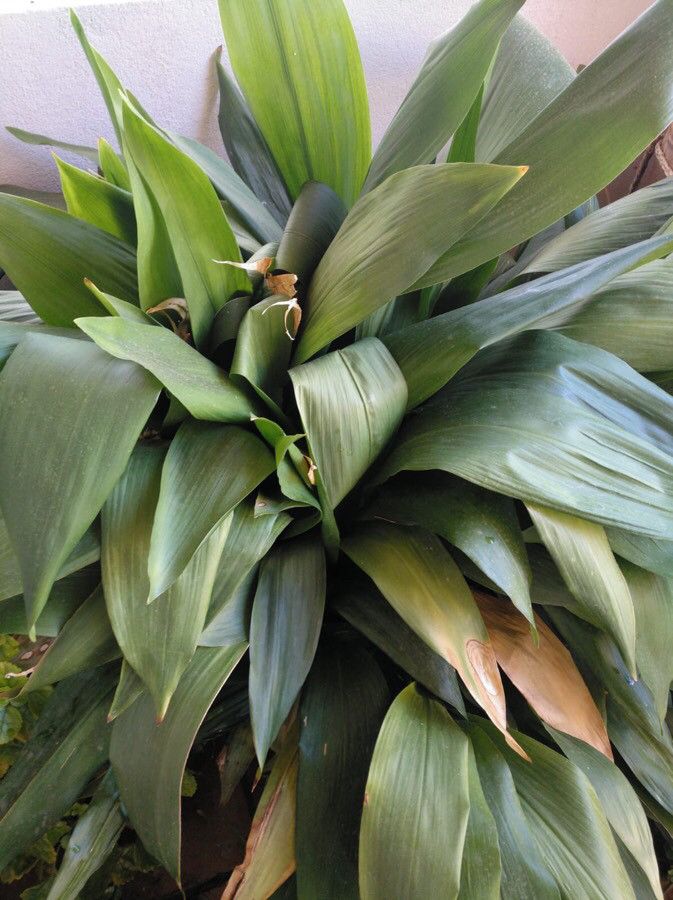
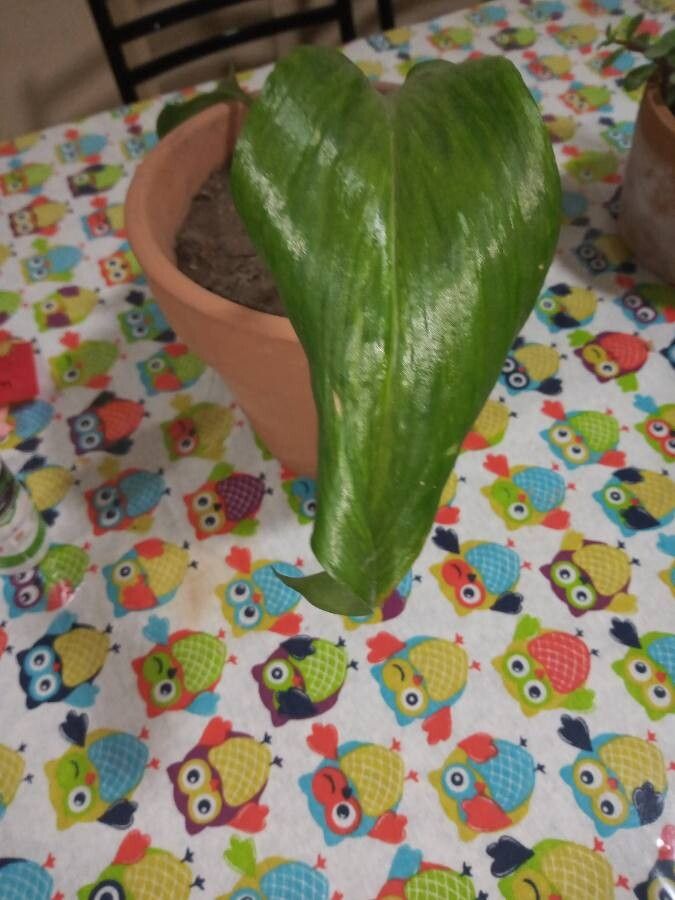
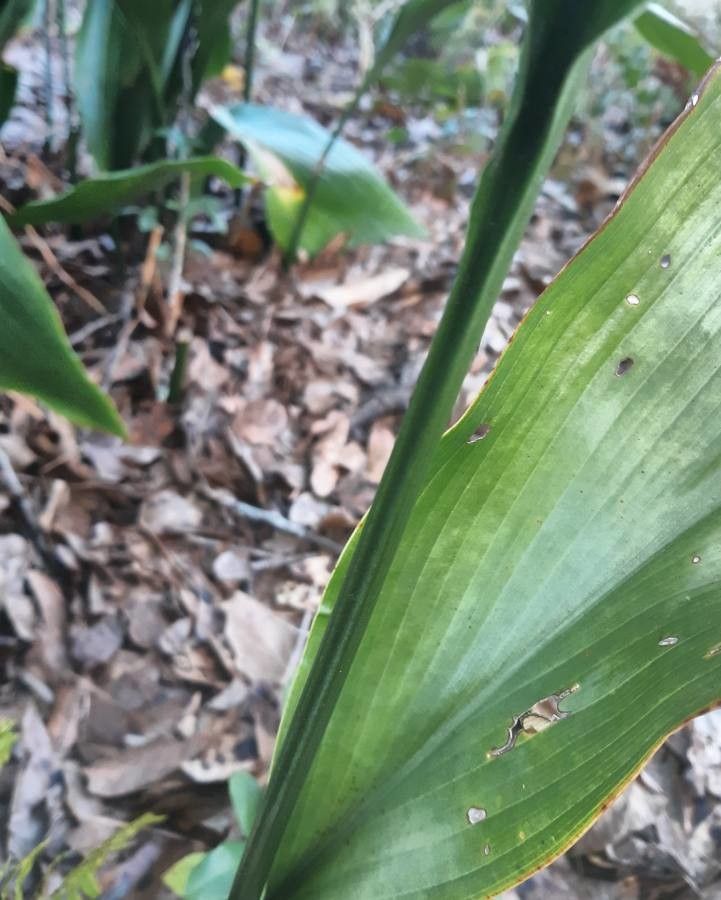
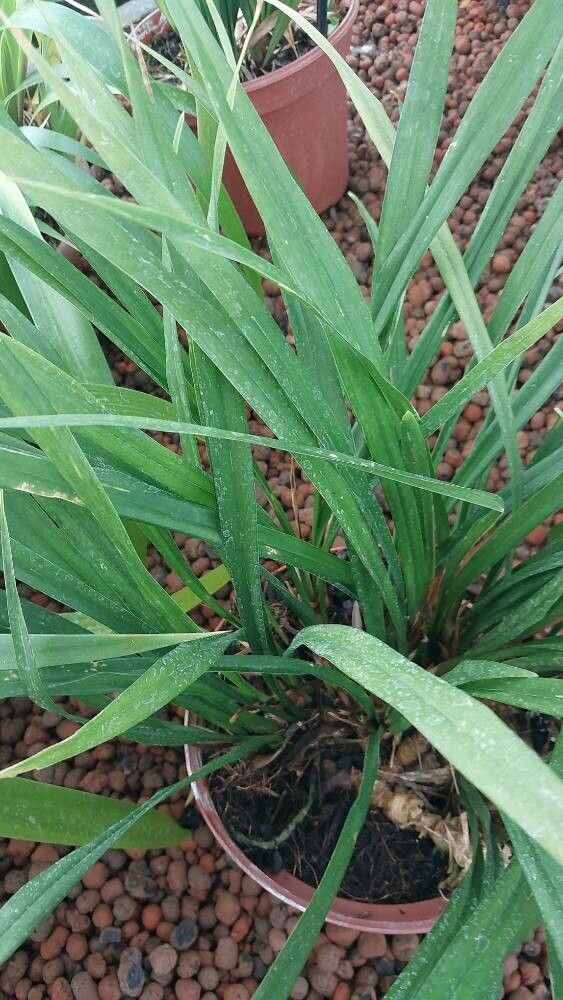
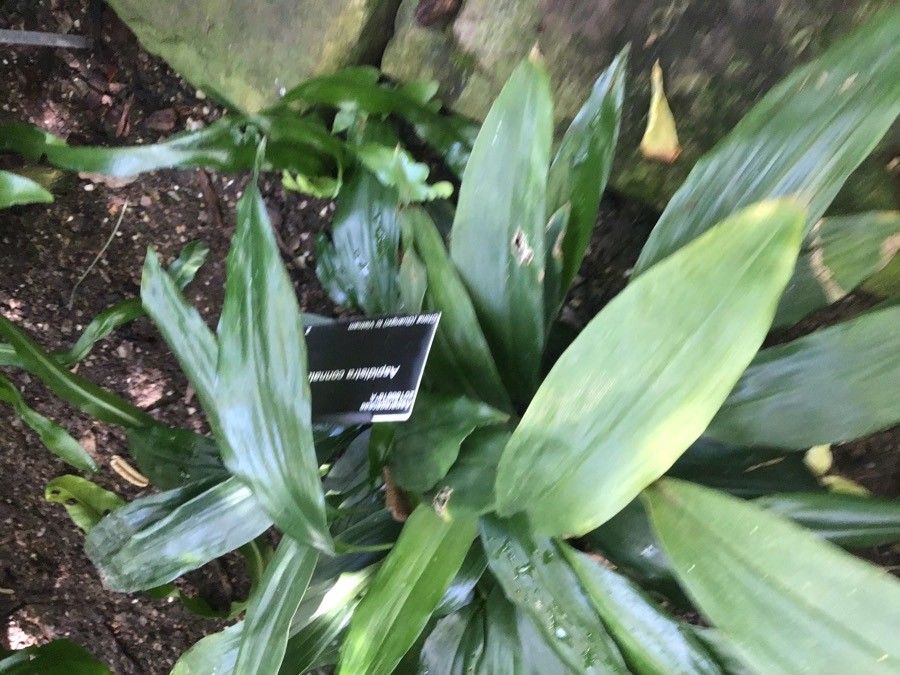
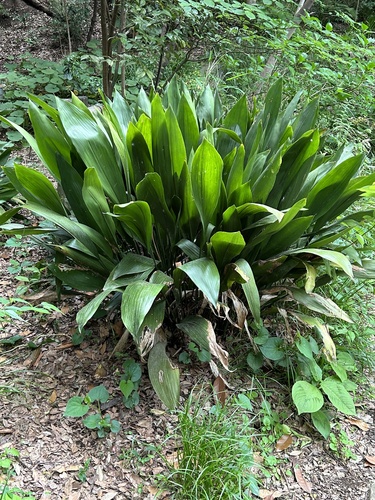
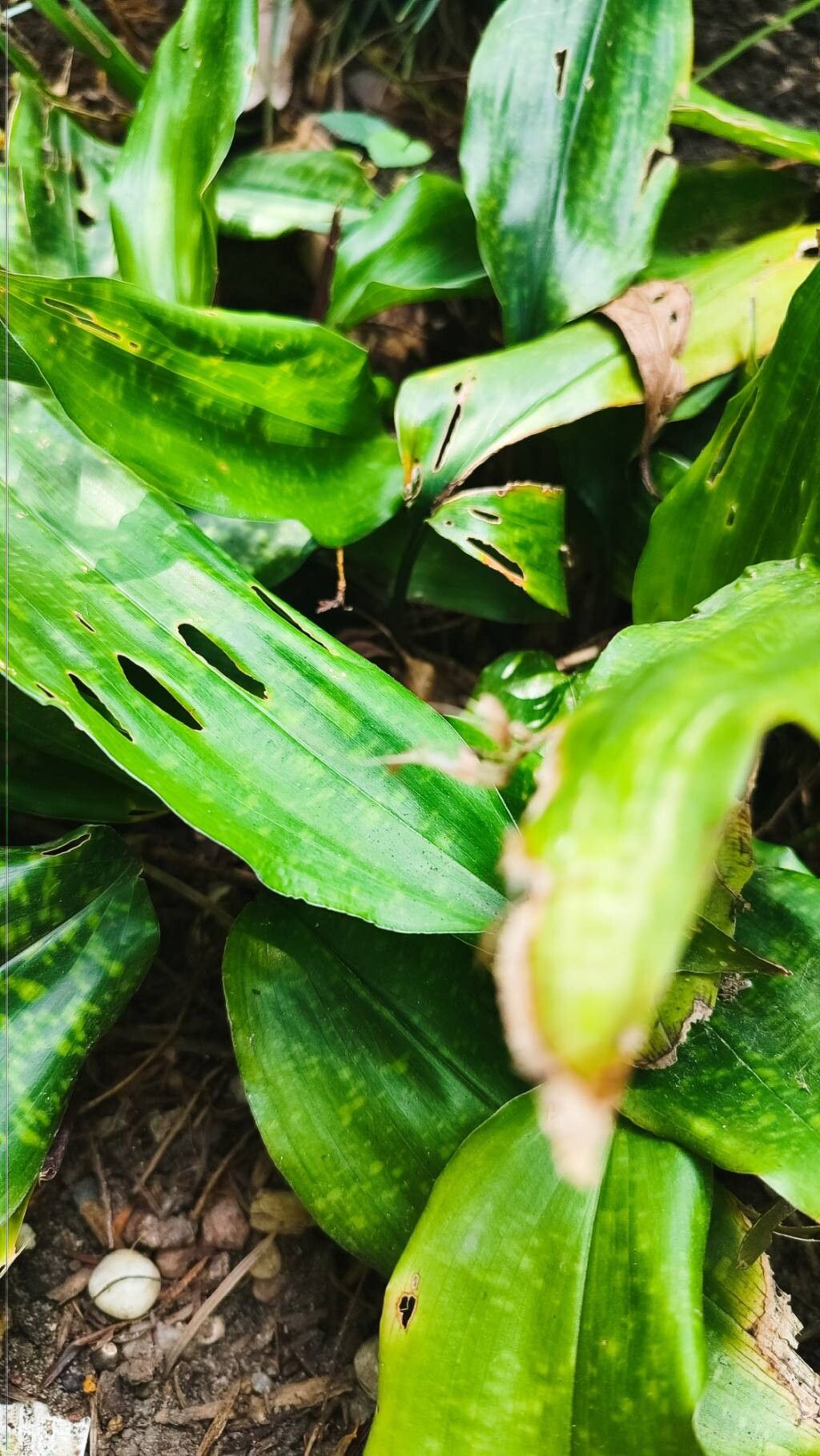
Aspidistra lurida, commonly known as the Cast Iron Plant, is a robust and low-maintenance evergreen native to China and Japan. Belonging to the family Asparagaceae, it is a popular choice for indoor decoration due to its ability to thrive in low-light conditions. This plant features long, glossy green leaves that can reach up to 60 cm in length and 10 cm in width. The leaves are leathery and tough, making them resistant to neglectful care conditions such as low humidity and infrequent watering.
The Cast Iron Plant can grow to a height of 60-90 cm with a spread of about 30-45 cm. It prefers well-draining soil with moderate moisture levels but can tolerate dry soil for extended periods without adverse effects on its growth.
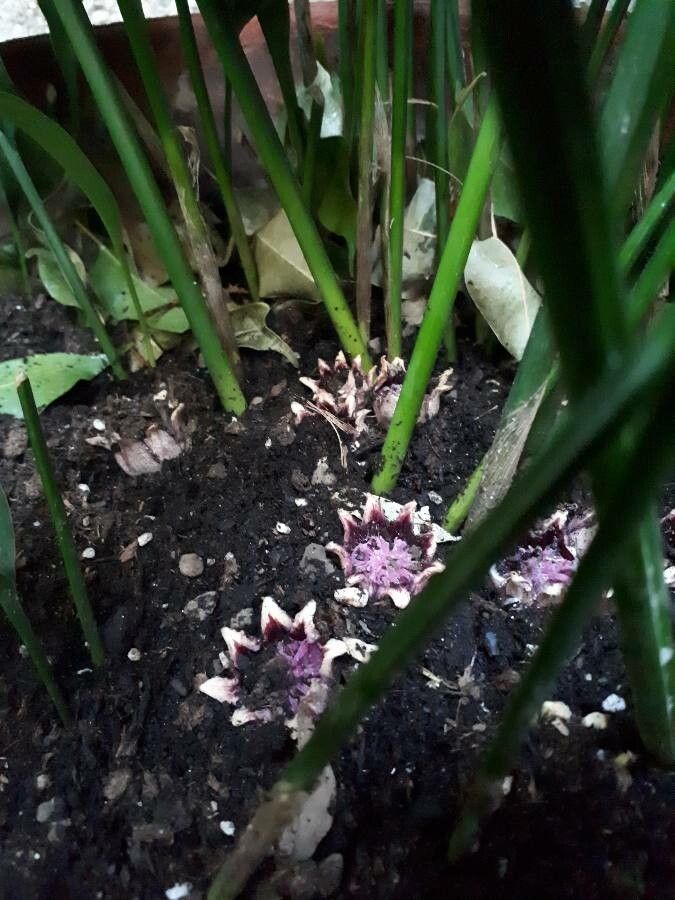
Aspidistra lurida produces small purple-brown flowers close to the ground, which are not very noticeable due to their size but do produce red berries that add an interesting touch of color.
Overall, Aspidistra lurida is an excellent choice for those seeking an easy-to-care-for indoor plant that requires minimal attention while still providing aesthetic appeal with its lush green foliage.
Spider-flower has strong disease resistance and is generally unlikely to suffer from illnesses. However, it can be vulnerable to pests and diseases present in its environment. Such infections are generally mild. Regarding care, this plant requires moderate upkeep. It needs regular pruning to preserve a good appearance and healthy growth. Fertilizing can also encourage flowering. Spider-flower is appropriate for anyone with outdoor space, such as a garden or patio, and does not demand extensive care experience. It may need more attention when grown indoors.
How to keep Aspidistra Lurida.
Light
Spider-flower is a sun-loving, perennial herbaceous plant native to open habitats and commonly thriving in meadows and grasslands. It prefers full sun but can also tolerate partial sun.
Temperature
Spider-flower is fairly adaptable to temperature, able to endure higher heat and wider temperature swings. In hot weather, care should be taken with watering and providing adequate shade to avoid sunburn. However, Spider-flower is relatively sensitive to low temperatures; while it can tolerate some cold, very low temperatures can cause frost damage.
Fertilizer
For Spider-flower, the primary time to apply fertilizer is early spring when the flowers are forming. Using the appropriate fertilizer promotes improved blooms and helps Spider-flower develop attractive flowers. Fertilizing in early spring guarantees strong flowering during the season and supplies energy for dormant growth phases.
Botanical profile.
- Plant Type
- Herb
- Life Cycle
- Perennial
- Genus
- Aspidistra
- Family
- Asparagaceae
- Hardiness Zone
- 9-11
- Mature Height
- 20 cm to 61 cm
- Mature Spread
- 30 cm to 61 cm
- Leaf Color
- Green
- Leaf Type
- Semi-evergreen
- Flower Color
- Yellow, Gold
- Flower Size
- 2.03 cm to 3.05 cm
- Bloom Time
- Mid spring, Late spring
- Planting Time
- Spring, Summer
- Harvest Time
- Early summer, Mid summer
- Native Area
- South Africa
Other names.