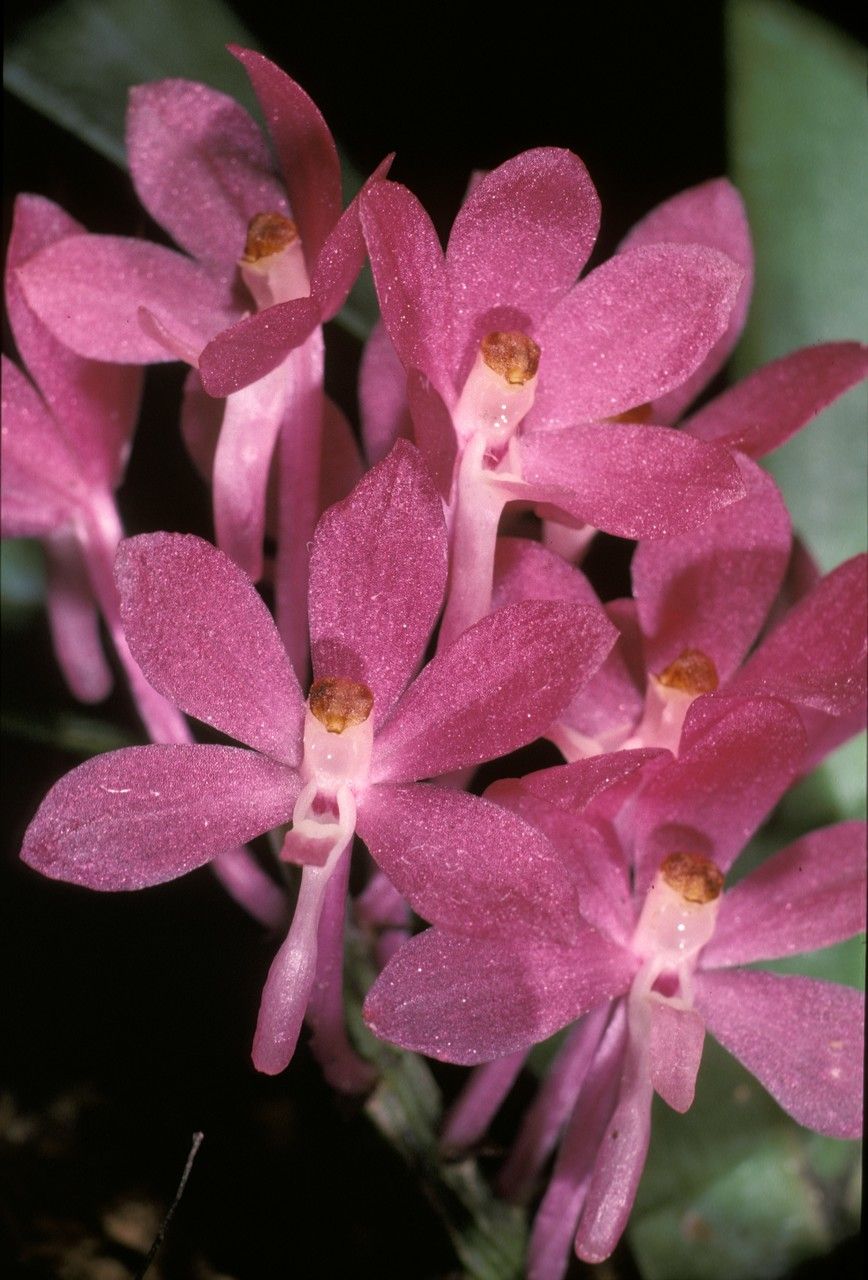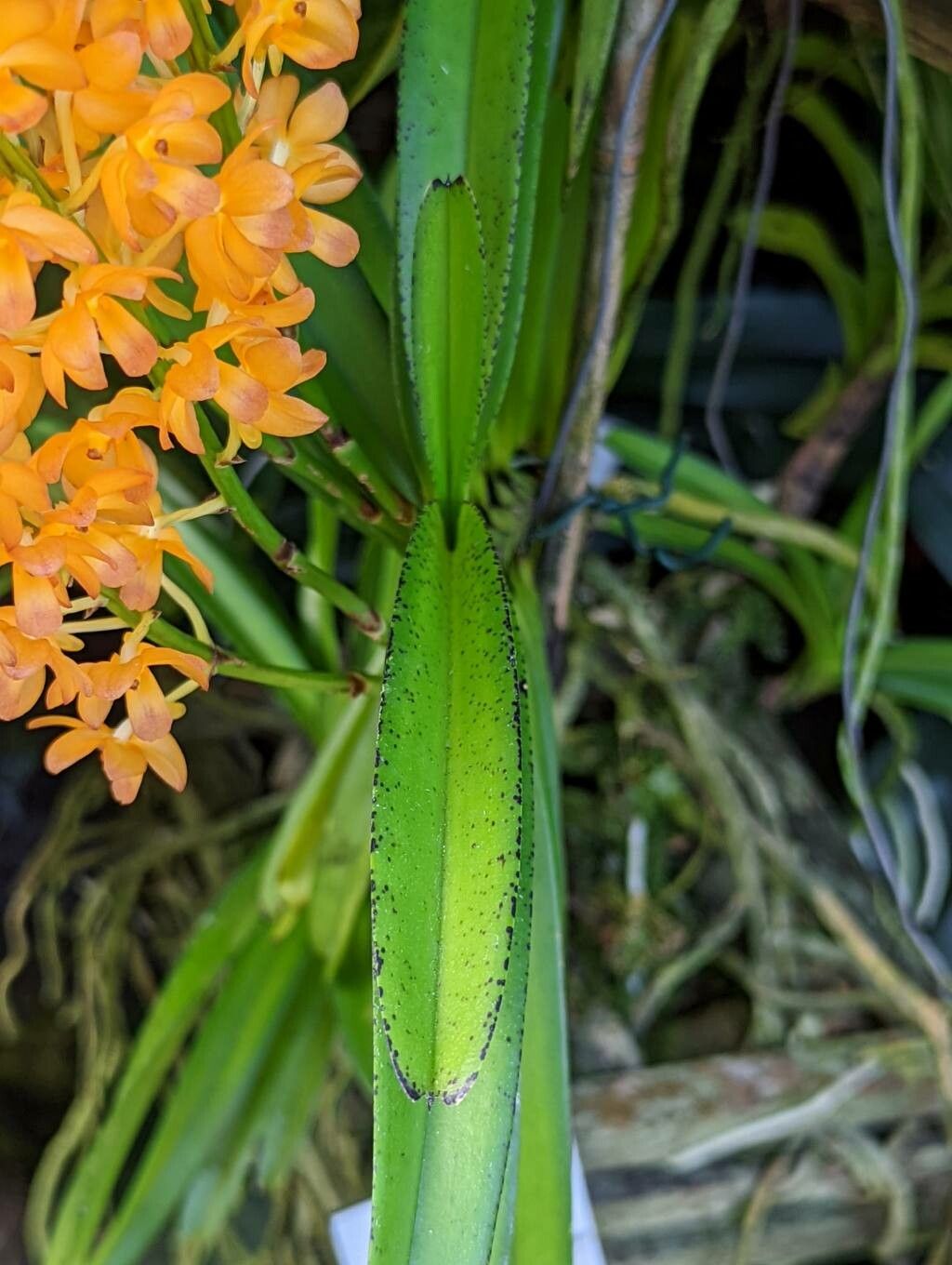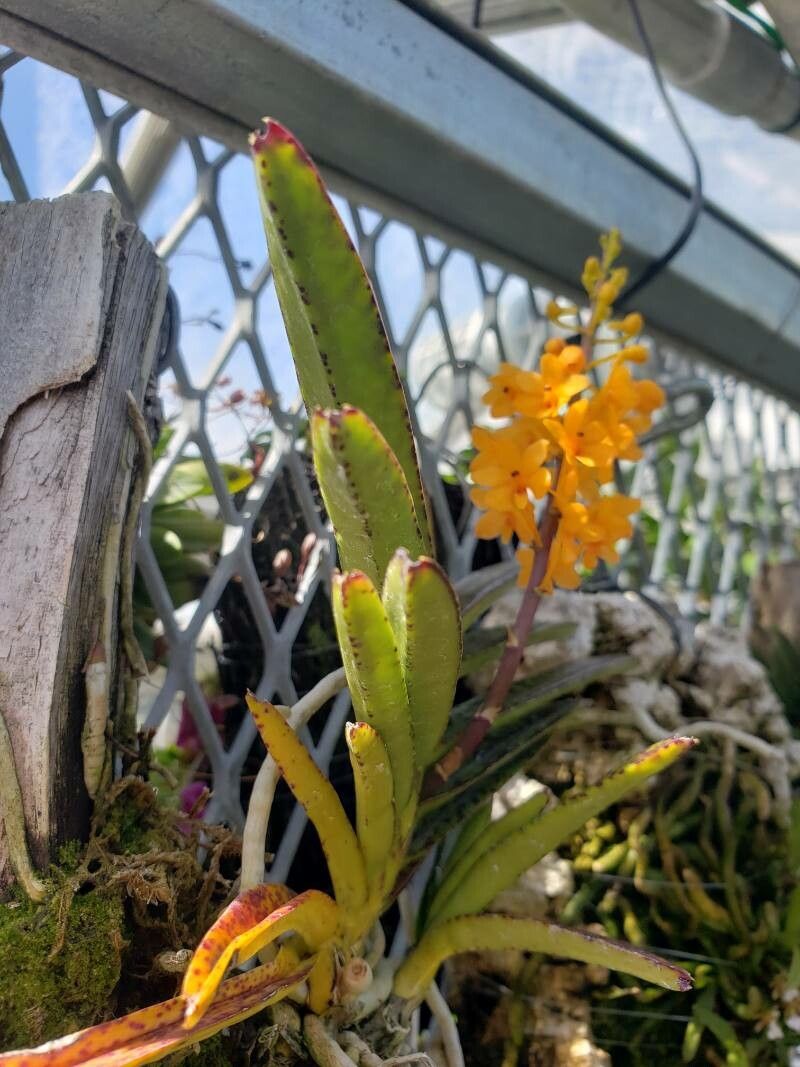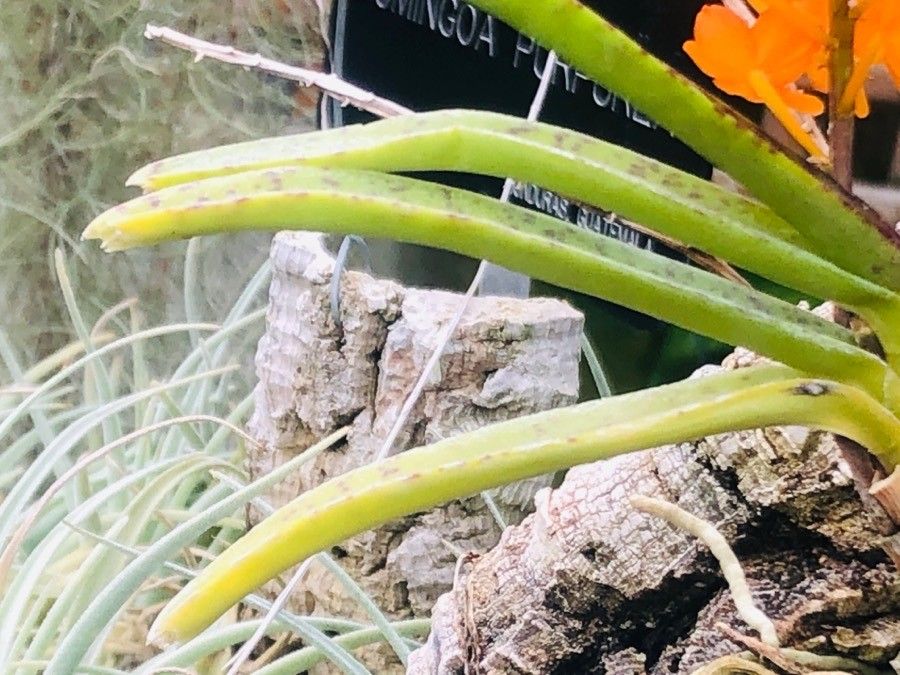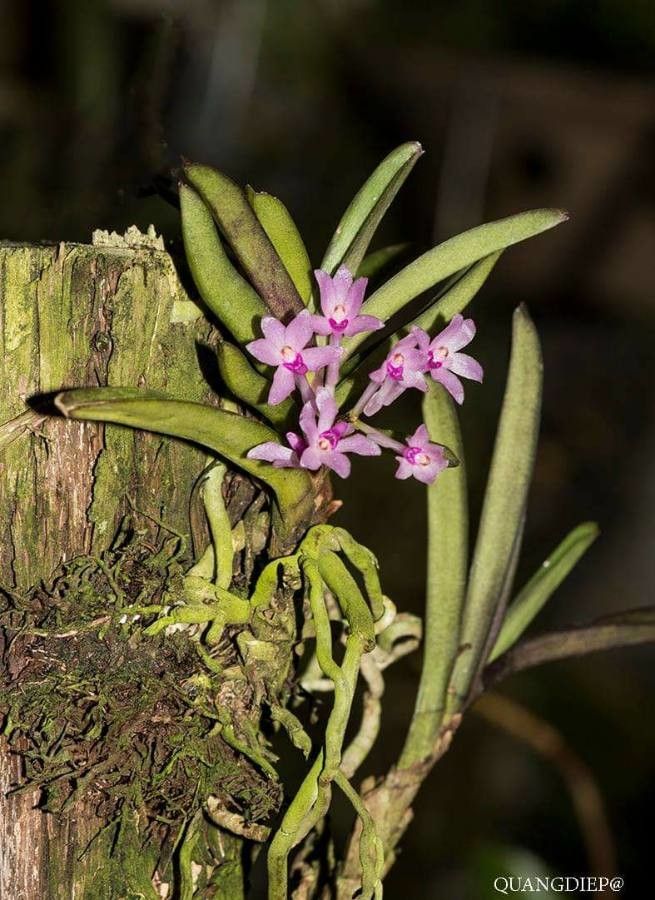
The Ascocentrum genus has just around ten species native to the Asian tropics, yet they are exceedingly valuable to collectors. Orchids belonging to the Vandeae tribe and the Sarcanthinae subtribe include Ascocentrum. They're connected to Vanda's and Renantheras and can easily hybridize with them. Ascocentrum orchids, like Phalaenopsis, are monopodial, meaning they have no pseudobulbs and grow from a single stem, with roots coming from the bottom.
How to keep Ascocentrum Pumilum.
Water
Ascocentrum has quite high water requirements in general. Water or mist hanging plants on a daily basis. Give a hanging Ascocentrum a good soak before watering it again. As the plant absorbs water, the roots should turn green or silvery.
Temperature
Ascocentrum Orchid when provided with temperatures between 75°F to 85°F (24°C to 29°C) during daytime and temperatures to only as low as 60°F to 70°F (15°C to 21°C) during nighttime. For optimal growth, at least 60% is required but more is preferable. There is no maximum humidity tolerance; these orchids thrive at 90% humidity with good air circulation. Leaves should cover the entire stem of a healthy plant.
Fertilizer
With balanced fertilizer, feed weekly in the spring and summer, biweekly in the fall and winter, and every fourth feeding with a high P formula ("bloom booster"). Plants that are fertilized appropriately will keep their leaves and blossom more strongly.
Pruning
Dead, damaged, and diseased parts of the Ascocentrum Orchid should be regularly removed in order to promote better health of the plant. This will enable to plant to focus all of its energy on the orchid’s growth and blooms, rather than it trying to cure or keep its damaged part alive.
Toxicity
Ascocentrum orchids have no toxic effects on people, dogs, cats, and other animals. As always, it is still, recommended to practice precautions. If your pets show any signs of irritation, it is still best to bring them to the vet clinic to be properly diagnosed and treated.
Further reading →
The toxicity and danger assessments provided are for reference only. We do not assure their accuracy, so it's crucial not to depend on them. Seek professional advice when necessary for accurate guidance.
Botanical profile.
- Genus
- Ascocentrum
- Family
- Orchidaceae
- Bloom Time
- The plants typically flower in the late winter or early spring, although Ascocenda hybrids have been known to throw flower spikes throughout the year.