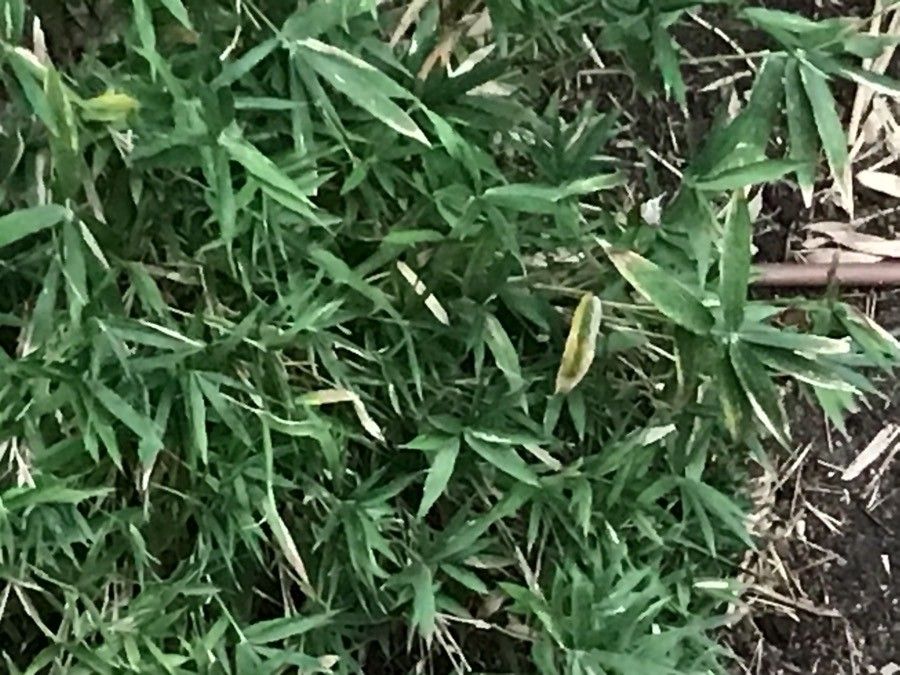
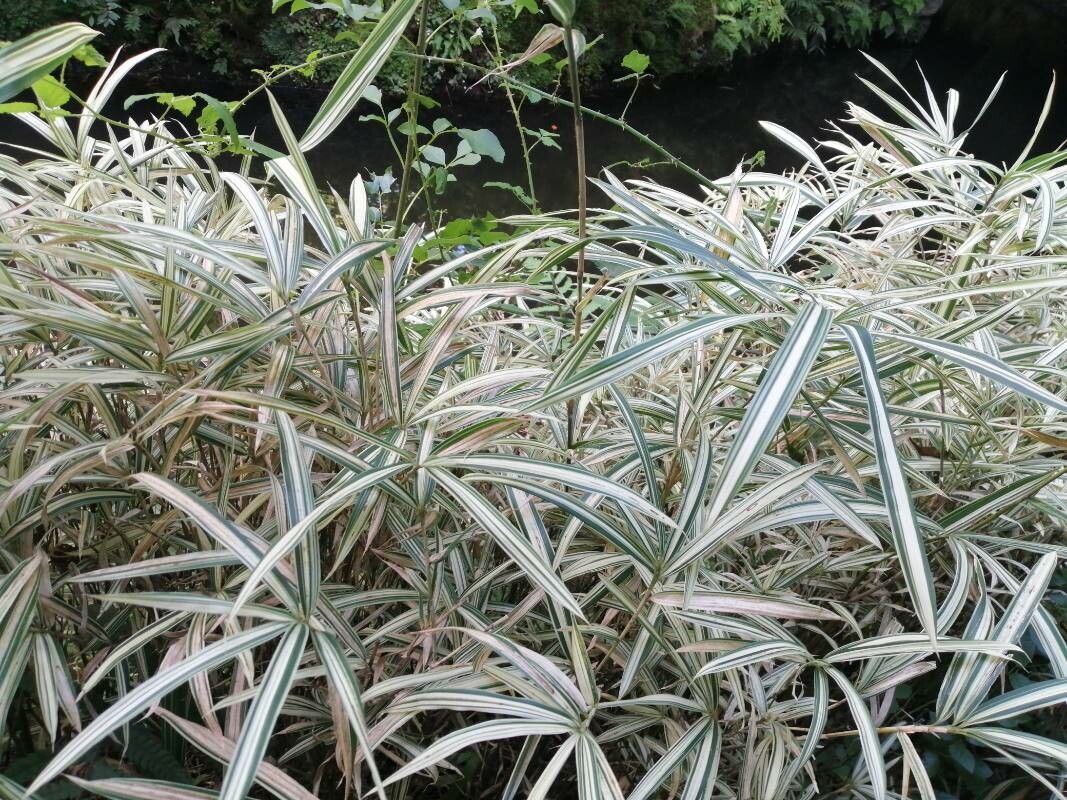
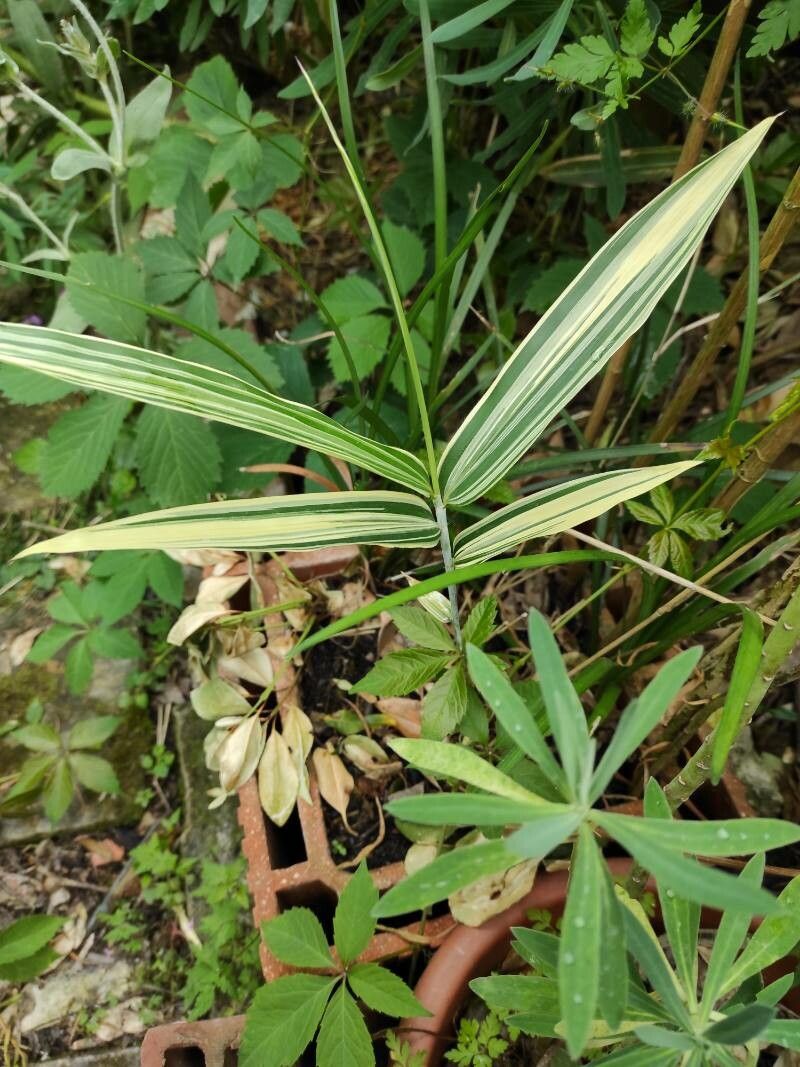
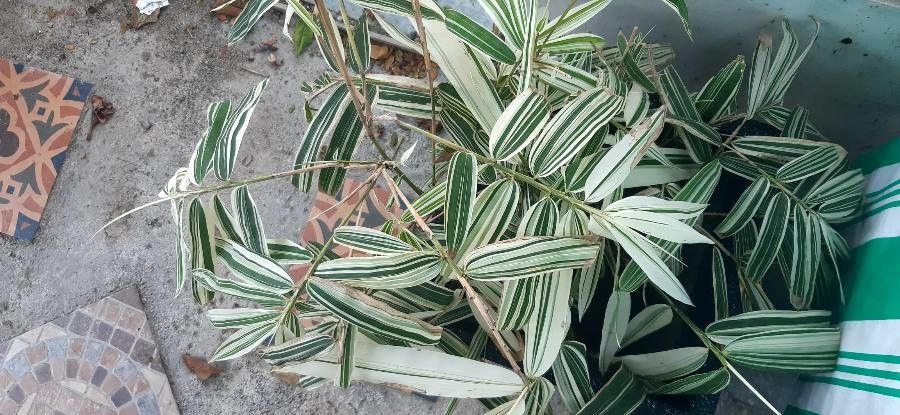
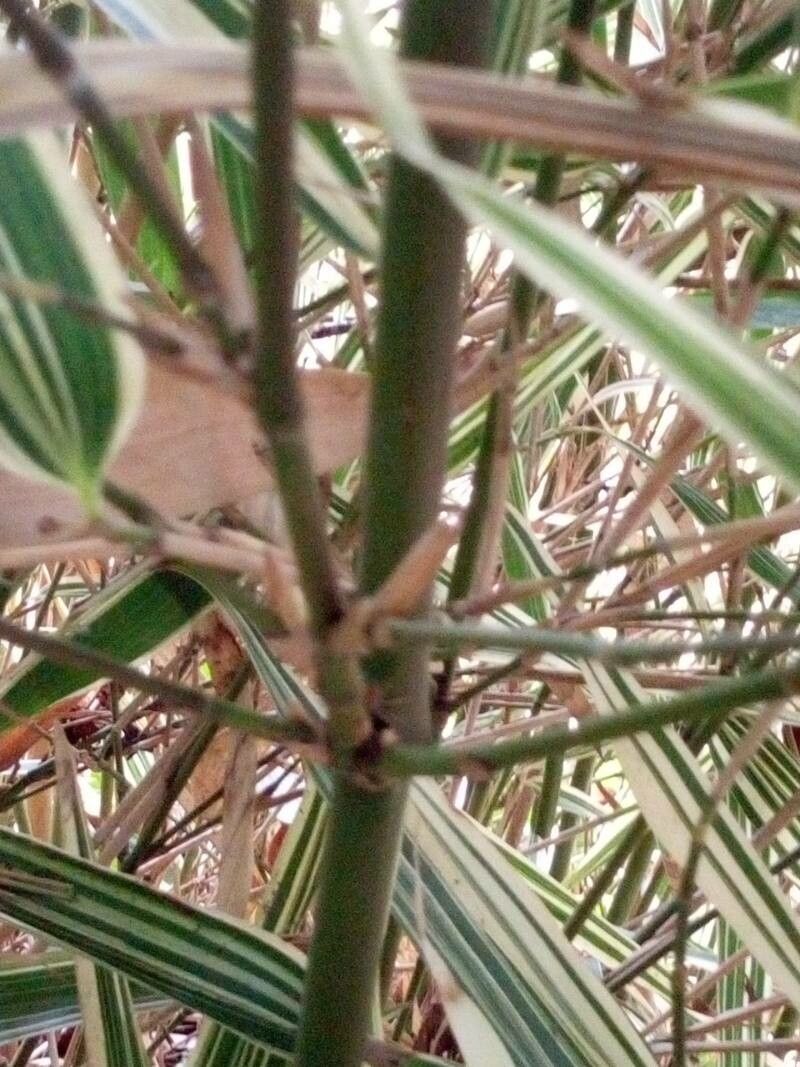
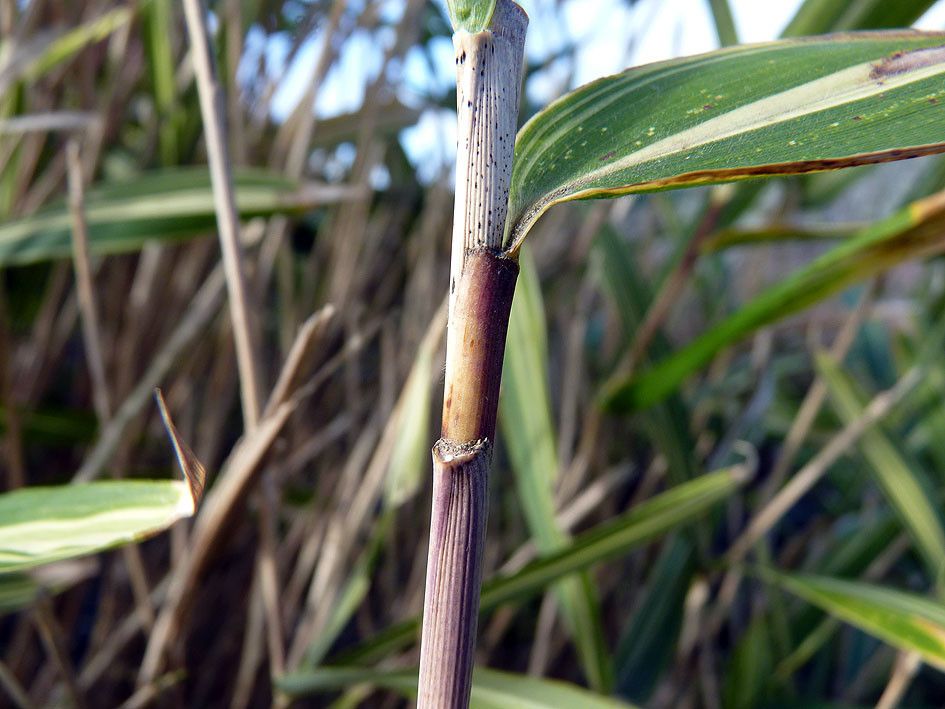
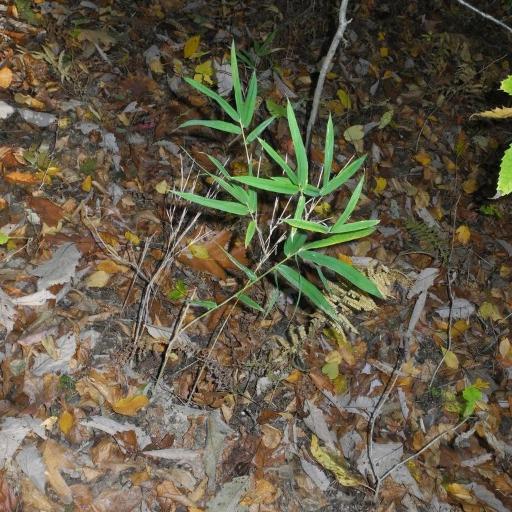
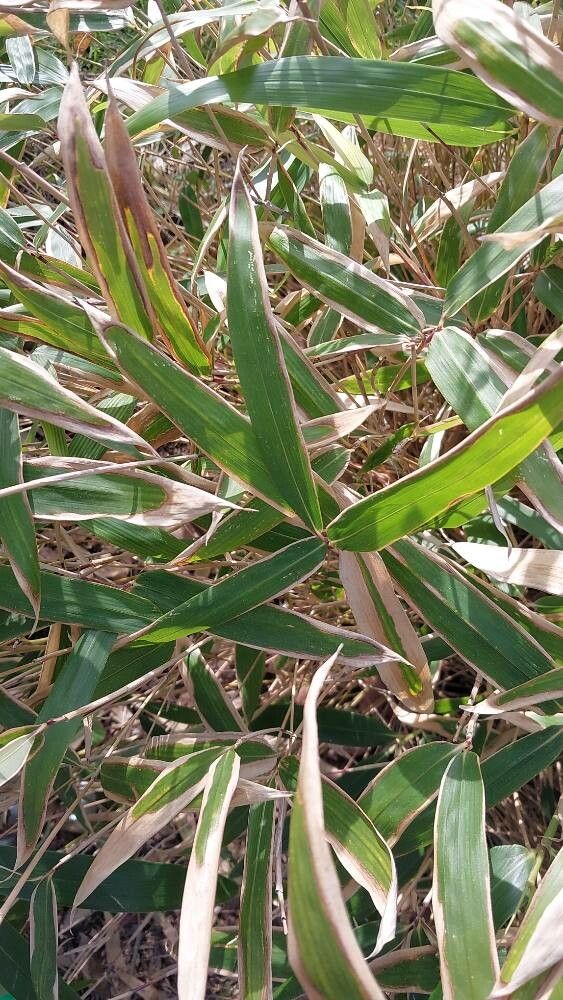
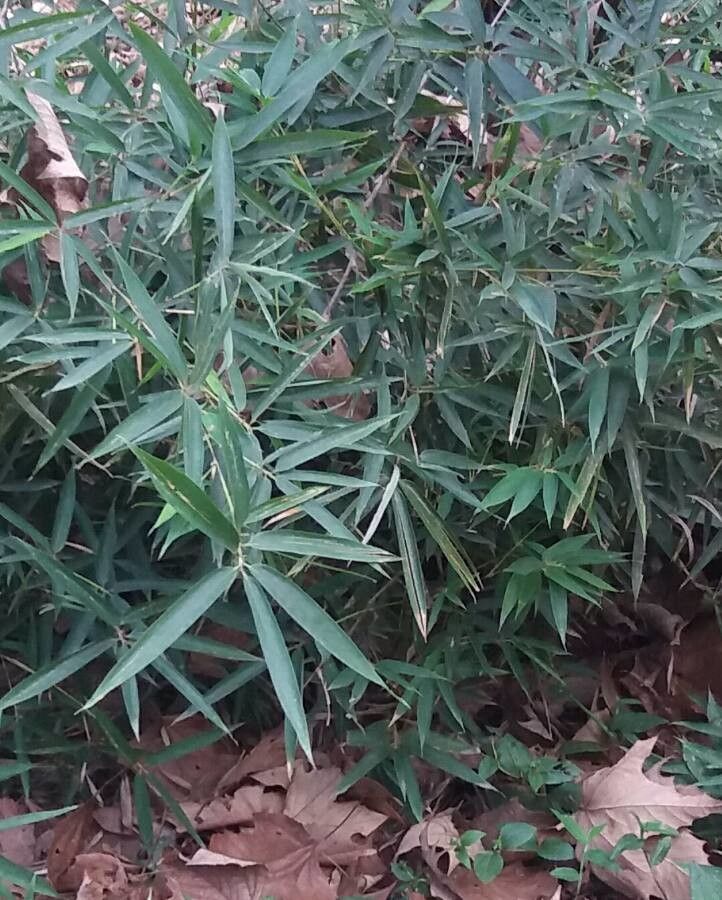
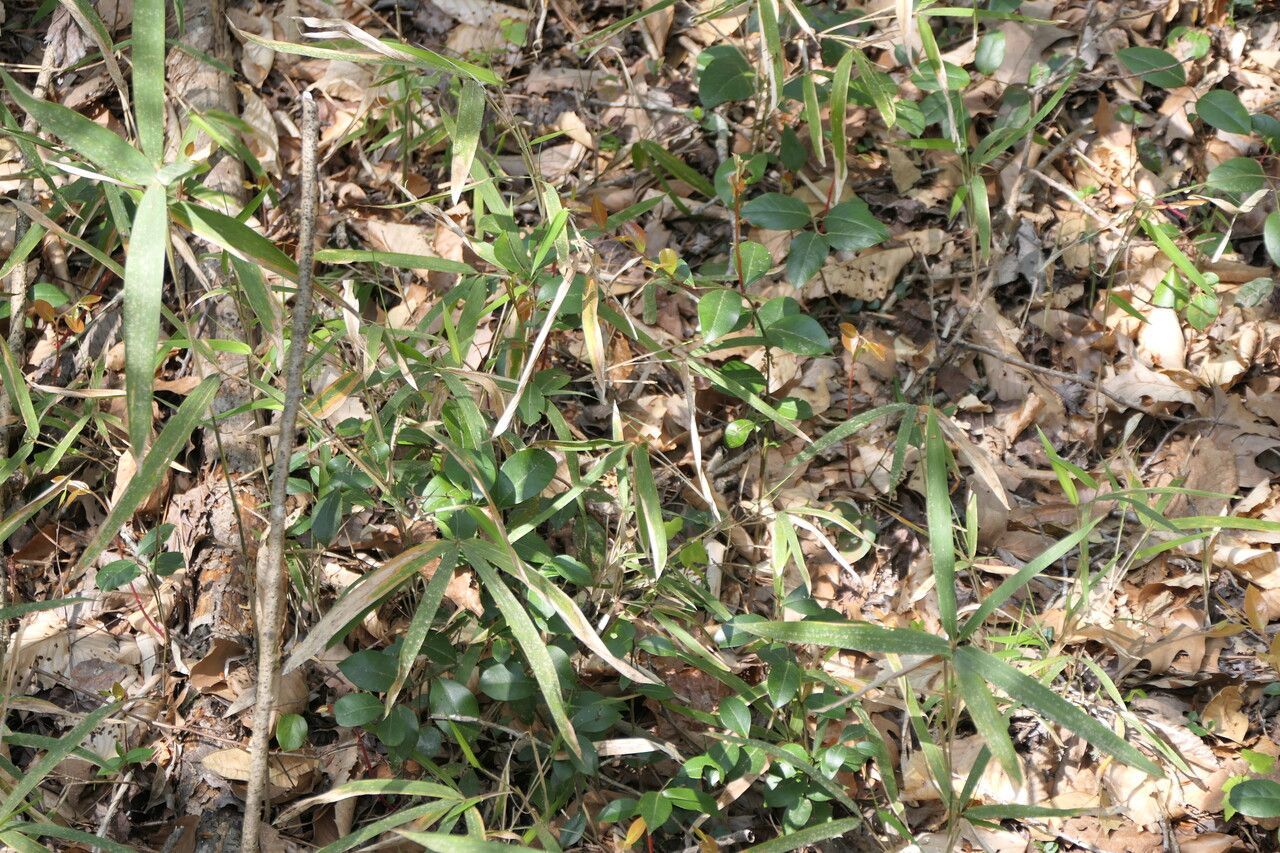
Pleioblastus fortunei is a species of bamboo in the family Poaceae. It is native to central and southern Japan, and has been introduced to southeast China, the North and South Islands of New Zealand, Maryland, Virginia, and the District of Columbia in the United States, Columbia, and southeast Brazil. It is hardy to −10 °F (−23 °C); USDA Hardiness zone 6a. It is an invasive species, escaping from cultivation and difficult to control, even surviving mowing. As its synonym Pleioblastus variegatus, dwarf white-striped bamboo, a variegated morph, has gained the Royal Horticultural Society's Award of Garden Merit.
Dwarf white-stripe bamboo has strong disease resistance and is generally not susceptible to diseases. In terms of care, this plant is fairly low-maintenance. When grown outdoors it needs little watering, and larger plants typically do not require pruning. However, smaller plants should be pruned after they have finished blooming. Dwarf white-stripe bamboo is suitable for anyone with outdoor space, like a garden or deck, and does not demand much experience in plant care.
How to keep Arundinaria Fortunei.
Light
The dwarf white-stripe bamboo does well with a moderate amount of sun, but can also tolerate situations where it receives abundant sunlight throughout the day. Native to habitats that naturally provide a mix of sun and shade, it can adapt to fluctuating light levels. However, prolonged darkness or excessive sunlight can impede dwarf white-stripe bamboo's healthy growth.
Temperature
Dwarf white-stripe bamboo comes from habitats where temperatures commonly range from 41 to 95 °F (5 to 35 ℃). It performs best within that range. Protective measures may be needed if temperatures drop below or exceed these levels.
Fertilizer
Dwarf white-stripe bamboo needs extra nutrients to encourage healthy new growth. In spring, placing compost around the plant’s base will effectively supply the nutrition it requires. Fertilizing helps support vigorous growth and improves the plant’s resistance to diseases and pests.
Botanical profile.
- Plant Type
- Grass
- Life Cycle
- Perennial
- Genus
- Arundinaria
- Family
- Poaceae
- Hardiness Zone
- 4-10
- Mature Height
- 0.61 m to 1.22 m
- Mature Spread
- 0.91 m to 1.22 m
- Leaf Color
- Variegated, Green, White, Brown
- Leaf Type
- Evergreen, Deciduous
- Bloom Time
- Early summer, Mid summer
- Planting Time
- Spring
- Harvest Time
- Late summer, Early fall
- Native Area
- Japan