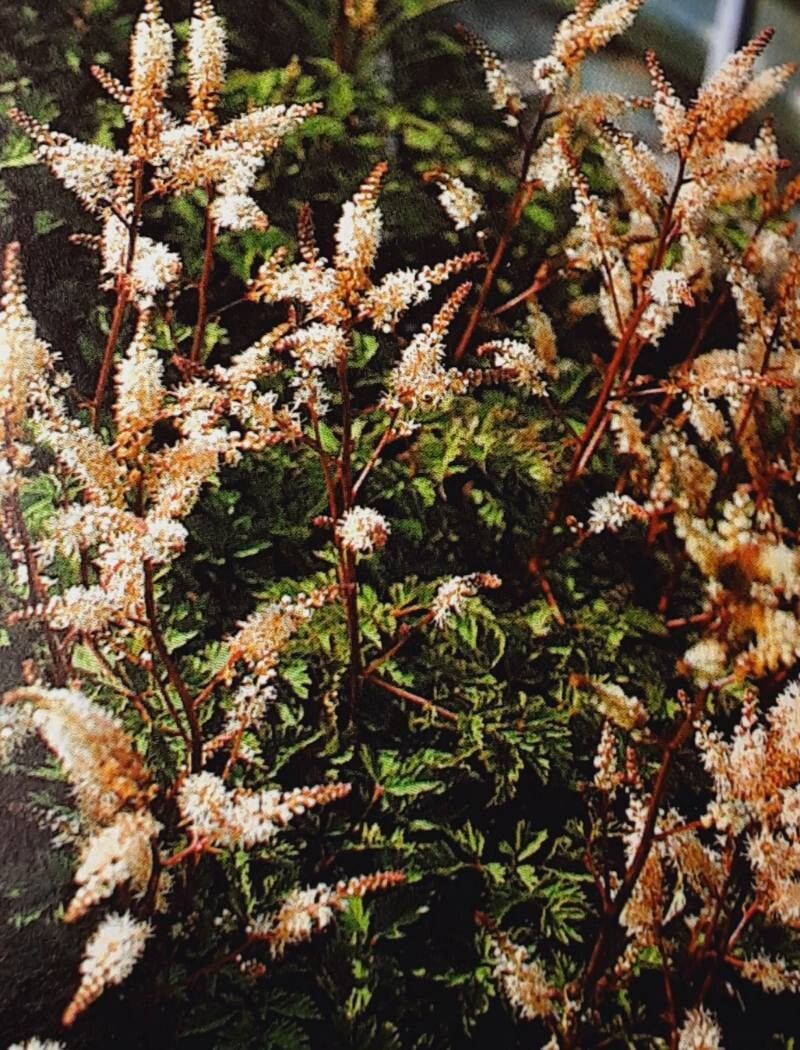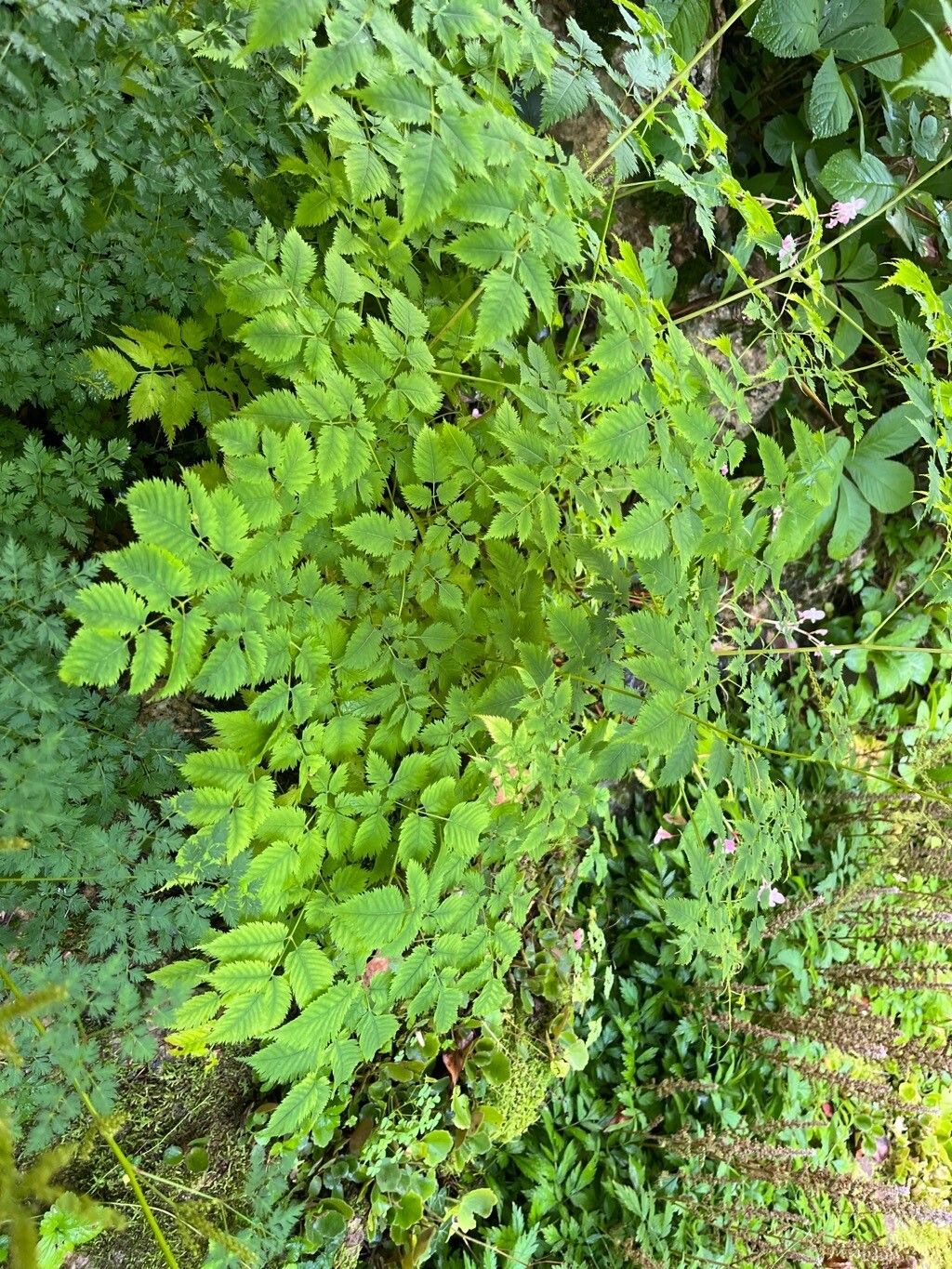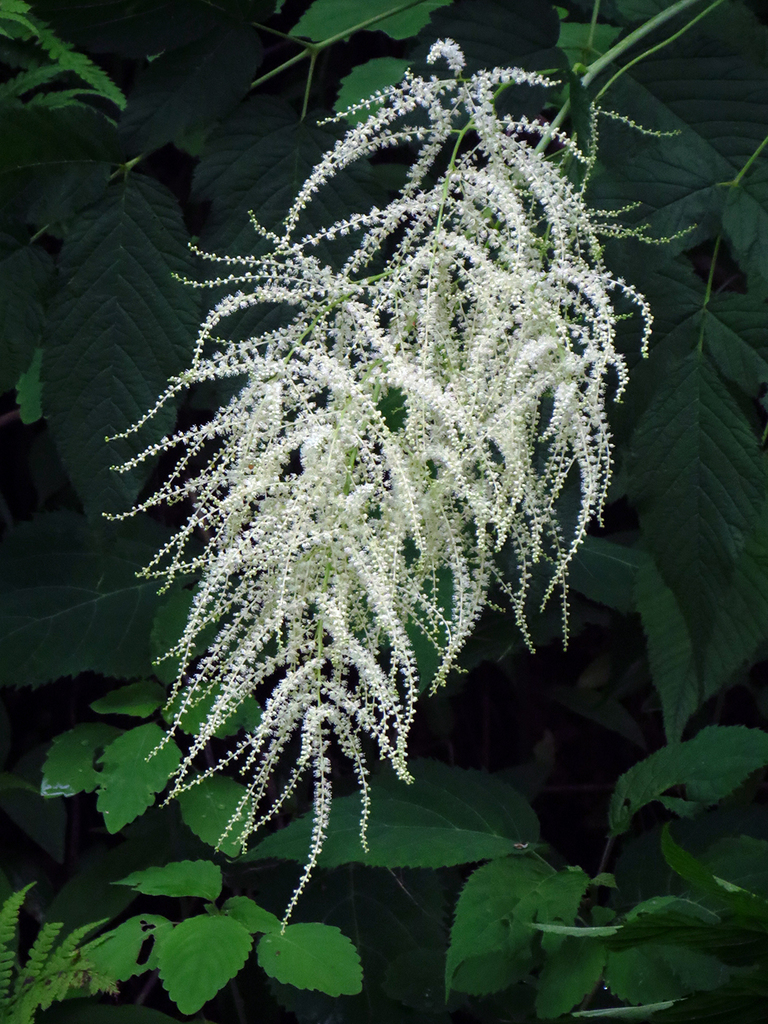
Aruncus dioicus, known as goat's beard, buck's-beard or bride's feathers, is a flowering herbaceous perennial plant in the family Rosaceae, found in Europe, Asia, and eastern and western North America. It is the type species of the genus Aruncus. It has alternate, pinnately compound leaves, on thin, stiff stems, with plumes of feathery white or cream flowers borne in summer. The Latin specific epithet dioicus means "having the male reproductive organs on one plant, and the female on another".
Goat's beard is fairly disease-resistant and is generally not prone to illness. However, it can be vulnerable to pests and diseases present in its surroundings. These infections are typically not serious. For care, the plant needs moderate maintenance. It should be pruned regularly to preserve a neat appearance and promote healthy growth. Fertilizing can also encourage flowering. Goat's beard is suitable for anyone with outdoor space, such as a garden or patio, and does not require much care experience. It may need more attention when kept indoors.
How to keep Aruncus Dioicus.
Light
Goat's beard prefers spots where sunlight is gently filtered during the day, though it can also do well in areas with stronger sun. Native to settings with patchy canopy cover, both too little and too much light can stunt its growth or cause leaf burn.
Water
Goat's beard flourishes in moist woodland environments. It prefers consistently moist soil, but once established, it can tolerate moderate drought. For optimal growth, it is recommended to water it weekly. Additionally, applying mulch can help retain soil moisture during the active growing season, making outdoor cultivation ideal for this plant.
Humidity
This plant prefers dry conditions, so don't mist it. However, watering it less often can also thrive in higher humidity.
Temperature
Goat's beard is naturally found in cool, moist environments, including temperate and boreal forests. It prefers temperatures between 32 and 95 °F (0 and 35 °C). In summer it can tolerate higher temperatures but needs ample moisture to cope with dry periods.
Fertilizer
One application of fertilizer in spring is generally sufficient for Goat's beard, although repeated feedings can maximize growth. Apply fertilizer roughly every month to every month and a half. Fertilizing improves the leaves' appearance and function, helping to maintain steady color and a healthy texture. It also stimulates root growth and nutrient uptake, supporting long-term plant health.
Pruning
Goat's beard thrives when pruned correctly, ideally from early to late spring before new growth begins. To encourage growth and improve airflow, remove any dead stems and trim spent blooms after flowering. Regular maintenance like this enhances the plant's structural integrity and promotes denser foliage, resulting in a healthier and more attractive plant.
Pot & Repot
When repotting Goat's beard, select a pot 1–2 inches (2.5–5.1 cm) larger with good drainage. Use a well-draining potting mix. Repot in spring or fall, making sure the root ball sits slightly lower than the rim of the flower pot. Water thoroughly after repotting and place it in a warm location with indirect sunlight.
Botanical profile.
- Plant Type
- Herb
- Life Cycle
- Perennial
- Genus
- Aruncus
- Family
- Rosaceae
- Hardiness Zone
- 3-9
- Mature Height
- 1.22 m to 1.83 m
- Mature Spread
- 0.61 m to 1.22 m
- Leaf Color
- Green
- Leaf Type
- Deciduous
- Flower Color
- White
- Flower Size
- 0.05 cm to 0.15 cm
- Bloom Time
- Early summer, Mid summer
- Planting Time
- Spring
- Harvest Time
- Mid summer
- Native Area
- Turkey, India, Austria, Slovakia, Montenegro, Croatia, Slovenia, Belarus, Russia, Germany, Koppen, South Korea, Romania, France, Nepal, Czech Republic, Armenia, Poland, Ukraine, Serbia, China, Italy, Spain, Switzerland, Japan, Mongolia, Bhutan, Albania, Azerbaijan, Hungary
Other names.
Reader questions.
How should I water my Goat's beard?
To properly water the Goat's beard, use filtered water at room temperature or slightly warmer. Tap water can contain harmful particles, so filtered water is preferred. The goat's beard is accustomed to warm environments, so cold water can be a shock. Avoid overhead watering to prevent foliage complications. Instead, thoroughly soak the soil with filtered, room temperature water. This helps moisten the roots and aids in their spread through the soil to gather necessary nutrients.
Why should I use fertilizer for my Goat's beard plant?
The Goat's beard plant relies heavily on its leaves for structure, making fertilization crucial for the health and appearance of these leaves. By providing proper fertilization, you can ensure that the Goat's beard retains vibrant color and a robust texture. Furthermore, fertilization has benefits that go beyond the surface level - it aids in root development and maintenance. This means that fertilization not only keeps your plant healthy in the present but also improves its ability to absorb nutrients from the soil in the long run.
What are the sunlight requirements for Goat's beard?
Goat's beard requires varying amounts of sunlight depending on its environment. For optimal growth, areas where sunlight gently disperses throughout the day are ideal, although it can also thrive in regions with more intense sun exposure. The plant originally comes from habitats with scattered canopy cover, and therefore, both lack and excess of sunlight can adversely affect its growth by either stunting it or causing leaf scorching. Specifically, partial sun exposure is about 3-6 hours of sunlight, while full sun exposure is above 6 hours of sunlight. It's important to observe how sunlight moves through your garden to choose spots that provide a perfect balance for your plants.
What are the essential growing conditions for Goat's Beard?
Goat's Beard (Aruncus dioicus) thrives in cool and moist habitats, specifically in temperate and boreal forests, and prefers temperature ranges from 32 to 95°F (0 to 35°C). It tolerates high temperatures during summer if there is ample moisture but demands more moisture during dry days to adjust. The plant exhibits strong cold resistance, thus special frost protection measures are not typically needed. However, for extreme cold where winter temperatures drop significantly, applying cold protection by covering the plant with soil or straw is advisable. Additionally, abundant watering before the first freeze in autumn to ensure moist soil can help the plant withstand winter and early spring conditions.
What if I give too much or too little water to my Goat's beard?
Overwatering and underwatering can harm the health of your Goat's beard plant, but overwatering is more common. When the plant gets too much water, its stems and leaves may wilt and turn yellow. Overwatering for a long time can also cause diseases like root rot, mold, and mildew, which can be fatal for the plant. Underwatering is less likely for the Goat's beard, as it can tolerate drought fairly well. However, it can still happen, and in such cases, the plant's leaves become brittle and brown. It's important to recognize the signs of overwatering early on. Some diseases caused by overwatering, like root rot, may not be fixable if you wait too long. If you notice initial signs of overwatering, reduce your watering immediately. Also, check the quality of the soil in which your plant is growing. If the soil doesn't drain well, replace it with a loose, well-draining potting mix. On the other hand, if your Goat's beard is showing signs of receiving too little water, simply water it more regularly until the signs improve.
When should I fertilize my Goat's beard?
If you grow your Goat's beard outdoors each year, it will start growing new leaves in early spring. This is the signal to begin fertilization. Usually, one application of fertilizer is enough for the Goat's beard to thrive. But if you want to maximize growth, you can fertilize it multiple times during the spring and early summer, with a monthly or monthly and a half schedule.
How does artificial lighting support Goat's beard growth indoors?
When natural sunlight is insufficient, particularly in indoor settings or during less sunny seasons like winter, artificial lighting becomes crucial for the growth of indoor plants like Goat's beard. Adequate artificial lighting ensures faster and healthier growth by offering an essential solution. LED lights, known for their ability to provide specific wavelengths of light needed by plants, are a popular choice. For full sun plants, 30-50W/sq ft of artificial light is recommended, partial sun plants need 20-30W/sq ft, and full shade plants require 10-20W/sq ft. Setting the right distance (12-36 inches above the plant) and duration (8-12 hours per day) of artificial light is critical to mimic natural sunlight conditions effectively.
How does Goat's Beard respond to low temperatures?
Goat's Beard is notably cold-tolerant and performs best when temperatures are kept above certain minimum tolerable levels. During colder months, maintaining temperatures above the minimum growth threshold ensures the plant's health. If temperatures fall below this critical point, while there may not be obvious changes in the plant's appearance during winter, there's a risk of reduced or failed sprouting in the following spring. The recommended solution for any parts of the plant that fail to sprout by spring is their removal to promote new growth.
How often do I need to water my Goat's beard?
If your Goat's beard plant is in a pot, the most precise way to determine if it needs water is by checking the soil with your finger. If the top two to three inches of soil are dry, it's time to water it. For outdoor plants, you can use the same method. Once the top few inches of soil have dried out, it's time to add water. In the spring and early fall, you'll typically need to water this plant about once a week using this method. However, during extremely hot weather, you may need to water it twice a week or more. It's worth noting that mature, well-established Goat's beard plants have a remarkable ability to withstand drought.
When is it not a good idea to put fertilizer on my Goat's beard plant?
During the late fall and winter, your Goat's beard goes into a dormant phase and stops producing new growth. During this period, it is best to refrain from fertilizing your Goat's beard. In the spring and summer, if you choose to fertilize, gradually decrease the amount as summer approaches because the growth rate of your Goat's beard will also slow down. In general, it is not advisable to fertilize your Goat's beard during extremely hot weather or when the soil is excessively dry as it can cause stress and premature death.
What are the symptoms of insufficient sunlight for indoor Goat's beard plants?
When indoor Goat's beard plants receive insufficient light, several symptoms may appear indicating light deficiency. These include smaller new leaves compared to the mature ones, leggy or sparse growth with longer spaces between leaves or stems, and a general appearance of a thin and stretched-out plant. Plants in low light may also experience faster leaf drop, slower or no new growth due to entering a survival mode, lighter-colored new leaves due to insufficient chlorophyll, and conditions like chlorosis where leaves lose their green color, sunscald with damage from intense sunlight exposure, leaf curling as a defensive mechanism to minimize water loss, wilting due to increased transpiration, and leaf scorching characterized by brown, dry edges on leaves.
What should be done if Goat's Beard experiences high temperatures?
During summer, it's crucial to manage the temperatures around Goat's Beard to prevent it from exceeding its maximum comfortable range. Excessive heat can cause the leaves to lighten in color, curl, become prone to sunburn, and in severe cases, lead to wilting and drying out of the entire plant. To mitigate these issues, remove any sunburned or dried-up parts promptly. Relocate the plant to a shaded area during intense midday and afternoon sun, or use a shade cloth to protect it. Ensuring the plant is watered in the morning and evening can also help maintain the necessary soil moisture to support its health under high temperatures.