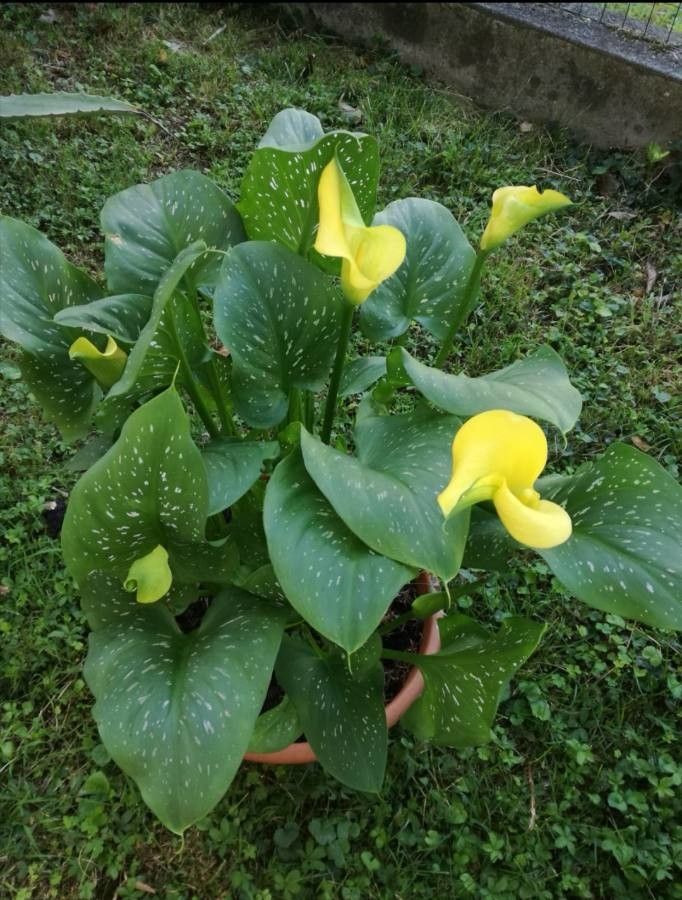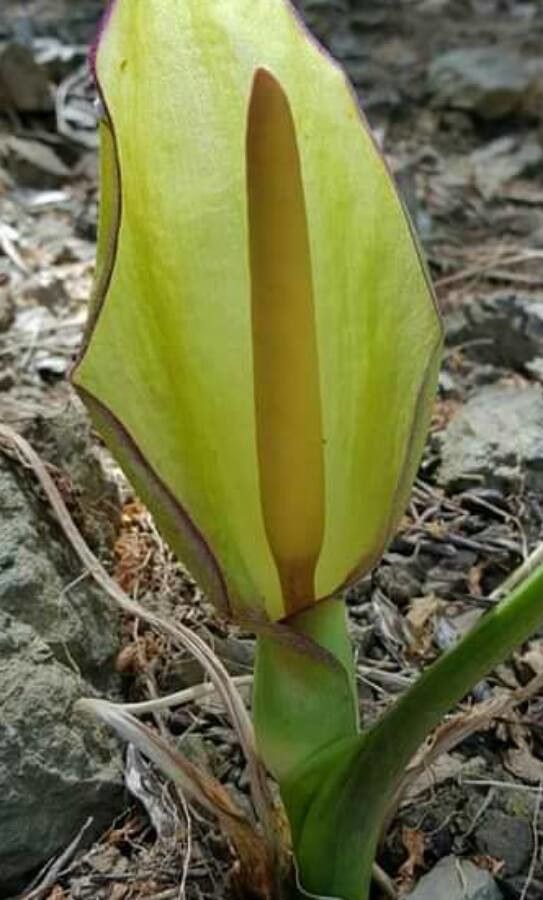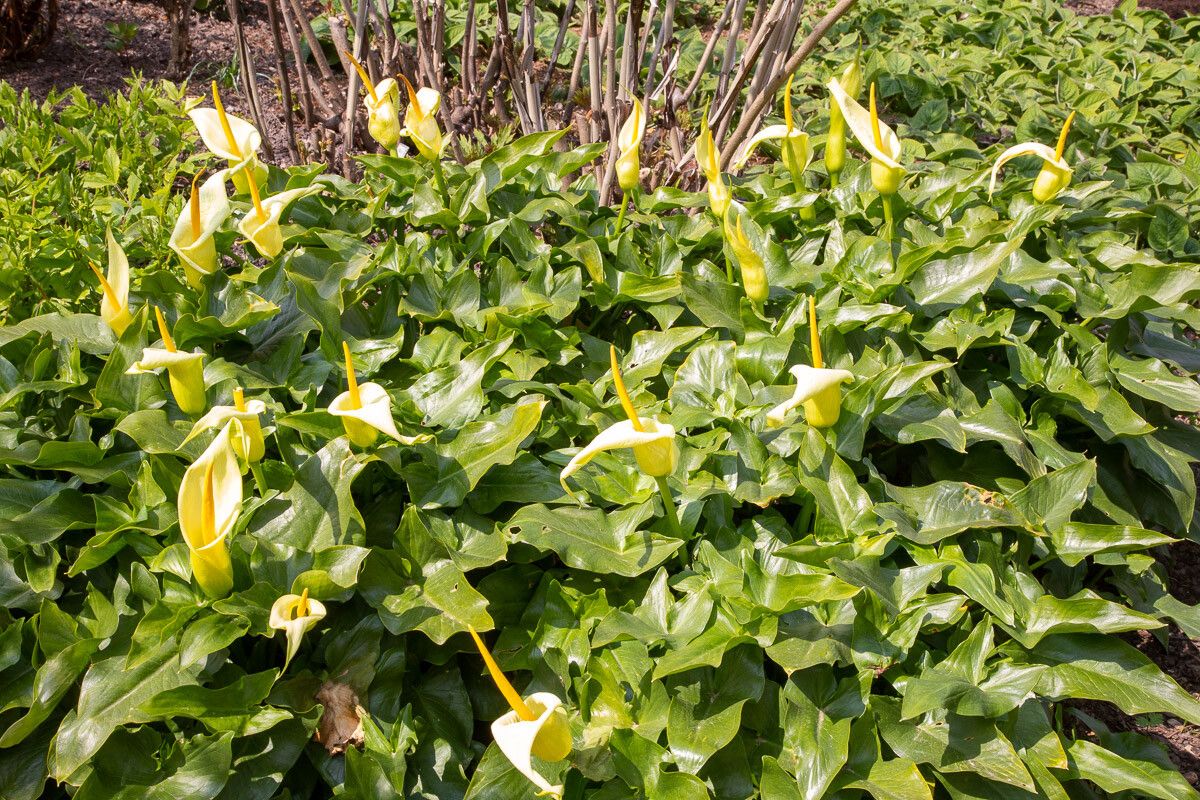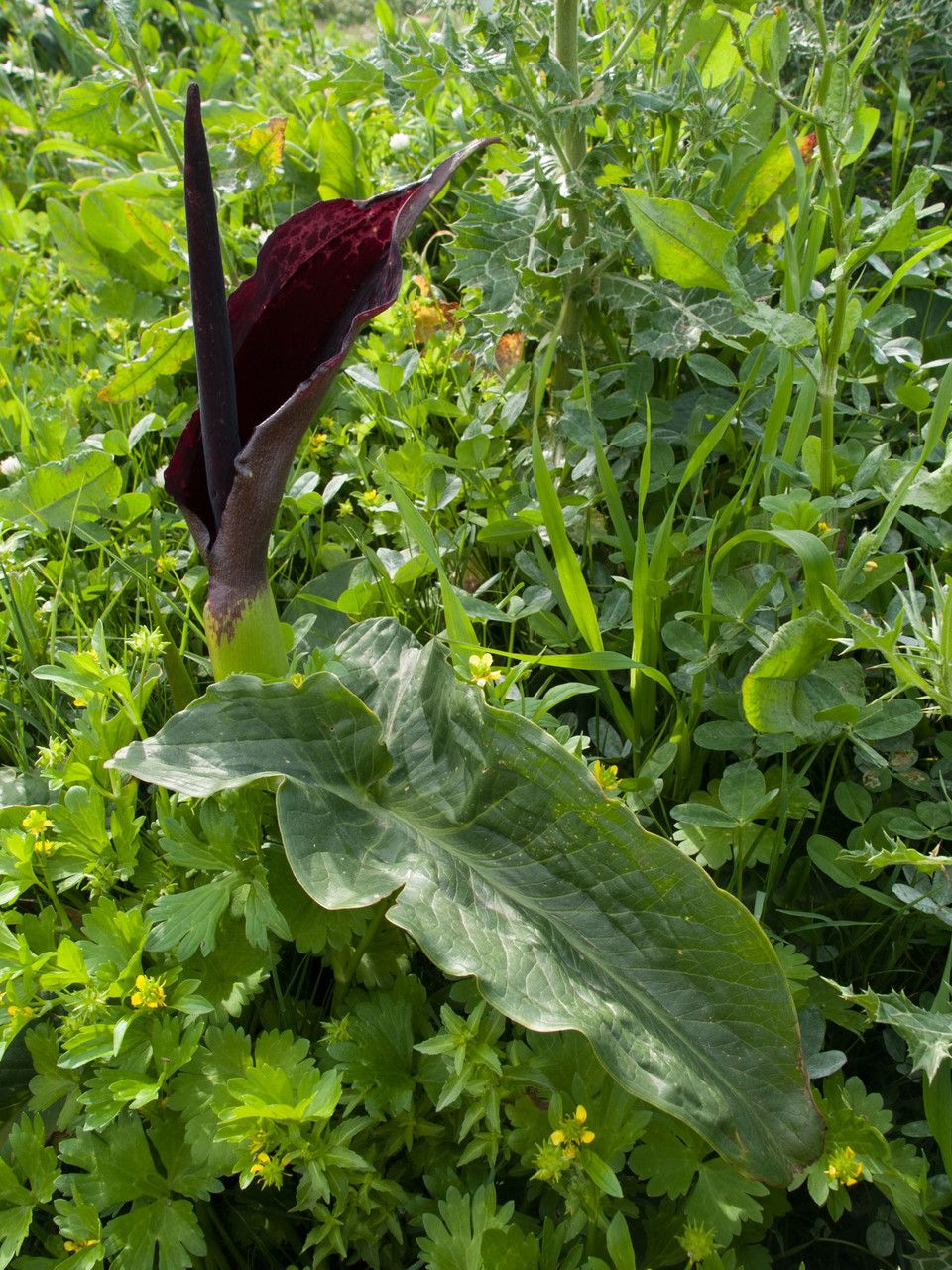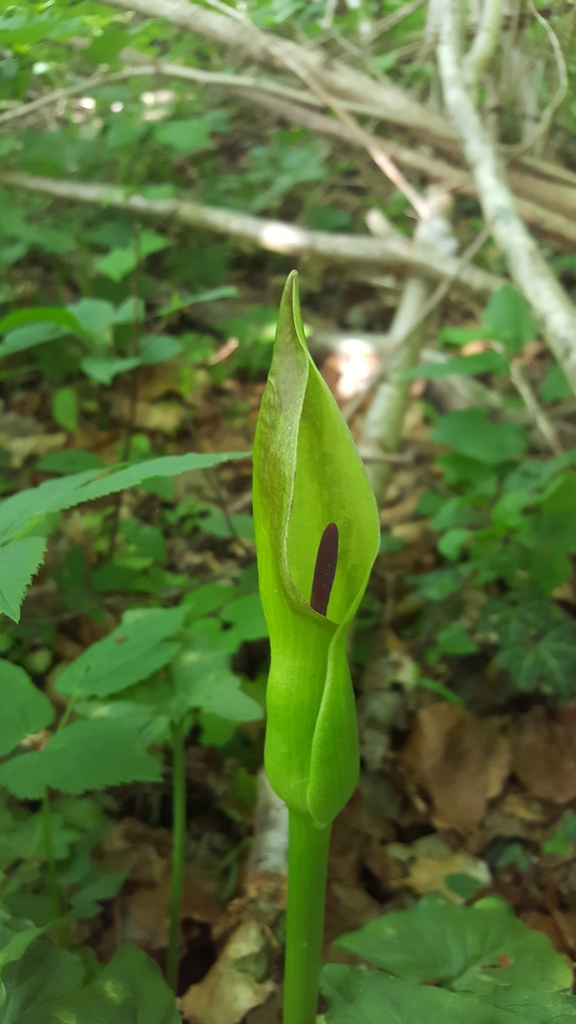
Arum cylindraceum is a perennial herbaceous plant belonging to the Araceae family. Native to the Mediterranean region, it is commonly found in countries such as Greece, Turkey, and Israel. This plant can grow up to 60 cm in height and features a cylindrical spadix surrounded by a greenish-yellow spathe.
The leaves of Arum cylindraceum are large, heart-shaped, and glossy green. They emerge from an underground tuber that can reach up to 10 cm in diameter. The plant's flowers are small and inconspicuous.
Arum cylindraceum thrives in moist, well-drained soils but can tolerate dry conditions once established. It grows well in partial shade or full sun but needs protection from strong winds.
Historically, the tubers of this plant have been used for medicinal purposes due to their anti-inflammatory properties. However, they should be used with caution, as they contain toxic compounds that can cause skin irritation or gastrointestinal issues if ingested.
In summary, Arum cylindraceum is an attractive ornamental plant with unique foliage, adding interest to any garden or landscape design. Moreover, it holds traditional medicinal value.
Mountain Arum has strong resistance to disease and is generally not susceptible to illnesses. However, it can be affected by pests and diseases present in its environment. These problems are typically not serious. Care-wise, the plant needs moderate maintenance. It should be pruned regularly to keep a good appearance and support healthy growth. Fertilizing can also encourage flowering. Mountain Arum is appropriate for anyone with outdoor space, such as a garden or patio, and does not demand extensive care experience. It may need more attention when cultivated indoors.
How to keep Arum Cylindraceum.
Light
Mountain Arum originates from habitats like forest understories and rocky terrain, where it grows in natural shade. It thrives best in partial sun but can tolerate both full sun and full shade, showing its versatile and hardy nature.
Water
Arum cylindraceum needs light water until the top growth starts to emerge. During active growth, the plant needs moderate watering. Water regularly during the growing season and keep the soil slightly moist during the winter.
Temperature
Mountain Arum can adjust to a wide range of temperatures, but its distribution may still be restricted by different combinations of moisture and heat. It grows best in warm summer climates with sufficient rainfall or watering. Extended periods of cloudy, rainy weather, as well as prolonged high temperatures, can raise the likelihood of Mountain Arum dying. In winter, providing proper protection from cold can improve the plant's survival rate.
Fertilizer
For Mountain Arum, the primary time to apply fertilizer is in early spring when the flowers are developing. The appropriate fertilizer promotes better blooms and helps Mountain Arum produce attractive flowers. Fertilizing in early spring ensures excellent flowers during the season and supplies energy for dormant growth phases.
Toxicity
These attractive red to orange berries are extremely poisonous. The berries contain oxalates of saponins which have needle-shaped crystals which irritate the skin, mouth, tongue, and throat, and result in swelling of the throat, difficulty breathing, burning pain, and upset stomach.
Further reading →
The toxicity and danger assessments provided are for reference only. We do not assure their accuracy, so it's crucial not to depend on them. Seek professional advice when necessary for accurate guidance.
Botanical profile.
- Plant Type
- Herb
- Life Cycle
- Perennial
- Genus
- Arum
- Family
- Araceae
- Hardiness Zone
- 5-9
- Mature Height
- 30 cm to 61 cm
- Mature Spread
- 20 cm to 30 cm
- Leaf Color
- Dark Green
- Leaf Type
- Deciduous
- Flower Size
- 5.08 cm to 7.62 cm
- Bloom Time
- Mid spring, Late spring
- Planting Time
- Spring
- Harvest Time
- Mid summer, Late summer