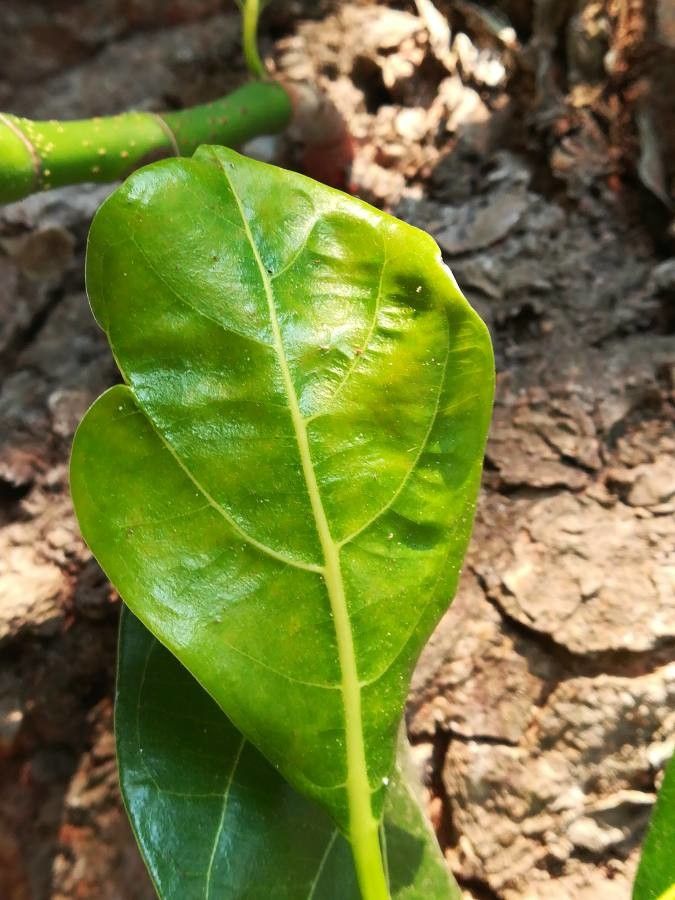
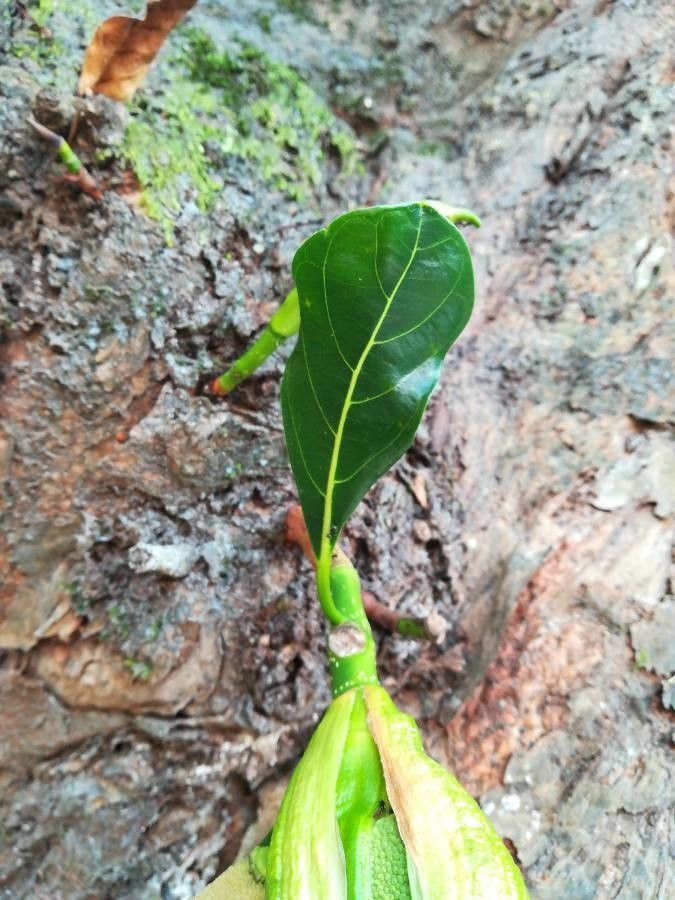
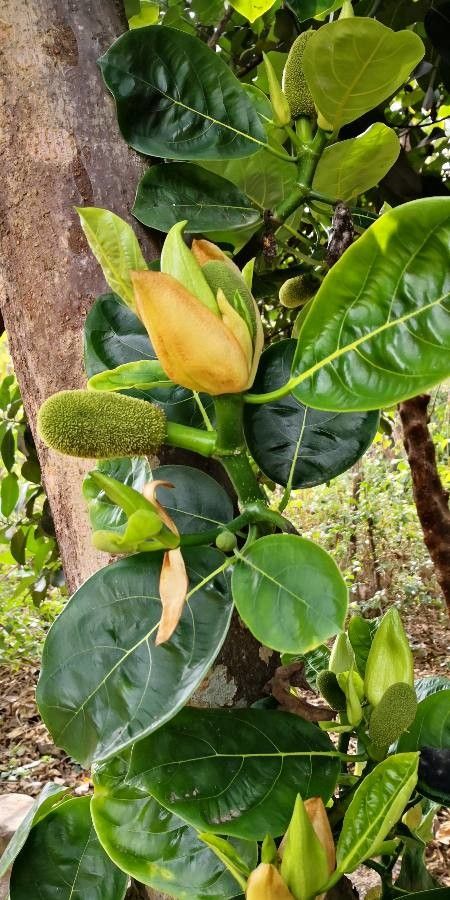
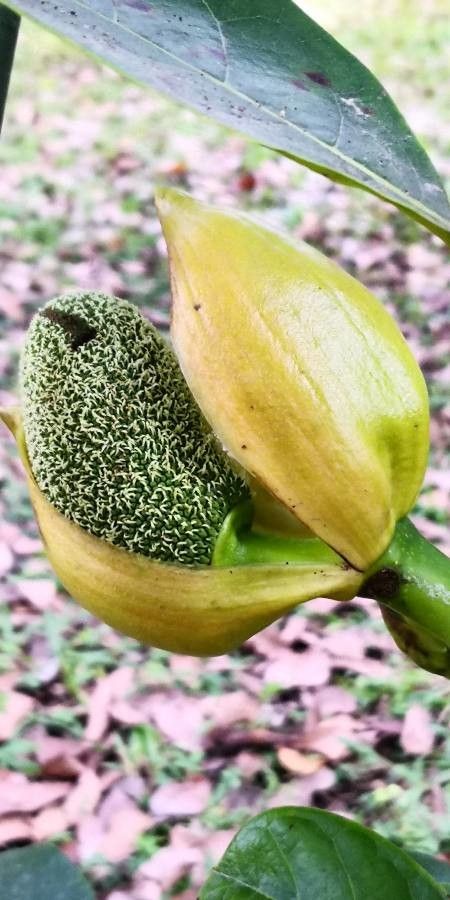
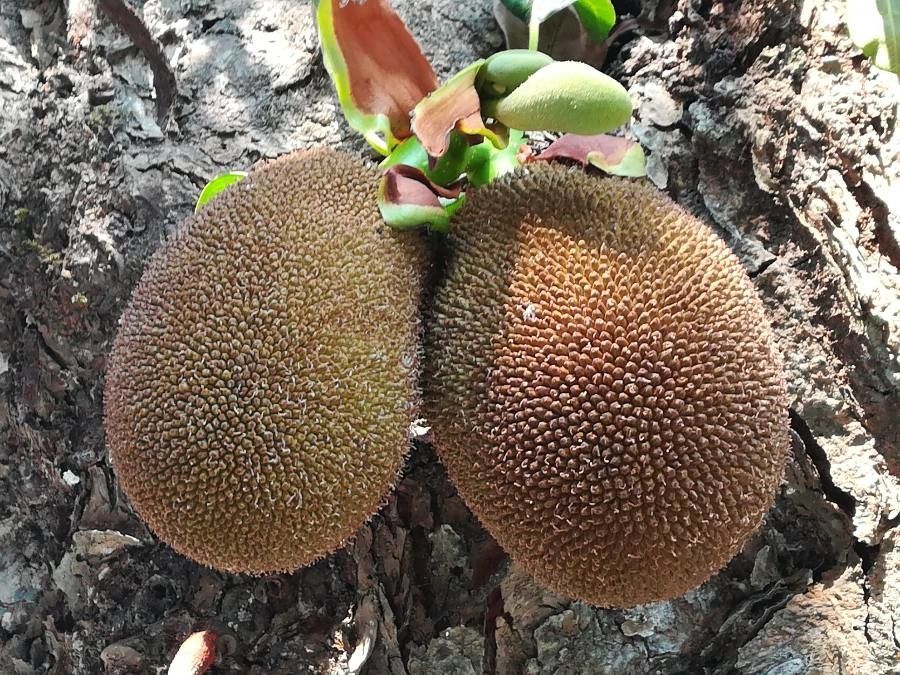
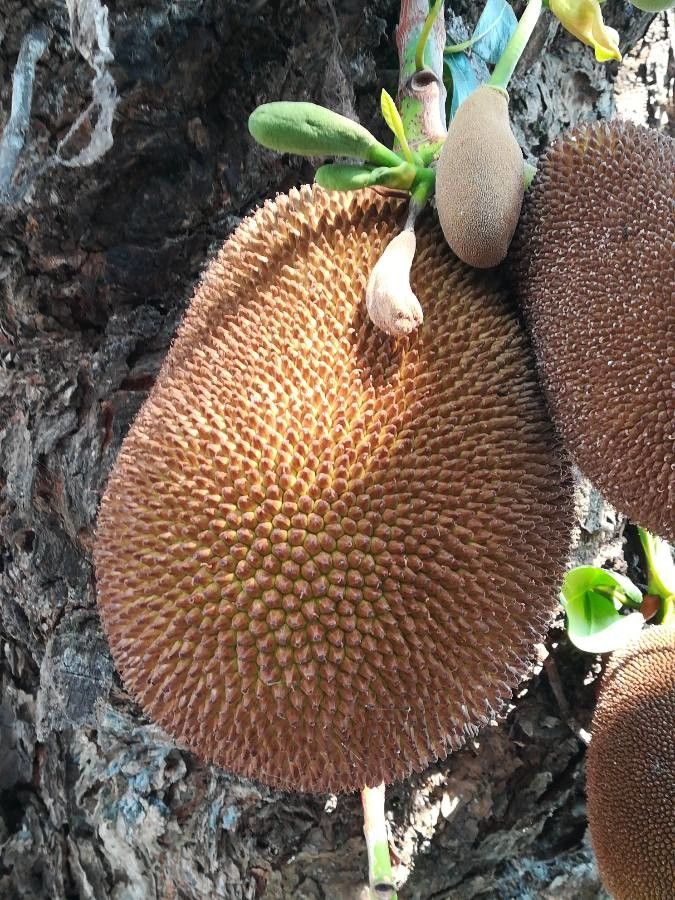
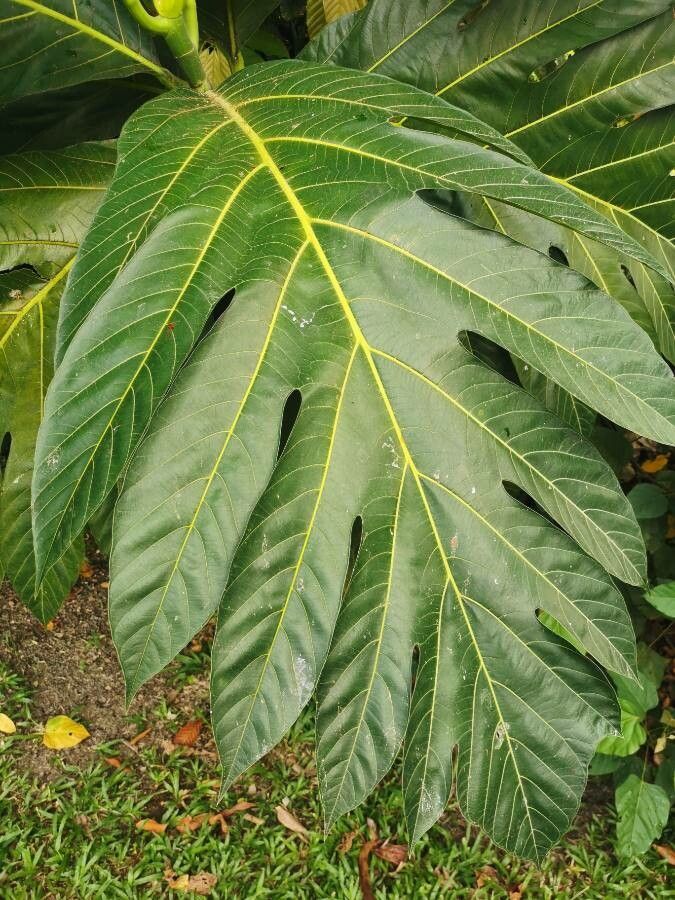
The jackfruit (Artocarpus heterophyllus), also known as jack tree, is a species of tree in the fig, mulberry, and breadfruit family (Moraceae). Its origin is in the region between the Western Ghats of southern India, all of Bangladesh, Sri Lanka, and the rainforests of the Philippines, Indonesia, and Malaysia.The jack tree is well-suited to tropical lowlands, and is widely cultivated throughout tropical regions of the world. It bears the largest fruit of all trees, reaching as much as 55 kg (120 pounds) in weight, 90 cm (35 inches) in length, and 50 cm (20 inches) in diameter. A mature jack tree produces some 200 fruits per year, with older trees bearing up to 500 fruits in a year. The jackfruit is a multiple fruit composed of hundreds to thousands of individual flowers, and the fleshy petals of the unripe fruit are eaten. The ripe fruit is sweet (depending on variety) and is more often used for desserts. Canned green jackfruit has a mild taste and meat-like texture that lends itself to being called a "vegetable meat".Jackfruit is commonly used in South and Southeast Asian cuisines. Both ripe and unripe fruits are consumed. It is available internationally canned or frozen and in chilled meals as are various products derived from the fruit such as noodles and chips.
Jackfruit is highly resistant to disease and generally not susceptible to illnesses. In terms of care, this plant is fairly low-maintenance. When planted outdoors it needs only light watering, and larger plants typically do not require pruning. Smaller plants, however, should be pruned after they have finished blooming. Jackfruit is suitable for anyone with outdoor space, such as a garden or deck, and does not demand much gardening experience.
How to keep Artocarpus Heterophyllus.
Light
The jackfruit prospers in full sun and can tolerate reduced, yet still considerable, sunlight, reflecting its native tropical habitat. Sunlight strongly affects its health, encouraging vigorous growth. Excessive or insufficient sun exposure can negatively impact growth, causing wilting or paleness.
Water
Jackfruit thrives in humid, tropical regions, where it benefits from consistent humidity, although it can tolerate moderate drought conditions. To mimic its natural habitat and ensure continuous growth without stress, water the jackfruit plant once every two weeks. As an evergreen plant, it retains its foliage throughout the year.
Humidity
This plant will thrive in moderate humidity, which is probably the level in your home. However, misting it a few times a week can be very beneficial. Make sure the room has good ventilation.
Temperature
Jackfruit needs a warm native growing environment with temperatures from 20 to 41 ℃ (68 to 106 ℉). The plant prefers consistently warm conditions and may not tolerate temperatures below 10 ℃ (50 ℉). In colder seasons, adjusting indoor temperatures may be necessary.
Fertilizer
Prefer organic fertilizers (for example, fish emulsion or compost) instead of chemical ones for Jackfruit. Supply higher levels of nitrogen and phosphorus to young plants in spring. Mix compost or fertilizer into the soil before or after planting. For mature plants, apply a balanced fertilizer or one aimed at specific deficiencies in spring. Nutrient deficiency results in small leaves, short branches, yellow or bronze foliage, acidic fruits, premature fruit drop, and fruit splitting.
Pruning
To ensure jackfruit trees are healthy and productive, it is important to prune them carefully. This involves removing dead or crossing branches to improve air circulation and allow more light to penetrate. The best time to prune is from early to late spring, as this promotes better overall health and increases fruit yield.
Botanical profile.
- Plant Type
- Tree
- Life Cycle
- Perennial
- Genus
- Artocarpus
- Family
- Moraceae
- Hardiness Zone
- 10-13
- Mature Height
- 10.06 m to 20.12 m
- Mature Spread
- 20.12 m
- Leaf Color
- Green
- Leaf Type
- Evergreen
- Flower Color
- Green, Cream
- Flower Size
- 7.62 cm to 12.70 cm
- Bloom Time
- Mid spring, Late spring, Early summer
- Planting Time
- Spring, Autumn
- Harvest Time
- Mid summer, Late summer
- Native Area
- India
Other names.
Reader questions.
How should I water my Jackfruit plant in the best way?
Watering your Jackfruit is not a difficult task. You can use any common watering tool such as watering cans, hoses, or cups. It's important to water the soil directly, ensuring equal moisture for all parts of the root system. Using filtered water is preferred to avoid harmful particles. Water at or slightly above room temperature is ideal, as extremely cold or hot water can shock the Jackfruit. However, the plant usually responds well to any type of water.
Why is it important to add fertilizer to my Jackfruit plant?
If your area has nutrient-rich soil, fertilizing may not be necessary. However, if the soil lacks nutrients, a Jackfruit plant will struggle to produce leaves, flowers, and fruits. To determine which nutrients are abundant or lacking in the soil, a soil test is recommended. Nutrient deficiency in Jackfruit can result in small leaves and short branches, yellow or bronze foliage, and fruits that are more acidic and less tasty. Certain nutrient deficiencies can also cause premature fruit drop or splitting.
What are the sunlight requirements for a jackfruit plant?
A jackfruit plant thrives under full exposure to the sun, ideally benefiting from more than 6 hours of sunlight daily. However, it can also tolerate partial sun, around 3-6 hours of sunlight. It's crucial to monitor how sunlight moves through your garden to ensure you place your jackfruit in a location that provides an adequate balance of light and shade, mimicking its natural tropical habitat. Sunlight is vital for the plant's health and growth; both overexposure and underexposure can have adverse effects, like wilting or causing the plant to become pale.
What are the ideal temperature conditions for growing Jackfruit?
Jackfruit thrives in warm environments and requires temperatures ranging between 20°C (68°F) and 41°C (106°F) for optimal growth. The plant favors consistent warmth and may be adversely affected by temperatures below 10°C (50°F). During colder seasons or in cooler climates, it is essential to adjust indoor temperatures to keep them suitable for the plant's growth. Specifically, maintaining temperatures above 20°C is beneficial during the winter, and care should be taken to avoid exposure to cold, with temperatures nearing 5°C proving harmful to the plant.
What do I do if I give my Jackfruit too much or too little water?
If you have outdoor plants, especially newly planted ones or seedlings, they might experience a lack of watering. Remember that for the first few months, you should water them enough, especially when they are small or recently planted. Once the roots are established, Jackfruit plants can rely on rain most of the time. If you have Jackfruit planted in pots, overwatering is more likely. If you accidentally overwater your Jackfruit, you should take immediate action to fix the problem. First, stop watering the plant right away to minimize the negative effects. Then, inspect the roots by removing the Jackfruit from its pot. If there is no root rot, you can return the plant to its container. If you find signs of root rot, trim any affected roots and consider applying a fungicide to prevent further damage. Finally, repot the Jackfruit in well-draining soil. For underwatered Jackfruit, simply water the plant more frequently. Underwatering is usually an easy problem to fix. If the plant's leaves droop, dry out, or fall off, and then quickly regain their fullness after watering, adjust your watering frequency accordingly.
When should I fertilize my Jackfruit tree?
To ensure strong leaf and root development in young Jackfruit trees, it is recommended to provide them with higher levels of nitrogen and phosphorus fertilizer. This should be done during the spring of the first growing season. Prior to or immediately after planting, it is advisable to mix compost or another fertilizer into the soil. For mature plants, supplementing their fertilization every few years during the spring and summer is beneficial. Depending on the specific deficiencies in the soil of your area, a balanced fertilizer or one addressing those deficiencies should be used. However, it is important to avoid fertilizing Jackfruit trees during the autumn or winter.
How to use artificial lighting for jackfruit care?
For indoor jackfruit plants or when natural sunlight is insufficient, artificial lighting can be an essential solution for promoting optimal growth. Here's how to properly use artificial lighting: Choose LED lights as they can provide specific light wavelengths needed by the plant. Full sun plants require 30-50W/sq ft, partial sun plants need 20-30W/sq ft, and full shade plants require 10-20W/sq ft of light. The artificial light source should be placed 12-36 inches above the plant, mimicking natural sunlight conditions. Most plants benefit from 8-12 hours of light per day, so adjust the duration to meet your plant's specific needs.
How should Jackfruit be cared for in low temperature conditions?
In low temperature conditions, Jackfruit requires special care as it prefers warmth and does not tolerate cold well. When the temperature drops below 20°C, steps should be taken to ensure the plant's warmth, especially during winter to keep it above 5°C. Exposure to temperatures below 1°C can cause the leaves to lighten in color, and frost damage may result in browning or blackening of the leaves, along with wilting and drooping. To mitigate frost damage, affected parts should be trimmed off and the plant should be moved indoors to a warm environment. Placing the plant near a south-facing window while ensuring it is not too close to heaters or air conditioners will help provide adequate sunlight and prevent excessive dryness in the air.
How much should I water my Jackfruit?
Most plants can grow well with natural rainfall, but if you live in an area with little rainfall, you need to water them adequately every 2 weeks in spring and fall. In summer, you'll need to water more frequently, while in winter, when plants grow slower and need less water, you can water sparingly or not at all. If your Jackfruit tree is young or newly planted, it needs more frequent watering to establish itself and grow into a drought-tolerant plant. For potted plants, there are two main ways to determine how often to water your Jackfruit. The first way is to follow a predetermined watering schedule, such as watering once every week or every other week. However, this may not always work as it doesn't consider the specific conditions of your Jackfruit's environment. Your watering frequency can also change depending on the season. During summer, when the plant requires more water, following a set schedule may not be enough. An alternative approach is to monitor the moisture level of the soil. It's best to wait until the top couple of inches of soil have completely dried out before watering again.
When is it not a good idea to fertilize my Jackfruit?
To ensure the well-being of your Jackfruit tree, it's important to avoid fertilizing it under certain conditions. Firstly, refrain from fertilizing after pruning, during times when the tree is affected by disease or infested with insects, or when it is already under stress. Fertilizers are beneficial only for addressing nutrient deficiencies in the soil, and cannot fix other issues that may be affecting the Jackfruit. Therefore, it is crucial to accurately diagnose the problem before resorting to fertilizing, as a different cause could be responsible for the issue. Additionally, it is best to avoid fertilizing Jackfruit during the winter or during excessively hot and dry periods in the summer.
What are the symptoms of inadequate light in jackfruit plants?
Jackfruit plants can show several symptoms when they don't receive sufficient light, especially when grown indoors with inadequate lighting. These symptoms include smaller than usual new leaves, leggy or sparse growth with longer spaces between leaves or stems, faster leaf drop, slower or halted growth, and pale or irregularly colored new leaves. In cases of excessive sunlight, a plant may experience chlorosis, sunscald, leaf curling, wilting, or leaf scorching—all indicating that the light exposure is either too much or too little for the plant's optimal health.
How to protect Jackfruit from high temperatures?
Protecting Jackfruit from high temperatures is crucial, especially during the summer when it should be kept below 41°C. Exposure to temperatures above 45°C can result in lighter leaf colors and increased susceptibility to sunburn. To protect the plant, trim away any sunburned or dried-up parts and relocate it to a spot that offers shade during the peak sun hours of midday and afternoon. It's also important to water the plant in the morning and evening to maintain soil moisture and help reduce heat stress.