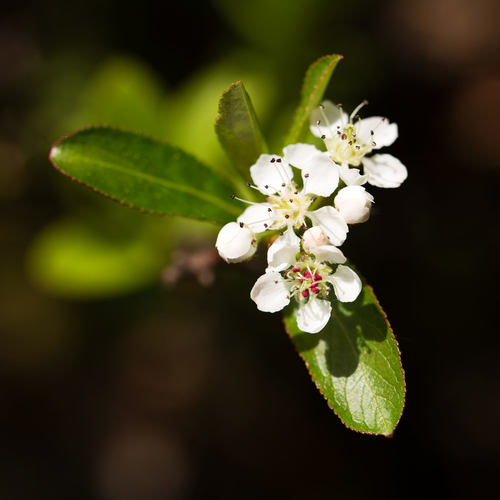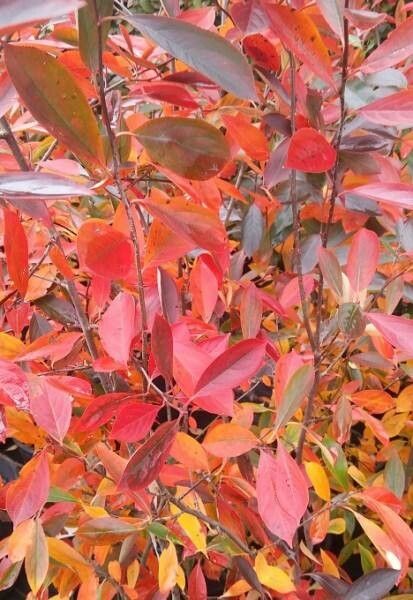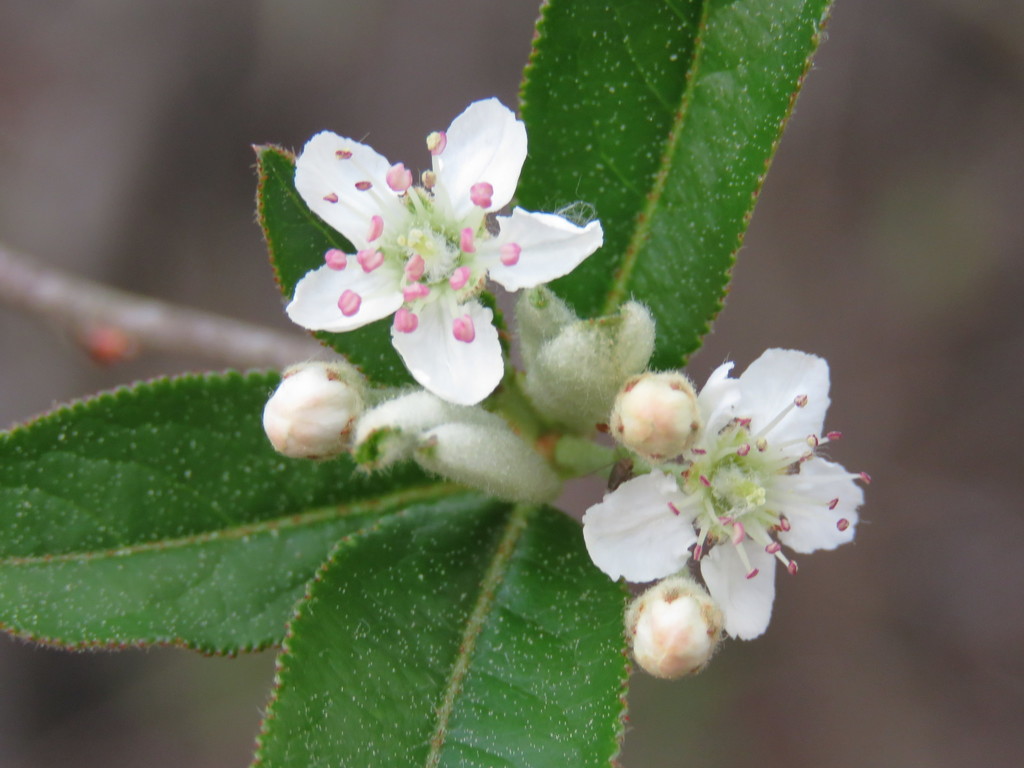
Aronia arbutifolia, commonly known as red chokeberry, is a deciduous shrub native to eastern North America. Typically reaching heights of 6 to 10 feet, this shrub features an upright growth habit with spreading branches. Its leaves are dark green and glossy, transforming into brilliant shades of red and orange during the fall. In the spring, red chokeberry produces clusters of small white flowers, followed by bright red berries that persist into winter.
Red chokeberry is an excellent choice for wildlife gardens, as it provides food for birds and other wildlife throughout the year. Beyond its ecological benefits, this plant offers ornamental value with its attractive foliage, flowers, and fruit. While it prefers moist soils, it can tolerate various soil types, including clay.
In addition to its ornamental value, Aronia arbutifolia has a history of medicinal use by Native Americans, who have utilized it for centuries to treat ailments such as colds, fever, diarrhea, and sore throat, thanks to its high levels of antioxidants.
Overall, Aronia arbutifolia is a versatile shrub that offers both aesthetic appeal and ecological benefits, making it an excellent addition to any landscape design or garden project.
Red chokeberry has strong resistance to disease and is usually not susceptible to illnesses. In terms of care, the plant is fairly low-maintenance. When grown outdoors it needs little watering, and larger plants typically do not require pruning. Smaller plants, however, should be pruned after they finish blooming. Red chokeberry is suitable for anyone with an outdoor area, such as a garden or deck, and does not demand much care experience.
How to keep Aronia Arbutifolia.
Light
Red chokeberry requires plenty of light for healthy growth, typically supplied by direct daytime sun. It can tolerate partial shade, but that may restrict its ability to reach full size. This reflects its native habitats, which are rich in open light. Both excessive light and too little light can prevent it from thriving or result in poor development.
Water
Red chokeberry thrives best in moist, woodland-like settings and needs steady moisture without becoming waterlogged. Water it every 1-2 weeks, depending on the light and temperature conditions. Using mulch can help retain soil moisture during dry spells, providing a consistent water supply during its active growth periods.
Temperature
Red chokeberry's native growing conditions cover temperatures from 5 to 35 ℃ (41 to 95 ℉). As a temperate woody plant, it prefers 18 to 24 ℃ (64 to 75 ℉). In winter it survives down to −25 ℃ (−13 ℉) by entering dormancy.
Fertilizer
Fertilize your Red chokeberry in early spring to encourage healthy growth. Regular feeding improves overall health, producing vigorous growth, greater tolerance of harsh conditions, and increased resistance to diseases and pests. Follow a consistent fertilization schedule for your Red chokeberry to keep foliage vibrant, richly colored, and lush.
Pruning
Pruning red chokeberry in early spring is essential for promoting healthy growth. This process involves removing dead wood and thinning out crowded branches. Rejuvenation pruning, which means cutting older stems down to the base every few years, enhances berry production. Always use clean, sharp tools to prevent the spread of disease.
Pot & Repot
When repotting Red chokeberry, select a pot 1-2 inches (2.5–5.1 cm) larger with ample drainage. Use a well-draining potting mix. Repot in spring or fall, making sure the root ball is slightly lower than the rim of the flower pot. Water thoroughly after repotting and place in a warm spot with indirect sunlight.
Botanical profile.
- Plant Type
- Shrub
- Life Cycle
- Perennial
- Genus
- Aronia
- Family
- Rosaceae
- Hardiness Zone
- 4-9
- Mature Height
- 1.83 m to 3.05 m
- Mature Spread
- 0.91 m to 1.52 m
- Leaf Color
- Green, Red, Yellow, Gray
- Leaf Type
- Deciduous
- Flower Color
- White
- Flower Size
- 2.54 cm
- Bloom Time
- Mid spring, Late spring
- Planting Time
- Spring, Autumn
- Harvest Time
- Mid summer, Late summer
Other names.
Reader questions.
How should I water my Red chokeberry in the best way?
To ensure excellent root development for your plants, it is recommended to place a garden hose at the base of the plant. When watering the plants, avoid spraying the leaves directly. If the plants are outdoors and exposed to direct sunlight, remember that the leaves will need more water. One option to moisturize the roots is to use bubblers, which can be placed on each plant. Soaker hoses are also helpful, especially when adding or removing plants as they can cover the entire garden or bed and promote deep root growth. After watering, be sure to drain any excess water and allow the soil to dry before watering again. To prevent diseases, it is best to water at ground level. On sunny days, it may be beneficial to spray the entire bush with water. Whether your plants are potted or in the ground, it is important to remember that Red chokeberry prefers deep watering instead of light sprinkling.
Do I have to put fertilizer on my Red chokeberry?
If you own a Red chokeberry, regardless of the type, regular fertilization is important for its overall health. Providing the right nutrients leads to stronger growth and increases the plant's ability to withstand tough growing conditions, as well as fight off diseases and pests. Taking care of the foliage is crucial as it is one of the most attractive features of the Red chokeberry. To keep the foliage intact, create and stick to a regular fertilization schedule tailored to your specific type of Red chokeberry. This will result in deep-colored leaves and a lush appearance.
What are the sunlight requirements for Red Chokeberry?
Red Chokeberry (Aronia arbutifolia) thrives in environments that provide full sun, meaning it requires above 6 hours of sunlight daily for optimal growth. However, it can also tolerate partial sun, which is about 3-6 hours of sunlight a day. For healthy growth, abundant illumination, typically from unobstructed daytime sun, is crucial. While it can manage in partial light, its growth might not reach its full potential. This adaptation is a reflection of its native habitats, which are abundant in open light. It's essential to watch how sunlight moves through your garden, seeking spots that strike a balance between light and shade to ensure the well-being of your plants.
What is the native growth environment for Red Chokeberry?
Red chokeberry (Aronia arbutifolia) thrives in a native growth environment that spans a temperature range of 5 to 35°C (41 to 95°F). Being a temperate woody plant, it prefers moderate temperatures between 18 to 24°C (64 to 75°F). In winter, it is capable of withstanding temperatures as low as -25°C (-13°F) by entering a state of dormancy. Due to its strong cold resistance, special frost protection measures are not normally required. However, in extremely cold winters where temperatures are expected to drop below -30°C, it is advisable to wrap the plant's trunk and branches with protective materials like non-woven fabric. Additionally, watering the plant generously before the first freeze of autumn helps to ensure the soil remains moist and prevents drought stress during the winter and early spring.
What should I do if I give Red chokeberry too much or too little water?
An overwatered Red chokeberry will show several signs of distress. Its leaves will turn yellow, drop off, and wilt, giving the plant a dull and unhealthy appearance. Mushy stems may also be present. When these signs appear, it is recommended to adjust your watering schedule accordingly. Conversely, wilting can also indicate under watering, characterized by crispy and dry leaves. In such cases, thoroughly watering the plant at the right time is necessary. However, the damaged root system may cause the plant to continue having dry and yellow leaves for a few days, even after sufficient watering. Once the plant returns to normal, the yellowing of leaves will stop. For Red chokeberries kept indoors, always check the moisture levels in the pot. Avoid overwatering, and be attentive to any signs of black spots. If present, allow the soil to dry out by withholding watering for a few days. Overwatering can result in root rot, indicated by discolored and slimy roots. To prevent this, transfer the plant to a different pot if necessary, and ensure the soil does not become overly saturated. When planting Red chokeberries outdoors, make sure to dig a little deeper into the soil. If the soil feels excessively dry when checked with your fingers, it may indicate underwatering. Adequate watering is crucial to aid in the plant's recovery.
When should I fertilize my Red chokeberry?
To promote healthy growth, it is important to fertilize your Red chokeberry during late winter or early spring. This provides the necessary nutrients for the plant to thrive when the weather warms up. In warm climate regions, giving an extra fertilizer feeding in early fall is beneficial. This not only adds nutrients for the next growing season, but also helps the plant withstand the winter cold without leaf damage. Fertilizing earlier ensures that new branches have sufficient time to grow and withstand the cold winter.
How does artificial lighting support Red Chokeberry growth indoors?
Indoor plants, including Red Chokeberry, require adequate lighting for optimal growth. When natural sunlight is insufficient, artificial lights provide a vital solution. They promote faster, healthier growth especially during winter or in less sunny spaces. Using the right type of artificial light, such as LED lights, allows customization to provide specific wavelengths needed by plants. For full sun plants, 30-50W/sq ft of artificial light is recommended, while partial sun plants need 20-30W/sq ft, and full shade plants require 10-20W/sq ft. The light source should be placed 12-36 inches above the plant to mimic natural sunlight, and most plants benefit from 8-12 hours of artificial light per day.
How should Red Chokeberry be cared for in low temperatures?
Red chokeberry is notably cold-tolerant and performs best when temperatures remain above 5°C. Even so, it's designed to withstand winter conditions down to -25°C. Upon experiencing temperatures below -30°C, the plant may not show immediate damage during winter, but come spring, branches could appear brittle and dry, failing to sprout new growth. The recommended solution for this is to prune away any dead branches in spring that have not produced new leaves, ensuring the plant can recover and continue to grow healthily.
How frequently should I give water to my Red chokeberry?
The Red chokeberry prefers deep and infrequent watering, especially when planted in pots. For potted plants, soak them in a gallon of water each time to account for limited water storage and fast drying soil. In cold regions, water every 3 to 5 days. Water early in the morning when the soil is dry, both indoors and outdoors. Check the soil inside to determine if watering is needed - if the top 2-3 inches of soil is dry, give the plant a thorough watering. During hot days, check the moisture daily as the heat can quickly dry out the soil in the pot. If you have a garden, you'll also need to irrigate the soil. In hot climates, water around once a week. Only water when you notice about 2-3 inches of soil becoming too dry, indoors or outdoors. Take into account rainfall - if there is sufficient rainfall, additional watering may not be necessary to avoid root rot. In spring and fall, when the Red chokeberry is outdoors, add mulch about 3-4 inches deep to conserve water. Sandy soil drains faster, so water plants more frequently. Clay soil requires less frequent watering - you can go 2-3 days without watering to ensure the plant doesn't develop root rot. To keep track of watering, mark the date on the calendar and look out for drooping leaves, which could indicate that watering is needed.
When should I not put fertilizer on my Red chokeberry plant?
There are specific times throughout the year when you should avoid fertilizing your Red chokeberry. The first is during the early and mid-winter months when the plant is dormant and does not require nourishment. Similarly, it is not recommended to fertilize this plant during the late spring and all of summer due to high temperatures and dry weather. These conditions can have an adverse effect on your Red chokeberry if it is fertilized. To prevent any problems, it is best to stick to a fertilization schedule that involves feeding only in early spring and early fall.
What symptoms indicate Red Chokeberry is not getting enough light?
When Red Chokeberry doesn't receive sufficient light, several symptoms can occur. New leaves may grow smaller, and the plant might exhibit leggy or sparse growth with longer spaces between leaves or stems, giving it a stretched-out appearance. There could be faster leaf drop as the plant tries to conserve resources. The growth of the plant may slow down or stop, and new leaves might appear lighter in color or show irregular color patterns indicating a lack of chlorophyll. Excessive sunlight exposure can lead to chlorosis, where leaves turn yellow, sunscald with pale or necrotic areas on plant tissues, leaf curling as a defense mechanism against sunlight, wilting from increased water loss, and leaf scorching characterized by brown, dry, and crispy leaf edges.
How does high temperature affect Red Chokeberry, and what are the solutions?
During the summer months, it is crucial to ensure that the temperatures surrounding Red chokeberry do not exceed 35°C. Should the temperatures rise above 38°C, the plant may exhibit stress symptoms such as lighter-colored leaves, dry and withered leaf tips, and a heightened susceptibility to sunburn. To mitigate these issues, trim away the parts of the plant that are sunburned or have dried up. Relocating the plant to a shaded area or employing a shade cloth can protect it from the harsh midday and afternoon sun. Additionally, maintaining soil moisture through watering in the morning and evening can help alleviate the stress caused by high temperatures.