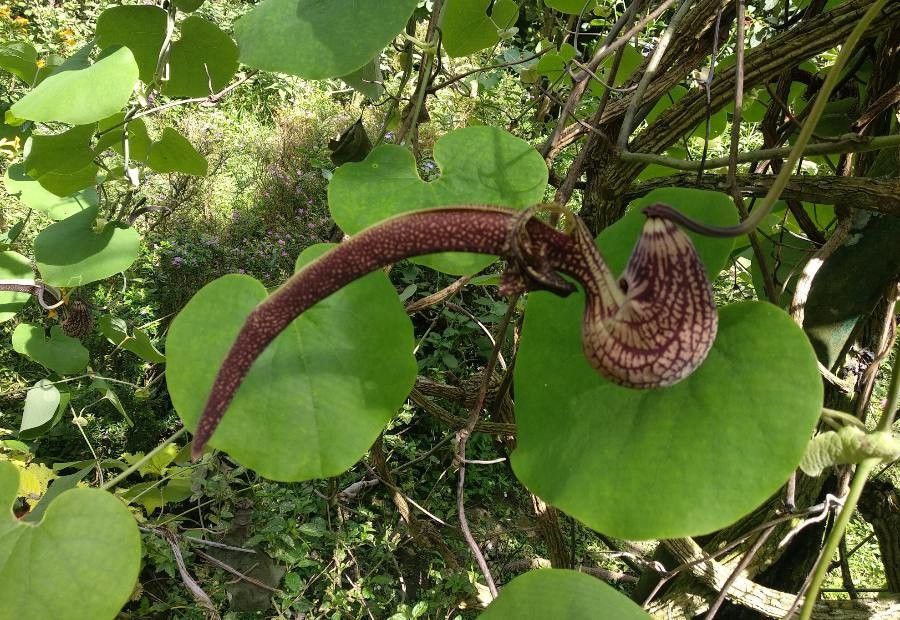
Aristolochia sempervirens, commonly known as the Evergreen Dutchman's Pipe, is a climbing vine that belongs to the Aristolochiaceae family. Native to the Mediterranean region, it thrives in various habitats such as rocky slopes, forests, and scrublands.
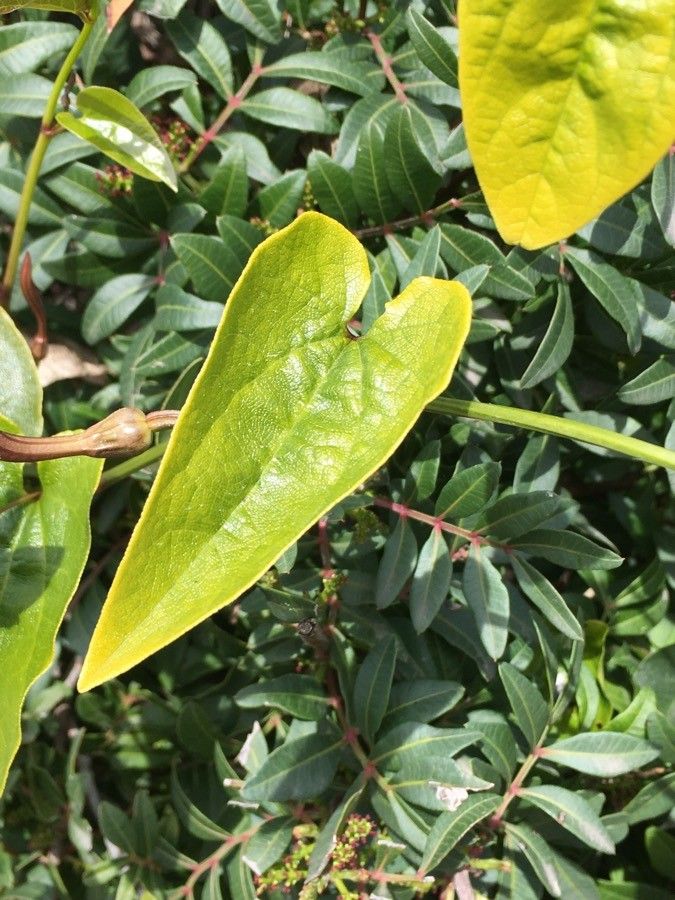
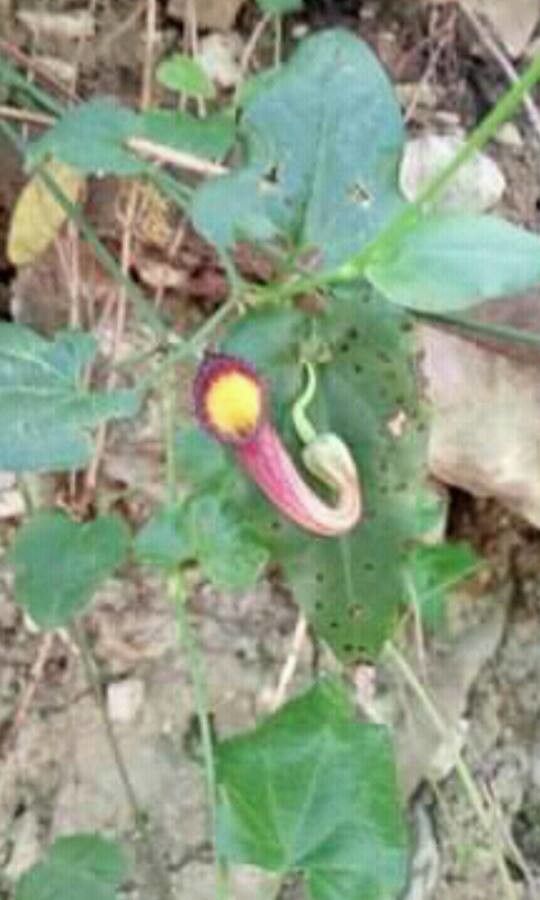
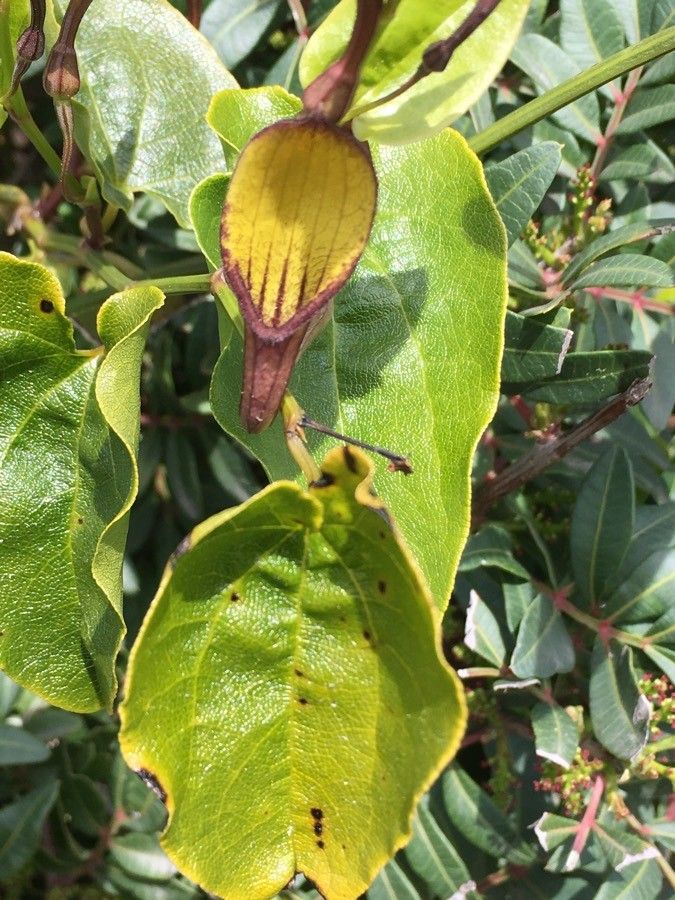
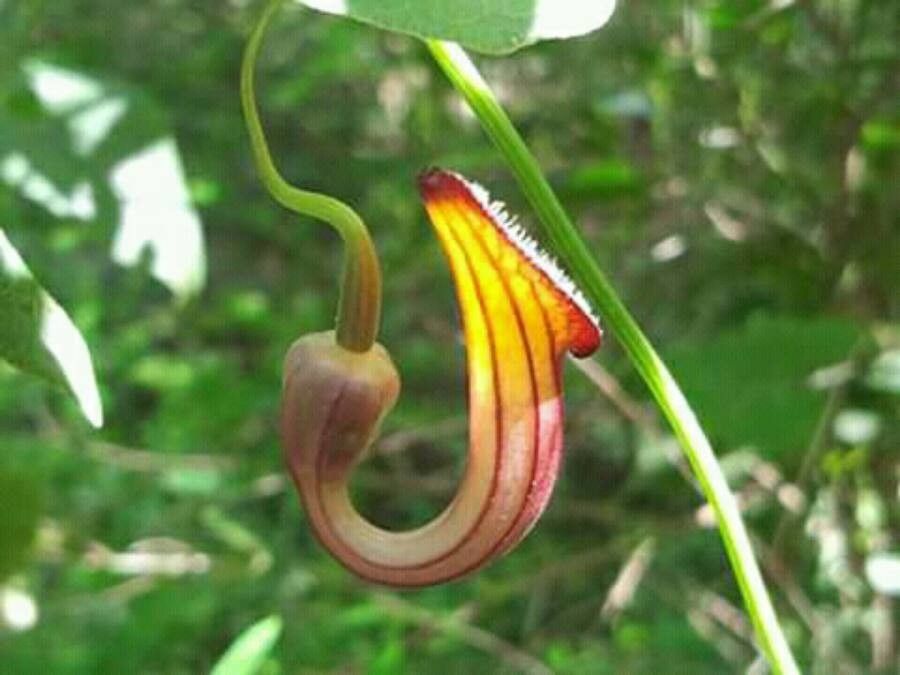
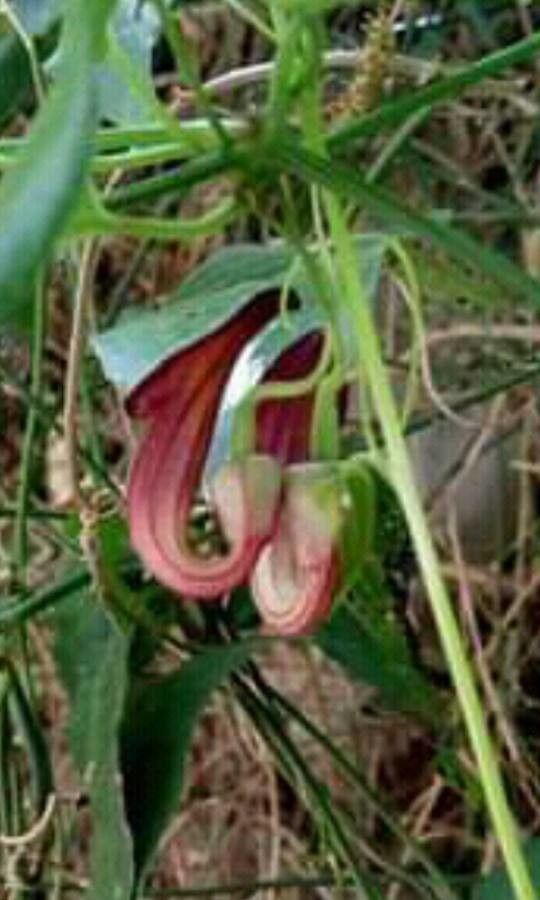
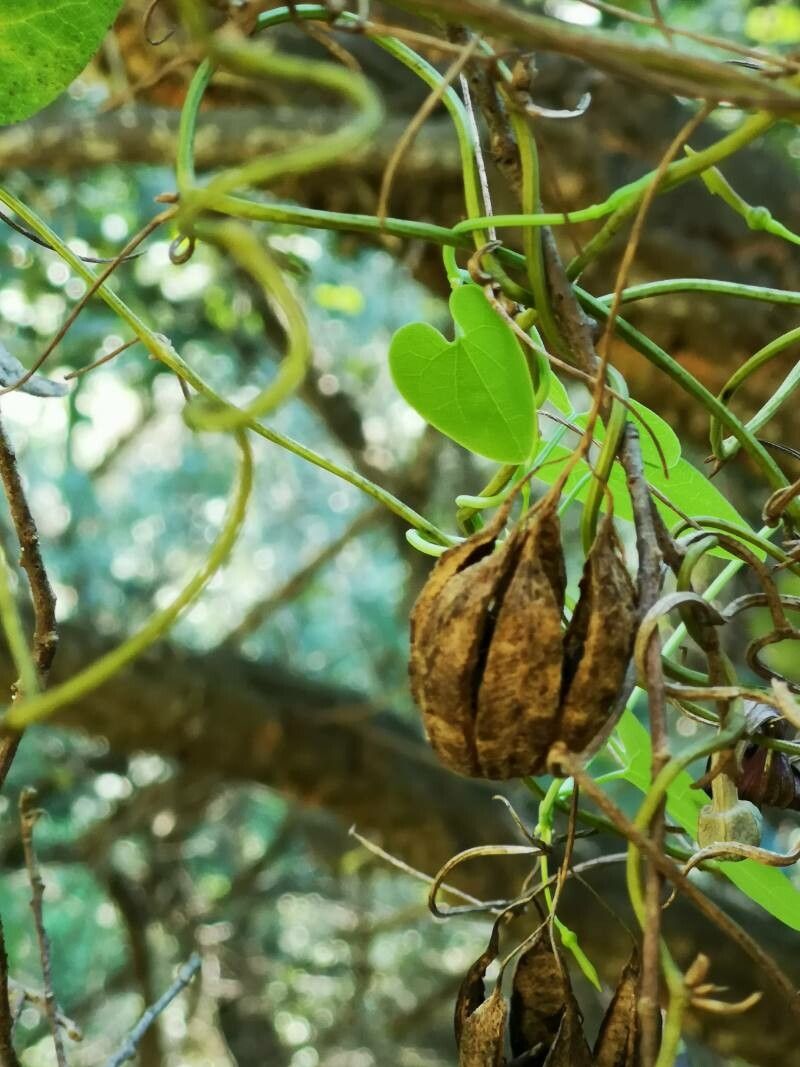
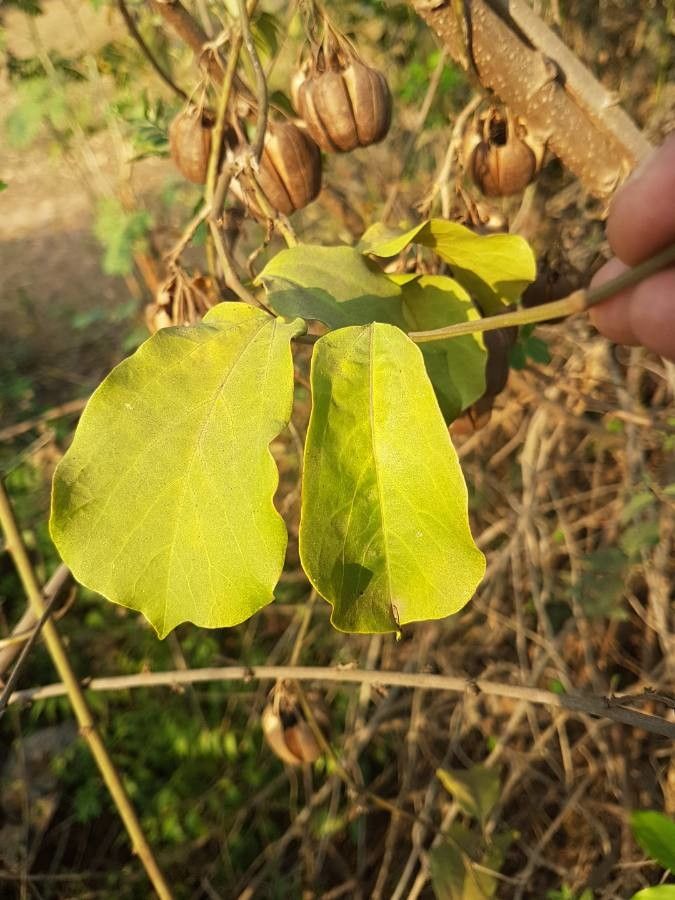
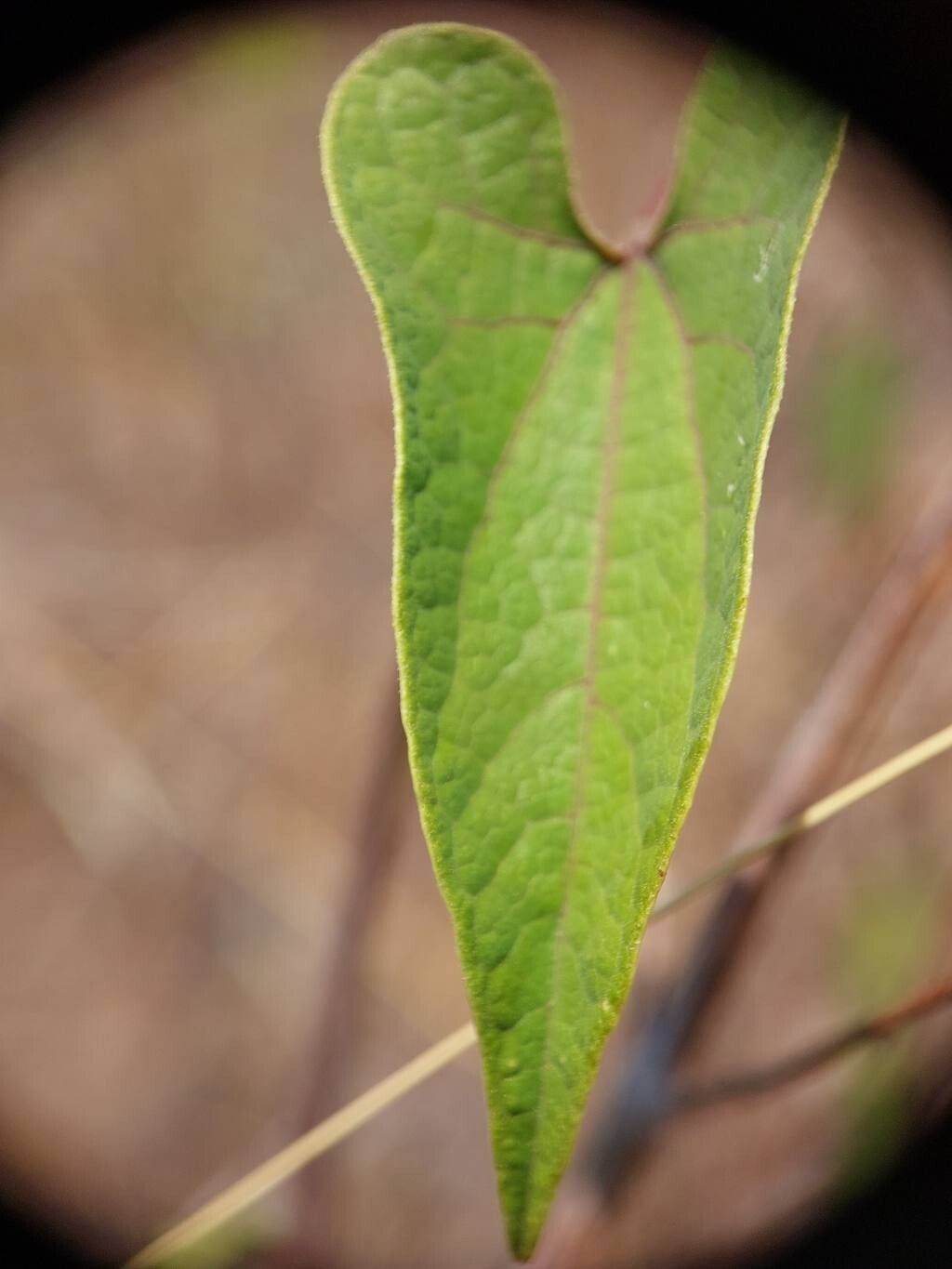
The plant features evergreen, heart-shaped leaves that are glossy green. Its unique flowers resemble a curved pipe with a flared opening at one end and a narrow tube at the other. These flowers are greenish-yellow with distinctive purple-brown markings.
Historically, the plant has been used for its anti-inflammatory properties in medicinal applications. However, it is important to note that some species of Aristolochia contain toxic compounds that can cause kidney damage if ingested.
Aristolochia sempervirens is also popular among gardeners due to its attractive foliage and unique flowers, which lure pollinators such as bees and butterflies.
In conclusion, Aristolochia sempervirens is an intriguing plant with both medicinal properties and ornamental appeal, making it an excellent addition to any garden or landscape design project.
Climbing birthwort is fairly disease-resistant and typically not susceptible to illnesses. As for maintenance, this plant is quite low-maintenance. When grown outdoors it needs only minimal watering, and larger specimens generally do not require pruning. However, smaller plants should be pruned after they finish blooming. Climbing birthwortt is appropriate for anyone with an outdoor area, such as a garden or deck, and does not need extensive care experience.
How to keep Aristolochia Sempervirens.
Light
Climbing birthwort does best in spots that get plentiful sun for most of the day, though it will also tolerate locations with only partial sunlight. Insufficient light can stunt its growth, while too much light may cause the foliage to yellow. Its native habitat is characterized by abundant sun exposure.
Water
Climbing birthwort thrives in Mediterranean climates and prefers evenly moist soil. To prevent waterlogging, it requires weekly watering. As an evergreen plant, it needs consistent hydration throughout the year, even during cooler months. Although it benefits from natural rainfall when grown outdoors, it should be carefully monitored during dry spells to ensure it receives adequate water.
Temperature
Climbing birthwort is native to temperate regions and prefers temperatures from 59 to 95 °F (15 to 35 ℃). In colder winter months it may require adjustments, such as moving the plant to warmer locations.
Fertilizer
Timing is essential when fertilizing Climbing birthwort. Apply fertilizer in early spring and continue once a month until early summer. Fertilizer aids in producing attractive blooms and supplies energy during both dormant and active growth phases.
Pruning
Climbing birthwort is a robust plant known for its vigorous climbing growth and heart-shaped leaves. To keep it healthy and manageable in garden spaces, regular pruning in early spring is essential. This practice removes damaged stems and controls the spread of the plant, promoting better air circulation and encouraging prolific flowering. By maintaining these conditions, you can prevent disease and ensure the climbing birthwort thrives.
Pot & Repot
To support the growth of climbing birthwort, it should be repotted every 2 to 3 years, preferably in the spring. Choose a pot that allows for expansion. After repotting, ensure the plant receives plenty of sunlight and consistent moisture to help it transition smoothly.
Botanical profile.
- Plant Type
- Vine
- Life Cycle
- Perennial
- Genus
- Aristolochia
- Family
- Aristolochiaceae
- Hardiness Zone
- 8-10
- Mature Height
- 7.92 m
- Mature Spread
- 4.88 m
- Leaf Color
- Green
- Leaf Type
- Evergreen
- Flower Color
- Yellow, Red, Gold
- Flower Size
- 3.05 cm to 5.08 cm
- Bloom Time
- Mid spring, Late spring, Early summer
- Planting Time
- Spring, Summer
- Harvest Time
- Mid summer, Late summer, Early fall
- Native Area
- Turkey, Syria, Italy, Cyprus, Algeria, Greece, Morocco, Lebanon
Other names.
Reader questions.
How should I water my Climbing birthwort plant?
To ensure that your plants develop strong roots, it's best to place a garden hose at the base of the plant. Avoid spraying water directly on the leaves, as this can be harmful. If your plants are outside and exposed to direct sunlight, keep in mind that the leaves may need more water. A helpful tip is to use bubblers to water the roots of each plant. Soaker hoses are also effective for watering the entire garden or bed and encouraging deep root growth when adding or removing plants. After watering, be sure to drain any excess water and allow the soil to dry before watering again. When watering, aim for ground level to prevent diseases. On sunny days, consider giving the whole bush a thorough water spray. It's important to note that whether your plants are in pots or in the ground, climbing birthwort plants prefer deep watering rather than light sprinkling.
Why should I add fertilizer to my Climbing birthwort?
No matter what type of Climbing birthwort you have, regular fertilization is key to ensure that your plant remains healthy. By supplying the necessary nutrients, you will promote stronger growth and enhance its ability to withstand difficult conditions and fend off diseases and pests. The foliage of your Climbing birthwort is particularly beautiful, so it's important to maintain its wellbeing. This requires following a fertilization schedule tailored to your specific Climbing birthwort. By doing so, you will encourage vibrant, lush leaves with rich colors.
What are the sunlight requirements for Climbing birthwort?
Climbing birthwort requires full sun, meaning it thrives in areas that receive more than 6 hours of sunlight daily. However, it can also tolerate partial sun conditions, where sunlight is available for about 3 to 6 hours per day. It's important to watch how sunlight moves through your garden to find spots that provide the perfect balance of light for these plants, ensuring their happiness.
What is the native environment of Climbing birthwort?
Climbing birthwort, scientifically known as Aristolochia sempervirens, is native to temperate environments. It thrives in a temperature range between 59 to 95°F (15 to 35°C). To ensure the health of the plant, particularly during the colder winter months, it may be necessary to adjust its location to maintain it within this ideal temperature range.
What should I do if I give Climbing birthwort too much water or not enough water?
If a Climbing birthwort is overwatered, it may exhibit signs such as yellowing leaves, leaf drop, and wilting. The plant may also appear unhealthy and lackluster, with mushy stems. In such cases, adjusting your watering schedule is advisable. However, wilting can also be a sign of under watering. Under these circumstances, you may notice crispy and dry leaves. When the soil is dry and simply watering is insufficient, a thorough watering is necessary. Sufficient water will help the Climbing birthwort recover, but the plant may still appear dry with yellow leaves for a few days due to root damage. The yellowing of leaves will stop once the plant returns to normal. When growing Climbing birthwort indoors, it is important to regularly check the moisture levels in the pot. Avoid overwatering and watch out for signs of black spots. If these spots are present, allow the soil to dry out for a few days before watering again. Overwatering can lead to root rot, so if you notice discolored and slimy roots, consider transferring the plant to a different pot. It is always best to prevent root rot by avoiding overly soggy soil. When planting Climbing birthwort outdoors, dig a little deeper and check the soil's moisture level with your fingers. If the soil is excessively dry, it may be a sign of under watering. Adequate watering is necessary to help the plant recover.
When should I put fertilizer on my Climbing birthwort plant?
To ensure healthy growth, it is best to fertilize your Climbing birthwort in late winter or early spring. This will provide the necessary nutrients for the plant once the weather becomes warmer. If you live in a warm climate region, it is also beneficial to fertilize in early fall. This will provide additional nutrients for the following growing season and help the plant withstand the cold winter without foliage damage. By fertilizing earlier, the new branches will have enough time to grow and withstand the winter conditions.
How does Climbing birthwort react to different lighting conditions?
Climbing birthwort prospers in generously sunlit areas for the majority of the day but also accepts partial sun. A deficiency or excess in sunlight exposure can impact its growth negatively, possibly stunting growth or causing foliage to turn yellow. Its natural habitat is characterized by ample sun exposure. For indoor plants requiring more light, especially in winter or less sunny spaces, artificial lighting such as LED lights can be a solution, with different requirements depending on whether the plant needs full, partial, or shade levels of light.
Does Climbing birthwort have any cold tolerance?
Yes, Climbing birthwort has some degree of cold tolerance and generally does not require additional protective measures when the temperature is above -5°C. However, in conditions expected to drop below -5°C, temporary protective measures should be undertaken, such as wrapping the plant with plastic film, fabric, or other insulating materials. It's important to remove these protections once the temperature rises again to avoid any potential damage to the plant.
How often do I need to water my Climbing birthwort?
The Climbing birthwort prefers deep, infrequent watering. When planted in pots, it's important to soak them in a gallon of water each time, as the limited water storage in pots cause soil to dry out faster. In cold regions, watering is necessary every 3 to 5 days, preferably in the morning when the soil is dry. To determine if watering is needed, check the top 2-3 inches of soil - if it's dry, it's time to water. During hot days, check the soil moisture daily, as the heat can quickly dry out the pot soil. If you have a garden, irrigation is also required. In hot climates, watering once a week is recommended. Only water when about 2-3 inches of soil become too dry. Take rainfall into consideration and avoid adding water to prevent root rot. Climbing birthwort mainly grows in spring and fall. When outdoors, adding 3 to 4 inches of mulch can help conserve water. Sandy soil drains faster, so these plants need more frequent watering. On the other hand, with clay soil, watering can be less frequent to avoid root rot. Marking watering dates on a calendar can help ensure plants are cared for on time. If the leaves start to droop, it may be an indication that watering is needed.
When is not a good time to fertilize my Climbing birthwort plant?
There are specific times of the year when you should avoid fertilizing your Climbing birthwort. The first is during the early and mid-winter months when the plant is dormant and does not require any nutrients. Similarly, it is not recommended to fertilize it during late spring and summer, as the hotter and drier weather during this time can have negative effects on the plant if fertilized. To prevent any issues, it is best to stick to a fertilization schedule that only includes feeding in early spring and early fall.
What are the common symptoms of incorrect lighting for Climbing birthwort?
When Climbing birthwort doesn't receive optimal lighting, it may exhibit various symptoms: new, smaller leaves compared to previous ones, leggy or sparse growth, faster leaf drop, slower or no new growth, lighter-colored new leaves, signs of chlorosis, sunscald, leaf curling, wilting, and leaf scorching. These symptoms indicate either too little or too much sunlight and can impact the plant's health significantly.
How should Climbing birthwort be cared for during low temperatures?
Climbing birthwort demonstrates moderate tolerance to low temperatures, thriving best above 15°C and ideally kept above -5°C during winter. If the temperature falls below -10°C, the leaves may droop, wilt, and eventually fall off in severe cases. To manage frost damage, trim off the frost-damaged parts. Before low temperatures are encountered again, protect the plant with non-woven fabric or cloth and construct a wind barrier to shield it from cold winds.