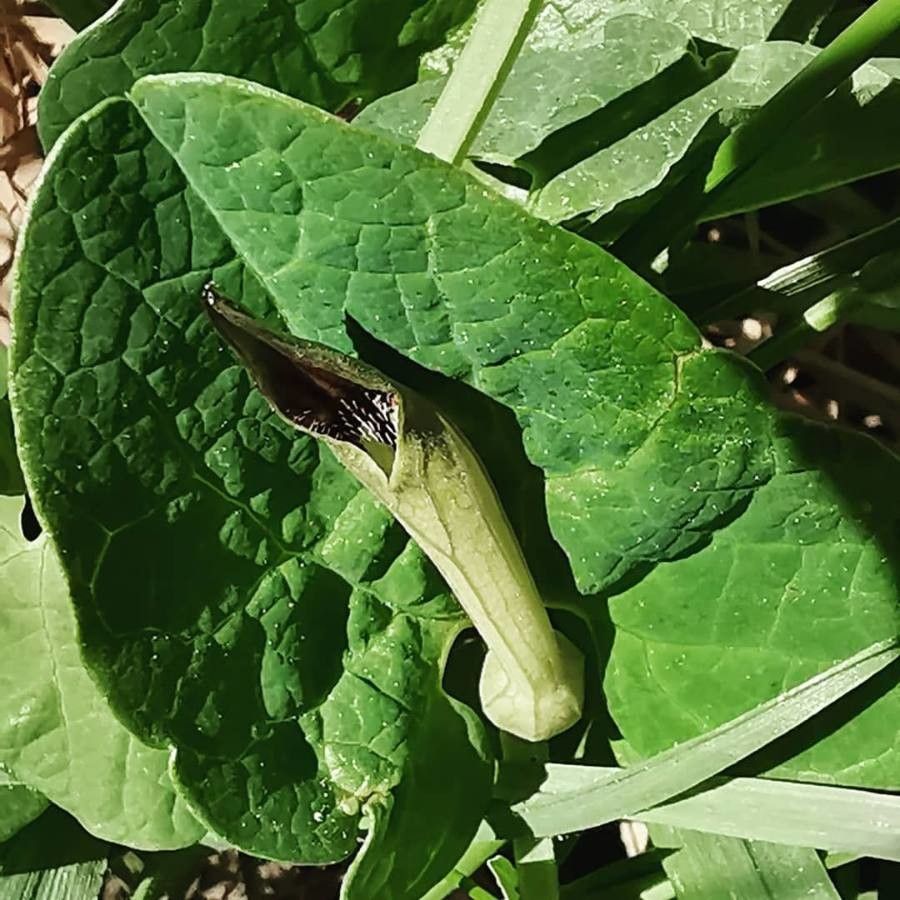
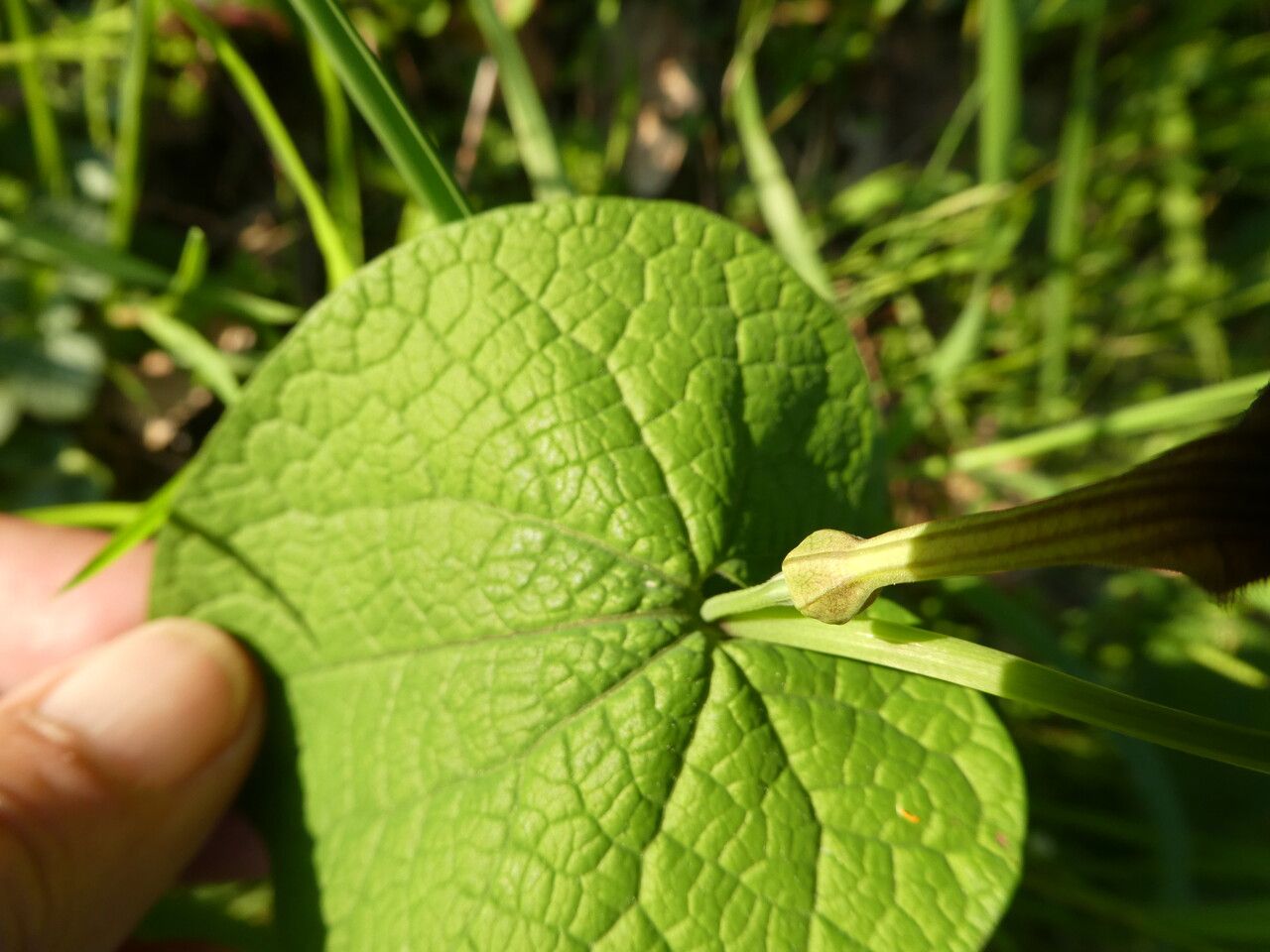
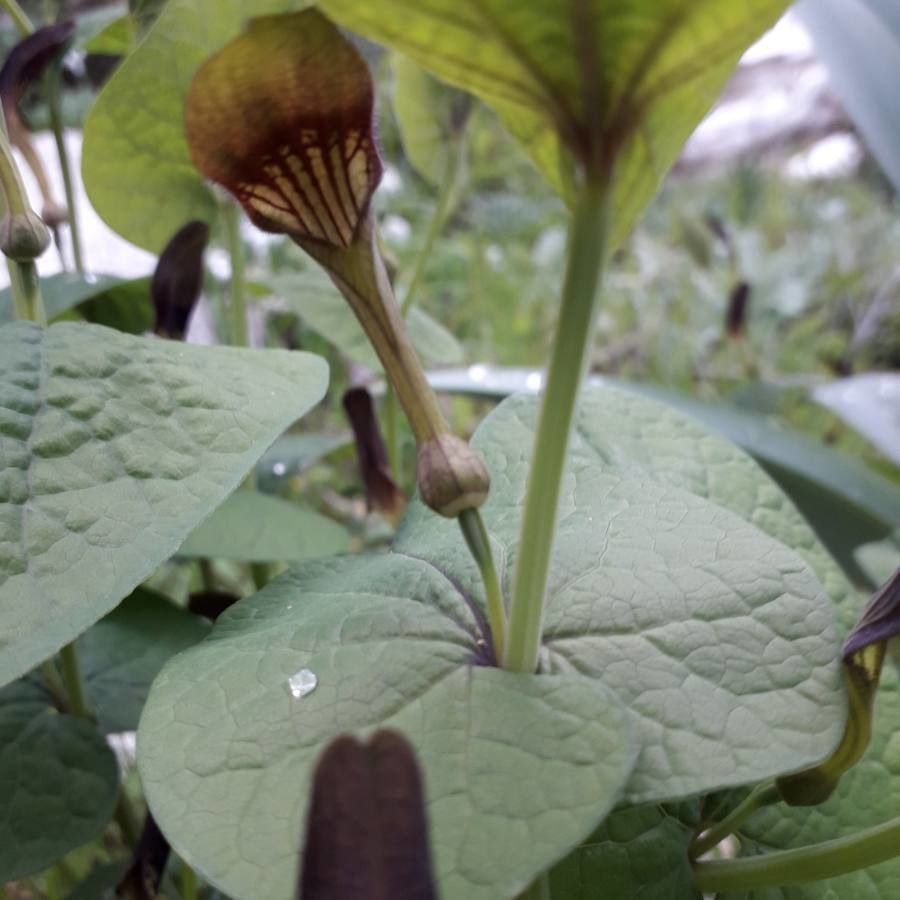
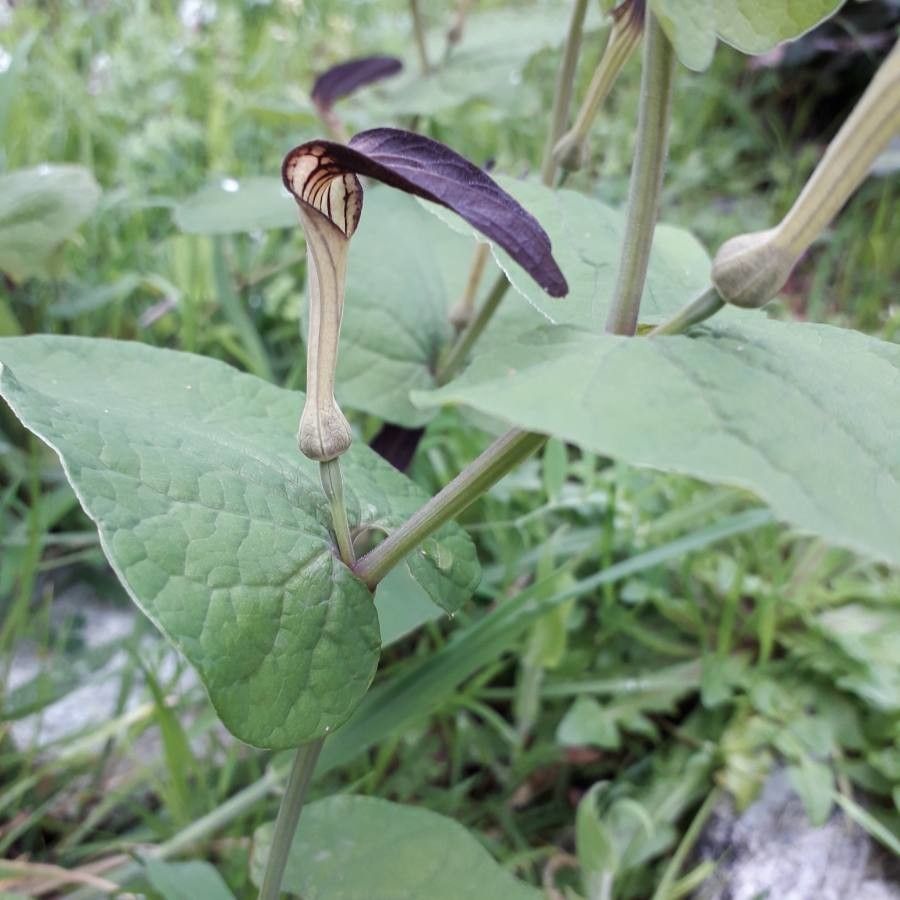
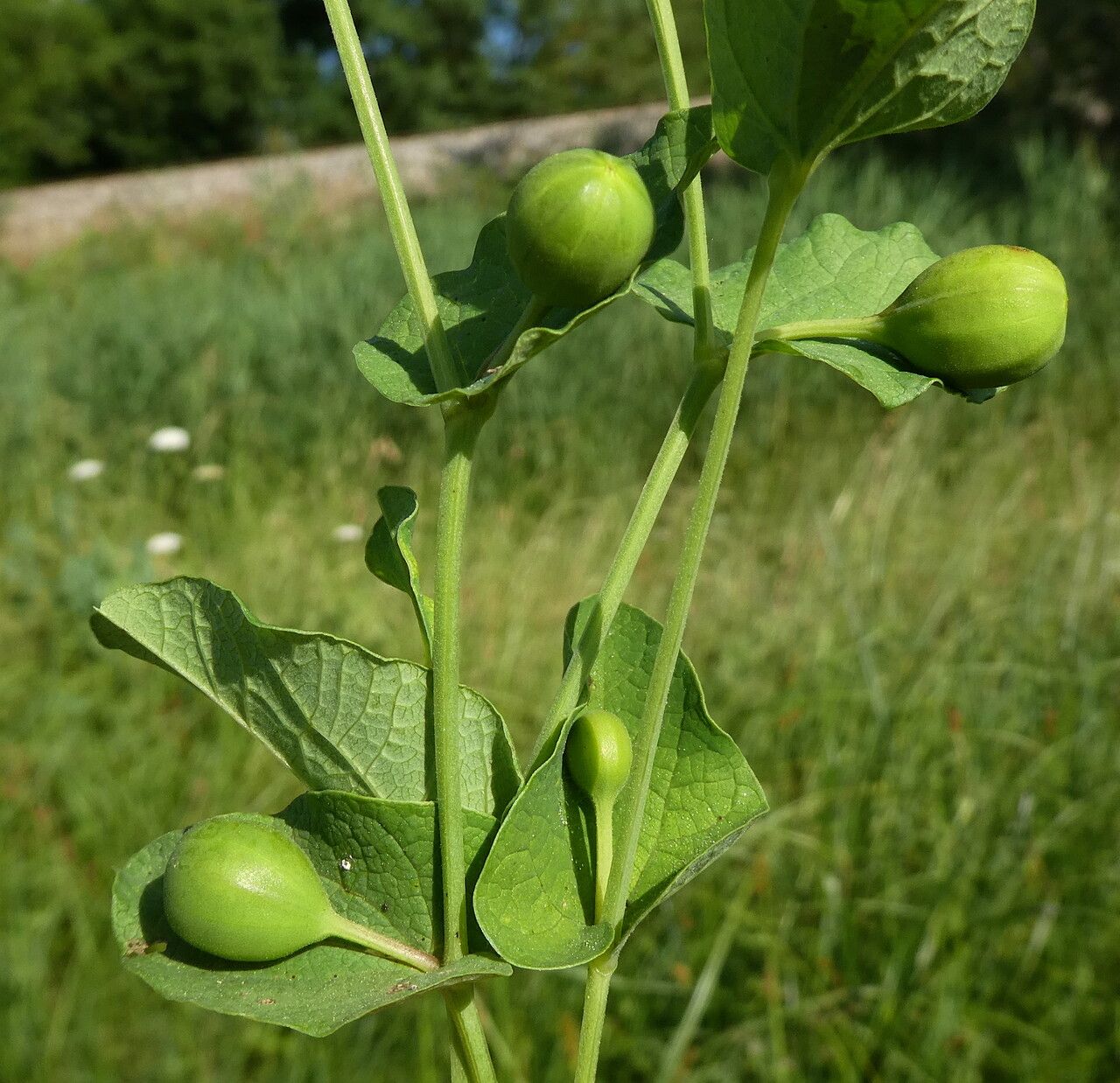
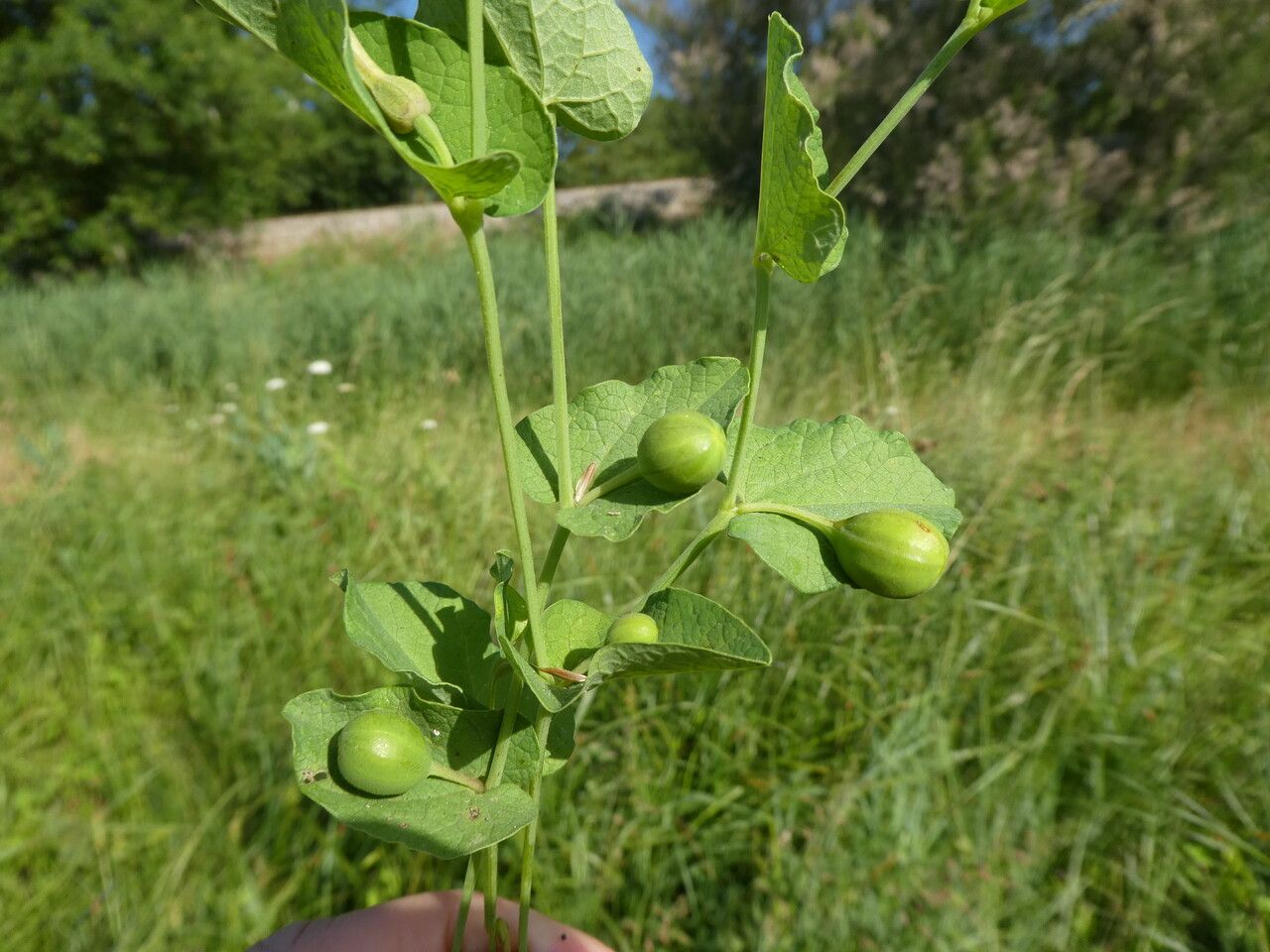
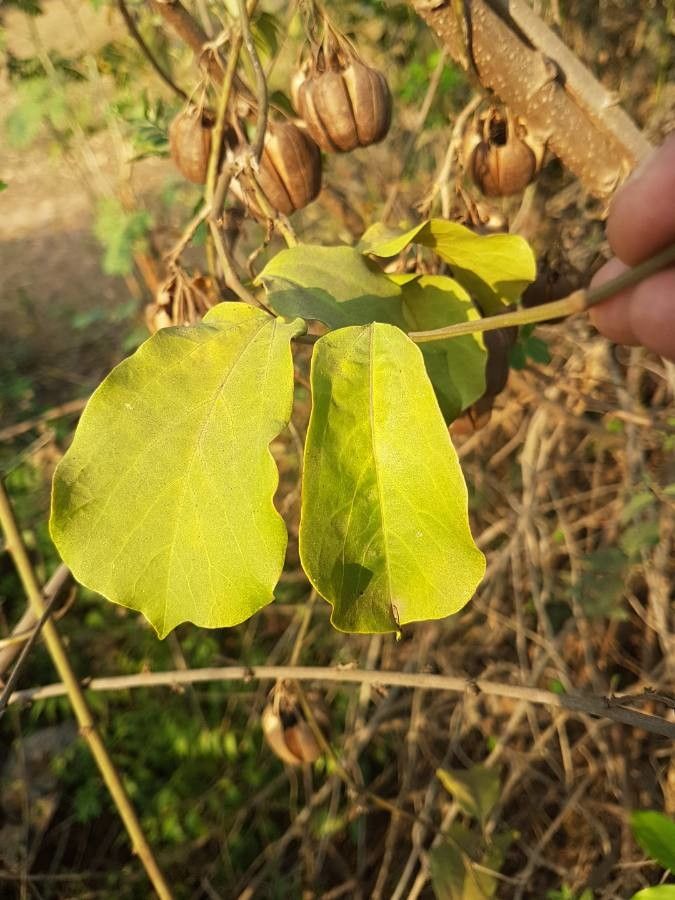
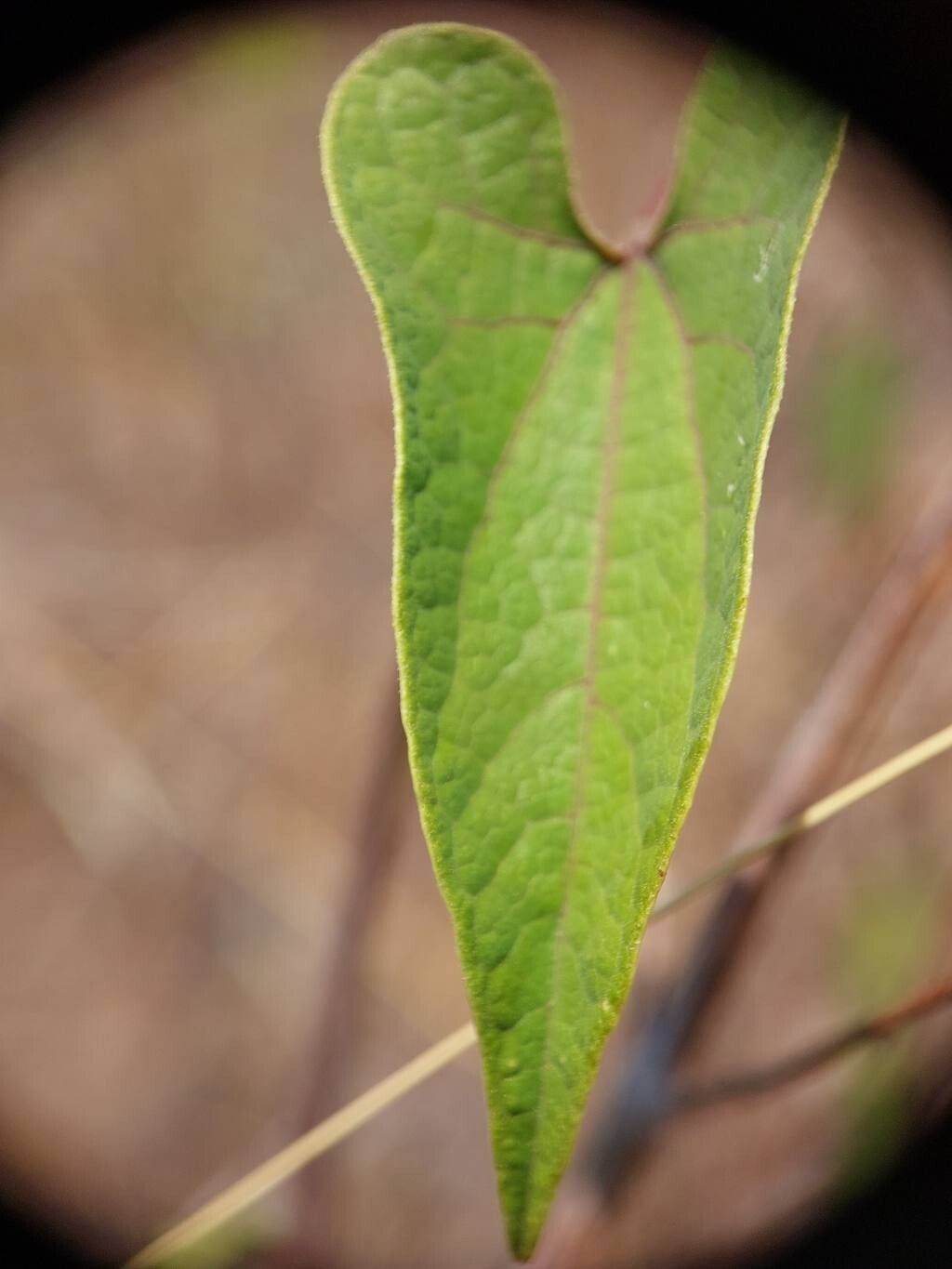
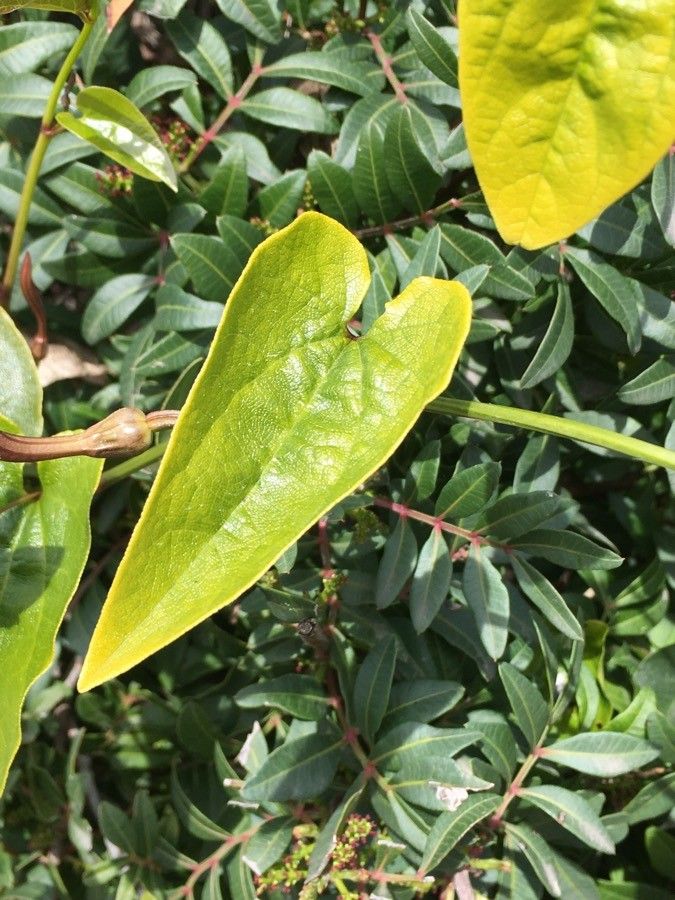
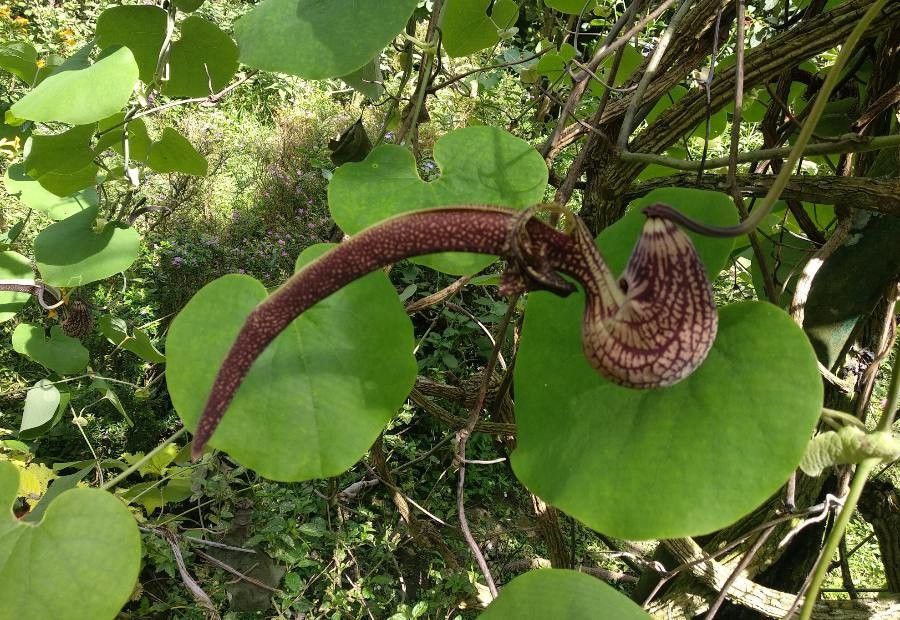
Aristolochia rotunda, commonly known as the Round-leaved Birthwort, is a perennial vine belonging to the Aristolochiaceae family. This plant is native to South America and is found in countries such as Brazil, Argentina, and Paraguay. It has a distinctive appearance with large, round leaves that can grow up to 20 cm in diameter. The flowers of Aristolochia rotunda are also unique, featuring a trumpet-like shape and a brownish-purple coloration. The Round-leaved Birthwort has been used for medicinal purposes for centuries by indigenous people in South America. It contains aristolochic acid, which has demonstrated anti-inflammatory properties and may be effective against certain types of cancer. However, it is important to note that aristolochic acid can also have toxic effects on the kidneys if consumed in large quantities or over an extended period. Therefore, this plant should only be used under the guidance of a qualified healthcare professional. In addition to its medicinal properties, Aristolochia rotunda is also valued as an ornamental plant due to its unique appearance. It prefers moist soil conditions and partial shade but can tolerate full sun if given sufficient water. Overall, Aristolochia rotunda is an intriguing plant with both medicinal and ornamental uses. Nonetheless, caution is necessary due to its potential toxicity when consumed improperly or in excess.
Birthwort has strong disease resistance and is generally unlikely to develop illnesses. Still, it can be affected by pests and diseases present in its surroundings. These infections are usually minor. Regarding care, this plant requires a moderate level of maintenance. It needs regular pruning to keep a good appearance and healthy growth. Fertilizing can also help encourage flowering. Birthwort is suitable for anyone who has outdoor space, such as a garden or patio, and does not need extensive experience in plant care. It may demand more attention when grown indoors.
How to keep Aristolochia Rotunda.
Light
The birthwort does best when it receives plentiful sunlight during the day, though it can also tolerate periods of moderate sun. Its native habitat is associated with places that have strong sunlight throughout the day. Insufficient sun can slow its growth, while too much may cause scorching.
Water
Round-leaved birthwort is native to the Mediterranean regions, where it thrives in dry environments. As a drought-tolerant herbaceous perennial, it grows well outdoors and benefits from natural rainfall. To maintain its health, it should be watered weekly, which provides the right balance of moisture without causing waterlogging.
Temperature
Birthwort is native to climates with temperatures ranging from 41 to 95 °F (5 to 35 ℃). It flourishes under those warm conditions. In colder seasons, consider adjusting its temperature environment to resemble its native growing conditions as closely as possible.
Fertilizer
Usually one spring application of fertilizer is enough for Birthwort, though repeated feedings can maximize growth. Apply fertilizer every month to a month and a half. Fertilization improves the appearance and function of the leaves, helping maintain uniform color and a healthy texture. It also encourages root development and nutrient uptake for the plant's long-term health.
Pruning
Round-leaved birthwort is a climbing vine characterized by its heart-shaped leaves and aromatic flowers. To maintain its health and appearance, prune the plant in early spring to remove any damaged stems and promote healthy growth. In late spring, perform light pruning to shape the plant, improve air circulation, and reduce the risk of disease by trimming back older growth for revitalization.
Botanical profile.
- Plant Type
- Herb, Vine
- Life Cycle
- Perennial
- Genus
- Aristolochia
- Family
- Aristolochiaceae
- Hardiness Zone
- 5-9
- Mature Height
- 61 cm to 91 cm
- Mature Spread
- 61 cm to 91 cm
- Leaf Color
- Green
- Leaf Type
- Deciduous
- Flower Color
- Yellow
- Flower Size
- 2.54 cm
- Bloom Time
- Mid spring, Late spring, Early summer, Mid summer
- Planting Time
- Autumn, Winter
- Harvest Time
- Mid summer, Late summer, Early fall
- Native Area
- Turkey, Austria, Czech Republic, Slovakia, Montenegro, Bulgaria, Poland, Greece, Croatia, Slovenia, Belarus, Ukraine, Serbia, Russia, Hungary, Germany, Italy, Kazakhstan, Spain, Switzerland, France, Albania, Azerbaijan, United Kingdom, Romania, Belgium, Netherlands
Other names.
Reader questions.
How should I water my Round-leaved birthwort plant?
To properly water the Round-leaved birthwort, it's important to use filtered water at room temperature or slightly warmer. Tap water may contain harmful particles. The plant prefers a warm environment, so cold water can be a shock. Avoid watering from above as it can cause foliage issues. Instead, water the soil directly until it is completely soaked. This helps keep the roots moist and allows them to spread and collect the necessary nutrients.
Why is it necessary to add fertilizer to my Round-leaved birthwort?
To keep your Round-leaved birthwort looking great and functioning properly, fertilization is key. By fertilizing your plant, you will not only maintain leaf color and texture, but also promote the growth of new roots and the maintenance of existing roots. This will not only benefit your plant now but also enhance its ability to absorb nutrients in the future.
What are the sunlight requirements for Round-leaved birthwort?
Round-leaved birthwort thrives best in full sun conditions, requiring more than 6 hours of sunlight daily. It can also grow in partial sun, receiving about 3-6 hours of sunlight. The plant's growth is significantly influenced by the amount of sunlight it receives, making it crucial to place it in spots that balance light and shade optimally. This ensures the plant's development and growth remain healthy. It's important to observe how sunlight moves through your garden and choose locations that provide this balance to keep your plants happy.
What is the native climate of the Round-leaved birthwort?
The Round-leaved birthwort is native to temperate regions and thrives in a temperature range of 41 to 89.6 °F (5 to 32 °C). It is crucial to maintain this temperature range across the different seasons to ensure the plant's health and growth. Despite its strong cold resistance, protection from extreme cold conditions, such as temperatures dropping below -25°C, may be necessary by covering the plant with insulating materials like soil or straw. Additionally, it is beneficial to water the plant abundantly before the first freeze of autumn to keep the soil moist and prevent drought and water scarcity during winter and early spring.
What should I do if I give too much or too little water to my Round-leaved birthwort?
Overwatering is a common issue for Round-leaved birthwort. If this plant receives too much water, its stems and leaves may wilt and turn yellow. Overwatering for a long time can cause diseases like root rot, mold, and mildew that can kill the plant. Underwatering is less common but still a possibility. Signs of underwatering include brittle and brown leaves. It's important to notice signs of overwatering early to prevent irreversible damage. Reduce watering if you see early signs of overwatering and check the soil's draining capacity. Replace poorly draining soil with a loose, well-draining potting mix. If you notice signs of underwatering, increase watering until the signs disappear.
When should I add fertilizer to my Round-leaved birthwort?
If you grow your Round-leaved birthwort outdoors, it will start to grow new leaves in early spring. This is the time to start fertilizing it for the year. Usually, one application of fertilizer is enough. But if you want your Round-leaved birthwort to grow as much as possible, you can fertilize it multiple times in the spring and early summer. In that case, feed it about once every month to a month and a half.
How does artificial light affect the growth of Round-leaved birthwort, especially when natural light is insufficient?
When natural sunlight is insufficient, especially during winter or in less sunny spaces, artificial lighting becomes essential for the growth of Round-leaved birthwort and other indoor plants. LED lights are a favored option for indoor plant lighting, as they can be tailored to provide specific light wavelengths necessary for the plants. The requirement varies depending on the type of plant; full sun plants need 30-50W/sq ft of artificial light, partial sun plants need 20-30W/sq ft, and full shade plants require 10-20W/sq ft. It's also vital to place the light source 12-36 inches above the plant, mimicking natural sunlight while ensuring it receives 8-12 hours of light per day to promote healthier, faster growth.
How does the Round-leaved birthwort react to low temperatures?
The Round-leaved birthwort is quite cold-tolerant and actually thrives best when temperatures are maintained above 5°C. During winter, it's important to ensure the temperature stays above -20°C. However, if temperatures fall below -25°C, the plant may not show immediate distress, but there could be a significant impact on its ability to sprout in spring, with possible decreased sprouting or total lack of sprouting observed. To address this issue in spring, any parts of the plant that have failed to sprout should be removed.
How frequently should I water my Round-leaved birthwort plant?
If your Round-leaved birthwort is in a pot, the most precise way to check if it needs water is to insert your finger into the soil. When the top two to three inches of soil feel dry, it's time to water it. If you have your Round-leaved birthwort planted directly in the ground, you can use a similar method to test the soil. Again, when the top few inches of soil have dried out, it's time to water. Typically, during spring and early fall, watering once a week is sufficient. However, during very hot weather, you may need to water twice a week or even more. Keep in mind that mature, well-established Round-leaved birthwort plants can tolerate drought well.
When is it not a good idea to add fertilizer to my Round-leaved birthwort?
During the late fall and winter, your Round-leaved birthwort will become dormant and stop producing new growth. It's important to avoid fertilizing it during this time. If you decide to fertilize in the spring and summer, gradually decrease the amount as summer approaches because the plant's growth rate will slow. In general, it's not recommended to fertilize your Round-leaved birthwort during extremely hot weather or when the soil is very dry. Doing so can cause stress and premature death for the plant.
What are the key symptoms of improper lighting for Round-leaved birthwort?
Improper lighting can lead to several symptoms in Round-leaved birthwort, such as smaller new leaves, leggy or sparse growth, faster leaf drop, slower or no new growth, lighter-colored new leaves, chlorosis (yellowing leaves due to lack of chlorophyll), sunscald, leaf curling, wilting, and leaf scorching. These symptoms indicate either excessive sunlight or insufficient light exposure, both of which affect the plant's ability to photosynthesize and maintain healthy growth.
How does high temperature affect the Round-leaved birthwort and what are the solutions?
During the summer months, it is crucial to ensure that the temperature around the Round-leaved birthwort does not exceed 32°C. Exposing the plant to temperatures above 35°C can lead to the leaves becoming lighter in color, prone to curling, susceptible to sunburn, and in severe cases, the entire plant may wilt and become dry. To mitigate these effects, sunburned and dried-up parts of the plant should be trimmed away. Additionally, moving the plant to a shaded area or using a shade cloth during the midday and afternoon sun can protect it from heat stress. It is also advisable to water the plant in the morning and evening to keep the soil moist and cool.