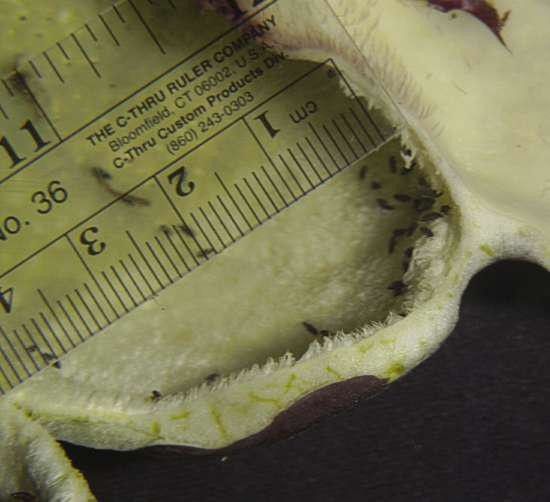
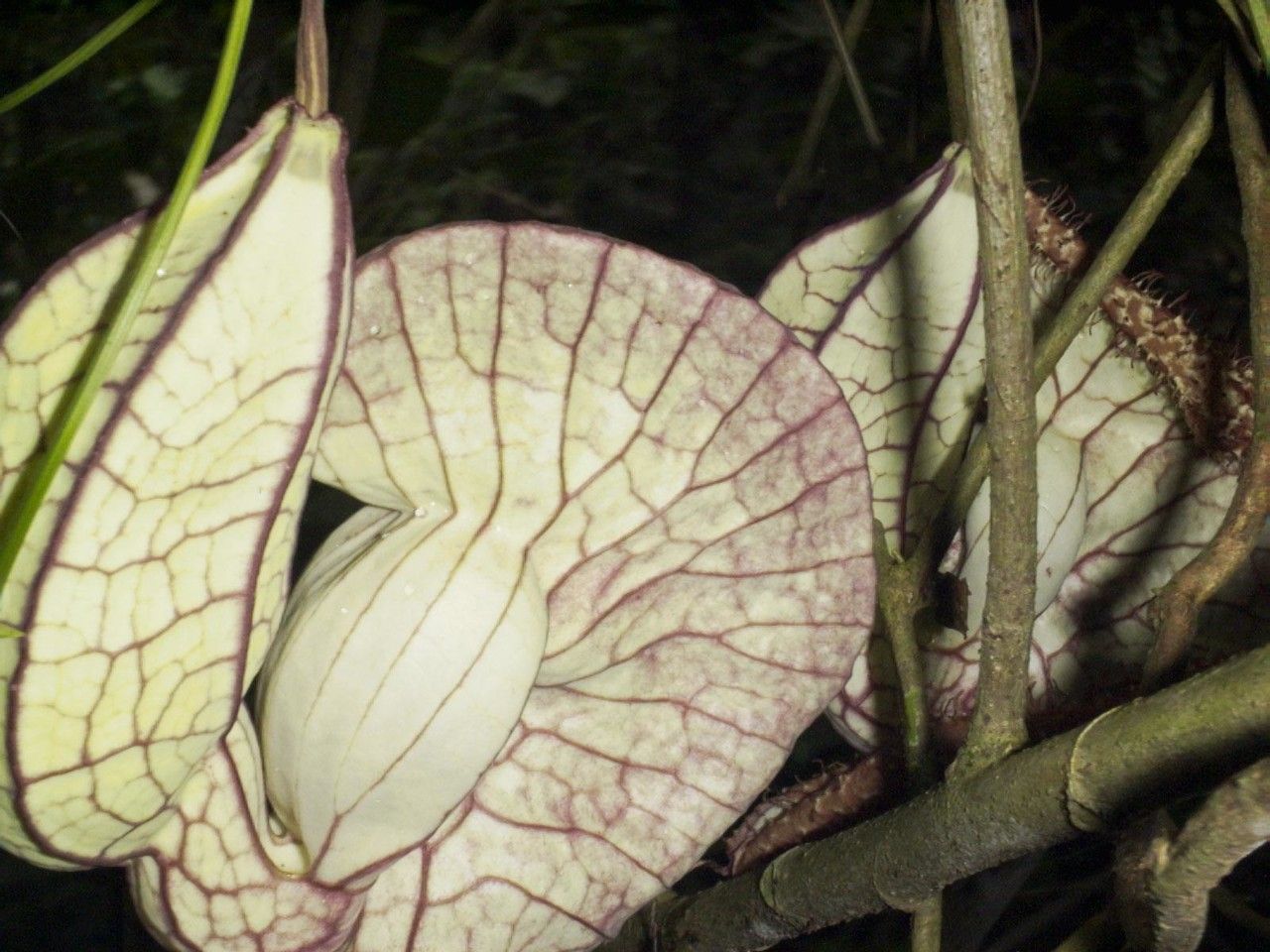
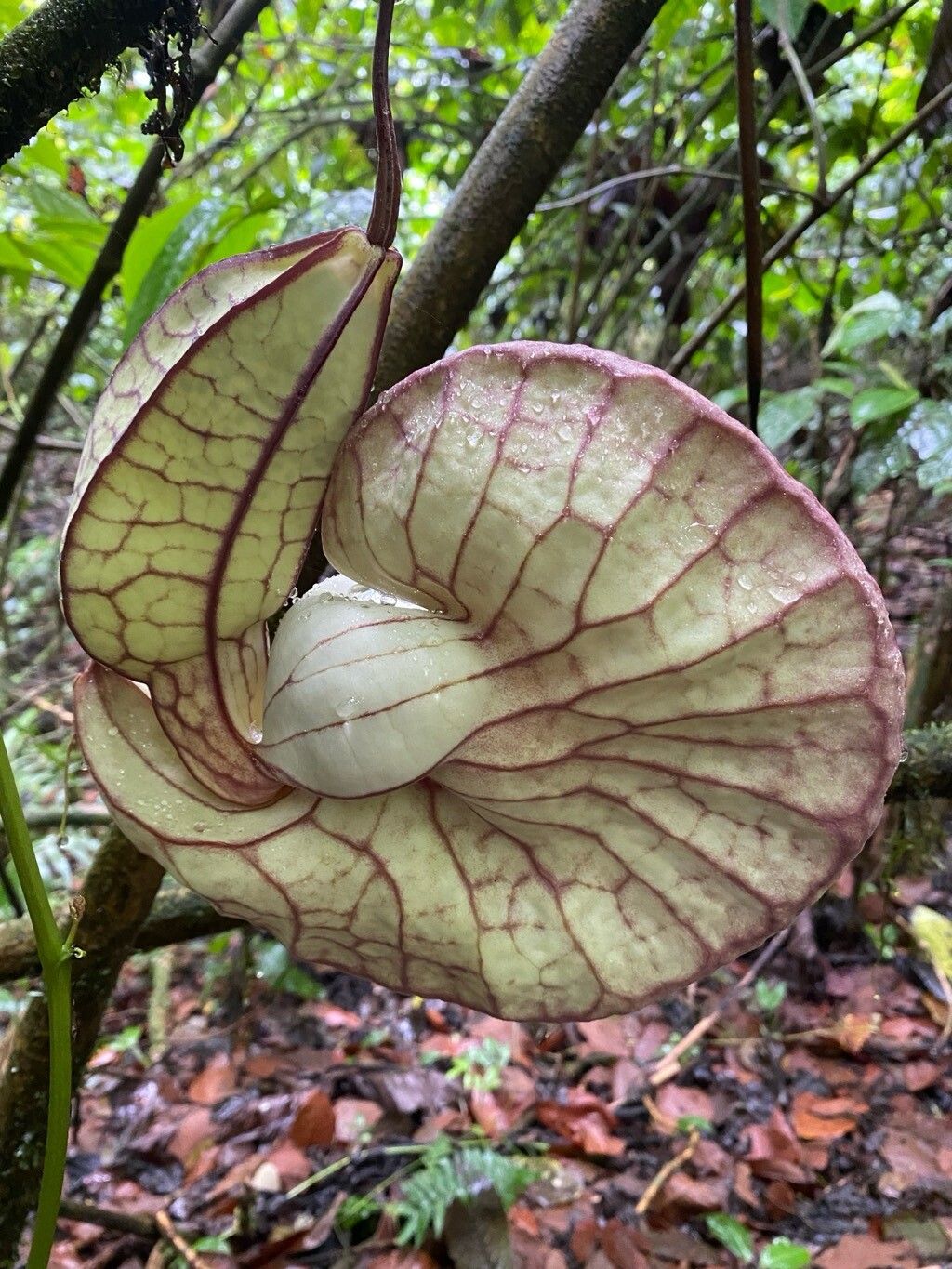
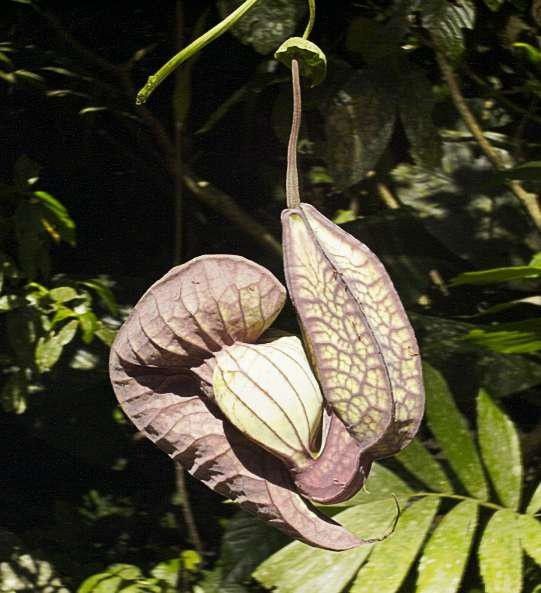
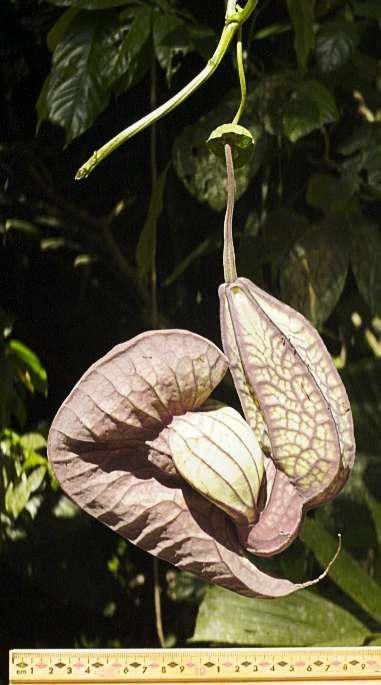
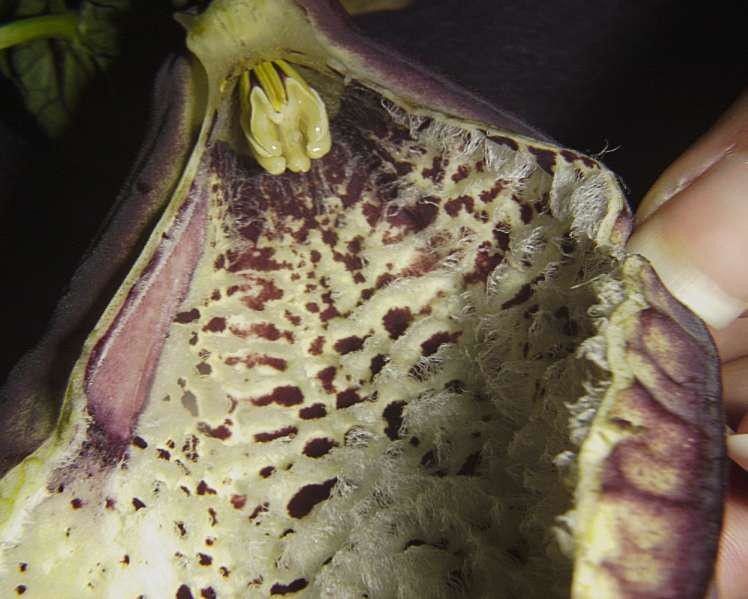
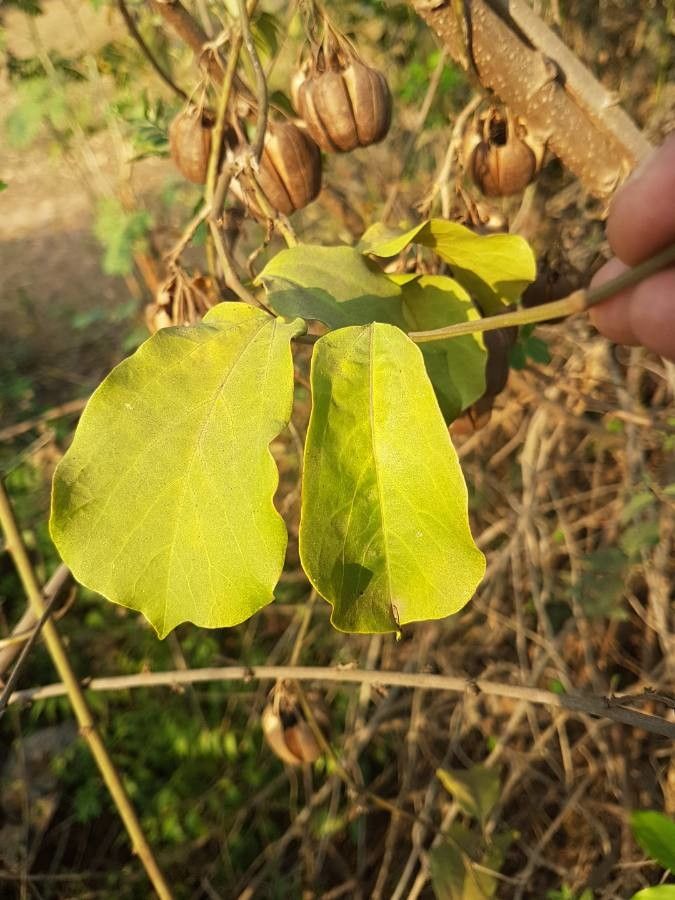
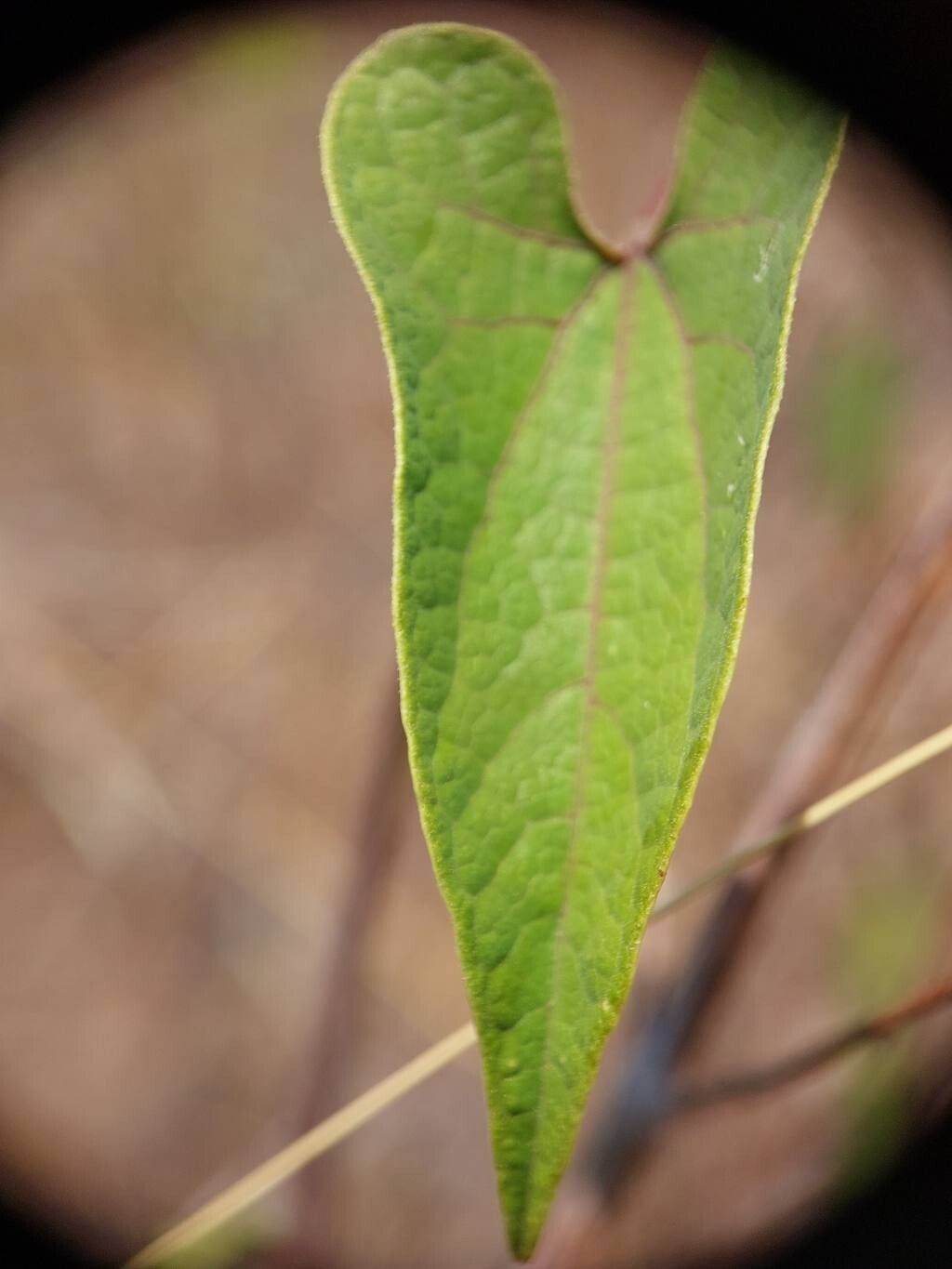
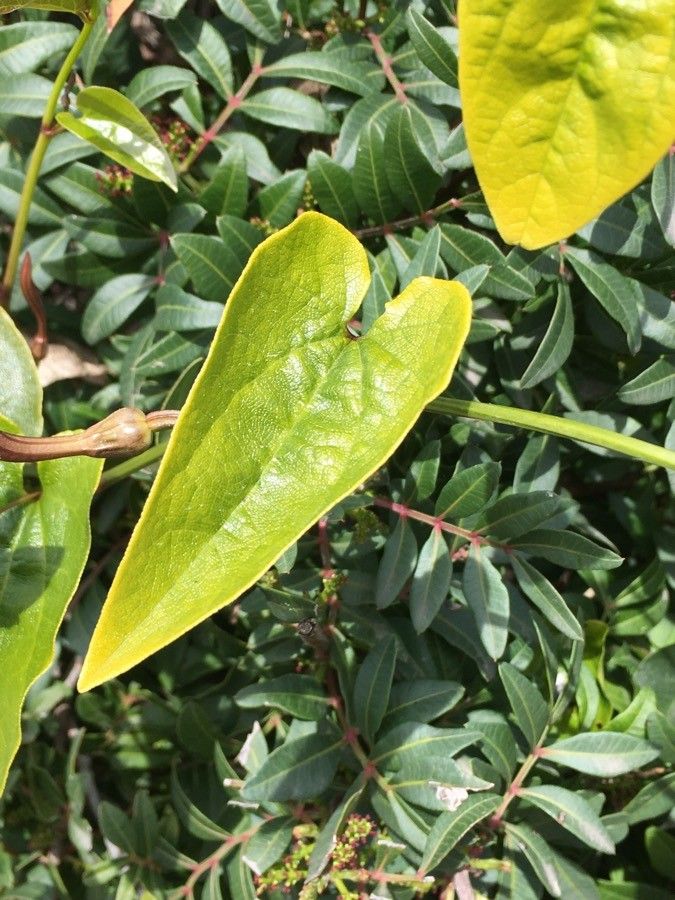
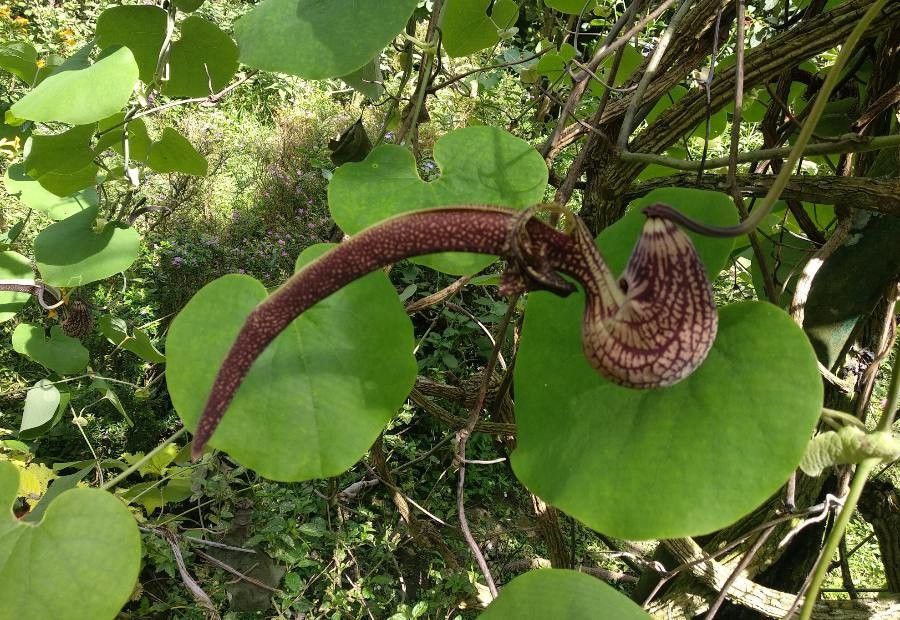
Aristolochia gorgona is a recently discovered (2002) flowering plant in the Dutchman's pipe family (Aristolochiaceae) (of the Eudicot super-order or subclass) found in the Atlantic-facing rainforests of Costa Rica and Panama. It differs from Aristolochia grandiflora in lacking the sometimes very long "tail" that hangs down from the trumpet of A. grandiflora, in being darker (sometimes even purple) and in being covered with inch-long (2.5 cm) tendril-like enations which have suggested a comparison to Medusa and her sisters. With a trumpet (usually regarded as a greatly expanded calyx) up to 12.5 inches (31 cm) top to bottom, twelve inches (30 cm) wide and about 15 inches (38 cm) deep A. gorgona is one of the largest flowers in the New World. Its discoverer, Blanco thought its very late discovery might be due to its similarity to A. grandiflora. This resemblance must be that of the foliage, for as we have seen the flowers are very different.
Botanical profile.
- Plant Type
- Vine
- Life Cycle
- Perennial
- Genus
- Aristolochia
- Family
- Aristolochiaceae
- Hardiness Zone
- 10-12
- Mature Height
- 10.06 m
- Mature Spread
- 6.1 m
- Leaf Color
- Forest Green, Dark Green
- Leaf Type
- Deciduous
- Flower Size
- 20.32 cm to 30.48 cm
- Bloom Time
- Late spring, Summer, Early fall, Mid fall
- Planting Time
- Spring, Autumn
- Harvest Time
- Late summer, Fall, Early winter
- Native Area
- Colombia, Belize, Honduras, Mexico, Guatemala, Venezuela, El Salvador, Nicaragua, Ecuador, Costa Rica, Panama