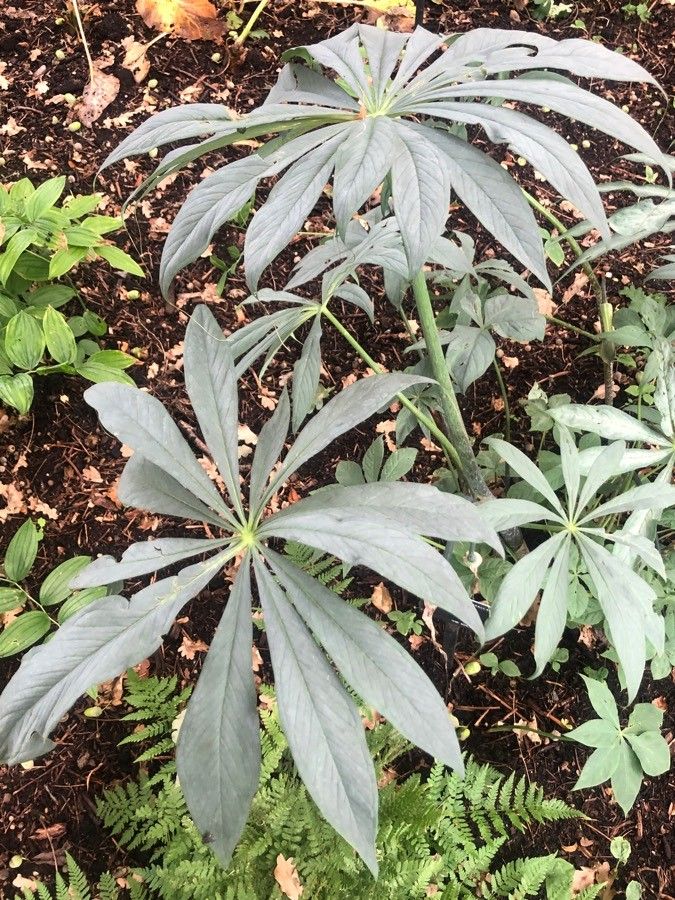
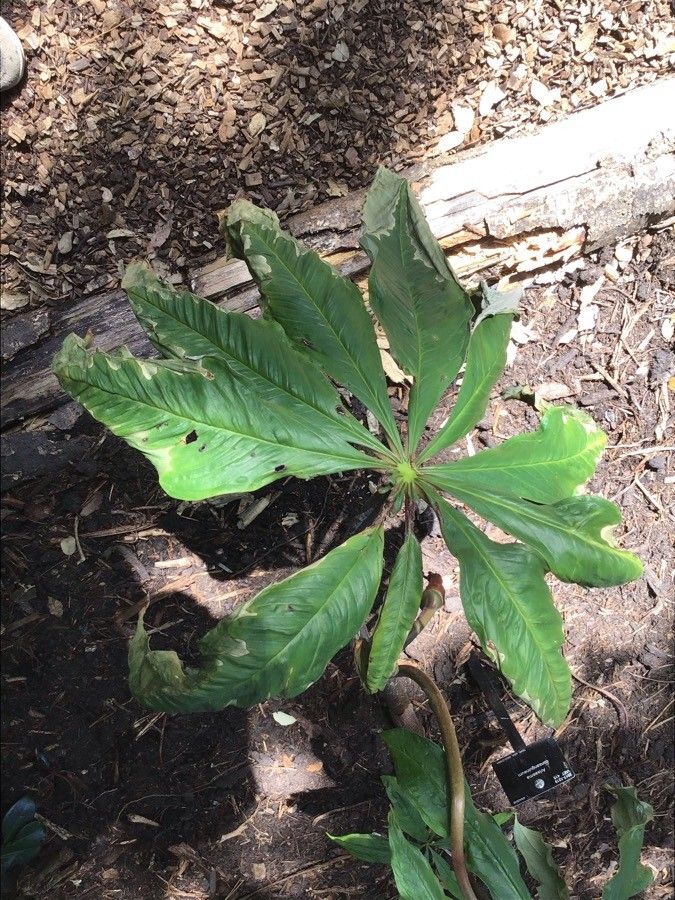
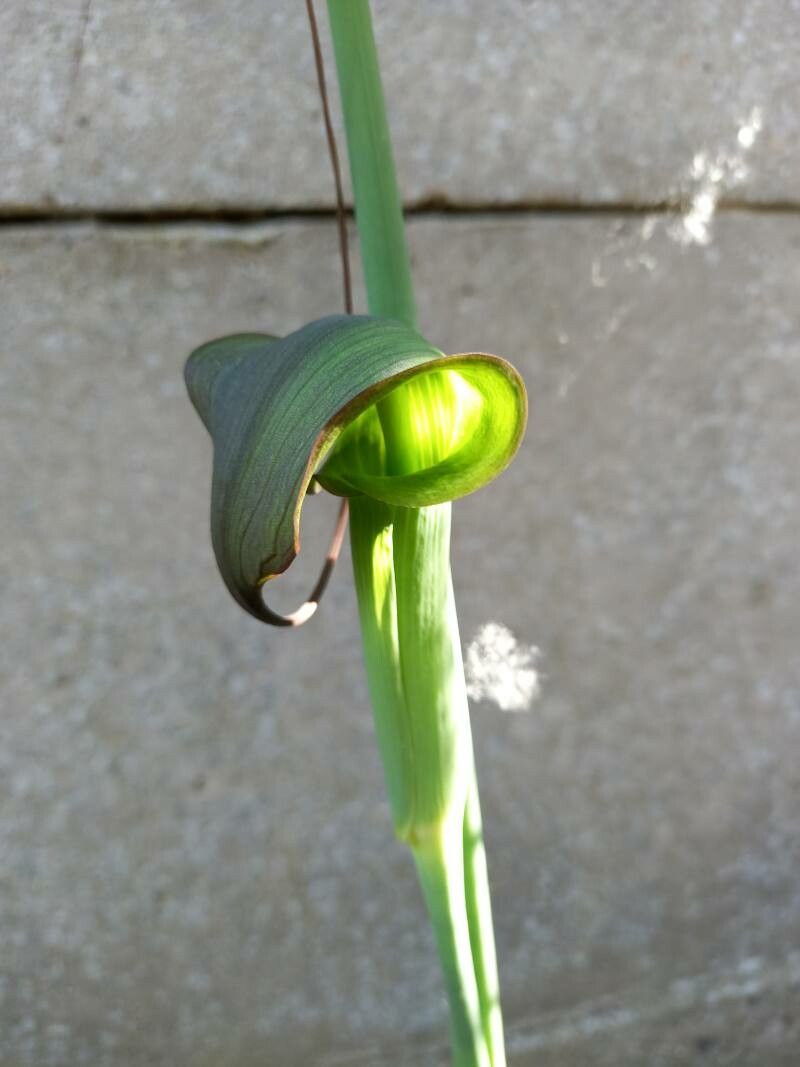
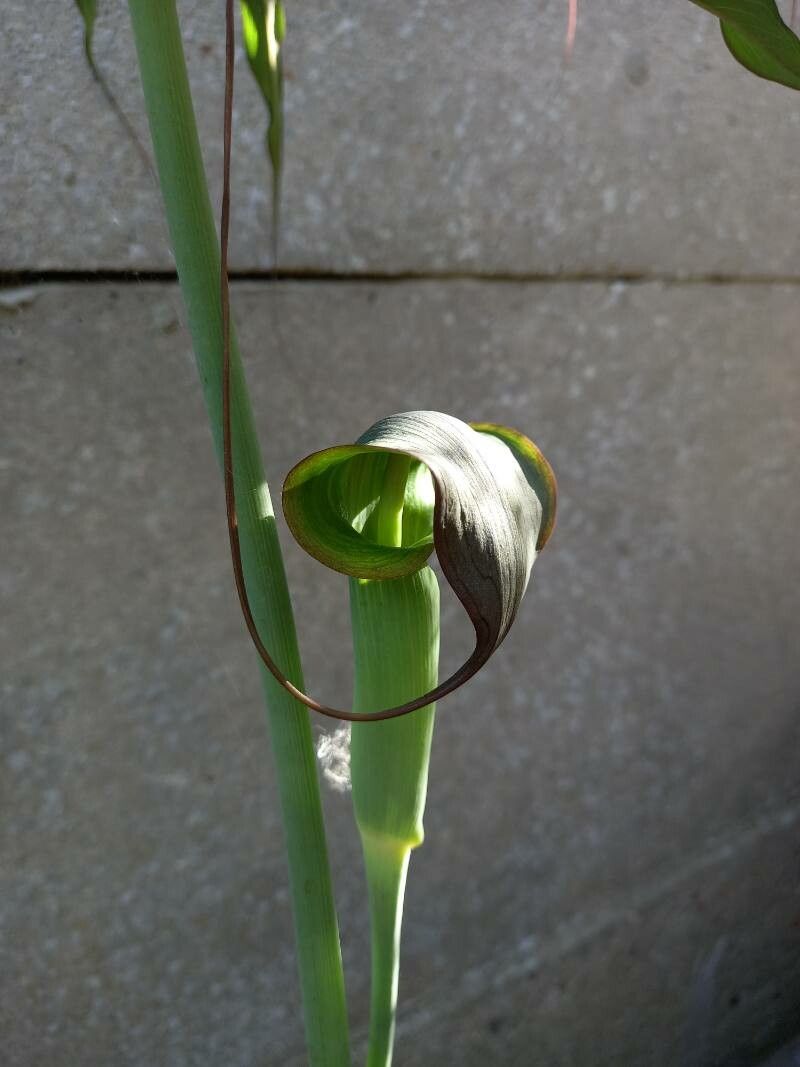
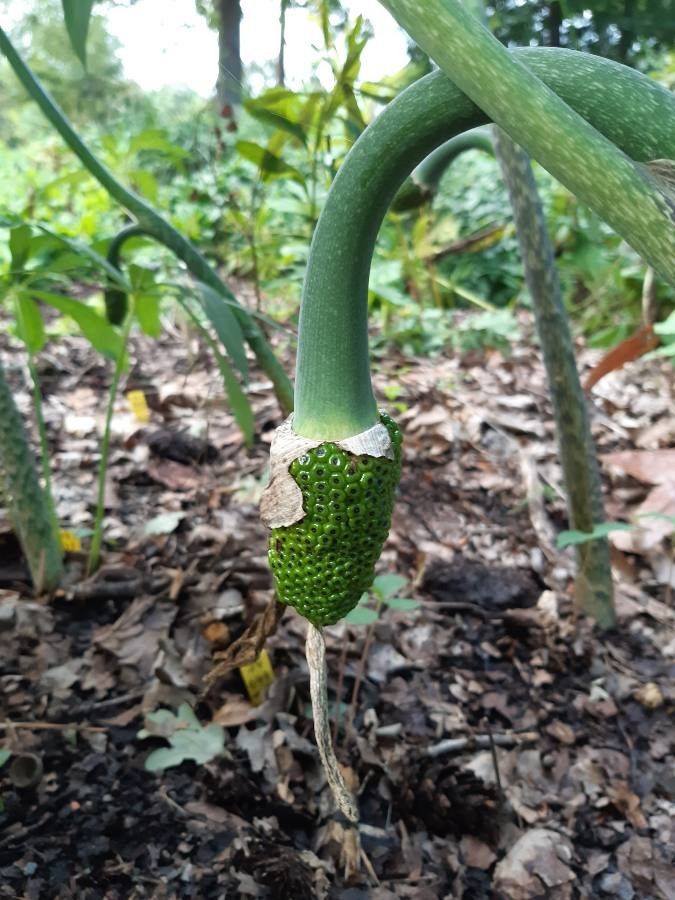
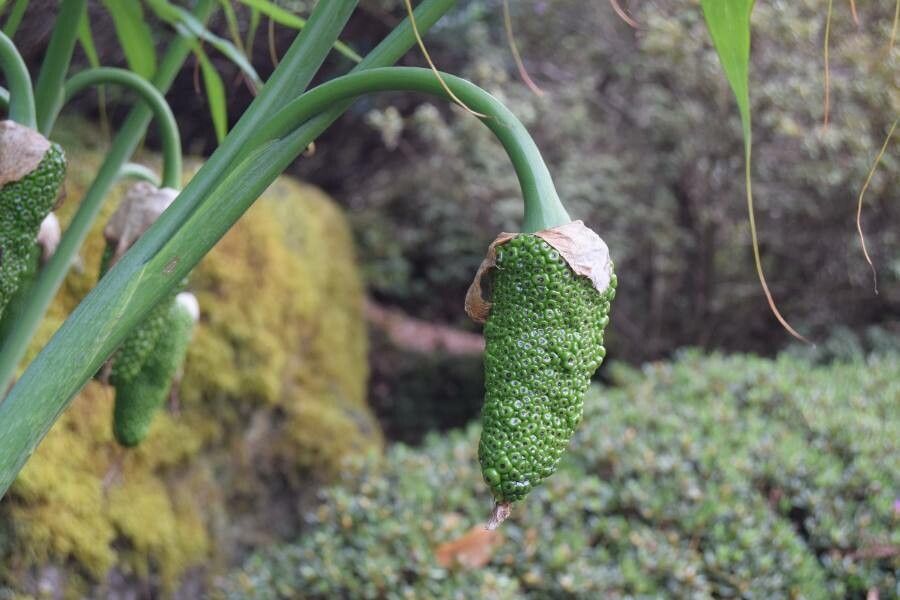
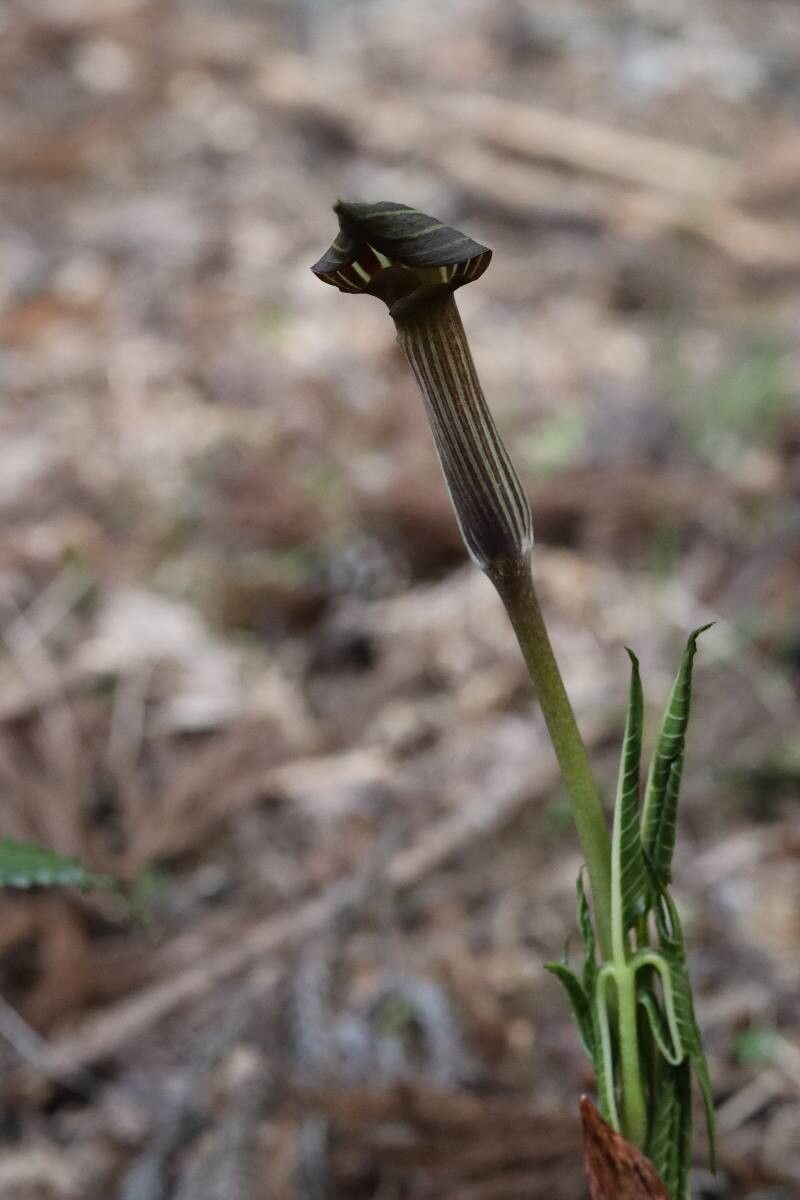
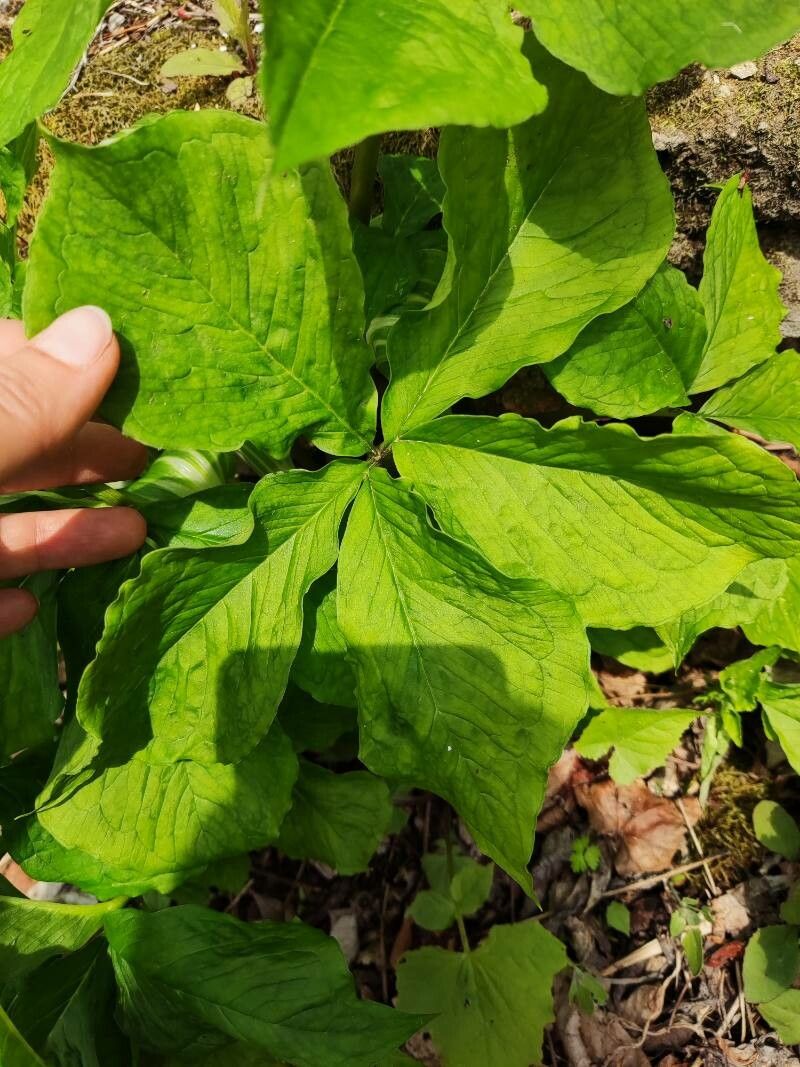
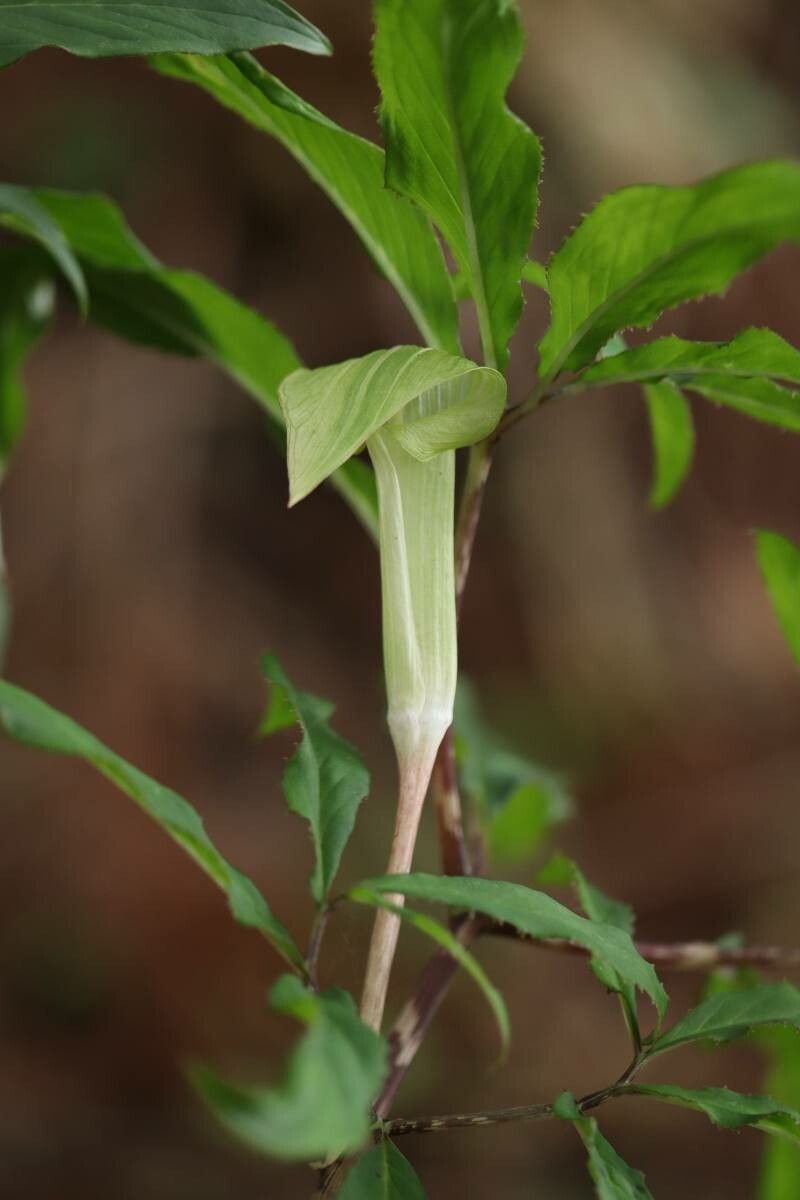
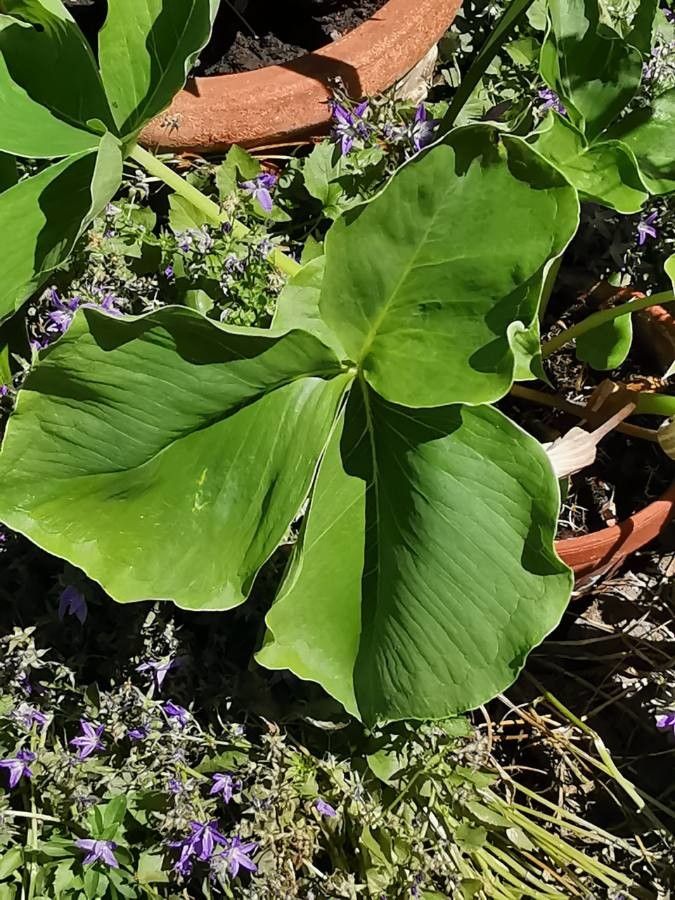
Arisaema consanguineum, the Himalayan cobra lily, is a species of flowering plant in the arum lily family Araceae. Native to the Himalayas and Indochina, it is a tuberous perennial. A single stem, 1 m (3.3 ft) tall, bears a deciduous leaf with multiple radial leaflets. The flower is a deep maroon hooded spathe striped green and white. It appears in summer, and is followed by a cluster of brilliant red berries in autumn.It is cultivated as an ornamental plant for a permanently damp, sunny or partially shaded, sheltered spot, such as a woodland setting. Though hardy to −5 °C (23 °F), the tuber may require protection during winter. It is reported to cause indigestion and skin irritation if handled.
Jack in the pulpit has strong disease resistance and is generally not prone to illnesses. However, it can be affected by pests and diseases present in its surroundings. These infections are usually minor. Care-wise, this plant requires moderate maintenance. It should be pruned regularly to maintain a good appearance and support healthy growth. Fertilizing can also help encourage flowering. Jack in the pulpit is suitable for anyone with outdoor space, such as a garden or patio, and does not demand extensive care experience. It may need more attention when grown indoors.
How to keep Arisaema Consanguineum.
Light
Jack-in-the-pulpit does well in places with partial sun or even beneath the main forest canopy. Native to woodland environments, it is naturally adapted to lower light levels. Too much sunlight can stress the plant, while too little light may limit its growth.
Water
Jack in the pulpit originates from the humid understories of forests, where it prefers consistently moist soil. It needs to be watered weekly, ensuring it does not become waterlogged. This plant can thrive indoors in low light conditions, but it also requires adequate humidity to mimic its natural habitat.
Temperature
Jack in the pulpit can tolerate a wide range of temperatures, but its distribution can still be restricted by different combinations of moisture and heat. It does best in warm summer conditions with sufficient rainfall or watering. Extended stretches of cloudy, rainy weather, as well as prolonged high temperatures, can raise the chance of Jack in the pulpit dying. In winter, proper protection from cold can increase the plant’s survival rate.
Fertilizer
The best time to fertilize a Jack in the pulpit is in early spring, when it is coming out of dormancy and beginning active growth. Fertilization supplies essential nutrients needed for healthy development. Although Jack in the pulpit has relatively low fertilizer requirements, feeding it annually can improve its survival and encourage better, longer-lasting flowers.
Pruning
The Jack-in-the-pulpit plant boasts distinctive hooded flowers and needs only minimal pruning, preferably from early to late spring. The main focus should be on removing any dead or damaged foliage, taking care not to cut into the main stem. Regular inspections for disease are crucial to preserve the plant's health and visual beauty.
Botanical profile.
- Plant Type
- Herb
- Life Cycle
- Perennial
- Genus
- Arisaema
- Family
- Araceae
- Hardiness Zone
- 5-9
- Mature Height
- 91 cm
- Mature Spread
- 49 cm
- Leaf Color
- Green
- Leaf Type
- Deciduous
- Flower Color
- Purple, Green
- Flower Size
- 0.10 cm
- Bloom Time
- Late spring, Early summer
- Planting Time
- Spring, Summer
- Harvest Time
- Late summer, Early fall, Mid fall
Other names.
Reader questions.
What are the sunlight requirements for Jack in the pulpit?
Jack in the pulpit requires partial sun, meaning it should receive about 3-6 hours of sunlight daily. For areas classified as full shade, less than 3 hours of sunlight per day is sufficient. It's important to monitor how sunlight moves through your garden to find spots that offer the ideal balance of light and shade, ensuring the plants thrive.
How does Jack in the pulpit respond to different lighting conditions?
Originating from woodland habitats, Jack in the pulpit has adapted to thrive in partial sun or even under primary canopy layers, demonstrating flexibility to varied light intensities. Excessive sunlight can stress the plant, while too little light may hinder its growth. Indoor plants might need artificial lighting to achieve optimal growth, especially in less sunny areas or during winter. LED lights are recommended for their ability to provide specific light wavelengths. The amount of artificial light required varies depending on whether the plant needs full sun (30-50W/sq ft), partial sun (20-30W/sq ft), or full shade (10-20W/sq ft). Positioning the light source correctly and mimicking natural daylight hours are critical for healthy indoor plant growth.
What are the symptoms of inadequate lighting for Jack in the pulpit?
Symptoms of light deficiency in Jack in the pulpit include smaller new leaves, leggy or sparse growth, faster leaf drop, slower or halted new growth, lighter-colored new leaves, chlorosis, sunscald, leaf curling, wilting, and leaf scorching. These symptoms indicate that the plant is either not getting enough light or is being exposed to too much direct sunlight. Managing the light exposure appropriately can mitigate these issues.
What solutions can help Jack in the pulpit thrive in different lighting conditions?
To optimize growth, gradually increase sun exposure for outdoor plants or utilize artificial light for indoor ones, ensuring they receive 3-6 hours of direct sunlight or its equivalent daily. Avoid drastic changes in light intensity to prevent sunburn. If sunlight is obstructed, consider pruning obstacles or transplanting smaller plants during their dormant period to better-lit locations. Note that while parts of the plant already affected by insufficient light may not recover, new growth should be healthy with improved light conditions.