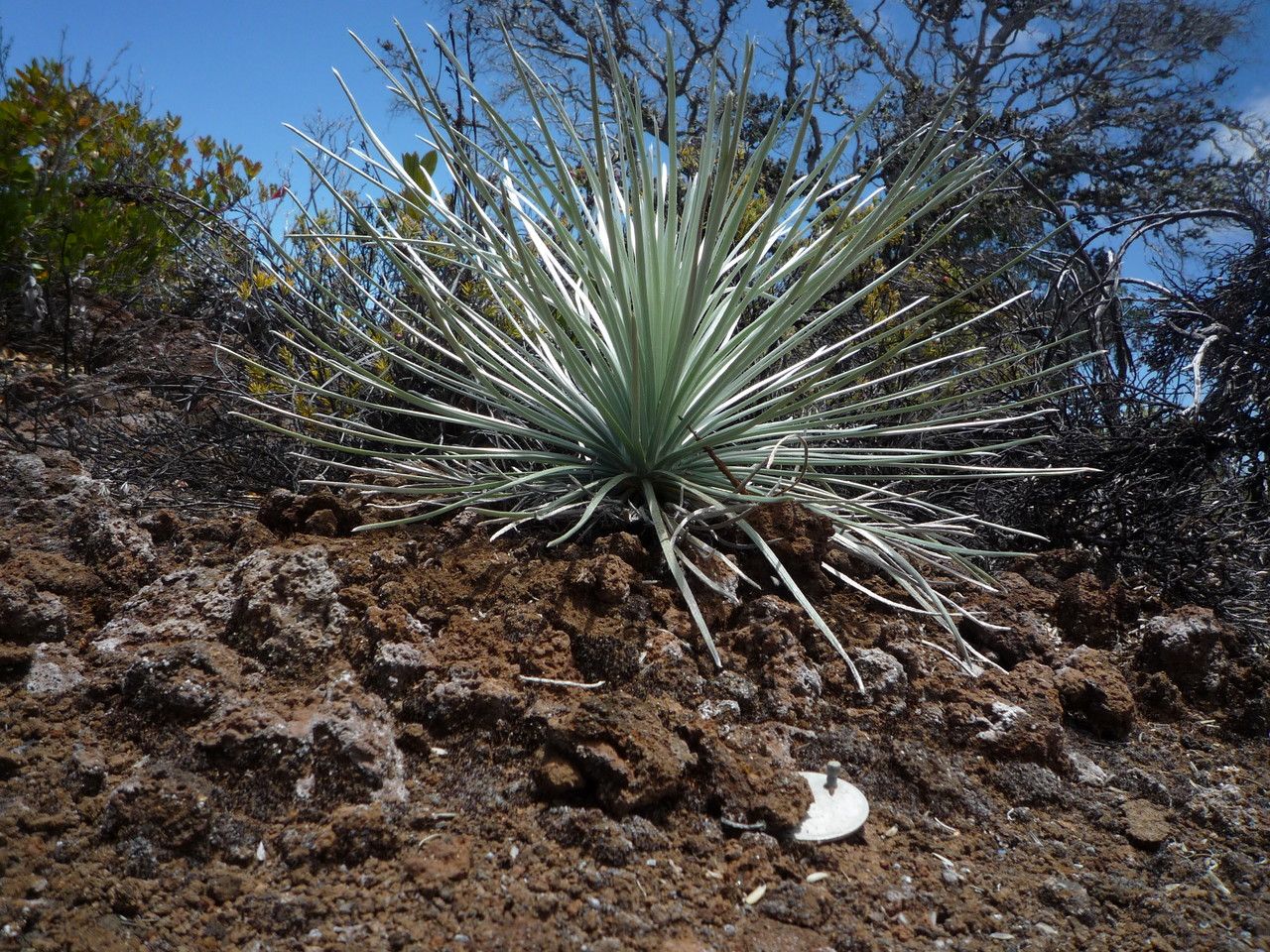
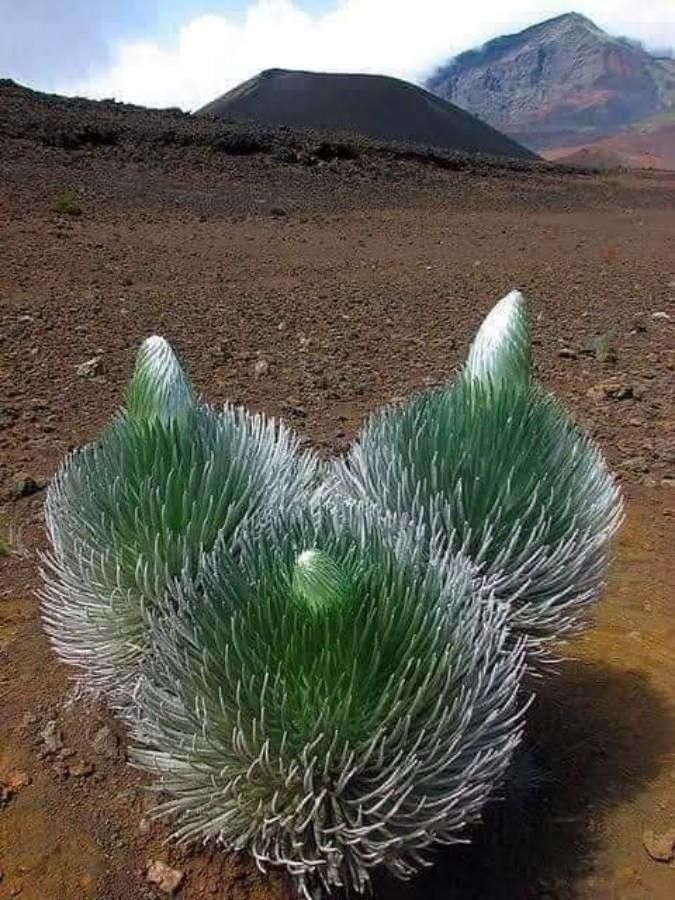
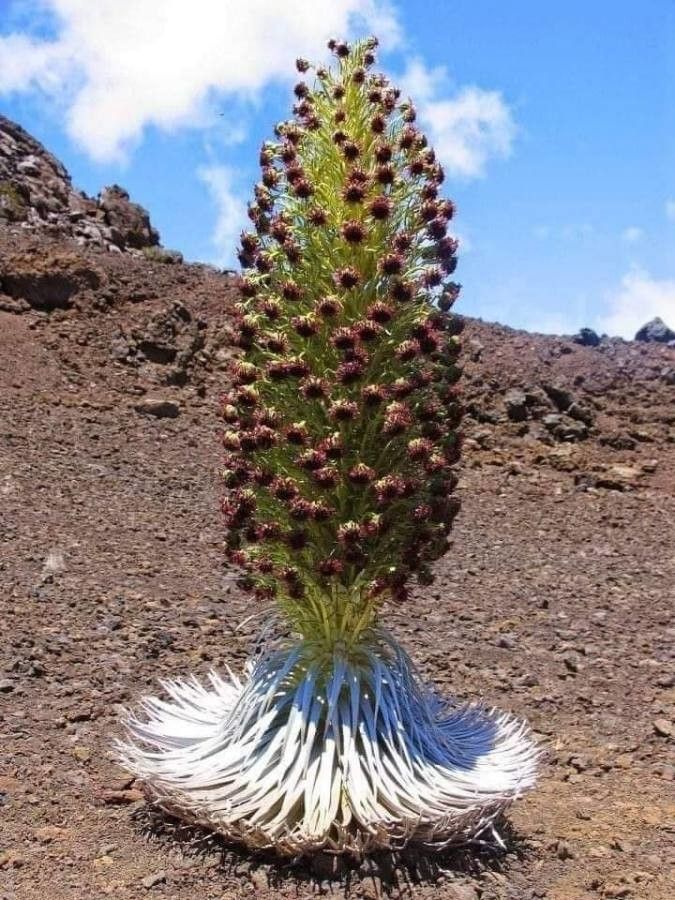
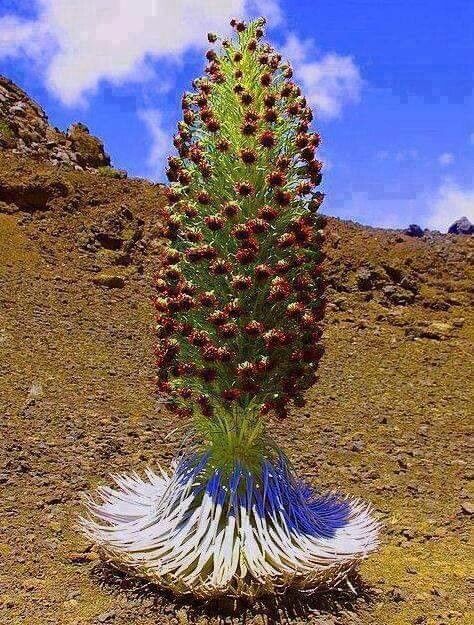
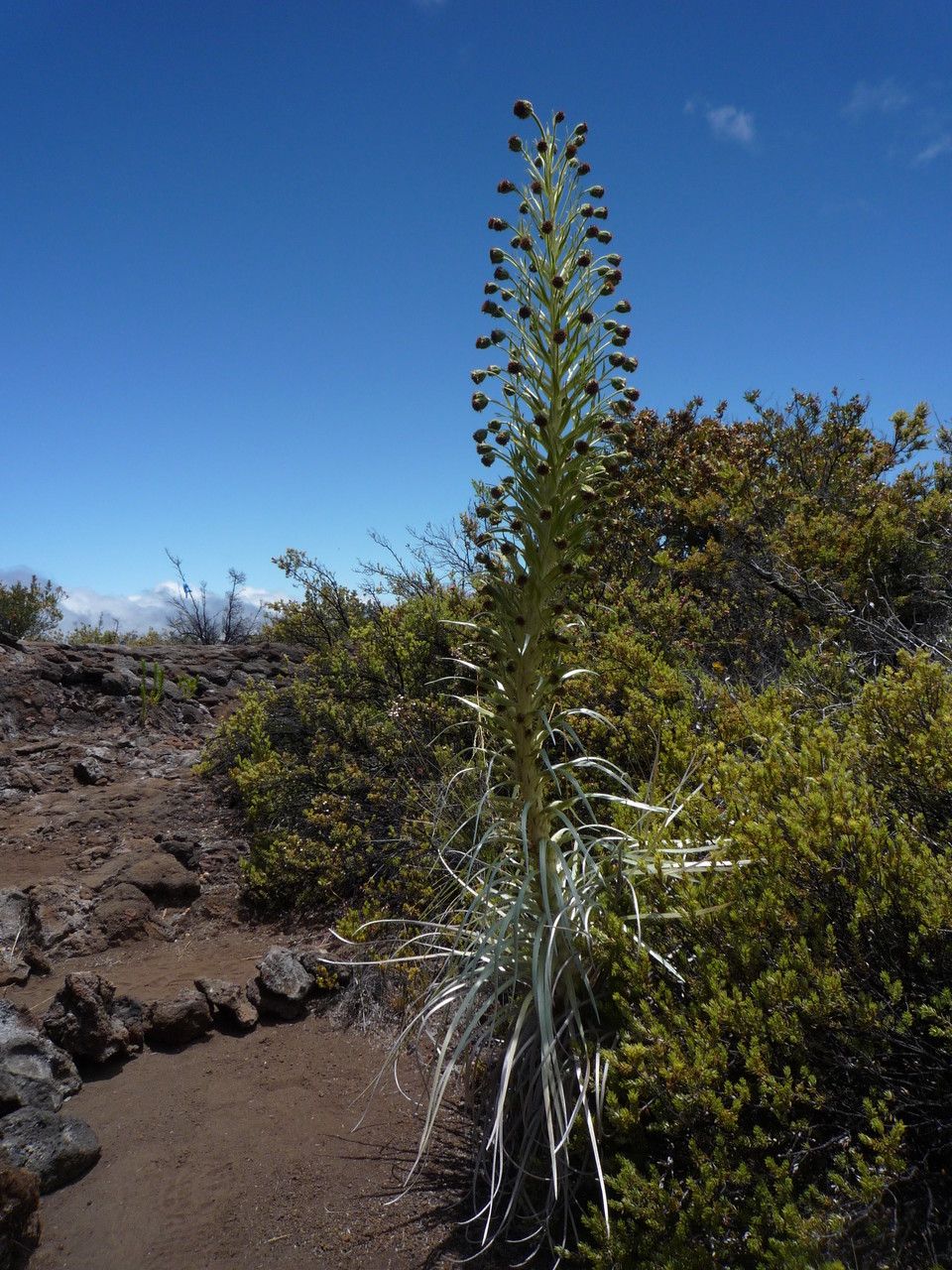
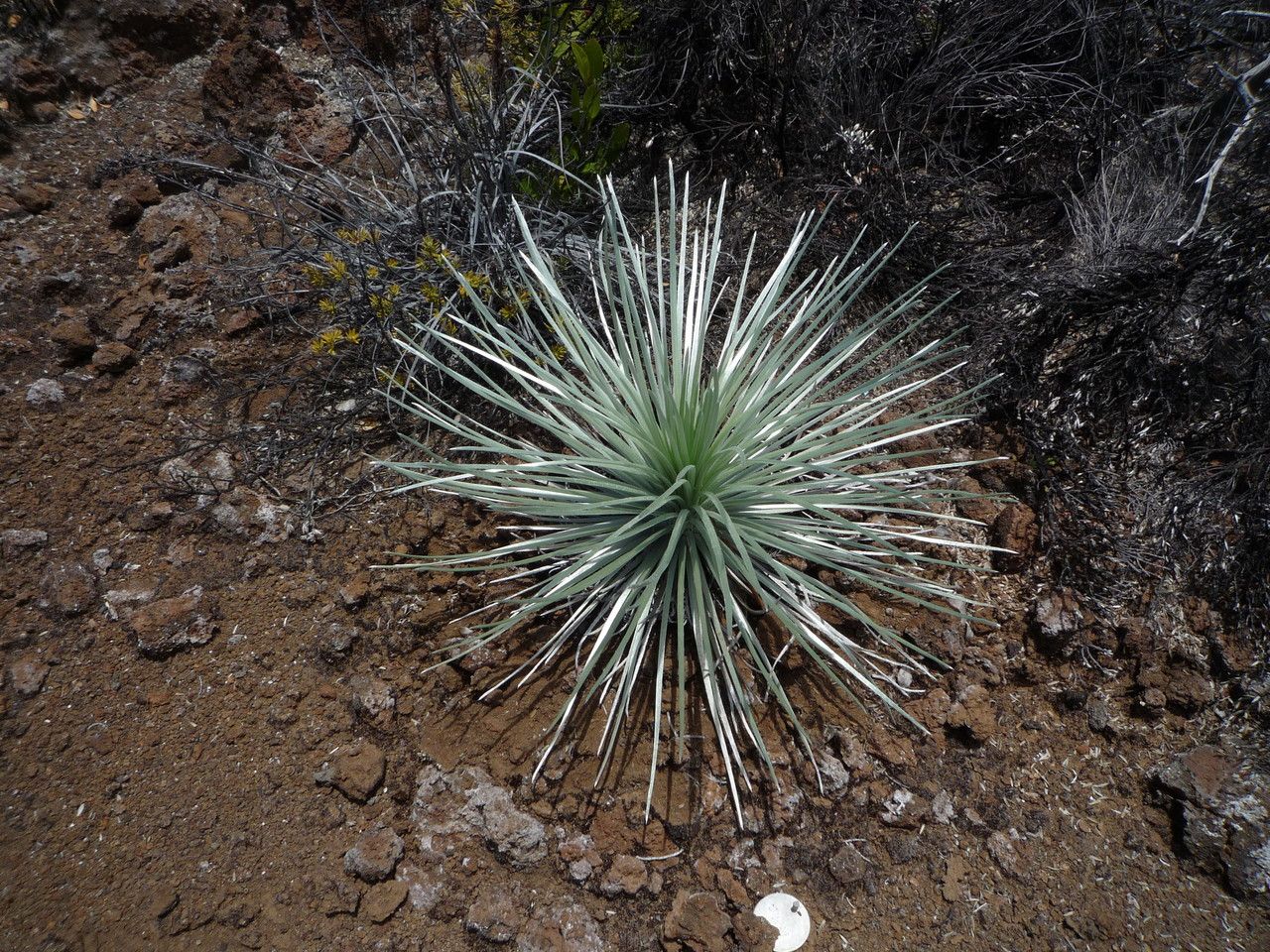
Argyroxiphium sandwicense, the Hawaiʻi silversword, or hinahina is a species of silversword. It is endemic to Hawaii. The two subspecies are separated by geography. Both subspecies are rare, threatened and federally protected.
Haleakala silversword (A. sandwicense subsp. macrocephalum) is found on the mountain Haleakalā on the island of Maui at elevations above 2,100 m (6,900 ft). It is a federally listed threatened species. Mauna Kea silversword (A. sandwicense subsp. sandwicense) is found on the mountain Mauna Kea on the Hawaii Island at elevations above 2,600 m (8,500 ft). It is a federally listed endangered species. As few as 40 individuals are left.
Hawai'i silversword has good resistance to disease and is generally not susceptible to illnesses. Care-wise, the plant is fairly low-maintenance. When grown outdoors it needs only minimal watering, and larger specimens typically do not require pruning. Smaller plants, however, should be pruned after they have bloomed. The Hawai'i silversword is appropriate for anyone with an outdoor space, such as a garden or a deck, and does not require extensive care experience.
How to keep Argyroxiphium Sandwicense.
Light
Hawai'i silversword, native to bright, sun-drenched environments, is a tropical woody plant that does best in full sun but can also tolerate partial sun. It commonly grows in open, well-lit areas with very little shade.
Water
The Hawai'i silversword thrives in the arid highlands with minimal moisture, needing watering only every 2-3 weeks. Its succulent nature allows it to store water effectively, making it perfect for rock gardens. Adapted to cool temperatures and high UV exposure, this plant demonstrates exceptional drought tolerance.
Temperature
Hawai'i silversword is native to environments where temperatures fall between 68 and 95 °F (20 to 35 ℃). The plant is adapted to flourish in this warm climate. Temperature adjustments, especially during seasonal transitions, should be made to keep it within that range.
Fertilizer
Early spring, when the plant comes out of dormancy, is the best time to fertilize a Hawai'i silversword. This encourages overall growth and flower development. Fertilizing improves foliage, stems, and branches, and supports flowers that are large, vibrant, and long-lasting. It helps move nutrients from the roots to the flowers and enhances the plant's health and resistance to disease.
Pruning
The Hawai'i silversword is known for its striking silver foliage and impressive flowering spikes. It requires minimal pruning, which is best done from early to late winter. To maintain the plant's health, remove only dead or damaged leaves while avoiding heavy pruning to prevent stress. Make sure to clean your tools to prevent infection, which will also help improve air circulation and encourage growth for the next bloom.
Botanical profile.
- Plant Type
- Shrub
- Life Cycle
- Perennial
- Genus
- Argyroxiphium
- Family
- Asteraceae
- Hardiness Zone
- 10-10
- Mature Height
- 3.05 m
- Mature Spread
- 76 cm
- Leaf Color
- Silver, Gray
- Leaf Type
- Evergreen
- Flower Color
- Purple
- Flower Size
- 2.03 cm to 2.54 cm
- Bloom Time
- Mid summer, Late summer
- Planting Time
- Spring, Autumn
- Harvest Time
- Early fall, Mid fall
Other names.
Reader questions.
What are the sunlight requirements for Hawai'i silversword?
Hawai'i silversword thrives in environments with abundant sunshine. It is native to bright, sun-drenched habitats and prefers full sun, receiving more than 6 hours of direct sunlight daily. However, it can also adapt to partial sun conditions, where it would get about 3-6 hours of sunlight. Being aware of the changing patterns of sunlight in your garden and finding the right balance of light and shade will be key to ensuring the plant's health and growth.
What is the Hawai'i silversword and where is it native to?
The Hawai'i silversword, botanically known as Argyroxiphium sandwicense, is a plant native to warm climates where temperatures range from 68 to 95 °F (20 to 35 °C). This plant has evolved to flourish in these conditions, making adjustments during seasonal transitions crucial to maintain temperatures within its preferred range.
How can artificial lighting support Hawai'i silversword growth indoors?
For indoor Hawai'i silverswords or when natural light is insufficient, artificial lighting can be a crucial supplement. It's advisable to provide 30-50W/sq ft of light for full sun plants, and 20-30W/sq ft for those in partial sun, using LED lights for their ability to be tailored to the plants' needs. Position the light source 12-36 inches above the plant to emulate natural sun conditions and ensure the plant receives 8-12 hours of light daily. This artificial lighting strategy encourages healthier and faster plant growth.
How should the Hawai'i silversword be cared for in different temperatures?
Caring for the Hawai'i silversword involves maintaining its preferred temperature range above 20°C and avoiding cold temperatures that can harm the plant. During autumn, it's advised to bring outdoor plants indoors, placing them near a bright window yet away from direct heat sources like heaters. In winter, keeping the plant in temperatures above 20°C is beneficial for its growth, while temperatures nearing 5°C or below are detrimental.
What are signs of insufficient light for Hawai'i silversword?
When Hawai'i silversword doesn't receive enough light, several symptoms may appear, such as smaller new leaves, leggy growth, faster leaf dropping, halted new growth, lighter-colored new leaves, chlorosis, sunscald, leaf curling, wilting, and leaf scorching. These symptoms indicate that the plant is struggling with low light levels and may impact its health and growth significantly.
What are the signs of low temperature damage on Hawai'i silversword, and how can it be treated?
Low temperatures can cause significant damage to the Hawai'i silversword, with signs including a lightening of the leaves when temperatures fall below 1°C, leading to brown or black discoloration and symptoms like wilting and drooping post-frost damage. To treat this, frost-damaged parts should be trimmed off, and the plant should be immediately moved to a warm environment indoors near a south-facing window for ample sunlight, while avoiding placing it near heaters or vents to prevent air dryness.
What solutions exist for Hawai'i silversword experiencing low light conditions?
For Hawai'i silverswords in low light, gradually increasing their sun exposure is key. Indoor plants can be moved to sunnier spots or supplemented with artificial light, ensuring at least 8 hours of light daily. Outdoor plants should be acclimated to brighter areas gently to prevent sunburn. Pruning obstructions like tree branches can help outdoor plants access more sunlight. If moving a plant isn't feasible due to its size, consider using supplemental lighting sources or possibly transplanting to a better location during its dormant period for improved sun exposure and health.
How does high temperature affect Hawai'i silversword and what are the remedies?
During summer, it's crucial to keep Hawai'i silversword below 35°C as temperatures exceeding 41°C can lighten the color of the leaves and increase susceptibility to sunburn. Remedies include trimming away sunburned or dried parts of the plant, moving it to a shaded location away from the midday and afternoon sun, and watering it in the morning and evening to maintain soil moisture.