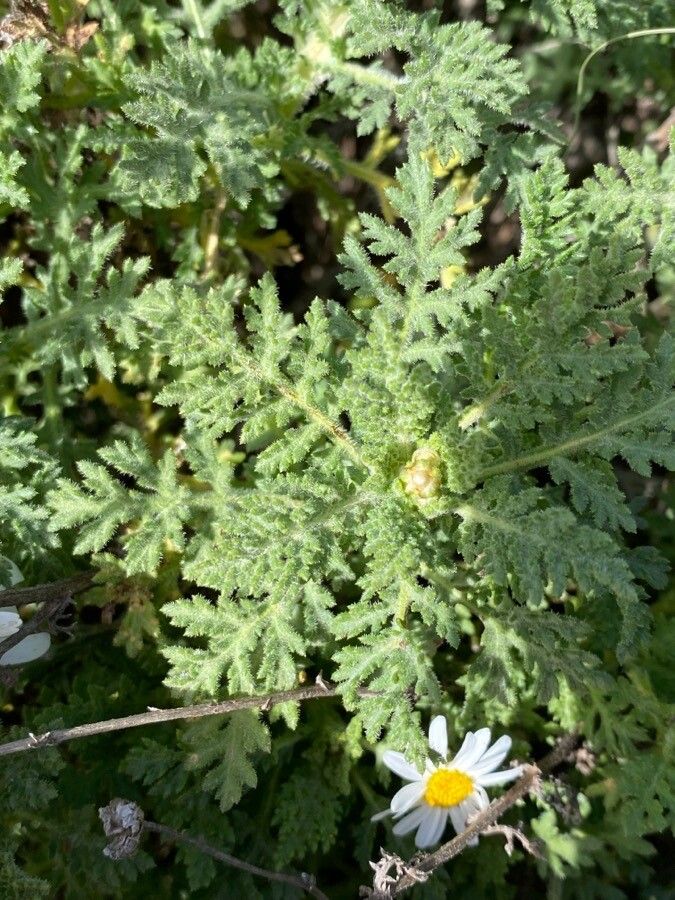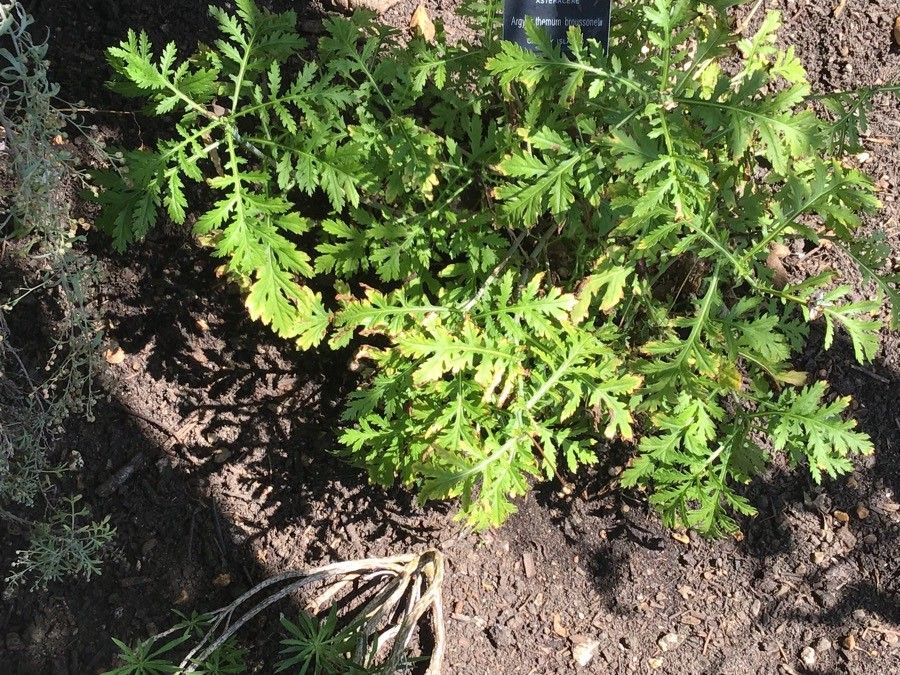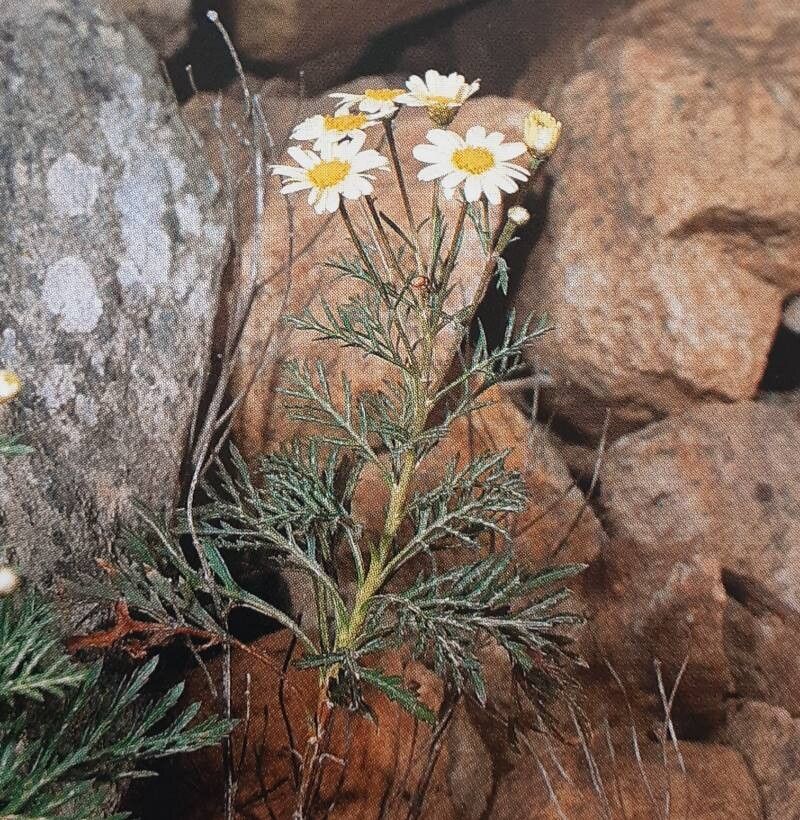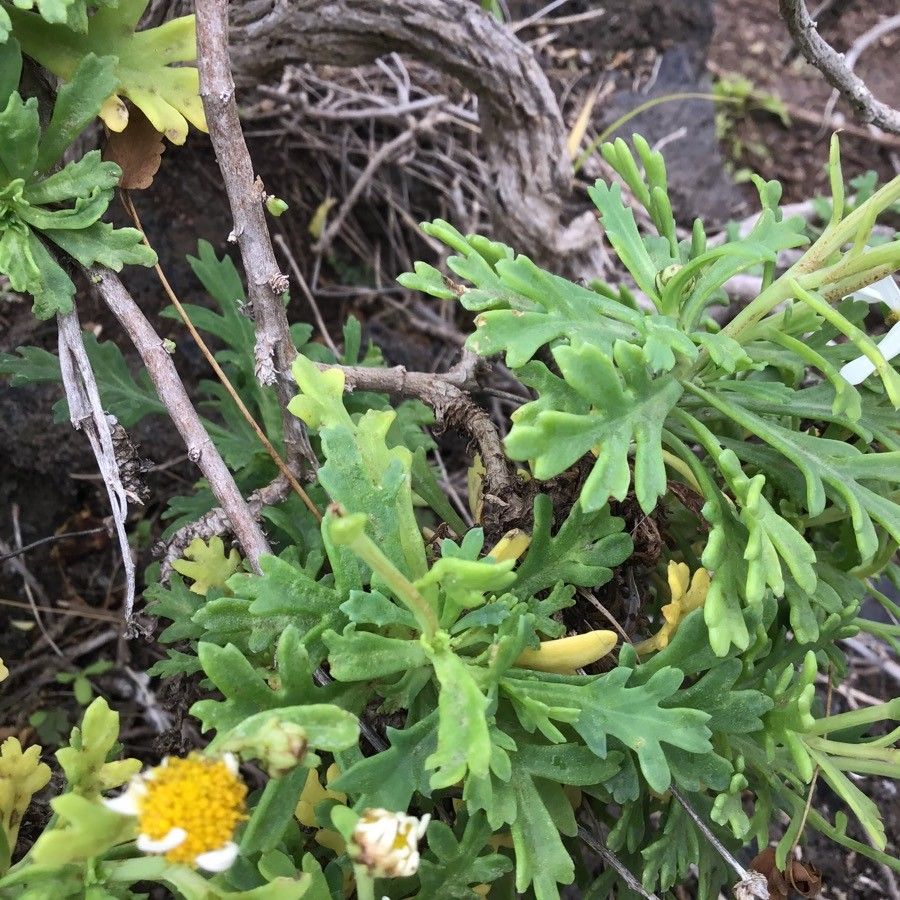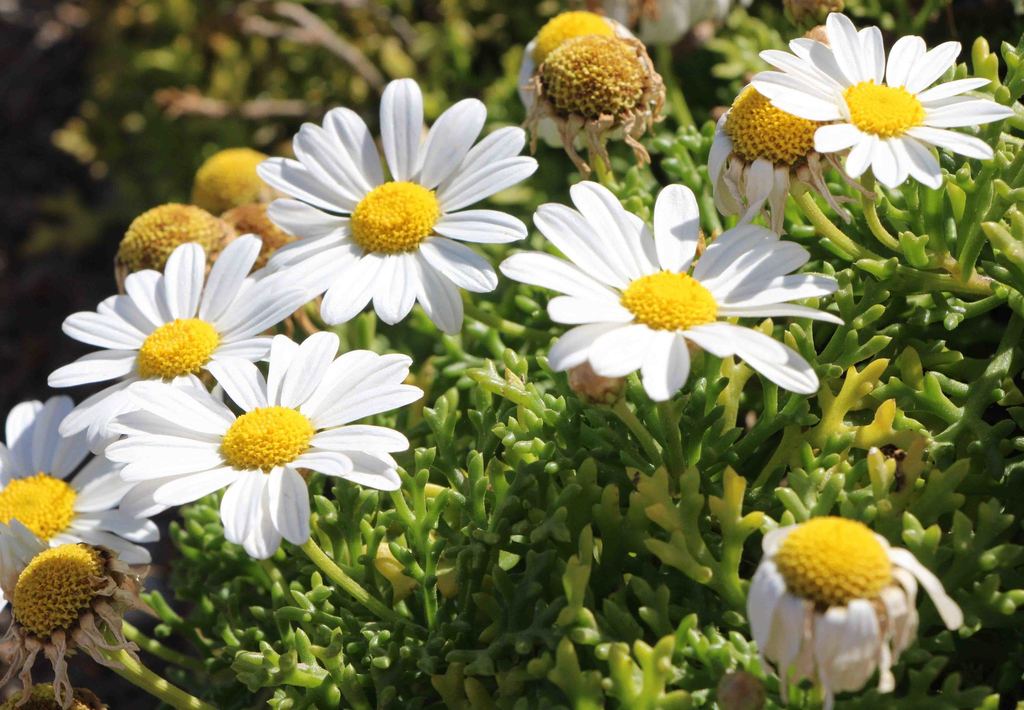
Argyranthemum frutescens, commonly known as the Marguerite daisy or Paris daisy, is a perennial flowering plant from the Asteraceae family. Native to the Canary Islands and Madeira, it has gained popularity worldwide for its attractive flowers and ease of cultivation.
The Marguerite daisy can grow up to 60 cm in height and features deeply lobed dark green leaves. Its large flowers, which have either white or yellow petals encircling a yellow center disk, bloom from spring through fall in warm climates. In colder regions, however, the plant may need protection from frost.
This plant thrives in full sun and prefers well-draining soil with regular watering during dry periods. It can be propagated through stem cuttings or by dividing mature plants.
Marguerite daisies are often used as ornamental plants for borders, containers, and mass plantings, thanks to their long-lasting blooms and low maintenance requirements. Additionally, they attract pollinators such as bees and butterflies, enhancing garden biodiversity.
Overall, Argyranthemum frutescens is an excellent choice for gardeners seeking an attractive, flowering perennial that thrives in various conditions and provides year-round color to outdoor spaces.
Marguerite daisy has strong resistance to disease and is generally not prone to illness. However, it can develop leaf spots if light and ventilation are poor and if watering is excessive. The plant is considered easy to care for; it mainly requires regular watering and little other attention. Marguerite daisy is therefore suitable for people who lack the time or energy to devote to frequent care.
How to keep Argyranthemum Frutescens.
Light
The marguerite daisy does best with ample sunlight, which is essential for optimal growth and flowering. Its native habitat receives abundant sun. It can also tolerate moderate sunlight, showing some adaptability. However, insufficient or excessively strong sun can impair the plant's health and the quality of its blooms.
Water
The Marguerite daisy originates from subtropical climates and prefers moderately moist soil. It thrives with consistent moisture and requires weekly watering. Primarily grown outdoors, the Marguerite daisy flourishes with regular hydration, especially during its blooming season. This emphasizes the importance of aligning irrigation with its growth phases.
Temperature
The marguerite daisy is native to areas with warm temperatures ranging from 20 to 38 ℃ (68 to 100 ℉). It flourishes in warm conditions but can tolerate slight seasonal temperature fluctuations. In colder seasons, it is recommended to keep the temperature above 10 ℃ (50 ℉) to prevent damage to the plant.
Fertilizer
Proper fertilization is essential for a Marguerite daisy's health and appearance. Fertilize Marguerite daisy in summer, repeating the application monthly throughout the season. Nutrients support growth and preserve the plant's parts. Fertilization improves the Marguerite daisy's flower display, ensuring the best blooms.
Pruning
The Marguerite daisy, known for its bright, daisy-like flowers, benefits from pruning in early spring or late winter. To maintain a healthy plant, remove dead stems and trim any overgrown branches by one-third. Regular deadheading not only encourages more blooms but also improves air circulation, reduces the risk of disease, and enhances the plant's vigor. Be sure to use clean, sharp tools for the best results.
Pot & Repot
When repotting Marguerite daisy, select a pot 1-2 inches (2.5–5.1 cm) larger with ample drainage. Use a well-draining potting mix. Repot in spring or fall, making sure the root ball sits slightly lower than the rim of the flower pot. Water thoroughly after repotting and place in a warm location with indirect sunlight.
Botanical profile.
- Plant Type
- Herb
- Life Cycle
- Perennial, Annual
- Genus
- Argyranthemum
- Family
- Asteraceae
- Hardiness Zone
- 9-11
- Mature Height
- 20 cm to 91 cm
- Mature Spread
- 30 cm to 61 cm
- Leaf Color
- Green
- Leaf Type
- Evergreen
- Flower Color
- White, Yellow, Pink
- Flower Size
- 2.03 cm
- Bloom Time
- All year round
- Planting Time
- Spring
- Harvest Time
- All year round
Other names.
Reader questions.
How should I water my Marguerite daisy?
To properly water the Marguerite daisy, it is recommended to use filtered water that is at room temperature. Tap water may contain harmful particles, so filtered water is preferable. The water should be at room temperature or slightly warmer because the Marguerite daisy thrives in a warm environment and cold water can be stressful for it. It is best to avoid overhead watering as it can cause problems with the foliage. Instead, it is advised to directly apply filtered room temperature water to the soil until it is completely soaked. This ensures that the roots are adequately moistened and allows them to spread and gather the necessary nutrients from the soil.
Why do I have to fertilize my Marguerite daisy?
Fertilizer and soil nutrients are like fuel for your Marguerite daisy, helping it grow healthy. Plants use nutrients from the soil to develop new plant material and maintain their existing parts. Specifically for the Marguerite daisy, fertilization is vital to showcase its beautiful flowers. Since the flowers are the main attraction, gardeners should prioritize fertilization to ensure the best blooms. Fertilization is a reliable method to enhance the quality of your Marguerite daisy's flowers.
What are the sunlight requirements for Marguerite Daisy?
The Marguerite Daisy, or Argyranthemum frutescens, thrives best with appreciable sunlight exposure. It requires above 6 hours of sunlight per day (full sun) for optimal growth and blossoming. However, it can also tolerate about 3-6 hours of sunlight (partial sun), indicating its adaptability to moderate sun exposure. It's essential to watch how sunlight moves through your garden to choose spots that provide a perfect balance for your plants. Adequate sunlight is crucial for the daisy's wellness and bloom quality, although both less-than-adequate and overly excessive sun exposure could inhibit its growth.
What is the native temperature range for Marguerite daisy and how does it respond to different temperatures?
Marguerite daisy, or Argyranthemum frutescens, naturally thrives in warm environments with temperatures ranging from 20 to 38°C (68 to 100°F). It is an extremely heat-loving plant that can tolerate slight temperature fluctuations across seasons. However, it is critical to keep the temperature above 10°C (50°F) during colder seasons to prevent damage. In autumn, it's advisable to move outdoor-grown Marguerite daisies indoors near a bright window, while ensuring they're not too close to heaters. Keeping the temperature above 20°C during winter is beneficial for the plant's growth, as temperatures nearing 0°C can be detrimental.
What do I do if I give my Marguerite daisy too much or too little water?
Overwatering and underwatering can both harm your Marguerite daisy, but overwatering is more common. If your Marguerite daisy gets too much water, its stems and leaves may wilt and turn yellow. Over time, overwatering can lead to diseases like root rot, mold, and mildew, which can be fatal for your plant. Underwatering is less common because the Marguerite daisy can tolerate drought well. However, it is still possible, and if it happens, you may notice brittle and brown leaves. It's important to recognize the signs of overwatering early on. Some diseases caused by overwatering, like root rot, may be irreversible if not addressed promptly. If you see early signs of overwatering, reduce your watering schedule and check the soil quality. If the soil doesn't drain well, replace it with a loose and well-draining potting mix. On the other hand, if your Marguerite daisy lacks water, simply increase your watering frequency until the symptoms improve.
When should I fertilize my Marguerite daisy for best results?
The Marguerite daisy has two main phases each year. The dormant phase happens in winter when the plant has minimal growth. The active growth phase happens in spring and fall and requires fertilization. It's best to start fertilizing in spring, repeating once a month until summer. Then, as fall approaches, reduce the fertilization rate.
How can indoor plants like Marguerite Daisy be supplemented with artificial lighting?
Indoor Marguerite Daisies require adequate lighting, especially when natural sunlight is insufficient. Artificial lights offer a vital solution for optimal growth. Use LED lights to provide specific wavelengths needed by your plants. For full sun plants, 30-50W/sq ft of artificial light is recommended, 20-30W/sq ft for partial sun plants, and 10-20W/sq ft for full shade plants. Place the light source 12-36 inches above the plant to mimic natural sunlight and keep it on for 8-12 hours per day to mimic the length of natural daylight hours.
What are the symptoms of low temperature exposure in Marguerite daisy and how can they be managed?
Marguerite daisy shows a clear preference for warm temperatures and does not tolerate cold well, thriving best above 20°C. When temperatures drop below 0°C, and especially under -5°C, the leaves may lighten in color. Frost damage may further cause the leaves to turn brown or black, leading to wilting and drooping. To manage these symptoms, it's crucial to trim off frost-damaged parts and move the plant to a warm environment indoors, preferably near a south-facing window for adequate sunlight. It's also important to avoid placing the plant near heaters or air conditioning vents to prevent air dryness.
How frequently should I water my Marguerite daisy?
If your Marguerite daisy is in a pot, the best way to know if it needs water is by checking the soil with your finger. If the top two to three inches of soil feels dry, it's time to water it. If your Marguerite daisy is planted outdoors in the ground, you can use the same method. When the top few inches of soil are dry, it's time to water. Usually, in spring and early fall, you'll need to water once a week using this method. However, during extremely hot weather, you may need to water twice or more per week. It's important to note that mature Marguerite daisies that are well-established can handle drought well.
When should I not put fertilizer on my Marguerite daisy?
If you want your Marguerite daisy to thrive, it's important to provide adequate support for growth without risking root burn. During the spring and summer, when the plant is actively growing, it requires additional nutrients. However, in the fall and winter when the plant enters its dormancy stage, it's best to refrain from fertilizing.
What are some symptoms of inadequate sunlight for Marguerite Daisy?
Marguerite Daisy can show several symptoms when exposed to inadequate light conditions, including smaller new leaves, leggy or sparse growth, faster leaf drop, delayed or no new growth, and lighter-colored or chlorotic leaves. Excessive sunlight can also pose issues, causing symptoms like sunscald, leaf curling, wilting, and leaf scorching. Observing these symptoms can help in adjusting the plant's exposure to sunlight or artificial light to ensure optimal health and growth.
How should Marguerite daisy be cared for in high temperature conditions?
During the summer, it's essential to ensure that the Marguerite daisy's environment stays below 38°C. Exposing the plant to temperatures above 43°C can lighten the color of the leaves and increase susceptibility to sunburn. To care for a Marguerite daisy in high temperatures, trim away any sunburned or dried-up parts. Relocate the plant to an area that offers shade during the midday and afternoon sun, and water it in the morning and evening to maintain soil moisture.