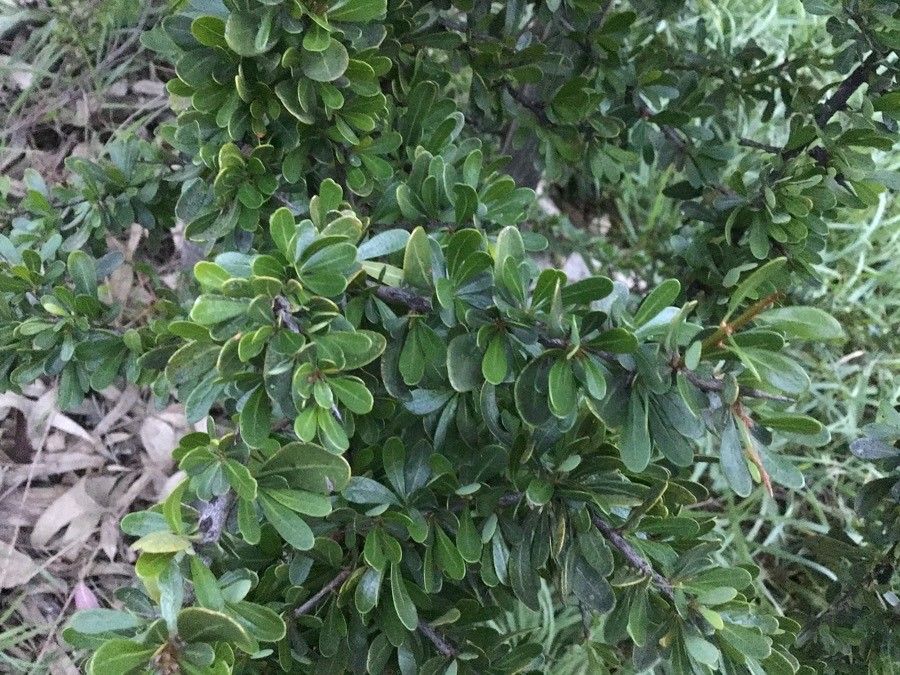
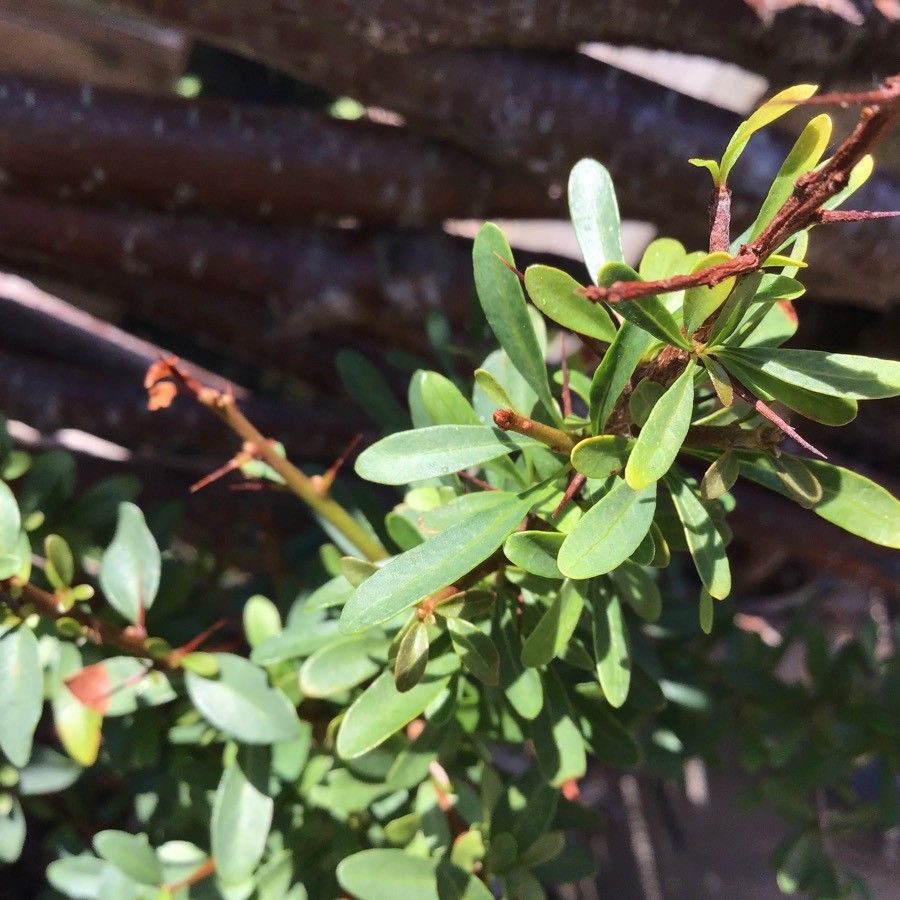
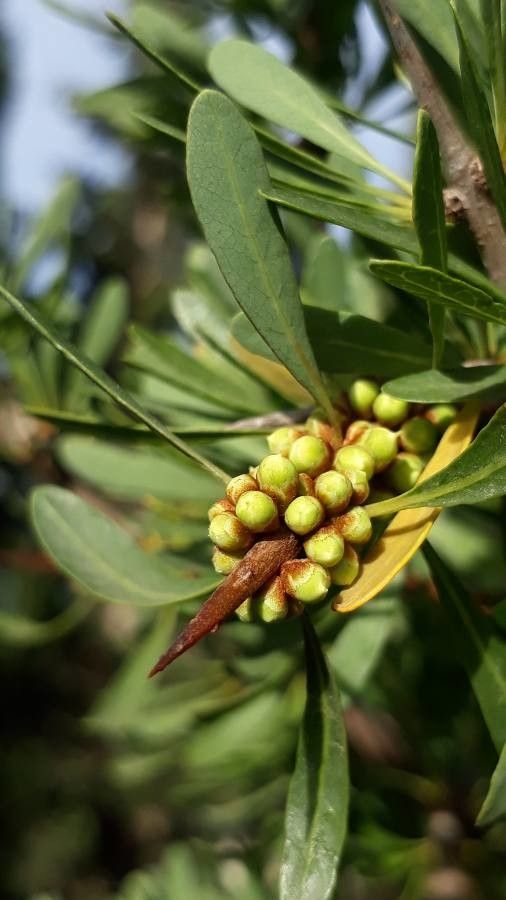
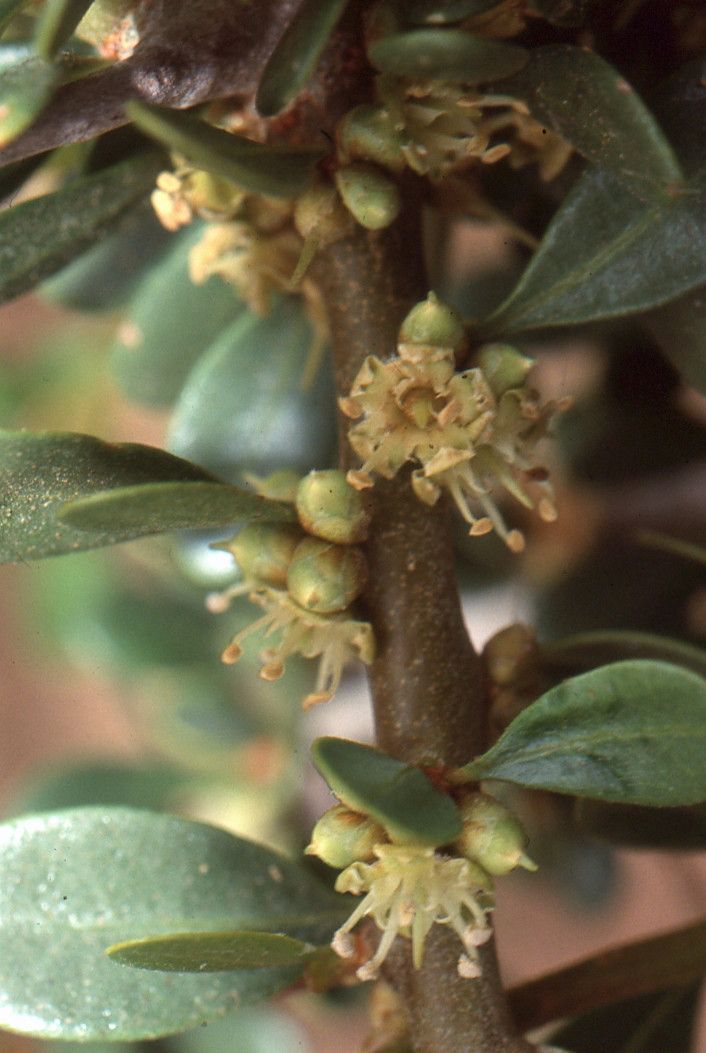
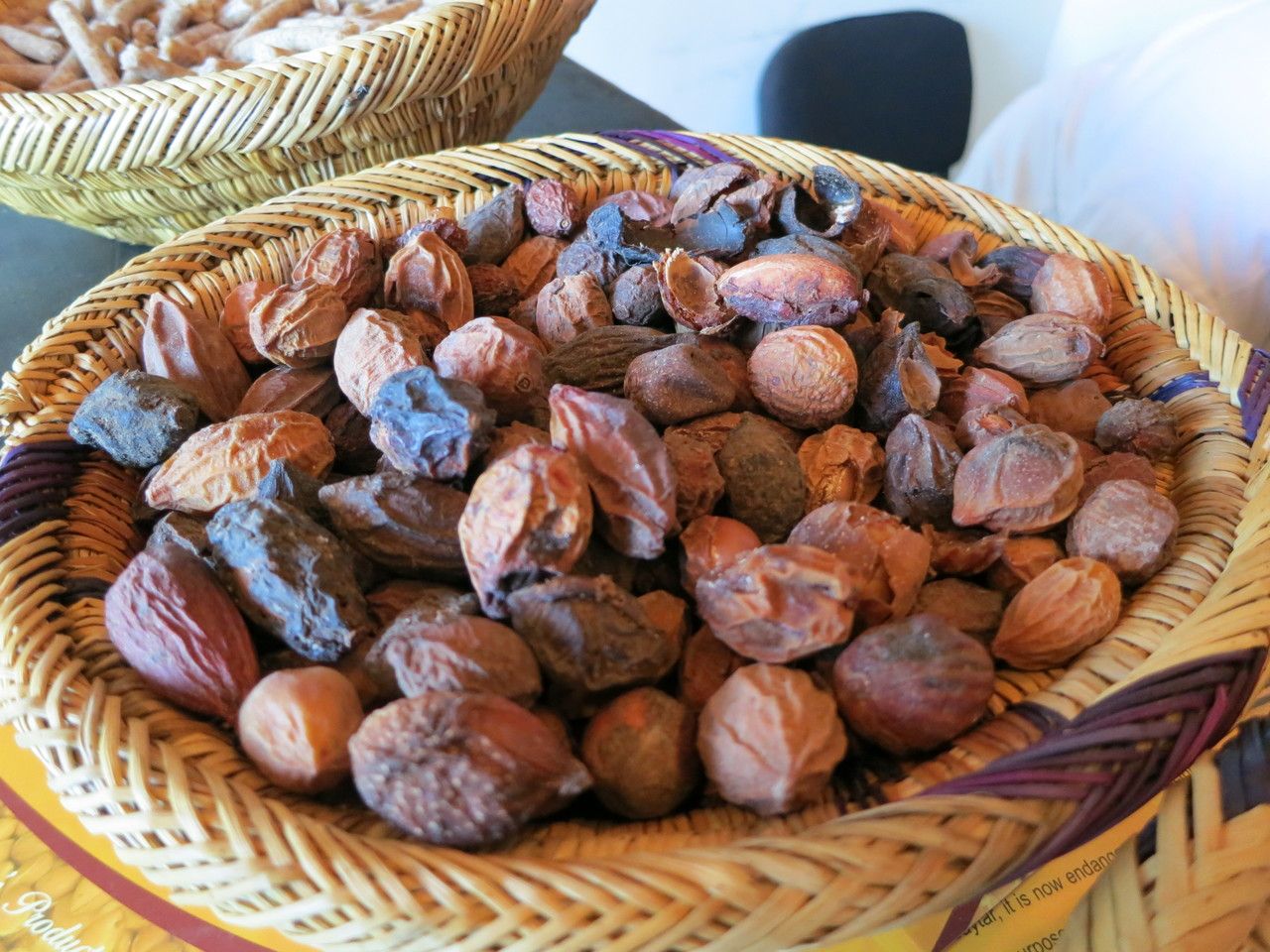
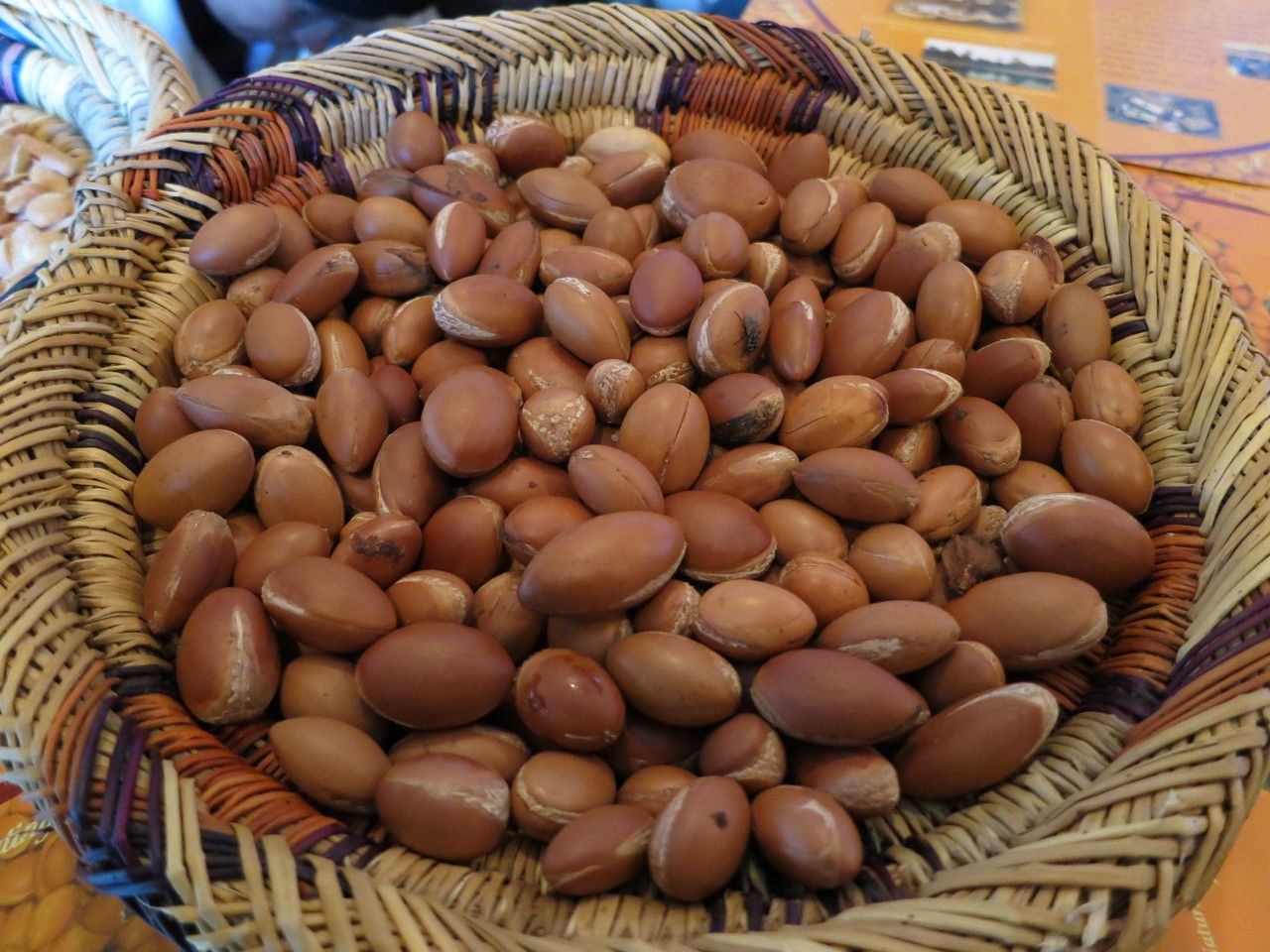
Argania (Tashelhit: ⴰⵔⴳⴰⵏ Argan) is a genus of flowering plants containing the sole species Argania spinosa, known as argan, a tree endemic to the calcareous semidesert Sous valley of southwestern Morocco and to the region of Tindouf in southwestern Algeria. Argan trees grow to 8–10 m (26–33 ft) high and live up to approximately 200 years. They are thorny, with gnarled trunks and wide spreading crown. The crown has a circumference of about 70 m (230 ft) and the branches lean towards the ground. The leaves are small, 2–4 cm (0.79–1.57 in) long, and oval with a rounded apex. The flowers are small, with five pale yellow-green petals; flowering in April. The fruit is 2–4 cm (0.79–1.57 in) long and 1.5–3 cm (0.59–1.18 in) broad, with a thick, bitter peel surrounding a sweet-smelling but unpleasantly flavored layer of pulpy pericarp. This surrounds the very hard nut, which contains one (occasionally two or three) small, oil-rich seeds. The fruit takes over a year to mature, ripening in June to July of the following year.
The argan tree has strong disease resistance and is generally unlikely to develop illnesses. Regarding care, this plant is fairly low-maintenance. When grown outdoors, it needs little watering, and larger plants typically do not require pruning. However, smaller plants should be pruned after they finish flowering. The argan tree is appropriate for anyone with an outdoor area, such as a garden or deck, and does not demand significant care experience.
How to keep Argania Spinosa.
Light
The argan tree comes from open habitats, like sunny meadows and forest edges, which offer plentiful light. It does best in Full Sun but can also tolerate Partial Sun, adapting well to different sunlight conditions.
Temperature
The argan tree shows good temperature adaptability, capable of enduring higher heat and wide temperature swings. In hot weather, attention should be paid to irrigation and providing suitable shade to prevent sunburn. However, the argan tree is relatively intolerant of low temperatures; while it can handle some cold, very cold conditions may cause frost damage.
Fertilizer
The Argan tree plant needs adequate nutrients to achieve optimal fruit production. Apply fertilizer in early spring to encourage new growth and flower development. Regular fertilization keeps the plant healthy, enables it to produce more delicious fruit, and prevents nutrient deficiency problems such as yellowing leaves and poor fruit production.
Botanical profile.
- Plant Type
- Tree
- Life Cycle
- Perennial
- Genus
- Argania
- Family
- Sapotaceae
- Hardiness Zone
- 10
- Mature Height
- 4.57 m to 7.62 m
- Mature Spread
- 2.13 m to 3.05 m
- Leaf Color
- Green
- Leaf Type
- Evergreen
- Flower Color
- Yellow
- Flower Size
- 0.51 cm to 0.76 cm
- Bloom Time
- Early summer, Mid summer
- Planting Time
- Spring, Summer, Autumn
- Harvest Time
- Late summer, Early fall, Mid fall
Other names.