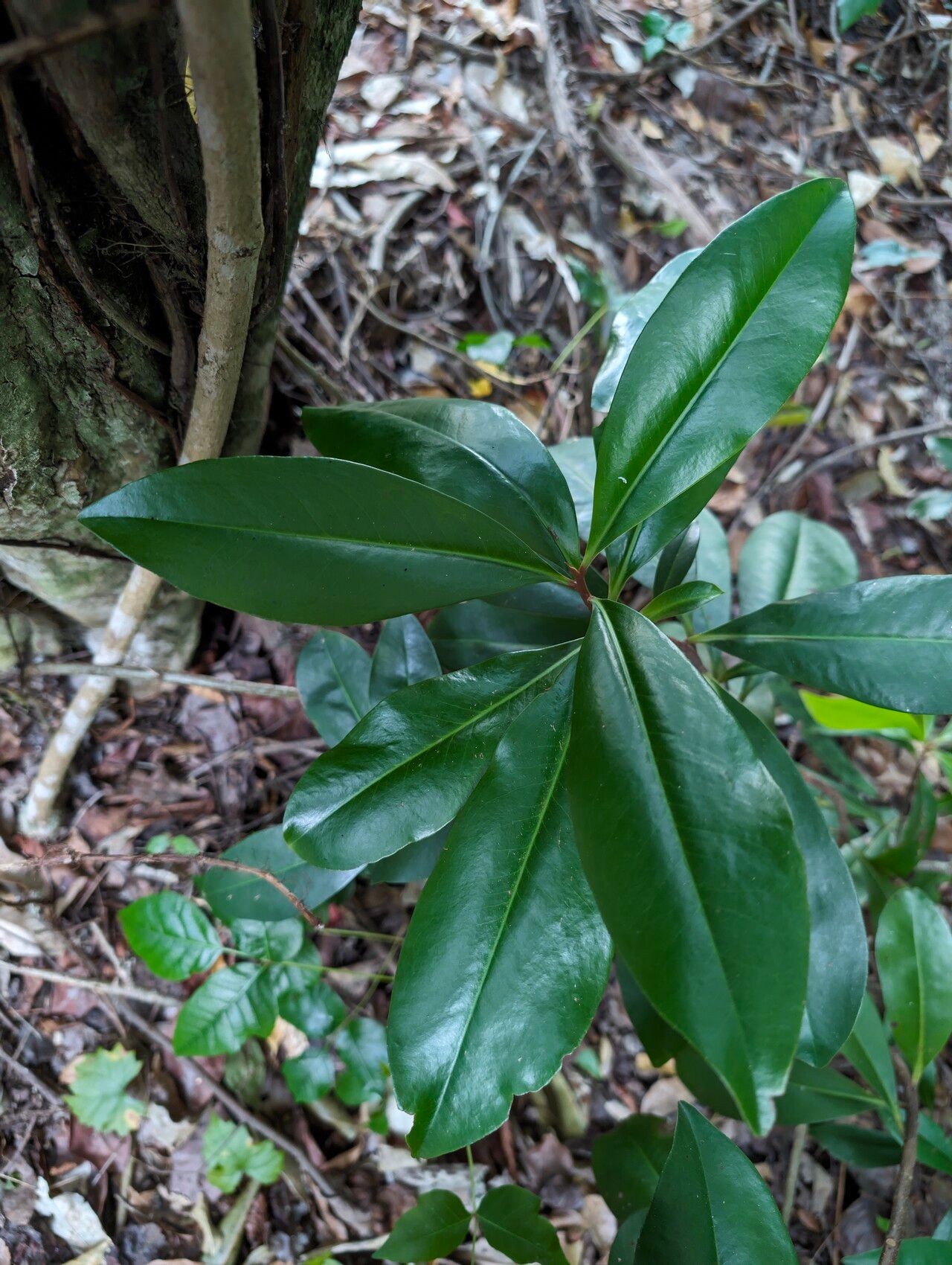
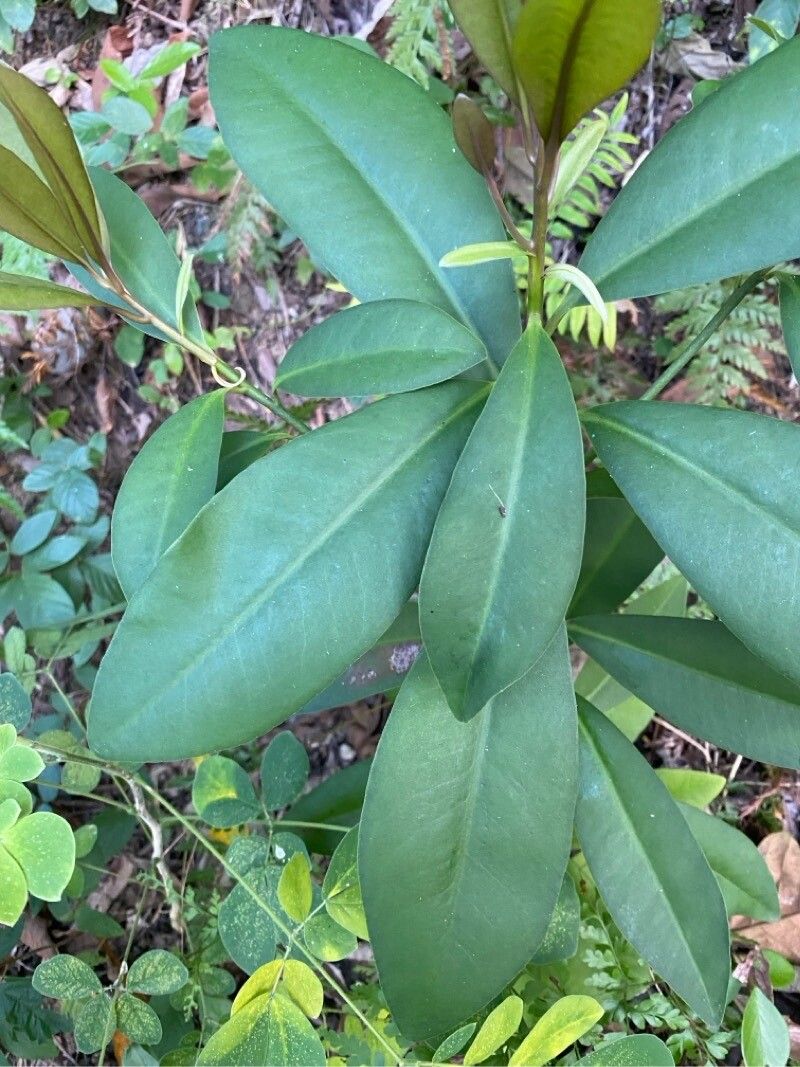
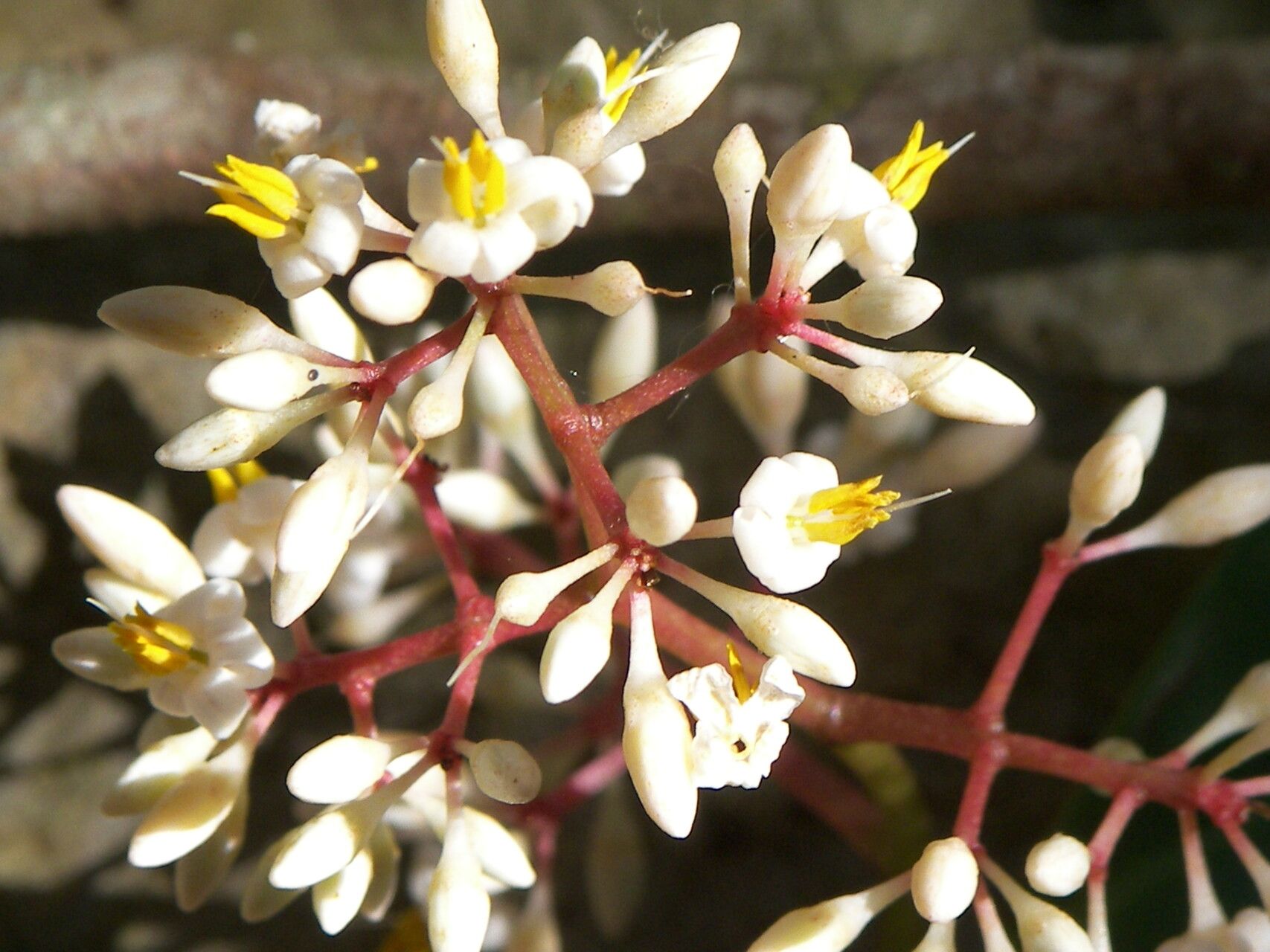
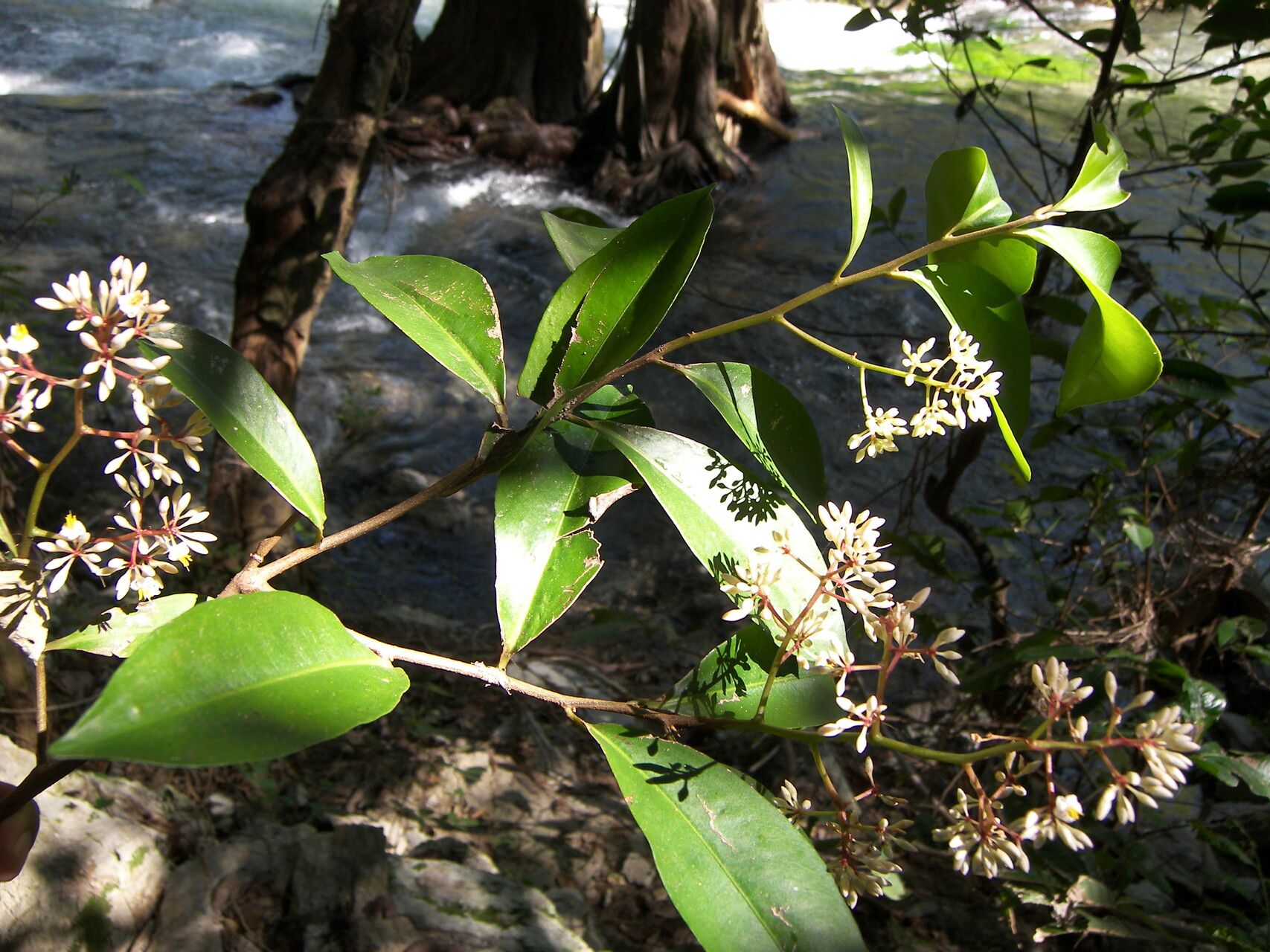
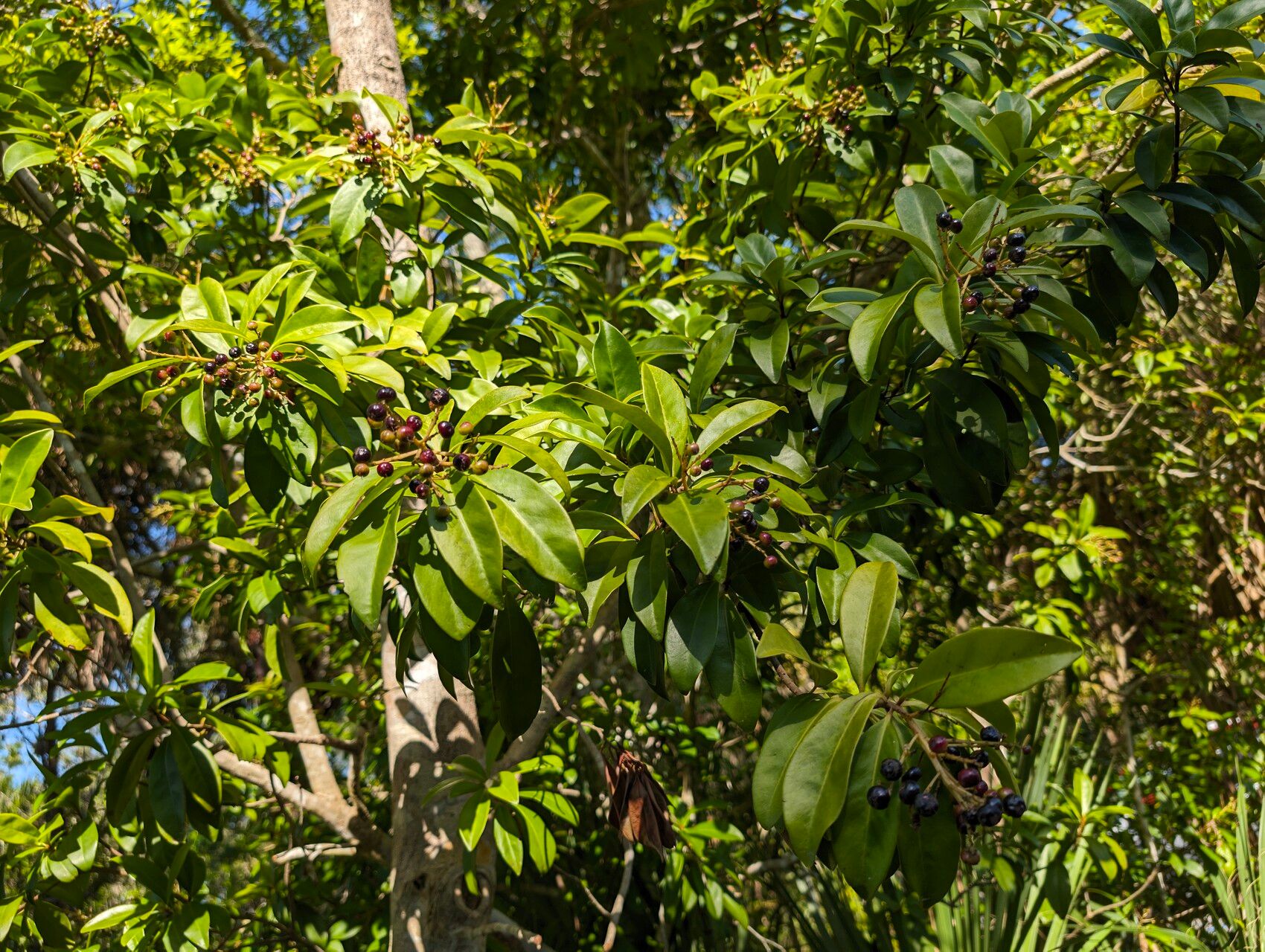
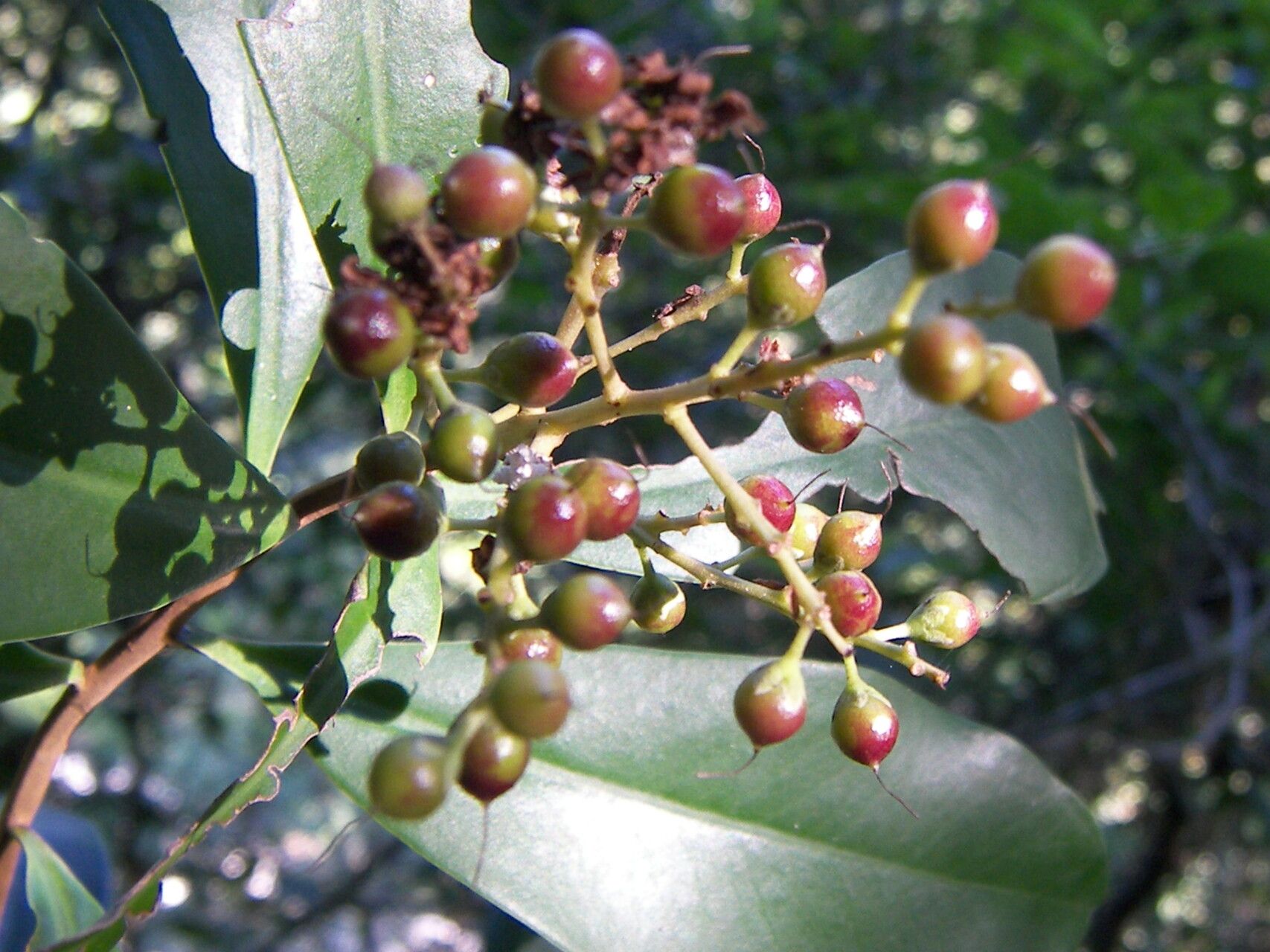
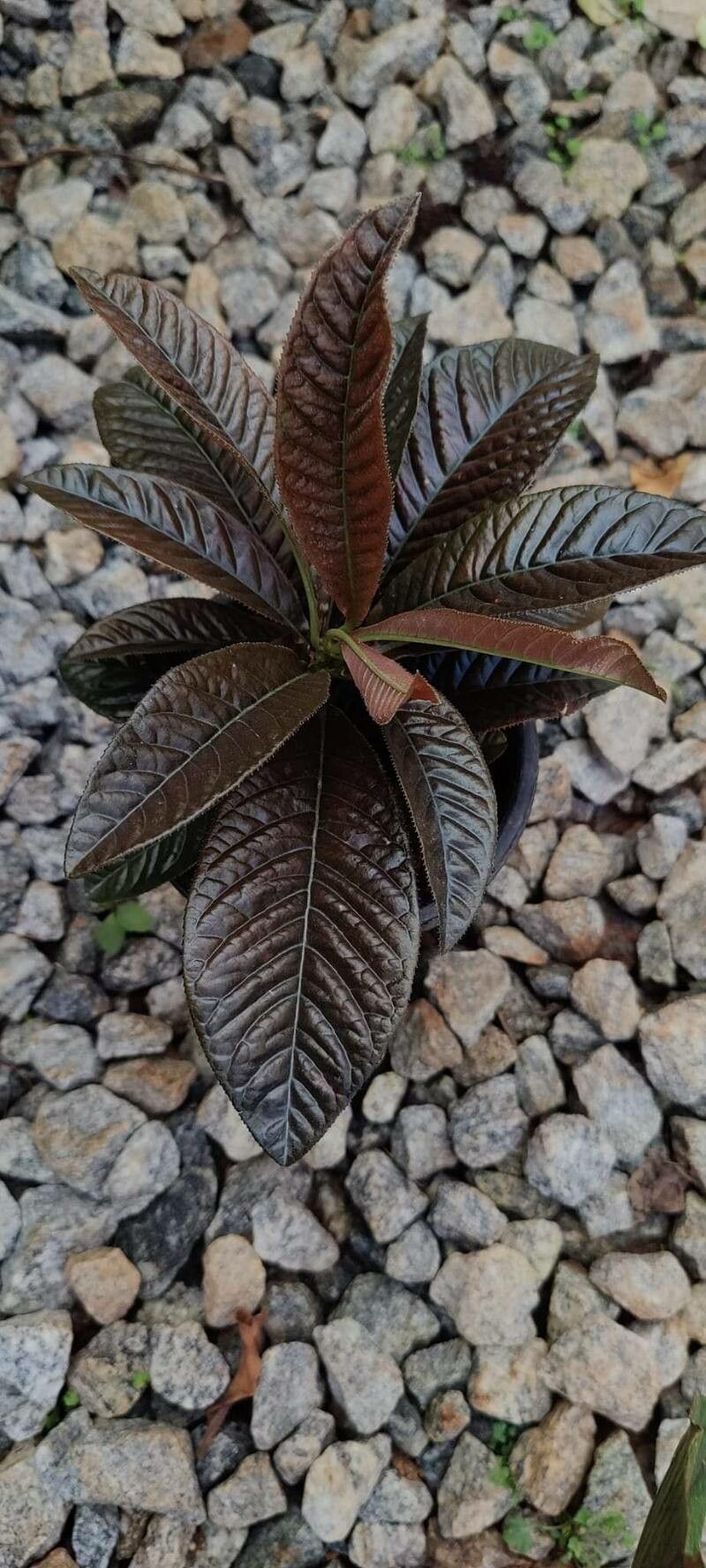
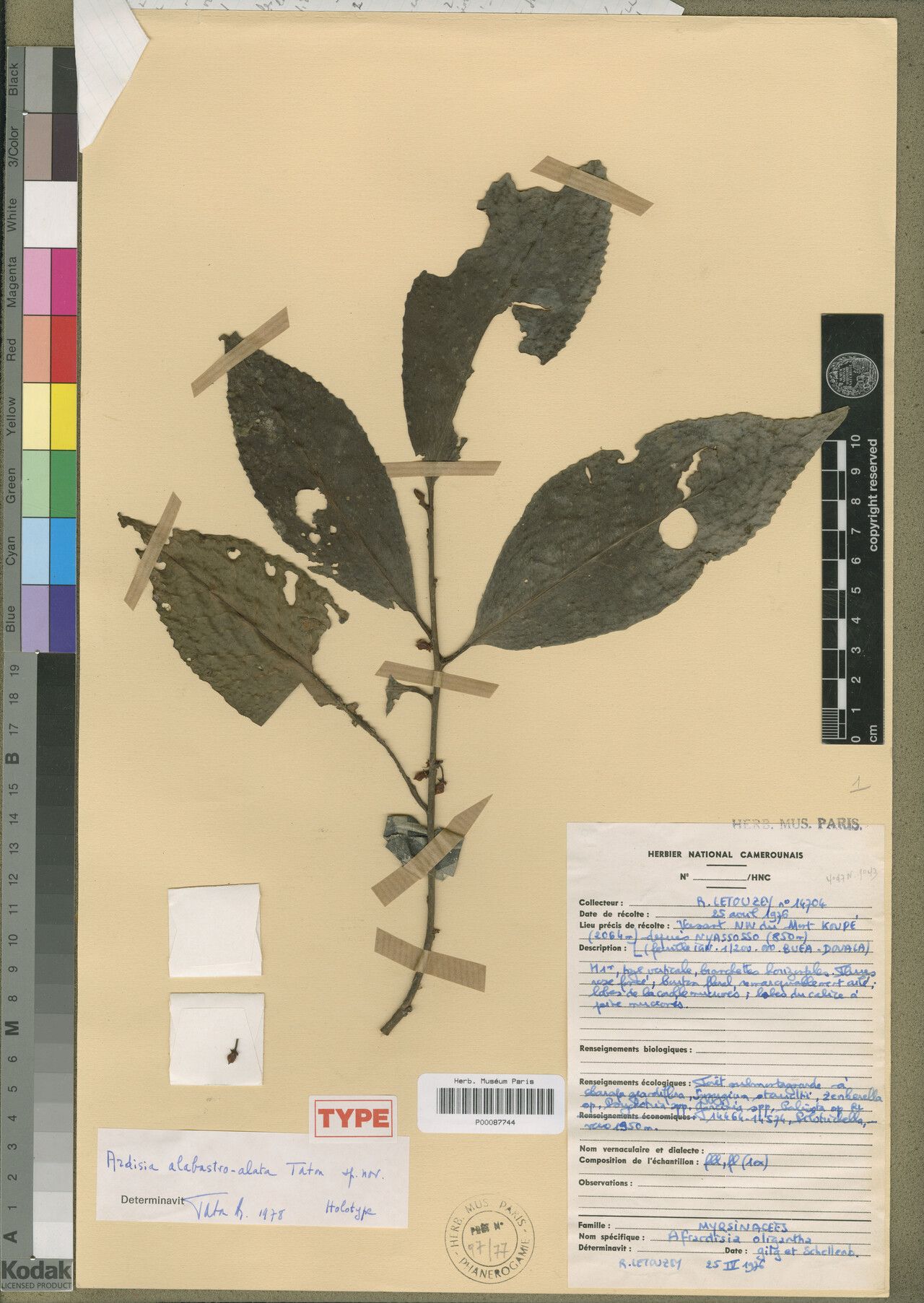
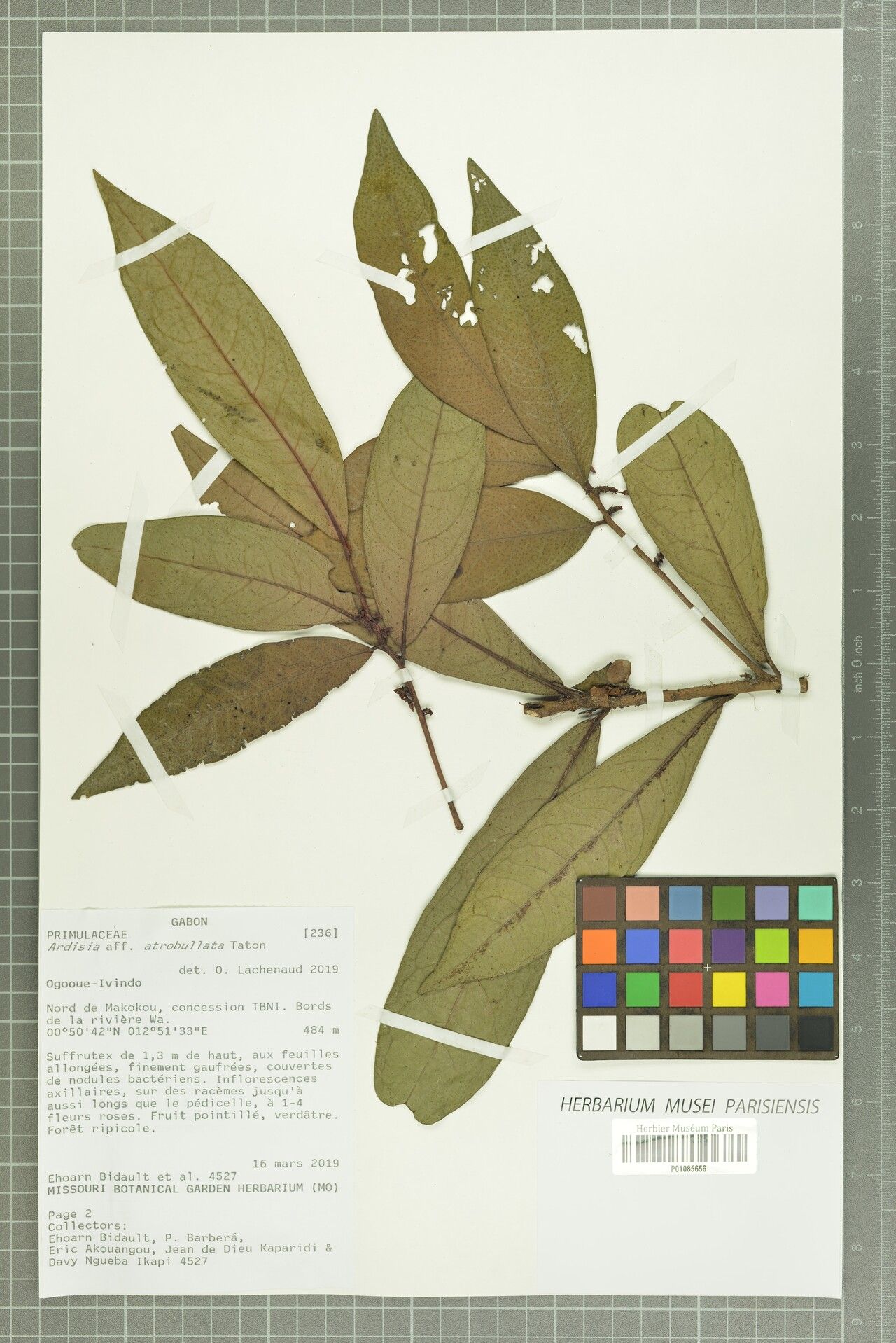
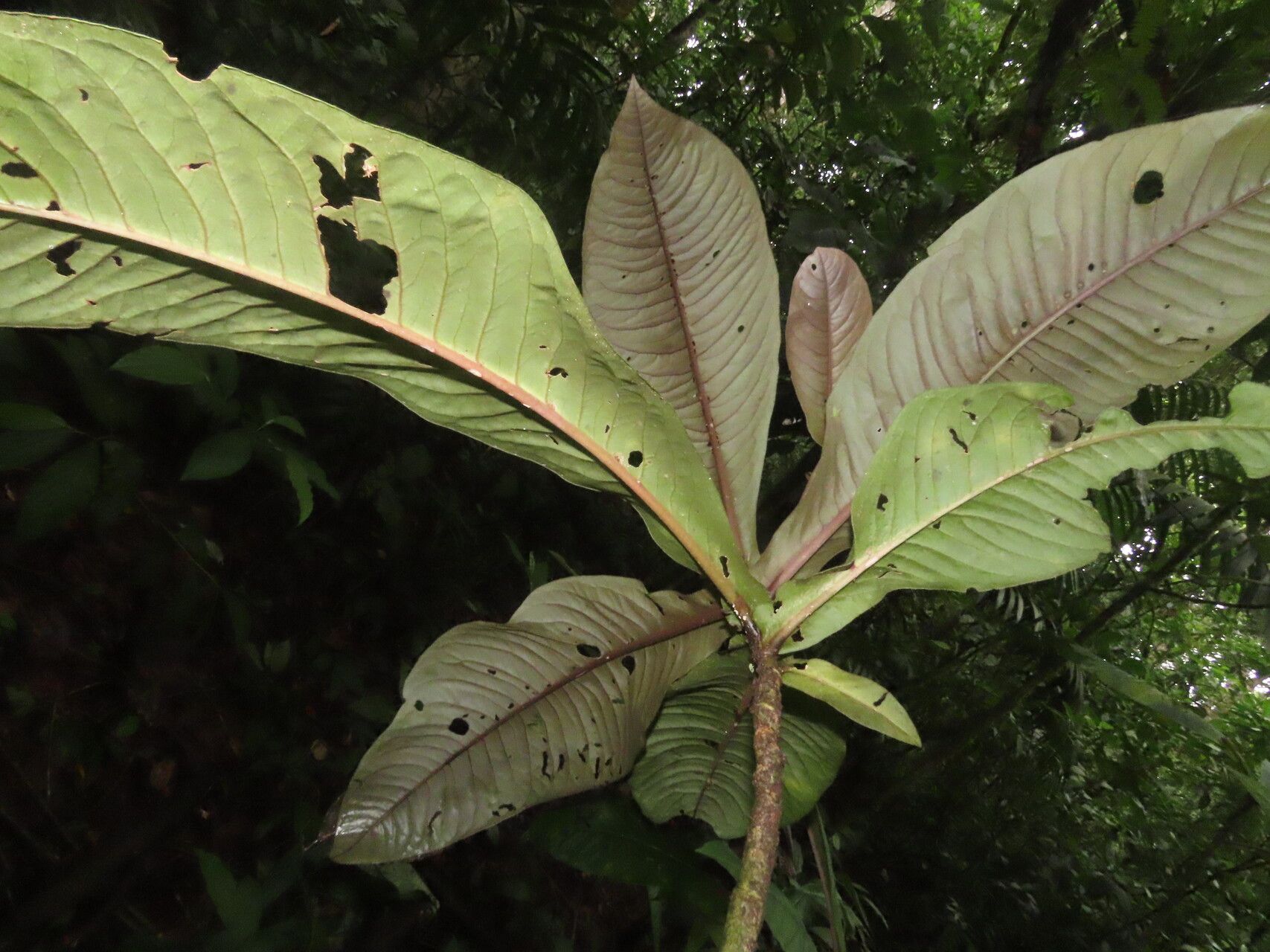
Ardisia escallonioides, the Island marlberry, is a plant species native to the West Indies and neighboring areas. It has been reported from Barbados, Bermuda, the Dominican Republic, Cuba, Mexico, Belize, Guatemala and Florida.Ardisia escallonioides is a shrub or tree up to 15 m (50 feet) tall. It has elliptic leaves up to 17 cm (7 inches) long. Flowers are borne in a panicle of up to 20 flowers. Each flower is white to pink, up to 7 mm (0.3 inches) across. Fruits are fleshy drupes up to 7 mm (0.3 inches) across, red at first then turning black.
Marlberry is well resistant to disease and typically does not get sick. Regarding care, this plant is fairly low-maintenance. Planted outdoors, it needs only minimal watering, and larger plants usually do not require pruning. Smaller plants, however, should be pruned after they have bloomed. Marlberryt is appropriate for anyone with an outdoor area, such as a garden or deck, and does not need much prior care experience.
How to keep Ardisia Escallonioides.
Light
The marlberry usually prospers in locations that receive ample sunlight throughout the day, though it can grow satisfactorily in places with somewhat reduced sun. Its native habitat is typically rich in sunlight. Both excessive and insufficient sun can impede its growth and health.
Water
Marlberry thrives in moist soil and high humidity, making it well-suited to its native tropical forest environment. It requires weekly watering and benefits from regular misting. Indoor plants do particularly well in well-lit bathrooms, where they can absorb moisture from daily showers.
Temperature
Marlberry naturally occurs in habitats with temperatures ranging from 68 to 100.4 °F (20 to 38 ℃). It thrives within this temperature range, and adjustments for different seasons are generally unnecessary.
Fertilizer
The best time to fertilize a Marlberry is in early spring, as it breaks dormancy. This supports overall growth and flower development. Fertilization improves foliage, stems, and branches, and encourages flowers that are large, vibrant, and long-lasting. It helps transfer nutrients from the roots to the flowers and enhances the plant’s health and resistance to disease.
Pruning
Marlberry is a native evergreen shrub or small tree characterized by its glossy leaves and white flowers that produce dark berries. To maintain its shape and encourage healthy growth, it's best to prune it from early to late winter. This also helps improve air circulation and light penetration. Opt for light, selective trimming rather than heavy pruning to ensure the plant remains healthy.
Botanical profile.
- Plant Type
- Tree, Shrub
- Life Cycle
- Perennial
- Genus
- Ardisia
- Family
- Primulaceae
- Hardiness Zone
- 9-11
- Mature Height
- 3.66 m to 6.1 m
- Mature Spread
- 1.83 m to 3.66 m
- Leaf Color
- Green, Blue
- Leaf Type
- Evergreen
- Flower Color
- White
- Flower Size
- 2.54 cm
- Bloom Time
- Summer, Early fall, Mid fall
- Planting Time
- Spring, Summer, Autumn
- Harvest Time
- Fall, Winter
- Native Area
- Bahamas, Belize, Cuba, Honduras, Mexico, Guatemala
Other names.
Reader questions.
How should I water my Marlberry plant?
To water your Marlberry, you have several options. You can use watering cans, hoses, or even cups - any common watering tool will do the job. It's important to water directly onto the soil to make sure all areas of the root system receive enough moisture. Using filtered water is recommended, as tap water may contain harmful particles. It's also best to use water at or slightly above room temperature, as extremely cold or hot water can be a bit too shocking for the Marlberry. However, this plant generally responds well to any type of water you provide.
Why should I add fertilizer to my Marlberry plant?
Ensuring the overall health and well-being of your Marlberry is crucial, and fertilization plays a vital role in achieving this. By providing the right energy and nutrients, you can promote the growth of healthy foliage, as well as sturdy stems and branches. Additionally, fertilization is particularly valuable for gardeners who wish to enjoy the Marlberry's flowers. With the proper fertilization, these flowers can become larger, more vibrant, and longer-lasting. The reason behind this is that the right fertilizer enables the efficient transfer of fuel from the roots to the stems and ultimately to the flowers. Furthermore, proper fertilization contributes to the overall good condition of the plant, enhancing its ability to resist diseases.
How much sunlight does Marlberry need to grow?
Tropical ornamental plants that thrive in full sun require at least 6 hours of direct sunlight each day. These plants are well-suited to areas with strong and direct sunlight, as they need this light to flourish. In their natural habitats, they tend to grow in open fields or along forest edges, where they can enjoy abundant sunlight all day long.
What temperature is best for Marlberry?
To help your tropical plants thrive, it's best to maintain a temperature range of 75℉ to 90℉ (25-32℃). While different species can tolerate temperatures outside this range, sticking within a few degrees of these limits will ensure optimal growth. However, there are extreme temperature limits to be aware of. Anything below 50℉ (10℃) or above 95℉ (35℃) can hinder growth and cause issues with the leaves and stems. Low temperatures are particularly damaging, as even a light frost can lead to the death of your tropical plants. In fact, cellular death can occur rapidly, with some species dying within 12 to 24 hours.
What do I need to do if I give my Marlberry plant too much or too little water?
When it comes to outdoor plants, especially newly planted ones or seedlings, they are prone to not getting enough water. It's important to remember to water them adequately for a few months while they are still small or recently planted. Once their roots are established, Marlberry plants can usually rely on rain for most of their water needs. If you have Marlberry plants in pots, there is a higher risk of overwatering. In case you accidentally overwater your Marlberry, it's important to take immediate action. First, stop watering the plant right away to minimize the negative effects of overwatering. Next, remove the Marlberry from the pot to inspect its roots. If you find that none of the roots have developed root rot, you can safely return the plant to its container. However, if root rot is present, trim away the affected roots and consider applying a fungicide to prevent further damage. Lastly, repot the Marlberry in well-draining soil. On the other hand, underwatering a Marlberry plant is usually easy to fix. If you underwater, the leaves may droop, dry out, and fall off. However, once the plant receives sufficient water, the leaves will quickly regain fullness. Therefore, it's crucial to adjust your watering frequency as soon as you notice signs of underwatering.
What is the ideal time to fertilize my Marlberry plant?
The best time to fertilize a Marlberry is in the early spring, as it is coming out of its dormant phase and preparing to bloom. This will provide the plant with extra energy for growth and flower development. However, it is also beneficial to give the plant another feeding during the fall, although it doesn't have to be as large as the spring feeding. Some gardeners also choose to fertilize Marlberry when planting, but this is not always required.
What happens if Marlberry doesn't get enough sunlight?
Tropical ornamental plants that need full sun may face issues if they don't receive enough sunlight. They might become leggy and weak, and their leaves could turn yellow or pale. Furthermore, they may stop producing flowers. Ultimately, if these plants continue to lack the required amount of direct sunlight, there is a possibility that they may die.
Do Marlberry need different temperatures for different growing stages?
Marlberry doesn't need temperature changes to go through different growing phases, but it does require consistency. If the temperature fluctuates too much, regardless of the current phase, the plant's growth will slow down. It's best to keep Marlberry in a controlled environment, maintaining an optimal temperature range of 75℉ to 90℉ (25-32℃). It's important to stay above the lower limit. While exceeding 90℉ (32℃) is not ideal, Marlberry can tolerate it because it is a tropical plant. However, if the temperature drops below 50℉ (10℃), especially below 40℉ (5℃), it will directly damage this heat-loving plant species.
How frequently should I give water to my Marlberry plant?
To ensure healthy growth for outdoor plants, it's usually enough to rely on rainwater. However, if your area experiences a lack of rainfall, you should water your plants adequately every 2 weeks in the spring and fall, and more frequently during the summer when they need more water. In the winter, when plants don't grow as much, you can water them sparingly or not at all. If you have a Marlberry plant that is young or newly planted, it will benefit from more frequent watering to help establish itself and grow into a more adaptable and drought-tolerant plant. For potted Marlberry plants, there are two main approaches to determine watering frequency. The first is to follow a set schedule, watering once a week or once every other week. However, this method doesn't consider the unique conditions of your Marlberry's environment and may not always be accurate. Alternatively, you can rely on the moisture level of the soil. It's generally best to wait until the top two to four inches of soil, about one-third to one-half of the pot depth, have completely dried out before watering again. Keep in mind that during summer, when the plant's water needs are highest, a predetermined schedule may not be sufficient.
When is the best time to not fertilize my Marlberry plant?
During the winter, like many plants, Marlberry does not require fertilization because it enters a dormant phase where it does not need much energy from the soil for growth. Fertilizing during this season increases the risk of overfertilization. The optimal times to feed a Marlberry are in early spring and fall, so during most of spring and summer, fertilization is not necessary. It is also advisable to refrain from fertilizing if the plant is exposed to excessive heat or dry conditions.
What will happen if the Marlberry plant gets too much sunlight?
Tropical ornamental plants that thrive in full sun require ample direct sunlight, but excessive exposure to intense sunlight can harm them. Prolonged periods of direct sunlight can cause sunburned leaves or the development of unsightly brown spots. Additionally, if the soil dries out too rapidly in full sun, these plants may become dehydrated.
Does Marlberry require different temperatures for different seasons?
Marlberry does not require different temperatures for different growing seasons. The key to caring for it throughout the year is to maintain an optimal temperature range. Keeping this plant inside is the recommended approach as it allows you to regulate the temperature, regardless of the climate outside. In terms of light, tropical species, including Marlberry, prefer partial side-level sun exposure. This means they should receive dappled or filtered light, with bright but indirect light being the ideal choice when growing them indoors. Excessive direct sunlight can harm the plant's leaves and hinder its growth.