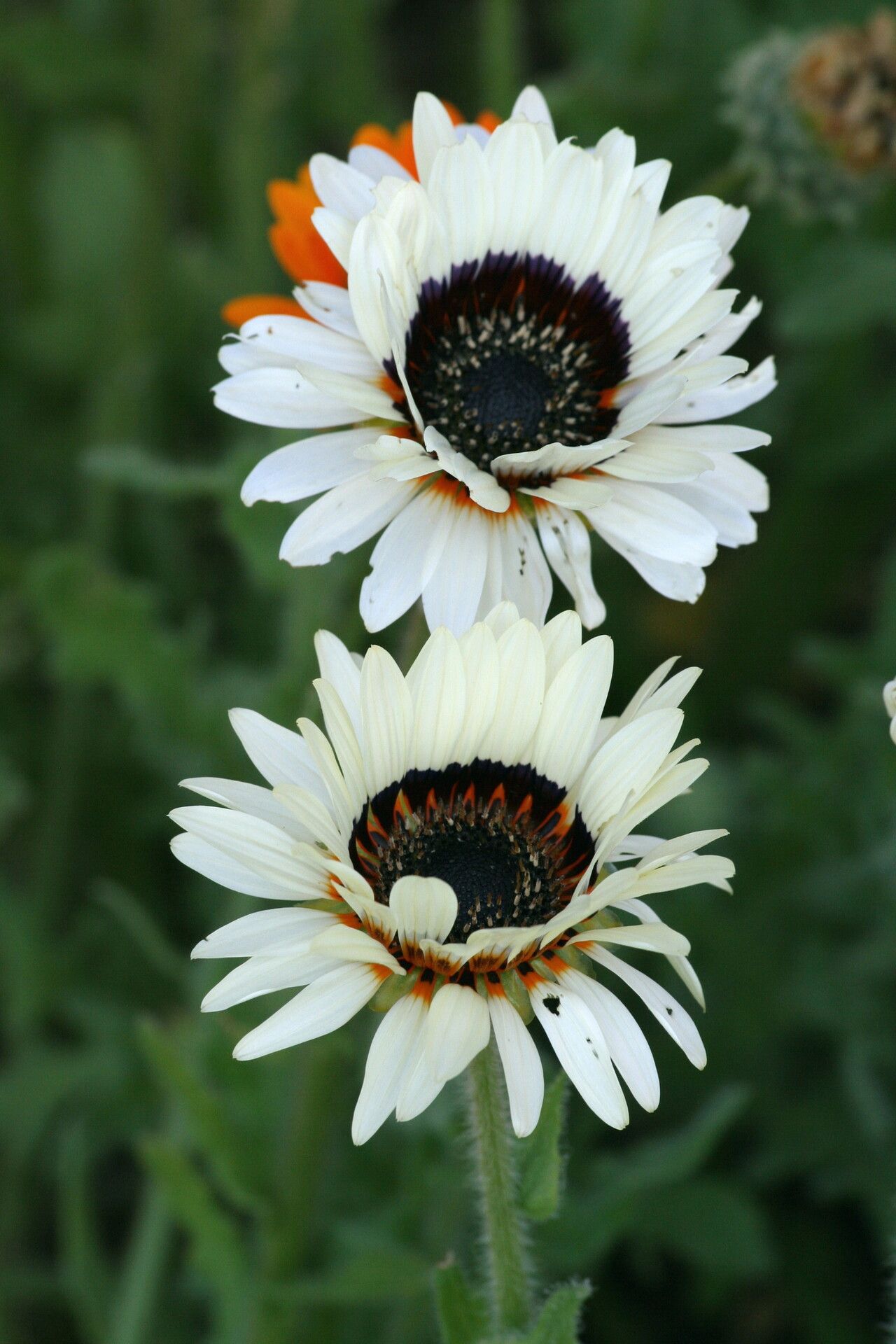
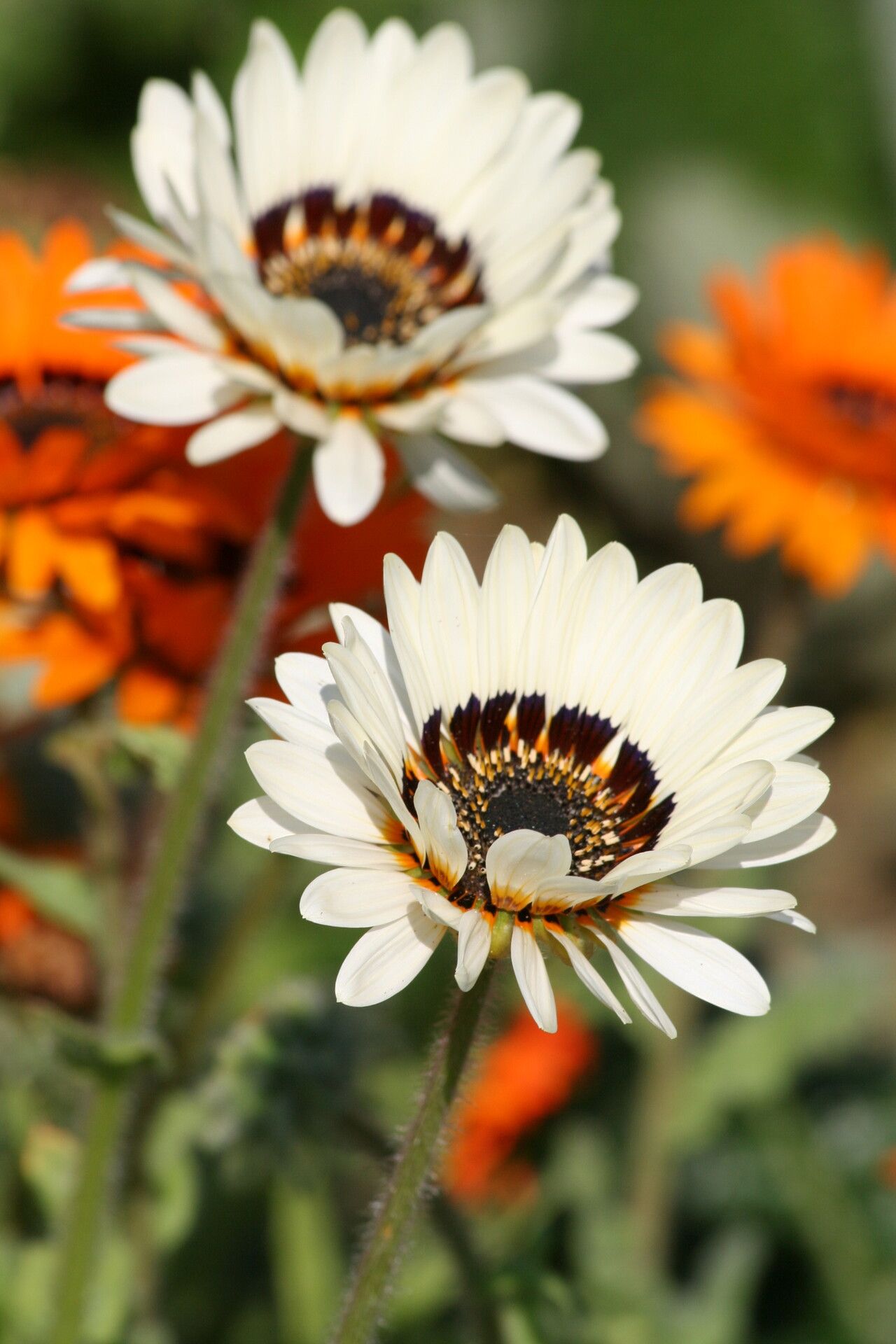
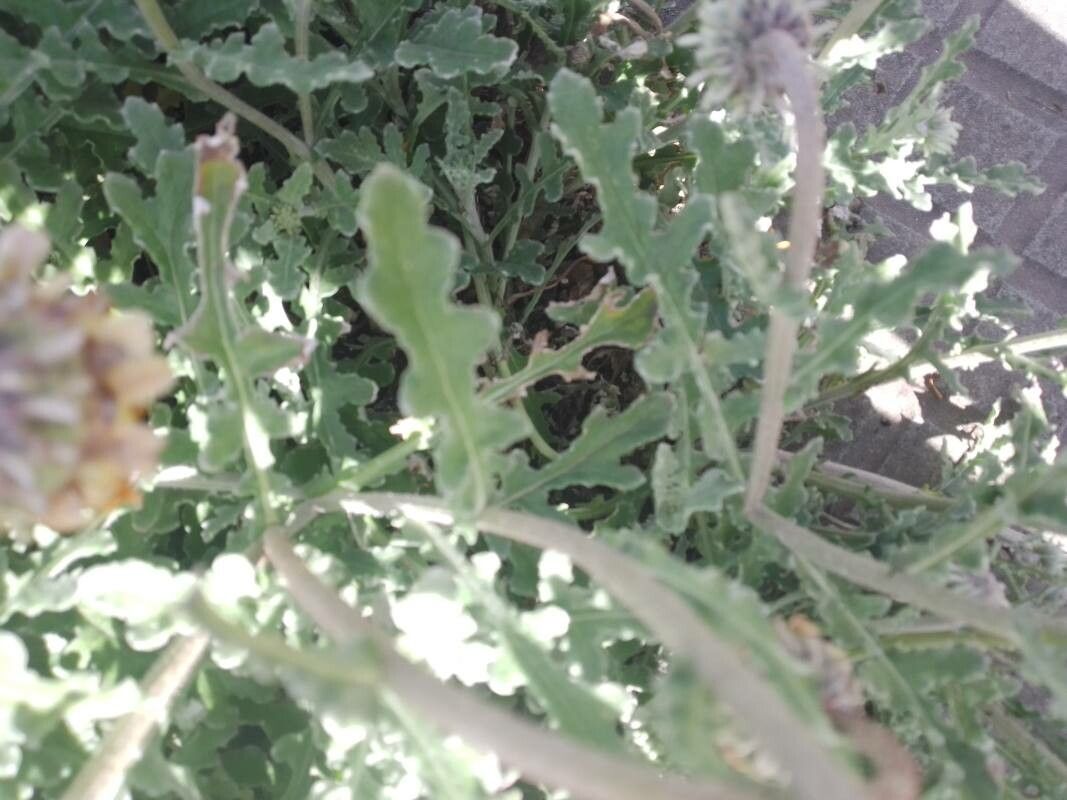
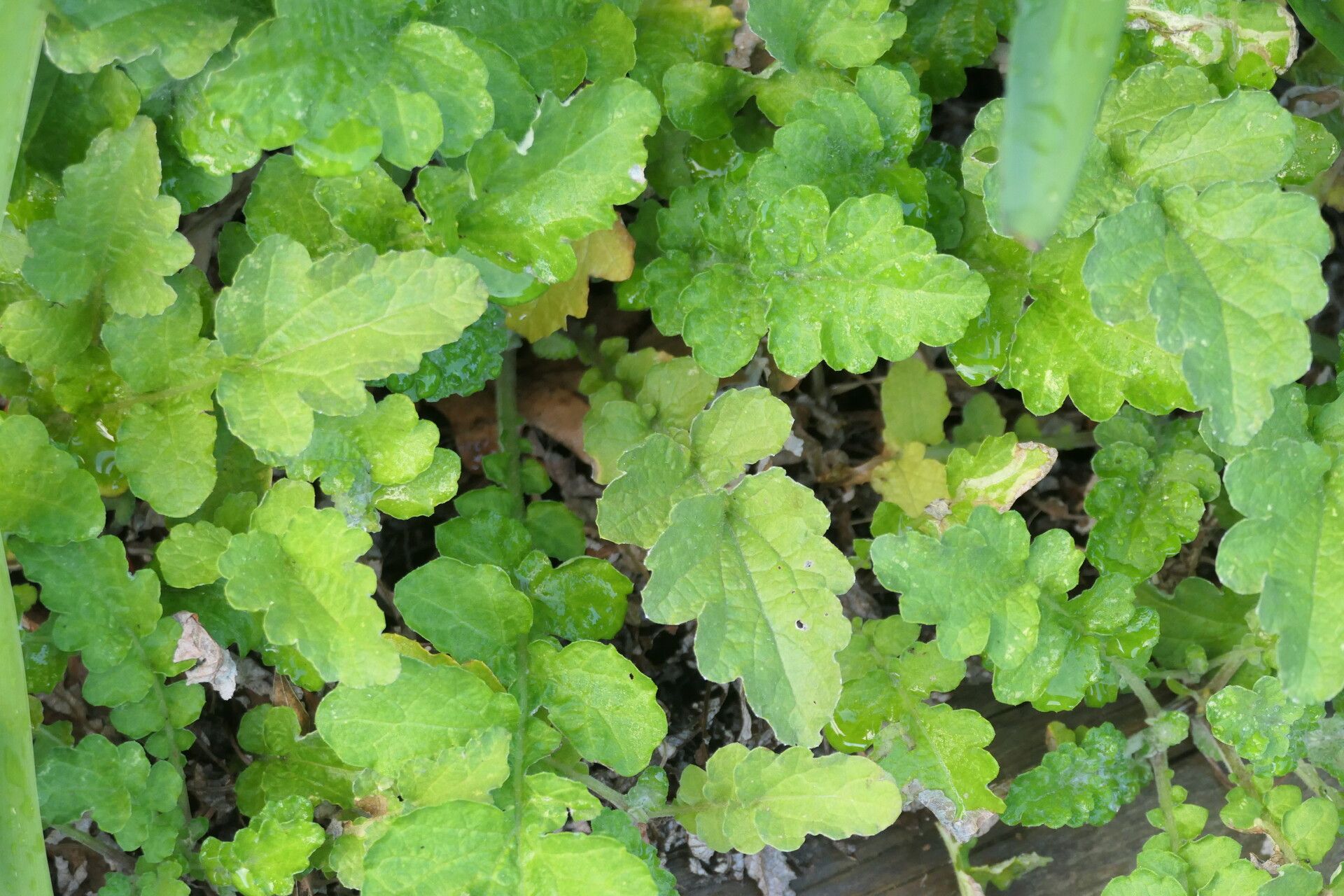
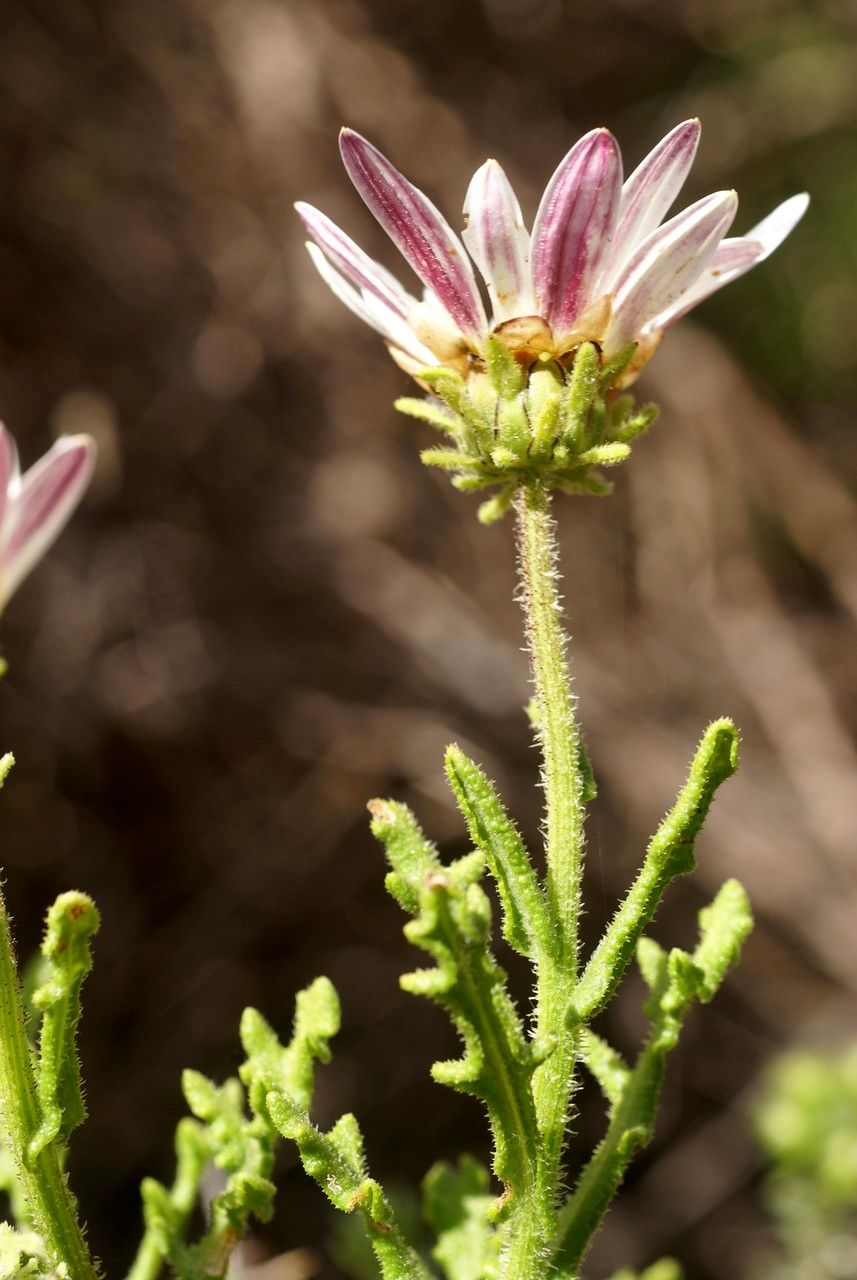
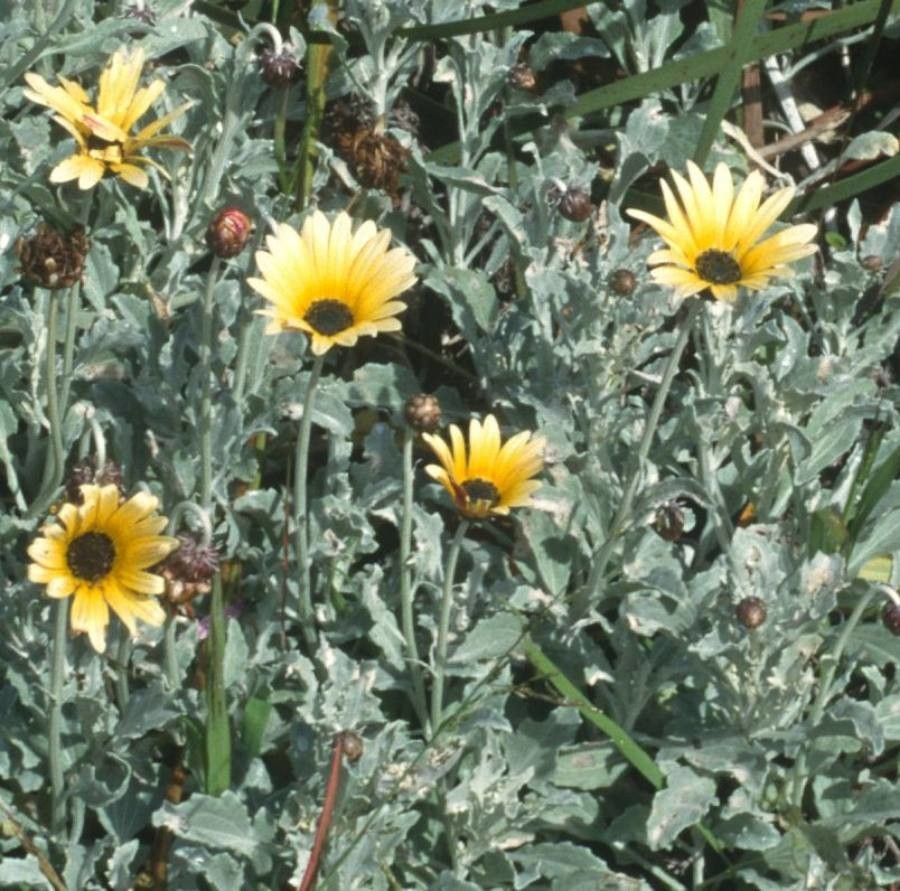
Arctotis fastuosa, called Monarch-of-the-veld, is a species of African plants in the family Asteraceae, native to Namibia and South Africa. It has become naturalized on roadsides and in vacant urban lots in southern California.Arctotis fastuosa is cultivated as an ornamental plant for its showy flowers. It is an annual herb growing up to about 35 centimeters in height, but known to approach 90 centimeters (36 inches) at times. It is hairy in texture, the hairs long and webby when the plant is young. Leaves occur in basal rosettes and are alternately arranged along the stem. They can be several centimeters long all but the uppermost are divided into several lobes. They are borne on flat petioles with wide bases. The inflorescence is a solitary flower head which can be large and showy, measuring up to 10 centimeters wide. Cultivars are bred for varied flower colors; the ray florets can be orange or white with purple, yellow, or orange bases, and the disc florets at the center can be brown, purple, or black.
Cape daisy is fairly disease-resistant and usually not prone to illnesses. Still, it can be affected by pests and diseases present in its environment. These problems are typically mild. For care, this plant requires moderate maintenance. Regular pruning is needed to keep it looking good and to support healthy growth. Fertilizing can also encourage flowering. Cape daisy is suitable for anyone with outdoor space, such as a garden or patio, and does not demand extensive gardening experience. It may need more attention when cultivated indoors.
How to keep Arctotis Fastuosa.
Light
Cape daisy is a perennial herbaceous plant that favors sunny sites and comes from open habitats, frequently found in meadows and grasslands. It prefers full sun but can also tolerate partial sun.
Temperature
Cape daisy can tolerate a broad range of temperatures, though its distribution can still be restricted by various combinations of moisture and heat. It performs best in warm summer climates with sufficient rainfall or watering. Extended spells of cloudy, rainy weather, and prolonged high temperatures, both raise the risk of the Cape daisy dying. In winter, shielding it from cold can increase its chances of survival.
Fertilizer
The best time to fertilize a Cape daisy is in early spring, as it comes out of dormancy and begins active growth. Fertilizing supplies essential nutrients for healthy development. Even though Cape daisy has relatively low fertilizer requirements, applying fertilizer annually can improve its survival and encourage better, longer-lasting flowers.
Pruning
Cape daisies benefit greatly from pruning in early spring. This process involves removing spent flowers and leggy stems to encourage bushier growth and more abundant blooms. Trimming away any damaged or dead stems helps maintain the plant's health. Pruning at the right time—before the growing season—supports vigorous new growth and maximizes the plant's flowering potential.
Botanical profile.
- Plant Type
- Herb
- Life Cycle
- Perennial
- Genus
- Arctotis
- Family
- Asteraceae
- Hardiness Zone
- 9-11
- Mature Height
- 46 cm
- Mature Spread
- 30 cm
- Leaf Color
- Light Green, Silver
- Leaf Type
- Deciduous
- Flower Color
- Orange, Yellow
- Flower Size
- 5.08 cm to 7.62 cm
- Bloom Time
- Late spring, Summer, Early fall, Mid fall
- Planting Time
- Spring, Summer
- Harvest Time
- Mid summer, Late summer, Fall
- Native Area
- South Africa, Namibia
Other names.